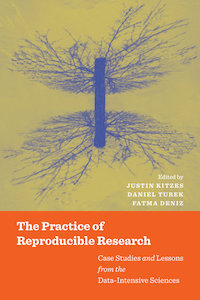
Fatma Deniz is a Full Professor at the Faculty of Electrical Engineering and Computer Science, Technische Universitaet Berlin. She combines computational neuroscience , data science , and artificial intelligence to investigate how complex information is encoded in the human brain during natural tasks. Her lab develops machine-learning approaches for analyzing multimodal brain data, with a current focus on multilingual brain representation . Education: PhD in Computational Neuroscience (Bernstein Center Berlin), M.Sc. in Computer Science (Technical University of Munich), thesis work at Caltech Past Appointments: Helen Wills Neuroscience Institute (UC Berkeley), Berkeley Institute for Data Science, International Computer Science Institute (Berkeley) Her research spans scientific reproducibility (co-editor of a UC Press book), image-based authentication (MooneyAuth), and Mooney image databases . She has received prestigious fellowships including Moore-and-Sloan Data Science Fellow and DAAD Postdoctoral Fellowship . Her GitHub repository denizenslab/pymooney contains Python tools for generating Mooney images. Scientific Awards: Moore-and-Sloan Data Science Fellow DAAD Postdoctoral Fellow Her work has been featured in major media outlets including Nature Neuroscience , MIT Technology Review , Discover Magazine , and ScienceDaily .
Atif Memon is a Professor in the Department of Computer Science at the University of Maryland, College Park (UMCP), where he has been a faculty member since 2001, progressing from Assistant Professor to Associate Professor and finally to Professor in 2015. He is also a Professor at the Institute for Advanced Computer Studies at UMCP. Dr. Memon founded and heads the Event Driven Software Lab (EDSL), where his research focuses on design, development, quality assurance, and maintenance of event-driven software applications. Dr. Memon received his Ph.D. in Computer Science from the University of Pittsburgh in 2001, with a dissertation titled "A Comprehensive Framework for Testing Graphical User Interfaces." His advisors were Martha Pollack and Mary Lou Soffa. Prior to his Ph.D., he earned an M.S. in Computer Science from King Fahd University of Petroleum and Minerals in Saudi Arabia (1995) and a B.C.S. in Computer Science from the University of Karachi (1991). Dr. Memon's research primarily focuses on software testing, particularly for event-driven systems. He is renowned for designing and developing GUITAR, a model-based GUI testing framework that operates on Android, iPhone, Java Swing, .NET, Java SWT, and web systems. His work extends to Community Event-based Testing (COMET), a community infrastructure for event-based testing researchers. His research interests include: Automated GUI and mobile application testing Model-based software testing techniques Event-driven software quality assurance Testing methodologies for emerging technologies Test automation and script maintenance Flaky tests and test reliability Dr. Memon's recent publications demonstrate a strong focus on practical applications of software testing, particularly in mobile environments. His work bridges theoretical testing concepts with real-world implementation challenges, with significant contributions to GUI test automation, mobile application testing, and test script maintenance. The trend in his recent work shows increasing emphasis on mobile platforms, security testing, and addressing the challenges of flaky tests in continuous integration environments. His research spans both academic innovation and practical industry applications, as evidenced by his collaborations with companies like Google, Apple, and others. Among his notable achievements, Dr. Memon received the Best Paper Award at SECURWARE 2014 for his work on "N-Gram Based User Behavioral Model for Continuous User Authentication" and a retrospective award for the most influential paper among the papers of 2003 Working Conference on Reverse Engineering. Dr. Memon currently advises six PhD students at Maryland on various aspects of testing event-driven software systems, and so far six students have completed their doctoral thesis work under his guidance. His research has been supported by significant funding from agencies including DARPA, NSF, NIH, and NSA for projects such as "Vetting Android Applications for Security Using Graphical User Interface Logic," "COMET - Community Event-based Testing," "Algorithms and Software for the Assembly of Metagenomic Data," and "Research in Science and Public Policy for the U.S. National Security Agency." As the founder and head of the Event Driven Software Lab (EDSL), Dr. Memon leads a team focused on advancing the state of the art in testing event-driven software applications. The lab has developed several influential tools and frameworks, most notably GUITAR, which has been widely adopted in both academic and industrial settings. Dr. Memon has also been instrumental in developing community infrastructure for testing researchers through COMET, enabling uniformity in experimentation and benchmarking in event-driven software testing.
Félix Gómez Mármol is an Assistant Professor at the University of Murcia , where he also serves as Vicedean of Students at the Faculty of Computer Science. A cybersecurity researcher with expertise in protecting ICT systems, he co-founded SCORPION Cybertech in 2025. Education: PhD in Computer Science (University of Murcia, 2010) MSc in Advanced Information and Telematic Technologies (University of Murcia, 2007) Computer Science Engineering (University of Murcia, 2006) His research focuses on cybersecurity, trust management in distributed systems, and privacy mechanisms for wireless/mobile networks. He has contributed to special issues on Industry 4.0 security , mobile communications , and identity protection . He has served as editorial board member for journals including Computers & Electrical Engineering and Journal of Information Security and Applications , and as guest editor for special issues on topics like Security in Parallel/Distributed Computing and Blockchain Security . Scientific awards include the 2021 Knowledge Transfer Award, 2017 Leonardo Grant, 2011 Best PhD Thesis Award, and multiple scholarships from Seneca Foundation and BBVA. As a conference organizer , he has held leadership roles in events like IEEE TrustCom, ACM AsiaCCS, and IEEE Globecom, focusing on cybersecurity trends across IoT , smart grids , and cyber-physical systems .
Shoji Nishimura is a Professor at the Faculty of Human Sciences, Waseda University, where he has served since 2006. Prior to his current position, he was an Associate Professor (2004-2006) and Assistant Professor (1997-1999) at the same institution. He holds a Doctor of Philosophy in Human Sciences from Osaka University and a Master of Science from Waseda University. Dr. Nishimura's educational background includes graduate studies in Pure and Applied Physics at Waseda University Graduate School and undergraduate studies in Mathematics at Waseda University Faculty of Science and Engineering. His academic journey reflects a strong foundation in quantitative disciplines that has informed his research in educational technology and data analysis. Dr. Nishimura's primary research interests focus on Educational Technology, Distance Education, and e-Learning . His work spans multiple domains including health informatics, biometrics, and human factors engineering. He has made significant contributions to the development of e-learning systems, particularly for tacit knowledge transfer and advanced skill acquisition. His research increasingly integrates health data analysis, wearable devices, and gait recognition technologies, demonstrating an interdisciplinary approach that bridges educational theory with practical applications in healthcare and safety. His recent publications (2020-2025) reveal a clear trend toward sophisticated health data analytics and biometric applications. The research shows increasing sophistication in causal analysis of health data, development of trustworthy decentralized health data systems, and applications of motion analysis for safety assessment. His work on gait recognition and driver behavior analysis demonstrates practical applications of his theoretical frameworks in real-world safety contexts. The shift from purely educational technology to health-focused applications represents a significant evolution in his research trajectory. Dr. Nishimura is actively involved in several major research projects including the development of e-learning systems for tacit knowledge transfer, research on broadcasting-telecommunications cooperation, and empirical studies on active learning behavior. His work has been supported by prestigious funding sources including Japan Society for the Promotion of Science Grants-in-Aid for Scientific Research. He maintains active membership in numerous professional societies including The Institute of Electronics, Information and Communication Engineers, Information Processing Society of Japan, The Botanical Society of Japan, The Society of Population Ecology, Ecological Society of Japan, Japanese Society for Information and Systems in Education, and Japan Society for Educational Technology, reflecting the interdisciplinary nature of his work.
Džemila Šero serves as an Assistant Professor at the University of Twente for the 2025-2026 academic period, specializing in the convergence of biometrics, artificial intelligence, and cultural heritage preservation. Her research focuses on analyzing historical fingerprints embedded in 17th-century terracotta sculptures to uncover artist identities, workshop practices, and artistic processes through cutting-edge technological approaches. Her primary research areas include heritage biometrics, forensic art analysis, 3D fingerprint recognition, and AI-driven cultural heritage preservation. Šero has pioneered a 3D micro-CT imaging protocol to capture microscopic fingerprint impressions on delicate artworks, enabling groundbreaking analysis of artist demographics and attribution validation. Her work bridges forensic science with art history through computational methods that transform how we interact with historical artifacts. Analysis of Šero's publications reveals a consistent trajectory in applying biometric and AI techniques to cultural heritage challenges, with increasing focus on automated fingerprint detection and reconstruction in fragile historical contexts. Her research demonstrates interdisciplinary innovation across computer science, forensic analysis, and art conservation domains. She has received significant recognition through the prestigious L'Oréal-UNESCO For Women in Science Fellowship for her project 'Heritage biometrics - AI for the analysis of fingerprints on artworks'. L'Oréal-UNESCO For Women in Science Fellowship As a current Fellow for Year Group 2025/26, Šero continues to advance her research at the University of Twente, developing AI solutions to overcome manual analysis limitations in fingerprint identification on historical sculptures while exploring profound connections between modern technology and tangible artistic legacies.
David-Olivier Jaquet-Chiffelle is a Full Professor at the School of Criminal Justice, University of Lausanne, where he serves as head of the Master program in forensic science (digital investigation and identification). He co-founded VIP Research & Consulting Sàrl and participates in the University of Zurich's Digital Society Initiative as a community member. He earned a PhD in Mathematics from the University of Neuchâtel and completed a post-doctoral fellowship at Harvard University, where he also lectured in the Department of Mathematics. His research spans digital security and societal technology implications , with emphasis on: Forensic science foundations and cybercrime investigation methodologies Privacy-preserving authentication systems and biometric pseudonyms Blockchain applications for document integrity (e.g., Horodocs timestamping) Ethical governance frameworks for cybersecurity in digital societies Current projects include EU H2020 CANVAS (workpackage leadership), Swiss NRP 77 ethical governance research (co-PI role), and blockchain development for medical statistics infrastructure used nationwide in Switzerland.
Yao Zheng is an Associate Professor in the Department of Electrical and Computer Engineering at the University of Hawaiʻi at Mānoa's College of Engineering. He holds a Ph.D. in Computer Science from Virginia Tech (2016), M.S. in Electrical and Computer Engineering from Worcester Polytechnic Institute (2011), and B.S. in Microelectronics from Fudan University (2007). Previously, he worked as a junior researcher at Siemens Corporate Technology in China (2007-2009). His research focuses on wireless communication, sensing, and security , with specific expertise in mmWave/sub-THz radar sensing, biomedical sensors, and intelligent reflective surfaces. He leads major research initiatives including the O-RAN-Based Cyberinfrastructure Training project (NSF OAC-2417891, $150k) and 5G/B5G Intelligent Reflecting Surfaces for Aircraft Mission Readiness ($1.95M total). His laboratory develops integrated sensing-communication systems for applications ranging from physiological monitoring to environmental sensing. His recent publications (2022-2024) demonstrate strong focus on wireless physiological sensing (using mmWave for respiration/heart monitoring), security applications (biometric authentication, channel randomization), and NextG network enhancements (intelligent reflective surfaces, C-V2X coverage). The work spans IEEE journals, radar conferences, and IoT venues with consistent contributions to wireless sensing integration. Senior Member of IEEE Honorary Graduate of Starfleet Academy Professor Zheng advises students through VIP projects including Monet (Millimeter-wave Communication and Sensing Integration) and RASRE (Reflectarray Applications). His teaching portfolio includes ECE260 (Digital Design), ECE602 (Algorithms), and specialized courses on wireless communication and security. Current grants support cyberinfrastructure training and aircraft mission readiness applications through O-RAN and intelligent reflecting surface technologies.
Professor Nathan Clarke is a Professor of Cyber Security and Digital Forensics at the University of Plymouth and an adjunct Professor at Edith Cowan University, Western Australia. His research focuses on information security, biometrics, digital forensics, intrusion detection, and human factors in cybersecurity. He has contributed over 250 publications across journals, conferences, books, and patents. Clarke serves as a chartered engineer, BCS Fellow, CIIS Fellow, and IEEE Senior Member. He has led pioneering studies in gait authentication, eHealth security, and AI-driven cybersecurity tools. His leadership roles include past Chair of IFIP TC11.12 (Human Aspects of Information Security) and co-chair of the HAISA symposium series. Clarke’s work emphasizes interdisciplinary approaches, blending technical solutions with human-centric design to address evolving cyber threats. Key Research Themes: Biometric authentication systems, digital evidence analysis, explainable AI in forensics, and insider threat mitigation. Awards: Fellowships from BCS, CIIS, and IEEE recognition. Labs/Groups: Director of the Centre for Cyber Security, Communications and Network Research (CSCAN) at Plymouth. Grants & Collaborations: Extensive industry and academic partnerships, including work on GDPR compliance frameworks and smart device security. Clarke’s recent publications highlight advancements in XAI for forensic image analysis, unified digital evidence systems, and AI-driven cybersecurity training. His work bridges technical innovation with user behavior insights to enhance real-world security applications.
Dr. Michael Gaebler is a Researcher and Group Leader at the Max Planck Institute for Human Cognitive and Brain Sciences in Leipzig, Germany. His Mind-Body-Emotion Group investigates brain-body interactions in health and disease using advanced technologies like virtual reality (VR), neuroimaging, and psychophysiological methods. Key research topics include emotional arousal decoding, brain-heart coupling, and stress physiology. His work bridges cognitive neuroscience, clinical applications, and immersive technologies, with a focus on translational research in neurorehabilitation and mental health. Education: Dr. rer. nat. in Psychology (2010-2013), Humboldt-Universität zu Berlin & Charité - Universitätsmedizin Berlin MSc Brain & Mind Sciences (2006-2008), University College London & École Normale Supérieure Paris BSc Cognitive Science (2002-2006), Universität Osnabrück Research Interests: The group employs lab-based and real-world methodologies to study mental processes across lifespan and emotional states. Current projects explore: Physiological responses in VR environments Heart-brain interactions during emotional experiences Neuroimaging biomarkers for stress and aging Applications of AI in neuroscience data interpretation Key Tools: AffectTracker: Real-time emotion monitoring in VR Excite-O-Meter: Heart activity integration in VR experiments OpenVirtualObjects: Standardized 3D object library for VR research Grants & Collaborations: Active collaborations with Max Planck Dahlem Campus of Cognition and Leipzig Research Centre for Civilization Diseases (LIFE). Funded projects include EU Horizon and German Research Foundation (DFG) grants.
Prof Yan Li is a full Professor of Computing at the University of Southern Queensland (UniSQ) , Australia, serving as Associate Head (Research) and Chair of the Research Committee in the School of Mathematics, Physics and Computing . She holds a PhD from Flinders University and has led the UniSQ AI Research group since 2018. Her research focuses on Artificial Intelligence, Machine Learning, Big Data, Network Security, Signal/EEG Processing , and Internet Technologies. With over 250 publications and $3.5M in grants, Prof Li has supervised dozens of PhD students. She is renowned for awards like the 2012 Australia National Teaching Citation and 2008 Queensland Smart Women Award. Her work bridges healthcare and technology, including EEG-based diagnostics for neurological disorders (e.g., Alzheimer’s, schizophrenia) and cybersecurity for IoT systems. She also contributes to telehealth systems and data-centric intelligent computing initiatives. Prof Li chairs UniSQ’s Academic Board Executive Committee and is a member of the Australian Research Council’s College of Experts. Her interdisciplinary projects integrate machine learning, signal processing, and healthcare analytics to address global challenges in health and security.
Denis Migdal is an Associate Professor (Maître de Conférence) at the University of Clermont-Ferrand and a member of the LIMOS laboratory . His research focuses on privacy-compliant biometric authentication systems, particularly leveraging keystroke dynamics for secure online transactions. He holds a PhD from 2019 titled "Contributions to keystroke dynamics for privacy and security on the Internet." Education: PhD in Computer Science, University of Clermont-Ferrand (2019) Internships at the University of Oslo (2016-2017) on the OffPAD project , resulting in 6 demonstrators presented at ACM CCS 2016. Research Interests: Privacy-preserving authentication protocols, keystroke dynamics anonymization, synthetic dataset generation for behavioral analysis, and trusted device architectures (e.g., OTDP, TLS Switching). He collaborates with institutions like the University of Reggio Calabria on social network identity verification. Key Contributions: Proposed Privacy Identity Code frameworks respecting user privacy. Developed methods to anonymize keystroke data and generate synthetic datasets (published in FGCS Q1). Co-designed the OffPAD trusted device architecture and TLS Switching protocols to mitigate malware threats in client devices. Collaborations: OffPAD consortium, University of Oslo, University of Reggio Calabria. His work addresses vulnerabilities in client-side authentication and enhances cybersecurity for critical sectors like healthcare and banking.
Dr. Sami Azam is a Senior Lecturer and Undergraduate Course Coordinator at Charles Darwin University's Faculty of Science and Technology. He holds a PhD in Biomedical Engineering, focusing on binaural processing in the human brain. His research spans machine learning, artificial intelligence, deep learning, advanced signal processing, and medical image analysis, with applications in biosignal classification (e.g., EEG, ECG) and cybersecurity for IoT devices. Dr. Azam is a key member of the Biomedical Engineering and Health Informatics research group and actively engages in grant writing, conference presentations, and professional organizations such as IEEE and ACS. His work emphasizes interdisciplinary projects, including automated disease diagnosis (e.g., skin cancer, retinal diseases), smart grid security, and privacy-preserving data analysis. He has secured numerous grants and developed frameworks like PBDINEHR for secure electronic health records. Dr. Azam’s contributions bridge biomedical engineering and computational methods, addressing global health challenges through innovative AI applications.
Mark Grimes is a Professor of Practice in the Decision and Information Sciences Department at the University of Houston's Bauer College of Business. His academic background includes a PhD in Management Information Systems from the University of Arizona (2015), an MBA from Belmont University, and a BBA from the University of Mississippi. He has conducted research at the National Center for Border Security and Immigration (BORDERS), a DHS center of excellence, focusing on deception detection, human-computer interaction, and cybersecurity. His research interests center on analyzing human-computer interaction behaviors (e.g., mouse movements, typing patterns) to detect cognitive/emotional states, conversational agent applications in security, and judgment/decision-making processes. He has secured over $220,000 in research funding and presented work to groups like the 111th Military Intelligence Brigade and the International Information Systems Security Certification Consortium. Grimes' publications emphasize conversational AI ethics, chatbot design, and cybersecurity applications. His work bridges technical systems with human behavioral analysis, addressing challenges in deception detection and adversarial thinking. He teaches courses in database management, information systems administration, and quantitative methods.
Doctor Nan Li is a faculty member at the University of Wollongong, Australia, where they hold a PhD from the same institution. Their research focuses on cybersecurity, IoT security, blockchain technology, and privacy-preserving cryptographic protocols. They have been actively involved in securing distributed systems, authentication mechanisms, and federated learning frameworks. Research interests include cryptographic protocol design, IoT threat mitigation, blockchain forensics, and educational technology innovation in computer science. Recipient of grants such as the Secure Private Cloud grant (2023) and the User-Centric Privacy-Preserving Techniques grant (2023). Current supervision of two PhD projects: leveraging generative AI for IoT security and pragmatic cryptography development. Recent work emphasizes policy-based authentication systems, oblivious location services, and mitigating attacks in federated learning. Their contributions span over 50 peer-reviewed publications, with notable advancements in chameleon hash functions and blockchain rewriting mechanisms. Teaching and supervision activities reflect a commitment to advancing secure technologies and educational methodologies in computer science and cybersecurity domains.
Florian Metze is an Adjunct Professor at the Language Technologies Institute (LTI) within the School of Computer Science at Carnegie Mellon University. His work focuses on advanced speech and audio processing, multimodal learning, and machine learning applications in under-resourced languages. He leads research in speech recognition, generative audio models, and cross-modal understanding. His research interests emphasize leveraging audiovisual data for robust speech recognition, developing scalable solutions for low-resource languages, and advancing multimodal systems through innovations like diffusion-based text-to-audio generation (Audio-Journey) and modular neural architectures (Legonn). His contributions include foundational work on wake-word detection, speaker verification (MASV), and context-aware error correction in ASR systems. Collaborative projects span speech technology for unwritten languages, child phonetic acquisition modeling, and integrating visual context into speech processing pipelines. His work often bridges theoretical advancements with practical applications in edge computing, security, and biomedical signal analysis (e.g., heart sound monitoring). Metze's research outputs include over 100 peer-reviewed articles since 2018, with recent emphasis on large language models for multitalker scenarios, efficient neural architectures, and cross-modal representation learning. He actively contributes to open-source tools like the ACLEW DiViMe diarization toolkit.