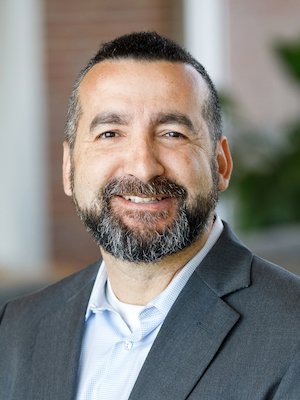
Dr. Kristin O'Grady is an Assistant Professor in the Department of Biomedical Engineering and Department of Radiology & Radiological Sciences at Vanderbilt University's School of Engineering. Her research focuses on developing quantitative MRI methodologies for the brain and spinal cord, particularly improving spinal cord MRI for neurological diseases like multiple sclerosis. She specializes in diffusion tensor imaging, functional connectivity analysis, and high-field MRI applications. Her work spans advanced imaging techniques including MP2RAGE, susceptibility-weighted MRI, and phase imaging, with a focus on clinical feasibility and disease markers. She has contributed to studies on spinal cord morphometry, paramagnetic rim lesions, and biological interactions affecting CNS structure. No scientific awards or grants are explicitly listed in the provided materials. Dr. O'Grady collaborates across interdisciplinary teams within the School of Engineering, focusing on translational research in neuroimaging technologies.
Marjan Firouznia is a Principal Research Engineer at Linköping University , affiliated with the Division of Diagnostics and Specialist Medicine (DISP) under the Faculty of Medicine and Health Sciences . With a PhD in Electrical Engineering from Amirkabir University of Technology and postdoctoral experience at institutions like Case Western Reserve University, she specializes in advancing machine learning models for precise segmentation of cardiac structures including the left atrium , epicardial fat , and fibrosis using CT and MRI scans. Her work aims to improve diagnostic accuracy and treatment planning in cardiovascular care. Marjan's research focuses on medical imaging , deep learning , and computational anatomy , with recent publications on FractalRG , FK-means , and Poincare-guided UNet for cardiac structure segmentation. Her academic contributions span 15 recent publications , emphasizing fractal geometry , chaos theory , and optimization algorithms in biomedical applications. She actively develops open-source datasets and tools, such as the FK-means codebase , to support reproducibility in medical AI research.
Kechen Zhang is an Associate Professor of Biomedical Engineering and Neuroscience at Johns Hopkins University School of Medicine. He holds affiliations with the Center for Hearing and Balance and the Kavli Neuroscience Discovery Institute. His research focuses on theoretical and computational neuroscience, particularly neural computation and spatial navigation models. Zhang earned a B.S. and M.S. from Peking University, a Ph.D. in Cognitive Science from UC San Diego, and completed a postdoc at the Salk Institute. Research Interests Zhang’s lab studies nervous system dynamics using mathematical and computational models, collaborating with experimental labs. Key areas include grid cells, place cells, path integration, oscillatory interference models, and neural coding mechanisms. His work bridges biophysical models and network-level computations. Publications Over 30 peer-reviewed articles in Neural Computation , PNAS , Journal of Neuroscience , and others, addressing topics like attractor networks, theta rhythms, and spatial representation. Recent work explores cognitive swarming and neuro-inspired robotics. Collaborations & Teaching Collaborates with Jim Knierim, Xiaoqin Wang, and others. Teaches Biomedical Systems II , Theoretical Neuroscience , and co-leads the Johns Hopkins Systems Neuroscience Journal Club.
Moo Chung is a Professor of Biostatistics and Medical Informatics at the University of Wisconsin-Madison, affiliated with the School of Medicine and Public Health. He holds additional appointments in the Department of Statistics and the College of Letters and Science. Chung earned his Ph.D. in Mathematics and Statistics from McGill University under Professors Keith J. Worsley and James O. Ramsay. His research focuses on computational neuroimaging, leveraging MRI, fMRI, and DTI to study brain dynamics through topological and geometric methods. Key areas include persistent homology, brain network analysis, and statistical modeling of high-dimensional imaging data. He has pioneered methods like hyper-network construction and exact topological inference for paired brain networks, addressing computational challenges in analyzing large-scale neuroimaging datasets. Chung’s work integrates advanced mathematical techniques such as Hodge Laplacian, spectral graph theory, and Wasserstein distances to analyze brain connectivity. He has secured NIH funding for projects like the Brain Initiative (2017-2020) and current grant MH133614 (2023), focusing on geometric data analysis and topological dynamics. His contributions include three books on brain imaging and network analysis, with ongoing research on topological data analysis applications. Awards: Vilas Associate Award (2013-2014), NIH Brain Initiative Award, Editor's Award (2011) Labs/Teams: Leads brain imaging workshops globally, including Seoul National University (2024) and POSTECH (2024), and organizes conferences like ISBI and MICCAI special sessions. Grants: NIH EB022856 (Brain Initiative), MH133614 (2023), and collaborations with institutions like Vanderbilt University and University of Chicago. Chung actively mentors students and postdocs in biomedical data science, offering fellowships through the CIBM program. His group maintains a Google mailing list for brain image analysis discussions and hosts regular seminars on methodological advancements.
Zihao Fu is a Researcher at the Oxford Internet Institute (OII), University of Oxford, where he served as a Postdoctoral Researcher from March 2024 to April 2025, focusing on the Trustworthiness Auditing for AI project. Previously, he was a Research Associate (PostDoc) at the University of Cambridge's Language Technology Lab under Prof. Nigel Collier. His research emphasizes Natural Language Processing, Text Generation, Machine Learning, and Biomedical Applications. Education includes a Ph.D. from The Chinese University of Hong Kong (supervised by Prof. Wai Lam) and a visiting student period at Tsinghua University's NLP Lab. He has substantial experience with large-scale distributed algorithms in Alibaba Cloud's PAI platform. Research interests span NLP, biomedical applications, and AI ethics, with notable contributions to datasets like BAND and frameworks like OxonFair. His work addresses challenges in text generation repetition, parameter-efficient fine-tuning, and algorithmic fairness.
Alfred Hero is the John H. Holland Distinguished University Professor of Electrical Engineering and Computer Science and the R. Jamison and Betty Williams Professor of Engineering at the University of Michigan. He is currently on leave from the University of Michigan as a Program Director in the CISE Directorate at the National Science Foundation. His primary appointment is in the Department of Electrical Engineering and Computer Science (EECS) with secondary appointments in the Department of Biomedical Engineering and the Department of Statistics. He is affiliated with multiple research centers including the UM Center for Computational Medicine and Bioinformatics (CCMB), the UM Graduate Program in Applied and Interdisciplinary Mathematics (AIM), the UM Applied Physics Program, and the Michigan Institute for Data Science (MIDAS). Hero's research focuses on data science, developing theory and algorithms for multimodality data collection, fusion, analysis and visualization using statistical machine learning and distributed optimization. His work has applications in wearable technologies for personalized health and predictive medicine, spatio-temporal networks in biology, climate, and social discourse, anomaly detection, and data analysis for international security. His research group has produced numerous PhD students who have gone on to prominent academic and industry positions. His recent publications show a strong focus on high-dimensional statistical methods, machine learning theory, network analysis, and applications in biomedical domains. The research trends indicate increasing emphasis on multimodal data fusion, robust learning algorithms, and applications to complex systems in biology and security domains. His work bridges theoretical foundations with practical implementations across diverse application areas. Fellow of the Institute of Electrical and Electronics Engineers (IEEE) Fellow of the Society for Industrial and Applied Mathematics (SIAM) Fourier Award in Signal Processing from the IEEE Hero has advised numerous PhD, MS, and undergraduate students who have gone on to successful careers in academia and industry. His research has been supported by various grants, though specific grant details are not provided in the source material. His lab collaborates extensively across disciplines with researchers in statistics, biomedical engineering, and computational medicine. The Hero Research Group maintains active collaborations with institutions worldwide and participates in major conferences in machine learning, signal processing, and data science.
Eduardo Maldonado is an Associate Professor in the Drug Discovery and Biomedical Sciences department at the College of Pharmacy, Medical University of South Carolina (MUSC) . His research focuses on mitochondrial metabolism in cancer cells, T cells, and cancer stem cells, particularly targeting mechanisms regulating Voltage-Dependent Anion Channels (VDAC) to develop therapeutic strategies. Education: DVM from Universidad Nacional del Centro (1986), PhD in Human Pathophysiology from Universidad Nacional del Sur (2001), Postdoctoral training at MUSC (2006, 2010), Predoctoral research at University of the Basque Country (1999). Research Interests: Mitochondrial metabolism regulation in cancer, VDAC-targeted small molecules, T cell immunometabolism, and cancer stem cell biology. His lab (established in 2015) explores how modulating VDAC channels through tubulin interactions or NADH-binding pockets can alter tumor proliferation and survival. Article Trends: Recent publications highlight VDAC's role in cancer bioenergetics, immunometabolic reprogramming (e.g., H2S-Prdx4 axis), and synergistic drug combinations. Earlier works emphasize mitochondrial ROS, lipid metabolism, and Golgi stress in disease contexts. Labs & Teams: Leads a research group at MUSC's College of Pharmacy, affiliated with the Developmental Cancer Therapeutics Program at Hollings Cancer Center. His work bridges mitochondrial physiology, cancer metabolism, and pharmacological intervention.
Casey Diekman is a Professor in the Department of Mathematical Sciences at New Jersey Institute of Technology (NJIT). His research focuses on mathematical and computational modeling of circadian rhythms, neural dynamics, and physiological systems. He has led NSF-funded projects, including studies on circadian clock mechanisms, neuronal data assimilation, and hybrid modeling of Alzheimer’s disease. His work integrates biophysical models with machine learning to study systems like cardiac electrophysiology and respiratory control. Roles: Professor, PI of multiple NSF grants Key Collaborations: Projects with researchers in neuroscience, cardiology, and computational biology Education & Background: While specific educational details are not provided, his academic position implies advanced training in applied mathematics or systems biology. Research Interests: Circadian rhythms, entrainment dynamics, computational modeling of biological systems, and applications in health (e.g., arrhythmias, neurodegenerative diseases). His work bridges mathematical theory and experimental data to address clinical problems like drug timing and respiratory failure. Grant Highlights: NSF GOALI (2022–2026): Integrates deep learning and mechanistic models for circadian clock neurons and Alzheimer’s disease NSF Career (2016–2021): Developed data assimilation tools for circadian rhythm studies NSF (2014–2017): Modeled circadian clock mechanisms from synapse to gene Recent Research Trends: Publications since 2022 focus on circadian impacts on drug safety, respiratory control during SARS-CoV-2 infection, and Alzheimer’s disease modeling using deep learning. His work often emphasizes interdisciplinary approaches to understand biological timing and its disruptions. Awards & Recognition: While specific prizes are not listed, his extensive grant portfolio and citation count (792) reflect scholarly impact. Advising & Grants: Oversees research teams in circadian biology and computational neuroscience. Media coverage highlights breakthroughs like explaining ‘happy hypoxia’ in COVID-19 patients and antiarrhythmic drug timing risks. Labs/Teams: Engaged in collaborative projects with institutions like NIH and other universities, focusing on systems-level biological modeling.
Eon Soo Lee is an Associate Professor in the Department of Mechanical and Industrial Engineering at the New Jersey Institute of Technology (NJIT). His primary research focuses on advanced materials engineering, biomedical microfluidics, and assistive technologies for individuals with disabilities. He has led federally funded projects including 'I-Corps: Multiplex Diagnostic Assay Using Interdigitated Nano-Sensing Technology' (NSF, 2023-2025) and 'Innovative Nano Catalysts for Automobile and Fuel Cell Applications' (NSF, 2018). Research Interests: Lee's work spans interdisciplinary areas including: Development of N-doped graphene/MOF composites for energy applications Microfluidic systems for blood plasma separation and antigen detection Design of accessible technologies for visually impaired users, including VR audio descriptions and remote sighted assistance systems Grants and Projects (select): National Science Foundation (2023): $500K for multiplex diagnostic assays National Science Foundation (2018): $300K for nano-catalysts in fuel cells Multiyear collaborations with industry partners on biosensor integration Innovation Highlights: Developed AIGuide: AR hand-guidance system for visual impairments Pioneered omnidirectional audio descriptions for VR music performances Published extensively in Carbon , Biomicrofluidics , and ACM/IEEE accessibility venues
Baldassarre D'Elia is a Researcher affiliated with the Department of Bioengineering at University of Roma Tre, associated with BioLab³. He holds a MSc in Electrical Engineering (1992) and PhD from Sapienza University of Rome (1996), followed by postdoctoral research there (2000). Since 2010, he has been involved in the Bioengineering Doctoral School at Roma Tre. His research focuses on neuroengineering applications in rehabilitation, particularly using haptic systems to aid post-stroke and Parkinson's patients. He explores movement regularity metrics in elderly populations through haptic feedback analysis. Education: MSc (Electrical Engineering, Sapienza 1992), PhD (Sapienza 1996), Postdoc (Sapienza 2000), current involvement in Roma Tre's Bioengineering Doctoral School. Research emphasizes haptic platforms for motor learning, quantifying movement parameters using kinematic data. His work bridges clinical needs with engineering solutions, addressing both neurological disorders and geriatric rehabilitation challenges. Publications (2012–2016) highlight studies on haptic feedback efficacy, comparison of visual/haptic modalities, and development of analytical frameworks for rehabilitation metrics. No awards explicitly mentioned but active in international conferences (ECCE, ICNR, Mediterranean Conferences). Associated with BioLab³, focusing on interdisciplinary projects combining neuroengineering and clinical applications. No formal advising role documented in provided texts.
Vassilis P. Plagianakos is an Associate Professor at the Department of Computer Science and Biomedical Informatics, University of Thessaly, Greece. He has held visiting academic roles at the University of the Aegean, University of Patras, and University of Central Greece. He currently serves as the Department Head and Director of the postgraduate program Informatics and Computational Biomedicine in the School of Sciences. His research focuses on machine learning, neural networks, bioinformatics, and parallel computing with applications in healthcare and education. Education : Bachelor’s in Mathematics (1996), University of Patras Ph.D. in Mathematics (2003), University of Patras Research Interests : Plagianakos explores neural networks, evolutionary algorithms, and machine learning applications in bioinformatics, medical diagnosis, and educational technology. His work bridges computational methods with real-world challenges in healthcare (e.g., precision medicine) and STEM education (e.g., flipped classrooms, AI integration). Recent Trends in Publications : Recent work emphasizes predictive precision medicine using big data, blockchain scalability solutions, and AI ethics in automated content detection. He has pioneered methods like the HCER hierarchical clustering-ensemble regressor and developed tools for analyzing single-cell RNA sequencing data. Professional Activities : Member of IEEE Neural Networks Society, IEEE BBTC, and former Board Member of the Hellenic AI Society. Active in collaborative projects like CrowdHEALTH for policy-driven health data analytics.
Dr Himashi Peiris is a Research Fellow in the Department of Data Science & AI at Monash University's Faculty of Information Technology in Australia. She holds a PhD in Biomedical Engineering from Monash University (2024) and a Bachelor's in Information Technology from the University of Moratuwa, Sri Lanka. Her work focuses on semi-supervised learning, medical image analysis, and AI-driven healthcare solutions. She has over three years of industry experience in software engineering. Research interests include developing machine learning algorithms for medical imaging challenges, particularly in scenarios with limited labeled data. Her innovations span neural networks, transformer architectures, and uncertainty-guided segmentation techniques applied to MRI, CT scans, and biomedical datasets. Her publications in Nature Machine Intelligence and MICCAI conference highlight contributions to semi-supervised segmentation and AI-driven diagnostic tools. Notable collaborations include the development of PINGU for perivascular space identification and adversarial networks for construction waste recognition. Awards include the 2023 Victorian Biomedical Imaging Capability Early Career Award and 2023 IEEE ACS Student Writing Award. Her work has been featured in media outlets and Mendeley platforms, emphasizing AI's role in medical decision-making.
Clemens V. Verhoosel is an Associate Professor in Computational Methods for Model- and Data-Driven Engineering at Eindhoven University of Technology (TU/e). He holds positions in the Department of Mechanical Engineering under the Energy Technology and Fluid Dynamics section, and is affiliated with the EAISI Foundational initiative. His research focuses on scan-based immersed isogeometric analysis, uncertainty quantification, and Bayesian inference for complex engineering problems. He leads the Group Verhoosel and manages the Engineering Mechanics Graduate School since 2018. Education: MSc (Aerospace Engineering, TU Delft, 2005, cum laude PhD, TU Delft, 2009). Postdoctoral research at University of Texas at Austin (2009-2010). Awarded NWO VENI Grant (2011). Research interests include numerical methods for solid mechanics, fluid dynamics, coupled problems, and applications in biomedical engineering (e.g., cardiac mechanics). He develops open-source tools like the Nutils toolkit and collaborates with industry partners such as Evalf Computing. Key contributions include isogeometric analysis for fracture mechanics, phase-field models, and mesh-free simulation workflows. Honors: NWO Veni Award (2011). Teaching includes Advanced Discretization Techniques and Scientific Computing courses. Active in professional activities, including invited talks on cardiac mechanics and computational methods.
David B. Grayden is a Professor at The University of Melbourne, affiliated with the Melbourne School of Engineering and the Department of Electrical and Electronic Engineering . His work spans Biomedical Signal Processing , Computational Neuroscience , and Brain-Computer Interfaces (BCI) , focusing on applications in Epilepsy Research and Cochlear Implants . Melbourne Neural Engineering Laboratory member Collaborator in multidisciplinary biomedical research Key research interests include: Developing Seizure Prediction Algorithms using long-term EEG/iEEG data Neural mass modeling for Epilepsy and Inhibitory Network Behavior Optimizing Cochlear Implants via computational models Advancing Endovascular BCI Systems and Neural Stimulation Recent publications highlight trends in Machine Learning , Path Signatures , and Multi-Frequency Stimulation for SSVEP-based BCIs . His work integrates Computational Modeling with Biomedical Engineering to address clinical challenges in neuroprosthetics and sensory processing. Grayden leads projects on Neural Network Dynamics , Biomedical Signal Analysis , and Neurostimulation , often collaborating with institutions like Monash University and Royal Melbourne Hospital .
Kim Cluff is a Professor and IACUC Chair at Wichita State University. Her research focuses on wearable sensing systems, biomedical engineering, and aerospace applications, with a particular emphasis on non-invasive monitoring of biofluid dynamics and medical diagnostics. She has developed novel sensors for applications ranging from aerospace health monitoring to patient-specific medical systems. Her work integrates advanced materials like PVDF and dielectric elastomers with electromagnetic and RF technologies to create innovative diagnostic tools. Key projects include skin patch resonators for fluid volume measurement and systems for real-time organ motion management in medical therapies. Publications highlight contributions to biomedical sensor design, including CO₂ gas detection and shoulder joint clearance monitoring in space suits. Though no grants or awards are explicitly listed, her research has been applied in clinical contexts such as peripheral artery disease diagnostics and cancer treatment systems. A lab website exists for her main campus research activities, though specific lab details are not provided in the text.