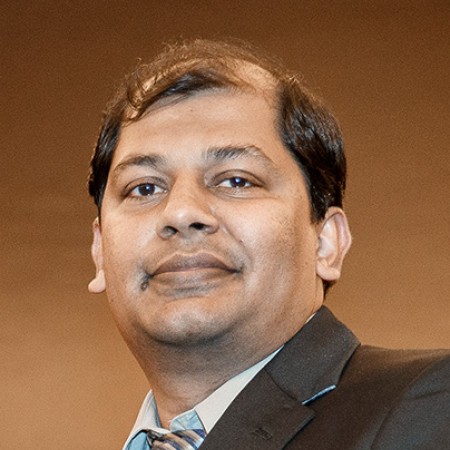
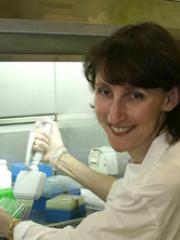
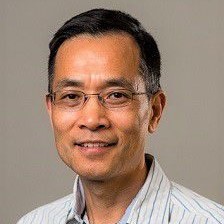
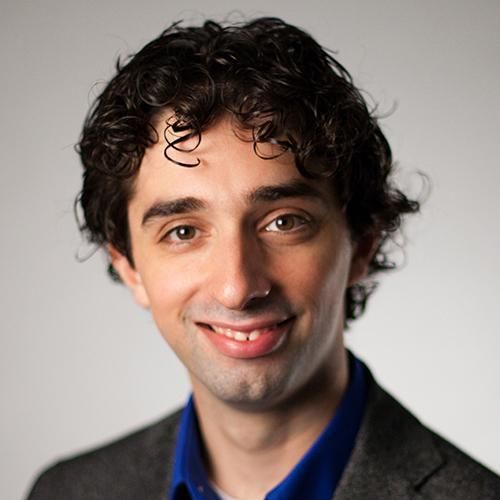
Dr. Babar Jamil is a Lecturer in Electrical Engineering at the University of York's School of Physics, Engineering and Technology. His expertise spans robotics, sensors, control engineering, and mechanism design. He holds a Ph.D. from Hanyang University (South Korea) and conducted postdoctoral research at Sungkyunkwan University, where he also served as a Research Professor. His current research focuses on safe human-robot collaboration systems, novel control algorithms for robotic systems, and smart structures through sensor integration. Education: Ph.D. in Electrical and Electronic Engineering, Hanyang University, South Korea Postdoctoral Researcher, Sungkyunkwan University, South Korea Research Interests: Developing hybrid robotic manipulators combining soft and rigid actuation Designing proprioceptive sensors for extreme environments Advances in pneumatic artificial muscles and soft actuators Integration of machine learning in robotics control systems Publications: Recent work emphasizes soft robotics actuators, sensor design, and human-robot interface innovations. Key themes include energy-efficient actuation, sensorized robotic fingers, and pumpless pneumatic systems. Labs/Teams: Leads robotics research at York, focusing on collaborative robotics and sensor-actuator integration. Maintains an active research group through his UoY Robotics website .
Raul Sanchez Reillo is a Full Professor at Universidad Carlos III de Madrid (UC3M), affiliated with the Grupo Universitario de Tecnologías de Identificación (GUTI). His research focuses on biometric systems, mobile authentication, and security technologies. Key areas include presentation attack detection, vein recognition, and ECG biometrics. He leads projects involving smartphone-based biometric solutions, 3D printed markers, and standards development for biometric interoperability. Research interests span multiple modalities: fingerprint authentication, dynamic signature verification, gait recognition, and vascular biometrics. He emphasizes usability and accessibility in mobile environments, exploring ergonomics and user interaction challenges. His work integrates machine learning (transformers, RNNs) with hardware solutions like FPGA-based systems. Publications highlight innovations in spoofing detection, medical applications (ECG/vein analysis), and low-cost hardware implementations. He contributes to European standards (BioAPI, Hand Data Interchange Format) and evaluates security practices for R&D compliance with EU data protection regulations. Current initiatives include enhancing biometric systems for critical infrastructure security and improving accessibility for elderly users. Active in interdisciplinary collaborations, he leads the Mobile Pass project evaluating user interaction in biometric systems. His lab (GUTI) develops open testing methodologies for biometric performance under Common Criteria and environmental stressors. Recent work addresses vulnerabilities in mobile fingerprint sensors and the ethical implications of biometric-as-a-service models.
Luis Filipe Santos is an Associate Professor at the Department of Chemical Engineering, Instituto Superior Técnico (University of Lisbon), specializing in Physical Chemistry, Materials, and Nanosciences. His research focuses on rare-earth doped glasses, glass ceramics for non-linear optics, and advanced material characterization methods. Research Interests Rare-earth doped glasses for optical applications Medical applications of Raman spectroscopy Materials characterization using vibrational spectroscopy Development of functional materials for optoelectronics Structural analysis of advanced materials Recent Research Trends His work emphasizes optical materials (e.g., glass ceramics with enhanced luminescence), biomedical applications (e.g., drug delivery systems), and advanced characterization techniques such as X-ray scattering and Raman spectroscopy. Recent studies explore ion-exchanged materials, thermoelectric compounds, and polymer-modified conductive films. Grants & Advising He has advised numerous interdisciplinary projects involving material synthesis, optical device development, and biomedical coatings. His research is supported by grants focusing on energy materials, biomaterials, and advanced manufacturing. Labs & Teams He leads the Center for Structural Chemistry (CQC) at IST, collaborating with multidisciplinary teams in photonics, energy materials, and biomedical engineering.
Weipeng Zhou is a Postdoctoral Associate at the Yale School of Medicine within the Department of Biomedical Informatics and Data Science . Working under Professor Hua Xu , he specializes in pre-training and evaluating large medical language models using electronic health records and medical claims data. His work bridges Natural Language Processing , Biomedical Data Science , and Clinical Informatics to address critical healthcare challenges. PhD in Medical Informatics from the University of Washington (2025) Bachelor's in Computer Science and Statistics from the University of Wisconsin (2019) His research involves NLP/LLM applications in healthcare domains such as: Long COVID characterization and prediction Cardiovascular disease analysis Suicide prevention through clinical text mining Clinical note section identification Emerging water contaminant detection via PubMed article analysis His publications focus on model transferability , automated cohort discovery , and contextual health research tools . Notable collaborations include work with teams at University of Washington and Yale .
P.L.Stephan Thamban is a Senior Lecturer II in the Department of Mechanical Engineering at the Erik Jonsson School of Engineering and Computer Science, The University of Texas at Dallas (UTD). He holds a PhD (2005) and MS (2002) in Mechanical Engineering from UTD. His research focuses on plasma processing, semiconductor manufacturing, and advanced material characterization techniques. Key research interests include plasma etching, biocompatible material synthesis, optical emission spectroscopy, and thin film technologies. His work emphasizes process optimization, real-time diagnostics, and plasma chemistry analysis. Recent publications explore gas mixtures for silicon etching, pulsed plasma synthesis for biomedical applications, and endpoint detection systems for semiconductor fabrication. Awards: 2011 Recognition for inventive contribution at UTD; 2011 AVS International Symposium moderation invitation Thamban's contributions bridge plasma physics and engineering applications, with instrumentation innovations for semiconductor manufacturing. His research spans interdisciplinary areas including material science, biomedical engineering, and nanoscale processing.
Kevin M. Daniels is an Associate Professor in the Department of Electrical and Computer Engineering at the University of Maryland, with a joint appointment at the Institute for Research in Electronics and Applied Physics and the Robert E. Fischell Institute for Biomedical Devices. He holds a B.S., M.E., and Ph.D. in Electrical Engineering from the University of South Carolina. Before joining UMD, he was a National Research Council Postdoctoral Fellow at the U.S. Naval Research Laboratory, studying wide bandgap materials and epitaxial graphene. His research focuses on two-dimensional materials, particularly graphene and transition metal dichalcogenides, for applications in environmental and biological sensors, quantum devices, and plasmonics. He has co-authored over 45 publications and secured grants including the NSF CAREER Award (2021) for gas sensing innovations. His lab, the Dimensional Materials Laboratory, develops advanced sensors with high sensitivity and selectivity, including a graphene biosensor for rapid SARS-CoV-2 detection. Dr. Daniels teaches courses in micro/nanoelectronics, solid-state physics, and advanced manufacturing. He advises multiple doctoral students and has mentored postdocs like Dr. Soaram Kim, now at Texas A&M. His work spans collaborations with institutions like the University of Wisconsin-Madison and industry partners such as Flu Lab LLC. Key Awards : NSF CAREER (2021), George Corcoran Teaching Award (2019) Grants : $1.34M from Flu Lab LLC (2023), NSF I-Corps (2024), MDDF commercialization funding (2021) Labs : Dimensional Materials Laboratory (specializing in 2D materials and heterostructures)
Peter F. Swaszek is a Professor in the Department of Electrical, Computer and Biomedical Engineering at the University of Rhode Island. His contact details include phone: 401.874.5802, email: swaszek@uri.edu, and office location: Fascitelli Center for Advanced Engineering, Rm 492. Education: Ph.D., Electrical Engineering, Princeton University, 1982 M.S., Electrical Engineering, Princeton University, 1979 B.S., Electrical Engineering, New Jersey Institute of Technology, 1978 Research Focus: Professor Swaszek specializes in Digital Communications Systems and Electronic Navigation Systems. His work spans signal detection, vector quantization, GNSS spoofing mitigation, celestial navigation optimization, and satellite positioning technologies. Recent publications emphasize maritime security, high-latitude navigation challenges, and innovative positioning methods like R-Mode. Publication Trends: His 2018–2020 articles cluster around enhancing navigation resilience, with themes including spoof detection (using bearing measurements), celestial navigation refinements, and satellite system performance limits. This reflects a consistent focus on reliability and security in electronic navigation.
Muhammed Said Boybay is an Associate Professor at the Department of Electrical and Electronics Engineering, Faculty of Engineering, Iğdır University. His academic journey includes a PhD in Electrical and Computer Engineering from the University of Waterloo (2004-2009), with a thesis on 'Sensitivity Enhancement of Near Field Probes Using Negative Materials', and a Bachelor's degree from Bilkent University's Electrical and Electronics Engineering program (2000-2004). His research focuses on microwave engineering, metamaterials, microfluidics, and sensing technologies. He has pioneered work on microwave-based microfluidic systems, metamaterial sensors for material characterization, and non-destructive evaluation techniques using resonant structures. His contributions include developing high-throughput sensing methods for individual droplets in microfluidic devices and integrating microwave heaters for thermo-capillary mixing. Boybay has authored over 20 peer-reviewed articles, with recent work emphasizing hydrogen sensing via palladium-based resonators and beam steering using dispersive superstrates. He has supervised three graduate students, including doctoral candidate Gürkan Yeşilöz and master's graduates Hasan Önder Yılmaz and Ayşegül Musul. He has held administrative roles such as Head of the Department of Electrical and Electronics Engineering at Iğdır University and Deputy Dean at International Antalya University. His teaching spans undergraduate courses like Electromagnetic Field Theory and graduate modules in Antenna Engineering and RF Design. Notably, he contributed a chapter on 'Microwave in Microfluidics' to the 2nd Edition of the Encyclopedia of Microfluidics and Nanofluidics .
Professor Elizabeth Gillam is a Professor in the School of Chemistry and Molecular Biosciences at the University of Queensland (UQ). Her research focuses on cytochrome P450 enzymes, exploring their roles in drug metabolism, biocatalysis, and evolutionary adaptations. She investigates how these enzymes enable organisms to metabolize diverse chemicals, including drugs, pollutants, and natural products, with applications in drug discovery, bioremediation, and synthetic biology. Education: BSc(Hons) in Biochemistry from UQ, PhD from Oxford University, and postdoctoral training at Vanderbilt University. She joined UQ in 1993 and became a Professor of Biochemistry in 2009. Research Interests: Gillam’s work emphasizes directed evolution of P450 enzymes to enhance catalytic efficiency and specificity. Her lab studies P450 involvement in neurodegenerative diseases, plant defense mechanisms, and solar-powered biocatalysis. She employs ancestral sequence reconstruction to engineer thermostable enzymes, advancing their industrial and biomedical applications. Articles Overview: Her recent work highlights the evolutionary plasticity of P450s, their roles in plant signaling (e.g., strigolactones), and the development of biocatalysts for drug discovery. Studies also address P450-mediated detoxification pathways in vertebrates and photosynthesis-linked catalytic systems. These projects underscore her lab’s interdisciplinary approach, bridging biochemistry, evolution, and biotechnology.
Enrico Macii is a Full Professor at the Politecnico di Torino, affiliated with the Interuniversity Department of Regional and Urban Studies and Planning (DIST) and the Department of Control and Computer Engineering (DAUIN). He leads the Electronic Design Automation (EDA) research group and holds key roles as Scientific Advisor for the Politecnico-STMicroelectronics partnership and Scientific Contact for the European Chips Joint Undertaking. Research Interests: His work spans digital circuits and systems, energy efficiency, smart cities, Industry 4.0, and smart manufacturing. He focuses on embedded and cyber-physical systems, low-power design, neuromorphic computing, AIoT, and sustainable urban development. Recent Publications: His recent research demonstrates strong trends in edge AI, neuromorphic computing, and smart energy systems. Articles highlight innovations in low-power hardware acceleration, federated learning, physics-informed AI, and digital twin applications for urban and industrial systems. There is a clear emphasis on deploying AI efficiently on constrained devices and integrating physical models with machine learning. J. William Fullbright Fellowship (1993) Best paper award IEEE European Design Automation Conference (1996) Best paper award ACM/IEEE Great Lakes Symposium on VLSI (2008) DAC Service Award (2014) IEEE Fellow (2006) DATE Fellow (2014) Advising and Grants: He has supervised over 25 PhD students in computer engineering, AI, and urban systems. His research is funded by major EU programs (Horizon 2020, PNRR, KDT JU), national (PRIN, FAR), and regional grants, as well as industrial contracts with STMicroelectronics, Michelin, and Cefriel. He leads numerous high-impact projects in smart manufacturing, energy efficiency, and digital twins. Labs and Teams: He is a core member of the EDA Group, an interdepartmental research team at Politecnico di Torino focusing on VLSI-CAD, bioinformatics, smart cities, and Industry 4.0. He also contributes to IAM@PoliTo (Integrated Additive Manufacturing) and leads multiple EU and national research consortia.
Zhonghua Peng is a Curators' Distinguished Professor at the University of Missouri-Kansas City (UMKC), part of the School of Science and Engineering. He joined UMKC in 1998 as an Assistant Professor, progressing to Associate Professor (2001), Full Professor (2003), and his current distinguished rank (2014). His research focuses on developing functional organic, inorganic, polymeric, and hybrid materials for optoelectronic and biomedical applications. Education: B.S. in Geochemistry, University of Science and Technology of China (USTC), 1989 M.S. in Engineering, Chinese Academy of Sciences, 1992 Ph.D. in Organic/Polymer Chemistry, University of Chicago, 1997 Research emphasizes multifunctional materials for electronics, optics, and biomedical uses. His work bridges chemistry and engineering, with applications in optoelectronics and biomedicine. Recipient of the Curators' Distinguished Professor title, UMKC's highest faculty honor.
Assoc. Prof. Dr. Arife Yurdakul is a faculty member in the Department of Metallurgical and Materials Engineering at Düzce University’s Faculty of Engineering, Turkey. She currently holds the academic rank of Associate Professor and actively contributes to both teaching and research in advanced ceramics and composite materials. Research Focus: Ceramic matrix composites and zirconia-based toughening mechanisms Processing of yttria-, ceria-, and magnesia-stabilized zirconia powders and sintered bodies Glass-fiber reinforcement in cementitious and polymer matrices Microstructural characterization from macro to atomic scale using electron microscopy Industrial applications including welding pins, ceramic bushings, and dental ceramics Across sixteen peer-reviewed publications (2009-2025), Dr. Yurdakul demonstrates a sustained trajectory in engineering high-performance ceramics. Her recent work emphasizes co-doped zirconia composites that achieve simultaneous gains in hardness and fracture toughness, while earlier studies systematically explored glass fiber durability in alkaline environments and novel glass compositions optimized for fiber drawing. Scientific Awards & Distinctions: No specific awards or honors are mentioned in the provided materials. Advising & Funding: No named graduate students, ongoing projects, or grant details are supplied. Laboratories & Teams: While the Faculty of Engineering at Düzce University hosts modern ceramics and microscopy laboratories, explicit laboratory affiliations or research group names are not stated.
Igor Simone Stievano is a Full Professor at the Polytechnic University of Turin , affiliated with the Department of Electronics and Telecommunications (DET) and the Interdepartmental Center Ec-L - Energy Center Lab . He holds a PhD in Electrical Engineering and has supervised numerous students in disciplines spanning electromagnetic compatibility, machine learning, and multi-energy networks. His research interests include: Modeling and simulation of integrated circuits Machine learning for signal integrity Multi-energy network resilience Stochastic analysis of electrical systems Electromagnetic compatibility Key projects include the EU-funded SHIMMER initiative on hydrogen injection in gas networks and commercial contracts for high-speed I/O macromodeling. He serves as a chair and committee member at major conferences like the IEEE Workshop on Signal and Power Integrity. Scientific recognitions : IEEE Senior Member Recipient of the 2013 Futuro in Ricerca grant Editorial Board member of ENERGIES (2020-) Stievano actively participates in PhD college evaluations for Mathematical Sciences and Metrology programs at Politecnico di Torino, while teaching courses in Electrical Engineering and Digital Technologies across biomedical, computer, and media engineering curricula.
Jonathan Viventi is the Hawkins Family Associate Professor of Biomedical Engineering at Duke University, with additional appointments as Assistant Professor in Neurosurgery and Neurobiology, and as a Faculty Network Member of the Duke Institute for Brain Sciences. His research focuses on developing flexible, high-resolution neural interfaces for diagnosing and treating neurological disorders, particularly epilepsy, and advancing brain-machine interfaces. Education: Ph.D. in Engineering from the University of Pennsylvania (2010). Research Interests: Dr. Viventi's work centers on flexible electronics for high-resolution brain interfacing . Key areas include: Micro-electrocorticography (μECoG) arrays with thousands of channels Wireless, fully implantable neural prosthetics for speech restoration Real-time seizure detection and prediction systems Chronic biointegration of soft electronic materials Translational applications in epilepsy, stroke, and Parkinson's disease Scientific Awards: MIT Technology Review Innovators Under 35 (2014) Popular Science Brilliant 10 (2014) Grants & Funding: Dr. Viventi leads multiple NIH-funded projects including: A Wireless µECoG Prosthesis for Speech (2021-2026) Neuro-CROWN: Optimized Ultra-Flexible CMOS Electrode Arrays (2021-2025) Next-Generation Wireless Intracranial Arrays for Post-traumatic Epilepsy (2021-2025) Laboratory & Teams: His lab develops cutting-edge neural interface technologies, collaborating across engineering, neuroscience, and clinical departments at Duke to translate flexible electronics into therapeutic devices.
Dr. Bai Ziqian is an Assistant Professor in the School of Automation and Intelligent Manufacturing at Southern University of Science and Technology (SUSTech) in Shenzhen, China. Recognized as a Pujiang Scholar and Shenzhen Pengcheng Peacock Talent, she has established herself as a leading researcher at the intersection of wearable technology, textile engineering, and human-computer interaction. Her work bridges technical innovation with practical design applications, focusing on user-centered solutions that enhance human experience through technology integration. Dr. Bai's educational background includes: PhD in Smart Wearable Product Design (2011-2015), Hong Kong Polytechnic University MA in Fashion and Textile Design (2005-2006), Hong Kong Polytechnic University BA in Fashion Design and Engineering (2001-2005), South China Agricultural University Her research spans wearable technology, tangible interactive interfaces, IoTs, ergonomics, functional garments, wearables for healthcare, material innovation, smart home applications, and user-centered design. Dr. Bai has pioneered work in smart wearable fabrics and sensing mechanisms based on flexible materials, with a particular focus on human-computer interaction theory and practice. She has established a research team that has mastered key technologies in smart fabrics, interactive textiles, physiological signal monitoring, and human-computer interaction systems. Her approach consistently emphasizes user-centered design principles, ensuring that technological innovations serve practical human needs while maintaining aesthetic appeal. Dr. Bai's publication record demonstrates a clear evolution from foundational work in photonic textiles toward increasingly sophisticated wearable healthcare and human-computer interaction systems. Her recent publications focus on advanced sensor technologies, energy harvesting for wearables, and sophisticated data analysis for human motion and physiological monitoring. The interdisciplinary nature of her work is evident in publications spanning materials science, biomedical engineering, textile technology, and design methodology, with papers appearing in high-impact journals including Advanced Functional Materials (IF: 19.5), ACS Sensors (IF: 8.9), and Computers in Industry (IF: 10). Dr. Bai has received numerous prestigious awards that highlight both the technical and artistic dimensions of her work: 2024 German Red Dot Design Award for Best Design 2013 Neo-Neon, permanent collection at China Silk Museum (State grade 1 museum) 2019 Finalist, ThermoBlanket, TechStyle for Social Good International Competition 2017 1st Prize Teaching Award, Donghua University 2017 China National Textile and Apparel Council Teaching Award Multiple Service Learning Awards from Hong Kong Polytechnic University She has successfully secured research funding from prestigious sources including the National Natural Science Foundation of China and Guangdong Province's General Project. Her projects include a collaborative effort with the Guangdong Provincial Department of Education and Li Ning Company on a 'flexible wearable lower limb functional electrical stimulation system.' Dr. Bai has extensive teaching experience across multiple institutions and has guided student teams to success in national competitions. She currently leads the Human-Computer Interaction Design Laboratory (HCID) at SUSTech, which focuses on advanced design, engineering, and technology research at the intersection of disciplines, training the next generation of interdisciplinary designers and engineers.