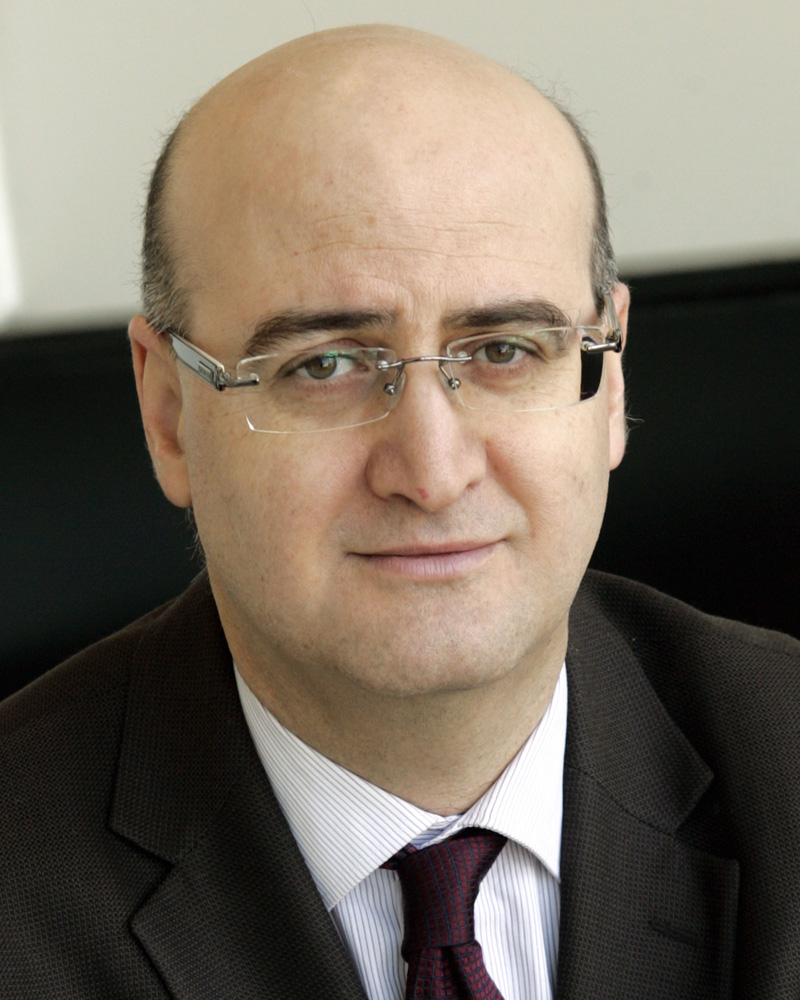
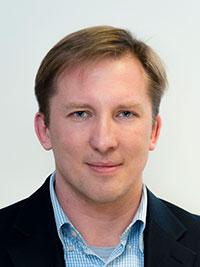
Univ.-Prof. Torsten Möller, PhD is a Professor at the University of Vienna and serves as Head of the Research Group Visualization and Data Analysis and Head of the Research Network Data Science. His work spans data visualization, visual analytics, and human-computer interaction, with a focus on biomedical, environmental, and societal data applications. Academic rank: Professor Research group: Visualization and Data Analysis Network: Data Science Email: torsten.moeller@univie.ac.at Research interests include: Visual data analysis for complex systems Interdisciplinary applications in climate science and medicine Human-computer interaction in data exploration Image processing and computer graphics Recent publication trends show expertise in: Visualizing climate change and pandemic data Multi-volumetric and network analysis Algorithmic transparency and user-centered design Interdisciplinary collaborations (e.g., astrophysics, medical imaging) Statistical and uncertainty visualization Design frameworks for visualization recommendation Teaching includes courses in: Computer graphics and visualization Image processing and analysis Human-computer interaction Data analysis projects Doctoral research seminars
Alan Bovik is the Cockrell Family Regents Endowed Chair Professor in the Department of Electrical and Computer Engineering at The University of Texas at Austin's Cockrell School of Engineering. He also holds positions at The Institute for Neurosciences and serves as Director of the Laboratory for Image and Video Engineering (LIVE). With a career spanning over three decades at UT Austin, he has progressed from Assistant Professor (1984-1988) to Associate Professor (1988-1994) to his current position as Full Professor (1994-present). Dr. Bovik received his Ph.D. in Electrical and Computer Engineering in 1984 from the University of Illinois, Urbana-Champaign. Professor Bovik's research focuses on image and video quality assessment, visual perception, and digital media processing. He is renowned for developing groundbreaking algorithms including the Structural Similarity (SSIM) index, Visual Information Fidelity (VIF), and various blind quality assessment models like BRISQUE and NIQE. His work bridges engineering and neuroscience, creating perception-based models that optimize visual media delivery while reducing bandwidth consumption. These innovations have had profound industry impact, with his algorithms processing a significant proportion of global internet video traffic. His recent publications demonstrate continued leadership in perceptual quality assessment, with increasing focus on AI-generated content, high dynamic range (HDR) video, and novel applications in medical imaging. The research shows a clear trajectory toward more sophisticated, neural network-based quality metrics that better align with human visual perception across diverse content types. Professor Bovik has received numerous prestigious awards recognizing his contributions to the field: John Fritz Medal (2024) IEEE Edison Medal (2022) IAMB BaM Award (2022) Elected to the United States National Academy of Engineering (2022) Technology and Engineering Emmy Award (2021) IEEE Fourier Award for Signal Processing (2019) Progress Medal from The Royal Photographic Society (2019) Named Honorary Fellow of The Royal Photographic Society (2019) Primetime Emmy Award (2015) Edwin H. Land Medal from The Optical Society (2017) As Director of the Laboratory for Image and Video Engineering (LIVE), Professor Bovik has secured substantial research funding from organizations including the National Science Foundation and the National Institute for Standards and Technologies. His lab has produced numerous influential datasets including the LIVE Image and Video Quality Databases. He has mentored many successful students who have gone on to make significant contributions in academia and industry, though specific student names are not provided in the source materials. The Laboratory for Image and Video Engineering (LIVE) under Professor Bovik's direction has become a world-renowned center for research in perceptual image and video quality. The lab maintains close collaborations with major technology companies including Netflix, Amazon, and YouTube, ensuring that research has direct practical applications. LIVE has developed numerous influential tools and databases that are widely used in both academic research and industrial applications worldwide.
Claudia Plant is a Professor in the Faculty of Computer Science , leading the Research Group Data Mining and Machine Learning . Her research focuses on clustering algorithms, data mining, and machine learning applications in areas like biomedical data, wind energy, and causality inference. She has contributed to projects such as Knowledge-infused Deep Learning for Natural Language Processing (2020–2028) and Hybrid Computational Sciences (2021–2021). Plant has authored over 160 publications, with recent work emphasizing deep learning, anomaly detection, and GPU-optimized algorithms. She actively engages in academic activities, including talks on clustering methods and interdisciplinary projects like Governing Algorithms: The Politics of Data and Decision-Making . Her research interests span clustering algorithms , graph neural networks , causality discovery , and ethical digital transformation . Notable projects include causal analysis of wind farm dynamics and AI-enhanced education tools. Plant’s work bridges computational methods with societal challenges, such as empowering marginalized communities through ethical technology adoption.
Professor Moncef Gabbouj is a distinguished academic and researcher currently serving as Professor of Signal Processing at the Department of Computing Sciences, Faculty of Information Technology and Communication Sciences, Tampere University, Finland. Previously, he held the same position at Tampere University of Technology before the merger in 2019. He has also held visiting professorships at prestigious institutions including Hong Kong University of Technology and Science, University of Southern California, and Purdue University. Ph.D. and MSc. in Electrical Engineering from Purdue University, USA (1989 and 1986) B.Sc. in Electrical Engineering from Oklahoma State University, USA (1985) Prof. Gabbouj's research spans multiple domains within signal and image processing, with a strong focus on machine learning applications. His primary research interests include artificial intelligence, machine learning, Big Data analytics, multimedia content-based analysis, indexing and retrieval, nonlinear signal and image processing, voice conversion, and video processing and coding. His work bridges theoretical advancements with practical applications across various industries, particularly in multimedia communications and biomedical applications. His extensive publication record demonstrates a clear evolution from traditional signal processing techniques toward more sophisticated machine learning and deep learning approaches. Recent work shows increasing focus on convolutional neural networks for various applications including ECG classification, video processing, financial time-series analysis, and image recognition tasks, reflecting the broader trend in the field toward deep learning methodologies while maintaining strong foundations in signal processing theory. IEEE Fellow (2011) Member, Finnish Academy of Science and Letters (2014) Knight, First Class, of the Order of the White Rose of Finland (2006) Nokia Foundation Recognition Award (2005) Nokia Foundation Visiting Professor Award (2012) Finnish Cultural Foundation for Art and Science Award (2017) TUT Foundation Grand Award (2015) Prof. Gabbouj has supervised 64 doctoral and 72 Master's theses, demonstrating his significant contribution to academic mentoring. His research has been supported by substantial funding, including research grants totaling 8.5 million Euro (2001-2015). He has served as Academy of Finland Professor during 2011-2015 and has been involved in numerous EU research projects including Horizon, ESPRIT, HCM, IST, COST, Tempus and Erasmus programs. As Editor, Guest Editor or member of the Editorial Board of 6 international scientific journals, he has significantly influenced the academic discourse in his field. He leads the Signal Analysis and Machine Intelligence (SAMI) research group at Tampere University and serves as the Finland Site Director of the NSF IUCRC funded Center for Visual and Decision Informatics. His research unit focuses on applying advanced machine learning techniques to solve complex problems in signal processing, computer vision, and multimedia analytics, with applications ranging from healthcare to multimedia communications and financial analysis.
Julian Jauk is a Researcher at the Institute for Architecture and Media, TU Graz. His work focuses on innovative material systems, digital fabrication, and sustainable architectural design. He explores the integration of clay composites, mycelium-based materials, and knitted structures with advanced manufacturing techniques like 3D printing. Key research themes include lightweight ceramic structures, biocomposite materials, and computational design methodologies. His research emphasizes material-driven innovation, structural optimization, and environmental sustainability. Notable projects include MyCera (clay-mycelium composites) and ClayKnit (3D-printed clay-knitted hybrids). He also investigates mixed reality tools for architectural sketching and kinetic architectural prototypes. Publications from 2021–2024 highlight trends in bio-based materials, additive manufacturing, and material-property analysis. His work bridges traditional craftsmanship with cutting-edge digital fabrication, aiming to redefine sustainable building practices.
Professor Robert Eason is a leading academic at the University of Southampton, specializing in photonics and laser technology. His research spans interdisciplinary areas combining Machine Learning , Medical Diagnostics , and Microfluidics . Research Interests : Eason focuses on AI-driven laser applications, including deep learning for phototherapy , autonomous laser machining , and low-cost paper-based diagnostic devices . His work bridges photonics with biomedicine and advanced manufacturing. Recent Publications : His 2025 article in Scientific Reports explores AI simulations for psoriasis treatment, while 2024-2022 works address laser-controlled microfluidics, deep learning in microscopy, and reinforcement learning for laser machining. Supervision : He supervises PhD student Georgia Mourkioti in laser-based research projects. External Roles : Eason has served as a speaker at international conferences including the International Symposium on Laser Precision Microfabrication (2018), LAISER (2019), and Deep Learning for Control of Light-Matter Interactions (2022).
Ivan Viola is an Associate Professor at the Institute of Computer Graphics and Algorithms, part of the Faculty of Informatics at TU Wien, Austria. He holds a leave of absence until December 2024 while also being affiliated with King Abdullah University of Science and Technology (KAUST) as an Associate Professor funded by the Vienna Research Groups program. His research focuses on visualization techniques in medicine, biological sciences, and earth sciences, with a specialty in illustrative visualization and DNA-nanotechnology applications. Viola has contributed over 100 scientific works and serves as a reviewer and panelist for major conferences in computer graphics and visualization. Education: M.Sc. (2002) and Ph.D. (2005) in Computer Graphics from TU Wien. Postdoctoral research at the University of Bergen (2006-2011), where he became Full Professor before returning to TU Wien. Research Interests: Whole-cell visualization Molecular modeling Interactive 3D environments Biomedical visualization Data-driven colormap techniques Awards: IEEE VIS 2017 Best Paper Honorable Mention, 'Best Overall Concept' for CellView, and multiple visualization awards. Active in EuroVis and IEEE VIS organizing roles. Grants & Supervision: Leads the Visualization Group at TU Wien, supervising student projects and master’s theses. Involved in grants like the Vienna Research Groups program. Labs/Teams: Visualization Group at TU Wien, collaborating on projects like CellView and Molecumentary.
Prof. Dr. Gernot R. Müller-Putz is Head of the Institute of Neural Engineering and the Graz Brain-Computer Interface Lab at Graz University of Technology. He serves as Dean of the Faculty of Computer Science & Biomedical Engineering and holds editorial roles at Frontiers in Human Neuroscience IEEE Transactions in Biomedical Engineering Brain-Computer Interface Journal . With over 212 peer-reviewed publications and an h-index of 80, his research focuses on Brain-Computer Interfaces , Neuroprosthetics , and EEG-based Motor Control . His work investigates: Neural signal decoding for spinal cord injury rehabilitation Hybrid BCI systems with error processing Artificial sensory feedback mechanisms Machine learning applications in neural engineering VR-based neurofeedback environments Non-invasive multimodal biosignal recording Research trends show strong emphasis on EEG signal processing , BCI clinical applications , and neurotechnology integration . Scientific Awards : ERC Consolidator Grant (2015) Ludwig-Guttman Award (2017) CYBATHLON Best Paper (2019) State of Styria Research Award (2019) Förderstipendium (2013-2014) He advises 21 PhD students and has managed major projects like MoreGrasp (EU Horizon 2020) , Feel Your Reach (ERC) , and INTRECOM (EU EIC Pathfinder) . The Institute hosts the BCI Racing Team Mirage91 and offers international thesis opportunities.
Matthias Bertsch is a faculty member with expertise spanning musical acoustics, medical acoustics, and ethnomusicology. His work bridges musicology, biomedical engineering, and clinical applications. Academic leadership in structured doctoral programs Research on brass instrument mechanics and NICU sound environments Interdisciplinary focus on music-physiology and psychoacoustics Research Interests: Specializing in the acoustic properties of musical instruments, therapeutic sound applications for premature infants, and physiological analysis of brass players. His work combines empirical measurement with clinical and cultural implications. Article Trends: Publications emphasize brass instrument biomechanics , incubator sound optimization , and music's physiological effects , with recurring themes in virtual acoustics and interdisciplinary methodologies.
Prof. Markus Valtiner is a Professor at TU Wien's Department of Applied Interface Physics, focusing on interfacial processes, corrosion science, and electrochemistry. His research combines experimental and theoretical approaches to study solid-liquid interfaces, surface chemistry, and material degradation mechanisms. He leads a team investigating high entropy alloys, passive film structures, and biomimetic membrane systems. Education: Dipl.-Ing. (Diplom-Ingenieur) in Engineering, Dr.techn. (Doctor of Engineering) from TU Wien. Research Interests: Corrosion mechanisms, electrochemical analysis, surface modification, and thin film characterization. His work spans applications in automotive materials, protective coatings, and biomedical systems. Recent Trends: Articles emphasize real-time visualization of ion dynamics, advanced surface analysis via LEIS and AFM, and sustainable material treatments. Studies on hydration layers and superlubrication highlight innovative solutions for friction reduction in confined spaces. Awards: None explicitly mentioned. Advising & Grants: Advised 19 thesis students (2018–2023) on topics like electrochemical functionalization, corrosion protection, and nanophotonic materials. Grant activities focus on interdisciplinary collaborations between physics, chemistry, and engineering. Labs & Teams: Leads the Network Lab at TU Wien, specializing in interfacial physics and advanced materials characterization using cutting-edge microscopy and spectroscopy techniques.
Michal Piovarci is a Researcher (Postdoc) at ETH Zurich's Computational Design Lab led by Bernd Bickel. He holds a Ph.D. from USI Lugano (2020) under Piotr Didyk, receiving the Eurographics PhD Award for his thesis on Perception-Aware Computational Fabrication. His research focuses on computer graphics, computational fabrication, and haptic/appearance reproduction, emphasizing perception-driven solutions. Education: Ph.D., USI Lugano (2020) Previous postdoc at ISTA's Visual Computing Group Research interests include 3D Printing Innovations Haptic Feedback Systems Material Perception Modeling Directional Surface Design Professional Activities: Area chair at ACM Symposium on Computational Fabrication (2024), program committee roles at SIGGRAPH, SAP, and Eurographics. Organized Computational Fabrication Seminars (2021-2022). Grants: SNSF Project Funding (CHF 1M, 2025-2029) and FWF Lise Meitner Grant (2022-2023). Teaching: Taught Scientific Machine Learning for Design (ETH Zurich, 2024) Computational Fabrication (TU Wien, 2022)
Peter Mohr-Ziak is a researcher affiliated with both the Institute of Computer Graphics and Vision at the University of Technology Graz (TU Graz) and VRVis Forschungs GmbH. His primary focus areas include Augmented Reality (AR) and Mixed Reality (MR) systems, specifically in the domains of AR visualization, content generation for AR, and head-mounted display (HMD) technologies. He is actively involved in projects with AVL List GmbH in addition to his academic research. Academic Rank: Researcher at TU Graz Education: Telematics, TU Graz Peter's research interests center on creating interactive AR systems with applications in industrial assembly, remote assistance, and education. His work spans technical aspects of AR visualization and practical implementations for skill training (e.g., guitar tutorials) and complex tasks like maxillofacial surgery. He investigates spatial rendering techniques, adaptive perspective models, and light field applications in mixed reality environments. Recent research trends include: 2024: Expanding into human-robot interaction and AR affordance templates 2023: Developing interactive guitar tutorials and state-aware configuration detection systems 2022: Advancing focus cues in video see-through MR and assembly instruction authoring 2019-2020: Improving HMD interaction with TrackCap and light field remote assistance 2017: Creating adaptive perspective rendering and video tutorial retargeting systems Scientific recognition includes: 2021: ISMAR Best Conference Paper 2017: CHI Best Paper Honorable Mention He contributes to projects at TU Graz's Institute of Computer Graphics and Vision, including collaborations with VRVis Forschungs GmbH and AVL List GmbH, while maintaining personal interests in photography and drone flying.
Johann Kastner is a Professor at Upper Austria University of Applied Sciences, leading the Research Center Wels Computed Tomography R&D-Headquarters. He is affiliated with Centers of Excellence in Automotive/Mobility, Energy, and Smart Production. His research focuses on advanced materials characterization using X-ray computed tomography (X-CT), with applications in non-destructive testing, composite materials, and biomedical engineering. Key research areas include porosity analysis in carbon fiber reinforced polymers, phase contrast imaging, and additive manufacturing. He has led over 10 projects, including the EU-funded xCTing initiative (2021–2025) and the X-PRO project (2020–2024), emphasizing industrial CT applications and cross-virtuality data analysis. His work spans 335+ publications, with notable contributions to XCT-based defect detection, material microstructure analysis, and AI-driven image segmentation. Collaborations include COMET K Projects and FTI-Structurförderung grants. He has advised 2 PhD students and actively participates in international conferences and workshops. Laboratory facilities include state-of-the-art XCT systems for 3D microstructural analysis, Talbot-Lau grating interferometry, and augmented reality visualization tools for industrial applications.
Hsiang-Yun Wu is a Research Fellow at the Computer Graphics department of Vienna University of Technology (TU Wien), actively contributing to information visualization and visual analytics. Her work spans biological network visualization, graph drawing, schematic network maps, and data physicalization, with a focus on interactive techniques and human-centric design. Projects: ArtVis (2022–2027) , SANE (2024–2027) , SMGV-Esprit (2024–2027) , and HumAlgo (2018–2023) . Affiliations: Member of the Visualization Group at TU Wien. Her recent publications emphasize uncertainty visualization, network physicalization, and dynamic graph representations. Notably, she received the EuroVis 2019 Honorable Mention Award for optimizing stepwise animations. Wu supervises diploma theses in areas like metabolic pathway visualization and semantic-aware character animation. Key research trends include integrating biological data with urban-style schematic maps ( Metabopolis ), physicalization workflows for anatomical education ( Slice and Dice ), and mixed labeling strategies in 3D environments.
Johannes Peter Wallner is an Associate Professor at Graz University of Technology (TU Graz), working in the Institute of Software Engineering and Artificial Intelligence within the Faculty of Computer Science and Biomedical Engineering. He leads the Knowledge Representation and Reasoning (KRR) research group and has previously been a researcher at TU Wien's DBAI group and the Constraint Reasoning and Optimization group at the University of Helsinki. Dr. Wallner's research focuses on knowledge representation and reasoning, artificial intelligence, argumentation, abduction, belief change, inconsistency handling and measurement, computational social choice, computational complexity, Boolean satisfiability, and answer set programming. His work bridges theoretical foundations with practical applications, particularly in developing computational models for argumentation systems. He has made significant contributions to structured argumentation frameworks, including assumption-based argumentation and ASPIC+. His recent publications demonstrate a strong trend toward advancing algorithmic approaches to probabilistic argumentation, abstraction techniques in argumentation systems, and applications of argumentation in domains like healthcare. He has been particularly active in exploring the computational complexity of various argumentation semantics and developing efficient algorithms for reasoning tasks. Dr. Wallner has received multiple prestigious awards including being selected for the IJCAI 2024 Early Career Track (only 12 researchers globally selected), being named a Top Scholar by ScholarGPS in 2024 (top 0.5% worldwide in AI), and receiving the AI 2000 Most Influential Scholar Honorable Mention in Knowledge Engineering in 2021 and 2022. As Principal Investigator, Dr. Wallner has secured significant research funding from the Austrian Science Fund (FWF), including two major projects: "A Novel Computational Workflow for Argumentation in AI" (grant P 35632, 358,848 €) and "Extending Belief Change to Advance Dynamics in Argumentation" (grant P30168-N31, 353,438 €). He is highly active in the academic community, serving on program committees for major AI conferences including AAAI, IJCAI, KR, and ECAI, and was a member of the Program Committee Board of IJCAI (2022-2024). He leads the Knowledge Representation and Reasoning (KRR) research group at TU Graz, which develops both theoretical foundations and practical implementations for computational argumentation systems. The group has contributed to several software systems including CEGARTIX (a SAT-based argumentation system), Vispartix (visualization of argumentation frameworks), ADFsys (an ASP-based argumentation system for abstract dialectical frameworks), and others that implement various argumentation frameworks.