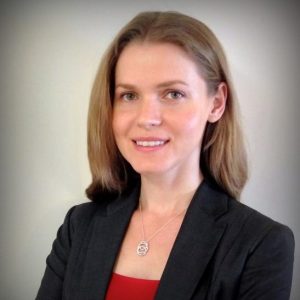
Prof. Dr. İbrahim Akduman is a Professor at the Department of Electronics and Communication Engineering , Istanbul Technical University , specializing in microwave imaging and biomedical applications. His research spans antenna engineering, dielectric property analysis, and microwave hyperthermia systems.
Dr. Aykut Koç is an Associate Professor at the Department of Electrical and Electronics Engineering and a faculty member of the National Magnetic Resonance Research Center (UMRAM) at Bilkent University, Turkey. He leads the AykutKoc Lab, focusing on interdisciplinary research at the intersection of machine learning, signal processing, natural language processing, and graph signal processing. Education: B.S. in Electrical and Electronics Engineering (2005, Bilkent University); M.S. in Electrical Engineering (2007), M.S. in Management Science and Engineering (2009), and Ph.D. in Electrical Engineering (2011) under Professor Lambertus Hesselink at Stanford University; LL.B. in Law (Ankara University). His research integrates mathematical signal processing techniques (e.g., fractional Fourier and linear canonical transforms) with modern machine learning architectures like transformers and graph neural networks. Recent work explores semantic communication systems, bias mitigation in legal language models, and cross-modal applications in biomedical imaging and radar technology. Dr. Koç has published extensively in IEEE and Springer journals, with recent articles analyzing Fourier-enhanced transformers, graph-based NLP methods, and time-vertex signal analysis. His work addresses both theoretical innovations and practical applications, including schizophrenia diagnosis, legal outcome prediction, and maritime surveillance. Scientific Awards: Science Academy Young Scientists Award (BAGEP), 2023. He has supervised numerous graduate and undergraduate researchers, many of whom have transitioned to top-tier institutions such as MIT, UCLA, and TU Darmstadt. Dr. Koç actively serves as Associate Editor for multiple IEEE journals and participates in conference program committees, including EMNLP's Natural Legal Language Processing (NLLP) workshop.
Professor Ali Yapar is a faculty member at Istanbul Technical University in the Electronics and Communication Engineering department. His research focuses on Electromagnetics , Microwave Engineering , and Antenna Technologies , with a particular emphasis on inverse scattering problems and microwave imaging for biomedical applications. He has supervised numerous graduate students and led projects related to breast cancer treatment and rough surface imaging. PhD in Electronics and Communication Engineering from Istanbul Technical University (1997) MSc in Electronics and Communication Engineering (1995) His recent publications analyze advanced techniques for microwave hyperthermia systems, reverse time migration methods, and Newton-based solutions for electromagnetic inverse scattering. Key projects include TUBITAK-funded initiatives on microwave tomography and brain stroke imaging. He serves as a project investigator and executive for electromagnetic research programs. Research areas span Electromagnetic Wave Propagation , Green's Function Applications , and Dielectric Material Analysis . Collaborations include IEEE members and international researchers in computational electromagnetics.
Prof. Dr. Mehmet Reşit Tolun is a full-time Professor in the Department of Software Engineering at Çankaya University (Turkey) since 2022. Previously held full-time professor positions at Konya Food and Agriculture University (2020-2022), Aksaray University (2013-2017), and TED University (2011-2013), along with a part-time professorship at Başkent University (2017-2020). Specializes in Artificial Intelligence , Machine Learning , and Data Mining , with a focus on deep learning applications in aerospace, biomedical data analysis, and software process improvement. PhD in Computer Science (University of Kent, 1985) MSc in Computer Science (University of Kent, 1982) BSc in Physics and Computer Science (University of Kent, 1981) Research Interests span deep learning frameworks, hybrid expert systems, software engineering methodologies, and biomedical signal processing. Publications emphasize practical implementations in medical diagnostics, robotics, and agricultural pest detection. Scientific Awards include the IEEE Third Millenium Medal (2000). Supervised over 55 graduate students, including Burak Çetin, Uğur Özotuk, and Mahinur Doğan. Collaborated with researchers from Orta Doğu Teknik Üniversitesi , Çankaya University , and Aksaray University .
Dr. Sueda Saylan is an Assistant Professor at the Faculty of Engineering, Özyeğin University, since 2024. Her academic journey includes a Ph.D. in Interdisciplinary Engineering (2016) from Masdar Institute (now Khalifa University), postdoctoral research at Khalifa University (2016-2022), and an MSCA Postdoctoral Fellowship at Bilkent University (2022-2024). She has also held visiting researcher positions at MIT (2014) and the University of Tokyo (2016). Education Doctorate: Interdisciplinary Engineering, Masdar Institute of Science and Technology (2016) Master's: Microelectronic Manufacturing Engineering, Rochester Institute of Technology (2004) Bachelor's: Mechanical Engineering, Middle East Technical University (2002) Dr. Saylan's research focuses on memristive devices , photovoltaics , and light-matter interactions at micro/nanoscale . Her work bridges materials science and electronic engineering, with recent publications on memristor-based sensors, spectral filtering in silicon, and machine learning integration for biomedical diagnostics. Key trends from her 15 most recent articles (2013-2025) include: Advancing memristor technology for radiation sensing and vacuum monitoring Optimizing photovoltaic efficiency through light management and antireflection coatings Developing compact, low-power diagnostic devices for pathogen detection Exploring nanoscale electrode materials and switching mechanisms Applying Fourier transforms and interferometry in optical systems Scientific Awards Marie Skłodowska-Curie Actions (MSCA) Postdoctoral Fellowship (2022-2024) Dr. Saylan has received research support from prestigious programs and has contributed to interdisciplinary projects involving semiconductor physics, optical engineering, and biomedical diagnostics. Her collaborations span institutions like Khalifa University, MIT, and the University of Tokyo.
Prof. Serkan Simsek is a Professor at the Department of Electronics and Communications Engineering, Faculty of Electrical and Electronics Engineering, Istanbul Technical University. He holds a PhD in Telecommunication Engineering from the same institution. His academic roles include serving as Vice Dean (2020-2023) and Program Coordinator of the ITU-NJIT Joint Degree Program. His research focuses on Optics, Photonics, Electromagnetics, and Microwave/Antenna Technologies. Education: PhD in Telecommunication Engineering (Istanbul Technical University, 2008), MSc in Electronics Engineering (Istanbul Technical University, 2003), and BSc in Electrical-Electronic Engineering (Istanbul University, 2001). Research interests span antenna design, electromagnetic bandgap structures, microwave imaging, and slow-wave structures. Notable projects include developing breast cancer imaging systems and optimizing antenna performance using metamaterials. He has been awarded the Leopold B. Felsen Award for Excellence in Electromagnetics (2009). His 14 advisees include students working on topics like 5G amplifiers, low-profile antennas, and ultrawideband arrays. Prof. Simsek contributes to academic administration and has coordinated multiple international joint degree programs. His lab focuses on advanced antenna systems and microwave engineering applications.
Prof. Dr. Selcuk Paker is a faculty member at the Department of Electronics and Communication Engineering , Faculty of Electrical and Electronics Engineering , Istanbul Technical University. His research spans electromagnetic field theory, microwave systems, and telecommunications, with a focus on antenna design, radar imaging algorithms, and bioelectromagnetics. Research Interests : Electromagnetic scattering, inverse scattering, radar systems, SAR imaging, GNSS algorithms, microwave heating, and wireless communication. Recent publications highlight his work in 5G antenna design , radar-based earthquake detection , and biological effects of RF exposure . He contributes to microwave and radar technologies, including applications in structural diagnostics and sensor networks.
Lale Tükenmez Ergene is a Professor at Istanbul Technical University 's Department of Electrical Engineering, specializing in Electrical Machines and Energy Conversion . Her work bridges theoretical research and practical applications in motor design for electric vehicles and home appliances. Ph.D. in Electrical Engineering from Rensselaer Polytechnic Institute 20+ years of academic and administrative leadership Focus areas: Permanent Magnet Motors, Synchronous Reluctance Motors, and Sensorless Control Systems Her research explores: Optimization of traction motors for electric vehicles Advanced sensorless control algorithms for motor drives Reduction of voltage distortion in high-performance motors Integration of predictive diagnostics in motor systems Applications of neurofuzzy control systems in multicopters Recent publications highlight trends in PMaSynRM parameter estimation , flux weakening capabilities , and real-time motor diagnostics . Her work spans both traditional electrical engineering and cross-disciplinary innovations like VR-based language learning systems for EU workforce mobility. Scientific recognition includes: Best Poster Paper Award (2016) 2nd Prize in Graduation Design Competition (2015) Doctoral Thesis Excellence Award (2015) She leads projects such as: Pmasynrm's Innovative Real-Time Model Diagnostic System (2021-2024) Sensorless Magnet-Supported Motor Drive for Washing Machines (2019-2022) VR-based Business English Training for Engineers (2018-2022)
Tamer Ölmez is a Professor in the Department of Electronics and Communication Engineering at Istanbul Technical University (ITU), College of Engineering, where he conducts cutting-edge research in biomedical signal processing, brain-computer interfaces (BCI), and deep learning applications in medical systems. His work bridges engineering and neuroscience, with a strong focus on EEG-based motor imagery classification, medical image analysis, and embedded deep learning systems. His research interests include motor imagery EEG signal processing , brain-computer interfaces , feature extraction , deep neural networks , classification algorithms , and medical image analysis . He applies machine learning and signal processing techniques to improve diagnostic accuracy and system performance in neuroengineering and healthcare technologies. The recent publications highlight a consistent trend in leveraging divergence-based deep neural networks , convolutional neural networks , and small-sized models for efficient and accurate classification in BCI and medical imaging. His work emphasizes performance improvement with reduced channel counts, noise elimination, and real-time applicability in embedded systems. Scientific Awards: Excellent Oral Presentation Certificate, June 1, 2015 Advising and Grants: He is actively supervising 26 theses in progress, indicating a strong mentoring role. He has led multiple funded research projects, including those funded by ITU’s Technology Transfer Office (TTO) and Scientific Research Projects (BAP), such as 'Classification of Medical Images with Deep Learning Method in Embedded Systems' and 'New Approaches to Finding Optimal Protein Folding'. Labs and Research Teams: While specific lab names are not mentioned, his collaborative fingerprint and project leadership suggest he leads or is a key member of a research group focused on biomedical signal processing, neural networks, and intelligent systems at ITU.
Semih Doğu is an Assistant Professor at the Department of Electronics and Communication Engineering , Faculty of Electrical and Electronics Engineering , Istanbul Technical University . His research focuses on Electromagnetic Theory , Microwave Imaging , Inverse Scattering Problems , and Antenna Design . Doctorate: Istanbul Technical University (2023) Master's: Istanbul Technical University (2017) Bachelor's: Yıldız Technical University (2015) His research interests emphasize microwave-based diagnostics, including: Microwave imaging for breast cancer detection Antenna optimization for medical and security applications Inverse problem solving in electromagnetic systems Through-the-wall imaging for surveillance Semih Doğu's recent publications demonstrate his expertise in: Neural networks for temperature monitoring in hyperthermia Ku/Ka-band antenna designs for satellite systems Microwave salinity sensing Algorithm development for improved imaging accuracy He contributes to the ITU Electromagnetics Research Group , participating in projects like: Microwave Brain and Breast Imaging Device Development Compressed Sensing for Energy-Efficient Communication Microwave Tissue Analysis
Tayfun Akgül is a Professor at Istanbul Technical University's Faculty of Electrical and Electronics Engineering, Department of Electronics and Communication Engineering. With academic affiliations spanning decades, he combines engineering rigor with innovative research in signal processing and underwater acoustics. His research focuses on advanced signal processing techniques, including Compressive sensing and cyclostationary analysis Underwater acoustic monitoring and sensor arrays Thermal imaging and infrared reflection modeling Biometric identification through facial attributes Seismic signal processing Recent publications demonstrate expertise in Propeller noise analysis in maritime environments Micro-Doppler helicopter signature detection Seismic activity precursor identification Novel fisheye camera human detection systems Awarded Most Successful Doctoral Thesis Award from TESID (2024) IEEE Top 10 Award (2013) he maintains active IEEE membership since 1992 and has led multiple high-impact projects including casualty detection systems and electric vehicle warning systems.
Mehmet Çayören is a Professor at Istanbul Technical University in the Department of Electronics and Communication Engineering. His research focuses on applying microwave imaging techniques to medical diagnostics, particularly for early detection of breast cancer. He leads the development of the SAFE (Screening and Early Detection) microwave imaging system, which has shown promising results in clinical investigations. His work bridges electrical engineering, biomedical applications, and machine learning for improved cancer screening. Dr. Çayören's research interests span multiple domains within electromagnetic applications for medical imaging: Microwave imaging systems for breast cancer detection and screening Determination of dielectric properties of biological tissues Development of open-ended coaxial probe techniques for material characterization Application of machine learning algorithms (XGBoost, SVM) to enhance medical imaging Monitoring of intracerebral hemorrhage using microwave imaging Development of tissue-mimicking phantoms for medical device validation His recent publications demonstrate a strong trend toward integrating advanced machine learning techniques with microwave imaging systems to improve diagnostic accuracy. The SAFE platform represents a significant advancement in non-invasive breast cancer screening, particularly for dense breast tissue where traditional mammography has limitations. His work also extends to neurological applications, with research on microwave-based monitoring of brain hemorrhages. Scientific awards received by Dr. Çayören include: Teknoloji Ödülü (Technology Award) in 2014 Dr. Çayören has supervised 24 students and leads multiple research projects funded by various sources including TUBITAK. His current projects focus on microwave imaging systems for breast cancer screening, monitoring of intracerebral hemorrhage, and hardware design for microwave imaging systems. He collaborates extensively with medical professionals to validate his imaging systems in clinical settings. Dr. Çayören leads a research group focused on microwave imaging applications in medicine. His team develops both hardware systems (like the SAFE platform) and advanced signal processing algorithms to improve medical diagnostics. The group maintains close collaborations with hospitals for clinical validation of their imaging systems.
Emine Ülkü Sarıtaş is an Associate Professor at the Department of Electrical and Electronics Engineering and the National Magnetic Resonance Research Center (UMRAM) at Bilkent University, Ankara, Turkey. She serves as the Associate Director of UMRAM and chairs the IEEE Turkey Section Women in Engineering since 2016. Her research focuses on novel biomedical imaging techniques, particularly magnetic resonance imaging (MRI) and magnetic particle imaging (MPI).
Zafer AYDIN is an Associate Professor at the Computer Engineering Department of Abdullah Gul University. He obtained his B.Sc. and M.Sc. from Bilkent University (Turkey) and his Ph.D. from Georgia Institute of Technology (USA). His research focuses on machine learning applications in bioinformatics, health informatics, and industrial problems. PhD: Georgia Institute of Technology (2008) Postdoc: University of Washington (2008-2011) Previous: Assistant Professor at Bahcesehir University (2011-2014) Research Interests include protein structure prediction, medical imaging analysis, network security, and financial data modeling. His work spans both fundamental bioinformatics research and practical industrial applications. Scientific Awards : 2nd in T0 phase of Respiratory Viral Dream Challenge (2016-2017) 1st in both question 1 and 2 prediction tasks of COVID-19 DREAM Challenge (2020-2021) Teaching includes undergraduate courses in Bioinformatics, Machine Learning, and Algorithms, and graduate courses in Deep Learning and Pattern Recognition.
Hulya Yalcin is an Assistant Professor in the Department of Mechanical Engineering at Istanbul Technical University. Her research focuses on artificial intelligence applications in robotics, computer vision, and precision agriculture. She leads projects in musculoskeletal modeling, plant phenology monitoring, and assistive technologies for elderly care. Her work contributes to UN Sustainable Development Goals related to innovation, health, and sustainable agriculture. Key projects include using deep learning for crop yield estimation and developing exergaming systems to improve elderly health. She has authored 52 research outputs and secured funding for initiatives like AISENSE (EU-funded exergames) and plant classification via computer vision. Publications span robotics control, medical engineering, and agricultural informatics. Notable contributions include knee orthosis gait learning via deep reinforcement learning and low-resource Turkish speech recognition improvements. As Principal Investigator, she manages projects on plant classification using CNNs, drone-based depth mapping, and multimodal assisted living systems. Her research bridges AI with practical applications in healthcare, agriculture, and robotics.