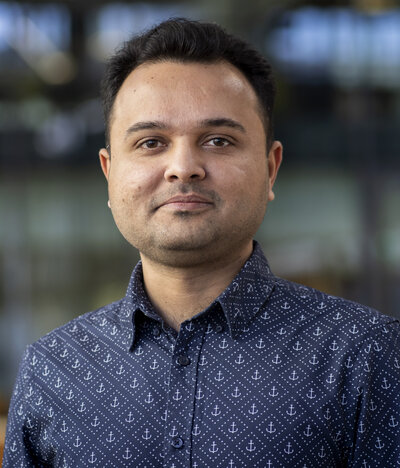
Aaqib Saeed is an Assistant Professor in the Department of Industrial Design at Eindhoven University of Technology. His research focuses on Human-Centric AI, Federated Learning, Self-Supervised Learning, and Audio Understanding, with applications in Personal Health. He holds a PhD (cum laude) from TU/e and an MSc (cum laude) from the University of Twente. Education: PhD in Computer Science (cum laude), TU/e (2021) MSc in Computer Science (cum laude), University of Twente (2018) Research Interests: Development of robust federated learning frameworks for decentralized data Self-supervised learning for audio and physiological signal analysis AI-driven solutions for healthcare monitoring Key Contributions: DeltaMask: Reducing communication overhead in federated fine-tuning FedNS: Mitigating noisy decentralized data in federated learning Labeling Chaos to Learning Harmony: Handling label noise in FL Professional Experience: Visiting Industrial Fellow, University of Cambridge (2023) Research Scientist, Philips Research (2019–2023) Research Internships: Google Research, TNO/EIT Digital Awards: UT Scholarship (MSc) Cum Laude awards for both PhD and MSc Labs/Teams: EAISI Health, EAISI Foundational, Computational Design Systems.
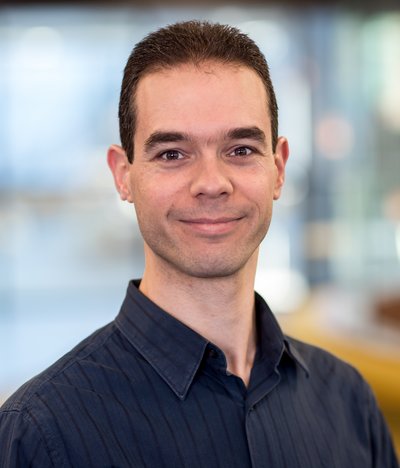
Peter H.N. de With is a Full Professor at the Video Coding & Architectures group within the Department of Electrical Engineering at Eindhoven University of Technology (TU/e). He is an international expert in video compression and image analysis for health, surveillance, and automotive applications, with over 35 years of R&D experience. He leads the Video Coding & Architectures Group (SPS-VCA) and contributes to initiatives like the Center for Care & Cure Technology Eindhoven and Eindhoven MedTech Innovation Center. De With's research focuses on video/image signal processing, machine learning, and their applications in healthcare (e.g., esophageal cancer detection), security, and automotive systems. His work includes collaborations with hospitals, EU projects, and industry leaders like Bosch Security Systems and ASML. His recent publications emphasize real-time 3D processing, assembly state recognition, driver action analysis, and medical imaging advancements, reflecting his expertise in computer vision and AI. Notable scientific awards include IEEE Fellowship and multiple paper awards (CE Chester Sall, SPIE, Elsevier). Scientific Awards IEEE Fellow CE Chester Sall Award SPIE Paper Award Elsevier Journal Award Best Paper Award (2017) Second Place in CAMELYON17 Challenge De With has supervised numerous research projects and contributed to datasets in noise reduction, augmented reality, and medical imaging. He actively collaborates on AI-driven innovations for healthcare and industrial applications.
Prof.dr. R. Arthur Bouwman is a Full Professor at the Electrical Engineering department of the Eindhoven University of Technology and affiliated with the Eindhoven MedTech Innovation Center . His work bridges biomedical engineering and clinical medicine , focusing on physiological monitoring , medical imaging , and biomarker validation for real-time patient care. Education : Not explicitly detailed in the text His research emphasizes non-invasive diagnostics and AI-driven health monitoring , including video-based cardiac arrhythmia detection , sweat-based renal function analysis , and Doppler ultrasound optimization . Recent work explores causal inference in observational studies and automated early warning systems in surgical wards. Key article trends highlight biomedical signal processing , medical device innovation , and integration of wearables in perioperative care . Collaborations span institutions like Catharina Hospital and research centers across cardiovascular and renal domains.
Dr. Utku Yavuz is an Assistant Professor in the Biomedical Signals and Systems Department at the TechMed Centre. His expertise spans neuromuscular physiology, wearable sensor technologies, and clinical monitoring systems. He holds a PhD in Biomedical Engineering from Ege University, complemented by earlier degrees in Physics Engineering (Hacettepe University) and Biophysics (Hacettepe University). Research Focus: Motor unit physiology, neuromuscular modeling, and clinical applications of wearable sensors. Key Areas: Spinal motor neuron behavior, electromyography (EMG), and translational technologies for diabetes and musculoskeletal health. Dr. Yavuz’s work bridges neuroscience and engineering, addressing challenges in prosthetic design, real-time neuromuscular signal decoding, and improving clinical decision-making through sensor data analysis. Recent studies include optimizing wearable glucose monitors and analyzing muscle-tendon dynamics in amputees. His research outputs span 43 publications, with contributions to high-impact journals like BMC Digital Health and IEEE Sensors Journal . Collaborations include institutions focused on biomechanics, robotics, and clinical informatics. Advising: Supervised 1 graduate project, though specific advisee names are not listed. Active in academic activities such as thesis examinations and conference presentations.
Jordan Boyle is an Assistant Professor in the Department of Sustainable Design Engineering at the Faculty of Industrial Design Engineering, Delft University of Technology (TU Delft). He is affiliated with the Materializing Futures Section, where he conducts research in robotics, bio-inspired systems, swarm intelligence, and human-robot interaction. Academic Background: PhD in Computer Science, University of Leeds – focused on neuro-mechanical control of locomotion in C. elegans . MSc and BSc (Hons) in Electrical Engineering, University of Cape Town. Prior academic experience at the University of Leeds as Research Fellow, Lecturer, and Associate Professor over 12 years. Research Interests: Dr. Boyle’s research centers on robotics with a strong emphasis on bio-inspired design. His work spans swarm intelligence , multi-robot systems , human-robot interaction , and robotic fabrication . He also specializes in designing experimental apparatus for pre-clinical and engineering applications. His interdisciplinary approach integrates mechanical design, control systems, and AI for real-world deployment in construction, medicine, and infrastructure. Publication Trends: His recent publications (2022–2024) demonstrate a clear trajectory toward bio-inspired autonomous systems applied in construction and medical imaging. Key themes include swarm robotics for construction, MRI trajectory correction with robotic components, and locomotion mechanisms inspired by biological systems. These works reflect strong interdisciplinary collaboration, particularly with biomedical and mechanical engineering teams. Teaching: Product Engineering (2024, 2025) Advanced Product Engineering (2024, 2025) Scientific Affiliations and Activities: Visiting Researcher, School of Mechanical Engineering, University of Leeds (2022–2026) Advising and Grants: While no formal students or specific grants are listed in the provided text, Dr. Boyle has supervised research projects and collaborated across disciplines, particularly in medical and civil engineering applications. His role in designing experimental apparatus indicates active involvement in grant-funded interdisciplinary research. Labs and Research Groups: He is part of the Materializing Futures Section within Sustainable Design Engineering, which likely operates in conjunction with TU Delft’s broader design and robotics labs, though specific lab names are not mentioned.
Reinder Haakma is a University Researcher at Eindhoven University of Technology in the Signal Processing Systems department. His work bridges biomedical engineering and machine learning , focusing on advanced signal processing techniques for healthcare applications. Research interests include: Photoplethysmography (PPG) signal decomposition Cardiovascular monitoring via wearable sensors Anomaly detection in physiological signals Improving pulse arrival time estimation Smartwatch-based cardiac arrest detection systems His contributions to rapid eye movement sleep analysis and heart rate variability align with UN Sustainable Development Goals for health innovation. Notable recognition includes the Best paper full paper award at IE 2018 for his work with Tax, van der Aalst, and Sidorova. Recent publications (2024-2025) demonstrate expertise in predictive coding algorithms, Gaussian modeling, and real-time physiological monitoring. Collaborations span cardiology (Dekker, Vullings) and human-computer interaction (Markopoulos) domains.
Gerard de Haan is a Professor of Electronic Systems at the Department of Electrical Engineering , Eindhoven University of Technology (TU/e). His research focuses on video signal processing, particularly in multimedia systems and video health monitoring , aiming to enhance image quality and enable accurate sensing of vital signals amidst motion artifacts. He has documented his research in 4 books, 3 book chapters, approximately 200 papers, and over 200 patent applications, leading to commercially available ICs. De Haan has served on program committees of international conferences and as a guest editor for journals including Elsevier, IEEE, and Springer. Education : BSc, MSc, PhD in Electrical Engineering from Delft University of Technology (1977, 1979, 1992) Professional Roles : Lead researcher at Philips Research (1979–present), Full Professor at TU/e (2000–present) His research interests span noise and artifact reduction , video format conversion , display-specific processing , and enabling technologies like motion estimation and object detection . Articles highlight advancements in rPPG motion robustness , blood volume pulse signature analysis , and remote SpO2 monitoring . Scientific awards include his appointment as Fellow at Philips Research Eindhoven in 2000.
Srirang Manohar is a Full Professor at the TechMed Centre , University of Twente, specializing in Multi-Modality Medical Imaging . His work focuses on photoacoustic imaging, ultrasound, and tomography, with clinical applications in breast cancer, prostate cancer, and thyroid disorders.
Gwenn Englebienne is an Assistant Professor at the Digital Society Institute and Human Media Interaction group of Utrecht University. Their research focuses on Artificial Intelligence, Computer Vision, and Human-AI Interaction, with applications in robotics, health, and social computing. They have contributed to over 80 research outputs since 2007, emphasizing embodied AI, social robotics, and explainable machine learning. Research interests span activity recognition, teleoperation systems, and ethical AI design. Notable work includes developing GNN-based group detection algorithms and evaluating chatbot reliability through automated question-answering frameworks. Their studies often bridge technical innovation with human-centered design, such as measuring embodiment via pupil dilation or addressing asymmetry in video-conferencing interactions. Key collaborations include work on social robotics, telepresence systems, and health monitoring using ambient sensors. Publications span conferences like IDA, CogMI, and LREC-COLING, reflecting interdisciplinary impact. A dataset on robot social positioning behavior is publicly accessible via 4TU.Centre for Research Data. Current work explores semi-supervised domain adaptation, spiking neural networks, and the psychological dimensions of AI trustworthiness. They lead initiatives in the Digital Society Institute to align technological advancements with societal needs.
Bert de Vries is a Professor at the Signal Processing Systems Group at Eindhoven University of Technology (TU/e), where he has been employed since January 2012. He maintains a dual career, also working at GN Hearing in the hearing aids industry since April 1999, where he holds both research and managerial roles. His academic journey began at TU/e, where he earned his MSc in Electrical Engineering in 1986, followed by a PhD from the University of Florida in 1991. Between 1992 and 1999, he worked at Sarnoff Research Center in Princeton, NJ, contributing to diverse signal and image processing projects. Professor de Vries's research centers on Bayesian Machine Learning, with particular focus on the Free Energy Principle and its applications to engineering problems. His work bridges theoretical neuroscience with practical signal processing systems, especially in biomedical applications. He directs the BIASlab research team at TU/e, which develops probabilistic programming tools including RxInfer.jl, ForneyLab.jl, GraphPPL.jl, ReactiveMP.jl, and Rocket.jl. His research spans active inference, variational message passing, probabilistic programming, and Bayesian neural networks, with applications ranging from hearing aids to multi-agent systems. Analysis of his recent publications reveals a strong trend toward practical implementations of Bayesian inference frameworks, particularly through Julia-based probabilistic programming tools. His work shows increasing focus on active inference applications, message passing algorithms, and the intersection of Riemannian geometry with probabilistic modeling. The research demonstrates consistent progression from theoretical foundations toward real-world engineering applications, particularly in biomedical signal processing and autonomous systems. Professor de Vries teaches a graduate-level course on Bayesian Machine Learning at TU/e and actively contributes to open-source software development through his GitHub profile (bertdv), with recent activity as recent as August 2025. His research team has developed several influential probabilistic programming libraries that have gained significant attention in the machine learning community. The BIASlab research group continues to advance the state of the art in Bayesian inference methods with applications in hearing technology, robotics, and signal processing.
Arvid Q.L. Keemink is an Assistant Professor in Biomechatronics and Rehabilitation Technology at the TechMed Centre , University of Twente. His research focuses on exoskeletons, neuromuscular modeling, and human-robot interaction for rehabilitation and dynamic balance assistance. Robotics and control systems Biomechanics and neuromuscular modeling Rehabilitation engineering Machine learning applications His recent publications emphasize lower-limb exoskeletons, momentum-based control algorithms, and spinal reflex circuitry modeling. Key subfields include dynamic trajectory optimization , disturbance recovery , and joint impedance analysis . Collaborations with researchers like Herman van der Kooij and Massimo Sartori highlight his interdisciplinary approach.
Kerstin Bunte is a Professor of Machine Learning for interdisciplinary data analysis at the University of Groningen, affiliated with the Faculty of Science and Engineering and the Bernoulli Institute's Intelligent Systems Group. She holds an Honorary Fellowship at the University of Birmingham and leads the Intelligent Systems Group. Her research focuses on interpretable machine learning, interdisciplinary applications (e.g., astrophysics and biomedical data), and visualization techniques. Research Interests: - Machine Learning - Artificial Intelligence - Explainable AI (XAI) - Interpretable Models - Dimensionality Reduction - Data Visualization - Astrophysical Data Analysis - Medical Imaging Awards & Grants: - DSSC XS funding (2023) - NWO VIDI grant (2020) - Rosalind Franklin Fellowship (2016–present) Advising & Students: Supervised PhD students include Elisa Oostwal, Janis Norden, Matteo Marcantoni, and Petra Awad. Research spans topics like tumor segmentation in medical imaging, astrophysical structure detection, and autonomous navigation systems. Labs & Collaborations: Leads the Intelligent Systems Group, collaborating with institutions like the University of Birmingham and the University of Warwick. Work involves interdisciplinary projects combining machine learning with astronomy, biomedical sciences, and robotics.
Pieter Harpe is an Associate Professor at the Department of Electrical Engineering, Eindhoven University of Technology. He leads the Resource Efficient Electronics Lab, focusing on ultra-low-power analog/mixed-signal microelectronics for medical and mobile applications. His work bridges sensor interfacing, ADC design, and wireless communication systems. Education: M.Sc. and Ph.D. from TU/e (2004, 2010) Research Interests: Energy-efficient ICs, ADC optimization, biomedical electronics Leadership: Head of Resource Efficient Electronics Lab Editorial Roles: Associate Editor for TCAS-I, IEEE Solid-State Circuits Society member Grants: VENI (2013), VIDI (2018) from NWO His recent publications emphasize breakthroughs in low-power ADC architectures for biomedical applications, achieving unprecedented energy efficiency ( Scientific Awards : VENI Grant (2013) VIDI Grant (2018) ISSCC 2015 Distinguished Technical Paper Award IEEE Solid-State Circuits Society Distinguished Lecturer (2016-2017)
Jan Bergmans is a Full Professor in the Department of Electrical Engineering at Eindhoven University of Technology (TU/e). He leads the Signal Processing Systems group and holds professorships at multiple research centers including the Eindhoven MedTech Innovation Center (e/MTIC), Center for Care & Cure Technology Eindhoven, NeuroPlatform, EAISI Health, and EAISI Foundational. With approximately 35 years of experience in signal processing theory and applications, Bergmans focuses on developing computationally efficient signal analysis techniques for healthcare, wireless communication, surveillance, and intelligent lighting applications. Bergmans' educational background includes: MSc in Electrical Engineering from Eindhoven University of Technology (1981) PhD in Electrical Engineering from Eindhoven University of Technology (1987) His research interests center around signal processing and data analytics theories, algorithms, architectures, and systems. Bergmans develops mathematical models that incorporate domain-specific knowledge, such as propagation models for radio communication channels or pathophysiological models for clinical decision support systems. His work emphasizes creating powerful yet computationally efficient signal analysis techniques, with significant applications in healthcare technology and medical diagnostics. The integration of engineering principles with clinical needs is a hallmark of his research approach, enabling practical solutions that address real-world medical challenges. Analysis of Bergmans' recent publications reveals a strong focus on medical signal processing, particularly in ECG and fetal monitoring applications. His work combines advanced signal processing techniques like adaptive Kalman filtering with practical healthcare applications. There's also significant research in visible light communications and sensor network technologies, showing the breadth of his expertise across different application domains of signal processing. The consistent theme across his work is developing computationally efficient algorithms that incorporate domain-specific knowledge to solve practical engineering problems. Scientific recognition includes: Senior Member of the IEEE Author of numerous papers and 2 books Holder of approximately 40 US patents Bergmans has established smooth collaborations with strategic industrial and clinical partners, including Philips Research and multiple hospitals in the Eindhoven region. He co-manages BrainBridge, the strategic collaboration between TU/e, Philips Research, and Zhejiang University (China). His research group has secured numerous projects, including recent third-tier projects like MEDEIA, PISANO SPS, and RAISE projects focusing on medical engineering innovations and robust AI for radar signal processing. As a key figure in the Signal Processing Systems group and one of the founders of the Eindhoven MedTech Innovation Center (e/MTIC), Bergmans plays a central role in bridging academic research with industrial and clinical applications. His leadership extends to managing multiple research teams working on healthcare technology, wireless communications, and sensor systems, fostering an environment where theoretical signal processing advances translate into practical medical and technological solutions.
David Maresca is an Associate Professor in the Imaging Physics department at the Faculty of Applied Sciences, Delft University of Technology. His research focuses on the intersection of ultrasound imaging physics and molecular engineering, with the goal of enabling ultrasound imaging of cells across space and time in living opaque organs. His research interests include: Biomolecular acoustic sensors Functional ultrasound neuroimaging Transcranial ultrasound Nonlinear ultrasound imaging Engineering of acoustic biosensors Ultrasound imaging of brain function Dr. Maresca's work centers on developing technologies that combine ultrasound physics with molecular engineering to create new imaging capabilities. His lab pioneers approaches to image cells within opaque organs using ultrasound, with applications in neuroscience and biomedical imaging. His research spans from fundamental ultrasound physics to the development of acoustic biosensors and imaging techniques that can detect cellular processes. His recent publications demonstrate a strong focus on advancing ultrasound imaging capabilities, particularly in nonlinear ultrasound techniques, contrast-enhanced ultrasound, and applications in neuroimaging. His work shows increasing interdisciplinary collaboration across physics, engineering, and neuroscience. Dr. Maresca has received recognition including the HFSP Cross-Disciplinary Fellowship. His academic background includes a Ph.D. in Biomedical Engineering from Erasmus MC, an M.Sc. in Acoustics, and a Master's degree in Physics from Université Paris Diderot. He completed postdoctoral work at Caltech and Institut Langevin, ESPCI. His research is supported by collaborations across institutions, with recent work involving researchers from multiple universities and research centers. Dr. Maresca's lab is actively contributing to advancing ultrasound imaging technology and its applications in biomedical research.