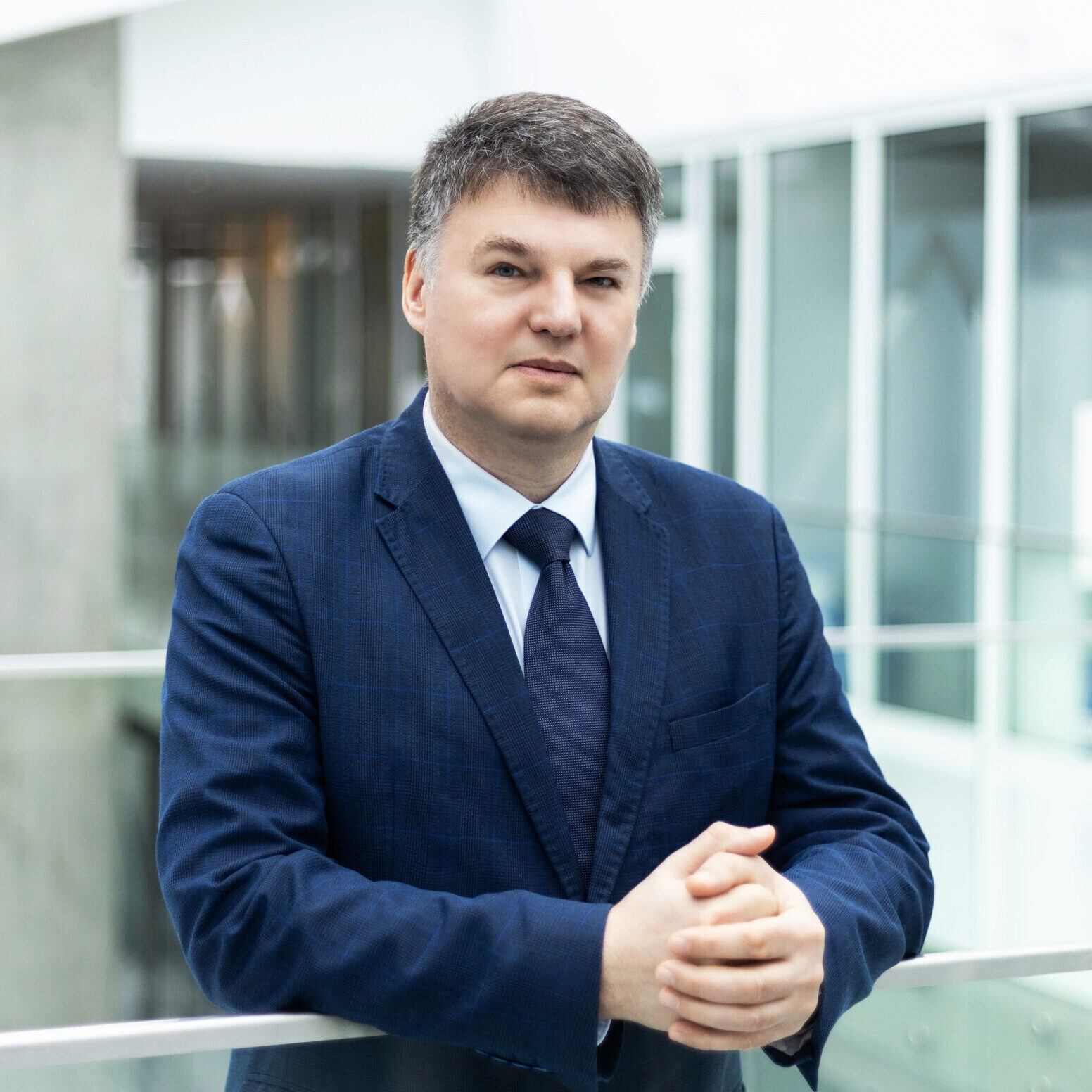
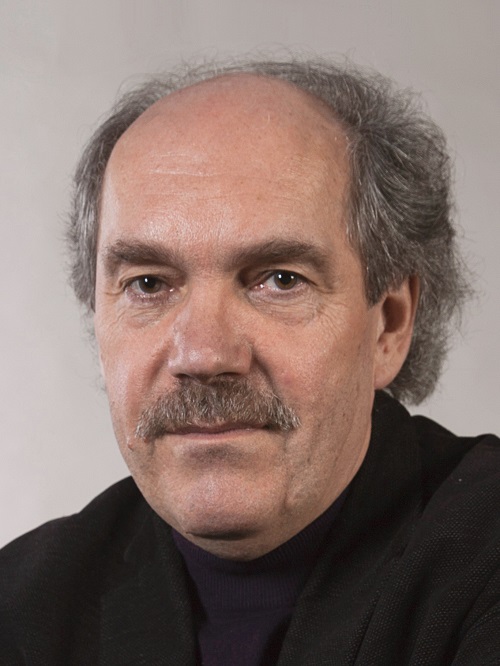
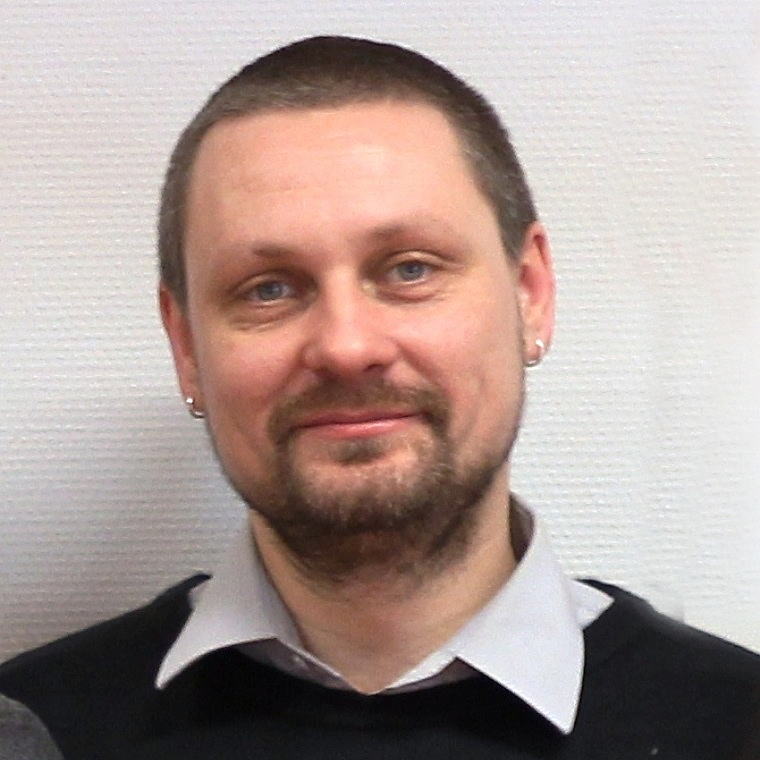
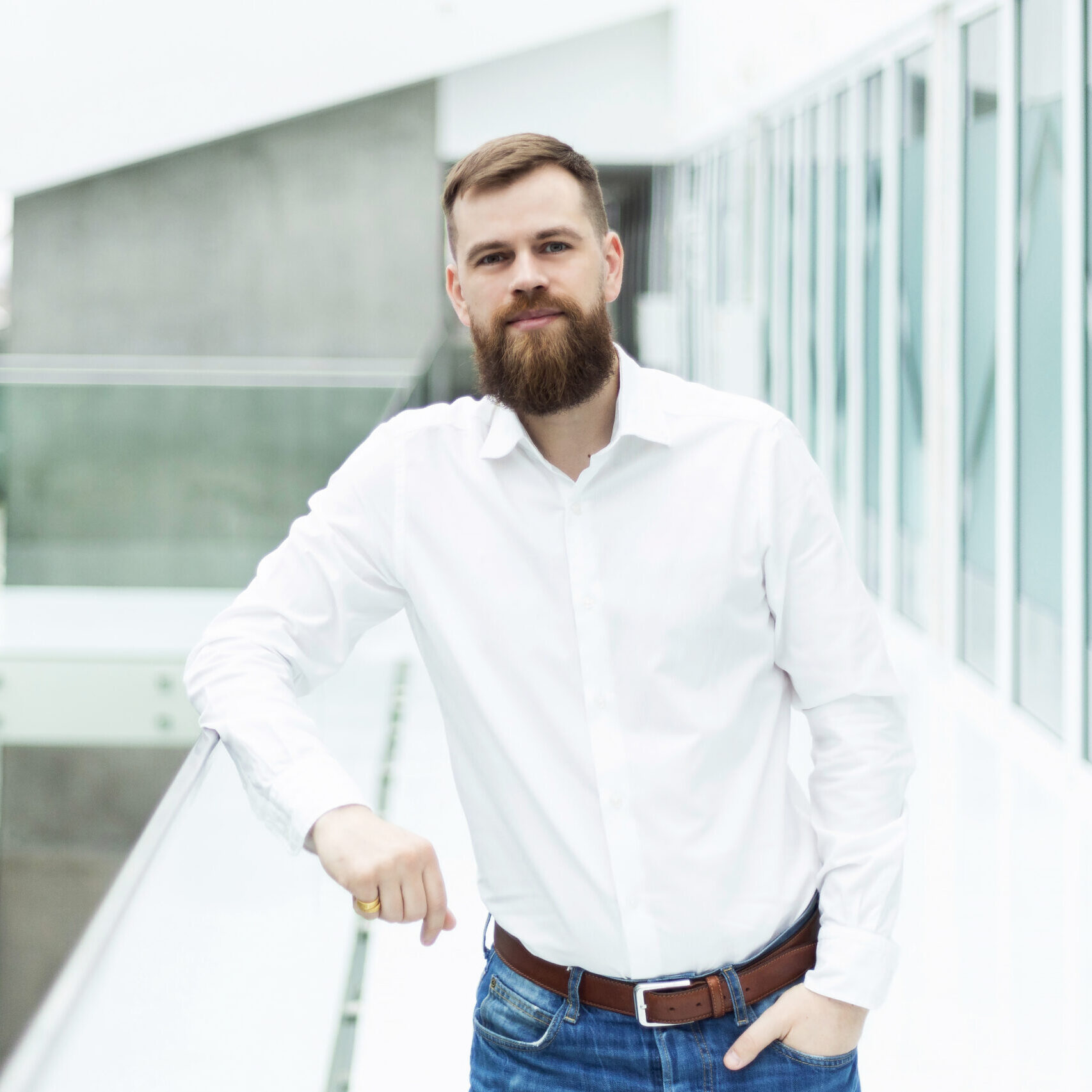
Prof. Dr. Vaidotas Marozas is affiliated with the Kaunas University of Technology (KTU) , serving as a Professor in the Faculty of Electrical and Electronics Engineering , Department of Electronic Engineering. He is currently the Director of the Institute of Biomedical Engineering and leads the Biosignal Analytics Laboratory . His research focuses on digital signal processing, machine learning applications, wearable medical devices, and cardiovascular disease monitoring technologies. Institute of Biomedical Engineering - Director Biosignal Analytics Laboratory - Head Projects: SV/115, SV/116, SV3/116 - Chief Researcher He can be contacted at vaidotas.marozas@ktu.lt . Professional profiles: Google Scholar , ORCID , Scopus ID 8319694900, ResearcherID T-4499-2017.
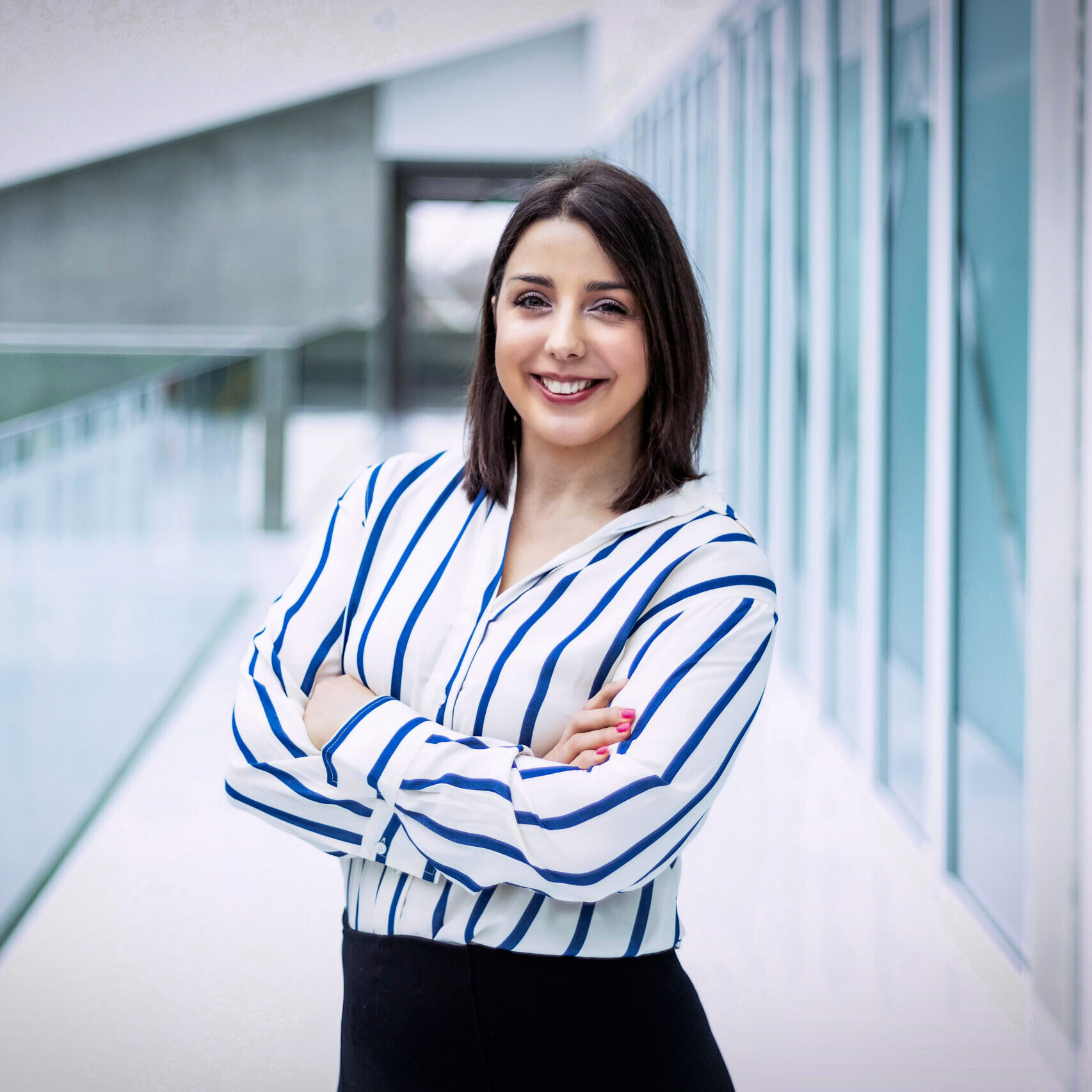
Dr. Eglė Butkevičiūtė is a young researcher at Kaunas University of Technology (KTU) specializing in biomedical engineering and wearable health monitoring technologies. She recently advanced to the global finals of the InSPiR2eS Global Pitching Research Competition (IGPRC2024) for her research proposal on improving stress and fatigue detection using noise-resistant PPG signal processing. Her work focuses on enhancing real-time health monitoring accuracy for applications such as student well-being management. Dr. Butkevičiūtė's research aligns with KTU's initiatives to advance health technology through structured research communication frameworks like the PRF method. Her participation in the IGPRC2024 competition reflects her ability to articulate scientific ideas clearly and concisely, a skill emphasized by the competition's criteria based on Robert Faff's 'Five Golden Rules' for effective research presentation. While no formal awards are explicitly mentioned, her advancement to the global finals underscores her research's significance and international recognition. Her work aims to bridge technological innovation with practical health applications, particularly addressing the needs of multi-tasking students balancing work and studies.
Vytautas Žalys is an Associate Professor and PhD at the VU Šiauliai Academy, primarily affiliated with the Department of Informatics Engineering. His research focuses on audiovisual technologies in music education, computer-assisted data analysis, and the integration of digital tools in special education contexts. He has led multiple international projects, including the 'ART HOUSE: Restoration of the Zubov Palace' and 'Digital Competence and Digitized Musical Heritage,' highlighting his commitment to innovative educational infrastructure and cultural preservation. Žalys holds a PhD and has over 35 years of professional experience, spanning roles as a music teacher, radio show creator, and project leader in educational technology. His educational background includes advanced studies in music and informatics. Key projects include developing distance education courses on ICT in music education and contributing to EU-funded initiatives like the Leonardo da Vinci project on digital technologies. His publications emphasize the application of multimedia and AI in autism education, music pedagogy, and cross-disciplinary arts integration. He actively participates in academic associations such as EERA and ATEE, furthering research in educational innovation and lifelong learning.
Dr. Kazimieras Badokas serves as a Researcher at Vilnius University's Institute of Photonics and Nanotechnology (IPN), specializing in semiconductor epitaxy and graphene transfer technologies. His work bridges fundamental materials science with applied biomedical innovations, contributing to both academic and industrial advancements in nanotechnology. His primary research focuses on Metalorganic Vapor Phase Epitaxy (MOVPE) of III-V semiconductors, particularly gallium nitride (GaN) growth via graphene layers and remote epitaxy techniques. Recent work extends into antimicrobial applications, including photodynamic therapy for biofilm inactivation and nanoparticle-based bacterial deactivation using magnetic fields. This dual trajectory demonstrates exceptional interdisciplinary collaboration across physics, materials engineering, and microbiology. Analysis of his 15 most recent publications reveals dominant themes in semiconductor materials (75% of output), emphasizing GaN-graphene heterostructures and epitaxial growth mechanisms, while 25% explores biomedical applications targeting bacterial pathogens. Key methodologies include MOVPE optimization, laser patterning, and nanoparticle synthesis, with consistent emphasis on practical device implementation. His scientific recognition includes: INFOBALT award for scientific research Lithuanian-American Innovation Award finalist (Top 5) Award of the President of the Republic of Lithuania for technological science excellence Dr. Badokas actively contributes to academic development through bachelor's thesis supervision (e.g., D. Augulis' 2022 work on III-nitride remote epitaxy) and service on the IPN scholarship board. He teaches 'Nano and micro technology,' integrating his research expertise into curriculum development while maintaining active roles in institutional governance and student mentorship. His research operates within the Institute of Photonics and Nanotechnology's infrastructure, leveraging specialized equipment for semiconductor growth, nanomaterial characterization, and biomedical testing, positioning him at the forefront of Lithuania's photonics and nanotechnology research ecosystem.
Professor Alvydas Lisauskas is affiliated with Vilnius University's Faculty of Physics, working at the Institute of Applied Electrodynamics and Telecommunications (IAET). His research spans electrical engineering and physics, with a strong focus on terahertz technologies and semiconductor devices. As a recognized expert in his field, he serves as a member of the Sensors and Electronics Technology panel at the NATO Science and Technology Organization from 2020 to 2023. Dr. Lisauskas specializes in terahertz electronics, terahertz monolithic integrated circuits, field-effect transistors, terahertz imaging, and graphene applications. His research explores the fundamental physics of terahertz radiation detection and generation using semiconductor devices, particularly focusing on plasma wave phenomena in field-effect transistors. His work bridges theoretical physics with practical applications in communication, imaging, and sensing technologies operating in the challenging terahertz frequency range. His publication record shows a consistent focus on advancing terahertz detector technologies, with recent work emphasizing silicon CMOS implementations, graphene applications, and novel antenna designs for improved sensitivity and bandwidth. The research demonstrates strong international collaboration, particularly with French institutions, and addresses both fundamental physics questions and practical engineering challenges in terahertz technology. Scientific Awards: Nominee for Global Lithuania Awards 2020 in the category 'For Solid Voice in Global Science Community' Winner of the 2021 THz Science and Tech. Best Paper Award from IEEE MTT-S Recipient of the Kazimieras Baršauskas Prize in 2022 from the Lithuanian Academy of Sciences Professor Lisauskas has actively supervised doctoral and master's students, including Kestutis Ikamas who completed doctoral research on 'Semiconductor devices for wireless communications at terahertz frequencies' (2014-2018). He leads multiple significant research projects funded by the Research Council of Lithuania and the European Space Agency, including 'Devices with electrically tunable metasurfaces for THz frequency band' and 'Directive transistor-based THz detectors (THzFET)'. His teaching includes Microwave electronics courses. His research group maintains active international collaborations, particularly with French institutions, and regularly presents at major international conferences including IRMMW-THz, ESSDERC, and SPIE Optics and Photonics. The team's work spans theoretical modeling, device fabrication, and practical applications of terahertz technologies.
Professor Povilas Treigys is a Senior Researcher and Group Leader at the Image and Signal Analysis Group within the Institute of Data Science and Digital Technologies at Vilnius University's Faculty of Mathematics and Informatics. With extensive experience in digital signal processing and machine learning applications, he leads research efforts in medical image analysis, speech processing, and maritime traffic modeling. Dr. Treigys earned his Doctor of Science in Computer Science Engineering in 2010 with a dissertation on "Development and application of graphical methods for analyzing ophthalmological and thermovision data." His academic journey has been marked by significant contributions to interdisciplinary research connecting computer science with medical applications. His research primarily focuses on digital signal processing across multiple domains including medical imaging (MRI, eye fundus), audio signals, and maritime traffic data. A key emphasis of his work is the development and application of deep learning methods to solve real-world problems in healthcare diagnostics, retail automation, and transportation safety. His recent work demonstrates a strong trend toward explainable AI in medical applications and sophisticated time series analysis for prediction tasks. Professor Treigys serves in numerous leadership roles including as a EuroHPC JU Board Member representing Lithuania, VU MIF representative on the Lithuanian Quantum Technology Association board, and as a delegate to multiple professional committees. He is an active reviewer for several prestigious journals including Computer Science, Nonlinear Analysis, Baltic Journal of Modern Computing, MDPI Sensors, and MDPI Electronics. His laboratory focuses on bridging theoretical machine learning advancements with practical applications, particularly in medical diagnostics where his team has made significant contributions to prostate cancer detection, arrhythmia classification, and ophthalmological image analysis. The group maintains strong international collaborations and regularly presents findings at major conferences in computer vision, medical imaging, and artificial intelligence.
Dr. Andrius Rapalis is a Senior Researcher at the Kaunas University of Technology Institute of Biomedical Engineering and serves as Laboratory Manager at the Biomedical Device Innovation Laboratory . His research focuses on biosignal parameterization and analysis algorithms, autonomic nervous system assessment, and development of smart wearable devices. Research Interests: Biosignal parameterization and analysis algorithms Autonomic nervous system assessment Smart wearable devices Contact: Email: andrius.rapalis@ktu.lt
Dr. Ana Rita Alves Dos Santos Rodrigues is a Researcher at the Kaunas University of Technology (KTU) within the Institute of Biomedical Engineering , where she works in the Biomedical Device Innovation Laboratory . Her primary scientific and practical interests include electrophysiology, biomedical signal processing, non-invasive indicators of hemostasis, biomedical algorithm development, and machine learning. Fields of Interest Electrophysiology Biomedical Signal Processing Non-invasive Indicators of Hemostasis Development of Biomedical Algorithms Machine Learning She contributes to KTU's research projects such as SV/115 and SV3240188. For direct inquiries, reach her at ana.rodrigues@ktu.lt .
Dr. Saulius Daukantas is a Researcher at the Institute of Biomedical Engineering , Kaunas University of Technology, affiliated with the Biomedical Device Innovation Laboratory . His work focuses on specialized electronics for physiological signal recording and wearable medical devices. Scientific areas: Technological Sciences Scientific directions: Electrical and Electronic Engineering Research Interests Design of biosignal recorders and specialized sensors Development of autonomous ambulatory monitoring systems Medical electronics innovation Wearable device technologies
Aidas Alaburda is a Professor at Vilnius University's Faculty of Natural Sciences, Department of Neurobiology and Biophysics. With a career spanning over two decades, his work bridges neurobiology , biophysics , and cell signaling , focusing on electrical signal transduction in neurons and stem cells. His research explores spinal motoneuron dynamics , calcium signaling , and synaptic plasticity . He has developed mathematical models of synaptic transmission and studied electrical stimulation 's role in tissue engineering. His 2011 Lithuanian Science Prize recognizes significant contributions to understanding neuronal adaptation and ion channel mechanisms . Recent publications (2024-2025) analyze TGF-β3/IL-1β effects on calcium homeostasis , HiPSC-derived cardiomyocytes on biomaterial scaffolds, and hippocampal neuron development . His work combines experimental electrophysiology with computational modeling , advancing knowledge of biomechanical signaling and neural network resilience . Scientific awards : 2011 Lithuanian Science Prize
Saulius Satkauskas serves as Professor of Biophysics at Vytautas Magnus University's (VMU) Faculty of Natural Sciences in Kaunas, Lithuania, concurrently leading the VMU Environmental Research Center. Holding the title of Doctor of Biomedical Sciences, his work bridges biophysics, biochemistry, and neuroscience through innovative translational research methodologies. His primary research focuses on physical techniques for biomedical applications: Electroporation and ultrasound sonoporation for enhanced drug/gene transfer to cells and tissues Tumor electrochemotherapy as a cancer treatment modality Mechanisms of gene therapy delivery systems Neuroscience investigations into cerebral hemisphere dominance, perceptual illusions, and consciousness Axonal growth regulation in neural development Cellular and intercellular signaling processes Internationally experienced through research internships at France's Gustave-Roussy Institute (Paris), Strasbourg Neurochemistry Center, and University of Strasbourg, he maintains active professional affiliations with the Lithuanian Society of Biophysicists, Lithuanian Neuroscience Association, and Lithuanian Society of Biochemists. As head of the Environmental Research Center, he directs interdisciplinary projects exploring environmental biophysics applications and sustainable development solutions.
Assoc. Prof. Dr. Gintautas Tamulevičius serves as Director of the Institute of Data Science and Digital Technologies at Vilnius University. His primary affiliation is with the Image and Signal Analysis Group, where he contributes as a Senior Researcher and Chief Researcher in projects. Doctor of Science in Technology (2008) Pedagogical Title: Associate Professor (2014, Vilnius Gediminas Technical University) Active in IEEE Computer Society and Signal Processing Society Dr. Tamulevičius specializes in speech signal processing, with research spanning three core domains: Speech Modeling : Autoregressive/linear prediction, nonlinear fractal modeling, non-parametric approaches Recognition Systems : Deep learning-based methods, Hidden Markov models, Wave-U-Net architectures Quality Assessment : Voice phonation evaluation, vocal fold condition analysis using acoustic methods His publication trends show strong focus on: Deep learning applications for speech processing 2D feature space analysis for recognition tasks Fractal dimension-based emotion classification Language preservation through technological development Human-centered AI applications Biomedical signal processing As an educator, he has taught: Digital Signal Processing (VGTU 2012–present) Speech Signal Processing (VGTU 2008–present) Data Visualization (VGTU 2015) User Interface Design (VU 2018–present) Audio Signal Processing (VU 2020–present) His editorial contributions include reviewing for: Informatica IEEE Access Neurocomputing Baltic Journal of Modern Computing Nonlinear Analysis: Modeling and Control IEEE Journal of Biomedical and Health Informatics International Journal of Applied Mathematics and Computer Sciences He has supervised doctoral research including: Daniel Zakševski (2023–2027): Deep learning models for speech enhancement Monika Danilovaitė (2020–2026): Voice quality assessment methods Tatjana Liogienė (2012–2016): Multistage speech emotion classification
Dr. Jolita Bernatavičienė serves as a Senior Researcher at Vilnius University's Institute of Data Science and Digital Technologies within the Image and Signal Analysis Group. With a Doctorate in Technological Sciences (Informatics), she has established herself as a leading researcher in medical image analysis and artificial intelligence applications in healthcare. Her extensive research portfolio spans over 15 years of continuous contributions to the field. Dr. Bernatavičienė's research interests primarily focus on medical image analysis, particularly in ophthalmology and oncology applications. Her work integrates advanced machine learning techniques with medical diagnostics, specializing in eye fundus image analysis for glaucoma detection and prostate MRI analysis for cancer identification. She has made significant contributions to deep learning architectures, signal processing methodologies, and data analysis frameworks applicable to biomedical challenges. Her publication record demonstrates strong trends in applying cutting-edge AI techniques to solve concrete medical problems, with a noticeable shift toward more sophisticated deep learning architectures in recent years. The research spans multiple medical domains including ophthalmology, cardiology, oncology, and renewable energy systems monitoring, reflecting her interdisciplinary approach to data science applications. Leader of International Conference 'Data Analysis Methods for Software Systems (DAMSS)' 2015-2024 Member of IEEE Computer Society section (since 2022) Member of the Council of the Lithuanian Computer Association, Artificial Intelligence Section Member of the Lithuanian Operations Research Society Expert at the Science, Innovation and Technology Agency (MITA) (2020-2022) Dr. Bernatavičienė actively supervises doctoral and master's students, with current doctoral student Roman Surkant working on prostate MRI analysis. She leads multiple significant research projects including 'Developing Talents in Artificial Intelligence to Solve Disruptive Environmental Problems' and serves as scientific leader for the Research Council of Lithuania funded project on cardiac MRI texture analysis. Her work has been supported by various national and international funding mechanisms including COST activities, EuroHPC programs, and Lithuanian national research grants. She is principal investigator for the long-term project developing a database of depersonalized fundus images (2018-2030) and has led numerous projects related to medical image analysis, AI applications in healthcare, and data science methodologies. Her research group maintains strong international collaborations through COST actions and other European research networks.
Tadas Žvirblis serves as an Associate Professor within the Interdisciplinary Statistical Research Group at Vilnius University's Institute of Data Science and Digital Technologies, maintaining his research office at Akademijos St. 4, room 604A in Vilnius. His academic profile bridges theoretical statistics with practical engineering and medical applications through advanced computational methodologies. His research program centers on machine learning and deep learning innovations for complex signal analysis, with dual specializations in biomedical diagnostics (EEG, NIRS, cardiovascular monitoring) and industrial systems (conveyor mechanics, gear fault detection, engine emissions). Key methodological contributions include novel data augmentation techniques for time series, generative modeling of vibration signals, and prognostic frameworks for reliability engineering, demonstrating consistent interdisciplinary collaboration across medical and engineering domains. Analysis of his 13 publications from 2023-2025 reveals a strategic research trajectory applying deep learning to data-scarce scenarios, particularly in biomedical signal interpretation and industrial predictive maintenance. His work shows increasing focus on clinical applications since 2024, including ECMO mortality prediction and aortic morphology studies, while maintaining strong industrial engineering output through IEEE conference publications on conveyor systems and engine diagnostics. Dr. Žvirblis actively supervises doctoral research as Senior Researcher for Gajane Mikalkėnienė's project (2023-2027) developing EEG-based depression diagnosis methods under Informatics field N 009. His grant portfolio includes multiple industry-collaborative projects evidenced by co-authorship with clinical researchers and engineering teams across Lithuania, Poland, and Germany. As a core member of the Interdisciplinary Statistical Research Group, he contributes to the unit's mission of advancing statistical methodologies for real-world data challenges, with particular emphasis on time-series analysis in non-stationary environments. His laboratory work integrates signal processing hardware with deep learning frameworks to address industrial automation and medical monitoring challenges.
Rytis Jurkonis is a Research Fellow at the Institute of Biomedical Engineering, Kaunas University of Technology (KTU), where he has been employed since 2000. He teaches clinical engineering modules in the Department of Electronics Engineering and conducts research at the intersection of ultrasound physics and biomedical applications. His academic credentials include: Bachelor of Electronics Engineering, KTU (1993) Master of Electronics Engineering, KTU (1995) PhD in Electrical and Electronics Engineering, Technology Sciences, KTU (2000) Jurkonis specializes in ultrasound wave-tissue interaction modeling, ultrasonic biomedical signal processing, and clinical engineering methodologies. His work develops electronic technologies for biological and medical applications, particularly focusing on non-invasive diagnostic systems and therapeutic enhancement through microbubble cavitation. Recent efforts target improving ultrasound-based tissue characterization and drug delivery efficiency. Analysis of his 2012-2017 publications reveals consistent innovation in ultrasound elastography for tissue elasticity measurement, microbubble-mediated sonoporation for drug delivery, and RF signal processing for ocular diagnostics. His research bridges engineering principles with clinical practice, emphasizing quantitative metrics for therapeutic efficacy and diagnostic accuracy in biomedical systems. He has secured significant research funding including the Eurostars NICDIT project (2008-2011) for non-invasive eye tumor diagnosis, and two Lithuanian Research Council projects: MIP 119/2010 on electroporation-enhanced drug delivery (2010-2012) and MIP 034/2013 on microbubble cavitation parameters for sonoporation efficiency (2013-2015). International collaboration features prominently in his work through research stints at Lund University and Linkoping University in Sweden. His methodology integrates laboratory experimentation with computational modeling to advance biomedical ultrasound applications, with publications appearing in Ultrasound in Medicine & Biology, Molecular Pharmaceutics, and Archives of Acoustics.