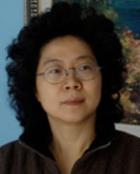
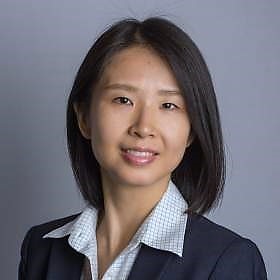
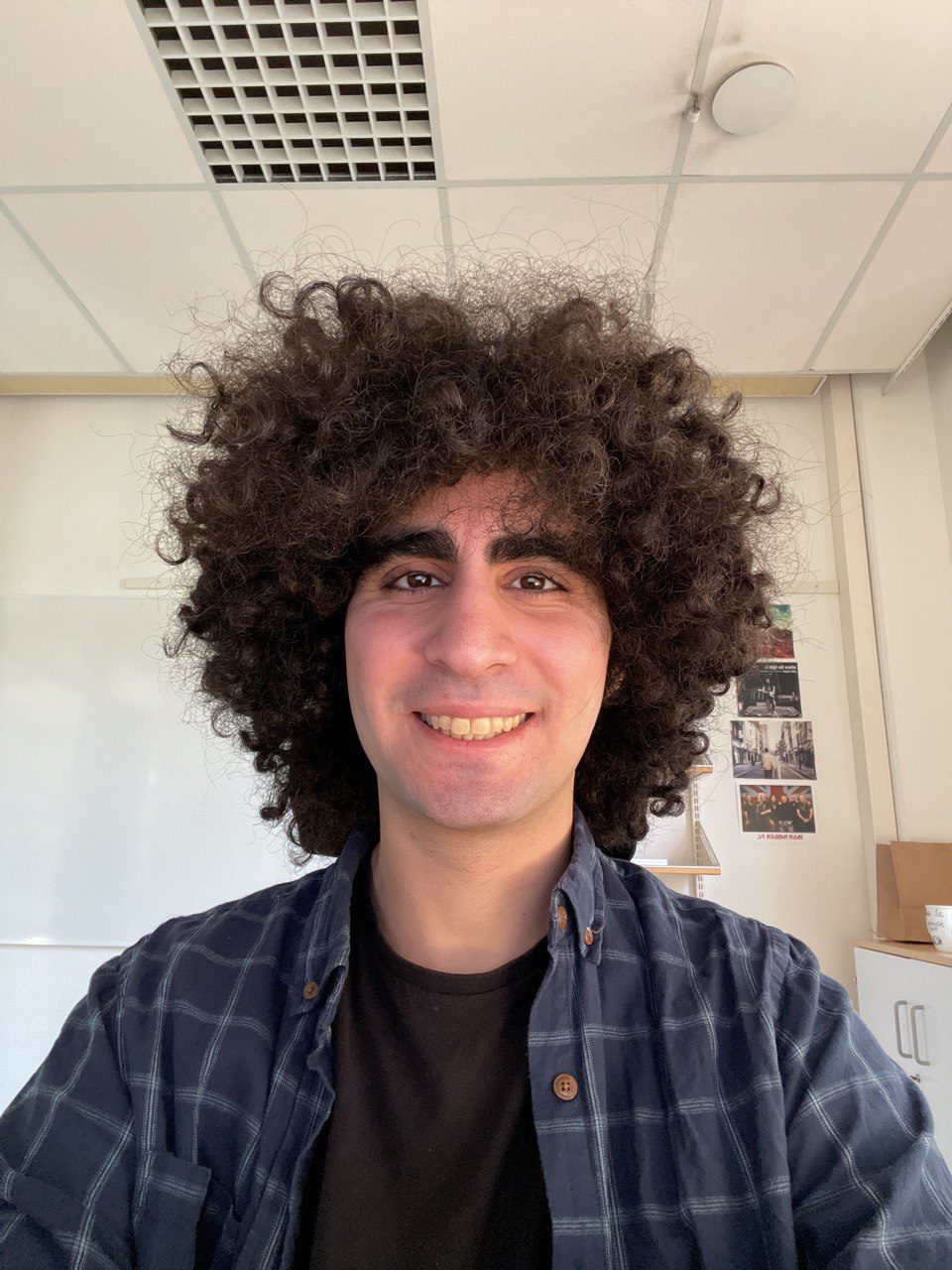
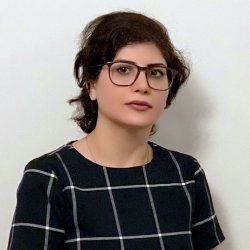
Wei Zhu is a Professor and Deputy Chair in the Department of Applied Mathematics and Statistics at Stony Brook University. She holds a Ph.D. in Biostatistics from UCLA (1996), an M.S. in Statistics from UIC (1992), and a B.S. in Mathematics from East China Normal University (1989). Her research focuses on biostatistics, brain image analysis, clinical trial design, and environmental modeling. Key areas include medical imaging algorithms, climate prediction systems, and statistical methodologies for biomedical studies. Her work spans interdisciplinary applications such as predictive analytics for kidney disease outcomes, synthetic data-driven climate forecasting, and cryptocurrency crash prediction frameworks. She has developed machine learning models for medical image segmentation and decision tree frameworks for risk stratification in pandemic contexts. Teaching includes courses like AMS 312 and AMS 572. Zhu’s research portfolio emphasizes translational statistics, with contributions to genomic modeling, financial market dynamics, and public health policy evaluation. Her lab addresses pressing challenges in healthcare analytics, environmental science, and computational biomedicine through rigorous statistical innovation.
Brian C. Sauer, PhD, MS is a researcher affiliated with the Department of Internal Medicine (primary) and adjunct departments including Biomedical Informatics , Family & Preventive Medicine , and Population Health Sciences . His work focuses on improving observational research methodologies through transparency and reproducibility frameworks. Education: PhD from University of Florida MS from University of Utah BS from University of Florida Dr. Sauer's research spans pharmacoepidemiology , medical informatics , and causal inference , with a particular emphasis on database research transparency and reproducibility. He leads the development of TRUST (Transparent ReUsable database and Statistical Tools) modules funded by the Veterans Health Administration and OMOP , enabling automated, shareable clinical workflows. His recent work examines cardiovascular risks in rheumatoid arthritis patients, drug safety monitoring via electronic health records, and multimorbidity pattern analysis using machine learning. Dr. Sauer collaborates extensively with epidemiologists, biostatisticians, and health services researchers across the Veterans Affairs system.
Saman Muthukumarana is a Professor and Head of the Department of Statistics at the University of Manitoba. He joined the department in 2010 as an Assistant Professor, was promoted to Associate Professor in 2016, and became a full Professor in 2022. He holds a BSc (Honours Special) in Statistics from the University of Sri Jayewardenepura, an MSc from Simon Fraser University, and a PhD from Simon Fraser University under Dr. Tim Swartz, focusing on Bayesian methods and applications. His research emphasizes Bayesian methodologies for complex models, with applications in social networks, health studies, sports analytics, environmental science, and machine learning. He has secured over $8.4M in research funding from NSERC, Mitacs, CIHR, and other organizations. His work has been published in journals such as the Canadian Journal of Statistics, Machine Learning with Applications, and IEEE Open Journal of Instrumentation & Measurement. Dr. Muthukumarana’s research spans Bayesian computation, biostatistics, data science, and environmental statistics. He has contributed to anomaly detection in buildings, predictive modeling for public health (e.g., Long COVID), and ecological studies like salmon stock recruitment. His collaborative projects include developing statistical tools for microbiome analysis and improving machine learning approaches for imbalanced datasets. He also leads the Data Science Nexus, fostering interdisciplinary research. His grants and collaborations highlight his role in advancing statistical methodologies for real-world challenges, including health, energy efficiency, and ecological conservation. While no specific awards are listed, his extensive funding and publication record reflect his scholarly impact. He currently supervises graduate students and actively participates in academic leadership roles.
Dr. Thomas M. Link serves as Professor and Division Chief of Musculoskeletal Radiology at the University of California, San Francisco (UCSF) in the Department of Radiology and Biomedical Imaging, with additional leadership roles as Director of the T32 Program, Clinical Director of the Musculoskeletal and Quantitative Imaging Research (MQIR) Group, and Co-Director of Clinical & Translational Musculoskeletal Imaging. His educational foundation includes an M.D. from Johannes Gutenberg University (1987), clinical training at Groote Schuur Hospital (University of Cape Town), multiple German radiology residencies, and a Ph.D. from University Hospital Muenster. Following a UCSF fellowship (1996) and Visiting Associate Professorship (1999-2001), he joined UCSF in 2003 after serving as Vice-Chair of Radiology at Technical University of Munich. Dr. Link's research centers on translational musculoskeletal imaging through three interconnected pillars: osteoporosis imaging (novel bone quality/density assessment), osteoarthritis and cartilage imaging (prevention of degeneration using high-field MRI), and interventional bone tumor techniques . His work leverages 3.0T/7.0T MRI and MR-guided focused ultrasound to bridge laboratory discoveries with clinical applications, emphasizing quantitative biomarkers for disease progression. His extensive publication record (400+ peer-reviewed articles) reveals current trends in adipose tissue's role in joint degeneration, AI-driven image analysis (particularly GPT-4 for report extraction), and multicenter validation of imaging biomarkers using Osteoarthritis Initiative data, with recent work increasingly incorporating machine learning for diagnostic precision. Scientific recognition includes election to AIMBE College of Fellows (2019), multiple mentoring awards (UCSF Outstanding Faculty Mentoring Award 2019), the Lodwick Award (Harvard 2019), and Distinguished Investigator Award (Academy of Radiology Research 2016), reflecting sustained contributions across research, education, and clinical innovation. As T32 Program Director, he oversees NIH-funded training for imaging scientists while leading MQIR's interdisciplinary team in developing clinical applications. His mentorship excellence is evidenced by the Pathways to Discovery Long-Term Mentor Award (2018) and sustained involvement in collaborative projects like the Osteoarthritis Initiative, demonstrating exceptional grant management across multi-institutional consortia. The MQIR Group under his direction integrates basic scientists and clinicians to translate imaging innovations into clinical practice, with current focus on quantitative MRI biomarkers for early disease detection and MR-guided therapeutic interventions for musculoskeletal disorders.
Professor Lilian Tang is a faculty member in the School of Computer Science and Electronic Engineering at the University of Surrey, holding a position in the Computer Science Research Centre. She holds degrees of BEng, MEng, and PhD (Cantab) from the University of Cambridge. Her research focuses on applying machine learning to image and natural language understanding, with emphasis on medical domains such as surgical instrument tracking, retinal image analysis, bacterial cell imaging, and collaborations with NHS hospitals globally. She also explores nature-related projects with institutions like the Royal Botanic Gardens, Kew. Education: BEng, MEng, PhD (Cantab) from University of Cambridge. Research Interests: Computer vision, image processing, machine learning, natural language processing, medical imaging analysis, and nature image data analysis. Collaborations: Moorfields Eye Hospital, Royal Surrey County Hospital, UCL NHS hospitals, Royal Botanic Gardens, Kew, and institutions in China, Australia, and Italy. Teaching: Courses include COM2028 Introduction to AI and COM3025 Deep Learning and Advanced AI. Research Highlights: Her work spans automated surgical instrument tracking, retinal image analysis for systemic conditions, bacterial cell image analysis, and heritage plant studies. Projects emphasize clinical applications and cross-disciplinary collaboration.
Jingjing Meng is a Senior Scientist affiliated with the Computer Science and Engineering Department at the University at Buffalo, SUNY, and Amazon. She holds a Ph.D. from Nanyang Technological University (NTU, Singapore), advised by Prof. Yap-Peng Tan, along with an M.S. from Vanderbilt University and a B.E. from Huazhong University of Science & Technology, China. Her research focuses on multimedia, large multimodal models, product recommendation/search, and computer vision applications. Notable contributions include work on surgical triplet recognition, 3D object representation, and video summarization. She has received the 2016 IEEE Transactions on Multimedia Best Paper Award. Service Roles: Technical Program Co-Chair (ICME 2024), Tutorial Co-Chair (ACM MM 2024), Area Chair (AAAI 2021-2025), and Associate Editor for IEEE TMM, Signal Processing: Image Communication, and others. Leadership: Member of IEEE IVMSP TC, VSPC TC, and MSA TC committees, and a Senior Member of IEEE. Teaching includes courses like Multimedia Systems (CSE 534), Computer Graphics (CSE 410/580), and Discrete Structures (CSE 191). Her work bridges theoretical advancements and practical applications in multimedia and AI.
Sina Sheikholeslami is a Researcher at the Division of Energy Systems, Department of Energy Technology at KTH Royal Institute of Technology. He works on leveraging AI for sustainability and climate action, focusing on projects like Beyond 2030 and OnStove. His affiliations include the KTH Climate Action Centre and Vinuesa Lab. He holds a PhD in Distributed Computing from KTH (2025), advised by Vladimir Vlassov, Amir Payberah, and Jim Dowling, with prior M.Sc. studies at Eindhoven University of Technology and KTH through the EIT Digital Master School. He also completed a B.Sc. in Computer Software Engineering at Amirkabir University of Technology. Research interests include distributed systems, machine learning, deep learning, and their applications in sustainable development. Notable work includes developing frameworks like AutoAblation for ablation studies and Importance-aware DPT for dataset partitioning, which earned the Best Artefact Award at DAIS 2023. His recent work explores using LLMs for ablation studies and weight initialization techniques from hyperparameter trials. Academic leadership roles include serving on the KTH PhD Chapter’s Board, EECS PhD Student Council, and committees such as the School Assembly and Third-Cycle Education Council. He is Sweden’s Local Representative for the EIT Digital Alumni Foundation. His teaching roles include assistant and teacher in courses like Data Mining and Data-Intensive Computing. He supervises multiple students, including those exploring topics like scalable model training with Ray and feature stores in Hopsworks. His research spans environmental monitoring (e.g., ExtremeEarth), public transit systems (DUGET), and interdisciplinary applications of ML in wood science and urban planning.
Samaneh Kouchaki is a Senior Lecturer in Machine Learning for Healthcare at the University of Surrey, affiliated with the Centre for Vision, Speech and Signal Processing (CVSSP) within the School of Computer Science and Electronic Engineering. She leads research on machine learning applications in healthcare, particularly dementia care and antibiotic resistance. Her roles include teaching, supervision of 6 PhD students, and collaboration with the UK Dementia Research Institute. Education : PhD in Computer Science (University of Surrey, 2015), postdoctoral research at University of Oxford (TB genomics) and University of Manchester (bioinformatics). Research Interests : Focuses on healthcare AI, including biomedical signal processing, graph learning for omics data, and sensor-based remote monitoring. Develops machine learning tools for early disease detection and personalized care. Publications : Over 30 peer-reviewed articles in top journals like NPJ Digital Medicine and The Lancet Microbe , covering topics from antibiotic resistance prediction to dementia care technologies. Recent work emphasizes lightweight models for clinical NLP and unsupervised anomaly detection. Lab & Teams : Leads research in health AI at CVSSP, collaborating with UK DRI, Imperial College London, and NHS trusts. Develops TIHM platform for remote monitoring of dementia patients.
Jason Gu is a Professor in the Department of Electrical and Computer Engineering at Dalhousie University, cross-appointed to the School of Biomedical Engineering. His research integrates robotics, control systems, and biomedical engineering to develop innovative solutions for mobile robotics, surgical systems, and rehabilitation technologies. His primary research domains include: Robotics : Mobile robotics, surgical robots, rehabilitation assistive devices, wireless control systems, and multi-sensor data fusion. Biomedical Engineering : Artificial eye implant control, medical robotic devices, and rehabilitation technology design. Control Systems : Real-time intelligent control, nonlinear systems theory, and embedded control applications. Alternative Energy : Development of novel energy technologies and systems. Analysis of his recent publications (2023-2025) reveals a strong convergence of AI with robotics, particularly in vision-language models for human-robot interaction, semantic SLAM for dynamic environments, and medical image processing. His work shows increasing emphasis on lightweight algorithms for UAVs, neural interfaces, and energy-efficient control systems for aerospace applications. His distinguished honors include: IEEE Canada President (2020-2021) and President-elect (2018-2019) Fellow of the Engineering Institute of Canada (FEIC) Fellow of the Canadian Academy of Engineering (FCAE) Professional Engineer (PEng) designation Professor Gu leads a dynamic research laboratory developing advanced robotic platforms including the PA10 Portable General-Purpose Intelligent Arm and B21r Mobile Robotic System. His team actively pursues real-world applications in surgical robotics, terrain perception for legged robots, and alternative energy systems through industry-academic partnerships and competitive research grants.
Xin Xing is an Assistant Professor at the University of Nebraska at Omaha, College of Information Science & Technology, Department of Computer Science. Their research bridges machine learning, neuroscience, and biomedical applications. Education: Ph.D. in Computer Science (2023), University of Kentucky M.S. in Information Technology (2016), University of Stuttgart B.S. in Communications Engineering (2011), Shandong University Research Interests: Medical Imaging AI: Developing models for Alzheimer's disease diagnosis using 3D PET/MRI and transformers (e.g., ADViT, CAT-XPLAIN) Gut-Brain Axis: Investigating microbiome impacts on neurodegeneration, particularly in APOE4 carriers Computer Vision: Innovating diffusion models, self-supervised learning, and attention mechanisms for biomedical and geospatial applications Publication Trends: Recent work focuses on neuroimaging biomarkers for Alzheimer's, microbiome interventions, and scalable vision-language architectures. They integrate cutting-edge ML techniques with clinical data analysis. Collaborations: Engaged in interdisciplinary projects spanning genetics, nutrition, and traffic safety. Their work appears in journals like Communications Biology and explores real-world applications such as roadway hazard detection via satellite imagery.
Xuguang Ai, MS, is a researcher at Yale School of Medicine specializing in biomedical natural language processing and large language models for healthcare applications. Their work focuses on applying AI to medical domains, particularly ophthalmology, with numerous publications in 2024-2025. Research interests center on biomedical natural language processing , large language model evaluation in clinical contexts , and specialty-specific AI applications . Their work bridges the gap between artificial intelligence and practical healthcare needs, developing systems that can understand and process medical text with clinical accuracy. Their publication record shows a strong emphasis on benchmarking methodologies for medical AI systems, with multiple studies evaluating LLM performance across thousands of clinical questions. Recent work includes developing ophthalmology-specific language models and improving medical information extraction systems. Award recognition has not been specified in available materials, but their high-impact publications in venues like Nature Communications demonstrate significant scholarly contribution to the field. Research activities include leading projects on medical question answering systems, clinical decision support tools, and specialized language models for healthcare domains. The work integrates systems immunology, engineering, and AI to monitor, predict, and improve human health as part of Yale's broader research initiatives.
Dr. Yan Gong is a Lecturer in Computer Science at Bournemouth University, Faculty of Science and Technology, Department of Computing and Informatics. He holds a PhD in Computer Science from Loughborough University (2023) and a Master’s degree in Communications and Signal Processing with distinction from Newcastle University (2012). Before academia, he worked over six years as a lead AI engineer in industry. Research Interests: Dr. Gong specializes in cutting-edge areas of artificial intelligence, including Natural Language Processing (NLP), Cross-modal Learning, Generative AI, and AI Agents. His work bridges theoretical advances with real-world applications, particularly in multimodal information retrieval and neural search systems. He is passionate about solving practical problems through AI and actively collaborates with industry partners. Publication Trends: His recent publications (2021–2024) focus on improving cross-modal information retrieval using deep learning, especially Vision Transformers and semantic embedding techniques. Key themes include hard negative mining, relation-focused learning, and neural search engines for artwork and general domains, published in high-impact journals like Pattern Recognition and ACM Transactions on Knowledge Discovery from Data . Scientific Service: Reviewer, Pattern Recognition (Elsevier) Reviewer, ACM MM 2023 Conference Guest Editor, IEEE Journal of Biomedical and Health Informatics Reviewer, Neural Networks , Knowledge and Information Systems , AI Communications Teaching and Advising: Dr. Gong is the unit leader for COMP7076 (Industrial Skills and Professional Issues) in the MSc Human-Centred Artificial Intelligence program. He supervises postgraduate students and welcomes PhD applicants interested in NLP, Generative AI, and multimodal AI. While no specific students are listed, he emphasizes mentorship and real-world research translation. Labs and Research Groups: Though not explicitly named, Dr. Gong is affiliated with AI and computing research activities at Bournemouth University, contributing to the university's research in human-centred AI and intelligent systems. His collaborations with Dr. Georgios Cosma and others suggest active participation in a research team focused on multimodal learning and information retrieval.
Giovanna Maria Dimitri is an Assistant Professor Tenure Track in Artificial Intelligence at Universitá degli Studi di Milano (Statale), with additional affiliations at the ICE, University of Cambridge, and the Dipartimento di Ingegneria dell'Informazione e Scienze Matematiche (DIISM) at the University of Siena. She earned her PhD in Artificial Intelligence from the University of Cambridge under Prof. Pietro Liò, focusing on multilayer network methodologies for brain data analysis. She holds an MPhil in Advanced Computer Science from Cambridge with distinction and completed her Master’s and Bachelor’s in Computer and Automation Engineering at the University of Siena, both with top honors. PhD in Artificial Intelligence – University of Cambridge, UK MPhil in Advanced Computer Science – University of Cambridge, UK (Distinction) Master’s & Bachelor’s in Computer and Automation Engineering – University of Siena, Italy (110/110 cum laude) Her research spans a broad spectrum of artificial intelligence, including foundational models, deep learning, brain data modeling, and applications in healthcare, environmental science, and sustainability. She is particularly known for her work on GAN detection, emotional image datasets, climate change impact modeling, and AI for Sustainable Development Goals. Her interdisciplinary approach integrates computer science with neuroscience, public health, and social impact. Her recent publications reflect a strong trend in applying AI to real-world problems such as healthcare diagnostics (e.g., Brugada Syndrome detection), environmental monitoring (air quality, climate change on agriculture), and ethical AI (CO2 emissions of ML models). She also contributes to digital humanities and science communication, indicating a commitment to societal engagement and interdisciplinary collaboration. She has received the competitive Ai-Net Fellows Scholarship from DAAD in 2023, enabling collaboration with Prof. Gemma Roig’s lab. She is an Associate Editor for Neurocomputing (Elsevier) and was elected Associate Editor of IEEE Transactions on Technology and Society in May 2024. Dimitri has extensive teaching experience, lecturing Business Intelligence at the University of Siena and serving as a Guest Lecturer in Data Science at the University of Cambridge’s Institute of Continuing Education. She has supervised numerous students and has a publication record of nearly 60 peer-reviewed papers. She is also active in science communication, having been interviewed by Italian media and appearing on Rai Radio 1. She is a life member of Clare Hall College, University of Cambridge, and continues to contribute to academic and public discourse on AI through seminars, workshops, and editorial leadership.
Niloofer Shanavas is an Assistant Professor in the School of Computer Science at the University of Birmingham, Dubai campus. She holds a PhD in Computer Science from Ulster University, UK (2020), and an M.Tech in Computer Science and Engineering with specialization in Information Systems from Rajagiri School of Engineering and Technology, India (2014). Her research focuses on artificial intelligence, machine learning, natural language processing, text mining, and semantic computing . She develops innovative approaches combining graph-based methods, ontologies, and deep learning models to enhance text classification, information extraction, and knowledge representation in both medical and technical domains. Recent publications demonstrate a strong trend in applying advanced NLP techniques—particularly graph-based learning, contextual embeddings, and large language models—to challenging real-world problems such as clinical concept annotation, tender document analysis, and structured entity extraction from unstructured and tabular data. Scientific Awards: No scientific awards mentioned in the provided text. She is actively engaged in research and publication, with recent contributions in 2024 and upcoming works in 2025. Although her advisees and grant funding are not listed, her collaborative work with researchers such as H. Wang, Z. Lin, G. Hawe, and A. Abbas indicates strong research team involvement. Her work suggests leadership in developing knowledge-driven AI systems for complex document understanding. Labs and Research Teams: While specific lab affiliations are not mentioned, her research outputs imply active participation in NLP and AI research groups, particularly focused on semantic computing and document intelligence.
Wei Hu is a full Professor and Ph.D. supervisor in the Department of Computer Science and Technology at Nanjing University, China. He earned his Ph.D. and B.S. from Southeast University in 2009 and 2005, respectively, and joined Nanjing University faculty in 2009. He has held visiting positions at Stanford University (2014-2015), University of Texas at Arlington (2016-2017), and University of Toronto (2017) as a visiting scholar/professor. Research Interests focus on Knowledge Graphs : Representation learning, foundation models, and error detection Databases : Entity alignment, crowdsourcing, and blockchain integration Digital Medicine : Collaboration with Nanjing University's National Institute of Health Data Science Publication Trends show expertise in knowledge graph reasoning, federated learning, and biomedical applications. Recent works include in-context learning for graph reasoning and blockchain-based data fusion systems. Scientific Awards include Huawei 2025 Challenges Spark Award ASE 2024 Distinguished Paper Award CHIP 2021 Best Paper Award CCKS 2018 Best English Paper Award Nanjing University Study Abroad Program Awardee (2013) IBM China Excellent Student (2008) Advising involves leading the Knowledge Fusion Group at Nanjing University, mentoring 18 current and former Ph.D. and Master's students. Professional services include editorial roles at Transactions on Graph Data and Knowledge and Big Data Research , plus committee memberships in CCF, CIPSC, and JSCS.