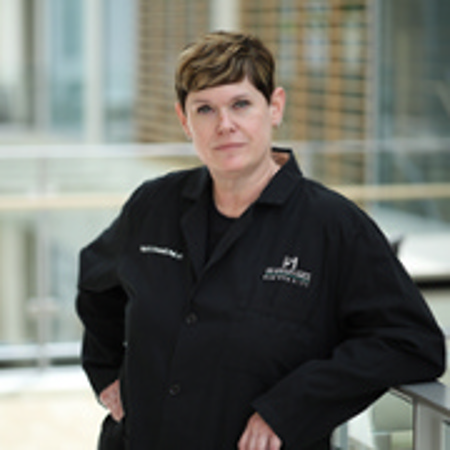
Lawton Robert Burns is the James Joo-Jin Kim Professor and Professor of Healthcare Management at the Wharton School, University of Pennsylvania . He serves as Co-Director of the Roy and Diana Vagelos Program in Life Sciences and Management and Chairperson of the Health Care Systems Department since 2008. His career spans academic roles at the University of Chicago, University of Arizona, and University of Wisconsin. Education: PhD in Sociology, University of Chicago (1981) MBA in Health Administration, University of Chicago (1984) MA, University of Chicago (1976) BA, Haverford College (1973) Dr. Burns specializes in healthcare organization design , strategic change , and supply chain dynamics . His work examines hospital-physician relationships , integrated delivery systems , and market forces in healthcare. His recent publications analyze Pharmacy Benefit Managers (PBMs) , Group Purchasing Organizations (GPOs) , and strategic implementation failures. Notable awards include the Arthur Anderson Distinguished Visitor (2001), Edwin Crosby Memorial Fellowship (1992-93), and Udall Fellowship (1990-91). His research has been featured in Knowledge at Wharton , LDI News , and American Political Science Review . Dr. Burns co-authors works with experts like David Dranove and Stephen Shortell , focusing on clinical integration , retail supply chains , and global healthcare models (India, China).
Jeffrey Krolik is a Professor of Electrical and Computer Engineering at Duke University's Pratt School of Engineering. He holds a Ph.D. in Electrical Engineering from the University of Toronto (1987) and previously served as an Assistant Professor at Concordia University and Assistant Research Scientist at Scripps Institution of Oceanography. Ph.D. University of Toronto (1987) M.A. University of Toronto (1983) B.A. University of Toronto (1980) His research focuses on physics-based and statistical signal processing with applications in radar, sonar, microwave remote sensing, and medical imaging. Key projects include adaptive beamforming for ocean acoustic waveguides, aircraft height finding via HF radar, and motion-robust fMRI algorithms. Recent publications cover multipath mitigation in sonar arrays, vibrational radar backscatter communication, and CNN implementations for radar signal processing. His work spans underwater acoustics, urban radar tracking, and distributed sensor networks. He teaches advanced courses in sensor array signal processing, digital audio systems, and radar applications. His research has been supported through collaborations with institutions like Scripps and consulting roles with ONR, DARPA, and Air Force Rome Laboratories. Key contributions include waveguide invariant processing, matched-field beamforming, and novel approaches to radar clutter suppression in urban and maritime environments. His work integrates statistical signal processing with physical propagation models across diverse domains.
Professor Lydia Bourouiba is a faculty member at the Massachusetts Institute of Technology (MIT), affiliated with the Department of Civil and Environmental Engineering and the Institute for Medical Engineering and Science (IMES). Her research focuses on the intersection of fluid dynamics and disease transmission, with a strong emphasis on biophysics, interfacial flows, turbulence, and multiphase systems. Ph.D. in Applied Mathematics from McGill University (2008) Research on fluid fragmentation, droplet/bubble dynamics, and pathogen transport Co-Founder and Associate Director of the NSF Center for Pandemic Prevention (APPEX) Her work spans fundamental and applied domains, including: Biophysics of pathogen transport in air and water Turbulent multiphase flows in respiratory events Fluid-plant interactions in agricultural disease Nonlinear dynamics in public health contexts Key article trends highlight: Biomedical fluid mechanics Climate and environment-driven disease modeling High-risk/high-reward public health innovations Interdisciplinary approaches combining physics, biology, and engineering Scientific awards include: Fellow of the American Physical Society (2021) American Institute for Medical and Biological Engineering Fellow (2022) Smith Family Foundation Odyssey Award for biomedical research Ole Madsen Mentoring Award She serves as Associate Editor for the journal FLOW and has founded conferences like the Gordon Research Conference on Fluids in Disease Transmission. Her lab (Fluids and Health Network) develops experimental and theoretical frameworks to address contamination, pandemic control, and fluid-health-environment interactions.
Prabir Burman is a Professor in the Department of Statistics at the University of California, Davis, with a career spanning over three decades. His research focuses on nonparametric function estimation, model fitting/selection, image analysis, time series, and discrete data. Education: Ph.D. (1982) and Master of Statistics (1977) from University of California, Berkeley; Bachelor of Statistics (1976) from Indian Statistical Institute, Calcutta. His work bridges theoretical statistics and applied problems, including ecological studies (e.g., coyote parasites, mountain lion tracking), biomedical research (e.g., metabolic syndrome in bipolar patients), and time series forecasting. He has secured multiple NSF and NSA grants for projects on multivariate analysis, shape modeling, and covariance estimation. Recent publications highlight his expertise in predictive model fitting, stock return analysis, and stroke survivor studies. While not explicitly listing awards, his editorial roles (e.g., Journal of Multivariate Analysis) and collaborative grants underscore his academic leadership.
Zhi-Pei Liang is the Franklin W. Woeltge Professor in the Department of Electrical and Computer Engineering at the University of Illinois at Urbana-Champaign, with joint appointments in the Department of Bioengineering, Beckman Institute for Advanced Science and Technology, and Coordinated Science Laboratory. His research spans biomedical engineering, medical imaging, and signal processing with a focus on advancing magnetic resonance imaging and spectroscopy technologies. His educational background includes a Ph.D. in Biomedical Engineering from Case Western Reserve University (1989) and a B.S. in Electrical Engineering from South-China University of Technology (1982), followed by postdoctoral training at UIUC (1989-1991). Professor Liang's research interests center on magnetic resonance imaging and spectroscopy , with particular emphasis on ultrafast imaging techniques , model-based reconstruction methods , and the integration of physics-based modeling with machine learning . His pioneering work on SPICE (SPectroscopic Imaging by exploiting spatiospectral CorrElation) has revolutionized high-resolution metabolic brain imaging by enabling label-free molecular imaging through the marriage of spin physics and machine learning. His research spans pattern recognition, parameter estimation, image formation theory, and algorithms for medical imaging applications. Analysis of his recent publications reveals a strong focus on high-resolution metabolic imaging , particularly using SPICE methodology to map brain metabolism with unprecedented detail. His work bridges fundamental physics of magnetic resonance with advanced computational methods to overcome traditional limitations in imaging speed and resolution. Current research directions include J-resolved spectroscopic imaging, deuterium-based metabolic mapping, and multimodal integration of PET and MRSI for studying neurological disorders. Elected to International Academy of Medical and Biological Engineering (2012) Gold Medal, International Society for Magnetic Resonance in Medicine (2022) Technical Achievement Award, IEEE Engineering in Medicine and Biology Society (2014) Fellow, National Academy of Inventors (2021) Author of influential book 'Principles of Magnetic Resonance Imaging' (1999) President of IEEE Engineering in Medicine and Biology Society (2011-2012) Professor Liang has advised numerous students and postdocs in biomedical imaging research and has received multiple teaching honors including the Ronald W. Pratt Outstanding Teaching Award (2005) and multiple listings among UIUC's Excellent Teachers. His research has been supported by various grants from NIH, NSF, and other funding agencies. He leads the SPICE (Spectroscopic Imaging by exploiting spatiospectral Correlation) research group which focuses on developing novel imaging techniques that combine physics-based modeling with machine learning for ultrafast metabolic imaging. His laboratory, part of the Beckman Institute's Integrative Imaging Theme, collaborates extensively with clinical researchers at Carle Illinois College of Medicine and other institutions to translate advanced imaging techniques into clinical applications for neurological disorders, cancer, and metabolic diseases. Current projects focus on high-resolution mapping of brain metabolism in Alzheimer's disease, stroke, and brain tumors using novel MR spectroscopic imaging techniques.
Philipp Eichmeir is a Researcher at the Research Center Wels within the Upper Austria University of Applied Sciences . His work focuses on optimal control , multibody dynamics , and adjoint methods applied to robotics and automotive systems. Expertise in adjoint gradient computation for extremal value optimization Active in automotive/mobility and smart production domains Philipp's research spans computational mathematics , robotics , and mechanical engineering , utilizing advanced numerical methods and simulation modeling for complex dynamic systems. His recent publications focus on multibody dynamics , adjoint optimization , and inequality constraint handling in control systems. Collaborative projects include IOMMS (Innovative Optimization Methods for Multibody Systems) and JR-Centre for Thermal NDE of Composites . Scientific Awards Best Paper Award (2020) Automatisierte Körperschallauswertung (2015)
Weiyu Xu is a Professor at the University of Iowa, affiliated with both the Department of Electrical and Computer Engineering and the Department of Applied Mathematical and Computational Sciences. He joined the College of Engineering in 2012 and leads the Intelligent Information Processing Lab (IIPL). Ph.D., Electrical Engineering, California Institute of Technology, 2009 M.S., Electrical Engineering, California Institute of Technology, 2006 M.S., Electronic Engineering, Tsinghua University, 2005 B.E., Information Engineering, Beijing University of Posts and Telecommunications, 2002 His research focuses on compressive sensing, information theory, signal processing, network optimization, and deep learning applications in medical imaging and cybersecurity. He has made significant contributions to adversarial attack robustness, distributed optimization algorithms, and medical imaging techniques for OCT segmentation and brachytherapy. Recent publications highlight trends in Adversarial machine learning Medical imaging algorithms Compressed sensing for diagnostics Optimization in wireless communication He has also contributed to federated learning over tree networks and theoretical guarantees for sparse signal recovery. Weiyu Xu's lab, IIPL, integrates deep learning with classical optimization and signal processing. His work bridges foundational theories (e.g., information-theoretic robustness) with real-world applications in healthcare (e.g., cancer treatment planning) and communication systems (e.g., MIMO channel estimation).
Dan Nguyen, Ph.D., is a faculty member in the Department of Radiation Oncology at UT Southwestern Medical Center, where he is part of the Division of Medical Physics and Engineering. He is a founding member of the Medical Artificial Intelligence and Automation (MAIA) Laboratory, collaborating closely with Dr. Steve Jiang to advance AI applications in radiotherapy. His work focuses on deep learning for treatment planning, dose prediction, auto-segmentation, and adaptive radiotherapy. Ph.D. in Biomedical Physics, University of California, Los Angeles (UCLA), 2017 Mentor: Dr. Ke Sheng Faculty appointment at UT Southwestern since 2017 Dr. Nguyen’s research is centered on applying artificial intelligence to solve critical challenges in radiation oncology. His primary interests include deep learning-based dose prediction, auto-segmentation of anatomical structures, optimization of treatment plans, and real-time adaptive radiotherapy. He has pioneered work in direct aperture optimization, 4π radiotherapy, and uncertainty quantification in AI models. His research bridges the gap between AI innovation and clinical implementation, with a focus on improving plan quality, reducing planning time, and enhancing accessibility for less experienced clinicians. The most recent publications (2023–2025) demonstrate a consistent trend in developing fast, accurate, and robust deep learning models for radiotherapy. Key themes include dose prediction with transfer and meta-learning, adaptive segmentation using test-time optimization, uncertainty assessment in AI predictions, and mathematical modeling of radiotherapy-immunotherapy synergy. These works span high-impact journals in medical physics, AI, and oncology, reflecting interdisciplinary innovation. While no specific scientific awards are listed, Dr. Nguyen’s leadership in the MAIA Lab and extensive publication record in top-tier journals indicate significant recognition in the field of medical physics and AI in medicine. Dr. Nguyen has co-authored numerous studies involving mentoring and collaborative research, particularly with trainees and junior faculty in the MAIA Lab. His work is supported by institutional and likely federal funding, given the scale and scope of AI deployment studies. He has contributed to large-scale collaborative efforts such as OpenKBP-Opt, involving international teams evaluating knowledge-based planning pipelines. The MAIA Laboratory is a multi-investigator research group focused on innovating, developing, and applying artificial intelligence technologies to empower clinicians—especially those with less experience or limited resources—for improved patient care. The lab’s work spans machine learning, deep learning, reinforcement learning, and mathematical modeling in radiation oncology.
Kwantae Kim is an Assistant Professor at the Department of Electronics and Nanoengineering within Aalto University's School of Electrical Engineering . He leads the Tiny Systems and Circuits (TSirc) Group , focusing on power-efficient analog/mixed-signal ICs for biomedical and neuromorphic sensor systems. IEEE Senior Member (2025) Collaborates with institutions across Europe, Asia, and America Specializes in ultra-low-power AI-embedded IoT platforms His research emphasizes Tiny, Sensory, Intelligent, and Wireless IoT systems through: Development of energy-efficient IC architectures Democratizing access to advanced chip design Hardware-software co-design for edge computing Recent publications highlight innovations in: Spoken-language-understanding SoCs Temporal-sparsity-aware keyword spotting Open-source silicon frameworks Awards include: 2025 IEEE Senior Member 2023 Best Poster Award (AICAS) 2019 Samsung HumanTech Silver Award Research partnerships span: Prof. Tobi Delbruck (UZH/ETH Zurich) Prof. Hoi-Jun Yoo (KAIST) Prof. Shih-Chii Liu (UZH) Prof. Sohmyung Ha (NYU Abu Dhabi)
Gary M. Shaw is the Rosemarie Hess Professor and Professor (Research) at Stanford University , with courtesy appointments in the Department of Epidemiology and Population Health and Department of Obstetrics & Gynecology - Maternal Fetal Medicine . He serves as Co-PI of the March of Dimes Prematurity Research Center at Stanford and PI of the California Center for Finding Causes and Preventives of Birth Defects . His research focuses on the Epidemiology of birth defects Gene-environment interactions in perinatal outcomes Nutritional factors in reproductive health . He has developed machine learning approaches for precision parenteral nutrition and predictive models for preterm birth, while investigating persistent metabolomic signatures following hypertensive pregnancy disorders. Shaw's recent work explores Climate change impacts on reproductive health Maternal-fetal immune interactions Epigenetic mechanisms in perinatal disease with applications of multiomics to neonatal intensive care units. As a member of Bio-X and the Maternal & Child Health Research Institute , he contributes to translational research networks while serving as Associate Editor for Birth Defects Research and American Journal of Medical Genetics . He supervises Med Scholar Project student Richard Liang Doctoral co-advisor for Saskia Comess and Richard Liang Master's advisor for Lenae Joe while leading the Division of Neonatology as Associate Chair for Clinical Research (2012-2025). His laboratory work integrates Metabolomic profiling Proteomic analysis Computational modeling Machine learning for biomedical data to advance neonatal care through precision medicine approaches.
Prof. Dr. Soeren Lienkamp is an Assistant Professor at the Institute of Anatomy , Faculty of Medicine , University of Zurich . His work bridges digital education and genetic research , focusing on enhancing medical teaching through innovative formats. Research Interests : Genetics, developmental biology, kidney disease modeling, CRISPR applications, digital medical education, and advanced microscopy. Methodologies : Combines Xenopus tropicalis models, deep learning , and bioengineering to study genetic kidney disorders and improve diagnostic tools. Publication Trends : His recent articles highlight predictable genome editing , 3D imaging technologies , and mechanistic insights into kidney and eye development. Earlier works focus on ciliary function , Wnt signaling , and metabolic stress in renal cells.
Scott L. Diamond is the Arthur E. Humphrey Professor of Chemical and Biomolecular Engineering and Bioengineering at the University of Pennsylvania's School of Engineering and Applied Sciences. He serves as Director of the Penn Center for Molecular Discovery, Director of the Penn Biotechnology Masters Program (one of the largest in the country with over 130 students), and Associate Director of the Institute for Medicine and Engineering (IME). His laboratory is located in the Roy and Diana Vagelos Laboratories at 3340 Smith Walk, 1020 Vagelos Research Laboratories, Philadelphia, PA. Diamond's research spans multiple interconnected fields in blood biology and biotechnology. His work focuses on mechanobiology, thrombolysis, coagulation, bioadhesion, gene therapy, drug/device development, proteomics, drug discovery, systems biology, and microfluidics. His laboratory has developed numerous specialized microfluidic devices for studying blood clotting under various flow conditions, including 8-channel devices for high-throughput clotting assays, side-view devices for clot structure analysis, stenosis devices for high shear clotting assays, and impingement-post devices for studying von Willebrand factor fibers. Diamond's research group has pioneered approaches to model and predict blood function using systems biology principles. His team has developed computational models that integrate reaction-transport phenomena with platelet signaling networks to predict thrombus formation under flow. These models have enabled the development of 'virtual blood' computer simulations that can predict the effectiveness of anticoagulation drugs for individual patients, contributing significantly to personalized medicine approaches in hemostasis and thrombosis. His extensive publication record demonstrates a consistent focus on understanding the fundamental mechanisms of blood clot formation and dissolution. Recent work has emphasized microfluidic approaches for point-of-care diagnostics, patient-specific modeling of platelet function, and the development of novel therapeutic strategies for thrombotic disorders. His research bridges engineering principles with clinical hematology to address significant challenges in cardiovascular medicine. NSF National Young Investigator Award NIH FIRST Award American Heart Association Established Investigator Award AIChE Allan P. Colburn Award George Heilmeier Excellence in Research Award Elected Fellow of the Biomedical Engineering Society (BMES) Diamond has secured significant research funding, including a $2.8 million NIH grant for 'Blood Systems Biology' and a $9.5 million NIH grant for the Penn Center for Molecular Discovery. His laboratory has developed numerous microfluidic devices for blood analysis and has collaborated extensively with clinicians and industry partners. Diamond has served on advisory committees for NSF, NIH, AHA, and NASA, and has consulted extensively for industry and government. With over 180 publications and patents, his work has significantly advanced the understanding of blood clotting mechanisms and the development of diagnostic and therapeutic approaches for thrombotic disorders.
Caryl E. Sortwell is a Professor of Translational Neuroscience and Edwin A. Brophy Endowed Chair in Central Nervous System Disorders at Michigan State University's College of Human Medicine. She leads the Sortwell Lab within the Neuroscience Program and Grand Rapids Research Center, focusing on Parkinson's disease (PD) therapeutics. Education : B.S. in Psychology/Pre-medicine (University of Illinois, 1987), Ph.D. in Anatomy and Cell Biology/Neurobiology (University of Illinois at Chicago, 1994) Positions : Assistant/Associate Professor at Rush University Medical Center (1997-2005), Associate Professor at University of Cincinnati (2005-2009), Professor at MSU College of Human Medicine (2009-present) Her research investigates alpha-synuclein pathology in PD using preformed fibril models to study neurodegeneration, neuroinflammation, and therapeutic interventions. She explores neurotrophic factors like BDNF, gene therapies targeting CaV1.3 channels, and deep brain stimulation mechanisms. Her work emphasizes precision medicine approaches to optimize treatment outcomes. Scientific contributions include methodological advancements in neurochemical sensing with diamond electrodes and viral vector delivery systems. Key collaborations include research with Dr. Joe Patterson on alpha-synuclein genetic consequences. Technical Expertise : Immunohistochemistry, stereotactic surgery, in vivo neurotoxicant models, protein analysis (Western blot/ELISA), droplet digital PCR, and neuroinflammatory profiling
Parisa Hosseinzadeh is an Assistant Professor in the Department of Bioengineering at the University of Oregon. Her research focuses on computational protein design and structure-guided rational protein/peptide engineering, with applications in enzyme design, biosensors, and biomedical solutions. She holds a B.Sc. from the University of Tehran, a Ph.D. from the University of Illinois (advisor: Yi Lu), and a postdoc at the University of Washington in David Baker's lab. Her lab emphasizes interdisciplinary approaches at the intersection of computer science, chemistry, and biology, prioritizing diversity and inclusion in STEM. Key projects include designing cyclic peptides as enzyme inhibitors, developing methods for tuning redox potentials in metalloproteins, and creating tools to combat biomedical challenges. Lab members include postdocs, graduate students (e.g., Noora Azadvari, Andrew Powers), and undergraduates. Notable achievements include NSF grants, the Baxter Foundation Award, and the Hans Horse Meyer Award. The lab also emphasizes mentorship, collaborative culture, and outreach initiatives.
Vernita Gordon is an Associate Professor in the Department of Physics at the University of Texas at Austin (since 2018), previously serving as an Assistant Professor there from 2010 to 2018. She holds a Ph.D. in Physics from Harvard University (2003) and a B.Sc. in Physics and Mathematics from Vanderbilt University (1997). Her research focuses on understanding how physical characteristics like mechanics and spatial structure influence bacterial biofilms, particularly their interactions with the immune system and resistance to antibiotics. She has pioneered techniques such as laser trapping to manipulate biofilm structures and studies radiation effects on bacteria like Deinococcus radiodurans . Education: Ph.D. in Physics, Harvard University (2003) B.Sc. in Physics and Mathematics, Vanderbilt University (1997) Research Interests: Dr. Gordon’s work integrates biophysics, microbiology, and materials science to explore biofilm mechanics, bacterial mechanosensing, and radiation biology. Key areas include: How biofilm mechanics resist immune clearance and antibiotic treatment Role of surface stiffness and shear stress in biofilm initiation Radiation resistance mechanisms in Deinococcus radiodurans Development of tools like laser trapping to study biofilm structure Key Achievements: Recipient of the Elizabeth B. Gleeson Professorship (2023) and Texas Mindset Initiative Fellowship (2023) Provost’s Teaching Fellow (2020–2024) and multiple teaching awards Funded by NSF, NIH, and Cystic Fibrosis Foundation Published over 60 peer-reviewed articles, including in Nature , PNAS , and Biophysical Journal Advising & Outreach: She mentors graduate students in Physics, Microbiology, and Biomedical Engineering, emphasizing interdisciplinary training. Her group actively recruits undergraduates and collaborates with industry partners like Solvay and the College of Pharmacy. Outreach includes lesson plans for high school STEM education and community science initiatives. Labs & Collaborations: Her lab uses advanced microscopy, microrheology, and computational modeling. Key collaborations include work with the Contreras Lab (UT Austin Chemical Engineering) on radiation-resistant bacteria and the Raizen Lab (UT Austin Physics) on self-sterilizing surfaces.