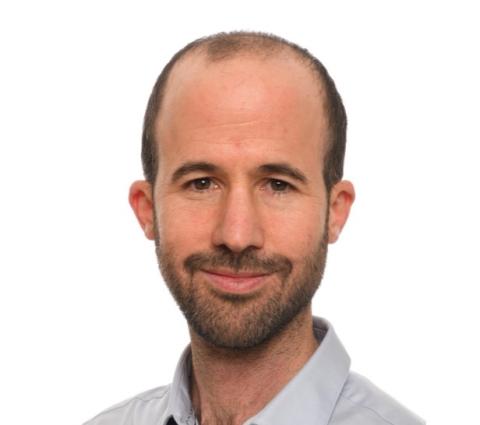
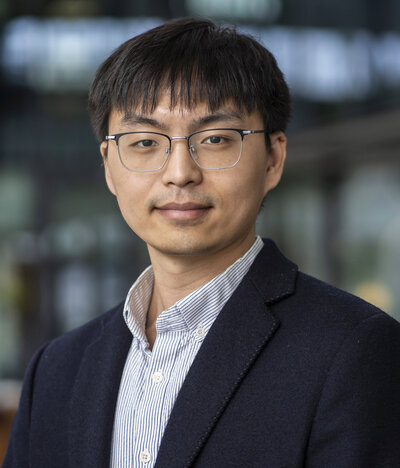
Hoifung Poon is General Manager at Microsoft Health Futures and affiliated faculty at University of Washington Medical School. He leads Real-World Evidence (RWE) research focusing on AI applications for precision health. Poon earned a B.S. with Distinction in Computer Science from Sun Yat-Sen University and a Ph.D. in Computer Science and Engineering from University of Washington. Specializes in biomedical AI research Focuses on structuring unstructured medical data Co-PI for DARPA Big Mechanisms projects Research strength lies in biomedical multimodal learning (text, radiology, pathology, genomics) and causal learning for real-world evidence generation. His team develops methods for LLM self-verification , multi-modal fusion , and biases correction in observational data. Publications show expertise in Nature , Nature Methods , and NEJM AI , covering topics from digital pathology to clinical text analysis. Scientific recognition includes: Best Paper Awards at NAACL, EMNLP, and UAI Winner of ACM Health Best Paper Award Named Technology Champion 2022 by Puget Sound Business Journal
Aidong Zhang is the Thomas M. Linville Professor at the University of Virginia and a Fellow of the ACM (2017), IEEE, and the American Institute of Medical and Biomedical Engineering. With 29 years of ACM membership, she founded the ACM Special Interest Group on Bioinformatics (SIGBio) in 2011 and served as its Chair and advisor until 2021, establishing its flagship ACM-BCB conference and serving as Steering Committee Chair until 2019. Her research pioneers bioinformatics, computational biology, and data mining through multimodal data fusion for heterogeneous integration, biomedical knowledge graph construction from scientific literature, and heterogeneous multi-omics data clustering. Recent work advances interpretable machine learning models for explainable complex data analysis in health informatics, evidenced by high citation impact and novel computational methodologies enabling biomedical discovery. Major recognitions include: ACM Distinguished Service Award (2023) for leadership in bioinformatics, computational biology, and data mining communities ACM Fellow (2017) for contributions to bioinformatics and data mining IEEE Fellow and Fellow of the American Institute of Medical and Biomedical Engineering She served as NSF Program Director (2015-2018) managing federal computing investments and founded diversity initiatives including Women in Bioinformatics, the PhD Student Forum, and Health Informatics Symposium. Editorial leadership includes Editor-in-Chief of ACM/IEEE Transactions on Computational Biology and Bioinformatics (2017-2021) and roles in ACM SIGMOD-DiSC, Multimedia Systems Journal, and SIGKDD 2022 General Chair.
Prof. Dr. Karsten Borgwardt is Director of the Research Department of Machine Learning and Systems Biology at the Max Planck Institute of Biochemistry in Martinsried, Germany. A leading figure in the intersection of machine learning, bioinformatics, and systems biology, he heads a multidisciplinary team that develops novel computational methods to extract knowledge from large biomedical data sets. Research Mission: The Borgwardt lab converges big data analytics and biomedical research . Two overarching goals drive their work: (1) Automatically generating new biological and medical knowledge from massive data via state-of-the-art machine-learning algorithms. (2) Understanding the molecular underpinnings of biological system function, with emphasis on personalized medicine and biomarker discovery. Their methodological toolbox spans graph neural networks, kernel methods, conformal prediction, deep learning on sequences and structures, and topological data analysis . Application domains include antimicrobial resistance prediction, protease engineering, acute-kidney-injury forecasting, coronary-artery-disease diagnostics, single-cell spatial proteomics, and Long-COVID immune profiling. Recent Publication Landscape (2023-2025): The group’s latest articles demonstrate a clear trend toward translationally relevant machine learning . High-impact venues such as Nature Communications , Science , ICLR , and RECOMB feature their work on: Data-driven protein engineering using DNA-recorded deep mutational scanning. Guaranteed antimicrobial resistance detection from MALDI-TOF spectra via conformal prediction. Graph-based biomarker discovery with theoretical guarantees. Deep phenotyping of human iPSC-derived neuronal networks to study disease mutations. Multi-modal learning that fuses genomics, proteomics, and clinical data for patient stratification. These contributions collectively advance both the theoretical foundations and real-world deployment of machine learning in medicine. Scientific Awards & Honors: While no explicit award list is provided, the breadth and impact of publications, invited book chapters, and keynote-level conference presentations (ICLR, RECOMB, ISMB/ECCB) testify to sustained international recognition. Laboratory & Collaboration Ecosystem: The Borgwardt lab operates at the Max Planck Institute of Biochemistry —a world-leading biomedical research campus. Collaborations span multiple Max Planck centers, university hospitals across Europe, and international consortia such as the EyeConic study on optogenetics therapy. The lab’s open-source footprint includes the Multi-SConES R package for multi-task network-regularized feature selection, fostering reproducible science across the community.
Slavko Žitnik is an Associate Professor and Vice-dean at the Faculty of Computer and Information Science, University of Ljubljana, where he is a member of the Laboratory for Data Technologies. His academic career spans multiple research projects and international collaborations focusing on data technologies and natural language processing. His primary research interests include information retrieval, information extraction, natural language processing, entity extraction, relationship extraction, coreference resolution, data merging, redundancy elimination, and ontologies. Dr. Žitnik's work often bridges theoretical computer science with practical applications in various domains including education, healthcare, and smart city ecosystems. Dr. Žitnik has led and participated in numerous significant research projects including P2-0359 on Ubiquitous Computing (2023-2027), PoVeJMo on Adaptive Natural Language Processing with Large Language Models (2023-2026), and the GOBLIN COST Action for building global networks of large-scale knowledge graphs. His recent work demonstrates a strong focus on adapting natural language processing techniques with large language models and creating practical applications of these technologies. His scientific contributions span multiple domains including: Natural Language Processing and Information Extraction techniques Knowledge graph construction and integration Applications in education, healthcare, and smart city ecosystems Development of practical tools and systems for data processing Dr. Žitnik has established international collaborations with institutions including Harvard University's Department of Biomedical Informatics (where he conducted a research visit from July to October 2022), the University of South Florida, and various European partners through COST Actions and other collaborative frameworks.
Ziyang Li is an Assistant Professor of Computer Science at Johns Hopkins University and a member of the Data Science and AI Institute. He holds a Ph.D. in Computer Science from the University of Pennsylvania (2025) and dual bachelor's degrees in Computer Science and Mathematics from UCSD (2019). Research Areas: Neurosymbolic Programming, AI4Code His research bridges programming languages and machine learning, focusing on neurosymbolic methods that combine symbolic reasoning with learning-based techniques. Applications span software security, computer vision, natural language processing, bioinformatics, and clinical decision-making. He developed Scallop , a neurosymbolic programming language, and Lobster , a GPU-accelerated framework for neurosymbolic applications, with impacts in cybersecurity and biomedical domains. Recent publications highlight neurosymbolic approaches for RNA structure prediction, Long COVID modeling, and safety-critical systems. His work emphasizes data-efficient learning, weak supervision, and hybrid AI for scalable reasoning. Scientific Awards : AWS Fellowship (2023) KPCB Fellows, Engineering (2018) NIH L3C Honorable Mention Award Li has mentored students including Jason Liu, Felix Zhu, and Eric Zhao, and served as Teaching Assistant for courses at UPenn and UCSD. He co-organized the TACPS Workshop and reviewed for NeurIPS, ICLR, and ICML.
Professor Raymond Tak-Yan Ng is a distinguished faculty member in the Department of Computer Science at the University of British Columbia's Faculty of Science. His research spans data mining, bioinformatics, health informatics, and natural language processing. He serves as the Director of the Data Science Institute at UBC and holds the Canadian Research Chair on Data Science and Analytics. Additionally, he works part-time as the Chief Informatics Officer at the PROOF Centre of Excellence for the Prevention of organ failures based at St. Paul's Hospital. Professor Ng received his academic training at prestigious institutions: B.Sc. (Hons) in Computer Science from the University of British Columbia (1986) M.Math. in Computer Science from the University of Waterloo (1988) Ph.D. in Computer Science from the University of Maryland, College Park (1992) Professor Ng's research focuses on developing data mining tools that place the human user front and center in the discovery process. His work emphasizes constraint-based mining, unified models for analysis and mining, performance optimization, and new data mining capabilities like outlier detection. In bioinformatics, he applies data mining techniques to link clinical and genomic data, particularly for cancer analysis. His health informatics research develops biomarker panels for conditions related to organ failures in hearts, lungs, and kidneys. His natural language processing work focuses on creating metadata from unstructured conversations to facilitate access to raw data. Professor Ng has received numerous prestigious awards recognizing his contributions: Outstanding Paper Award Genome BC Award Academic Data Leader List Killam Research Prize Fellow of the Royal Society of Canada Bio-IT Best Practices Award CASCON Best Exhibit Award Best Paper Award from ACM SIGMOD Professor Ng has supervised numerous graduate students, with doctoral dissertations completed from 2009-2021 and master's theses from 2013-2022 covering diverse topics from RNA-binding proteins to financial knowledge graphs. His research has been supported by significant grants enabling work at the intersection of computer science, healthcare, and data science. His collaborative approach has led to partnerships with medical researchers, clinicians, and industry partners to translate computational methods into practical healthcare applications. Professor Ng leads the Data Systems and Mining Laboratory at UBC and is deeply involved with multiple research centers including the CAIDA (Centre for Artificial Intelligence Decision-making and Action), the Data Science Institute, the Blockchain at UBC initiative, and the Language Sciences Institute. He collaborates extensively with the PROOF Centre of Excellence and various health research institutes including the Centre for Heart Lung Innovation and the Providence Health Care Research Institute. His interdisciplinary work bridges computer science with clinical applications through partnerships with medical researchers and healthcare institutions.
Ovidiu Șerban is a Research Fellow at the Data Science Institute, Imperial College London, leading the Data Observatory group. His work focuses on real-time Natural Language Processing, Data Curation, and Large Scale Visualization Systems. PhD in Computer Science (2013) - Joint from INSA de Rouen Normandy and Babeș-Bolyai University MSc in Artificial Intelligence (2009) - Babeș-Bolyai University BSc in Computer Science (2008) - Babeș-Bolyai University Research interests span Artifical Intelligence, Natural Language Processing, Interactive Systems, Affective Computing, and Deep Learning. Recent publications emphasize knowledge graph completion, temporal graph analysis, and multimodal data processing frameworks. Contributed to development of OVE (Open Visualization Environment) for scalable data rendering Created TKGQA dataset for temporal knowledge graph validation Advanced conflict-aware multilingual knowledge graph techniques Projects include SENTINEL for real-time event detection, Watchme for workplace analytics, Intuitel for e-learning enhancement, and Agentslang for distributed interactive systems. Affiliations include Imperial College London, University of Cambridge, and University of Reading.
Dr. Shlomi Haar is a Senior Lecturer in Cognitive Neuroscience at the University of Surrey and an Honorary Senior Lecturer at the Department of Brain Sciences, Imperial College London. He also serves as the Movement Data and Living Lab Lead at the UK Dementia Research Institute Care Research and Technology Centre since 2023. Education: BSc, Biomedical Engineering (Ben-Gurion University, 2007-2011) MSc, Biomedical Engineering (Ben-Gurion University, 2010-2012) PhD, Brain and Cognitive Sciences (Ben-Gurion University, 2013-2017) Dr. Haar investigates neurobehavioural mechanisms of human movement in health and disease, with a focus on Parkinson's disease (PD) and Deep Brain Stimulation (DBS). His interdisciplinary research bridges engineering, neuroscience, and data science to develop Real-World Motor Neuroscience approaches through: Novel sensor technology Adaptive AI models Ecologically valid motor learning paradigms Digital biomarkers for neurodegeneration Closed-loop therapeutic systems Explainable neural network architectures His recent 2023-2025 publications demonstrate trends in: Applying embodied VR for motor rehabilitation Quantifying cerebellar role in PD Developing AI-driven biomarkers from EEG/fMRI Validating markerless motion capture for clinical use Understanding motor variability in PD and DBS Improving clinical outcome measures for long-term trials Scientific awards include: Royal Society – Kohn International Fellowship (2017-2020) Edmond and Lily Safra Research Fellowship (2020-present) Dr. Haar leads the Haar Lab at Surrey, focusing on: Developing digital biomarkers for motor conditions Integrating robotics and VR in motor rehabilitation Creating adaptive closed-loop therapies for PD Quantifying individual differences in motor learning Translating lab findings to real-world applications Collaborations with Milbotix Ltd and SERG Technologies Ltd
Bo Song is an Assistant Professor in the Department of Information Science at Drexel University's College of Computing & Informatics (CCI). He teaches courses in data mining, database management systems, web systems and services, software development, and information science. Education: PhD, Information Science, Drexel University MS, Biomedical Engineering, Drexel University BS, Biomedical Engineering, Northeastern University, Shenyang, China His research focuses on Data Science, particularly in data mining, bioinformatics, big data analytics, and knowledge discovery . Recent work applies computational methods to biomedical problems, including disease association prediction, PPI network alignment, and social network privacy. Scientific Awards: NSF Student Travel Award (2018) Bo Song has served on the Program Committee for IEEE International Conference on Bioinformatics and Biomedicine (2019–present), is a member of IEEE (2017–present), and has reviewed for journals like Computational and Structural Biotechnology Journal (2020).
Yaoxin Wu is an Assistant Professor at the Eindhoven University of Technology, affiliated with the Department of Industrial Engineering and Innovation Sciences. His research bridges deep learning and combinatorial optimization to solve complex problems in transportation, scheduling, and network design. Education : PhD in Computer Science from Nanyang Technological University (2023). Wu specializes in artificial intelligence and operations research , focusing on graph neural networks, stochastic programming, and multi-objective optimization. His work has significant applications in UAV routing and on-demand delivery systems. His 2025 publications highlight trends in neural combinatorial optimization for stochastic job shop scheduling, ride-hailing, and drone logistics. Key subfields include deep reinforcement learning, preference modeling, and topological graph learning. He has supervised 9 students, including PhD candidates Xia Jiang and Igor Smite, and Master’s students like Venkata Roshan Mannepu and Floor Halkes. Wu's research is funded by projects like LEO (Holland High Tech | TKI HSTM) and SURF Cooperative grants. His educational activities include teaching Fundamentals of Algorithmic Programming and AI-Driven Business Operations , emphasizing data-driven methods for manufacturing processes.
Nicolas HIOT is a Post-doctoral fellow at the University of Orleans affiliated with the LIFO laboratory (Laboratoire d'Informatique Fondamentale d'Orléans) and the Pamda project. His research bridges database systems, natural language processing, and medical informatics with a focus on text-to-database integration and consistency maintenance. His research interests center on: Database Systems for medical applications with emphasis on consistency and evolution Natural Language Processing for clinical text analysis and relation extraction Knowledge Graph construction from unstructured textual data Medical Informatics applications for healthcare data management Analysis of his 15 most recent publications (2020-2024) reveals a cohesive research trajectory at the intersection of databases and NLP. Key thematic clusters include automated medical database construction from clinical texts, consistency management in evolving RDF/property graph systems, and clinical entity/relation extraction for knowledge graphs. His work consistently addresses real-world challenges in healthcare data integration through tools like DataFix and ArchiTXT, demonstrating strong translational potential. Nicolas HIOT actively contributes to the LIFO research laboratory at the University of Orleans, collaborating extensively with Jacques CHABIN, Mirian HALFELD-FERRARI, and Dominique LAURENT. His technical output includes multiple software systems for database evolution management and clinical text processing, reflecting both theoretical contributions and practical implementations in semantic data management.
Dr. Zhi Huang serves as an Instructor and incoming Assistant Professor in the Department of Pathology and Laboratory Medicine, with a secondary appointment in the Informatics Division of the Department of Biostatistics, Epidemiology, and Informatics. His academic work bridges biomedical research with artificial intelligence to advance healthcare solutions. His research expertise spans critical areas in medical AI: Biomedical AI : Developing AI models for clinical decision support Human-AI Collaboration : Designing intuitive interfaces for clinician-AI teamwork Medical Image Platforms : Creating scalable infrastructure for medical imaging analysis Digital Pathology : Implementing AI-driven tissue analysis systems Precision Medicine : Tailoring treatments using genomic and clinical data integration Analysis of his publication record reveals a strong interdisciplinary trajectory connecting computer vision, multi-agent systems, and clinical applications. His work demonstrates consistent innovation in translating autonomous systems research—particularly in scene graph generation, motion planning, and visual question answering—into medical contexts including digital pathology platforms and precision diagnostics. Recent contributions emphasize open-source frameworks for accessible medical AI development.
Albert-László Barabási is a University Distinguished Professor at Northeastern University , affiliated with multiple institutions including The Roux Institute in Portland, Maine, and offices in London and Boston. His research spans the intersection of network science , biological networks , control theory , and urban infrastructure . Research Interests : Biological and Health Systems, Complex Systems Forecasting, Fundamental Network Theory, Urban Networks and Infrastructure. Recent Work : Focuses on network medicine, foodome analysis, and AI applications in biomedical prediction. The 15 most recent publications highlight his contributions to understanding physical network constraints, human-AI coevolution, and the chemical complexity of food systems. These works span disciplines like physics, biology, and data science, with subfields including network medicine, gene co-expression modeling, and urban resilience. Scientific Recognition : Julius Edgar Lilienfeld Prize (2023) for contributions to network science. Barabási’s lab uniquely integrates art and science , emphasizing innovative data visualization and interdisciplinary collaboration. His work addresses societal challenges through network-based frameworks, including the impact of processed foods and the design of resilient urban systems.
Milos Jovanovik is an Associate Professor at the Faculty of Computer Science and Engineering, Ss. Cyril and Methodius University in Skopje. Concurrently, he serves as a Knowledge Graphs Researcher at TU Wien (Vienna) and Senior R&D Knowledge Graphs Engineer at OpenLink Software (London). His academic trajectory includes a B.Sc. in Informatics and Computer Engineering (2008), M.Sc. in Computer Networks and E-Technologies (2010), and Ph.D. in Computer Science and Engineering (2016), all from Ss. Cyril and Methodius University. His research focuses on Knowledge Graphs , Linked Data , and Data Science , with applications in Open Data ecosystems and Semantic Web technologies. Recent work explores AI-driven solutions for large-scale biomedical data, including nephrology analytics and synthetic health record generation. He has authored ≈60 scientific papers and co-authored three books. Jovanovik leads projects involving international collaborations (e.g., TARGET EU Project on health virtual twins and SPARQL-ML for query optimization). He has participated in 9 international and 26 domestic research projects. His educational contributions include courses in operating systems, e-commerce, DevOps, and web-based systems. He directs research teams at TU Wien and FCSE Skopje, focusing on knowledge graph innovation and scalable data solutions. No awards are explicitly documented in the provided sources.
Mehmet Can Yavuz is an Assistant Professor at Işık University's Faculty of Engineering and Natural Sciences, Department of Computer Engineering. As Principal Investigator of the Multimedia Lab, he bridges machine learning with artistic expression through projects like Arky Multimedia, ConvergedMachine, and Duyukoru. His research spans biomedical imaging, human-computer interaction, and cross-modal analysis of multimedia storytelling. 2019-2023: PhD in Computer Science & Engineering, Sabancı University 2010-2016: MS in Physics, Boğaziçi University 2006-2010: BS in Physics, Işık University 2004-2010: BS in Electrical-Electronics Engineering, Işık University Current research explores: Advanced machine learning architectures (Variational Contrastive Learning, Cross-D Convolution) Biomedical imaging applications for disease detection Computational analysis of dramatic/literary works through graph theory and sentiment analysis AI-driven threat detection systems using sensor fusion Creative technology intersections in multimedia production His lab develops frameworks for: Noisy data processing in semi-supervised learning Cross-dimensional knowledge transfer Ensemble approaches in 2D/3D medical imaging Temporal-sentiment analysis of urban events Document embedding-based character analysis Projects include: ARKY MULTIMEDIA - Combining creative exploration with ML DUYUKORU - Machine learning-enhanced sensor threat detection CONVERGEDMACHINE - Multimodal ML research repository He oversees the Işık University Multimedia Lab , which integrates medical image computing with animation production, pushing boundaries in both scientific and artistic domains.