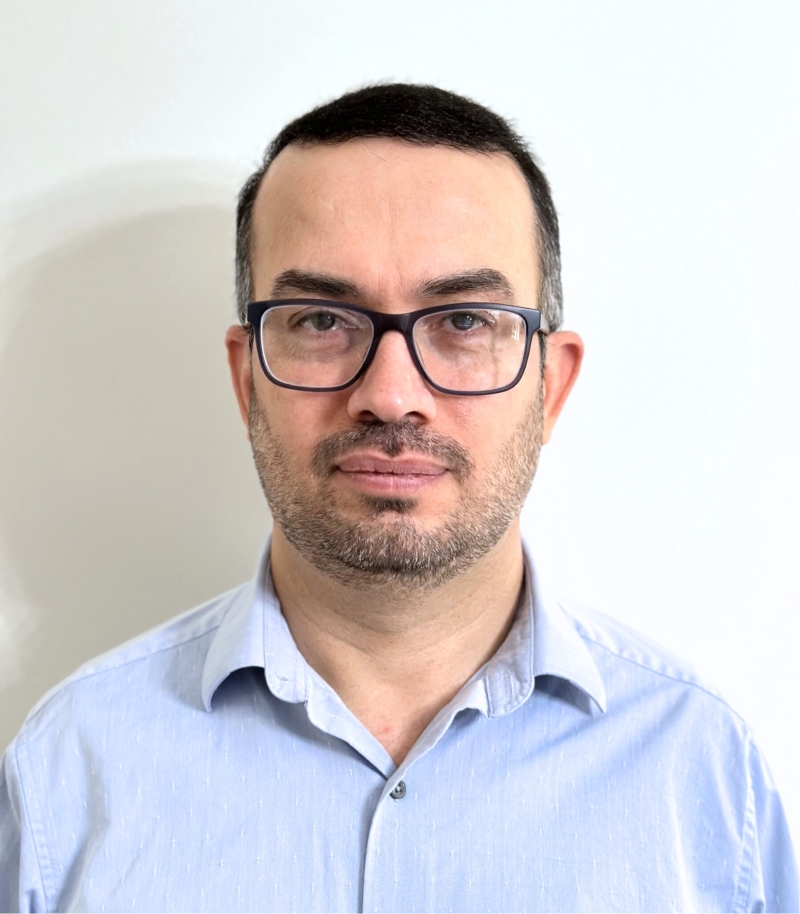
Seyed Ziae Mousavi Mojab is an Assistant Professor (Teaching) in Computer Science at Wayne State University's James and Patricia Anderson College of Engineering. He holds a B.S.E. in Computer Science from the University of Michigan Ann Arbor, and both M.S. and Ph.D. degrees in Computer Science from Wayne State University. His research focuses on evolutionary computation, optimization methods, workflow scheduling, medical image processing, data analytics, and business intelligence. Key investigations include cultural algorithms for big data workflows, deep learning ensembles for medical diagnostics, and neural architecture synthesis techniques. Recent publications demonstrate applications in robotic surgical segmentation (2023), COVID-19 detection via chest X-ray analysis (2020-2021), and optimization frameworks for cloud-based big data systems (2019-2022). Research consistently integrates evolutionary computation with deep learning architectures across medical and data-intensive domains.
Karl Hall is a Lecturer in Computing & Games at the Department of Computing & Games, Teesside University. His research focuses on machine learning applications across diverse domains including healthcare analytics, telecommunication, traffic modeling, and social network analysis. He specializes in developing predictive models for credit risk assessment, disease diagnosis, customer behavior analysis, and infrastructure optimization. Key research interests include machine learning algorithms (e.g., Random Forest, CNNs), explainable AI systems, and their practical implementations in real-world scenarios. He has conducted studies on diabetes prediction, pandemic forecasting, and metaverse risk assessment. His work often bridges theoretical models with practical industry challenges, particularly in finance, healthcare, and transportation sectors. Recent research trends show a focus on interdisciplinary applications of AI, such as biomedical information retrieval frameworks and transformer-based models. He has collaborated on projects analyzing UK traffic datasets and Bitcoin trader networks, highlighting his versatility in data-driven research. No awards or grants are explicitly mentioned in the provided texts. His advising and professional activities are not detailed in the current data, but his publications reflect active engagement with both academic and applied research challenges.
Yusuf Sinan Akgul is an Associate Professor at the Department of Computer Engineering, Gebze Institute of Technology (GIT), Turkey. He has been affiliated with GIT since 2005 and is part of the GIT Vision Lab. His research focuses on computer vision, medical imaging, and machine learning. He holds a Ph.D. from the University of Delaware (2000), where he also earned his M.S. (1995) and B.S. (1992) in computer engineering. His work includes contributions to image segmentation, stereo vision, and 3D structure recovery, with over 30 peer-reviewed publications and multiple patents. Education Ph.D. 2000, University of Delaware, USA M.S. 1995, University of Delaware, USA B.S. 1992, Middle East Technical University, Turkey Research Interests Akgul’s research spans computer vision fundamentals and applications, including medical image analysis, image segmentation techniques, 3D reconstruction from stereo data, and real-time surveillance systems. His work integrates machine learning and statistical methods to address challenges in biomedical engineering and video analysis. Key contributions include modular frameworks for anatomical contour extraction and adaptive focus measurement algorithms. Scientific Awards Frank Pehrson Graduate Student Achievement Award (1999) TUBITAK Career Grant (2006) Advising & Grants He has supervised 3 Ph.D. and 2 M.S. theses. Current funded projects include developing X-ray baggage inspection systems and operator-performance-tuned surveillance systems. Past grants include projects on 3D structure recovery using dual meshes. Labs & Teams He leads the GIT Vision Lab, focusing on interdisciplinary computer vision research with applications in healthcare and surveillance.
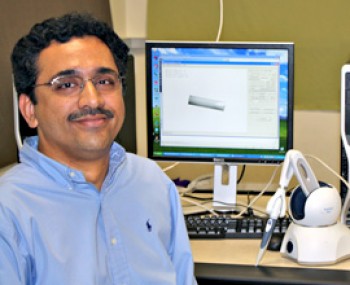
Prof. Matthias Harders is a Professor at the Department of Computer Science, University of Innsbruck. His work focuses on medical imaging, haptic systems, virtual reality, and data-driven simulation. He leads research in interactive visualization tools, medical device development, and machine learning applications in healthcare and environmental engineering. Research areas include haptic augmented reality for surgical training, deformable medical image registration, and synthetic data generation for retinal imaging. Notable projects include SPBView for eye movement analysis and the PoRi device for post-stroke rehabilitation. His work bridges computer science with biomedical applications, emphasizing real-world impact in healthcare technology. Publications span medical simulation, machine learning for biogas prediction, and perceptual interfaces. He collaborates on EU-funded projects involving VR/AR systems and has contributed to open-source tools for point cloud analysis and surgical planning.
Riccardo Renzulli is a Researcher at the Department of Computer Science, University of Turin, focusing on object-centric representation learning, medical image analysis, and AI-based computer vision applications. His research emphasizes capsule networks, deep learning models for hierarchical relationships, and applications in healthcare and aerial/satellite imagery. Education: MSc and BSc in Computer Science from University of Turin (2018 and 2015). Previous research with Prof. Valentina Gliozzi explored description logics and non-monotonic reasoning. Professional experience includes a 2022 post at Aalto University (supervised by Prof. Ville Kyrki and Francesco Verdoja) and roles at Addfor and Machine Learning Reply as a deep learning scientist. Research interests span concept learning, few-shot learning, interpretability, and medical imaging. Notable work includes visual localization systems for UAVs, AI-assisted diagnosis for COVID-19 via CXR analysis, and lung nodule segmentation using DeepHealth Toolkit. He contributed to the UniToChest dataset for cancerous nodule detection. His recent publications (2022-2025) address efficient neural architectures, medical imaging applications, and 3D scene modeling. Collaborations include EIDOSLAB, with research emphasizing scalable compression, entropy-based pruning, and ensemble methods for neural networks.
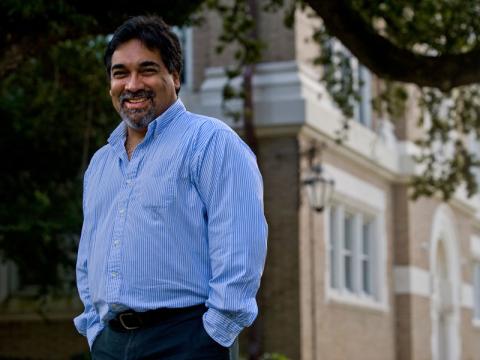
Ricardo Cortez is the Pendergraft William Larkin Duren Professor in the Mathematics Department at Tulane University, part of the School of Science & Engineering. He holds a Ph.D. in Applied Mathematics from the University of California, Berkeley (1995), and dual B.S. degrees in Mechanical Engineering and Mathematics from Arizona State University (1986, 1988). His research focuses on computational fluid dynamics, numerical methods, and biological fluid flow applications, including studies of microorganism motility, immersed boundary problems, and Stokes flow simulations. Cortez has developed influential methods like the Regularized Stokeslets and Lagrangian Vortex/Impulse approaches, which address fluid-structure interactions in complex biological systems. He is affiliated with the Center for Computational Science (CCS) at Tulane and Xavier Universities, and contributes to initiatives promoting diversity in STEM through organizations like SACNAS. His work bridges applied mathematics and biological applications, with over 50 peer-reviewed publications since 1995. Education: Ph.D., Applied Mathematics, UC Berkeley, 1995 B.S., Mechanical Engineering, Arizona State University, 1988 B.S., Mathematics, Arizona State University, 1986 Research Interests: Computational Fluid Dynamics Numerical Methods for Partial Differential Equations Biological Fluid Dynamics Immersed Boundary Methods Stokes Flow Simulation His research combines mathematical rigor with applications in physiology, such as modeling kidney mechanics and microorganism swimming. Recent work includes studies on choanoflagellate hydrodynamics and regularization techniques for viscous flow simulations. Grants & Collaborations: Developed the Method of Regularized Stokeslets, widely used in biofluids Contributions to SACNAS and STEM diversity initiatives Collaborations on glomerular mechanics modeling with biomedical researchers Labs & Affiliations: Center for Computational Science (CCS), Tulane/Xavier Universities Society for Advancement of Chicanos/Hispanics and Native Americans in Science (SACNAS)
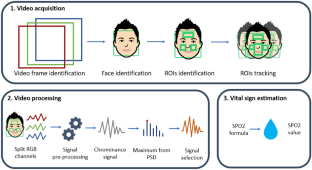
Gianluca Zaza is an Assistant Professor (non-tenure track) in the Computer Science Department at the University of Bari Aldo Moro, where he conducts research in healthcare technology and artificial intelligence applications. His work focuses on developing contact-less monitoring systems for vital signs and cardiovascular risk assessment using advanced computational techniques. Dr. Zaza's research interests span mHealth, remote patient monitoring, cardiovascular risk assessment, fuzzy inference systems, photoplethysmography, computer vision, and healthcare technology. His work demonstrates a strong focus on applying computational intelligence to solve real-world healthcare problems, particularly in the context of non-invasive monitoring solutions. His recent publications reveal a clear trend toward developing contact-less monitoring systems for vital signs, with particular emphasis on blood oxygen saturation and cardiovascular risk assessment. These works leverage neuro-fuzzy systems, remote photoplethysmography, and video imaging techniques to create practical healthcare solutions that have gained significant relevance during the pandemic era. Member of GNCS-INDAM (Gruppo Nazionale per il Calcolo Scientifico) of Istituto Nazionale di Alta Matematica Research supported by INdAM GNCS within the project 'Computational Intelligence methods for Digital Health' Associated with CITEL - Centro Interdipartimentale di Telemedicina Dr. Zaza's research has practical applications in telemedicine and remote patient monitoring, with potential to reduce the need for physical contact during health assessments, which became particularly valuable during the COVID-19 pandemic. His work bridges the gap between computer science, biomedical engineering, and clinical practice through innovative technological solutions.
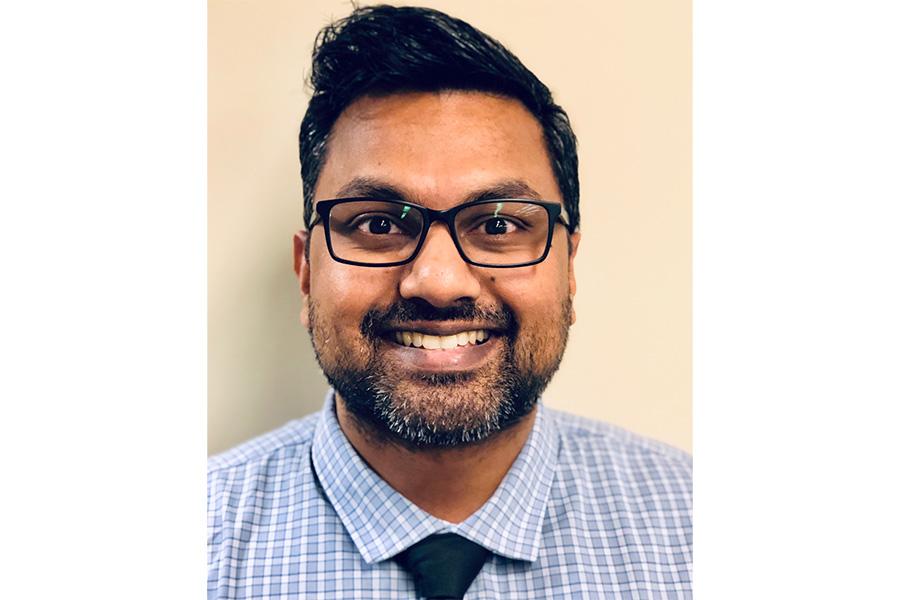
Niranjan Venugopal is an Adjunct Professor in the Department of Physics and Astronomy at the University of Manitoba's Faculty of Science. He holds affiliations with CancerCare Manitoba, focusing on advanced imaging techniques for radiation treatment planning. Contact: Niranjan.Venugopal@umanitoba.ca , nvenugopal@cancercare.mb.ca . Academic Rank: Adjunct Professor Institution: University of Manitoba Department: Physics and Astronomy Affiliation: CancerCare Manitoba Research Interests: Development and application of advanced MRI, MRSI, and PET-CT techniques for radiation oncology. Key areas include: MRI Pulse Sequence Design MR Spectroscopic Imaging Quantum Mechanical Simulations of Metabolites MR Elastography Deep Learning for Image Segmentation Image Registration and Processing Recent trends in his publications (2025-2020) emphasize AI-driven radiotherapy workflows, synthetic CT generation, and precision targeting in lung/brain/prostate cancers using SBRT and HDR brachytherapy.
Jingfeng Jiang is a Professor of Biomedical Engineering and Graduate Program Director at Michigan Technological University. His research focuses on translational biomedical engineering, particularly in biomechanics, medical imaging, and machine learning applications. He holds a PhD in Civil Engineering (Computational Mechanics) from the University of Kansas, along with MS degrees in Computer Science and Structural Engineering, and a BS in Civil Engineering from Zhejiang University, China. Research Interests : Dr. Jiang’s work bridges biomechanics, medical imaging, and computational intelligence. He develops tools for transforming biomedical imaging data into clinically relevant parameters, such as soft tissue elasticity and blood flow characteristics. His current projects include real-time elastography systems, AI-driven medical imaging analysis, and precision medicine tools for cardiovascular and oncological applications. He collaborates closely with clinical and industrial partners, notably contributing to Siemens’ real-time elastography system. Education : PhD, Civil Engineering (Computational Mechanics), University of Kansas MS, Computer Science, University of Kansas MS, Structural Engineering (Structural Dynamics), Zhejiang University, China BS, Civil Engineering, Zhejiang University, China Grants and Collaborations : Dr. Jiang’s work involves clinical and industrial collaborations, including contributions to commercial medical imaging systems. His lab focuses on advancing ultrasound technologies, computational fluid dynamics modeling, and AI-driven diagnostics for cardiovascular diseases and cancers. Labs and Future Work : His research lab aims to improve precision medicine through tool development in medical imaging and biomechanics. Current open positions include doctoral students and post-doctoral researchers to support projects in aneurysm rupture prediction, liver fibrosis characterization, and AI-driven diagnostic systems.
Julia Arciero is a Professor in the Department of Mathematical Sciences at Indiana University–Purdue University Indianapolis (IUPUI). Her research focuses on applied mathematics and mathematical biology, particularly in modeling physiological phenomena such as blood flow regulation, immune responses, and inflammation. She holds a Ph.D. in Applied Mathematics from the University of Arizona and has held postdoctoral and faculty appointments in interdisciplinary research. Her work emphasizes collaborations with clinicians and experimentalists to address challenges in health and disease. Notable projects include modeling peripheral arterial disease, glaucoma, transplant rejection, and sepsis. She has received grants from the NIH and NSF, including a NSF CAREER Award. Her research has led to advancements in understanding vascular compensation mechanisms and ocular hemodynamics. Education: Ph.D. in Applied Mathematics, University of Arizona M.S. in Applied Mathematics, University of Arizona B.S. in Mathematics, University of Michigan Awards: 2023 Kathryn J. Wilson Award for Leadership in Undergraduate Research 2021 Women’s Leadership Award 2015 Trustees Teaching Award Grants: NIH R01EY030851 (2020–2024) NSF DMS-1654019 (2017–2024) NSF DMS-2150108 (2022–2025) Her research integrates theoretical models with clinical data, contributing to fields like ocular circulation, transplant tolerance, and systemic inflammation. She leads an REU program in mathematics with applications to medicine and engineering.
Wei Zhu is a Professor and Deputy Chair in the Department of Applied Mathematics and Statistics at Stony Brook University. She holds a Ph.D. in Biostatistics from UCLA (1996), an M.S. in Statistics from UIC (1992), and a B.S. in Mathematics from East China Normal University (1989). Her research focuses on biostatistics, brain image analysis, clinical trial design, and environmental modeling. Key areas include medical imaging algorithms, climate prediction systems, and statistical methodologies for biomedical studies. Her work spans interdisciplinary applications such as predictive analytics for kidney disease outcomes, synthetic data-driven climate forecasting, and cryptocurrency crash prediction frameworks. She has developed machine learning models for medical image segmentation and decision tree frameworks for risk stratification in pandemic contexts. Teaching includes courses like AMS 312 and AMS 572. Zhu’s research portfolio emphasizes translational statistics, with contributions to genomic modeling, financial market dynamics, and public health policy evaluation. Her lab addresses pressing challenges in healthcare analytics, environmental science, and computational biomedicine through rigorous statistical innovation.
Xinchen Ni is an Assistant Professor in the Department of Mechanical Engineering at The University of Texas at Dallas (UT Dallas), affiliated with the Erik Jonsson School of Engineering and Computer Science. His research focuses on mechanics, programmable materials, soft robotics, and machine learning applications in materials science. Education : PhD in Mechanical Engineering, Massachusetts Institute of Technology (2020) SM (Master's) in Mechanical Engineering, MIT (2014) BS in Mechanical Engineering, Fudan University (2012) Research Interests : Ni explores advanced composites, bioresorbable materials, and soft robotics with applications in medical devices and wearable technology. His work integrates machine learning for materials analysis and combines experimental techniques like synchrotron X-ray tomography with computational modeling to study fracture mechanics and dynamic material behavior. Key Themes in Articles : Recent publications emphasize programmable shape-morphing materials, self-powered drug delivery systems, and wireless sensor networks for biomedical applications. His work bridges materials science, robotics, and medical engineering, with a focus on adaptive systems and smart materials. Awards and Recognition : Details pending explicit mention in text. Lab and Collaborations : He leads the Ni Research Group, focusing on interdisciplinary projects in soft robotics, bio-integrated electronics, and advanced materials. Collaborations span institutions like MIT and Johns Hopkins University.
Dr. Balakrishnan Prabhakaran is a Professor of Computer Science at the Erik Jonsson School of Engineering and Computer Science, University of Texas at Dallas. He specializes in multimedia systems, focusing on areas like video and healthcare data analytics, 3D video streaming, wireless network QoS, and collaborative virtual environments. His work integrates technical innovation with healthcare applications, including telemedicine and rehabilitation systems. Education: PhD (Computer Science & Engineering) from Indian Institute of Technology, Chennai (1995); MSc (CSE) from IIT Chennai (1990); BEng (Electronics & Communication) from Madurai-Kamaraj University (1986). Research Interests: Current projects include intelligent medical imaging platforms (e.g., IntelliCardiac), mixed reality systems for pain management (MR.MAPP), and robotic grasp synthesis. Past work involved multimedia databases, web-based presentation servers, and QoS in ad-hoc networks. Notable Achievements: Recipient of NSF CAREER Award (2003), 2007 School of Engineering Service Award, and recognition as an ACM Distinguished Scientist. He chairs the PhD Studies program at UT Dallas and has led numerous academic initiatives including graduate admissions committees. Teaching: Courses span multimedia systems, advanced operating systems, and animation programming. He has taught at institutions including National University of Singapore and University of Maryland. Labs/Teams: Active in developing immersive healthcare technologies through projects like H-TIME (haptic tele-examination) and VirTePeX (virtual tele-physical exam systems). Collaborates on cloud-based body sensor networks (BSNCloud) and mixed reality frameworks (ScanToVR).
Shikhar Uttam is an Assistant Professor at the University of Pittsburgh, specializing in computational imaging and optics with applications in cancer systems biology. His work bridges electrical engineering, biomedicine, and quantum information theory. He holds a Ph.D. in Electrical Engineering from the University of Arizona. Education : Ph.D. Electrical Engineering (Minor: Mathematics), University of Arizona, Tucson Research Interests : Computational imaging techniques for early cancer detection Multimodal imaging for tumor microenvironment analysis Machine learning in precision medicine Quantitative phase imaging for cancer prognosis Radar imaging and quantum information systems His research focuses on developing imaging modalities to address challenges in cancer epigenetics, immunotherapy response prediction, and early detection of neoplastic progression. Publications Trends : Recent work emphasizes nanoscale nuclear architecture mapping for cancer risk stratification, immune profiling in Lynch syndrome, and unsupervised machine learning for cell segmentation. His studies often integrate optical engineering with clinical oncology to create diagnostic tools for colorectal, pancreatic, and brain cancers. Grants & Labs : Operates a lab focused on computational systems biology and optical innovation. Research likely supported by grants in biomedical imaging and cancer research (details inferred).
Dr. Alexandra Gersing is an Associate Professor in Radiology at the University of California, San Francisco (UCSF). She holds concurrent roles as Director of Magnetic Resonance Imaging and AI Research at the University Hospital of Munich and Ludwig Maximilians University Munich. Her expertise lies in musculoskeletal imaging and AI-driven medical imaging technologies. Dr. Gersing completed her medical degree at the University of Hamburg and Technical University of Munich (TUM), followed by radiology residency and musculoskeletal imaging fellowship at TUM's University Hospital. She also served as a postdoctoral fellow at UCSF from 2014 to 2016. Affiliations: UCSF School of Medicine, University Hospital of Munich, Ludwig Maximilians University Munich Roles: Associate Professor, Director of MRI and AI Research Her research focuses on advancing MRI techniques and AI applications for musculoskeletal disorders, particularly osteoporosis and bone tumors. She has published extensively in top journals like Radiology and European Radiology , and her work includes developing deep learning models for fracture differentiation and tumor classification. Dr. Gersing has received notable awards including the 2023 Wilhelm-Conrad-Roentgen Prize and the International Skeletal Society Seed Grant. She mentors doctoral candidates, postdoctoral scholars, and junior faculty, and actively contributes to professional societies such as the European Society of Skeletal Radiology. Her work integrates multidisciplinary teams to leverage AI and advanced imaging for clinical diagnostics and treatment planning, emphasizing translational research with significant clinical impact.