Prof. Dr. Dennis Säring is a faculty member at the University of Applied Sciences Wedel , specifically affiliated with the School of Engineering. His academic and research activities focus on Deep Learning , Medical Image Analysis , and applications of Artificial Intelligence in healthcare and biomedical imaging. He has led seminars on Deep Learning topics and supervised student projects in Autonomous Driving at Audi's AADC 2018 competition. Research Highlights : Cardiovascular imaging, forensic age estimation via MRI, neural network-based bone segmentation, and cerebrovascular aneurysm analysis. Technical Expertise : Cardiac MRI, 3D/4D image processing, parametric mapping, and spatiotemporal data fusion. His recent publications (2018-2023) emphasize 3D MR segmentation for age assessment, CMR strain analysis in athletes, and T1/T2 mapping for myocarditis. Key collaborations include institutions like the University Medical Center Hamburg-Eppendorf and Wedler Hochschulbund, with funding for autonomous vehicle research. While no explicit scientific awards are listed, his work spans clinical cardiology, forensic radiology, and AI-driven medical diagnostics.
Francesca De Benetti is a Researcher at the Chair of Computer Aided Medical Procedures (Prof. Navab) at the Technical University of Munich (TUM), affiliated with the Interdisciplinary Research Laboratory (IFL) and NARVIS Lab at the Garching Campus. Her research focuses on Nuclear Medicine and Machine Learning for medical image processing, particularly in internal radiation therapy simulations and AI-driven segmentation. Education : M.Sc. in Biomedical Computing (TUM, 2018-2020), B.Sc. in Information Engineering (Università di Padova, 2015-2018) Francesca's recent publications highlight her work in Monte Carlo dosimetry , dynamic PET tracer modeling , and deep learning-based anomaly detection in medical imaging. Her projects emphasize personalized radiation therapy and cross-modality image translation , often involving collaborations with nuclear medicine experts and radiologists. She contributes to teaching at TUM, leading lectures and practical courses on topics including Medical Augmented Reality , Computer Aided Medical Procedures , and Deep Learning for Medical Applications . Francesca is actively involved in labs such as the IFL Lab and NARVIS Lab , focusing on interdisciplinary applications of computer vision and generative AI in medicine.
Nasir M. Rajpoot is a Professor in the Department of Computer Science at the University of Warwick, UK. His research focuses on computational pathology, medical image analysis, and deep learning applications in histology. He leads interdisciplinary projects integrating artificial intelligence with healthcare, particularly in cancer diagnostics and pathology workflows. Rajpoot’s work emphasizes developing robust algorithms for histology image analysis, including nuclear segmentation, tumor classification, and domain generalization in computational pathology. His contributions include the TIAToolbox, an open-source framework for tissue image analytics, and the CoNIC Challenge to advance nuclear detection and counting in histology images. He collaborates with clinicians and biologists to translate AI models into clinical practice, addressing challenges like tumor heterogeneity and staining variability. Rajpoot’s research spans colorectal, lung, and oral cancers, with a focus on predicting clinical outcomes via histological features and genomic data integration. Notable projects include the development of Handcrafted Histological Transformer (H2T) for unsupervised representations of whole slide images and the SAFRON framework for histology image synthesis. His work addresses domain adaptation, robustness evaluation, and explainability in AI-driven pathology systems.
Franziska Mueller is a Research Scientist at Google Zurich , specializing in Augmented Perception . Prior to joining Google, she earned her Ph.D. in Computer Science at Saarland University under the supervision of Prof. Dr. Christian Theobalt, focusing on real-time hand reconstruction from RGB and depth images. Ph.D. in Computer Science (2016-2020) at Saarland University Master’s and Bachelor’s in Computer Science at Saarland University Research visits at Stanford University (2018) and Reality Labs Research (2019) Her research emphasizes the integration of model-based techniques and machine learning components for real-time 3D hand pose estimation, occlusion handling, and hand-object interaction tracking. Key contributions include methods for single-camera reconstruction and datasets like HandSeg. Scientific Awards : Dr. Eduard Martin Award (2021) Google PhD Fellowship (2017) Günter-Hotz-Medal (2016) Bachelor Award (2015) Völklinger Abiturpreis (2012)
Joachim Weickert is a Professor of Mathematics and Computer Science at Saarland University where he heads the Mathematical Image Analysis Group since 2001. He received his diploma and Ph.D. in mathematics from the University of Kaiserslautern (1991, 1996), and a habilitation degree in computer science from the University of Mannheim (2001). Prior to his current position, he worked as a research assistant at the University of Kaiserslautern, as a post-doctoral researcher at the universities of Utrecht and Copenhagen, and as an assistant professor at the University of Mannheim. His research focuses on image processing, computer vision, and scientific computing, with special emphasis on techniques based on partial differential equations, variational principles, wavelets, morphological and nonlocal methods, as well as neuroexplicit approaches. He has developed mathematical models and efficient numerical algorithms for image restoration, enhancement, segmentation, compression, optic flow computation, stereo reconstruction, shape from shading, and signal processing methods for tensor fields. These ideas have been successfully applied in industry, biomedical image analysis, and other fields. Analysis of his recent publications reveals a strong trend toward combining traditional PDE-based methods with modern deep learning approaches, particularly in the areas of image inpainting and compression. His work increasingly explores the connections between numerical algorithms for partial differential equations and neural network architectures, demonstrating how mathematical foundations can inform cutting-edge AI techniques while maintaining strong theoretical guarantees. Gottfried Wilhelm Leibniz Prize (2010), considered the most important research award in Germany ERC Advanced Grant (2017) for "Inpainting-based Compression of Visual Data" Elected member of Academia Europaea - The Academy of Europe Jan Koenderink Prize for Fundamental Contributions in Computer Vision (2014) Multiple DAGM Prizes and Best Paper Awards throughout his career AAIA Fellow (2021) and Highly Ranked Scholar (2024) distinctions Professor Weickert has supervised over 250 bachelor's and master's theses and initiated the Master Programme in Visual Computing at Saarland University, the first of its kind in Germany taught in English. He has established numerous interdisciplinary collaborations with colleagues from medicine, bioinformatics, pharmacy, physics, mechatronics, and mechanical engineering. As Principal Investigator for Visual Computing within the Multimodal Computing and Interaction Cluster of Excellence, and former dean of the Faculty of Mathematics and Computer Science (2008-2010), he has played a significant leadership role in advancing visual computing research and education. He heads the Mathematical Image Analysis Group, which has been at the forefront of developing mathematical methods for image analysis. The group maintains strong connections with both theoretical mathematics and practical applications, bridging the gap between fundamental research and real-world implementation across various domains including medical imaging, industrial inspection, and multimedia processing.
Olaf Ronneberger is an associate professor at the Albert-Ludwigs-Universität Freiburg and works at Google DeepMind . His research focuses on deep learning architectures , AI applications to scientific problems , and protein structure prediction . He leads seminars on deep learning and 3D image analysis, emphasizing vision-language integration and generative models. His publications include foundational work on U-Net architectures for biomedical image segmentation, AlphaFold 3 for biomolecular interaction prediction, and Gemini models for multimodal AI systems. Key subfields span medical imaging , protein folding , and vision-language models . Co-developer of U-Net , a widely used biomedical image segmentation framework. Contributor to AlphaFold 3 for structural biology. Research on Gemini 1.5/2.5 models for multimodal reasoning.
Mehrdad Salehi is a researcher at the Chair of Computer Science Applications in Medicine at the Technical University of Munich (TUM) . His work focuses on the intersection of computer science and medical imaging, with expertise in ultrasound technology, deep learning, and surgical navigation systems. Key research areas include sonification of medical data, 3D ultrasound reconstruction, and machine learning-based segmentation. He has contributed to innovative projects like PRO-TIP calibration phantoms and ColibriDoc autonomous docking systems. His publications highlight trends in acoustic feedback mechanisms, neural radiance fields for medical imaging, and real-time image analysis. He can be reached at mehrdad.salehi@tum.de .
Dongwook Kim is affiliated with the Korea Advanced Institute of Science & Technology (KAIST) as a faculty member in the Department of Business and Technology Management under the College of Business. His research spans multiple domains including machine learning, robotics, signal processing, and biomedical engineering. Key contributions in Computer Vision (CNN-based semantic segmentation, 3D point cloud analysis) Significant work in Hardware Design (energy-efficient processors, neuromorphic computing) Interdisciplinary expertise in Medical Imaging (bone age assessment, retinal biomarkers) and Cybersecurity (attack detection, network analytics) Publications since 2015 demonstrate sustained innovation in AI applications , Signal Processing , and Smart City Governance . His work often integrates theoretical advances with practical implementations in real-world systems. No scientific awards or student mentorship details are explicitly documented in the provided records.
Ario Sadafi is a researcher at the Technical University of Munich (TUM) , affiliated with the Chair of Computer Science Applications in Medicine under Prof. Nassir Navab. His work spans medical image analysis , machine learning , and computational pathology , with a strong focus on developing AI-driven solutions for microscopic imaging in hematology and oncology. Research Focus: Multiple Instance Learning for weakly supervised medical image classification. Explainable AI for biomedical single-cell imaging. Continual and cross-domain learning for robust diagnostic models. Microscopic image analysis for blood cell disorders and leukemia subtyping. Teaching Contributions: Sadafi has been actively involved in teaching courses such as Computer Aided Medical Procedures , Medical Augmented Reality , and Deep Learning for Medical Applications . He also supervises practical courses and seminars in 3D Computer Vision and Machine Learning in Medical Imaging . Labs & Collaborations: He works closely with the MEDIA (Medical Image Analysis) and NARVIS labs at TUM, contributing to projects in surgical data science , generative models , and robotics & ultrasound . Publications Impact: His research output (2018–2025) emphasizes AI-driven hematology , with applications in red/white blood cell classification, leukemia subtype diagnosis, and interpretable deep learning models for clinical use.
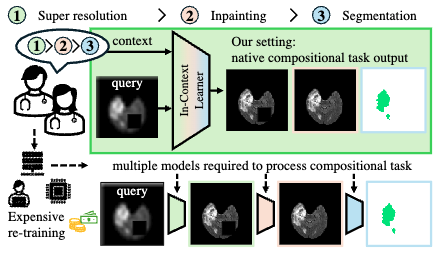
Prof. Dr. Erik Rodner is a faculty member at the University of Applied Sciences Berlin (HTW Berlin), where he serves as a Professor for Machine Learning and Data Science. He also contributes to the School of Engineering Sciences - Technology and Life. His research spans computer vision, machine learning, and biomedical applications, with a focus on learning with limited data, robust visual recognition models, and medical image analysis. He has developed innovative methods for medical diagnostics, industrial classification, and anomaly detection. Recent publications (2025-2016) highlight his expertise in visual in-context learning, semi-weakly segmentation, and active learning frameworks. He has collaborated with institutions such as ZEISS Group, Friedrich Schiller University Jena, and UC Berkeley. Scientific Awards: Award for Excellent Teaching (2023)
Prof. Dr.-Ing. H. Siegfried Stiehl is a retired Senior Professor (until Sept 2021) at the Department of Informatics, University of Hamburg. He previously held roles including Dean of the Faculty of Mathematics, Computer Science, and Natural Sciences (2001–2006), Vice President for Research (2007–2013), and Head of the Image Processing Research Group. His academic journey includes a PhD from TU Berlin (1980) and a Habilitation in Computer Vision (1987). Education: 1973: Ing. Degree in Ingenieur-Informatik, Fachhochschule Furtwangen 1976: Diploma in Computer Science, TU Berlin 1980: Dr.-Ing. Dissertation on medical image processing, TU Berlin Research focuses on Computer Vision , Computational Neuroscience , and Cognitive Science , with contributions to medical image registration, 3D landmark detection, and biomechanical modeling. Key projects include the EU-funded 'COVIRA' consortium (1989–1995) and leadership in the SFB 950 'Manuscript Cultures' project (2015–2019). His 110+ publications span biomedical image registration, elastic deformation algorithms, and real-time signal processing. Notable collaborations include work with institutions like the University of Pennsylvania, University of Birmingham, and Philips Research. Leadership roles include organizing scientific events, serving on editorial boards (e.g., Biological Cybernetics), and founding the Interdisciplinary Nanoscience Center Hamburg (INCH) in 2001. His research has addressed challenges in neurosurgical interventions, VLSI implementation of neural networks, and interdisciplinary education.
Alina Roitberg is a Junior Professor (Assistant Professor) at the University of Stuttgart , affiliated with the Faculty of Computer Science, Electrical Engineering and Information Technology . Her research focuses on advancing computer vision, machine learning, and robotics applications, particularly in human activity recognition, domain adaptation, and synthetic data generation. She explores challenges in action understanding, cross-domain generalization, and real-world deployment of AI systems in fields like healthcare, autonomous vehicles, and industrial automation. Her work emphasizes robust learning under noisy conditions, multimodal data fusion, and ethical AI applications. Recent projects include foundational studies on large language models in construction (AEC), video-based muscle group estimation, and improving driver activity recognition for autonomous vehicles. She also investigates circular factory design through uncertainty-aware process optimization and human-robot interaction. Dr. Roitberg's contributions span academic publications and industrial collaborations, addressing both theoretical advancements and practical implementations. Her research bridges computer vision techniques with real-world problems, emphasizing scalability and ethical considerations in AI deployment.
Prof. Dr. Florian Knoll is a full professor in Computational Imaging at the Department of Artificial Intelligence in Biomedical Engineering (AIBE) at Friedrich-Alexander-Universität Erlangen-Nürnberg. He leads the Computational Imaging Lab, focusing on machine learning applications in medical imaging, particularly accelerating MRI through innovative reconstruction algorithms and translating them into clinical practice. His research emphasizes improving MRI speed, artifact robustness, and accessibility, alongside developing quantitative biomarkers for disease processes. Knoll's work is funded by NIH grants, including projects on machine learning for musculoskeletal imaging, MR fingerprinting, and deep learning frameworks for MRI reconstruction. He is a key figure in open science initiatives, co-creating the fastMRI dataset with Facebook AI, providing public access to over 1300 knee and 7000 brain MRI scans. He currently serves as deputy editor of Magnetic Resonance in Medicine and chairs the ISMRM Reproducible Research Study Group. His contributions extend to reproducible research, maintaining GitHub repositories with code for image reconstruction techniques (e.g., AGILE, gpuNUFFT) and educational materials. He teaches medical imaging fundamentals at FAU, integrating theoretical and practical insights for students and researchers. Grants: NIH R01EB024532, R21EB027241, P41EB017183, R01EB029957 Labs/Teams: Computational Imaging Lab, fastMRI initiative Software: GitHub repositories for MRI reconstruction (e.g., github.com/FlorianKnoll )
Prof. Dr. Franziska Mathis-Ullrich is a Professor at Friedrich-Alexander-University Erlangen-Nuremberg (FAU) leading the Surgical Planning and Robotic Cognition Lab (SPARC) in the Department of Artificial Intelligence in Biomedical Engineering. Previously, she was an Assistant Professor at Karlsruhe Institute of Technology (KIT) from 2019 to 2023. Her research focuses on minimally invasive robotic systems, soft robotics, and embedded machine learning for surgical applications. She holds a PhD in Microrobotics from ETH Zurich (2017), with earlier degrees from the same institution. Education: B.Sc. and M.Sc. in Mechanical Engineering and Robotics (ETH Zurich, 2009–2012) Ph.D. in Microrobotics (ETH Zurich, 2017) Research Interests: Minimally invasive medical robotics, soft robotic systems, AI-driven surgical assistance, microrobotics, and robot-assisted surgery. Her work emphasizes translating robotics innovations into clinical applications through interdisciplinary collaboration. Key Awards: IEEE ICRA Best Paper Award in Medical Robotics (2014) IEEE BioRob Best Student Paper Award (2016) ICRA Microassembly Challenge First Prize (2014 & 2015) Forbes 30 under 30 (2017) Grants & Projects: Leading a Bavarian State Ministry-funded project on endometriosis diagnostics (€3M). Active in multidisciplinary collaborations with Erlangen University Hospital. Serves as Vice-President of the German Society for Computer- and Robot-assisted Surgery (CURAC). Labs & Teams: Directs the SPARC Lab, which develops cognitive robotic systems for surgical planning and execution. Collaborates with institutions like Max Planck, Fraunhofer, and Helmholtz.
Bjoern Menze is a Professor and Rudolf Mößbauer Tenure Track Chair at the Technical University of Munich (TUM), leading the Image-based Biomedical Modeling Group within the Munich School of Bioengineering. His research focuses on medical image computing, tumor growth modeling, and computational physiology, with applications in clinical neuroimaging and personalized radiotherapy design. He holds a Ph.D. in Computer Science from Heidelberg University and has held positions at ETH Zurich, INRIA Sophia Antipolis, MIT, and Harvard Medical School. His academic journey includes a postdoc at MIT’s CSAIL and Harvard Medical School, followed by roles at ETH Zurich and INRIA. His work bridges biomedical imaging with machine learning, emphasizing model-driven analysis of physiological processes. He has been a visiting professor at Maastricht University and contributes to initiatives like the Center for Translational Cancer Research at TUM. Key research areas include tumor growth modeling, quantitative imaging biomarkers, and integrating mathematical models with clinical data. His awards include the MICCAI Young Scientist Award (2014), Leopoldina Fellowship (2009), and DFG Research Fellowship (2008). He advises on medical AI, leads interdisciplinary projects, and publishes extensively in top journals like Nature Neuroscience and IEEE Transactions on Medical Imaging. His lab’s work spans applications such as glioblastoma radiotherapy optimization, whole-body bone lesion detection, and neural connectivity imaging. Collaborations include institutions like Harvard, MIT, and ETH Zurich. He emphasizes translating computational methods into clinical practice for personalized healthcare solutions.