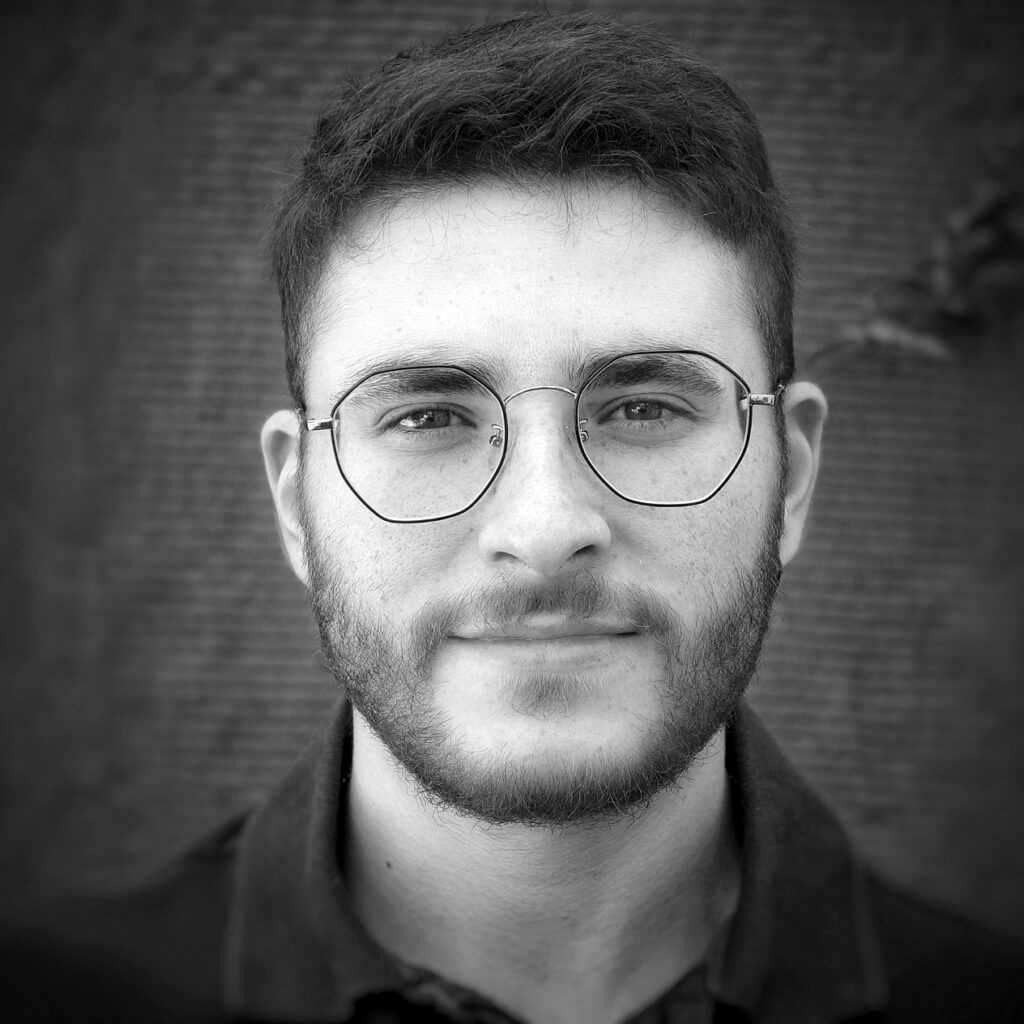
Prof. Dr. Ralph Müller is affiliated with the ETH Zurich , where he leads the Laboratory for Bone Biomechanics under the Institute for Biomechanics. His research focuses on quantitative image processing for three-dimensional biomaterials models to enhance tissue engineering strategies, particularly in skeletal applications like bone and cartilage repair. Specializes in tissue engineering and regenerative medicine Develops advanced micro-tomographic imaging techniques Investigates bioreactor systems for biomechanical stimulation of tissue cultures Studies relationships between cell in-growth, viability, and material structural features Targets predictive modeling of material failure and therapy response The group’s work bridges biomedical imaging technology with therapeutic innovations in skeletal pathophysiology.
Dr. Thomas Sutter is a Researcher affiliated with the Department of Computer Science at ETH Zurich , specifically part of the Professorship for Medical Data Science. His work focuses on advanced machine learning techniques applied to medical data, including anomaly detection, generative AI, and multimodal learning. He contributes to healthcare innovation through projects like improving radiology diagnostics via Vision-Language Models (RadVLM) and developing denoising techniques for physiological signals in cardiology. Research Interests: Medical Data Science, Anomaly Detection in Healthcare, Generative AI for Biomedical Signals, Multimodal Representation Learning, and Cardiac Function Prediction using Echocardiograms. His methods often combine deep learning with domain-specific medical challenges. Key Publications Trends: Recent work emphasizes medical imaging analysis (e.g., MIMIC-CXR studies), generative models for signal denoising, and contrastive learning for anomaly detection. His research bridges computer science theory with clinical applications, particularly in cardiology and radiology. Awards & Grants: No specific awards or grants mentioned in the provided texts. Advising & Teams: While no advisees are listed, he collaborates within the Medical Data Science research group at ETH Zurich, contributing to interdisciplinary projects in healthcare AI.
Patric Hagmann is a Full Professor at the Faculty of Biology and Medicine (FBM) at the University of Lausanne (UNIL), appointed on March 1, 2022. He is based at the Radiodiagnostic and Interventional Radiology Department at CHUV, where he leads a research unit and divides his time between clinical practice as a diagnostic neuroradiologist and advanced research in brain imaging. He is the originator of the concept of the "connectome," a foundational contribution to modern neuroscience. His research focuses on mapping and analyzing brain connectivity using diffusion MRI, functional MRI, and advanced signal processing techniques. He applies these methods to understand brain development in premature infants, aging, and psychiatric conditions such as schizophrenia. His work bridges engineering, neuroscience, and clinical medicine, with strong collaborations at EPFL and within the CHUV. Connectomics Diffusion and Functional MRI Brain Connectivity Analysis Graph Signal Processing Psychosis and Schizophrenia Research Neonatal Brain Development Patric Hagmann has been recognized with the Clinical Science Award from FBM, UNIL (2016). His pioneering PhD thesis at EPFL in 2005 laid the foundation for the field of connectomics. He is actively involved in mentoring, postgraduate education, and academic leadership, including directing the Passerelle program at UNIL. He has collaborated closely with Prof. Jean-Philippe Thiran (EPFL), Prof. Kim Do Cuénod, Prof. Philippe Conus (Psychiatry), and Prof. Anita Truttmann (Neonatology). Since 2008, he has led a cohort study on premature babies to investigate neuronal development. His dual expertise as a physician and engineer enables translational research that impacts both clinical practice and theoretical neuroscience.
Daniele Allegri is a Professor of 'Programmable and Integrated Microelectronic Systems' at the University of Applied Sciences and Arts of Southern Switzerland (SUPSI), leading the Department of Innovative Technologies. He serves as Director of the Institute for Systems and Applied Electronics (ISEA) since 2023 and previously held roles including Head of the 'Digital Electronics, Microelectronics, and Bioelectronics' research area (since 2019). His professional career spans engineering roles at Mandozzi Elettronica SA (1998–2014) and academic research at SUPSI (2014–present). Education: Ing.-Dipl. in Electronic Engineering from ETH Zurich (1998), PhD in Microelectronics from the University of Pavia (2017). Research Focus: Development of integrated circuits and embedded systems for biomedical applications, mixed analog-digital circuits, FPGA systems, signal processing, imaging technologies, and Edge AI. His work addresses clinical needs like real-time hydration monitoring for dialysis patients and advanced solar telescope instrumentation. Key Projects: Probing semiconductor rad-hardness via ions/lasers Next-gen tunnel safety sensors High-precision 3D imaging systems Cardio Pulmonary Rescue Support System Wireless pulmonary edema sensing networks Publications emphasize biomedical instrumentation and astrophysical engineering. No scientific awards explicitly listed in text, but contributions suggest strong peer recognition. Advising activity details not provided in source text. Current affiliations include leadership roles at SUPSI's ISEA and teaching responsibilities in multiple electronics-related courses.
Björn Jensen is a Professor and Co-Head of the AI Robotics Research Lab at Lucerne University of Applied Sciences and Arts (HSLU), specifically within the Lucerne School of Computer Science and Information Technology. He also teaches medical robotics at the University of Bern's Biomedical Engineering Program. His professional background includes roles at the Autonomous Systems Lab at EPFL, Switzerland, and founding the startup Singleton 3D focusing on 3D laser measurement technology. Educational background: MSc in Electrical Engineering (Automation & Image Processing) from TU Darmstadt (1998), followed by a Master's in Industrial Management from the same institution. PhD in human-robot interaction from EPFL (2005), with research stints at Tokyo University (2005) and involvement in projects like Robox@Expo.02 and Smarter-Elrob. Research interests span robotics, human-robot interaction, autonomous systems, medical robotics, and sensor-based navigation. Notable projects include the 'Smart Ennoblement Factory', 'NaviMow' autonomous lawnmower, and 'Bagger Assistenzsysteme'. His work emphasizes real-world applications of robotics in dynamic environments and human-centric systems. Lab leadership includes co-directing the AI Robotics Research Lab, focusing on advancing robotics technologies for practical scenarios. No scientific awards explicitly listed, but contributions to industry-academia collaborations are highlighted through startup ventures and applied research projects.
Prof. Dr. Catherine Jutzeler is an Assistant Professor at the Department of Health Sciences and Technology (D-HEST) at ETH Zurich. Her research focuses on spinal cord injury, pain management, and the application of machine learning in medical diagnostics and rehabilitation. She specializes in developing advanced computational methods for analyzing spinal MRI scans, predicting clinical outcomes, and optimizing therapeutic interventions. Her work bridges biomedical engineering and clinical neuroscience, with a strong emphasis on translational research. Key areas include neuroimaging analysis, serological biomarker discovery, and the development of predictive models for neurological recovery. Recent studies have explored the impact of pharmacological treatments, racial disparities in biomarker responses, and biomechanical thresholds in cervical myelopathy. Prof. Jutzeler collaborates extensively on interdisciplinary projects, integrating clinical data with machine learning frameworks. She is particularly known for pioneering diffusion-based models for lumbar spine segmentation and advancing data standards in spinal cord injury research. Her contributions aim to improve diagnostic accuracy and personalize patient care in neurotrauma and chronic pain management.
Emiliya Poghosyan is a Senior Scientist at the Paul Scherrer Institute (PSI) in Switzerland, affiliated with the Laboratory for Multiscale Bioimaging and the Electron Microscopy Facility. Since 2018, she provides user support, training, and manages advanced electron microscopy equipment while developing biological imaging methodologies. Her educational background includes: Bachelor of Science in Physics (with honours) from Yerevan State University Master's Degree in Nano-biophysics from Technical University of Dresden PhD in Cryo-electron microscopy from ETH Zurich Postdoctoral work on single particle cryo-EM of membrane proteins at University of Basel Her research focuses on cryo-electron microscopy techniques, structural biology, and membrane protein imaging. Recent publications highlight advancements in ptychography tools, X-ray tomography, and deep learning applications for electron microscopy. She actively contributes to method development and facility management. Scientific achievements include DAAD Long-Term Fellowships (2010-2012), PSI Research Grants (2021), and SDSC Collaborative Data Science Projects. She is a member of the Swiss Society for Optics and Microscopy (SSOM) and has delivered lectures at the University of Zurich (PHY 427). Teaching roles span multiple international cryo-EM schools and hands-on training programs since 2018, emphasizing practical microscopy education.
Bastian Alexander Grossenbacher is a Full Professor of Machine Learning at the University of Fribourg, where he leads the AIDOS Lab within the Department of Informatics, Faculty of Science and Medicine. He holds secondary appointments at the Institute of AI for Health and the Helmholtz Pioneer Campus of Helmholtz Munich. He is also a TUM Junior Fellow and a member of ELLIS and AI-LIFE. He co-directs the Applied Algebraic Topology Research Network (AATRN) and is involved in the Topology, Algebra, and Geometry in Data Science (TAG DS) initiative. His research lies at the intersection of geometry, topology, and machine learning, with a focus on Geometric Deep Learning, Topological Deep Learning, and Topological Data Analysis. He develops novel machine learning methods that use topological and geometric priors to improve model robustness and interpretability, particularly in biomedical applications. His work spans theoretical foundations and practical implementations in areas such as single-cell analysis, medical imaging, and network science. The 15 most recent publications (2023–2025) reveal a strong trend toward integrating algebraic and differential topology into deep learning architectures. Key themes include the use of Euler Characteristic and magnitude transforms, curvature-based analysis of graphs and data, simplicial and manifold-based neural representations, and the application of topological methods to biomedical data. His articles appear in top-tier venues such as Nature Communications, ICML, NeurIPS, ICLR, and IEEE conferences, reflecting both theoretical depth and high-impact applications. ERC Starting Grant Bastian Rieck is actively involved in mentoring and academic leadership. He supervises PhD students and postdoctoral researchers in the AIDOS Lab and is open to new collaborations, particularly with candidates from interdisciplinary backgrounds. He has secured significant research funding, including the ERC Starting Grant, and leads multiple collaborative research initiatives. He emphasizes open science, sharing code, data, and educational materials publicly. He leads the AIDOS Lab, which focuses on advancing machine learning through topological and geometric principles. He is also a co-director of the Applied Algebraic Topology Research Network (AATRN), which hosts a large online seminar series. Additionally, he maintains DONUT, a curated database of non-theoretical applications of topology, and is active in the ELLIS and AI-LIFE networks, fostering international collaboration in AI and health.
Maurizio Molinari is a Group Leader at the Institute for Research in Biomedicine (IRB) in Bellinzona, Switzerland, since October 2000. He earned his PhD in Biochemistry from ETH-Zurich in 1995 and conducted postdoctoral research at the University of Padua and ETH-Zurich. His work focuses on protein folding, quality control, and degradation mechanisms within the endoplasmic reticulum (ER), with implications for rare diseases and Alzheimer’s pathology. Affiliation: IRB Bellinzona, Adjunct Professor at EPFL since 2008 Education: PhD in Biochemistry (ETH-Zurich, 1995) Dr. Molinari’s research explores the ER-phagy pathway , proteostasis , and lysosomal degradation as failsafe mechanisms during ER stress. His studies link these processes to neurodegenerative diseases , myelin maintenance , and rare genetic disorders . Recent publications highlight his contributions to allosteric enzyme modulation , organelle fragmentation , and computational tools for autophagy quantification . He received the Friedrich-Miescher Award in 2006 for his work in molecular biology. Scientific Networks: European Research Council (ERC), Rare Diseases Platform (Switzerland) Leadership Roles: Advisory Board, Centro Malattie Rare della Svizzera italiana
Demetri Psaltis is a **Professor honoraire** at the École Polytechnique Fédérale de Lausanne (EPFL), affiliated with the School of Basic Sciences (STI) and the Department of Physics (PH-STI). He holds roles as **Chargé de cours** (Lecturer) across multiple departments including Microengineering (SMT-ENS), Electrical and Electronics Engineering (SEL-ENS), and serves as **Professeur hôte** (Host Professor) at the Laboratoire d'hémodynamique et de technologie cardiovasculaire (LHTC). His research focuses on advanced optical systems, biomedical imaging, nonlinear optics, and the integration of machine learning with optical technologies. Key affiliations include the Institute of Bioengineering (IBI-STI) and administrative roles in the IBI-STI-GE management unit. He has advised over 20 PhD students at EPFL, contributing significantly to their thesis work. His laboratories develop cutting-edge tools for applications in medical diagnostics, energy systems, and optical computing. Research interests span computational optical imaging, optical computing architectures, 3D printing with light, and AI-driven wavefront shaping. Recent publications emphasize innovations in hybrid neural networks, optical diffusion models, and scalable optical circuit switching. His work bridges fundamental physics with practical applications in healthcare and renewable energy sectors. Labs: Laboratoire d'hémodynamique et de technologie cardiovasculaire (LHTC), IBI-STI Institute Teaching:** Courses include Computational Optical Imaging, Optical Computing, and 3D Printing with Light.
Igor V. Pivkin is a full professor at the Institute of Computing within the Faculty of Informatics at the University of Lugano (USI). He holds a B.Sc. and M.Sc. in Mathematics from Novosibirsk State University, followed by an M.Sc. in Computer Science and a Ph.D. in Applied Mathematics from Brown University. Before joining USI, he was a Postdoctoral Associate at MIT's Department of Materials Science and Engineering. His research focuses on multiscale/multiphysics modeling , numerical methods, and large-scale simulations of biological and physical systems. Key areas include biophysics, cellular/molecular biomechanics, stochastic modeling, and coarse-grained molecular simulations. He leverages high-performance computing and particle-based methods to address complex biological phenomena. His work spans diverse applications, including cancer cell dynamics, bioleaching bacterial biofilms, and erythrocyte mechanics in human spleen circulation. He has pioneered computational tools such as the Bayesian recursive global optimizer (BaRGO) and the in-silico lab-on-a-chip framework, enabling petascale simulations of microfluidic systems at cellular resolution. Pivkin collaborates extensively with institutions like the SIB Swiss Institute of Bioinformatics and has contributed to advancing methodologies for multi-model scientific simulations. His research integrates experimental data with computational models to bridge gaps between microscopic and macroscopic biological processes.
Outi Supponen is an Assistant Professor of Multiphase Fluid Dynamics at ETH Zurich's Department of Mechanical and Process Engineering, leading the Institute of Fluid Dynamics since 2020. She holds a MEng in Aeronautical Engineering from Imperial College London (2013) and a DSc in Mechanics from EPFL (2017). Prior to ETH, she was a Postdoctoral Fellow at the University of Colorado (2018–2019) and an Assistant Professor at McGill University (2019). Education: MEng, Aeronautical Engineering, Imperial College London (2013) DSc, Mechanics, Ecole Polytechnique Fédérale de Lausanne (2017) Her research focuses on experimental investigations of high-speed multiphase fluid phenomena, with applications in biomedical engineering , material science , and hydraulic machinery . Key areas include cavitation bubble dynamics, ultrasound-driven microbubble behavior, and fluid-structure interactions in medical and industrial contexts. Her work bridges fundamental fluid dynamics with practical applications, such as targeted drug delivery via microbubble jetting and kidney stone fragmentation mechanisms. She collaborates extensively with biomedical and engineering communities, leveraging advanced imaging techniques like X-ray phase-contrast and high-speed visualization. Grants & Advising: Supervises research on multiphase systems and collaborates on EU-funded projects on medical fluid dynamics. Labs/Teams: Leads the Fluid Dynamics Group at ETH, specializing in advanced experimental setups for high-speed fluid phenomena.
Lijing Xin is an Assistant Professor at the Department of Physics and a research staff scientist at the Center for Biomedical Imaging (CIBM) at Ecole polytechnique fédérale de Lausanne (EPFL), Switzerland. She teaches courses on Biomedical Imaging and Translational MR Neuroimaging, while also contributing to academic administration. PhD in Physics (2010, EPFL) Master's Project (2002-2005) on MRI instrumentation Her research focuses on high-field magnetic resonance spectroscopy (MRS) and MRI for studying brain function and neurological diseases. She develops novel acquisition and quantification methods for 1 H, 13 C, and 31 P nuclei, particularly on 7T clinical platforms . Her work bridges preclinical and clinical research , with collaborations in psychiatry to explore pathophysiology and biomarkers for disorders like schizophrenia and mood disorders. Recent publications include studies on epilepsy , Alzheimer's disease , brain energy metabolism , and neurochemical profiling using advanced MRS and deep learning for psychosis classification. She has contributed to RF coil design , macromolecule suppression , and metabolic pathway analysis across multiple disciplines. She advises PhD students and collaborates on interdisciplinary projects involving neuroimaging hardware , metabolic disease research , and psychiatric biomarker identification . Her lab at EPFL CIBM-AIT develops cutting-edge techniques for high-resolution brain metabolism analysis and clinical translation .
Alin Achim is a Professor of Computational Imaging at the School of Computer Science, University of Bristol, with a focus on statistical signal processing and inverse problems. His research bridges model-based and data-driven approaches in machine learning, particularly for computational imaging applications. Education: B.Sc. and M.Sc. from the University of Bucharest, Ph.D. from the University of Patras. His work emphasizes sparse representations in signal/image processing, enabling non-linear algorithms for image denoising, fusion, segmentation, super-resolution , and novel penalty functions for deep learning architectures. Applications span Synthetic Aperture Radar (SAR) imaging for Earth Observation and biomedical imaging (e.g., lung ultrasound, OCT). Recent publications highlight trends in computational medical imaging (2023), SAR for ocean surface modeling (2022), and non-convex optimization methods (2020). His research integrates statistical sparsity with classical sparsity constraints. Scientific Awards: EUSIPCO Best Student Paper Award (2009) Senior Member IEEE (2009) He has supervised multiple students and leads active projects like Next Generation Quantitative Acoustic Microscopy (NIH-funded) and AssenSAR for naval SAR applications. He contributes to open-access datasets (e.g., OCT2Confocal, 3D OCT Images of Murine Uveitis) and serves on editorial boards for journals like IEEE Transactions on Image Processing .
Jaime Barranco is a Researcher at the Computational Neuroanatomy & Fetal Imaging Section of the Center for Biomedical Imaging (CIBM SP CHUV-UNIL), supervised by Prof. Meritxel Bach Cuadra. His work integrates biomedical image processing, deep learning, and web/software engineering. Education: MSc in Telecommunication Engineering (2020) from Universidad Politécnica de Madrid, specializing in machine learning and multimedia data science. His research includes the A-eye project, funded by the Gelbert Foundation, which develops AI systems for MRI assessment of the eye to advance disease degeneration studies and personalized surgical planning. Collaborators include experts from Rostock University Medical Center and the ARTORG Center. Scientific Awards: Certified Widevine Implementation Partner (CWIP) from Google Jaime combines technical expertise in software engineering (Unity, DRM systems) with biomedical applications, leveraging his background in video streaming technology to innovate in medical imaging.