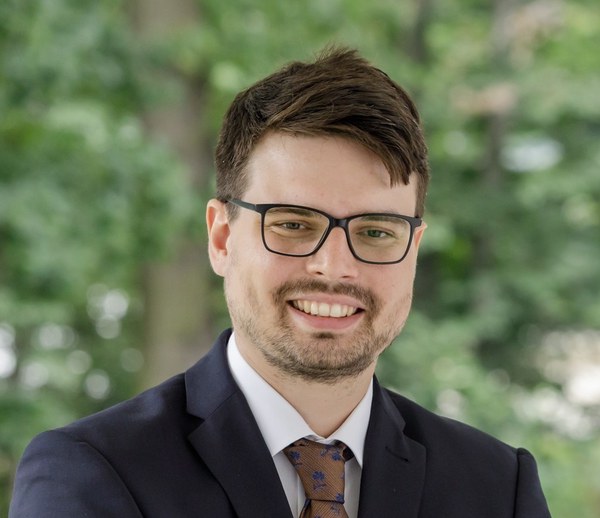
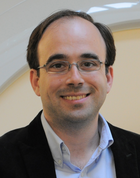
Dr. Markus Zimmermann is a researcher at the Institute of Neuroscience and Medicine (INM-4: Physics of Medical Imaging) at the Research Center Jülich. His work focuses on advancing quantitative MRI techniques, particularly in water content mapping, multiparametric imaging, and ultrahigh-field MRI applications. He contributes to developing methods for eddy current characterization, multi-exponential relaxometry, and rapid whole-brain protocols. His research addresses neurological and medical imaging challenges, including cerebral pathologies and neurobiological implications. Key areas of expertise include MRI parameter estimation, medical imaging algorithms, and the integration of advanced imaging techniques for clinical and neuroscience applications. His projects often involve collaborations to validate methodologies using in vivo/ex vivo experiments and super-resolution reconstruction. Dr. Zimmermann’s work aims to enhance diagnostic precision and understanding of brain physiology through innovative MRI technologies.
Prof. Barbara Wohlmuth is a full professor in Numerical Mathematics at the Technical University of Munich (TUM), affiliated with the TUM School of Computation, Information and Technology. She leads the International Graduate School of Science and Engineering at TUM and has held professorships at Stuttgart, Darmstadt, and Berlin universities. Her research focuses on numerical simulation of partial differential equations, multiscale solvers, and coupled multi-field problems with applications in engineering. Education: Studied mathematics at TUM and Université Joseph Fourier in Grenoble, received her doctorate from TUM in 1995, and completed habilitation in Augsburg. Visiting professorships in USA, France, and Hong Kong. Research interests include discretization techniques, predictive modeling, and interdisciplinary collaboration with engineering disciplines. Notable achievements: 2012 Gottfried Wilhelm Leibniz Prize (Germany’s highest academic honor in sciences), 2005 Sacchi-Landriani Prize. Publications emphasize advanced numerical methods in fluid dynamics, geophysics, and biomedical engineering. Active in editorial roles for international journals and scientific committees across Europe and USA. Elected member of Bavarian and European Academies of Sciences. Key contributions include: Development of robust numerical algorithms for exascale simulations Pioneering work in coupled multi-physics modeling Innovative methods for computational contact mechanics Leadership in graduate education initiatives
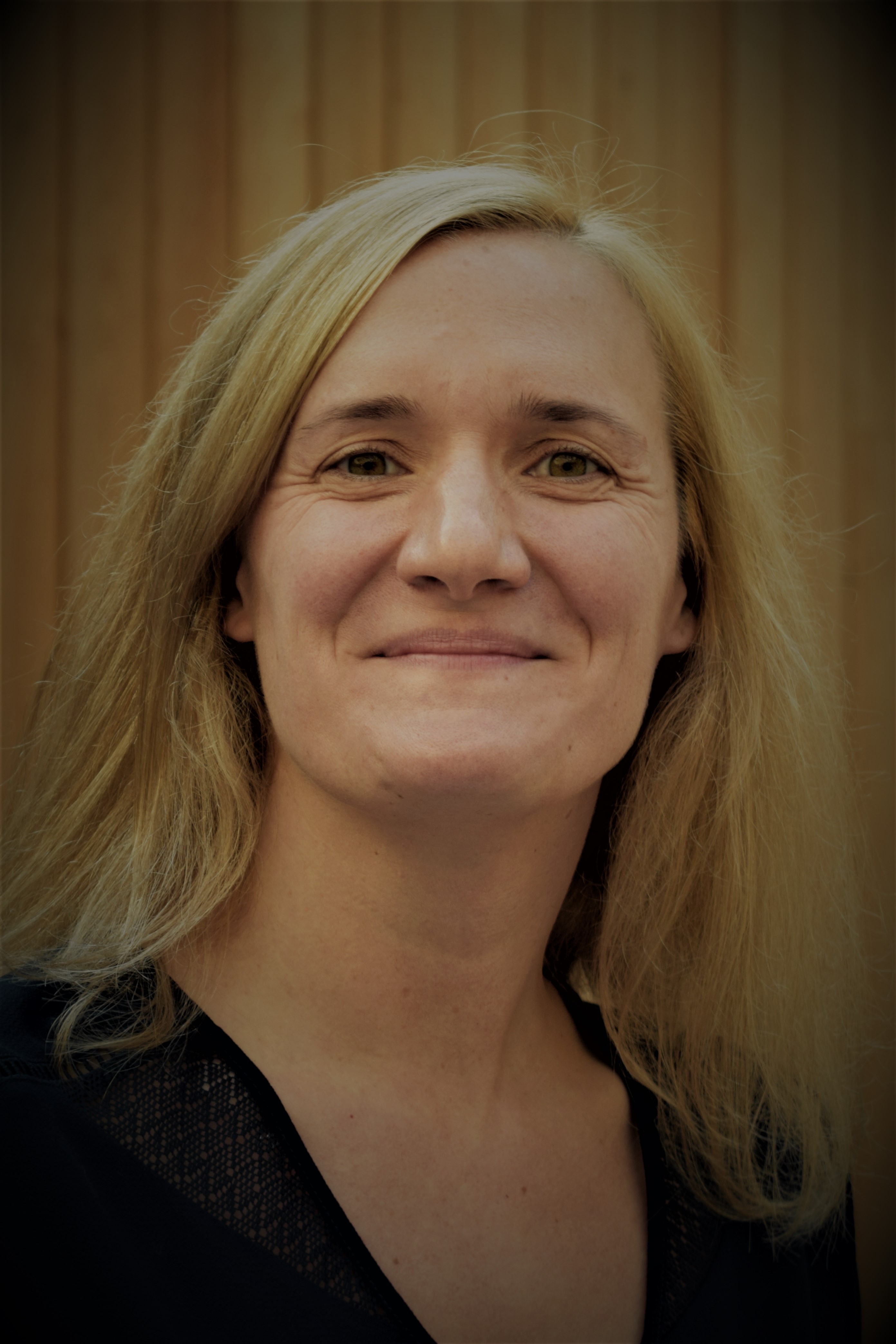
Professor Melanie Wilke is a leading figure in cognitive neurology at the University Medical Center Göttingen, where she serves as Director of the Department of Cognitive Neurology and Head of the MR Research Unit. She is also a Co-Investigator in the 'Decision and Awareness' group at the German Primate Center. Her work bridges human and non-human primate neuroscience to investigate the neural basis of perception, awareness, and movement planning. Her research focuses on understanding how distributed neural activity supports spatial awareness and decision-making. Key areas include thalamocortical interactions, neural mechanisms of spatial neglect, and translational models of cognitive disorders. She employs multimodal methods such as fMRI, electrophysiology, brain stimulation (tACS, tDCS, TMS), and inactivation techniques in both human and monkey models. Analysis of her recent publications reveals a strong emphasis on visual consciousness, neural connectivity, and sensorimotor integration. Her work frequently explores the role of the pulvinar and parietal cortex in attention and awareness, using innovative paradigms including no-report tasks and microstimulation. There is a clear translational trajectory from basic mechanisms to clinical applications in stroke and Parkinson’s disease. Fellows Award for Excellence in Biomedical Research, National Institutes of Health, USA (2008) Prof. Wilke leads a dynamic research group and mentors students within several graduate programs, including Systems Neuroscience and the International Max Planck Research School (IMPRS). Her team conducts cutting-edge research using advanced imaging and stimulation techniques. She has secured long-term support through the Herman and Lilly Schilling Foundation Professorship (2011–2022) and continues to lead major projects in cognitive neurology and brain network dynamics. Her laboratory, embedded in the Heart & Brain Center Göttingen, fosters interdisciplinary collaboration and focuses on developing novel therapeutic interventions for cognitive deficits following brain injury. The MR Research Unit under her leadership is central to advancing non-invasive brain imaging and stimulation in both research and clinical contexts.
Prof. Yu-Seop Kim is a Professor at the School of Software, Hallym University, Chuncheon-si, Republic of Korea. He holds a B.Eng. in Computer Science from Sogang University (1992), and M.Eng. (1994) and D.Eng. (2000) in Computer Engineering from Seoul National University. His academic work is centered on the integration of artificial intelligence with biomedical applications. B.Eng., Department of Computer Science, Sogang University, 1992 M.Eng., Computer Engineering, Seoul National University, 1994 D.Eng., Computer Engineering, Seoul National University, 2000 His research interests lie at the intersection of bioinformatics, computational intelligence, natural language processing, and deep learning , with a strong emphasis on medical applications. He actively explores how AI can assist in clinical diagnostics and healthcare documentation. The recent trend in his publications demonstrates a focus on AI-driven medical image analysis and automated clinical text generation . His work leverages convolutional neural networks and language models to interpret brain CT scans, detect aortic dissection, and augment medical reports for cerebrovascular diseases. These efforts reflect a consistent effort to bridge machine learning with real-world clinical challenges. While no scientific awards are listed in the provided text, his collaborative research output suggests active engagement in academic and clinical partnerships. Prof. Kim has advised multiple researchers and co-authored numerous publications, particularly in journals like Applied Sciences and Journal of Clinical Medicine . Although specific grant information is not mentioned, his research likely involves funding for AI in healthcare. He collaborates with colleagues such as Byoung-Doo Oh, Chulho Kim, and Bitnarae Kim, indicating a multidisciplinary team approach. His work appears to be conducted within a research group or lab focused on AI for medical imaging and language processing , potentially involving students and clinical collaborators from affiliated institutions like Chuncheon Sacred Heart Hospital. This environment supports translational research from algorithm development to clinical validation.
Nele Mentens is a full professor at both KU Leuven and Leiden University, where she leads cutting-edge research in applied cryptography, hardware security, and secure embedded systems. At KU Leuven, she is affiliated with the Faculty of Engineering Technology and the Electrical Engineering Department (ESAT), leading the Emerging Technologies, Systems & Security (ES&S) research group at the Diepenbeek campus. Simultaneously, she holds a full professorship at Leiden University’s Leiden Institute of Advanced Computer Science (LIACS), focusing on applied cryptography and security. She has been instrumental in numerous national and international research initiatives, including Horizon Europe and NWO-funded projects. Full Professor, KU Leuven (since 2023) Full Professor, Leiden University (since 2020) Associate Professor, KU Leuven (2014–2023) Post-doctoral Researcher & Lecturer, KHLim / KU Leuven (2007–2014) Ph.D. in Engineering Science, KU Leuven (2007) M.Sc. in Electrical Engineering, KU Leuven (2003) Her research focuses on secure and efficient hardware design, particularly for cryptographic applications on FPGAs, reconfigurable architectures, IoT security, and neuromorphic computing. She explores physical attack resistance, side-channel analysis protection, and trusted computing architectures, with applications in healthcare, industrial monitoring, and endpoint AI. Her work bridges theoretical cryptography with practical hardware implementations, emphasizing energy efficiency and real-time performance. The 15 most recent publications reflect a strong trend toward secure, energy-efficient, and intelligent embedded systems. Topics include neuromorphic AI accelerators, trusted IoT architectures, dynamic reconfiguration for side-channel protection, and secure medical data processing. These works span disciplines such as computer architecture, cybersecurity, digital design, and embedded systems, with a focus on hardware-software co-design and real-world deployment. Nele Mentens has received recognition for her contributions, including: Best Paper Award, DATE'16 Best Paper Nomination, AsianHOST'17 Best Paper Award, CHES'19 She has supervised over 15 Ph.D. students and post-docs, both current and former, and has served as principal investigator in approximately 25 funded research projects. Her work has attracted significant grants from Horizon Europe, NWO, FWO, and national innovation programs. She actively contributes to the academic community through editorial roles in top journals and leadership in major conferences. Nele Mentens leads the ES&S research group at KU Leuven and collaborates closely with LIACS at Leiden University. Her team includes Ph.D. students, post-docs, and research experts working on projects like NimbleAI, NeuroSoC, and TrustedIoT. She has also established secure electronics labs through infrastructure grants and maintains strong international ties with institutions such as EPFL, Ruhr University Bochum, and ETH Zurich.
Prof. Dr. Renato Negra is a faculty member at RWTH Aachen University, serving as the Chair of High Frequency Electronics within the Faculty of Electrical Engineering and Information Technology. His research is centered on advanced electronic systems with a focus on reconfigurable and low-power architectures for real-time applications. Research Interests: His work spans high frequency electronics, neuromorphic computing, embedded systems, and cyber-physical systems. He develops FPGA-based and edge-computing solutions for computer vision, robotics, and smart infrastructure, particularly in elderly monitoring and autonomous navigation. His research integrates deep learning with hardware optimization for energy efficiency and real-time performance. The recent publications highlight a strong trend toward event-based vision , neuromorphic sensors , and low-power embedded AI , applied in domains such as smart cities, healthcare, and robotics. There is a consistent emphasis on real-time processing, reconfigurable systems, and the deployment of neural networks on constrained hardware platforms. Scientific Awards: No awards or honors were mentioned in the provided text. Advising and Grants: While no specific students or advising roles are listed, the volume and depth of publications suggest active supervision or collaboration within research projects. Although no grants are explicitly named, involvement in EU-level initiatives (e.g., FitOptiVis ECSEL Project) and national R&D programs (e.g., BIO-PERCEPTION) can be inferred from the research topics and publication contexts. Labs and Teams: Prof. Negra leads the research activities in High Frequency Electronics at RWTH Aachen. While not directly linked to the Computer Vision and Robotics Lab (CVR-Lab) mentioned in the text, his work aligns closely with neuromorphic and CPS research themes, suggesting potential interdisciplinary collaboration.
Prof. Dr. Marcus Vetter is the founder and director of the Institute for Applied Artificial Intelligence and Robotics (A²IR) at Mannheim University of Technology's Faculty of Information Technology. His work bridges Deep learning Medical imaging and navigation Embedded systems Real-time computing Software engineering for medical devices He has taught courses including Deep Learning Methods, Image-Guided Medicine, and Embedded Systems. Education Computer Science, Technical University of Mannheim, 1999 Doctorate ('summa cum laude superato') in 'Image-based navigation systems', University of Heidelberg, 2003 Research focuses on AI-driven medical imaging tools, real-time deformation models, and open-source frameworks like MITK. His 15 most recent publications span 6D pose estimation for medical robotics Spectroscopy-based diagnostics Formal software verification Gesture and gaze recognition interfaces UAV drive train optimization Scientific achievements Doctorate with distinction (2003) Co-founder of MITK open-source project Director of A²IR institute since 2007 He has received BMBF grants for real-time deformation models and tracking systems, and has led development of navigation systems for laparoscopic surgery and cardiac ablation procedures.
Prof. Dr. Rolf Wanka is a Professor at the Department of Computer Science, Friedrich-Alexander-Universität Erlangen-Nürnberg (FAU), specializing in efficient algorithms and combinatorial optimization. His research focuses on swarm intelligence, discrete optimization algorithms, and scheduling problems, particularly in timetabling and robotics applications. Education : Sc.D. (Dr. rer. nat.) in Computer Science His work includes theoretical and experimental analyses of particle swarm optimization (PSO) algorithms, addressing runtime complexity, stagnation behavior, and convergence properties. He has developed novel heuristics for timetabling and sorting problems, with applications in multi-robot systems and medical imaging. Notable collaborations include studies on Markov chain-based PSO and fairness in academic scheduling. Key trends in his recent publications span swarm intelligence , discrete optimization , and scheduling heuristics , with a focus on robust timetabling , runtime analysis , and stochastic algorithm behavior . While no explicit scientific awards are listed, his mentorship in the Max Weber-Programm highlights his advisory role in academia. His publications demonstrate interdisciplinary applications of algorithms in robotics , medical imaging , and parallel computing , leveraging both theoretical rigor and practical experimentation. The full description below provides exhaustive details on his academic contributions and affiliations.
Prof. Dr. Gil Westmeyer is a Professor of Neurobiological Engineering at the Technical University of Munich (TUM), holding joint appointments at the TUM School of Natural Sciences and TUM School of Medicine and Health. He serves as Director of the Institute for Synthetic Biomedicine at Helmholtz-Zentrum München and leads the Chair of Neurobiological Engineering at TUM. His research program bridges molecular engineering, neuroimaging, and synthetic biology to develop next-generation tools for understanding and manipulating cellular networks. Westmeyer's educational background includes medical and philosophical studies in Munich, doctoral work on the molecular basis of Alzheimer's disease under Professor Christian Haass, clinical training at Harvard Medical School, and postdoctoral research with Professor Alan Jasanoff at MIT. His laboratory focuses on creating genetically encoded molecular sensors and actuators that enable non-invasive imaging and remote control of cellular processes across multiple scales. His research spans three primary domains: molecular sensors for multimodal imaging (from electron microscopy to whole-organism optoacoustics), molecular actuators for spatiotemporal control of cellular processes, and neurobehavioral imaging in freely behaving model organisms. The lab's work integrates synthetic biology, nanotechnology, and advanced imaging techniques to create tools that map dynamic signaling processes and manipulate cellular functions with unprecedented precision. Westmeyer's publication record demonstrates consistent innovation in molecular engineering, with recent work focusing on genetically encoded barcodes for electron microscopy, intron-encoded reporting systems, multiplexed optoacoustic imaging, and magnetically responsive cellular compartments. His publications in high-impact journals like Nature Methods, Cell, and Nature Biotechnology reflect the significance of his contributions to molecular imaging and engineering. ERC Proof of Concept 'inteRNAlizer' (2023) ERC Consolidator Grant 'EMcapsulins' (2019) ERC Starting Grant 'MagnetoGenetics' (2013) Helmholtz Young Investigator's Group (2011) Westmeyer actively mentors students and researchers through multiple teaching positions at TUM, including courses in biological chemistry, genetic machine development (iGEM), mammalian cell technology, and neuro-recording methods. His laboratory develops technologies with clear translational potential for future neurotherapies and regenerative medicine applications, particularly through the creation of imaging-controlled cellular interventions. The lab maintains strong collaborations across disciplines and institutions, with research that contributes to multiple UN Sustainable Development Goals related to health and wellbeing.
Zhang Yang is an Associate Professor at the School of Medical Engineering, Harbin Institute of Technology (Shenzhen), with a joint appointment as Visiting Professor at the University of Tokyo starting in July 2024. He holds a PhD from the University of Cambridge's Department of Pathology and an M.Phil. from the University of Hong Kong's HKU-Pasteur Research Center. Previously, he served as an Assistant Professor at Harbin Institute of Technology (Shenzhen) from September 2015 to December 2020. His research integrates computational and experimental approaches to address challenges in pathogen and cancer research. On the computational side, his work focuses on developing AI-powered microscopic imaging systems, applying deep learning to analyze multi-omics data (including proteins, DNA, miRNAs, LncRNAs, and mRNAs), and utilizing deep learning in cheminformatics for drug discovery. On the experimental side, his laboratory combines imaging, high-throughput sequencing, mass spectrometry, and chemical biology to understand disease mechanisms at the molecular level. His publication record demonstrates significant impact, with over 50 SCI-indexed papers in high-impact journals including Nature Communications, Briefings in Bioinformatics, Bioinformatics, Analytical Chemistry, and Trends in Biotechnology. His work has been cited by prestigious journals such as Nature Reviews Methods Primers and Nature Communications, with three ESI highly cited papers. His research spans multiple interdisciplinary fields, combining artificial intelligence with biomedical applications to advance diagnostic and therapeutic approaches. World's Top 2% Scientists 2021 Fellow of the Royal Society of Biology Three ESI Highly Cited Papers Five authorized national invention patents As an academic leader, he serves as Associate Editor for BMC Biology and Frontiers in Microbiology, Academic Editor for PLOS Genetics, Editorial Board Member for Communications Biology, and Guest Editor for a Special Issue on AI in analytical chemistry in Trends in Analytical Chemistry. His laboratory actively collaborates with international institutions, with graduates pursuing further studies at Hong Kong Chinese University, Hong Kong University of Science and Technology, Hong Kong Polytechnic University, Macau University, and the University of New South Wales. He teaches Introduction to Modern Biology for undergraduates and Bioanalytical Chemistry for graduate students.
Dr. Wolfgang Hübner is a Researcher at the Faculty of Physics at University of Bielefeld, Germany, affiliated with the Biomolecular Photonics Group. His work focuses on advanced optical imaging techniques applied to cellular and molecular structures. He maintains an active research program as evidenced by numerous publications from 2023-2025. His research interests center on photonics, biophotonics, optical microscopy, super-resolution imaging techniques, cellular biophysics, and molecular imaging. Dr. Hübner's work bridges physics and biology, developing and applying cutting-edge microscopy methods to address biological questions at the nanoscale level. His recent publications demonstrate a strong focus on super-resolution microscopy techniques, particularly structured illumination microscopy, fluorescence lifetime imaging, and correlative imaging approaches. His research investigates cellular structures like liver sinusoidal endothelial cells, dystroglycan mutants, and mitochondrial dynamics, revealing how advanced optical methods can visualize biological processes at unprecedented resolution. Dr. Hübner's research shows consistent development in both methodological advances in optical imaging and biological applications. His work spans from fundamental optical engineering to biomedical applications, demonstrating interdisciplinary expertise across physics, engineering, and cell biology.
Kanwarpal Singh serves as Group Leader and Head of the Microendoscopy Research Group at the Max Planck Institute for the Science of Light (MPL) in Erlangen, Germany. His research focuses on developing and applying advanced optical imaging techniques, particularly Optical Coherence Tomography (OCT) and related technologies, for biomedical applications. As part of the Max Planck Society, one of Germany's premier research organizations, his work bridges fundamental optical physics with clinical medicine. Dr. Singh's research interests center on biomedical optics and imaging, with particular expertise in endoscopic OCT, optical elastography, and polarization-sensitive imaging techniques. His work spans from developing novel optical systems and probes to applying these technologies in clinical settings for disease diagnosis and monitoring. Key areas include gastrointestinal imaging, dermatological applications, and neurological tissue characterization. His research demonstrates a consistent trajectory from fundamental optical engineering to translational medical applications, with particular emphasis on improving imaging depth, resolution, speed, and clinical usability. Analysis of Dr. Singh's recent publications (2021-2025) reveals a strong focus on overcoming technical limitations in biomedical imaging. His work addresses critical challenges including motion artifacts in in vivo measurements, depth of focus limitations, polarization sensitivity issues, and the development of portable, clinically practical systems. The research shows increasing clinical relevance, with applications spanning inflammatory bowel disease monitoring, esophageal tissue analysis, skin biomechanics, and central nervous system regeneration studies. Dr. Singh leads the Microendoscopy Research Group within the MPL's research structure. While specific lab details aren't provided in the text, his numerous publications describing novel probe designs and imaging systems suggest an active laboratory focused on optical system development, with strong connections to clinical collaborators for in vivo and patient studies. His research appears to involve both theoretical modeling and practical implementation of optical technologies.
Aggelos K. Katsaggelos is a Professor in the Department of Electrical Engineering and Computer Science at Northwestern University's McCormick School of Engineering. His research focuses on biomedical imaging, machine learning, and computer vision applications in healthcare. He has collaborated extensively with interdisciplinary teams, including clinicians and engineers, to develop advanced algorithms for medical diagnosis and image analysis. Key research interests include medical image processing, deep learning for diagnostics, and computational methods in cardiology. His work spans applications such as MRI and ultrasound analysis, automated pathology detection, and multimodal sensing for health monitoring. Recent articles highlight contributions to myocardial scar quantification, lung ultrasound scoring, and AI-driven cough detection. His methodologies often combine domain-specific physics with modern machine learning techniques to solve real-world clinical challenges. Notable collaborations include projects with institutions like the University of Chicago and international teams in astrophysics and cognitive science. His work emphasizes translating algorithmic advancements into practical clinical tools.
Andrew T. Duchowski is a Professor at Clemson University, specializing in Eye Tracking Methodology, Human-Computer Interaction, and Computer Graphics. His work spans over two decades with significant contributions to gaze-based interaction systems, foveated rendering, and cognitive load measurement. He authored three editions of the influential textbook Eye Tracking Methodology (Springer, 2003/2007/2017). Duchowski's research integrates eye movement analysis with applications in virtual reality, medical imaging (e.g., colonography viewers), and aviation safety. He actively collaborates with institutions globally and serves on editorial boards for journals like Proceedings of the ACM on Human-Computer Interaction . His recent projects include developing real-time gaze analytics pipelines and exploring entropy-based metrics for visual attention analysis. Publications (selected 15 recent): Focus on advancing gaze interaction in immersive environments, optimizing 3D visualization, and measuring cognitive load through pupillary activity and microsaccades. Key co-authors include Krzysztof Krejtz, Matias Volonte, and Donald House.
Prof. Dimitrios Karampinos is a Professor at the Technical University of Munich (TUM), leading the Experimental Magnetic Resonance Imaging group within the TUM School of Medicine and Health. He specializes in developing novel MRI techniques for quantitative biomarker discovery, focusing on musculoskeletal, metabolic, and oncological applications. His career includes a PhD from the University of Illinois (2008), postdoctoral research at UCSF (2009–2012), and leadership roles at TUM since 2012. Prof. Karampinos has pioneered advancements in MRI reconstruction, signal modulation, and biomarker validation for clinical translation. Educations: BSc in Mechanical Engineering (National Technical University of Athens, Greece), PhD in Biomedical Engineering (University of Illinois, Urbana-Champaign, 2008). Research Interests: Development of MRI measurement techniques, quantitative biomarkers for disease diagnosis, and improving therapy monitoring. Key areas include musculoskeletal disease imaging, metabolic disorder assessment, and oncology applications. His work emphasizes translating research into clinical practice through innovations like accelerated imaging, artifact correction, and AI-driven analysis. Awards: ERC Starting and Proof of Concept Grants (2015, 2019), TUM Supervisory Award (2020), ISMRM Junior Fellow (2011). Grants: Multiple ERC grants for MRI method development. Labs/Teams: Leads the Experimental Magnetic Resonance Imaging group at TUM, collaborating on clinical and technical MRI advancements.