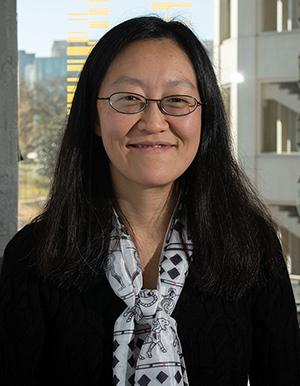
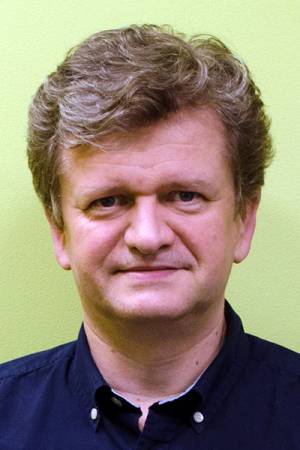
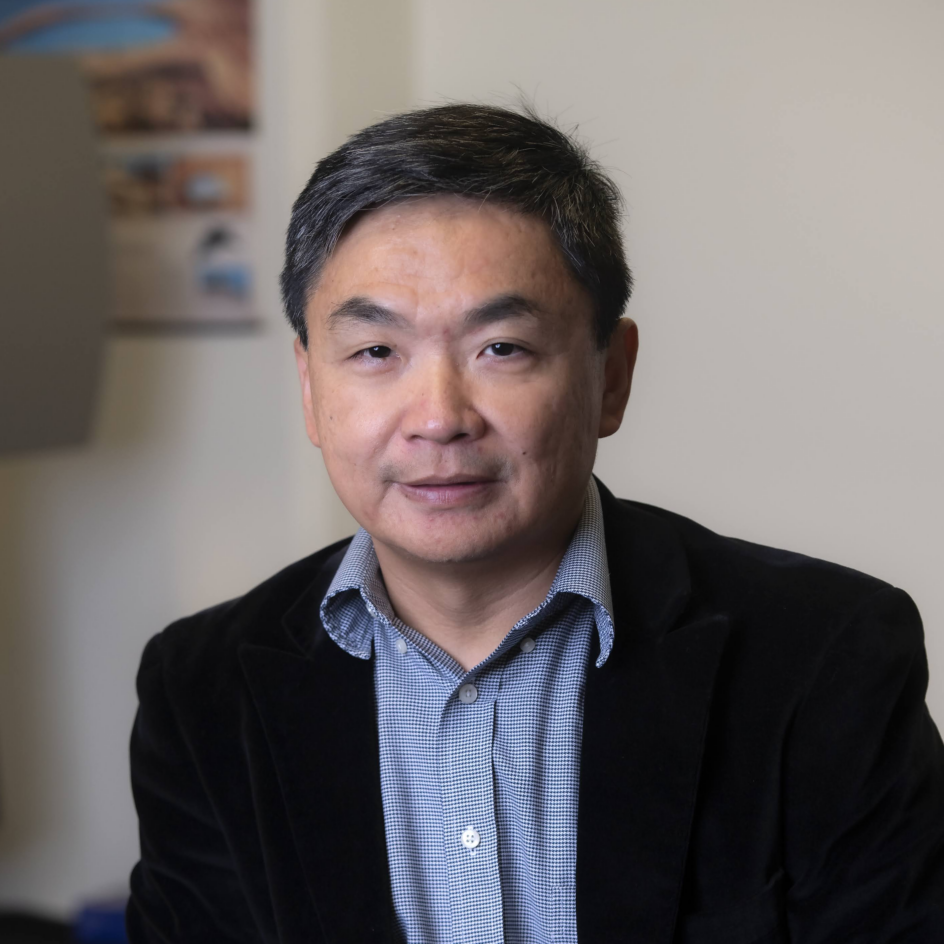
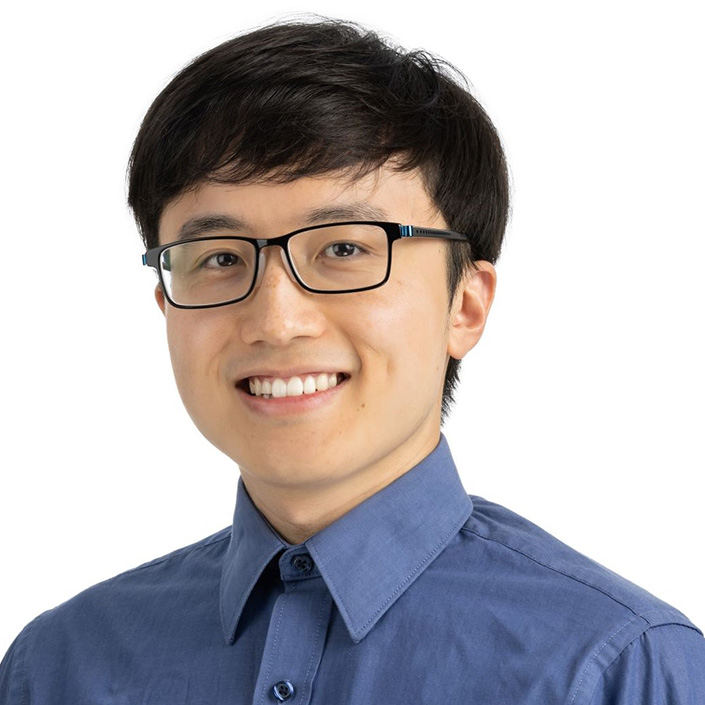
Heng Huang is the Brendan Iribe Endowed Professor in the Department of Computer Science and the Department of Electrical and Computer Engineering at the University of Maryland, College Park . He earned his Ph.D. in Computer Science from Dartmouth College and holds prior degrees from Shanghai Jiao Tong University. His research focuses on advancing the foundations and applications of artificial intelligence, particularly in machine learning, data mining, natural language processing, computer vision, and biomedical informatics . His work integrates large-scale optimization, fairness, and robustness in deep learning systems. Heng Huang’s recent publications demonstrate a strong trend in large language models, federated learning, model watermarking, continual learning, and medical image analysis . His work appears consistently in top venues like NeurIPS, ICML, CVPR, ICLR, and MICCAI, reflecting a broad impact across theoretical and applied AI. He actively mentors students and postdocs, seeking highly motivated researchers in machine learning and related domains. His work has significant implications for healthcare, privacy, and trustworthy AI.
Hang Lu is a Professor and holds the Cecil J. "Pete" Silas Chair of Chemical & Biomolecular Engineering at the Georgia Institute of Technology. Dr. Lu also holds a Love Family Professorship and leads the Lµ Fluidics Group, which focuses on engineering microfluidic systems and machine learning tools to address complex questions in neuroscience, developmental biology, and cell biology that are difficult to address with conventional techniques. Dr. Lu's research lies at the intersection of engineering and biology, with primary interests including: Microfluidic systems for high-throughput screens and image-based genetics and genomics Systems biology: large-scale experimentation and data mining Microtechnologies for optical stimulation and optical recording Big data, machine vision, and automation Developmental neurobiology, behavioral neurobiology, and systems neuroscience Cancer biology, immunology, embryonic development, and stem cells Her laboratory engineers microfluidic devices and BioMEMS to study neuroscience, genetics, cancer biology, and biotechnology. These miniaturized Lab-on-a-chip tools operate at scales comparable to biological systems, leveraging unique micro and nano-scale phenomena to gather large-scale quantitative data about complex biological systems. Current projects include Microfluidics for Life Sciences, Optical Neuron Recordings and Manipulations, Machine Learning Tools for Neuroscience, Measuring and Modeling Behavior, and High-throughput, High-content Cell-based Assays. Analysis of Dr. Lu's recent publications (2024-2025) reveals a strong trend toward integrating microfluidics with advanced computational methods: Development of deep learning frameworks for biological image analysis Advanced neuron tracking and functional imaging techniques Non-invasive characterization of 3D organoid cultures Sophisticated neuromechanical modeling of locomotion Microfluidic temperature control systems for in vivo studies Label-free imaging pipelines for neural development Dr. Lu's significant professional honors include: Cecil J. "Pete" Silas Chair of Chemical & Biomolecular Engineering Love Family Professorship The Lµ Fluidics Group actively mentors students and postdocs, currently accepting new postdoctoral researchers. The lab receives substantial funding for interdisciplinary projects at the engineering-biology interface, with research implications spanning fundamental biological understanding to therapeutic development. The group operates within Georgia Tech's School of Chemical & Biomolecular Engineering, with specialized facilities for microfluidic device fabrication, biological experimentation, and advanced imaging, maintaining strong collaborative ties across engineering, neuroscience, and biological disciplines.
Philip S. Yu is a Distinguished Professor in the Department of Computer Science at the University of Illinois at Chicago and holds the Wexler Chair in Information Technology. Previously, he led the Software Tools and Techniques department at IBM Thomas J. Watson Research Center. Education: B.S. in Electrical Engineering, National Taiwan University M.S. and Ph.D. in Electrical Engineering, Stanford University M.B.A., New York University His research spans data mining , big data , social networks , privacy-preserving data publishing , graph/network mining , recommender systems , and deep learning . He has authored over 970 papers with 74,500+ citations and an H-index of 127. Recent work focuses on heterogeneous graph representation, quantum walks in network analysis, and federated unlearning. Scientific Honors: ACM SIGKDD 2016 Innovation Award IEEE Computer Society 2013 Technical Achievement Award IEEE ICDM 2003 Research Contributions Award IEEE Region 1 Award (1999) UIC Research of the Year (2013) IBM Master Inventor with 300+ patents AI 2000 Most Influential Scholar Honorable Mentions (2024-2025) He served as Editor-in-Chief for ACM Transactions on Knowledge Discovery from Data and IEEE Transactions on Knowledge and Data Engineering , and on steering committees for ACM KDD and IEEE Data Mining. His work bridges theoretical advances in graph neural networks , deep learning , and privacy-preserving systems with applications in healthcare, social media, and enterprise analytics.
Artur W. Dubrawski is an Alumni Research Professor of Computer Science and Director of the Auton Lab at Carnegie Mellon University's School of Computer Science. He leads interdisciplinary research on Artificial Intelligence, Machine Learning, and Robotics with real-world applications in healthcare, nuclear safety, food safety, and counter-human trafficking. His work focuses on bridging gaps between data-driven AI and empirical sciences through probabilistic modeling, predictive analytics, and time-series intelligence. Lab: Auton Lab (founded 1993) Collaborations: Allegheny County Health Department, USDA, CDC, U.S. Army Research Impact: AI for wastewater-based COVID-19 forecasting, radiological inspection systems, and hospital infection detection His students and affiliates include current PhD candidates Angela Chen, Emma Erickson, Cecilia Morales, Willa Potosnak and past researchers like Benedikt Boecking (co-inventor of Interactive Weak Supervision). The lab has spun off startups like Marinus Analytics (IBM XPrize finalists) and developed open-source tools like auton-survival for survival analysis. Key Grants: $10.5M U.S. Army contract for AI-driven predictive maintenance research.
Professor Scott Sisson is Director of the UNSW Data Science Hub (uDASH) and Professor of Statistics and Data Science at the University of New South Wales, School of Mathematics and Statistics. His research focuses on computational statistics, particularly solving 'intractable' statistical problems through Bayesian methods, big data techniques, simulation algorithms, and extreme value theory with environmental applications. Education includes a PhD in Statistics from Bristol University (2002), MSc in Environmental Statistics from Lancaster University (1997), and BSc in Mathematics and Statistics from Lancaster University (1996). Research interests span: Bayesian statistics and uncertainty quantification Big data analytics and scalable algorithms Machine learning integration with statistical methods Extreme value modeling for climate/environment Computational techniques for intractable problems Recent publications (2022-2025) demonstrate strong emphasis on Bayesian computation, spatiotemporal modeling, and interdisciplinary applications in materials science, oncology, quantum computing, transportation policy, and ecology. Methodological innovations include likelihood-free inference, modular Bayesian analyses, and symbolic data modeling. Awards and honors: 2020 Service Award (Statistical Society of Australia) 2017 ARC Future Fellowship 2015 G. N. Alexander Medal (Engineers Australia) 2011 Moran Medal (Australian Academy of Science) 2010 J.G. Russell Award (Australian Academy of Science) 2010 Queen Elizabeth II Research Fellowship As Director of uDASH, he leads data science initiatives across UNSW. He maintains sustained ARC funding and supervises students in computational statistics, Bayesian methods, extreme value theory, and machine learning. Professional service includes editorial roles for Statistics and Computing and past presidency of Statistical Society of Australia.
John Paisley is an Associate Professor of Electrical Engineering at Columbia University's Fu Foundation School of Engineering and Applied Science, and a member of Columbia's Data Science Institute (DSI). He holds a B.S., M.S., and Ph.D. in Electrical and Computer Engineering from Duke University (2004-2010), followed by postdoctoral research in Computer Science at Princeton University and UC Berkeley. His research focuses on Bayesian models, posterior inference techniques for Big Data, and applications in data analysis, recommendation systems, information retrieval, and compressed sensing. He has pioneered methods like Bayesian Gaussian Process ODEs and Double Normalizing Flows, with recent work emphasizing uncertainty quantification in environmental modeling and neuroimaging analysis. His collaborative workflows (e.g., bneR ) address air pollution exposure and PM2.5 concentration uncertainties, combining Bayesian nonparametric ensembles with geospatial data. He has also developed frameworks for neural network interpretability, image denoising, and compressed sensing MRI. Paisley's work bridges statistical theory and applied machine learning, with applications in healthcare, environmental science, and geophysics. His academic contributions include over 50 publications since 2016, spanning topics like deep metric learning, adversarial learning, and variational inference optimization. He maintains an active research group and serves on editorial boards for machine learning and signal processing journals.
Sanjay Purushotham is an Assistant Professor in the Department of Information Systems at the University of Maryland Baltimore County (UMBC), with a PhD in Electrical Engineering from the University of Southern California (USC) and a postdoctoral background in Computer Science at USC's Integrated Media Systems Center (IMSC). His research focuses on machine learning, data mining, and their applications in biomedical informatics, social network analysis, and multimedia data mining. Key contributions include survival analysis models using pseudo values and federated learning frameworks for healthcare data. He has received awards including the Best Paper Award at SIGSPATIAL 2014 and a Best Poster Runnerup at SCMLS 2016. Education: PhD in Electrical Engineering (USC), Postdoc in Computer Science (USC) His work spans interdisciplinary areas such as domain adaptation for remote sensing, thermal face translation, and interpretable neural networks for medical applications. Recent projects include federated survival analysis models and climate-informatics frameworks for cloud property retrieval. He teaches courses in artificial intelligence, healthcare informatics, and statistical learning at UMBC. Research highlights include developing MedFuseNet for multimodal medical question answering and VDAM for multi-sensor cloud data analysis. His work on fair survival analysis models addresses algorithmic bias in healthcare predictions. Current grants include a NSF CAREER award for trustworthy federated learning in computational healthcare.
Prof. Hayden Kwok Hay SO is an Associate Professor at the University of Hong Kong (HKU), affiliated with the Department of Electrical and Electronic Engineering. He currently serves as Acting Director of the School of Innovation and previously co-directed the Computer Engineering Program. His research focuses on reconfigurable computing systems, FPGA-based architectures, and their applications in AIoT, medical imaging, and high-performance computing. He holds a B.S., M.S., and Ph.D. in Electrical Engineering and Computer Sciences from UC Berkeley (1998–2007). Prof. So has been recognized with awards such as the IEEE-HKN Teaching Award (2021), Croucher Innovation Award (2013), and multiple teaching excellence awards. He leads the Computer Architecture & System Research Lab (CASR) and co-founded the Joint Lab on Future Cities (JLFC). His work spans FPGA overlay architectures, graph processing systems, and hardware-software co-design for efficient computing. Key research contributions include advancements in FPGA-based reconfigurable systems, sparse dataflow architectures, and medical imaging accelerators. He has secured grants for projects like 'Advanced machine vision guided aquatic surface vehicles' and 'Efficient and Productive Parallel Data Processing in Hybrid FPGA-CPU Clusters.' Prof. So has advised numerous students and researchers, contributing to over 150 peer-reviewed publications. His current projects explore AI hardware acceleration, neuromorphic computing, and FPGA-driven solutions for big data challenges.
Chen Li is a Professor in the Department of Computer Science at the University of California, Irvine (UCI), affiliated with the Donald Bren School of Information and Computer Sciences (ICS). He holds a Ph.D. from Stanford University and bachelor's and master's degrees from Tsinghua University. His research focuses on data management, including databases, query optimization, machine learning systems, and open-source tools like AsterixDB and Texera. He has received prestigious awards such as the NSF CAREER Award and IEEE Fellow recognition. Li is also a board member of the VLDB Endowment and the former Faculty Director of UCI's ICS Master of Computer Science Program. Education: Ph.D., Computer Science, Stanford University M.S. and B.S., Computer Science, Tsinghua University Research interests span next-generation databases, approximate query processing, and AI-driven data analytics. Notable contributions include the Texera system for collaborative data science workflows and the Apache AsterixDB project. He has led NIH-funded initiatives in diabetes research and pandemic prediction, emphasizing real-world applications of data science. Professional roles include PC co-chair of VLDB 2015, General Co-chair of SIGMOD 2027, and a visiting research scientist at Google. His awards highlight his impact in both academia and industry. Advising and mentoring are central to his career, with a focus on graduate education. He has pioneered outreach programs like DS4ALL to teach high-school students data science using Texera.
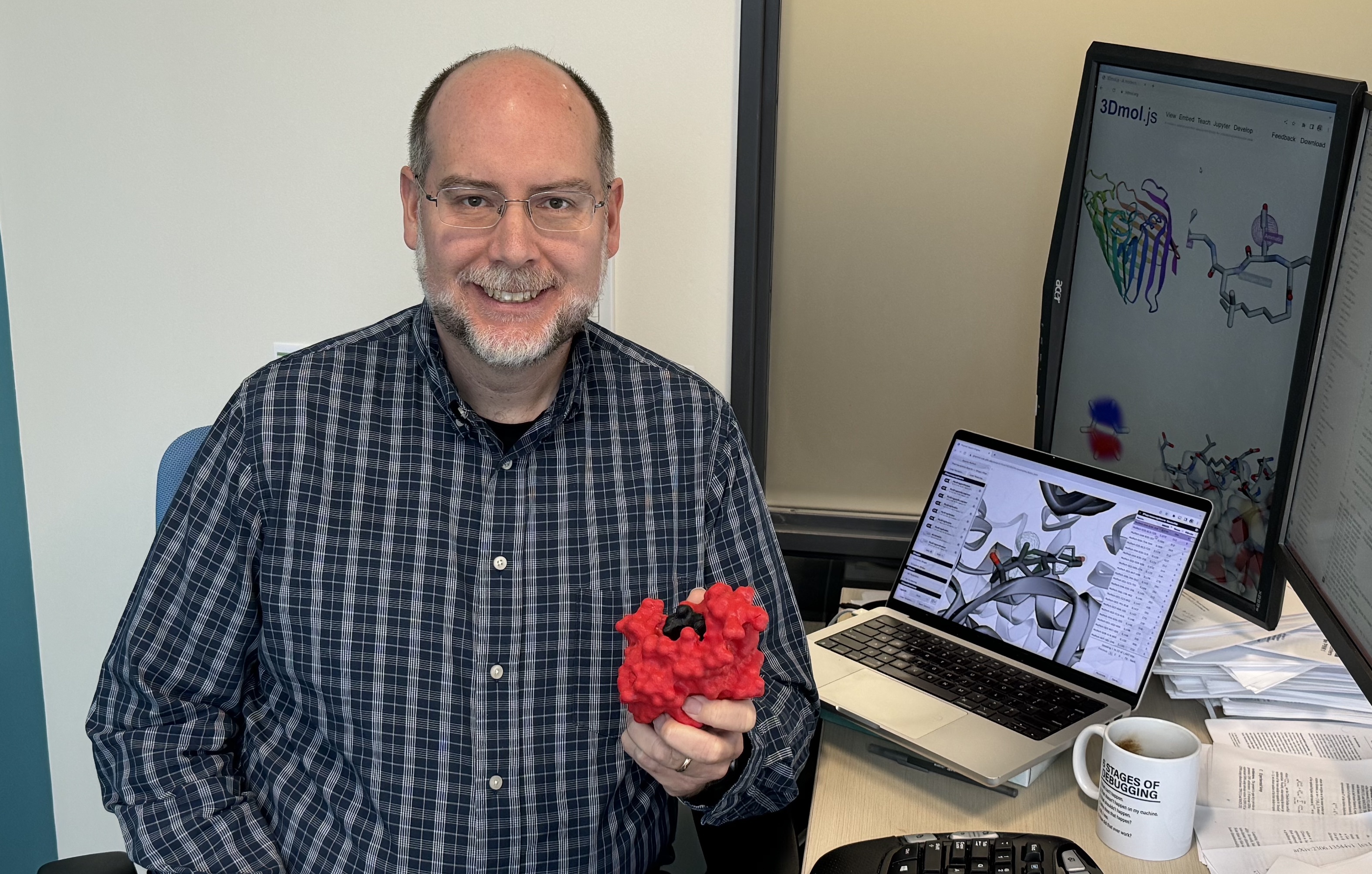
David R. Koes is an Associate Professor in the Department of Computational and Systems Biology at the University of Pittsburgh, affiliated with the School of Medicine. He holds roles such as Associate Director of the Joint CMU-Pitt Computational Biology PhD Program (CPCB) and is involved in multiple graduate programs including Intelligent Systems and Computational Biomedicine. His research focuses on developing computational algorithms and systems for drug discovery, emphasizing open-source software and machine learning applications in biomedical data. Koes teaches courses like MSCBIO2025 (Bioinformatics Programming in Python) and MSCBIO2065 (Scalable Machine Learning for Big Data Biology). He has secured NIH funding (R35GM140753) and collaborated on projects with institutions like NVIDIA and Google Cloud. His lab develops tools such as GNINA, Pharmit, and 3Dmol.js, and actively contributes to open drug discovery initiatives. Education: PhD in Computer Science from Carnegie Mellon University (CMU). Research Interests: Leveraging computation and AI for drug design, molecular docking, pharmacophore modeling, and open science. Specific areas include developing scalable machine learning pipelines, virtual screening systems, and tools for 3D molecular analysis. Grants and Funding: Current NIH R35 grant and prior support from NSF, Relay Therapeutics, and others. His work emphasizes translating computational methods into practical drug discovery solutions. Lab and Teams: Directs a lab focused on computational drug discovery, collaborating with multiple academic and industry partners. Supervises graduate students and postdocs in projects spanning AI-driven drug design, molecular modeling, and software development.
Dr. Xiaoxiao Li is an Assistant Professor in the Electrical and Computer Engineering Department at the University of British Columbia (UBC), with joint appointments in Computer Science (Associate Member) and the School of Medicine at Yale University (Adjunct Assistant Professor). She is also a Canada CIFAR AI Chair and Canada Research Chair (Tier II) in Responsible AI. Her research focuses on enhancing trustworthiness, fairness, and efficiency in AI algorithms and foundation models, particularly in healthcare applications. Education: B.S. (Honors) in Zhejiang University (2015), Ph.D. in Biomedical Engineering from Yale University (2020), Postdoc at Princeton University (2020-2021). She leads the Trusted and Efficient AI (TEA) Lab at UBC, which develops algorithms for federated learning, medical imaging analysis, and interpretable AI systems. Research interests include federated learning, generative models, medical image analysis, AI fairness, and graph-based methods for neuroimaging. Recent projects include GMValuator (data valuation for generative models), FairMedFM (fairness benchmarking in medical AI), and FedTextGrad (textual gradient-based FL optimization). Grants: Canada Foundation for Innovation Grant (2023), UBC Green Lab Fund (2023), Vector Institute funding Teaching: Courses on machine learning, federated learning, and AI ethics at UBC Awards & Recognition: Best Paper Award at FL@FM WWW 2024, Editorial Board Member of Medical Image Analysis , multiple top-tier conference acceptances (NeurIPS, ICLR, CVPR, MICCAI). Lab & Teams: TEA Lab collaborates with industry and hospitals to translate AI research into clinical tools. Current projects address AI fairness in healthcare, federated learning for medical data, and multimodal medical analytics.
Farnoush Banaei-Kashani is an Associate Professor (Tenured) in the Department of Computer Science and Engineering at the University of Colorado Denver. She also holds an Adjunct Associate Professor position in the Department of Mathematical and Statistical Sciences. As the founder and director of the Big Data Management and Mining Lab (BDLab), she leads multiple GAANN Fellowship Programs, including BDSE (Big Data Science and Engineering), DDC (Data-Driven Cybersecurity), and II (Infrastructure Informatics). She directs the 'Data Science in Biomedicine' MS Track and focuses on data-driven decision systems (DDSs), integrating machine learning and big data analytics into healthcare, energy, transportation, and environmental applications. Education: Details not explicitly provided in the text. Her research spans data management cycles for DDSs, addressing challenges like big data volume, velocity, and variety. Key projects include iWatch (crime surveillance), POCM (mobility monitoring), and GeoSIM (urban texture documentation). She teaches courses such as Machine Learning Systems, Big Data Science, and Data Mining. Publications highlight advancements in sea ice classification, federated learning, proteomic networks, and privacy-preserving AI. Her work is funded by NSF, NIH, DOT, and industry partners like Google and IBM. She has advised numerous students and contributes to academic leadership as editor, conference chair (ACM SIGSPATIAL 2018/2019), and program committee member for venues like SIGMOD and KDD.
Kevin C. Zhou is an Assistant Professor in the Department of Biomedical Engineering at the University of Michigan. His research focuses on developing high-performance computational optical imaging systems with unprecedented spatiotemporal throughput, integrating advanced optical instrumentation with machine learning-driven algorithms to analyze big data in biology and medicine. His lab specializes in creating imaging systems capable of capturing high-resolution, high-speed, and high-dimensional datasets. Dr. Zhou holds a Ph.D. in Biomedical Engineering from Duke University (NSF GRFP Fellow) and a B.S. in Biomedical Engineering from Yale University (Barry Goldwater Scholar). Prior to joining U-M, he was a Schmidt Science Fellow and postdoctoral researcher at UC Berkeley. Key research areas include: High-throughput microscopy (gigapixel-scale systems) 3D tomographic imaging Light field and Fourier-based imaging modalities Machine learning for image reconstruction and analysis Biomedical applications in cellular/molecular imaging His recent work has advanced technologies like multi-camera array microscopes (MCAM/MCAS) and Fourier light field mesoscopes, achieving video-rate 3D imaging of freely moving organisms. These innovations enable applications in digital cytopathology, behavioral tracking, and high-content biological studies. Notable awards include the NSF Graduate Research Fellowship and Barry Goldwater Scholarship. His research has been featured in top journals and conferences with a focus on advancing optical imaging hardware and computational pipelines.
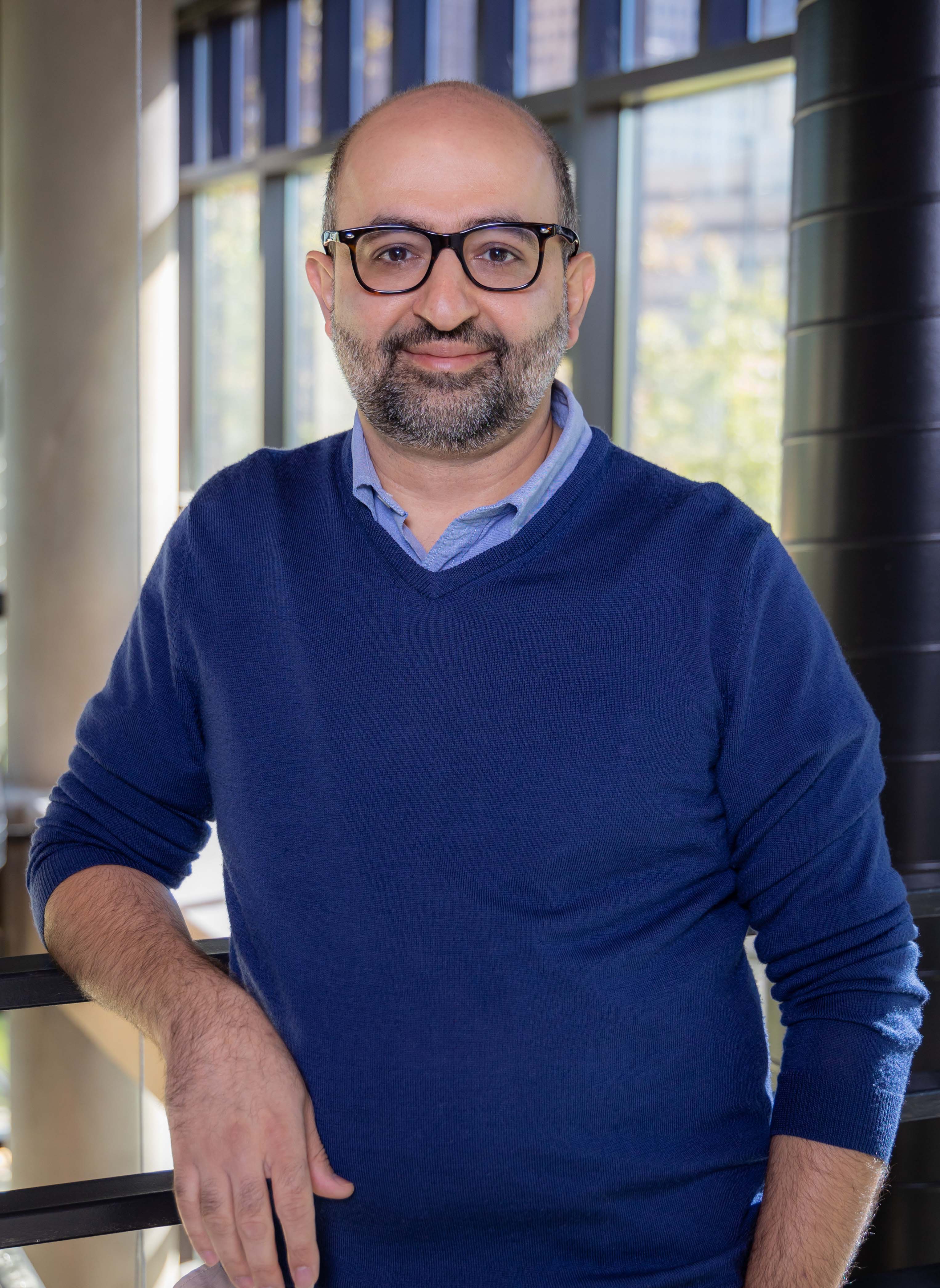
Prof. Martin Boeker is a Professor of Medical Informatics at the Technical University of Munich (TUM), affiliated with the TUM School of Medicine and Health. His work focuses on advancing healthcare through AI-driven solutions, interoperability frameworks, and precision medicine initiatives. Key projects include the German Medical Text Corpus (GeMTeX) and the MIRACUM DIFUTURE Alignment Hub. Expertise: Medical Informatics, AI in Healthcare, Federated Learning, Health Data Integration Key Contributions: FHIR-based systems, clinical decision support, patient-centered outcomes research Leadership: Director of the Institute for AI and Informatics in Medicine at TUM Hospital Right of the Isar Research emphasizes bridging clinical practice and data science through projects like modular health crawlers, automated guideline adherence monitoring, and cross-institutional medical NLP solutions. His work spans oncology informatics, rare disease management, and pandemic response data ecosystems. Recent articles highlight innovations in digital twins for precision oncology, federated analysis in oncology, and German-language medical NLP challenges. He collaborates internationally on EHR standardization and healthcare interoperability, contributing to the Medical Informatics Initiative (MII) and pandemic evidence ecosystems. Grants and collaborations involve the German Federal Ministry of Education and Research, European initiatives, and industry partnerships. Educational efforts focus on training future medical informatics professionals through MII competency programs.
Scott T. Acton is the Lawrence R. Quarles Professor and Chair of Electrical and Computer Engineering at the University of Virginia, with a courtesy appointment in Biomedical Engineering. He leads the VIVA lab, specializing in biological image analysis, machine learning, and AI for education. His research spans medical imaging, signal processing, and computer vision. Professor Acton holds a B.S. (Virginia Tech, 1988), M.S. (UT Austin, 1990), and Ph.D. (UT Austin, 1993) in Electrical Engineering. He has authored over 325 publications and served as Editor-in-Chief of IEEE Transactions on Image Processing and General Co-Chair of the IEEE International Symposium on Biomedical Imaging. His research interests include bioimage analysis, machine learning applications, and medical imaging technologies. The VIVA lab focuses on problems like cell tracking in bacterial biofilms, gait recognition using LiDAR, and AI-driven classroom activity analysis. Awards: IEEE Fellow (2013), All-University Teaching Award (2009), Outstanding Young Electrical Engineer (1996). Courses Taught: How the iPhone Works, Digital Image Processing, Signals and Systems. Labs/Teams: VIVA - Virginia Image and Video Analysis lab. Recent work emphasizes AI for education (e.g., automated classroom activity classification) and medical imaging advancements like 3D biofilm segmentation and LiDAR-based human identification. His contributions bridge engineering and healthcare, with applications in neuroscience and clinical decision support.