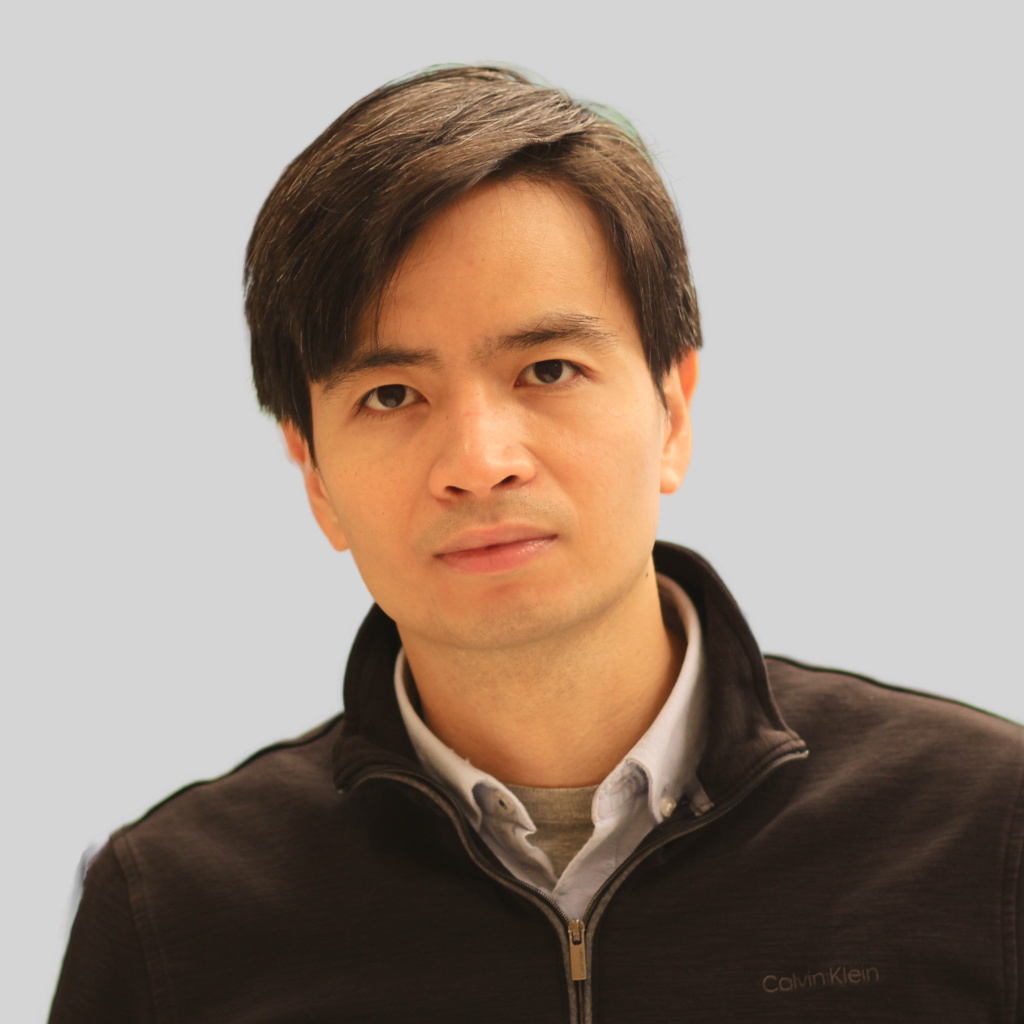
Thanh Duc Nguyen is an Associate Professor in the Department of Mechanical Engineering at the University of Connecticut since 2016. His research focuses on interdisciplinary fields at the intersection of biomedicine, materials science, and nanotechnology. He completed his postdoctoral research at MIT under Professor Robert Langer, developing biomaterial platforms for medical applications, and earned his PhD from Princeton University, where he worked on biointerfaced nanopiezoelectrics with Professor Michael McAlpine. Education : PhD in Mechanical and Aerospace Engineering, Princeton University (2013); Postdoc, MIT (with Robert Langer). Research : Specializes in biomaterials for drug delivery, medical implants, and nanoscale electromechanical systems interfacing with biological tissues. His work has been featured in major media including the New York Times and Nature. No listed scientific awards or grants are explicitly mentioned in the provided text, though his work has garnered significant media attention. No advising information or lab details beyond his departmental affiliation are specified.
Randolph Ashton is a Professor in the Department of Biomedical Engineering at the University of Wisconsin-Madison College of Engineering. He directs the Stem Cell Bioprocessing and Regenerative Biomaterials Laboratory, where his team engineers novel materials and methodologies for lineage-specific differentiation of human pluripotent stem cells. His interdisciplinary research bridges biomaterials science, stem cell biology, and tissue engineering to develop regenerative therapeutic strategies. His educational background includes: PhD (2007) from Rensselaer Polytechnic Institute BS (2002) from Hampton University Ashton's research focuses on neural and vascular tissue engineering , with specialization in regenerative therapies for the central nervous system. His laboratory employs microfabrication, molecular biology, recombinant protein engineering, and automated live-cell imaging to investigate cellular microenvironmental factors regulating stem cell fate. Current work emphasizes developing high-throughput screening methods and tissue-engineered scaffolds for generating complex tissue structures in vitro. His recent publications reveal a strong trajectory in neural organoid development, CNS vascularization, and microphysiological systems. The research demonstrates quantitative approaches to understanding stem cell differentiation, with applications spanning from fundamental developmental biology to clinical regenerative medicine. Key technological innovations include advanced microelectrode arrays and high-throughput screening platforms for neural tissue engineering. Notable awards include: 2023 AIMBE Fellowship 2020 WARF Innovation Award 2018 UW-Madison College of Engineering Equity & Diversity Award 2017 NSF CAREER Award 2016 Regenerative Medicine Workshop Young Investigator Award Ashton actively mentors graduate students through thesis research (BME 890, BME 990) and teaches core courses including Biological Interactions with Materials (BME 430). His laboratory operates as an interdisciplinary team bringing together engineering, biology, and materials science expertise to develop regenerative therapies, with current focus on central nervous system applications and expanding interests in vascular and muscular tissues. The Stem Cell Bioprocessing and Regenerative Biomaterials Laboratory maintains active collaborations across disciplines and continues to develop novel approaches for high-order tissue structure generation using human pluripotent stem cells. Current research directions include expanding into vascular and muscular tissue systems while refining quantitative methodologies for stem cell microenvironment characterization.
Professor Hongbin Li is a Professor and Canada Research Chair in the Department of Chemistry at the University of British Columbia. His research program focuses on single molecule biophysical chemistry, biomaterials, and protein engineering. He leads an active research group investigating the mechanical properties and conformational dynamics of elastic proteins using advanced single molecule techniques. Professor Li received his B.Sc in Polymer Engineering from Tianjin University, China in 1993. He earned his Ph.D. in Polymer Chemistry and Physics from Jilin University, China in 1998 under the supervision of Profs. Jiacong Shen, Xi Zhang and Hermann E. Gaub. During his doctoral studies, he was a visiting PhD student at Ludwig-Maximilians-Universität München, Germany (1996-1997) working with Prof. Hermann E. Gaub. Following his Ph.D., he completed a Research Fellowship at Mayo Medical Center, USA (1999-2002) with Prof. Julio M. Fernandez. Professor Li's research program centers on understanding the mechanical properties and conformational dynamics of elastic proteins at the single molecule level. His laboratory combines protein engineering with single molecule atomic force microscopy (AFM) and computational approaches to rationally design and engineer proteins with tailored mechanical properties. Using AFM as their primary tool, his team directly manipulates proteins one molecule at a time to measure mechanical properties and monitor folding/unfolding trajectories in real time. His research spans four main directions: (1) Protein Mechanics and Engineering, where they design proteins with specific mechanical properties; (2) Single Protein Folding/Unfolding Dynamics, investigating folding mechanisms at the single molecule level; (3) Protein-based Biomaterials, designing biomaterials with tailored mechanical properties for biomedical applications; and (4) Polymer physical chemistry using single molecule AFM. His work bridges fundamental protein mechanics with practical applications in biomaterials design. Professor Li has received numerous prestigious awards recognizing his contributions to biophysical chemistry and protein engineering: 2020: AAAS Fellow (the American Association for the Advancement of Science) 2012: Changjiang Guest Chair Professorship (Jilin University, China) 2011: JILA Visiting Fellowship (JILA and University of Colorado, Boulder) 2011: Alexander von Humboldt Fellowship (Technical University of Munich, Germany) 2010: JILA Distinguished Short-term Visiting Fellow 2010: Charles McDowell Award for Research (UBC) 2006: Michael Smith Foundation for Health Research Career Investigator Award 2005: Peter Wall Institute for Advanced Studies Early Career Award (UBC) Professor Li has mentored numerous graduate students and postdoctoral fellows throughout his career at UBC. His research has been supported by multiple grants, including his Canada Research Chair position which he has held continuously since 2004. His work bridges chemistry, physics, and biology, attracting funding from diverse sources including the Natural Sciences and Engineering Research Council of Canada (NSERC), the Michael Smith Foundation for Health Research, and international collaborations. His laboratory maintains strong connections with research groups worldwide, particularly in China and Germany, reflecting his international research profile. Professor Li leads an active research group within the Department of Chemistry at UBC that combines expertise in protein engineering, single molecule biophysics, and biomaterials science. His laboratory is equipped with state-of-the-art atomic force microscopes and optical trapping systems, enabling cutting-edge single molecule studies. The group maintains close collaborations with researchers in the Michael Smith Laboratories and other interdisciplinary centers at UBC, fostering a highly collaborative research environment focused on understanding protein mechanics and developing novel protein-based materials.
Wenwen Fang is a Visiting Professor in the Department of Bioproducts and Biosystems at Aalto University, affiliated with the Biopolymer Chemistry and Engineering research group within the School of Chemical Engineering. Her work is centered on sustainable biomaterials and green processing technologies. Her research interests span nanocellulose , ionic liquids , cellulose films , fiber spinning , and biorefining , with applications in environmental sensing and biomedical materials. She actively contributes to advancing circular economy principles in materials science. The recent publications demonstrate a strong trend in developing functional, sustainable materials—particularly through solvent-based cellulose processing, novel biorefinery concepts, and smart nanocellulosic sensors. The work integrates green chemistry with advanced material engineering for industrial scalability. Although no formal awards are listed, her research has been highlighted in media coverage by Aalto University, focusing on sustainable textile fiber applications and spinning process optimization. She collaborates extensively with researchers such as Herbert Sixta, Mariko Hummel, and Ingrid Schlapp-Hackl. Her work involves advising on doctoral theses and contributing to large-scale research outputs, though specific students are not named. She is involved in lab-based experimental research, particularly in fiber and film fabrication, and is part of a network focused on sustainable material innovation.
Natasa Sladoje is a Professor in Computerized Image Analysis at the Department of Information Technology, Uppsala University. She is affiliated with the Vi3 and Image Analysis research group and leads the MIDA research group. Her work spans artificial intelligence, biomedical image analysis, deep learning, and algorithm development, with applications in medical imaging and life sciences. Her research focuses on developing advanced image analysis methods, particularly using machine and deep learning, to enable automated analysis of image data in science and everyday life. Key areas include medical image analysis, image registration, segmentation, pattern recognition, and discrete geometry. She applies these techniques to critical domains such as oral cancer detection, cytology, and multimodal imaging. The recent publications highlight a strong trend in AI-driven medical diagnostics, particularly in cancer detection using whole slide images, self-supervised learning for sparse instance detection, and contrastive learning for multimodal image registration. Her work also emphasizes reproducibility and benchmarking in bioimage analysis through frameworks like BIAFLOWS and public datasets like HISTOBREAST. She has no listed scientific awards in the provided text. Natasa Sladoje supervises research within the MIDA group and collaborates extensively on projects involving bioimage analysis, deep learning, and medical applications. While specific grant details are not mentioned, her leadership in collaborative frameworks and publication output suggests active involvement in funded research initiatives. She leads the MIDA (Medical Image Analysis) research group, which focuses on developing and applying novel image analysis tools for biomedical applications, particularly in cancer diagnostics and multimodal imaging.
Jolanda Spiering is a Researcher at the Eindhoven University of Technology , affiliated with the Chemical Engineering and Chemistry school and its departments of Macro-Organic Chemistry and Supramolecular Chemistry & Catalysis . Her career spans over 25 years, focusing on organic synthesis and biomaterials development. Education: Organic Synthetic Chemistry, HU University of Applied Sciences (1996) Research Interests include supramolecular chemistry, catalysis, polymer nanoparticles, chirality, and biomaterials. Her work bridges organic synthesis with functional materials for tissue engineering and dynamic systems. Recent Research Trends highlight innovations in bisurea-based supramolecular polymers for tunable biomaterials (2024), advancements in copper-containing polymeric nanoparticles (2024), and studies on reproducibility in supramolecular systems (2022). These reflect her expertise in creating and analyzing complex organic structures for biomedical applications. Scientific Contributions are documented in 26 peer-reviewed publications, including articles in Chemistry: A European Journal and Angewandte Chemie , with over 6,160 citations. Her collaborations with groups led by Bert Meijer and Sijbesma demonstrate interdisciplinary engagement. Teaching involves hands-on organic chemistry courses for undergraduates, aligning with her technical expertise in synthesis and material science.
Associate Professor Robert Nordon is a faculty member at UNSW Sydney's Graduate School of Biomedical Engineering. He holds an MB BS, BMedSci, and PhD, with research focusing on advanced manufacturing and medical technologies. Since 2016, he has secured over $5M in research grants for projects in point-of-care diagnostics, cell/gene therapy manufacturing, and stem cell science. Research interests span three primary domains: Developing microfluidic single-use disposables for scalable clinical cell production Modeling cardiovascular development using stem cell-based microfluidic systems Creating computational tools for single-cell analysis and lineage tracking His publications (2017-2024) demonstrate strong emphasis on microfluidic device engineering, stem cell dynamics, and biomaterials development. Recurring themes include hematopoietic stem cell expansion, cardiac cell behavior, and peptide-based biomaterials. Significant grants include: ARC Linkage Grant LP160100570: Scaling microfluidics for cell manufacture (2016-2019) ARC Linkage Grant LP160100573: 3D microstructures for medical devices (2016-2019) ARC Linkage Grant LP190100029: Electrophoretic cell sorters (2020-2023) CRC-P: Microbioreactor for affordable cell/gene therapy (2021-2023) Current research trainees include Farzaneh Ziaee and Eric Du.
Dr. Adèle Carradò is a Full Professor in Solid State Physics at the University of Strasbourg (UNISTRA), affiliated with the Institute of Physics and Chemistry of Materials (IPCMS). Her research focuses on bioactive coatings, surface characterization of metallic and multi-layer systems, and mechanical properties of hybrid materials. PhD in Mechanics and Material Science (University of Reims, 2001) HDR (University of Strasbourg, 2004) Research Assistant (University of Ancona, 1997-1998) Post-doc (CEA Saclay, 2002) Her work includes over 70 original articles, two patents, and 50+ invited lectures. She specializes in: Residual stress analysis via neutron and synchrotron radiation Functional thin films for biomedical applications Mechanical behavior of metal/polymer/metal systems 3-layered sandwich structures for lightweight design Zn-Mg alloys for orthopedic implants Surface grafting techniques for biomaterials Recent publications highlight advancements in: Biodegradable Zn-Mg alloys with PMMA coatings ATUM-SEM for bone microstructure analysis Forming mechanics of steel-glass fiber-reinforced composites Residual stress optimization in extruded and drawn materials She actively participates in international conferences and serves on executive committees for biomedical materials symposia.
Paola Lorenzon is an Associate Professor of Physiology at the University of Trieste 's Department of Life Sciences since 2002. She coordinates the International Master's Degree in Neuroscience , serves as Coordinator of the OPBA program , and holds key roles in multiple PhD cycles including Neuroscience and Cognitive Science (XXVIII to XXXVIII cycles) and Biology (SM50). Her research focuses on neuromuscular plasticity , aging effects, and microgravity adaptation mechanisms. Education : Bachelor's in Biological Sciences and PhD in Biochemistry from University of Trieste Research Experience : University of Milan, San Raffaele Milan, University of Ljubljana, University of Bonn Her research spans three main areas: neuromuscular junction plasticity , electrostimulation protocols for muscle regeneration, and Piezo1 ion channels in mechanotransduction. Current projects funded by the Italian Space Agency (MIAG, NEMUSY) investigate muscle atrophy in spaceflight and aging. Notable collaborations include working with Annalisa Bernareggi (electrophysiology), Marina Sciancalepore (electrostimulation), and Alessandra Bosutti (project coordination). Her lab employs primary satellite cell cultures , electrophysiology , and mechanotransduction studies to explore muscle regeneration mechanisms.
Rachelle Crosbie is a Professor and Department Chair at the University of California, Los Angeles (UCLA), specializing in Integrative Biology and Physiology. Her research focuses on Duchenne muscular dystrophy (DMD), sarcospan, and extracellular matrix interactions in muscle health and disease. She earned her B.S. in Biochemistry from Texas A&M University (1989) and her Ph.D. in Biochemistry from UCLA (1994). Postdoctoral work was conducted at the University of Iowa Carver College of Medicine, supported by the Muscular Dystrophy Association. Her lab investigates sarcospan's role in ameliorating dystrophic muscle by activating compensatory mechanisms. Research includes developing small molecule therapies, in vitro platforms for fibrosis studies, and multi-omics approaches to cytoskeletal remodeling. She leads an NIH T32 training grant for muscle research. Scientific awards include the UCLA Chancellor’s Distinguished Teaching Award, Coalition Duchenne Lotus Award, and National Academies Education Scholar recognition. She developed an online DMD course for UC campuses and contributed to education research on student engagement in asynchronous learning.
Ruxia Fan is a doctoral researcher affiliated with Aalto University's Department of Bioproducts and Biosystems, focusing on advanced biomaterials engineering and sustainable textile development. Their work bridges molecular design with practical applications in biotechnology. Developing innovative protein engineering strategies via click-reactions Creating sustainable spider silk analogs with enhanced mechanical properties Transforming keratin waste into functional textile fibers Recent publications highlight their expertise in molecular tool development and circular bioeconomy solutions. They actively contribute to: Advanced Functional Materials (2024) ChemBioChem (2023) ACS Sustainable Chemistry and Engineering (2023) Angewandte Chemie (2023) Awarded the 2024 Working Grant for their research. Collaborates with Cellular Engineering research group and international experts like Markus B. Linder and A. Sesilja Aranko.
Juha Lipponen is a Professor at Aalto University's Department of Bioproducts and Biosystems. His work focuses on developing sustainable materials using bio-based components and circular economy principles. Affiliation: Aalto University Department: Bioproducts and Biosystems Research Interests His research spans Materials Science , Biotechnology , and Sustainable Engineering , emphasizing: Composite materials from renewable resources Waste valorization for high-performance applications Green polymer synthesis techniques Thermal energy storage systems Circular economy in forest industry Recent Publications demonstrate expertise in lignin-based composites, cellulose nanomaterials, and eco-friendly packaging solutions. Collaborative work includes biomedical hydrogels and carbon fiber recycling.
Sesilja Aranko is an Assistant Professor at Aalto University , affiliated with the Department of Bioproducts and Biosystems. Her research focuses on protein engineering, biomolecular condensates, and sustainable materials derived from biological macromolecules. Research Groups : Cellular Engineering Email : sesilja.aranko@aalto.fi Her work explores protein self-assembly mechanisms, particularly in spider silk and collagen systems, leveraging liquid-liquid phase separation for advanced biomaterial design. Recent studies investigate how polymer length and modular protein architecture control condensate properties, alongside developing bio-inspired adhesives from recombinant proteins and nanocellulose. She has pioneered the use of Catcher/Tag click-reaction tools for protein engineering and developed sustainable methods for spider silk production with inherent functionalization potential. Collaborative projects span marine biology (sea cucumbers) and keratin waste upcycling for textile applications. Key methodologies include intein-mediated protein splicing, segmental isotopic labeling, and structural characterization of protein ligation systems. Her research bridges fundamental biophysics with industrial applications in sustainable chemistry and biomimetic composites.
Dr. Cecelia C. Yates is an Associate Professor in the Department of Nurse Anesthesia at the University of Pittsburgh's School of Nursing. She directs a cellular/molecular laboratory researching chemokine-matrix interactions in fibrosis (Systemic Sclerosis, Idiopathic Pulmonary Fibrosis) and develops small-molecule/cellular therapies for tissue remodeling. She teaches graduate Pathophysiology and undergraduate Anatomy & Physiology labs, mentors pre-doctoral/undergraduate researchers, and participates in the Undergraduate Research Mentorship Program (URMP). Her research explores: Chemokine/extracellular matrix dynamics in fibrotic diseases Genomic regulation of fibrosis progression Biomimetic therapeutics (e.g., FibroKine peptides) Stem cell applications in scar minimization Publications emphasize fibrosis mechanisms, wound healing, and therapeutic innovations, with recent focus on COVID-19/fibrosis convergence and macrophage polarization. Awarded: Prestigious Early Career Award NAI Senior Member recognition She secured a $250,000 CSL Behring grant (2020) for FibroKine development and a patent for anti-fibrotic technologies. Her lab collaborates nationally on projects like glaucoma fibrosis therapy and cardiac remodeling.
Dr. Manuel Desco Menéndez is a Full Professor at the Department of Bioengineering , Carlos III University of Madrid , focusing on biomedical imaging and instrumentation. He leads the Biomedical Imaging and Instrumentation Group. Key research domains: Medical Imaging , Neuroimaging , Biomedical Instrumentation Primary publication areas: Computed Tomography , PET Imaging , MRI , Biomaterials His scientific contributions (2022-2025) include: Neuroanatomical changes in pregnancy/postpartum and psychiatric disorders Advanced CT reconstruction algorithms with beam-hardening compensation Innovative biomedical nanoplatforms using milk exosomes Preclinical bone regeneration scaffolds in animal models Current technical developments focus on GPU-accelerated image processing and deep learning applications in tomographic reconstruction.