
Julio Fernandes is a Full Professor in the Department of Surgery at the University of Montreal’s Faculty of Medicine and holds the University of Montreal Research Chair in Orthopedics at the Hôpital du Sacré-Cœur de Montréal. He is a globally recognized leader in orthopedic surgery and non-viral gene therapy using polymeric nanoparticles. His research focuses on osteoporosis, bone quality analysis, surgical instrumentation, and advanced therapies for arthritis and fractures. Education: MD, MSc Affiliations: CIUSSS Nord-de-l’Île-de-Montréal, Hôpital du Sacré-Cœur de Montréal International Collaborations: Brazil, China, USA, Europe Research Highlights: Over CAD 13 million in funding since 2000, 68 international invited lectures, and pioneering work on chitosan-based nanoparticles for gene delivery. Key projects include developing resolvin analogues for osteoporosis therapy and investigating 4-hydroxynonenal’s role in osteoarthritis. Advising & Grants: Supervised 16+ graduate students (PhD/MSc), led projects like the CAD 1.3M ‘Science Without Borders’ program. Major grants include IRSC and FQRNT funding for bone metabolism and nanomedicine research. Labs & Teams: Leads the Orthopedic Research Chair and collaborates with global teams on biomaterials, fracture prevention, and gene therapy.
جستوجوی استاد و پژوهشگر
استاد راهنما، استاد دانشگاه یا پژوهشگر مناسب برای مسیر پژوهشیتان را پیدا کنید و با او ارتباط بگیرید.
نمایش ۶۷۶-۶۹۰ از ۹٬۶۳۲ استاد راهنما
اطلاعات این پروفایلها از صفحات عمومی دانشگاهها جمعآوری شده و ممکن است بهروز نباشد.
- Computer-Assisted Medical Interventions (CAMI)
- Medical Robotics
- Biomimetic Medical Devices
- +۴ مورد دیگر
Philippe Cinquin is a Professor of Medical Informatics and Director of TIMC-IMAG (UMR5525), a CNRS-Université Joseph Fourier research unit. He leads the CAMI (Computer Assisted Medical Interventions) Labex and co-heads INSERM's CIC-IT 803 clinical investigation center. With a PhD in Applied Mathematics and Medical Doctor qualification, he pioneered surgical robotics and computer-aided interventions since 1984, benefiting over 100,000 patients through startup innovations. His recent work focuses on symbiotic implantable devices, energy scavenging for medical implants, and hydrogen therapy. He received the 2013 CNRS Innovation Award and 2014 Ambroise Paré Surgical Award. Research interests span biomimetic devices, medical robotics, and innovative therapies including transdermal hydrogen delivery. He has developed implantable systems like intestinal reactors and biosensors, with applications in diabetes treatment and pandemic response. His work integrates mathematics, signal processing, and nanotechnology to advance minimally invasive surgery and autonomous medical implants. Key contributions include virtual fluoroscopy systems for navigation, enzymatic biofuel cells, and reusable PPE sterilization methods during the pandemic. His interdisciplinary teams collaborate across engineering, medicine, and computer science to address clinical challenges through technological innovation. Education: PhD in Applied Mathematics; Medical Doctorate Grants & Startups: Founded multiple companies commercializing surgical navigation systems and diagnostic devices Labs: TIMC-IMAG, CAMI Labex, CIC-IT 803 clinical innovation center
Christopher Price is an Associate Professor at the Ammon Pinizzotto Biopharmaceutical Innovation Center, University of Delaware. His research focuses on musculoskeletal biomechanics, bone adaptation, and cartilage degeneration, with a particular emphasis on mechanotransduction and fluid flow dynamics in tissues. He holds a Ph.D. in Biomedical Sciences from Mount Sinai School of Medicine (2008) and a B.Sc. in Biomedical Engineering from Boston University (2000). Dr. Price’s research interests include the role of load-induced fluid flow in bone and cartilage health, advanced bioimaging techniques, and the development of disease-modifying therapies for osteoporosis and osteoarthritis. His work has received national/international recognition, including the Orthopaedics Research Society’s New Investigator Recognition Award (2010) and multiple Young Investigator Awards (2009–2010). Research focuses on mechanobiology, mechanosensory pathways, and tissue adaptation in musculoskeletal systems. Key areas: post-traumatic osteoarthritis, cartilage lubrication, and aging-related bone fragility. Utilizes cross-disciplinary methods: biomechanics, imaging, cell biology, and animal models. Publications span topics like solute transport in bone, cartilage tribology, and genetic influences on bone healing. His lab explores translational applications of mechanotransduction research to develop therapies targeting musculoskeletal diseases.
Evelyne Knappمشاهده پروفایل
پژوهشگر
- Organic Electronics
- Photovoltaics
- Material Science
- +۳ مورد دیگر
Evelyne Knapp is a Researcher at the ZHAW School of Engineering, Zurich University of Applied Sciences, within the Organic Electronics & Photovoltaics research focus area. Her work centers on advanced materials science, semiconductor physics, and machine learning applications in energy systems. She has led major projects such as 'Uncertainty quantification in ML Prediction for PV Quality Assurance' and contributed to innovations in perovskite solar cell optimization, organic semiconductor characterization, and device simulation models. Her research interests span photovoltaic technologies, charge transport phenomena, and optoelectronic device development. Key areas include: Perovskite solar cell performance analysis and degradation mechanisms Machine learning-driven parameter extraction for semiconductor materials Electro-thermal modeling of organic light-emitting devices Frequency-domain analysis of large-area solar cells Knapp's publications (over 30 peer-reviewed articles) demonstrate expertise in device simulation, material characterization, and interdisciplinary approaches merging computational methods with experimental data. Recent work highlights include: Advancing ML techniques to identify limiting parameters in perovskite solar cells Developing inverse models for solar cell parameter estimation Quantifying charge transport dynamics in organic semiconductors Her contributions have been presented at leading conferences including the IEEE Photovoltaic Specialists Conference and the Society for Information Display Symposium.
Srikanthan Rameshمشاهده پروفایل
استادیار
- Biological Additive Manufacturing
- Micro-scale Additive Manufacturing
- Biomaterial Development
- +۷ مورد دیگر
Dr. Srikanthan Ramesh serves as an Assistant Professor in the School of Industrial Engineering and Management within Oklahoma State University's College of Engineering, Architecture and Technology. Since establishing the Advanced Materials and Additive Manufacturing Laboratory in August 2022, he has led interdisciplinary research at the intersection of materials science, physical phenomena, and advanced manufacturing technologies, with applications spanning healthcare, aerospace, and electronics sectors. His educational foundation includes a Ph.D. in Mechanical and Industrial Engineering from Rochester Institute of Technology (2022) and an M.S. in Industrial and Manufacturing Systems Engineering from Iowa State University (2017). This academic background enables his innovative approach to manufacturing science. Dr. Ramesh's research program focuses on biological and micro-scale additive manufacturing (bio-AM), specializing in biomaterial development for tissue engineering and regenerative medicine. His work integrates computational fluid dynamics, machine learning, and real-time process monitoring to achieve precise control over mechanical, biological, and electrical properties of manufactured structures. He develops experimental tools and process frameworks for droplet-based and extrusion-based AM systems, with particular emphasis on wound healing applications and space-compatible microelectronics. Analysis of his 14 publications from 2020-2025 reveals a strong trajectory toward AI-driven manufacturing solutions, with increasing emphasis on multi-objective Bayesian optimization for bioink design, aerosol jet printing process refinement, and bioprinted tissue construct development. His recent work demonstrates sophisticated integration of machine learning with physical manufacturing processes to solve complex biomedical challenges. His scientific recognition includes: Doctoral Dissertation Pitch Competition (Runner-up), IISE, 2021 Best Oral Presentation, Graduate Showcase, Rochester Institute of Technology, 2019 Gilbreth Memorial Fellowship, IISE, 2018-2019 Wakonse College Teaching Fellowship, Iowa State University, 2018-2019 Graduate Research Excellence Award, Iowa State University, 2017 Best Overall Oral Presentation, Nano@IAstate, Iowa State University, 2017 Dr. Ramesh currently leads significant research initiatives including as Principal Investigator for an NSF REU Site on Additive Manufacturing and Cybersecurity ($464,606, 2025-2028) and a NASA EPSCoR Travel Grant for aerosol jet printing in space missions (2024-2025). As Co-PI on an NSF grant for Privacy-aware Collaborative Design in additive biofabrication ($599,981, 2025-2028), he develops frameworks for mass personalization in medical applications while addressing data security challenges. These projects support his lab's mission to advance manufacturing science through rigorous experimentation and computational innovation. The Advanced Materials and Additive Manufacturing Laboratory operates as a collaborative hub where Dr. Ramesh directs research teams in developing novel biomaterials, optimizing printing processes, and creating functional prototypes for wound dressings, liver tissue models, and space-rated microelectronics. The lab's interdisciplinary approach combines expertise in materials characterization, computational modeling, and machine learning to push the boundaries of what's possible in additive manufacturing for critical applications.
Subha R. Dasمشاهده پروفایل
دانشیار
Subha R. Das is an Associate Professor of Chemistry at Carnegie Mellon University's Mellon College of Science. His research focuses on nucleic acid-polymer biohybrids, nanobiotechnology, and automated science. He holds a Ph.D. from Auburn University (2000) and has been on the faculty since 2006. Key projects include engineering DNA/RNA nanostructures, developing click-chemistry tools for RNA labeling, and creating exosome-polymer hybrids for biomedical applications. His research interests span organic chemistry, biomaterials, and nanotechnology. Notable contributions include backbone-branched DNA/RNA design for precise nanostructure assembly and RNA lariat synthesis to study splicing mechanisms. He also pioneered the Kitchen Chemistry Sessions course, linking molecular gastronomy to chemistry education. Education: Ph.D. in Chemistry (Auburn University, 2000), M.S.C. in Chemistry (BITS Pilani, 1994), B.E. in Computer Science (BITS Pilani, 1994) Key Research Themes: Nucleic acid-polymer hybrids, automated polymer synthesis, RNA nanotechnology, biomaterials for drug delivery Recent Trends in Publications: Focus on ATRP-driven biohybrid systems, RNA functionalization, and exosome engineering His lab collaborates extensively with the Matyjaszewski group on controlled radical polymerization techniques and has developed novel methods for biomolecule-polymer integration. Research spans from fundamental nucleic acid chemistry to applied biomedical systems.
Leonardo Marchese is a Full Professor at the Department of Science and Technological Innovation, Università degli Studi del Piemonte Orientale 'Amedeo Avogadro'. His research focuses on advanced materials for environmental and energy applications, particularly porous materials for gas storage, pollutant removal, and sensor development. He leads projects like ECOSTORE-H2 (2023-2025) targeting eco-friendly hydrogen storage and ECOH2STORE for sustainable porous materials. Key research interests include: Functionalized silica and mesoporous materials Nuclear Magnetic Resonance (NMR) characterization Environmental monitoring sensors Waste-derived materials (e.g., rice husk, insect chitin) Adsorption mechanisms for pollutants/metals Recent projects involve collaborations in: Hydrogen storage solutions Biodegradable polymers from insect larvae Efficient water purification systems 3D-printed porous structures Prominent contributions include over 370 publications (2025: 2 articles; 2024: 23; 2023: 14), with emphasis on material synthesis and applications in sustainability. No awards are explicitly listed, but his work aligns with UN SDGs for clean energy and responsible consumption.
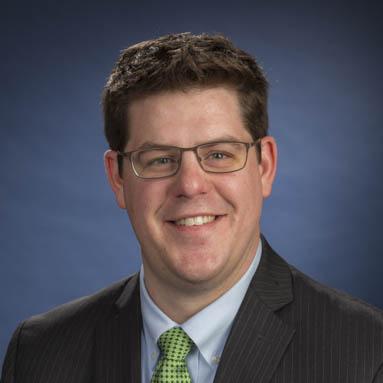
Eric Mosher Young is an Associate Professor in the Department of Chemical Engineering at Worcester Polytechnic Institute (WPI), affiliated with Biomedical Engineering and Bioinformatics & Computational Biology. He holds the Leonard P. Kinnicutt Assistant Professorship and received the 2020 NSF CAREER Award. His education includes a B.S. in Chemical Engineering and Biological Engineering (summa cum laude) from the University of Maine, a Ph.D. in Chemical Engineering from the University of Texas at Austin, and a postdoctoral fellowship in Biological Engineering at MIT. His research focuses on synthetic biology, metabolic engineering, and protein engineering, leveraging chemical engineering principles to reprogram microbial metabolism for biofuel, biomaterial, and biosensor applications. Key strengths include systems biology, genetic circuit design, and collaboration across academia and industry. He emphasizes interdisciplinary education, integrating technical proficiency with social impact analysis and entrepreneurship through WPI’s project-based learning model. Notable achievements include patents on yeast genome engineering, leadership in the Synthetic Biology Knowledge System project, and featured publications in Nature Communications and ACS Synthetic Biology . His work aligns with UN Sustainable Development Goals 3 (Health), 4 (Education), 7 (Energy), 8 (Economic Growth), 9 (Industry), and 11 (Sustainable Cities). Young’s lab at WPI’s Life Sciences & Bioengineering Center actively collaborates on projects like transparent cellulose materials and probiotic yeast development. He advises student projects via Digital WPI, emphasizing hands-on problem-solving in biotechnology.

- Biosensors
- Bionanotechnology
- Microfluidics
- +۳ مورد دیگر
Susan Zhou is a Professor in the Department of Chemical Engineering at Worcester Polytechnic Institute (WPI). Her research focuses on biosensors, bionanotechnology, and microfluidics, with applications in healthcare and infectious disease detection. She teaches Advanced Chemical Processes and Fluid Mechanics, emphasizing project-based learning and global education. Education: MS in Chemical Engineering, Clarkson University, 1999 PhD in Chemical Engineering, University of California, Irvine, 2002 Research Interests: Dr. Zhou's team develops biosensors using microfabrication and nanotechnology, targeting applications in healthcare diagnostics. Key areas include electrochemical (EC), surface plasmon resonance (SPR), and surface-enhanced Raman spectroscopy (SERS) technologies. Recent work includes portable biosensors for viral infections like COVID-19 and durable electrocatalysts for fuel cells. Professional Highlights: Recipient of WPI's Faculty Promotion and Tenure Award (2021) Contributed to WPI's record research funding milestone (2018) Co-developed a biosensor for Clostridium difficile detection featured in the Worcester Business Journal Labs/Teams: Leads research on bio-nanotechnology and electrochemical systems, collaborating with industry and academic partners. Active in mentoring undergraduate and graduate students in interdisciplinary projects.

Summary George D Pins is a Professor of Biomedical Engineering at Worcester Polytechnic Institute (WPI). He holds a BS (1989) and PhD (1996) from Rutgers University, followed by a postdoc at Harvard Medical School (1999). His research focuses on creating bioengineered scaffolds to regenerate tissues/organs using biomimetic strategies. Key projects include designing microfabricated basement membrane structures for skin substitutes and fibrin microthreads for muscle regeneration. Education: BS in Biomedical Engineering, Rutgers University, 1989 PhD in Biomedical Engineering, Rutgers University, 1996 Postdoctoral Fellowship, Harvard Medical School, 1999 Research Interests: Biomaterials fabrication, cell-biomaterial interactions, wound healing, functional tissue engineering, and bioMEMs. His lab develops 3D constructs mimicking native tissue architectures to study ECM cues and topographic effects on cellular behavior. Publications: Focus on fibrin microthread scaffolds, crosslinking strategies, and applications in cardiac patches, skeletal muscle repair, and in vitro models. Recent work explores plant-derived vascular structures and anisotropic scaffold design for myogenesis. Awards: AIMBE Fellowship, WPI Academic Advising Award, ARMI Leadership Council role. Recognized for contributions to tissue engineering and mentoring. Grants & Labs: NIH-funded projects (e.g., heart muscle patch development). Leads a lab advancing biomaterials for clinical problems like myocardial infarction and volumetric muscle loss.

Adaias O. Matosمشاهده پروفایل
استادیار بالینی
- Biomaterials
- Drug Delivery
- Implant Dentistry
- +۶ مورد دیگر
Adaias O. Matos is a **Clinical Assistant Professor** in the Department of Restorative Dentistry at the University at Buffalo School of Dental Medicine. He holds a PhD in Clinical Dentistry from the University of Campinas (2020) and a DDS from the Federal University of Pará (2013). His research focuses on biomaterials, implant dentistry, and generative AI applications in dental education. He leads grants such as a $5,000 project on AI-driven fixed prosthodontics education and has patented a titanium surface modification process (2023). **Education:** DDS (Dentistry), Federal University of Pará (2013) MS (Prosthodontics), University of Campinas (2016) PhD (Clinical Dentistry), University of Campinas (2020) Fellowship in AI-Driven Teaching, Lumen Circles (2025) **Research Interests:** Dr. Matos explores thin-film coatings for implant drug delivery, digital dentistry innovations, and microbiological assays. His work bridges biomaterials science with clinical applications, emphasizing anti-corrosion surfaces and AI-enhanced education. **Awards:** Arthur R. Frechette Prosthodontics Research Award (2019) 3rd Place, Research Day **Grants & Service:** As Principal Investigator, he manages grants like the AI-Driven Prosthodontics Lectures initiative. He also serves on committees such as the Faculty Senate Communications and chairs search committees for faculty and residents. His professional memberships include the American College of Prosthodontics and the International Association for Dental Research. **Labs & Teams:** Affiliated with the Institute for Artificial Intelligence and Data Science and the Institute of Biomaterials, Tribocorrosion, and Nanomedicine. Collaborates on projects involving dental material durability and AI in education.

- Biomaterials
- Nanotechnology
- Drug Delivery
- +۷ مورد دیگر
Dr. Hu Yang is the Linda and Bipin Doshi Chair and Professor of Chemical and Biochemical Engineering at Missouri University of Science and Technology , serving as Department Chair and Director of the Center for Biomedical Research (CBR). He previously held the Qimonda Endowed Chair at Virginia Commonwealth University (VCU). His research focuses on nanotechnology-driven biomedical solutions, including drug delivery systems, dendrimer engineering, and treatments for cancer, glaucoma, and atherosclerosis. He has secured over $10M in research funding, including NSF and Coulter Awards, and holds five patents. Education: B.S. in Polymer Science from Sichuan University (1998), Ph.D. in Chemical Engineering from the University of Akron (2004), and postdoctoral training in pharmaceutical sciences at the University of Wisconsin-Madison. Research Interests: Biomaterials, nanotechnology, targeted drug delivery, gene therapy, ocular disease treatments, and pharmaceutical engineering. Key projects include ROS-responsive nanoassemblies for atherosclerosis, cancer cell membrane-derived vaccines, and dendrimer-based hydrogels for retinoblastoma treatment. Publications: Over 120 peer-reviewed articles, with recent work in Advanced Science , Biomacromolecules , and Journal of Agricultural and Food Chemistry . Themes include nanoparticle analysis in plant tissues, glaucoma therapy, and neuroinflammation studies. Awards: NSF CAREER Award (2010), Coulter Young Investigator Award (2009), and recognition as a top 2% cited scientist (Stanford, 2024). Grants & Leadership: Primary investigator on $5.5M NIH/NSF grants. Editorial roles include Materials Express and Smart Materials in Medicine . Lab: Drug and Gene Delivery Laboratory at Missouri S&T. Additional Roles: Member of the Massey Cancer Center (VCU), grant reviewer for NIH/NSF, and advocate for diversity in STEM education.

Oliver Karras is a researcher, data scientist, and lecturer at the Data Science and Digital Libraries research group at TIB – Leibniz Information Centre for Science and Technology. He holds a BSc, MSc, and PhD in Computer Science from Leibniz University Hannover. His research focuses on FAIR scientific knowledge, Open Research Knowledge Graph (ORKG), and national research infrastructure projects like NFDI-4Ing and FAIR-DS. He is a member of the German Informatics Society (GI) and spokesperson of the Requirements Engineering (RE) group, contributing to conferences and journals as a reviewer. Previously, he was a research associate and PhD student in the Software Engineering group at Leibniz University, leading the DFG project ViViReq on video integration in requirements engineering. His research interests include Data Science, AI, Knowledge Representation, Software Engineering, Requirements Engineering, Empirical Research, and Open Science. He has published over 60 papers in these areas, with notable contributions to knowledge graphs, FAIR data, and reproducibility frameworks. His work emphasizes organizing scientific knowledge for accessibility and collaboration across disciplines. He is actively involved in initiatives like the ORKG, promoting sustainable literature reviews and open science practices. His professional contributions extend to tool development, such as OntoAligner for ontology alignment and SciKGTeX for semantic annotation in LaTeX. Oliver Karras collaborates with institutions like Leibniz University, contributing to the NFDI consortium and energy research projects. His expertise bridges technical innovation and academic rigor, addressing challenges in knowledge management and reproducibility. His current roles include advancing TIB’s research infrastructure and fostering interdisciplinary collaboration through knowledge graph applications.
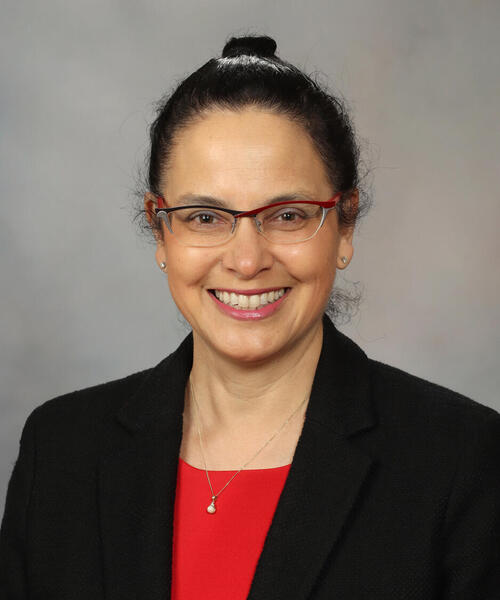
Robin Patel, M.D., is a Professor of Medicine and Microbiology at Mayo Clinic in Rochester, Minnesota. She serves as Director of the Infectious Diseases Research Laboratory, Chair of the Division of Clinical Microbiology, and Director of the Bacteriology Laboratory within the Department of Laboratory Medicine and Pathology. Her work bridges clinical microbiology, infectious diseases, and translational research, with a focus on improving patient care through innovation in diagnostics and therapeutics. Her research interests center on biofilm-mediated infections , including prosthetic joint infections, endocarditis, and catheter-associated infections. She investigates mechanisms of biofilm formation and resistance, develops novel diagnostic assays, and evaluates new antimicrobial agents using in vitro and animal models (e.g., rabbit endocarditis, mouse pneumonia). Her lab is also deeply involved in combating antimicrobial resistance through innovative strategies such as electrochemical bandages and catheters. Dr. Patel's recent publications highlight trends in novel antimicrobial devices , phage therapy , proteomic analysis of biofilms , and advanced molecular diagnostics . Her work increasingly integrates engineering solutions with microbiology to create non-antibiotic interventions for persistent infections. Fellow, American Association for the Advancement of Science (2024) Distinguished Mayo Clinic Investigator (2022) Distinguished Educator Award (2021) Elizabeth P. and Robert E. Allen Professor of Individualized Medicine (2017) Fellow, American Academy of Microbiology (2012) Dr. Patel has led multiple NIH-funded grants, including projects on electrochemical catheters for bloodstream infection prevention and novel bandages for wound infections. She mentors a large research team and contributes significantly to national standards through leadership roles in the American Board of Pathology and Clinical and Laboratory Standards Institute. Her lab collaborates extensively across disciplines and institutions, driving innovation in clinical microbiology and infectious diseases. She is affiliated with key research centers at Mayo Clinic, including the Center for Individualized Medicine, the Infectious Diseases Research Center, and the Center for Clinical and Translational Science (CCaTS). Her laboratory is a hub for translational research, developing assays that are directly implemented in patient care at Mayo Clinic.
Jaakko Timonenمشاهده پروفایل
دانشیار
- Active Matter
- Soft Matter Physics
- Ferrofluids
- +۱۲ مورد دیگر
Jaakko Timonen is an Associate Professor and Vice Head of the Department of Applied Physics at Aalto University, where he leads the Active Matter research group. He is also Deputy Director of the Center of Excellence in Life-Inspired Hybrid Materials (LIBER), and holds significant research funding from the Academy of Finland and the European Research Council (ERC StG). His academic journey includes a doctoral degree from Aalto (2013) and postdoctoral research at Northwestern and Harvard Universities. His research interests lie at the intersection of physics, chemistry, and biology, focusing on soft and active matter systems. Key areas include ferrofluids, electrohydrodynamics, liquid-liquid phase separation, colloidal nanoparticles, magnetic control of non-magnetic matter, and advanced optical microscopy. His recent publications span high-impact journals and reveal a strong trend toward bioinspired materials, responsive systems, and biomedical applications such as 3D bioprinting and cancer diagnostics. His work often involves interdisciplinary collaboration and the development of novel experimental techniques. ERC Starting Grant (2019–2024) Academy of Finland Research Fellow (2019–2023) Distinction prize for doctoral thesis (Aalto, 2013) Distinction prize for master’s thesis (Helsinki UT, 2009) Timonen actively supervises PhD and early-career researchers, with several students contributing to recent publications and projects. He leads multiple active grants, including projects on multiscale electrostatic phenomena in nanoparticles and food applications of Pickering emulsions. He also organizes academic events and participates in public outreach, such as the 'Life inspired materials' seminar. His research group maintains strong ties to both fundamental physics and real-world applications in health, sustainability, and advanced materials. He is involved in several research labs and collaborative networks, particularly through the LIBER Center of Excellence, focusing on hybrid materials with life-inspired functions. His team develops custom imaging systems and explores emergent behaviors in active and biological matter, contributing to fields such as non-equilibrium physics, microfluidics, and synthetic biology.
فقط ۷۵۰ نتیجه اول نمایش داده میشود. برای رسیدن به نتایج دقیقتر، جستوجو را با فیلترها محدودتر کنید.