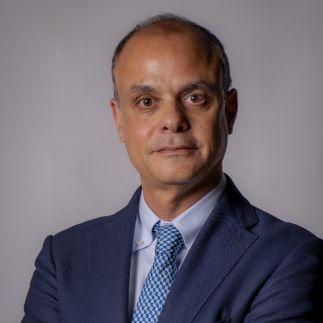
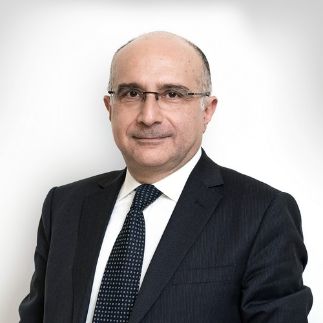
Federica Tomao is an Associate Professor at the Department of Maternal, Child and Urological Sciences within Sapienza University of Rome. She actively teaches and supervises courses in Medicine and Surgery , Nursing , and Midwifery programs across multiple institutions. Current faculty member with academic rank Teaching roles in 6th, 3rd, and 2nd year courses Specialized in gynecologic oncology Research Focus : Her work spans ovarian cancer, breast cancer, and endometrial cancer, emphasizing chemotherapy optimization, precision medicine, and radiomics. Notably, she contributes to understanding PARP inhibitors, immune checkpoint therapies, and fertility preservation techniques in cancer survivors. Recent Publications highlight advancements in sarcopenia analysis, BRCA testing, and radiogenomic nomograms. These studies demonstrate her commitment to bridging imaging and molecular data for improved cancer management. Email : federica.tomao@uniroma1.it
Luca Sebastiani is a Full Professor in Horticultural Sciences (AGR/03) at Scuola Superiore Sant'Anna in Pisa, Italy, since 2014. He currently coordinates the PhD Course in AgroBioSciences and has previously served as Director of the Institute of Life Sciences (2016-2021). His academic career includes roles as Associate Professor (2002-2014) and Assistant Professor (1998-2002) at the same institution. PhD in Plant Biology from Scuola Superiore Sant'Anna (1996) MSc in Agricultural Sciences from University of Pisa (cum laude, 1991) Postdoctoral research in agricultural biotechnology (1996-1998) Research Interests: Focus on plant-environment interactions, particularly abiotic and biotic stress responses in crops. Key areas include: Physiological and molecular responses to climate change stressors Nutraceutical enhancement of food crops Plant germplasm conservation using molecular markers Agriculture 4.0 integrating AI, IoT, and robotics Phytoremediation using poplar and Brassica species Scientific Contributions: His work bridges molecular mechanisms (aquaporin function, heavy metal transport) with ecosystem-level applications (precision irrigation, contaminant phytoremediation). Recent publications emphasize genome sequencing, stress tolerance modeling, and nutraceutical food development. ISHS Medal for SapFlow Workshop organization (2011) Giovanni Spitali Foundation Award for PhD dissertation (1998) Collaborations: Extensive international collaborations with institutions like Beijing Forestry University, Comenius University, and Purdue University. Currently supervises projects in plant phenotyping, omics technologies, and sustainable crop management.
Giuseppe Rizzo is a Full Professor at the Department of Maternal and Child Health and Urological Sciences, Sapienza University of Rome. His academic career focuses on Maternal Fetal Medicine, with expertise in ultrasound applications, fetal growth restriction, preeclampsia, and congenital anomalies. Research Interests : Delivery optimization, prematurity prediction, ultrasound diagnostics, and placental anomalies. Recent Publications : Over 15 high-impact studies in 2024-2025 on topics like umbilical cord abnormalities, cerebroplacental ratios, and gestational diabetes complications. Clinical Expertise : Prenatal counseling, Doppler ultrasound, and labor management protocols. Collaborations : Active in multicenter trials across Italy and Europe, with a focus on fetal neurosonology and high-fidelity obstetric simulation.
Livio Trusolino is a Professor in the Department of Oncology at the University of Turin, affiliated with the Institute for Cancer Research and Treatment (IRCCS) in Candiolo. His research focuses on mechanisms of neoplastic transformation, growth factor receptor signaling, and preclinical models of targeted therapies, particularly in colorectal cancer. He leads courses such as 'Targeted Therapies in Colon Cancer' and contributes to the MD-PhD Program in Medicine. His work integrates molecular profiling (proteomics, genomics) with experimental models like patient-derived xenografts to study drug sensitivity and resistance. Key collaborations include projects on KRAS mutations, EGFR blockade, and drug combination therapies. He chairs academic bodies within the Department of Oncology and oversees the Molecular Pharmacology Laboratory. Recent research highlights include identifying biomarkers for therapeutic response and elucidating adaptive mutability in cancers. His contributions bridge basic science and clinical applications, advancing precision oncology strategies for colorectal cancer.
Gabriella Casalino is an Assistant Professor at the University of Bari Aldo Moro, Department of Computer Science, and a key researcher at CILAB - Computational Intelligence Lab. Her work focuses on Computational Intelligence methods for interpretable data analysis, particularly in eHealth, Data Stream Mining, and eXplainable Artificial Intelligence (XAI) within medical and educational domains. She has contributed to innovative approaches in smartphone-based health monitoring, fuzzy logic applications, and remote vital sign detection via photoplethysmography. Education : Ph.D. in Computer Science, with advanced training at institutions like Universitat de Girona and Université de Mons. Research Trends : Recent publications highlight applications of evolving granular computing, neuro-fuzzy systems, and explainable AI in hypertension prediction, bipolar disorder monitoring, and educational data analysis. Key subfields include remote health monitoring, medical data streams, and hybrid AI models. Grants : Research funded by AIRC (Italian Cancer Research Foundation), focusing on computational methods for healthcare challenges. Labs & Collaborations : Active in CILAB, collaborating on projects involving mHealth solutions, cardiovascular risk assessment, and intelligent educational systems.
Prof.ssa Elda Favari is a Full-Time Associate Professor of Pharmacology at the Department of Food and Drug, University of Parma, Italy . Her research focuses on atherosclerosis physiology , cholesterol metabolism , and cellular cholesterol efflux processes . She has collaborated with international institutions in the USA , Australia , and Switzerland . PhD in Pharmacology and Toxicology (University of Parma, 2005) Academic Editor for the journal Medicine Member of Italian Society of Pharmacology , European Lipoprotein Club , and International Atherosclerosis Society Her scientific contributions include over 50 peer-reviewed publications , an H-index of 23 , and 16 Q1-journal publications from the last 15 years. Key research areas cover reverse cholesterol transport , PCSK9 mechanisms , and HDL functionality in diseases like familial hypercholesterolemia , cancer , and autoimmune disorders . Recent Google Scholar publications (2023-2025) examine: HDL modulation through nutraceuticals and 3D-printed devices Immune checkpoint inhibitors in relation to lipid profiles PCSK9-lomitapide interactions in genetic lipid disorders Anti-ApoA-1 IgGs as atherogenic factors 2000: AstraZeneca Grant at SISA Congress 2011: National Research Grant for Lupus Study She has held institutional roles including Student Orientation Delegate and serves on scientific committees for international congresses. Teaching spans Toxicology , Anticancer Chemotherapy , and Pharmacovigilance across Pharmacy , Food Safety , and Drug Sciences programs.
Daniela Carnevale is a Full Professor at Sapienza University of Rome, where she serves in the Department of Medical-Surgical Sciences and Biotechnologies within the Faculty of Medicine. She directs the Laboratory of Neuro and Cardiovascular Immunology at the Department of Molecular Medicine, based at IRCCS Neuromed in Pozzilli. Her academic career spans over a decade with a permanent position as Assistant Professor since 2012, progressing to her current role as Full Professor. Education: PhD in Neuroscience (2010) - Faculty of Medicine and Surgery, Catholic University of the Sacred Heart in Rome Professional qualification in Biology (2006) - Sapienza University of Rome Degree in Biological Sciences (2005) - Sapienza University of Rome, final mark 110/110 cum laude Daniela Carnevale's research primarily focuses on the intersection of cardiovascular medicine, neuroscience, and immunology. She investigates neuroimmune mechanisms in hypertension, exploring how the nervous and immune systems interact to influence blood pressure regulation and organ damage. Her work encompasses biotechnologies and translational approaches to understand arterial hypertension, chronic heart failure, Alzheimer's related dementias, and adaptive immune responses. She has pioneered research on brain-spleen communication pathways in hypertension, demonstrating how neural signals prime immune responses that contribute to cardiovascular pathology. Analysis of her recent publications reveals a strong emphasis on neuroimmune cardiovascular interfaces, with particular focus on hypertension-induced cognitive impairment, cerebrovascular remodeling, and organ damage mechanisms. Her work increasingly integrates advanced imaging techniques, genetic analyses, and immune profiling to uncover novel therapeutic targets for cardiovascular and neurodegenerative conditions. Scientific Awards: Fellow of the American Heart Association (FAHA) (2016) Council on Hypertension Mid Career Award for Research Excellence (2019) International Patent in medical technology (2010) Multiple research awards from the Italian Society of Arterial Hypertension Research Award from the Foundation "Roberto Cornelli" (2009) Professor Carnevale has secured significant research funding as Principal Investigator, including grants from Sapienza University, Istituto Pasteur-Fondazione Cenci Bolognetti, and the Italian Ministry of Health. She has supervised numerous PhD students, post-doctoral fellows, and undergraduate students across various biomedical programs. Her laboratory collaborates internationally with leading researchers from Harvard University, Vanderbilt University, University of Glasgow, and University of Munich. At IRCCS Neuromed, Professor Carnevale directs the Laboratory of Neuro and Cardiovascular Immunology, where her team investigates the cellular and molecular mechanisms underlying neuroimmune interactions in cardiovascular diseases. Her research facility includes advanced preclinical imaging capabilities, including a 7Tesla MRI for small animal research, which she secured through competitive grant funding.
Marco Ghislieri is an Assistant Professor at the Department of Electronics and Telecommunications (DET) of Politecnico di Torino, Italy. He is a member of the Interdepartmental Center PolitoBIOMed Lab and teaches in the Biomedical Engineering program, including courses like Neuroengineering and Design of Programmable Biomedical Devices . His research spans Artificial Intelligence, Biomedical Signal Processing, Neuroscience, and Rehabilitation Engineering . PhD in Bioengineering and Medical-Surgical Sciences (2017-2021) at Politecnico di Torino Thesis: Muscle Synergy Assessment during Cyclic and Non-Cyclic Movements His research focuses on muscle synergy analysis in Parkinson’s Disease (PD) patients post- Deep Brain Stimulation (DBS) , AI-driven gait analysis for fall prevention, and wearable sensor applications for stress-cognitive decline monitoring. He leads the S-CoDe and OMNIA-PARK projects, and contributes to PRIN as a team member. Recent publications highlight advancements in machine learning for intraoperative DBS targeting , statistical gait analysis , and neurorehabilitation tools . He serves as Associate Editor for Scientific Reports and Applied Bionics and Biomechanics , and Guest Editor for Frontiers in Neural Circuits . Awards include the Carlo J. De Luca Award (2022) , GNB Doctoral Award (2022) , and the Best Poster Award at M. Grattarola Summer School (2022) . He supervises Fabrizio Sciscenti (PhD candidate) and collaborates on neuroengineering and biomedical device design courses. His work addresses Goal 3 (Good Health) and Goal 4 (Quality Education) of the UN SDGs.
Alfio Grillo is a Full Professor at the Department of Mathematical Sciences (DISMA) of Politecnico di Torino, with research interests in biomechanics, continuum mechanics, and mathematical physics. His expertise spans classical mechanics and multiscale modeling of biological tissues. Research Focus: Grillo's work integrates analytical mechanics with nonholonomic constraints, fractional calculus applications, and multiscale modeling of growth/remodeling phenomena in biological systems. Recent articles emphasize poroelasticity, viscoelastic composites, and bi-phasic material behavior. Scientific Contributions: Editorial roles in leading journals since 2014 Member of INdAM-GNFM since 2009 Recipient of National Scientific Qualification in 2017 €128,609 PRIN grant for multiscale biological modeling Academic Leadership: Supervises PhD students in Civil Engineering, Mathematics, and Mathematical Engineering. Teaches advanced courses in Differential Varieties, Variational Methods, and Porous Media Mechanics.
Barbara Penolazzi is an Associate Professor of Clinical Psychology at the University of Trieste's Department of Life Sciences. She serves as a member of the Department's Board, coordinates Course of Study Advice for Psychological Sciences and Techniques, and participates in multiple Doctoral Colleges for Neuroscience and Cognitive Sciences across numerous academic cycles. As the leader of the Clinical Psychology research group, her work focuses on "Typical and atypical development during lifespan" within the Psychology research area. Department Council - Member Course of Study Advice - Coordinator (Psychological Sciences and Techniques) Boards of Studies - Member (Clinical Psychology, Developmental Psychology and Neuropsychology) Doctoral Studies Boards - Member (Neural and Cognitive Sciences across multiple cycles) Professor Penolazzi's research spans clinical psychology, neuropsychology, and psychological well-being with emphasis on emotional intelligence, cognitive processes in various disorders, and brain mechanisms. Her work integrates experimental psychology with clinical applications, particularly using transcranial direct current stimulation to investigate neural mechanisms underlying decision-making, moral cognition, and memory processes. She has made significant contributions to understanding psychological mechanisms in eating disorders, schizophrenia, and addiction through a transdiagnostic lens. Her extensive publication record demonstrates consistent focus on the intersection of cognitive neuroscience and clinical psychology. Recent work examines neural underpinnings of voluntary action, environmental sensitivity as a personality trait, and interventions for fostering emotional intelligence in preadolescence. Her research employs diverse methodologies including neurostimulation techniques, psychometric validation studies, and experimental paradigms to investigate cognitive control mechanisms across various clinical populations. Professor Penolazzi currently serves as Scientific Manager for two significant research projects funded by the Ministry of University and Research: "PROBEN_0000008 - Promotion of the Well-Being of the University Community - PRO-BENE-COMUNE" and "10% Trentin Silvia - 100% MUR". These projects reflect her commitment to applying psychological science to address contemporary mental health challenges within academic communities and beyond. Within the Department of Life Sciences, Professor Penolazzi leads the Clinical Psychology research group that investigates typical and atypical developmental trajectories across the lifespan. Her team employs a multidisciplinary approach combining cognitive neuroscience methods with clinical assessment to understand the mechanisms underlying various psychological conditions and to develop evidence-based interventions.
Gabriele Capurso is an Associate Professor of Medicine at Vita-Salute San Raffaele University's School of Medicine, Department of Gastroenterology (Disciplinary Sector MEDS-10/A). He teaches Gastroenterology across multiple sections of the Master's Degree in Medicine and Surgery program for the 2025-2026 academic year. His research focuses on pancreatic cancer , IPMN progression , autoimmune pancreatitis , and endoscopic interventions . Key contributions include leading the Italian Chronic Pancreatitis Registry (ITARECIPE) and developing risk-stratification models for IPMN surveillance. His work bridges clinical practice and translational research, emphasizing diagnostic delays, smoking-related progression risks, and endoscopic management of pancreaticobiliary disorders. Analysis of his 2024-2025 publications reveals a concentrated effort on pancreatic disease outcomes, with prominent themes in malignant transformation biomarkers, endoscopic technique validation, and multicenter cohort studies. His research consistently targets improving survival metrics through optimized diagnostic pathways and personalized treatment protocols. Capurso served on Sapienza University of Rome's Oncology doctoral college (2014-2018, cycles 30-34), mentoring PhD candidates. His leadership in national registries and prospective studies like CABRIOLET_Pro demonstrates active engagement in collaborative clinical research infrastructure.
Ambra Ferrari is a Research Fellow at the Interdepartmental Center for Mind/Brain Sciences (CIMEC) within the University of Trento. Her work focuses on cognitive development, multisensory perception, and neuroimaging techniques. She teaches courses such as Cognitive neuroscience of infant development and contributes to the Cognitive Neuroscience program in the Department of Psychology and Cognitive Sciences. Her research integrates methodologies from neuroscience and psychology to study infant cognition, social development, and sensory integration. She develops computational tools like the WTools MATLAB toolbox for analyzing infant neural data. Ferrari's work bridges developmental psychology, psycholinguistics, and sensory neuroscience, emphasizing how prior expectations guide perception during communication. In teaching, she employs journal clubs and seminars to foster critical analysis of empirical studies and contemporary theories in cognitive development. Her courses aim to equip students with skills to evaluate experimental research and understand neurobiological foundations of cognition. Her laboratory (CIMEC) focuses on adaptive behavior, cross-modal plasticity, and embodied communication. Current projects explore statistical learning mechanisms, attention modulation in multisensory perception, and the role of gesture-prosody interactions in language comprehension.
Dr. Kathleen Curtius is an Assistant Professor in the Department of Medicine at the University of California San Diego (UCSD), affiliated with the Division of Biomedical Informatics and the UCSD Moores Cancer Center. She leads the Quantitative Cancer Control laboratory, focusing on early cancer detection and prevention through mathematical modeling and multi-scale data analysis. Previously, she held a Medical Research Council Rutherford Fellowship at Barts Cancer Institute (London) and completed postdoctoral training in Prof. Trevor Graham's lab. Her research integrates applied mathematics, computational biology, and clinical oncology to address cancer evolution and screening strategies. Education: PhD in Applied Mathematics, University of Washington (2015) MS in Applied Mathematics, University of Washington (2011) BS in Mathematics, UCLA (2010) Research Interests: Mathematical oncology Cancer evolution modeling Epigenetic drift analysis Screening optimization Multiscale tumor dynamics Her work bridges disciplines to develop predictive tools for early cancer detection and personalized surveillance strategies. Publications: Recent work includes studies on metagenomic data bias (Nature Communications 2025), AI-driven cancer biomarker discovery (JCI Insight 2022), and computational models of Barrett's esophagus progression (Gut 2020). Her research emphasizes translational applications in clinical oncology and public health. Awards: Recognized with the 2024 Leah Edelstein-Keshet Prize, 2022 AGA Research Scholar Award, and 2018 MRC Rutherford Fellowship. Her work has been cited over 1,000 times across key oncology journals. Funding: Principal Investigator on NIH grants (R01CA270235, I01BX005958) supporting projects on Barrett's esophagus modeling and colitis-associated colorectal cancer surveillance optimization. Collaborates with clinicians, geneticists, and computational biologists to advance cancer control efforts. Labs/Teams: Leads the Quantitative Cancer Control Lab at UCSD, part of the Bioinformatics and Systems Biology division. Active in interdisciplinary initiatives like the Moores Cancer Center's Cancer Control Program.
Roberto Cavallaro is a Full Professor of Psychiatry at the Faculty of Medicine and Surgery of Vita-Salute San Raffaele University. He serves as President of the Degree Course in Medicine and Surgery and leads the General Psychiatry Rehabilitation Unit and Disease Unit for Psychotic Disorders at IRCCS Ospedale San Raffaele. With a career spanning over three decades, he specializes in clinical psychopharmacology, neuropsychology, and neurocognitive rehabilitation, particularly in schizophrenia and psychotic disorders. Education: Graduated in Medicine (1987) and specialized in Psychiatry (1991) from the University of Milan. Research Interests: Focuses on schizophrenia pathophysiology, clinical psychopharmacology, neuropsychological rehabilitation, and the genetic modulation of cognitive performance. His work integrates neurobiological, pharmacological, and psychological approaches to address cognitive deficits in psychiatric disorders. Publications & Conferences: Authored/co-authored over 100 peer-reviewed articles and organized international conferences like the 'Cognition in Schizophrenia Satellite Meeting' since 2008. Recent research explores psychedelic drug effects, neuroinflammation in schizophrenia, and integrated translational studies combining genomic and microbiome data. Awards: Fellow of the European College of Neuropsychopharmacology (ECNP). Leadership Roles: Director of the Master's Degree in Clinical Psychopharmacology, member of the Schizophrenia Research: Cognition editorial board, and reviewer for DSM-V. Teaching: Leads courses in Psychiatry, Clinical Psychology, and Psychopharmacology across undergraduate and graduate programs at Vita-Salute University. Labs/Teams: Oversees clinical and research activities in the General Psychiatry Rehabilitation Unit and collaborates with multidisciplinary teams in neurocognitive rehabilitation and pharmacotherapy.
Bianca Papotti is a fixed-term Researcher at the Department of Food and Pharmaceutical Sciences, University of Parma. Her academic career spans interdisciplinary research in Pharmacology Cholesterol Metabolism Neurodegenerative Diseases Cardiovascular Pathology Immunometabolism . She teaches courses including Experimental Pharmacology and Food Toxicology. Her research focuses on the role of PCSK9 and cholesterol efflux in Alzheimer's Disease Atherosclerosis Rheumatoid Arthritis Lipoprotein Biology Inflammatory Disease Drug Development . Key trends in her publications (3 in 2025, 12 in 2024) reveal strong emphasis on PCSK9 inhibition mechanisms, cholesterol-immune crosstalk in rheumatoid arthritis, and fasting interventions in lipid-related pathologies. Her work has explored PCSK9's neuroinflammatory effects ABCA1/ABCG1 transporter dynamics Macrophage cholesterol loading Natural compound screening HDL dysfunction in diabetes Covid-19 lipid interactions .