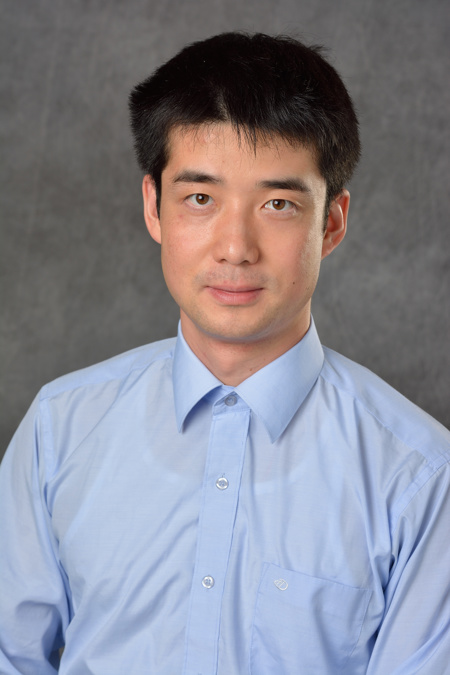
Domenico Napoletani is a Research Fellow at Chapman University's Schmid College of Science & Technology, specializing in quantum computing, artificial intelligence, and interdisciplinary research. He is also a philosopher of data science, poet, and founder of Germinal Computing LLC, which focuses on solving complex scientific problems using methods inspired by living phenomena. His research integrates natural philosophy, quantum mechanics, and mathematical biology, emphasizing the interconnectedness of systems through concepts like omnia in omnibus fingere and agnostic science . He explores topics such as the theory of isolated objects, phase integral approaches to geometry, and developmental economics analogies. Recent publications highlight his work on quantum foundations, asymptotic analysis, big data philosophy, irrationality in mathematics, cancer evolution, and multiscale biological modeling. Collaborations span physics, philosophy, and biology. He has taught interdisciplinary courses linking science to poetry (e.g., J.W. Goethe) and mathematics to religious experience (e.g., Simone Weil), advocating for a humanism centered on sensorial dissonance and conjectural reasoning.
Diarmuid O'Donoghue is an Assistant Professor in the Faculty of Science & Engineering at Maynooth University, specializing in Computational Creativity and Analogical Reasoning . His research explores topological similarities between text and source code to develop cognitively inspired systems for problem-solving and bias detection. Co-PI of the Modelling implicit bias project (€21/FFP-P/10118) Senior Scientific Coordinator for the €2.6M EU-funded Dr Inventor project Key research areas include: Latent homomorphism detection in lexical data Comparative analysis of LLMs and analogical systems Formal specification generation from code/text His work has shaped undergraduate project frameworks with ethical GenAI integration . Publications span ICCC , GECCO , and journals like Artificial Intelligence Review .
Austin M. Garner is an Assistant Professor of Biology at Syracuse University’s College of Arts and Sciences , jointly affiliated with the Department of Biology and the Biochemistry Program . A functional morphologist and biomechanist, he explores how animals attach to and interact with complex surfaces, integrating life-science and physical-science approaches. Education Ph.D. Integrated Bioscience, University of Akron (2021) Dissertation: Examining the relationships between form, function, environment, and behavior in adhesive pad-bearing lizards B.S. Biology (magna cum laude), University of Akron (2016) Research Interests Garner’s interdisciplinary program centers on functional morphology, biomechanics, and bio-inspired design . Current focal systems include: Lizard adhesion : quantifying microscopic setal morphology, claw–substrate interactions, and performance trade-offs in geckos and anoles. Sea-urchin adhesion : elucidating tube-foot biomechanics under environmental stressors such as hyposalinity and temperature change. Bio-inspired engineering : translating organismal attachment mechanisms into design principles for synthetic adhesives and biologging tag attachment. His work combines high-resolution imaging, mechanical testing, field experiments, and computational analyses to reveal how form, function, and environment interact. Publication Trends Across 15 recent papers (2020-2025), Garner has advanced three major themes: (1) comparative adhesive morphology of lizards and its ecological correlates; (2) environmental modulation of sea-urchin adhesion and locomotion; and (3) cross-disciplinary biomechanical studies spanning fish fins, polar-bear paws, and bio-inspired devices. These contributions appear in leading journals such as Journal of Experimental Biology , Integrative and Comparative Biology , and Royal Society Open Science . Funding & Grants Co-PI, “Advancement of Attachment of Biologging Tags,” Office of Naval Research via University of Michigan (2023-2026) PI, “Habitat-level Variation in the Functional Morphology of the Purple Sea Urchin Adhesive System,” Syracuse University (2024) Service & Outreach Garner serves as seminar-series organizer and recruitment-committee member in the Department of Biology, co-leads the Form & Function Focus Group within the BioInspired Institute, and regularly reviews for NSF, DoD, and >10 international journals. He has delivered >30 invited talks, including Café Scientifique and K-12 outreach events, and has been featured in Newsweek , The Boston Globe , and phys.org for his expertise on animal behavior during solar eclipses. Laboratory & Team Garner directs an active research group at Syracuse University equipped for high-speed videography, force measurement, microscopy, and 3-D surface analysis. Graduate and undergraduate students collaborate on projects examining lizard and echinoderm biomechanics, with opportunities for fieldwork in Jamaica and coastal marine sites.
Dr. Ningning Zhang serves as Chair of Geotechnical Engineering and leads the Institute of Geomechanics and Underground Technology (GUT) at RWTH Aachen University. Her research bridges computational mechanics and practical geotechnical applications, with a focus on soil-structure interaction and bio-inspired solutions for underground engineering challenges. Her primary research domains include Geotechnical Engineering , Geomechanics , and advanced Discrete Element Modeling (DEM) . She investigates granular material behavior under complex loading conditions, specializing in bio-inspired penetration mechanics, soil creep phenomena, and particle-scale interactions. Current projects explore self-burrowing robotics for granular media, multi-scale particle shape effects on soil stiffness, and deep-learning applications for geotechnical testing. Her work consistently integrates experimental validation with high-fidelity numerical simulations to address fundamental soil mechanics questions. Dr. Zhang's recent publication trajectory reveals a strategic shift toward bio-inspired geotechnics and AI-enhanced modeling. Over 70% of her 2023-2024 publications focus on self-burrowing systems and granular material characterization, demonstrating expertise in translating biological burrowing strategies into engineered solutions. Her research uniquely combines gravitational effects analysis, crushable soil modeling, and multi-cycle penetration dynamics, establishing new methodologies for simulating complex soil behaviors. As an active mentor, she has supervised five Master's theses on topics including discrete element modeling of bio-inspired penetration processes, manufacturing trials of self-burrowing robots, and numerical analysis of trapdoor mechanisms in granular soils. Her academic leadership extends to international collaborations with institutions like Universidad Técnica Federico Santa María and research groups in India, fostering global innovation in geomechanics. The Institute of Geomechanics and Underground Technology operates state-of-the-art laboratories for soil and rock mechanics testing under Dr. Zhang's direction. The facility specializes in custom equipment development for granular material characterization, including bespoke setups for simulating bio-inspired penetration processes and virtual calibration chambers for cone penetration testing. This experimental infrastructure synergizes with their computational research to provide comprehensive solutions for geotechnical challenges.
Dr. Igor Berinskii is a Senior Lecturer at the Iby and Aladar Fleischman Faculty of Engineering , Tel Aviv University, affiliated with the School of Mechanical Engineering . He leads the Multiscale Mechanics of Solids (MSMS) Lab , focusing on the relationship between microstructure and macroscopic mechanical behavior through analytical and computational methods. His research aims to explain unconventional mechanical properties and predict novel features for engineering applications. 2005 : B.S. (Cum laude) in Applied Mechanics, Peter the Great Polytechnic University 2007 : M.S. (Cum laude) in Applied Mechanics, Peter the Great Polytechnic University 2010 : Ph.D. in Mechanics of Solids, Institute for Problems in Mechanical Engineering, Russian Academy of Sciences His research spans Mechanics of media with microstructure , Cellular materials/Metamaterials , Nanomechanics/NEMS/MEMS , and Micromechanics of fracture . Recent publications highlight work on origami-inspired structures , graphene and MoS2 mechanics , bio-inspired metamaterials , and computational homogenization , with a focus on multiscale modeling and dynamic systems. The MSMS Lab employs HiDRA (Hierarchical Deformable and Rigid Assemblages) for coarse-grained modeling, contributing to advancements in lattice materials and elastic wave propagation.
Prof. Gil Marom is an Associate Professor at the School of Mechanical Engineering within Tel Aviv University's Iby and Aladar Fleischman Faculty of Engineering. He leads the Marom Research Group, focusing on computational multiphysics models and biomechanics to address cardiovascular diseases, spinal cord injuries, and innovative ventilation systems. His research spans: Cardiovascular biomechanics (heart valves, circulatory systems) Computational fluid dynamics and fluid-structure interaction Spinal cord injury mechanisms Biomimetic ventilation systems inspired by biological transport Current projects include mitral valve treatment optimization, placental hemodynamics modeling, and bioinspired ventilation for indoor spaces. Prof. Marom's publications demonstrate consistent focus on computational biomechanics with recent emphasis on: Cardiac device optimization (ventricular expanders, annuloplasty devices) Patient-specific modeling of valvular pathologies Multiphysics approaches to spinal cord injuries Translational applications of fluid dynamics in medical contexts He advises numerous graduate students on projects including: Mitral valve biomechanics Cerebral aneurysm morphology Placental hemodynamics Spinal cord injury multiphysics Biomimetic ventilation systems His laboratory develops advanced computational frameworks to investigate disease mechanisms and therapeutic innovations.
David Bierbach is a Researcher at the Biology and Ecology of Fishes group within the Faculty of Life Sciences at Humboldt University . His work focuses on collective behavior, animal welfare, and evolutionary ecology in aquatic species. Key Research Areas: Collective decision-making in fish shoals Behavioral plasticity in clonal and sexual fish species Environmental stress responses and adaptations Science of Intelligence Cluster collaborations Methodological Innovations: Use of biomimetic robots in studying social behavior Development of standardized fish husbandry protocols Current Projects: Thermal tolerance in extremophile fish Predator avoidance dynamics in collective systems Behavioral individuality in clonal vertebrates In recent publications (2024-2025), Bierbach's research spans fish social networks, aquaculture standards, and computational modeling of collective behavior. His work emphasizes interdisciplinary approaches combining biology with robotics and data science to advance both ecological understanding and animal welfare practices.
Prof. Dr. Pawel Romanczuk is a faculty member at Humboldt University's Faculty of Life Sciences, Institute of Biology, where he leads research in complexity science and adaptive systems. His work bridges biological collective behavior with robotics and computational modeling. Research Focus: Collective decision-making, swarming dynamics, animal behavior, and bio-inspired robotics Key Collaborations: Interdisciplinary work with robotics, physics, and ecological modeling His recent publications explore metric-free alignment in active matter, human-swarm interaction , and escape cascades in biological systems. He investigates how network topology influences decision-making and studies vision-based navigation algorithms. Scientific trends include: Understanding phase transitions in animal collective behavior Developing biomimetic robots for experimental studies Modeling social contagion in multi-agent systems
Yang Yang is an Associate Professor in the Department of Computational Mathematics, Science and Engineering at Michigan State University. Their research bridges inverse problem theory with computational innovation for medical and geophysical imaging technologies. Ph.D. in Mathematics (2014), University of Washington B.S. in Mathematics (2009), Zhejiang University Research Focus : Theoretical development of inverse boundary value problems in acoustics, optics, and elasticity using PDE theory, microlocal analysis, and differential geometry Geometric inverse problems for metric and vector field identification in Riemannian/Lorentzian geometries Algorithm design for tomographic reconstruction with applications in Ultrasound Computed Tomography, Photoacoustic Tomography, and Optical Tomography Scientific Contributions : NSF CAREER award recipient (2023) Developed non-iterative boundary control algorithms for acoustic inverse problems Established uniqueness/stability results for transversely isotropic perturbations in elasticity Created mathematically-justified imaging algorithms for media with unknown acoustic properties Publication Trends : Recent work focuses on conscious learning frameworks to address post-selection misconduct in AI, emergent Turing machines for autonomous programming, and ethical implications of deep learning's performance data. These align with their core expertise in inverse problem analysis and computational innovation.
Dr. Hamdan Awan serves as an Assistant Lecturer in the Department of Computer Science at Munster Technological University (MTU), Cork, Ireland, a position held since January 2022, and is an Associate Investigator at the CONNECT Centre. Previously, he held postdoctoral roles at South East Technological University (SETU), Waterford, and York University, Canada. Education: PhD in Computer Science and Engineering, University of New South Wales, Sydney, Australia Research Interests: His work bridges communication technologies with healthcare applications, focusing on: Internet of Things (IoT) Molecular Communication Networks Biologically Inspired Communications AI-based Communications Healthcare Applications Scientific Awards: Best Paper Award at IEEE/ACM Nanocom 2018 Advising and Service: Mentored 6 PhD and Master's students across institutions. Active in academic service as reviewer for IEEE/ACM venues, TPC co-chair for MolCom Workshop 2022, and current symposium chair for the Molecular, Biological, and Multi-Scale Communication Track at IEEE ICC 2024. Contributed to FET Open Projects Gladiator and Prime exploring molecular communication in health science, affiliated with the Dependable Networks research group.
Dr. Christopher Bunick is an Associate Professor at Yale School of Medicine, Department of Dermatology, with a focus on structural biology and translational research. He combines clinical practice with groundbreaking work in atomic resolution dermatology , using x-ray crystallography and cryo-EM to study skin barrier proteins and therapeutic mechanisms. Education: BS in Molecular Biology & Mathematics (Vanderbilt, 2000); MD/PhD (Vanderbilt, 2008) Clinical: General dermatology, surgery, and patient care in Middlebury, CT Research: Skin barrier integrity, keratin structures, acne pathogenesis, and drug development His lab investigates intermediate filament assembly , keratinopathies , and TYK2 inhibitors , funded by NIH/NIAMS and Almirall. 2025 publications span topics from benzene contamination in topical products to space-inspired cancer research. Scientific Awards: Young Investigator Award (AAD, 2017) Career Development Awards (Dermatology Foundation, 2013-2015) Bayer Lindau Fellow (2014) Lab: Hosts medical students, graduate researchers, and postdocs in a collaborative environment.
Gerrit van Lenthe is a Professor at the Faculty of Engineering Sciences , KU Leuven , specializing in biomechanics within the Department of Mechanical Engineering . He leads the Biomechanics (BMe) department and serves as a contact person for its research activities. Research Focus: Biomechanics, biomedical engineering, finite element analysis, and medical imaging applications for bone and joint diseases. Projects: Promotor for initiatives like INSPIRE (osteoporotic pelvic fractures), KNEE-ADAPT (osteoarthritis modeling), and FIBEr (biomechanical tissue characterization under MDR compliance. Collaborations: Active in the iSi Health institute and POC Biomedical Engineering networks. Technologies: Expertise in photon-counting CT, laser powder bed fusion (LPBF) for implants, and computational modeling of bone-cartilage interfaces. Labs: FIBEr center at KU Leuven focuses on mechanical characterization of biological tissues and biomaterials aligned with EU Medical Device Regulation (MDR).
Dr. Stevin Gehrke is a Professor in the Department of Chemical and Petroleum Engineering at the University of Kansas , where he leads the KU Hydrogel Lab . His research focuses on hydrogels , biomimetic materials , and biomedical applications , with expertise in drug delivery , tissue engineering , and protein-based biomaterials . Education: B.S. in Chemical Engineering, Kansas State University M.S. and Ph.D. in Chemical Engineering, University of Minnesota Research Themes: Environmentally responsive hydrogels for pharmaceutical and biotechnology applications Biosynthesis of artificial proteins for tissue engineering via genetic engineering Advanced polymer characterization techniques (NMR, QCM-D, rheology) Biomechanical studies of insect cuticle for bioinspired material design Development of novel hydrogel coatings for medical devices Publication Trends: Recent work emphasizes biomimetic hydrogel design for cartilage regeneration Key innovations in nanoparticle-reinforced hydrogels and 3D bioprinting Long-standing contributions to responsive hydrogel kinetics and protein separation techniques Labs & Collaborations: Directs the KU Hydrogel Lab for advanced biomaterials research Collaborates with agricultural, medical, and international institutions (Sweden, Japan, Brazil)
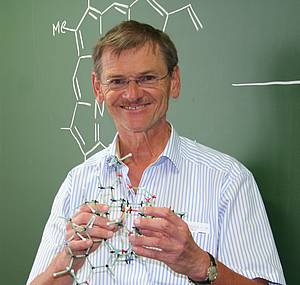
Professor Gerhard Bringmann is a distinguished academic at the University of Würzburg, Germany, where he serves as Professor of Organic Chemistry in the Faculty of Chemistry and Pharmacy. His research group focuses on bioactive compounds from nature, particularly exploring natural products chemistry with structural, biosynthetic, and pharmacological facets. With decades of commitment to research, teaching and academic self-administration, Prof. Bringmann has received high distinctions including the Federal Cross of Merit and the Medal Bene Merenti in Gold from the University of Würzburg for his extraordinary humanitarian commitment, outstanding scholarship achievements, and particular merits to the University. Prof. Bringmann's research interests span multiple disciplines within natural products chemistry. His group applies novel efficient methods of analytical, synthetic, computational, and medicinal chemistry to investigate stereochemical questions of stereogenic centers (C- or N-based), axes (C,C or C,N, sp 2 -sp 2 or sp 2 -sp 3 ), of chiral 'planes' or helices, both analytically and synthetically. They specialize in the search for novel antiparasitic, antileukemic, and anticancer natural products from tropical plants, with particular focus on elucidating their full absolute stereostructures. The group has developed innovative synthetic approaches, including the 'lactone method' for atropo-selective construction of highly hindered axially chiral biaryl and hetero-biaryl systems of any desired configuration. Prof. Bringmann's extensive publication record (over 800 publications as of 2025) reflects his leadership in the field of naphthylisoquinoline alkaloids and related natural products. His recent work shows a strong trend toward pharmacological applications, with numerous studies on antiparasitic, anticancer, and anti-inflammatory compounds. His group frequently employs interdisciplinary approaches combining natural product isolation, synthetic chemistry, computational methods, and biological testing to develop novel therapeutic agents, with particular emphasis on antiparasitic, antileukemic, and anticancer compounds. Federal Cross of Merit from Bavarian Minister of Science Bernd Sibler Medal Bene Merenti in Gold from the University of Würzburg Recognition for more than 700 publications and patents Prof. Bringmann has mentored numerous doctoral students and postdoctoral researchers, many of whom have gone on to successful careers in academia and industry. His group maintains active collaborations with international partners, particularly in the Democratic Republic of Congo, where he has contributed significantly to the development of higher education through the BEBUC program (Bila elimu hakuna maendeleo na amani - Without education no prosperity and peace). The Bringmann Group operates state-of-the-art laboratories for natural product isolation, structural analysis, and synthetic chemistry, with specialized equipment for stereochemical analysis and biological testing.
Frank Kirchner is a Professor at the Faculty of Mathematics and Computer Science of the University of Bremen and Executive Director of the Robotics Innovation Center at DFKI Bremen since 2008. He holds a chair for Robotics and leads a team of over 100 employees. Kirchner is also a Research Fellow at Tsinghua University and a member of the Berlin-Brandenburg Academy of Sciences and Humanities. Education: Diploma in Informatics and Neurobiology (1994), University of Bonn Doctorate (Dr. rer. nat) in Computer Science (1999), University of Bonn Research Interests: Kirchner specializes in biologically inspired behavior and motion sequences for highly redundant, multifunctional robot systems. His work spans soft robotics, space robotics, and human-centered robotic systems, with recent projects like AI-REEFSHIELD (AI for marine restoration monitoring) and FieldCoBots (collaborative field robotics for strawberry harvesting). He integrates generative AI (e.g., ActGPT) and quantum control methods into robotics, pushing the boundaries of autonomous systems. Scientific Contributions: With over 350 publications and leadership in initiatives like the German Softrobotics Priority Program and the Brazilian Institute of Robotics, Kirchner bridges robotics, AI, and interdisciplinary applications. His 15 most recent papers highlight trends in robotic design, quantum control algorithms, and planetary exploration. Awards & Memberships: Honorary Doctorate from SENAI CIMATEC, Brazil (2017) Research Fellow, Tsinghua University (2018) Member, Berlin-Brandenburg Academy of Sciences and Humanities (2015–) Committee member, Leopoldina (2021–) Academic Leadership: Kirchner has founded institutes like MarTech (maritime technologies) and Ground Truth Robotics, and co-founded journals like the International Journal of Advanced Robotic Systems. He oversees projects funded by the EU, DFG, and national agencies, with a focus on security-relevant research and hostile-to-life environments.