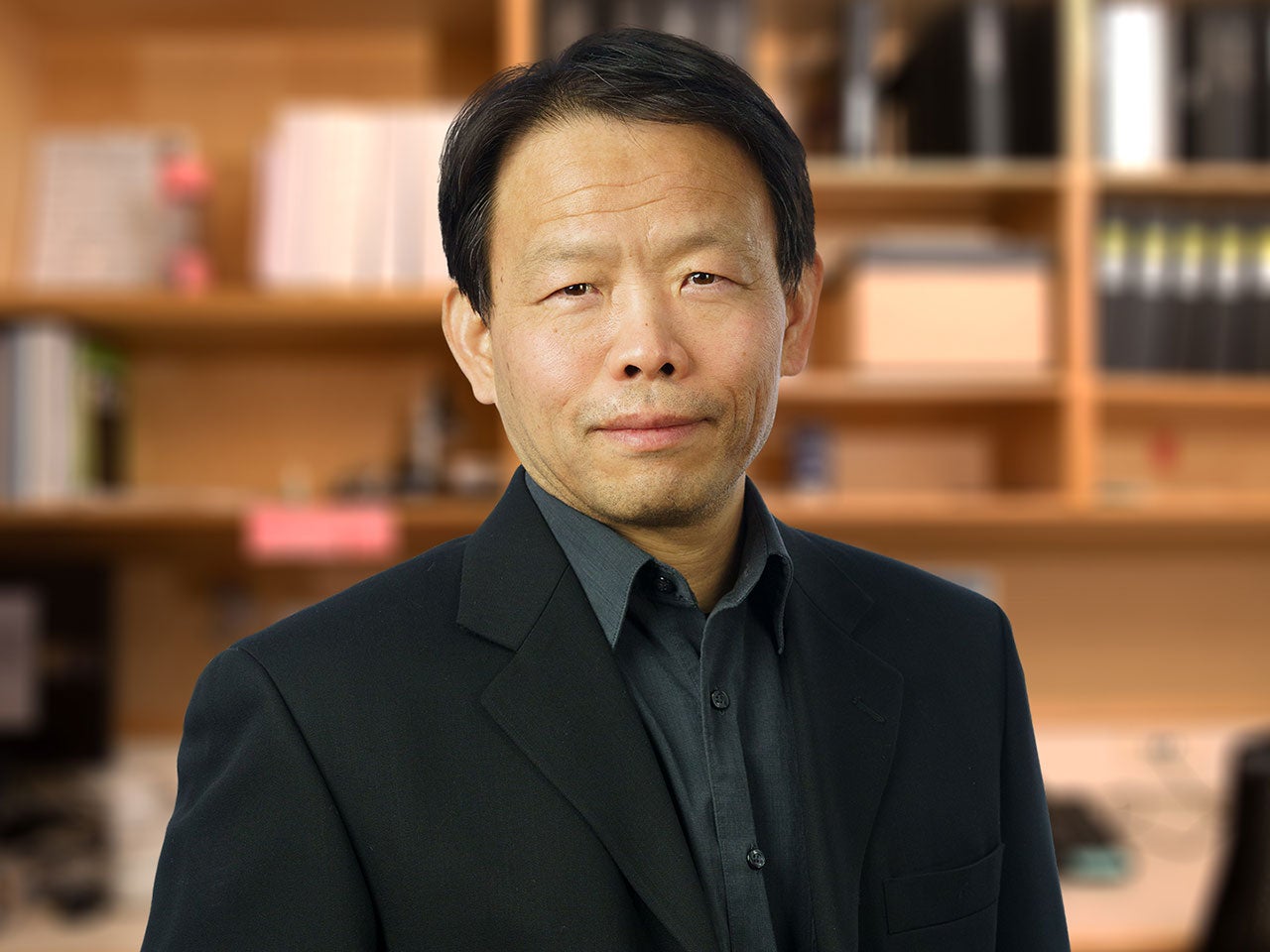
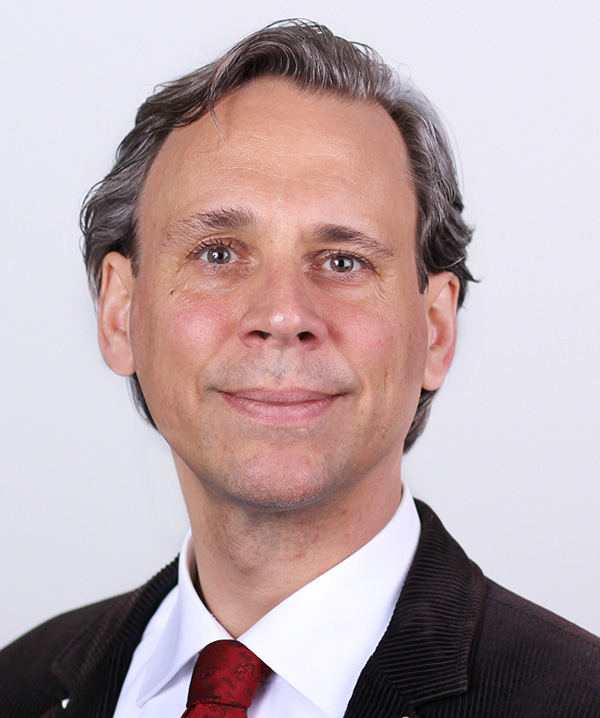
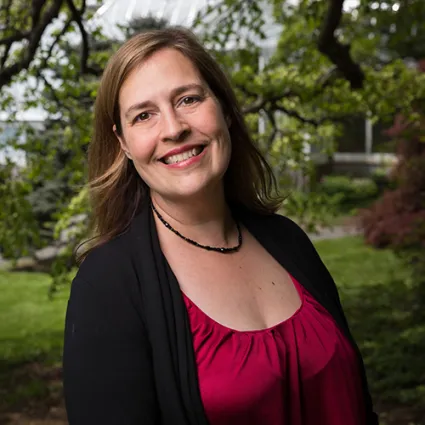
Prof. Dr. Christian Ungermann is a Professor in the Department of Biochemistry at the University of Osnabrück, Germany. His research focuses on the molecular mechanisms underlying endosome, lysosome, and autophagosome biogenesis. He combines cell biological methods with in vitro reconstitution assays to study protein complexes involved in these processes. His work is critical for understanding disease-related mechanisms linked to organelle dysfunction. Research topics include endosomal maturation, autophagosome/lysosome biogenesis, and endosomal signal transduction. Model systems include Saccharomyces cerevisiae, insect cells, and Drosophila melanogaster. Key methods are protein purification, fluorescence microscopy, membrane fusion assays, and enzymatic activity assays. Recent publications highlight studies on Rab GTPase regulation, endosomal Rab transitions, and CORVET tethering complex structure, reflecting expertise in membrane trafficking and organelle dynamics.
Saleh Taghvaeian is an Associate Professor in the Department of Biological Systems Engineering at the University of Nebraska-Lincoln and a Faculty Fellow at the Daugherty Water for Food Global Institute. His research focuses on precision irrigation systems, water resource management, and climate-resilient agricultural practices. He holds a Ph.D. in Irrigation Engineering from Utah State University and academic degrees from Ferdowsi University of Mashhad, Iran. Education: Ph.D., Irrigation Engineering, Utah State University M.S., Irrigation Engineering, Ferdowsi University of Mashhad, Iran B.S., Irrigation Engineering, Ferdowsi University of Mashhad, Iran Research Interests: His work integrates remote sensing, hydrological modeling, and machine learning to address challenges in irrigation efficiency, drought response, and sustainable water use. Key areas include soil moisture dynamics, crop water productivity, and the application of big data in agricultural systems. Publications Trends: Recent articles emphasize GRACE data downscaled analysis for water storage monitoring, AquaCrop modeling for crop performance under water stress, and machine learning applications in precision agriculture. His work spans transboundary water basins (Indus), U.S. High Plains, and Oklahoma Panhandle regions. Awards: 2021 Oklahoma State University Distinguished Early Career Faculty Award 2019 ASABE Larry W. Turner Young Extension Professional Award 2018 Oklahoma Cooperative Extension Service Honor Award Grants and Advising: Leads research projects on irrigation energy conservation, soil salinity mitigation, and agricultural drought resilience. Collaborates with institutions like USDA, UCOWR, and international partners on transboundary water management. Labs/Teams: Active in Nebraska's Water for Food Institute, leading interdisciplinary teams developing decision-support tools for irrigators and policymakers. Engaged in extension programs promoting smart irrigation technologies and water policy advocacy.
Per Bruheim is a Professor at the Department of Biotechnology and Food Science, Norwegian University of Science and Technology (NTNU). He leads the Bruheim research group, focusing on Deep Phenotyping of prokaryotic and eukaryotic systems using advanced metabolomics, fluxomics, and lipidomics techniques. He is the scientific leader of the NV faculty Mass Spectrometry lab and has developed targeted/non-targeted MS methods applied to diverse biological systems. Teaching roles include leading the 2-year and 5-year Biotechnology programs (MSBIOTECH and MBIOT5). He teaches courses such as TBT4140 Biochemical Engineering, TBT4110 Microbiology, and TKP4170 Process Design. Current research projects include targeting antibiotic resistance via bacterial stress responses (Trond Mohn Foundation), chemically defined cell culture media development, and peptide drug inhibition of translesion synthesis mechanisms. Research interests center on metabolomics and systems biology approaches to study microbial physiology and antibiotic resistance, with applications in bioprocessing and sustainable protein production. His lab employs mass spectrometry for precise metabolic profiling and collaborates internationally on projects involving lipidomics and flux analysis. Advising and grants involve mentoring over a dozen master’s theses on topics like microbial fermentation optimization, single-cell protein production, and recombinant protein expression. He actively pursues funding for projects addressing AMR mechanisms and bioprocess innovation. The Bruheim group also collaborates with industry on sustainable raw material utilization for microbial cultures. Labs/Teams: Leads the Mass Spectrometry facility at NTNU and directs the Bruheim research group within the Institute of Biotechnology (IBT). Collaborates with national/international partners in microbiology, metabolomics, and bioprocessing.
Prof. Anna Franklin is a Professor of Visual Perception and Cognition at the University of Sussex's School of Psychology. She leads the Sussex Colour Group and Sussex Baby Lab , focusing on human color perception, development, and neural representation. Her research combines cognitive psychology, developmental science, and neuroscience to explore how color perception develops, influences aesthetics, and relates to conditions like autism. Key projects include ERC-funded initiatives studying environmental impact on color perception and developing the ColourSpot diagnostic app for childhood color vision deficiency. She also serves as Deputy Director of Research and Knowledge Exchange for the School of Psychology. Education includes a BA from the University of Nottingham and a PhD from the University of Surrey, followed by a postdoctoral fellowship. Her work spans 107+ publications, emphasizing interdisciplinary methods like hyperspectral imaging and fMRI. Collaborations include industry partnerships with ETTA LOVES and COSATTO to apply infant visual preference research in product design. Research grants include European Research Council awards (Starting Grant 2012-2017, Consolidator Grant 2018-2025) and a Proof of Concept grant for ColourSpot . Her labs investigate cross-cultural color categorization, infant aesthetics, and neural correlates of color processing. Future work focuses on calibrating visual systems to environmental statistics and improving early childhood color vision screening.
Bo Li is the Robert Lourie Professor of Neuroscience at Cold Spring Harbor Laboratory (CSHL) in the School of Biological Sciences. His research focuses on the neural circuits underlying cognitive function and dysfunction related to anxiety, depression, schizophrenia, and autism, with particular emphasis on synaptic mechanisms and rodent behavioral models. He earned his Ph.D. in Neuroscience from the University of British Columbia in 2003. Education: Ph.D., Neuroscience, University of British Columbia (2003) M.Sc., Psychology, Chinese Academy of Sciences (1997) B.Sc., Medicine, Jining Medical College (1992) Li's lab integrates in vitro and in vivo electrophysiology, imaging, molecular and genetic techniques, optogenetics, and chemogenetics to probe fear and reward circuits in rodent brains. His work examines how these circuits contribute to adaptive and maladaptive behaviors, with significant implications for understanding mental disorders. Recent publications highlight his exploration of the vitamin B6 pathway in cancer, opioid neuropeptide dynamics in motivation, and area postrema neurons in brain-body interactions. His research also addresses salience assignment through striatal-amygdala circuits and dietary choice regulation via neurotensin neurons in the extended amygdala. Scientific awards include: HFSP Research Grant awards 2015 NARSAD Independent Investigator grant WSBS Teaching Award 2015 Students in his lab include Sara Boyle, Mingzhe Liu, and Danielle van de Lisdonk. His work has been supported by NIH BRAIN Initiative grants and involves collaborations across multiple CSHL laboratories.
Haohan Wang serves as Assistant Professor at the School of Information Sciences, University of Illinois Urbana-Champaign, with additional appointments as Affiliate at the Carl R. Woese Institute for Genomic Biology and Assistant Professor at the National Center for Supercomputing Applications (NCSA). His interdisciplinary work bridges machine learning, genomics, and AI security, focusing on trustworthy systems for biomedical applications and foundational AI research. Wang's research centers on robust and secure artificial intelligence, with emphasis on large language model vulnerabilities (jailbreaking, safety evaluation), federated learning personalization, and genomic data analysis. He develops techniques for privacy-preserving dataset distillation, confounding factor correction in genome-wide studies, and multi-agent frameworks for scientific discovery. His fingerprint highlights expertise in Machine Learning (94%), Linear Mixed Models (87%), and Confounding Factor Correction (41%), reflecting his focus on methodological rigor in complex data environments. Analysis of his 2025 publications reveals dominant trends in AI security (jailbreak evaluation frameworks like GuardVal, adversarial attacks such as InfoFlood), biomedical AI (transcriptomic analysis, wearable data privacy), and foundational methods (federated learning optimization, synthetic data generation). These works consistently address real-world challenges in model trustworthiness while advancing computational techniques for genomics and healthcare. Through NCSA's high-performance computing resources and the Institute for Genomic Biology's collaborative ecosystem, Wang integrates supercomputing capabilities with biological research to tackle data-intensive problems in disease modeling and AI safety testing, as evidenced by media coverage of his team's AI security testing methods.
Prof. Gabriele Schrag holds the Professorship of Microsensors and Actuators at the Technical University of Munich (TUM), within the TUM School of Computation, Information and Technology. Her research focuses on MEMS (Micro-Electro-Mechanical Systems), including microsensors, actuators, and their applications in acoustics, microfluidics, and bioengineering. She has pioneered work in virtual prototyping for system-level modeling to enhance device robustness and performance. Education: PhD (summa cum laude) from TUM on 'Modeling coupled effects in microsystems' Habilitation in sensor systems technology (2018) Acting head of the Chair of Technical Electrophysics (2018-2023) Research emphasizes acoustic MEMS transducers , electrohydrodynamic printing , and physics-based modeling . Notable projects include developing piezoelectric MEMS microphones with corrugated membranes and integrated micropump systems. Awards include the Bavarian Prize for Good Teaching (2021) and Eurosensors Fellow Award (2019). Her work bridges virtual prototyping with real-world applications , addressing challenges in miniaturization, energy efficiency, and sensor integration for medical and industrial systems.
Dr Stuart Cameron is a Senior Research Fellow in the School of Engineering at the University of Aberdeen, where he has been contributing to research since 2007. His work is centered on environmental fluid mechanics, with a focus on open-channel flows, turbulence, sediment transport, and bio-inspired hydrodynamics. He is affiliated with a series of high-impact interdisciplinary research projects involving advanced experimental and theoretical fluid dynamics. His research interests include: Open-channel flow turbulence structure Sediment entrainment and transport mechanisms Flow-biota interactions in aquatic ecosystems Development and error analysis of Particle Image Velocimetry (PIV) techniques Hydrodynamics of bioinspired surfaces and fish-shaped bodies The most recent publications highlight a strong trend in analyzing complex turbulent flows over rough beds, secondary currents, and bio-inspired surface morphologies. His work frequently involves high-resolution experimental techniques and theoretical modeling, often in collaboration with leading researchers such as V. Nikora. Articles span topics from drag forces on sediment particles to hydrokinetic turbine performance and field-based PIV studies in natural water bodies. Notable scientific contributions have been supported by major grants from EPSRC, NERC, and the European Commission. These include projects such as: "Secondary currents in turbulent flows over rough walls" (EPSRC, 2021–2024) "River flow regulation, fish behaviour and status – RIBES" (European Commission, 2020–2023) "Field stereoscopic PIV system for freshwater and marine ecosystems" (NERC, 2019–2020) "Bed friction in rough-bed free-surface flows" (EPSRC, 2014–2017) "HYTECH" (Marie Curie ITN, 2013–2016) "High-resolution numerical and experimental studies of turbulence-induced sediment erosion" (EPSRC & DFG, 2010–2014) Dr Cameron has not advised any named students in the available data, but he collaborates extensively within research teams focused on environmental hydraulics and experimental fluid mechanics. He is involved in the development of advanced measurement systems and theoretical frameworks for understanding complex flows in natural and engineered environments. He is actively engaged in laboratory and field-based research, contributing to both fundamental fluid mechanics and applied environmental engineering challenges. His work bridges engineering, ecology, and physics, particularly in the context of river systems and aquatic habitats.
Prof. Dr. Sebastian Schlücker is a full professor in the Department of Physical Chemistry at the University of Duisburg-Essen , where he leads the Molecular Biophotonics and Nanodiagnostics research group within the Faculty of Chemistry. He is actively engaged in research, teaching, and academic leadership, with a strong focus on advanced spectroscopic techniques for biomedical and analytical applications. His research interests lie at the intersection of nanophotonics, plasmonics, and bioanalytical chemistry . Key areas include surface-enhanced Raman spectroscopy (SERS) , single-particle spectroscopy , laser diagnostics , and the design of functionalized metal colloids for biosensing and tumor diagnostics. He emphasizes a theory-guided approach combining simulation and experiment to tailor nanoparticle properties. His recent publications (2023–2025) reflect a strong trend toward quantitative, label-free molecular diagnostics , point-of-care testing , and in situ monitoring of catalytic and biological processes . The work spans fundamental plasmonics to clinical applications, particularly in cancer detection and immunoassays using SERS nanotags. International Raman Innovation Prize He mentors students and researchers, supervises theses, and collaborates widely across disciplines. His group develops advanced instrumentation, including portable SERS readers , fs-laser laboratories , and automated nanoparticle synthesis systems (e.g., BONAPARTE robot). He teaches master’s courses such as NanoBioPhotonics and Optical Spectroscopy , and is involved in STEM outreach.
Colm O'Donnell is a Full Professor at the School of Biosystems and Food Engineering, University College Dublin (UCD). He leads the Food Quality and Processing Pillar at UCD's Institute of Food & Health and has held roles including Head of the School and Vice-Principal for Teaching & Learning in the College of Engineering & Architecture. His research focuses on Process Analytical Technology (PAT), bioprocessing, and dairy technology, with emphasis on spectroscopy, bioactive compound extraction, and food safety. He coordinates EU-funded projects like DiTECT and FreshProof, and leads the UCD team in the Dairy Processing Technology Centre (DPTC). O'Donnell is a Fellow of the Irish Academy of Engineering and has been recognized as a Thomson Reuters Highly Cited Researcher. Education: BE and PhD from University College Dublin, Chartered Engineer (CEng). Research Interests: PAT for food/bioproducts, dairy processing innovations, and bioactive extraction from seaweeds. His group develops non-destructive technologies like NIR-HSI and acoustic sensors for real-time quality monitoring in food production. Grants: Over 40 grants including EU Horizon 2020, Marie Sklodowska-Curie, and industry partnerships. Recent projects include acoustic sensor development for milk protein concentrate (2020-2022) and seaweed biorefinery processes (2018-2023). Awards: Irish Academy of Engineering Fellowship (2022), EU Comett Fellowship, and editorial roles at International Journal of Food Properties and Food Engineering Reviews . Labs/Teams: Leads the PAT-focused research group at UCD's Institute of Food & Health, collaborating with industry partners like DPTC and global academic networks.
Prof. Dr. Andreas Walther is a Professor of Macromolecular Materials and Systems at the Department of Chemistry, Johannes Gutenberg University Mainz, Germany. He is also a Research Fellow at the Gutenberg Research College and the Max Planck Institute for Polymer Research. His research focuses on adaptive, bioinspired materials systems, self-assembly processes, and energy-driven functional materials. Key projects include the development of ATP-fueled systems, dissipative systems engineering, and light-actuated materials. Walther leads the Walther Lab, specializing in life-like materials and systems, and contributes to educational initiatives like the livMatS program. His expertise spans hierarchical self-assembly, biomimetic materials, and non-equilibrium systems. Recent work emphasizes communication in chemically fueled networks and programmable DNA coacervates. Publications highlight breakthroughs in ATP-responsive materials, scalable hydrogel synthesis, and light-controlled systems. Awards and grants include DFG funding for livMatS-related research. He advises two PhD students and collaborates widely across institutions.
Professor James Sullivan is a corrosion science expert at the Faculty of Science and Engineering, Swansea University , specializing in zinc alloys for galvanic protection. He developed an in-situ time-lapse imaging technique to visualize corrosion mechanisms, presented at the Gordon Research Conference in 2012. As co-director of the Materials Academy , he secured £15M in grants to train industry professionals and researchers, collaborating with Tata Steel, European Space Agency, and The Royal Mint. Research Focus: Microstructure-corrosion relationships in metallic coatings Key Projects: Novel zinc alloy coatings, additive manufacturing corrosion performance His recent publications analyze Zn-Mg-Al and Zn-Mg-Ca systems , antimony/germanium alloying effects, and additive manufacturing material optimization. Supervision includes PhD/EngD students working on galvanic coatings, high-entropy alloys, and sustainable materials. Teaching: Modules like Materials Degradation and Protection and Interpersonal Skills for Engineers .
Schea N Fissel, Ph.D., CCC-SLP, is an Associate Professor in the Department of Speech-Language Pathology at Midwestern University's College of Health Sciences, Glendale campus. She holds a Ph.D. from Kent State University (2018), an M.A. (2008), and B.S. (2006) from Western Michigan University. Her educational background includes: Ph.D., Kent State University, 2018 M.A., Western Michigan University, 2008 B.S., Western Michigan University, 2006 Dr. Fissel's research examines how attentional resources are dynamically recruited by complex visual stimuli like human faces and biological motion, with emphasis on neurodiverse populations. She investigates automatic attention processes in social communication and how these differ in autism spectrum disorder, focusing on autism, attention, and literacy dynamics. Her work applies complexity theory to understand information processing in social contexts. Her publications (2019-2025) reveal strong thematic continuity in autism research, attention mechanisms, and clinical education. Key trends include music's impact on attention, evidence-based practice critiques in autism services, second-language processing interactions, and reading comprehension in traumatic brain injury. The work consistently bridges cognitive theory with speech-language pathology applications. Dr. Fissel teaches core graduate courses including Child Language and Learning II/III (SLPPG 522/533) and Communication Disorders in Autism (SLPPG 623), alongside capstone sequences (SLPPG 505/506/606/607) and thesis supervision (SLPPG 670). Her teaching portfolio demonstrates active mentorship through evidence-based practice instruction and clinical research guidance, preparing students for professional practice in speech-language pathology.
Kim Bjerge serves as Associate Professor and Group Leader in Aarhus University's Department of Electrical and Computer Engineering, specializing in computer vision and machine learning applications for ecological monitoring. His research bridges engineering and environmental science to develop innovative solutions for insect biodiversity assessment and sustainable agriculture. His core research interests include computer vision, deep learning, and edge computing systems for real-world ecological monitoring. Dr. Bjerge develops time-lapse camera pipelines and deep learning models specifically for insect population tracking in natural environments, with emphasis on agricultural applications like black soldier fly farming and biodiversity conservation. His work integrates signal processing techniques with biological data to create field-deployable monitoring systems. Recent publications reveal a strong trend toward practical implementations of computer vision in entomology, particularly focusing on edge processing for camera traps, automated trait prediction in insect farming, and biodiversity monitoring systems. Key research areas include nocturnal insect monitoring, floral environment analysis, and developing specialized datasets like AMI for insect identification in wild settings. He leads multiple significant research projects funded through competitive grants: MAMBO: Modern Approaches to Monitoring Biodiversity (2022-2026) FLYgene: Sustainable Insect Production for Livestock Feed (2022-2026) Automatisk monitering af nataktive insekter: Automatic nocturnal insect monitoring (2024-2029) Pilotprojekt for automatisk registrering af invasive plantearter: Invasive species monitoring (2020-2021) As head of the Signal Processing and Machine Learning research group, Dr. Bjerge directs interdisciplinary teams developing computer vision solutions for biological monitoring systems. His laboratory focuses on creating robust field-deployable technologies including scanner-based arthropod imaging systems, time-lapse camera networks for floral environments, and edge AI processors for real-time insect monitoring in agricultural settings.
Sara Pruss is the Esther Cloudman Dunn Professor of Geosciences at Smith College, where she has established herself as a leading researcher in geobiology and paleontology. Her work focuses on critical transitions in Earth's history, particularly mass extinctions and the evolution of early life forms. She maintains an active research program that combines field work, laboratory analysis, and theoretical approaches to understand the complex interactions between life and Earth's environments through geological time. Education: Ph.D., University of Southern California M.S., University of Southern California B.S., University of Rochester Professor Pruss's research spans several interconnected areas within geobiology and paleontology. Her primary focus is on understanding mass extinction events, particularly the end-Permian extinction and Cambrian-Ordovician transitions. She investigates how these events affected marine ecosystems and the subsequent recovery patterns. Her work on Neoproterozoic carbonates and early animal evolution has provided important insights into the environmental conditions that facilitated the emergence of complex life. Professor Pruss also examines microbial sedimentary structures and their implications for interpreting ancient environments. Her research often combines detailed field observations with geochemical analyses to reconstruct paleoenvironments and understand the taphonomic processes that affect fossil preservation. Analysis of Professor Pruss's recent publications reveals a consistent focus on critical transitions in Earth's history. Her work spans the Ediacaran-Cambrian boundary, the Cambrian-Ordovician transition, and the Permian-Triassic extinction. A recurring theme is the relationship between environmental changes (particularly oxygenation and redox conditions) and biological evolution. Her research increasingly incorporates geochemical proxies like mercury chemostratigraphy to identify potential volcanic triggers for extinction events. The geographical scope of her work is global, with field sites in North America, Scotland, Namibia, and the Arctic. Scientific Awards: Outstanding Contributions to Geobiosciences by the Society for Geobiology and Geomicrobiology (2014) Sherrerd Prize for Distinguished Teaching by Smith College (2015) Professor Pruss has mentored numerous undergraduate students through her research lab at Smith College. Several of her former students, including Katie Castagno, Jana Burke, Kelsey Moore, Sophie Westacott, and Kiara Gomez, have gone on to earn PhDs from prestigious institutions like MIT, Yale, and Woods Hole. Her research has been consistently supported by major funding agencies including the National Science Foundation and the National Geographic Society. Beyond her research mentorship, Professor Pruss has been actively involved in programs aimed at supporting underrepresented women in STEM fields, demonstrating her commitment to inclusive excellence in science education. Professor Pruss leads an active research laboratory at Smith College that combines field, laboratory, and analytical approaches to geobiological research. Her lab has produced numerous publications with undergraduate co-authors, reflecting Smith's strong emphasis on undergraduate research. The lab's work often involves international collaborations with researchers from institutions around the world. Current research directions include investigating the relationship between oxygenation and early animal evolution, studying microbial influences on sedimentary structures, and examining the environmental triggers for major extinction events throughout Earth's history.