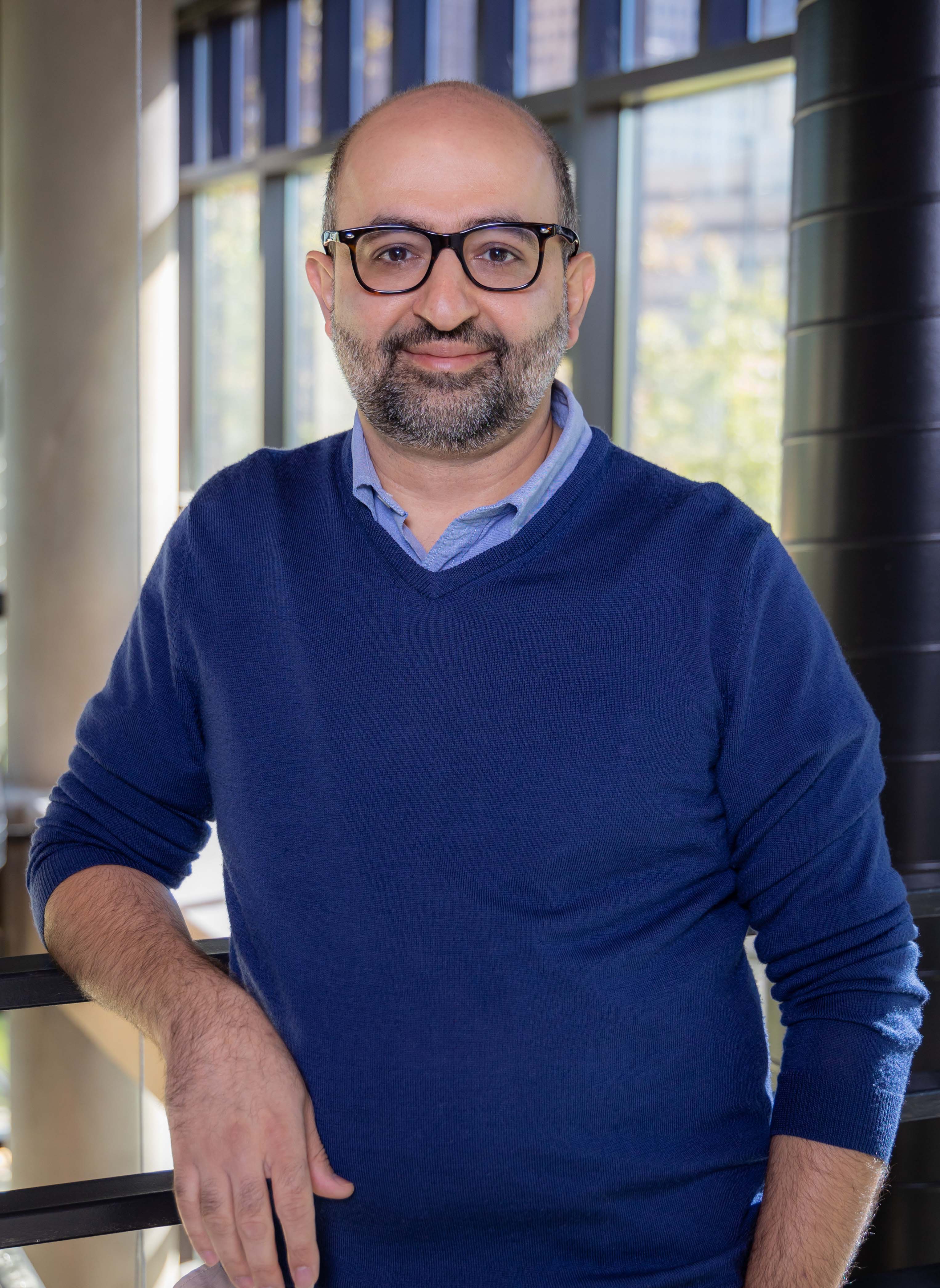
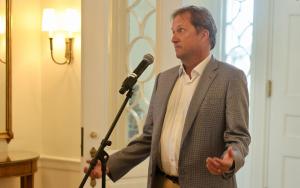
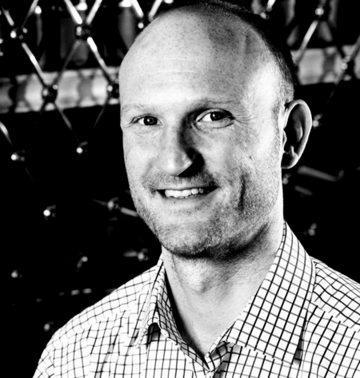
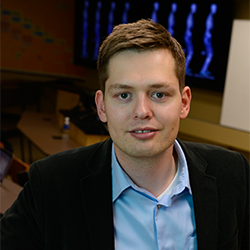
Hyunghoon Cho is an Assistant Professor at Yale School of Medicine in the Department of Biomedical Informatics & Data Science, with a secondary appointment in the Department of Computer Science. He received his PhD in Electrical Engineering and Computer Science from MIT (2019) and MS/BS in Computer Science from Stanford University (2013). His research focuses on computational challenges in biomedical data privacy, single-cell genomics, and network biology. Assistant Professor (Primary): Biomedical Informatics & Data Science Assistant Professor (Secondary): Computer Science Appointments: Yale School of Medicine | Broad Institute (Schmidt Fellow) Research Themes: Privacy-Enhancing Technologies for genomic and health data Scalable AI/ML tools for omics data analysis Structured biological modeling for system-level discovery His work includes secure GWAS, transcriptomic privacy assessment, and sfkit - a federated genomic analysis toolkit. He received the NIH Director's Early Independence Award and leads NSF-funded projects on confidential genome analytics. Awards: NIH Director's Early Independence Award Lab Members: Haris Smajlović (Postdoc), Vincent Angelo (CBB MS), Denis Loginov (Senior Software Engineer), Lucy Zheng (CBB PhD)
Jan Madsen is a Professor at DTU Compute, Technical University of Denmark, and Head of the Embedded Systems Engineering section. His research focuses on system-level modeling and design of embedded computing systems, particularly cyber-physical systems, microfluidic biochips, and synthetic biology applications. Develops design automation tools and methodologies for embedded systems Supervises numerous PhD students and leads major research projects Research Interests Key areas include: Embedded systems-on-a-chip Cyber-Physical Systems (Internet-of-Things) Microfluidic Lab-on-Chip devices Synthetic biology with molecular computing Design, modeling, and optimization of complex systems Scientific Awards DATE Fellow (2019) IEEE CEDA Outstanding Recognition (2019) DTU Scientific Advise Award (2013) Best Paper Awards at MECO (2013) and CASES (2009) Jorck’s Foundation Research Award (1995) Publications His 14+ journal papers and 115+ conference papers demonstrate expertise in: SystemC-based modeling frameworks Energy-aware sensor networks Self-healing eDNA architectures Microfluidic biochip synthesis RTOS modeling and MPSoC exploration
Marta Kwiatkowska is a Professor of Computing Systems at the University of Oxford and a Fellow of Trinity College. Her research focuses on probabilistic verification , quantitative model checking , and formal methods for complex systems including autonomous robots, medical devices, and biological systems. She leads the development of the PRISM and PRISM-games probabilistic model checkers. Key research areas: Probabilistic systems, formal verification, autonomous robotics, medical device analysis, systems biology Grants: ERC Advanced Grant VERIWARE, EPSRC Programme Grant Mobile Autonomy Awards: 2024 ETAPS Test-of-Time Tool Award for PRISM Students: Current and former advisees in topics spanning formal methods, robotics, and quantitative verification The PRISM-games extension enables verification of stochastic multi-player games with applications in network protocols, autonomous systems, and game theory. Her work bridges theory, algorithms, and practical implementation, with real-world applications in ubiquitous computing and nanotechnology.
Kathryn Roeder is the UPMC University Professor of Statistics and Life Sciences at Carnegie Mellon University (CMU), affiliated with the Dietrich College of Humanities and Social Sciences and the Departments of Statistics & Data Science and Computational Biology. Her research focuses on developing statistical methods for genetic and genomic data, particularly in identifying autism risk genes and analyzing single-cell multi-omic data. She earned her Ph.D. in Statistics from Penn State University and has been at CMU since 1994, previously serving as Vice Provost for Faculty (2015–2019). Education: Ph.D. in Statistics, Penn State University (1988) B.S. in Wildlife Resources, University of Idaho (1982) Research Interests: Her work integrates modern statistical techniques (high-dimensional statistics, machine learning, networks) to study complex diseases like autism and schizophrenia. Recent efforts include tools for analyzing single-cell RNA-seq and proteomic data, such as UNICORN, DAWN, and SCEPTRE. Key Awards: COPSS Distinguished Achievement Award (2020) National Academy of Sciences Member (2019) COPSS Presidents’ Award (1997) AAAS Fellow (2020) Advising & Grants: She has advised over 20 Ph.D. students, many contributing to landmark studies in autism genetics. Her grants include NIH funding for projects like the Autism Sequencing Consortium. Current research teams focus on computational biology and statistical genetics. Labs & Collaborations: Her lab develops software tools (e.g., TADA, MIND) and collaborates with the Autism Sequencing Consortium and iPSYCH-BROAD Consortium on large-scale genomic studies.
Farnoush Banaei-Kashani is an Associate Professor (Tenured) in the Department of Computer Science and Engineering at the University of Colorado Denver. She also holds an Adjunct Associate Professor position in the Department of Mathematical and Statistical Sciences. As the founder and director of the Big Data Management and Mining Lab (BDLab), she leads multiple GAANN Fellowship Programs, including BDSE (Big Data Science and Engineering), DDC (Data-Driven Cybersecurity), and II (Infrastructure Informatics). She directs the 'Data Science in Biomedicine' MS Track and focuses on data-driven decision systems (DDSs), integrating machine learning and big data analytics into healthcare, energy, transportation, and environmental applications. Education: Details not explicitly provided in the text. Her research spans data management cycles for DDSs, addressing challenges like big data volume, velocity, and variety. Key projects include iWatch (crime surveillance), POCM (mobility monitoring), and GeoSIM (urban texture documentation). She teaches courses such as Machine Learning Systems, Big Data Science, and Data Mining. Publications highlight advancements in sea ice classification, federated learning, proteomic networks, and privacy-preserving AI. Her work is funded by NSF, NIH, DOT, and industry partners like Google and IBM. She has advised numerous students and contributes to academic leadership as editor, conference chair (ACM SIGSPATIAL 2018/2019), and program committee member for venues like SIGMOD and KDD.
John Baillieul is Distinguished Professor at Boston University with joint appointments in Mechanical Engineering, Systems Engineering and Electrical & Computer Engineering. He directs experimental laboratories for real-time control of lightweight robotic systems and applies nonlinear control theory to complex multi-body, networked, and bio-inspired systems. Education: Ph.D., Harvard University Research Interests: Baillieul’s work spans robotics, nonlinear control, and networked systems. Early contributions resolved motion-planning for kinematically redundant manipulators; current themes include neuromimetic learning, vision-based navigation, and resilience of infrastructure networks such as power grids. His group couples rigorous geometric control with real-time hardware to create lightweight, high-performance robots and to uncover fundamental information limits in feedback systems. Recent Publication Trends (2021-2025): Over the past five years his output has concentrated on three synergistic directions: (i) neuromimetic and Koopman-based data-driven methods for estimating and controlling nonlinear systems, (ii) vision-based guidance and sparse optical-flow primitives for agile autonomous flight, and (iii) network-theoretic decomposition and information-rate studies for resilient operation of power grids and collective dynamics. Honors & Awards: IEEE Fellow 2025 Roger W. Brockett Control Systems Award Former Editor-in-Chief, IEEE Transactions on Automatic Control Affiliations & Service: He is a member of Boston University’s Center for Information and Systems Engineering (CISE), has served as Editor-in-Chief of IEEE Transactions on Automatic Control, and remains active in editorial and organizational roles across the IEEE control systems community.
Noah J. Cowan is a Professor of Mechanical Engineering at Johns Hopkins University's Whiting School of Engineering, with secondary appointments in Computer Science, Electrical & Computer Engineering, and Neuroscience. He is the founder and director of the Locomotion in Mechanical and Biological Systems (LIMBS) Laboratory, part of the Laboratory for Computational Sensing and Robotics. His research focuses on neuromechanics, robotics, and control theory, bridging neuroscience, biomechanics, and engineering. Cowan's work investigates how organisms achieve precise locomotion and applies these insights to advance robotics, neuroprosthetics, and rehabilitation technologies. Education: B.S. Electrical Engineering (Ohio State, 1995), M.S. and Ph.D. Electrical Engineering & Computer Science (University of Michigan, 1997/2001). Postdoctoral fellowship at UC Berkeley (2001–2003) before joining Johns Hopkins. Research Interests: Neuromechanics of motion, bio-inspired robotics, multisensory integration in animals (e.g., electric fish, Drosophila), and sensorimotor control in clinical contexts like cerebellar ataxia. His lab studies how neural circuits interact with biomechanics to produce movement, with applications to robotic design and neurological disorder treatments. Awards & Recognition: Presidential Early Career Award for Scientists and Engineers (2010), IEEE Fellow, NSF CAREER Award (2009), and multiple teaching and research excellence awards at Johns Hopkins. His work has been published in top journals like Nature , Proceedings of the National Academy of Sciences , and IEEE Transactions on Robotics . Outreach & Mentorship: Longtime mentor for high school and undergraduate students in STEM, leading programs like the Baltimore Ingenuity Project and WISE. Served as team leader for the STEM Achievement in Baltimore Elementary Schools (SABES) initiative. Key Projects: Development of the LIMBS Lab’s VR systems for animal studies, bioelectric navigation technologies for medical devices, and collaborations with clinicians on upper limb movement disorders. His team’s research on electric fish and fruit flies has revealed principles of adaptive control applicable to robotics and AI.
Alfred O. Hero, III is the John H. Holland Distinguished University Professor of Electrical Engineering and Computer Science and the R. Jamison and Betty Williams Professor of Engineering at the University of Michigan, Ann Arbor. He is currently on leave from the University of Michigan as a Program Director in the CISE Directorate at the National Science Foundation. His primary appointment is in the Department of Electrical Engineering and Computer Science (EECS), with secondary appointments in the Department of Biomedical Engineering and the Department of Statistics. He is also affiliated with the UM Center for Computational Medicine and Bioinformatics (CCMB), the UM Graduate Program in Applied and Interdisciplinary Mathematics (AIM), the UM Applied Physics Program, and the Michigan Institute for Data Science (MIDAS), which he co-founded from 2015-2018. Hero's research focuses on data science, developing theory and algorithms for multimodality data collection, fusion, analysis and visualization that use statistical machine learning and distributed optimization. His work has applications in wearable technologies for personalized health and predictive medicine, spatio-temporal networks in biology, climate, and social discourse, anomaly detection, and data analysis for international security. His recent research interests include high dimensional spatio-temporal data analysis, multimodal data integration, statistical signal processing, and machine learning, with particular emphasis on predictive mathematical models for biological and physical sciences, social networks, network security and forensics, and personalized health and disease. His recent publications demonstrate a strong focus on high-dimensional statistical methods, contrastive learning, neural network optimization, change detection in temporal graphs, and applications in microbiome analysis and epidemic modeling. The research spans theoretical foundations in information theory and statistical learning while addressing practical applications across multiple domains. Scientific Awards: IEEE Signal Processing Society Best Paper Award (1998) Best Original Paper Award from Journal of Flow Cytometry (2008) Best Magazine Paper Award from IEEE Signal Processing Society (2010) SPIE Best Student Paper Award (2011) IEEE ICASSP Best Student Paper Award (2011) IEEE Signal Processing Society Technical Achievement Award (2014) IEEE Signal Processing Society Society Award (2015) IEEE Fourier Award (2020) University of Michigan Distinguished Faculty Achievement Award (2011) Hero has advised over 60 PhD students and 30 postdocs in areas including modeling, computation, and inference for large scale time varying data in the biosciences. He has received significant research funding from the Department of Energy, Army Research Office, Air Force Office of Scientific Research, and National Science Foundation. He has held leadership positions including President of the IEEE Signal Processing Society (2006-2007), Director of Division IX (Signals and Applications) on the IEEE Board of Directors (2009-2011), and Chair of the Committee on Applied and Theoretical Statistics of the US National Academies (2018-2020).
Qingguo Li is a Professor and Associate Head at the Department of Mechanical and Materials Engineering , Queen's University , and a member of the Ingenuity Labs Research Institute . He specializes in biomechanical system design, energy harvesting, wearable sensors, gait analysis, and load carriage systems. His research integrates robotics, biomedical engineering, and sensor technology to develop human-centric devices and mobility aids. Current Roles : Professor, Associate Head, Queen's University Research Institute : Ingenuity Labs Research Institute Lab : Bio-Mechatronics and Robotics Laboratory His work focuses on biomechanical energy harvesting , IMU-based motion analysis , and assistive device development . Key applications include stroke rehabilitation, gait monitoring, and wearable power generation systems. Articles span cable-driven robots , smart walkers , and 3D printing mechanisms , emphasizing human-robot interaction and dynamic modeling . The lab explores sensor calibration , adaptive control algorithms , and human movement optimization . Areas of impact include rehabilitation engineering , load carriage stability , wearable sensor accuracy , and assistive robotics . His team develops solutions for gait asymmetry detection , post-stroke mobility , and low-cost energy systems , leveraging machine learning and kinetic modeling .
Assoc Prof Ng Teng Yong is an Associate Professor at the School of Mechanical & Aerospace Engineering (NTU), specializing in numerical modeling and simulation. With a background as Research Manager at A*STAR Institute of High Performance Computing, his work spans materials science, nanotechnology, and aerospace engineering. Current focus on graphene-based desalination membranes Expertise in molecular dynamics simulations Investigates nanoscale fluid mechanics and structural dynamics Recent publications highlight advancements in energy-efficient electrodialysis, smart robotics, and nonlinear vibration analysis. His interdisciplinary approach integrates computational methods with experimental validation in additive manufacturing and soft material mechanics.
Scott T. Acton is the Lawrence R. Quarles Professor and Chair of Electrical and Computer Engineering at the University of Virginia, with a courtesy appointment in Biomedical Engineering. He leads the VIVA lab, specializing in biological image analysis, machine learning, and AI for education. His research spans medical imaging, signal processing, and computer vision. Professor Acton holds a B.S. (Virginia Tech, 1988), M.S. (UT Austin, 1990), and Ph.D. (UT Austin, 1993) in Electrical Engineering. He has authored over 325 publications and served as Editor-in-Chief of IEEE Transactions on Image Processing and General Co-Chair of the IEEE International Symposium on Biomedical Imaging. His research interests include bioimage analysis, machine learning applications, and medical imaging technologies. The VIVA lab focuses on problems like cell tracking in bacterial biofilms, gait recognition using LiDAR, and AI-driven classroom activity analysis. Awards: IEEE Fellow (2013), All-University Teaching Award (2009), Outstanding Young Electrical Engineer (1996). Courses Taught: How the iPhone Works, Digital Image Processing, Signals and Systems. Labs/Teams: VIVA - Virginia Image and Video Analysis lab. Recent work emphasizes AI for education (e.g., automated classroom activity classification) and medical imaging advancements like 3D biofilm segmentation and LiDAR-based human identification. His contributions bridge engineering and healthcare, with applications in neuroscience and clinical decision support.
Michael U. Gutmann is a Senior Lecturer in Machine Learning at the School of Informatics, University of Edinburgh, and a member of the Institute for Adaptive and Neural Computation. His research lies at the intersection of machine learning, statistics, and scientific applications, with a focus on developing inference methods for complex and implicit models. Education: PhD in Computational Neuroscience, University of Tokyo MSc in Engineering and Applied Mathematics, Swiss Federal Institute of Technology (ETH) Zurich MSc, Ecole Centrale Paris His primary research interests include Bayesian inference, likelihood-free inference, optimal experimental design, unsupervised learning, and applications in computational biology and neuroscience. He is best known for introducing Noise-Contrastive Estimation (NCE), a foundational technique for training unnormalized statistical models. His recent work spans variational inference, density ratio estimation, flow models for missing data, and AI-driven experimental design in behavioral and biological sciences. His publications, including in NeurIPS , ICML , JMLR , and eLife , demonstrate a strong emphasis on methodological innovation for scientific discovery. He has contributed to open-source tools such as ELFI (Engine for Likelihood-Free Inference) and developed practical implementations of robust inference algorithms. Scientific Awards: No specific awards listed in the provided texts. Michael Gutmann actively supervises students and collaborates with leading researchers in machine learning and computational biology. He has secured research funding from EPSRC and BBSRC for projects in generative modeling and infectious disease epidemiology. He teaches advanced courses such as Probabilistic Modelling and Reasoning and Data Mining, reflecting his deep engagement with both theoretical and applied aspects of machine learning. Labs and Research Groups: Institute for Adaptive and Neural Computation (ANC), University of Edinburgh Former affiliations with Department of Mathematics and Statistics and Department of Computer Science at the University of Helsinki and Aalto University
Seddik M. Djouadi is a Professor in the Min H. Kao Department of Electrical Engineering and Computer Science at the University of Tennessee, Knoxville. He holds a PhD from McGill University (1999), an M.A.Sc. from École Polytechnique (1992), and a B.Sc. from École Nationale Polytechnique (1989). His research focuses on robust control, distributed systems, wireless communication, model reduction, and power networks. He has authored over 100 publications and received awards including recognition as an outstanding reviewer by Automatica (2006-2007, 2003-2004) and the Tibbets Award (1999). Education: PhD in Electrical Engineering, McGill University, 1999 M.A.Sc., École Polytechnique, 1992 B.Sc., École Nationale Polytechnique, 1989 Research Interests: Robust and distributed control Wireless communication systems Model reduction for fluid flows Power network dynamics and renewable integration Biological systems modeling Cyber-physical systems security Awards: Outstanding Reviewer, Automatica (2006-2007, 2003-2004) Best Paper Award, Mediterranean Conference on Intelligent Systems (2008) Ralph E. Powe Junior Faculty Enhancement Award (2005) Tibbets Award (1999) Students and Advising: Djouadi has mentored over 20 graduate students and postdoctoral researchers, including current advisees Yichen Zhang and Ehsan Raoufat. Notable past students include Jin Dong (now at Oak Ridge National Laboratory) and Xiao Ma (Western Digital). Projects: Current research includes distributed control of large power networks, data-driven nonlinear model reduction, and stochastic modeling of wireless systems. Collaborations involve ORNL and TVA on energy systems and cybersecurity.
Dr. Ian Stavness is a Professor and Department Head in the Department of Computer Science at the University of Saskatchewan. His research focuses on interdisciplinary applications of computer science, including deep learning in agriculture, biomedical computation, and 3D display technologies. He leads the Biological Imaging & Graphics (BIGLAB) laboratory, which develops tools for plant phenotyping and musculoskeletal modeling. Education: Ph.D. in Computer Engineering, University of British Columbia, 2010 M.A.Sc. in Computer Engineering, University of British Columbia, 2006 B.Sc. in Computer Science & B.Eng. in Electrical Engineering, University of Saskatchewan, 2004 Research Interests: Deep Learning for Plant Phenomics & Agriculture 3D Displays and VR/AR Technologies Musculoskeletal Biomechanical Simulation (OpenSim, ArtiSynth) Computer Vision and Image Analysis Awards: ACM CHI 2019 Honourable Mention ACM VRST 2018 Polyphony Digital Award Key Projects: Deep Plant Phenomics Platform Parametric Human Project (Digital Human Modeling) P2IRC (Plant Phenotyping & Imaging Research Center)
Professor Marta Zofia Kwiatkowska is Professor of Computing Systems and Fellow of Trinity College at the University of Oxford, where she has held a faculty position since 2007. She previously served as Professor of Computer Science at the University of Birmingham (2001–2007), Reader and Lecturer at the University of Birmingham (1994–2001), and Lecturer at the University of Leicester (1986–1994). Her academic career began as Assistant Professor at the Jagiellonian University in Kraków, Poland (1980–1988). Education: BSc/MSc in Computer Science, Jagiellonian University, Kraków MA, University of Oxford PhD, University of Leicester Research Interests: Professor Kwiatkowska spearheaded the development of probabilistic and quantitative verification methods on the international stage. Her work bridges theory and practice through the PRISM model checker—the leading software tool in probabilistic model checking—used worldwide for research and teaching. Application domains include communication and security protocols , nanotechnology designs , power management , ubiquitous computing and systems biology . She investigates automated verification , temporal logics , semantic models for concurrency , real-time systems , and biological process modelling . Current grant funding exceeds £3.7 million from EPSRC, EU and ERC, including the prestigious ERC Advanced Grant VERIWARE. Scientific Awards & Honours: Fellow of the Royal Society Fellow of the ACM Fellow of the European Association for Theoretical Computer Science (EATCS) Fellow of the British Computer Society (BCS) Fellow of the Polish Society of Arts & Sciences Abroad ERC Advanced Grant VERIWARE (€2.046 M, 2010–2015) Top Cited Article Award, Theoretical Computer Science (2005–2010) Best Paper Award, QEST 2006 Doctoral Supervision & Grants: Professor Kwiatkowska actively supervises doctoral students (D.Phil. at Oxford) and post-doctoral researchers. She welcomes applications in areas aligned with her research interests, detailed here . Current students include Charlie Griffin, Daqian Shao, Matthew Yuan and Minghao Liu; past students and researchers number over twenty, many now in faculty or industry leadership roles. Laboratory & Teams: She leads the Oxford Quantitative Verification group within the Department of Computer Science. Ongoing projects include FUN2MODEL, ELSA, FAIR and the flagship PRISM probabilistic model checker. The group maintains strong collaborations with biological, robotics and engineering teams worldwide.