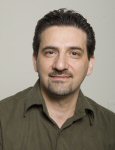
Paul Prucnal is a Professor of Electrical and Computer Engineering at Princeton University, affiliated with the Princeton Materials Institute (PMI). He leads the Lightwave Communications Research Lab, focusing on ultrafast optical techniques for communication networks and neuromorphic photonics. His research spans optical security, CDMA networks, nonlinear signal processing, and photonic neurons. Education: Ph.D., Columbia University (1979) M.Phil., Columbia University (1978) M.S., Electrical Engineering, Columbia University (1976) A.B., Bowdoin College, summa cum laude (1974) Research Interests: Optical Network Security (eavesdropping/jamming countermeasures) Optical CDMA for broadband networks Silicon photonic neuromorphic computing RF interference cancellation in wireless systems Photonic spiking neurons mimicking biological organisms Awards: National Academy of Inventors Fellow (2017) 10+ teaching awards including Princeton's President's Award (2015) OSA/IEEE Fellowships (1992, 1997) Labs/Teams: Leads the Lightwave Communications Lab, collaborating with government/industry partners. Lab alumni like Prof. Bhavin Shastri have achieved international recognition. Grants/Publications: Over 350 journal papers, 22 U.S. patents. Authored/co-authored Neuromorphic Photonics (2017) and edited Optical Code Division Multiple Access (2019). Current projects include photonic tensor processors and real-time RF signal processing.
Jason Ritt is an Associate Professor of Brain Science (Research) and Scientific Director of Quantitative Neuroscience at the Robert J. and Nancy D. Carney Institute for Brain Science, Brown University. He holds affiliations with the Data Science Institute and collaborates across disciplines on quantitative research methods. Education : B.S., M.A., and Ph.D. in Neuroscience from Boston University (1997–2003). Research : Focuses on neural processing during active sensing and neuroengineering for neurostimulation. Combines electrophysiology, optogenetics, and theoretical approaches in rodent models. Develops closed-loop systems for studying sensory neural prosthetics and brain-machine interfaces. Key areas include synaptic diversity, neurocontrol algorithms, and sensory restoration. Teaching : Instructs NEUR 2100 NeuroPracticum, integrating hands-on neuroscience research training.
Noah J. Cowan is a Professor of Mechanical Engineering at Johns Hopkins University's Whiting School of Engineering, with secondary appointments in Computer Science, Electrical & Computer Engineering, and Neuroscience. He is the founder and director of the Locomotion in Mechanical and Biological Systems (LIMBS) Laboratory, part of the Laboratory for Computational Sensing and Robotics. His research focuses on neuromechanics, robotics, and control theory, bridging neuroscience, biomechanics, and engineering. Cowan's work investigates how organisms achieve precise locomotion and applies these insights to advance robotics, neuroprosthetics, and rehabilitation technologies. Education: B.S. Electrical Engineering (Ohio State, 1995), M.S. and Ph.D. Electrical Engineering & Computer Science (University of Michigan, 1997/2001). Postdoctoral fellowship at UC Berkeley (2001–2003) before joining Johns Hopkins. Research Interests: Neuromechanics of motion, bio-inspired robotics, multisensory integration in animals (e.g., electric fish, Drosophila), and sensorimotor control in clinical contexts like cerebellar ataxia. His lab studies how neural circuits interact with biomechanics to produce movement, with applications to robotic design and neurological disorder treatments. Awards & Recognition: Presidential Early Career Award for Scientists and Engineers (2010), IEEE Fellow, NSF CAREER Award (2009), and multiple teaching and research excellence awards at Johns Hopkins. His work has been published in top journals like Nature , Proceedings of the National Academy of Sciences , and IEEE Transactions on Robotics . Outreach & Mentorship: Longtime mentor for high school and undergraduate students in STEM, leading programs like the Baltimore Ingenuity Project and WISE. Served as team leader for the STEM Achievement in Baltimore Elementary Schools (SABES) initiative. Key Projects: Development of the LIMBS Lab’s VR systems for animal studies, bioelectric navigation technologies for medical devices, and collaborations with clinicians on upper limb movement disorders. His team’s research on electric fish and fruit flies has revealed principles of adaptive control applicable to robotics and AI.
Atsuo Takanishi is a distinguished Professor at Waseda University's Faculty of Science and Engineering, School of Creative Science and Engineering, with appointments in both the Department of Bioscience and Biotechnology and the Department of Modern Mechanical Engineering. With over 700 publications, 10,399 citations, and an h-index of 47, Professor Takanishi has established himself as a leading figure in robotics research. His work spans multiple institutions, including visiting positions at Showa University School of Dentistry and KDDI Research, Inc. Professor Takanishi received his Doctor of Engineering degree from Waseda University in 1985, following his undergraduate studies in the Faculty of Science and Engineering at the same institution, which he completed in 1980. His academic journey began with positions as an Assistant at Waseda University (1985-1988), Lecturer (1988-1990), and Associate Professor (1990-1997) before achieving his current Professor status. Professor Takanishi's research interests center around robotics and intelligent systems, with particular expertise in humanoid robotics, surgical dentistry applications, and biomechatronics. His work demonstrates a unique integration of mechanical engineering principles with biological systems, resulting in innovative robotic platforms that mimic human capabilities. Notably, his laboratory has developed the Waseda Anthropomorphic Saxophonist Robot series and various medical training simulators that have significantly advanced the field of human-robot interaction. His research in experimental psychology complements his robotics work, particularly in human-robot interaction studies. Analysis of Professor Takanishi's recent publications reveals a strong focus on practical applications of robotics technology, particularly in assistive devices for elderly mobility, medical training simulators, and agricultural robotics for Synecoculture environments. His work consistently bridges theoretical robotics with real-world implementation, with recent papers emphasizing reinforcement learning approaches, haptic feedback systems, and computer vision techniques for complex environments. The Waseda Anthropomorphic Saxophonist Robot series represents a culmination of decades of research in humanoid robotics and musical expression. IEEE Fellow (2020-present) Robotics Society of Japan Fellow (2012-present) Japan Society of Mechanical Engineers Fellow (2007-present) Multiple Best Paper Awards from IEEE conferences (ICRA, IROS, ROMANSY) BusinessWeek Asia's Stars Bloomberg (2001) IFToMM Award of Merit (2010) Professor Takanishi has maintained extensive collaborations with research institutions worldwide, particularly with Italian institutions through the Italy-Japan Workshop series. His laboratory has secured substantial funding from Japanese government agencies including the Japan Science and Technology Agency, with particular emphasis on projects bridging robotics with medical applications and human-centered technologies. His international recognition is evidenced by his numerous visiting professorships and collaborative projects across continents. Professor Takanishi leads the Takanishi Laboratory at Waseda University, which maintains specialized facilities for humanoid robotics development, medical robotics research, and human-robot interaction studies. The laboratory has developed several notable robotic platforms including the WABIAN series of bipedal humanoid robots, the WASEDA FLUTIST ROBOT, and various medical training simulators used in clinical education settings. His work on the WASEDA SAXOPHONIST ROBOT represents a unique fusion of musical artistry and robotics engineering.
Qingguo Li is a Professor and Associate Head at the Department of Mechanical and Materials Engineering , Queen's University , and a member of the Ingenuity Labs Research Institute . He specializes in biomechanical system design, energy harvesting, wearable sensors, gait analysis, and load carriage systems. His research integrates robotics, biomedical engineering, and sensor technology to develop human-centric devices and mobility aids. Current Roles : Professor, Associate Head, Queen's University Research Institute : Ingenuity Labs Research Institute Lab : Bio-Mechatronics and Robotics Laboratory His work focuses on biomechanical energy harvesting , IMU-based motion analysis , and assistive device development . Key applications include stroke rehabilitation, gait monitoring, and wearable power generation systems. Articles span cable-driven robots , smart walkers , and 3D printing mechanisms , emphasizing human-robot interaction and dynamic modeling . The lab explores sensor calibration , adaptive control algorithms , and human movement optimization . Areas of impact include rehabilitation engineering , load carriage stability , wearable sensor accuracy , and assistive robotics . His team develops solutions for gait asymmetry detection , post-stroke mobility , and low-cost energy systems , leveraging machine learning and kinetic modeling .
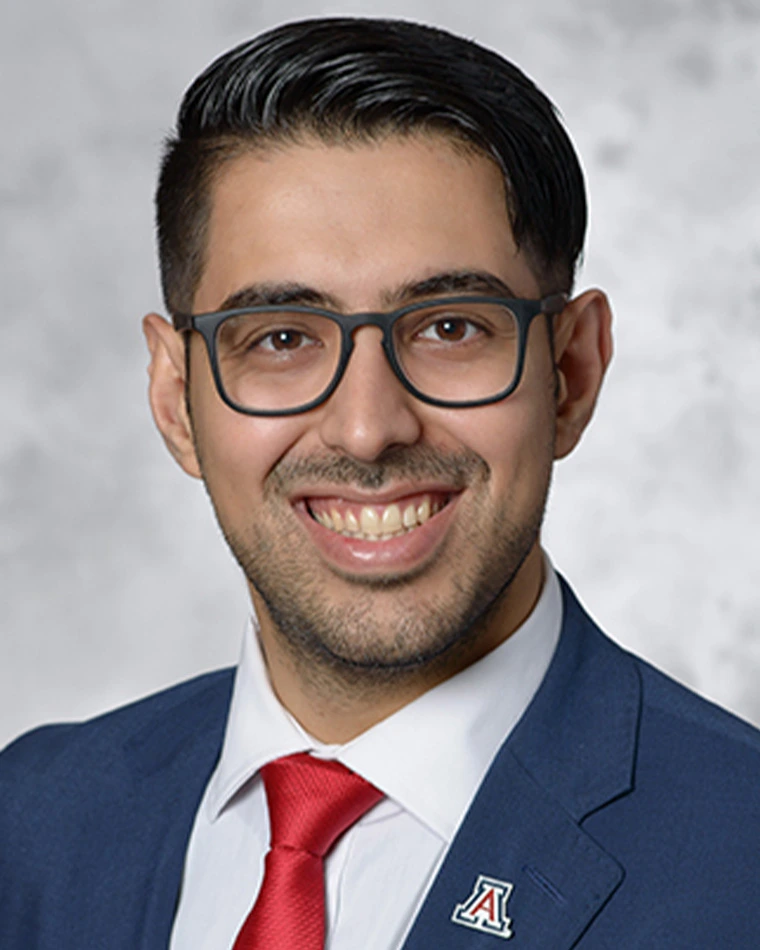
Soheil Salehi is a tenure-track Assistant Professor in the Department of Electrical and Computer Engineering at the University of Arizona, with a joint appointment in Systems and Industrial Engineering. He is the Director of the Privacy-preserving, Intelligent, and Secure Computing (PRISM) Lab, established in August 2022. Prior to this, he was an NSF-Sponsored Computing Innovation Fellow and Postdoctoral Research Fellow at the University of California, Davis. Ph.D., Electrical and Computer Engineering, University of Central Florida, 2020 M.S., Electrical and Computer Engineering, University of Central Florida, 2016 B.S., Isfahan University of Technology, Iran, 2014 Dr. Salehi's research focuses on the intersection of hardware, AI, and security. His work spans hardware and AI-enabled security in IoT , Generative AI for hardware design and security , neuromorphic and biologically-inspired AI hardware , emerging spin-based devices , reconfigurable architectures , low-power VLSI circuits , and digital twins and mixed reality for semiconductor workforce development . He also explores the application of Generative AI in personalized education . His recent publications, spanning 2023–2025, reveal a strong trend toward integrating AI and machine learning into hardware security and design. Key themes include automated secure IC design flows , AI-driven hardware obfuscation , firmware and side-channel attack analysis , security in neuromorphic and spiking neural networks , and educational frameworks using digital twins and generative models . His work appears in top venues like DAC, ICCAD, USENIX Security, IEEE TCAS-I, and ISCAS. Outstanding Reviewer Award, IEEE/ACM Design Automation Conference (DAC), 2023 Best Presentation of the Symposium Award, UC Davis Postdoctoral Research Symposium, 2021 UCF Excellence by a Graduate Teaching Assistant (University-Level), 2016 Nominated for 30-under-30 Award, UCF, 2020 Nominated for Postdoctoral Research Excellence Award, UC Davis, 2022 Dr. Salehi has secured significant research funding as PI and Co-PI, including a $300K NSF SaTC EAGER grant on Generative AI-based Personalized Cybersecurity Tutor, a $174,000 University of Arizona PIF Award, and multiple RII grants totaling over $198K. He has also received industry funding from CHEST. He actively mentors students and leads the PRISM Lab, which focuses on privacy-preserving and intelligent secure computing. His service includes roles as Technical Program Committee (TPC) Member and Session Chair at premier conferences such as DAC, ICCAD, CCS, NDSS, and GLSVLSI. The PRISM Lab, under his direction, conducts cutting-edge research in secure and intelligent hardware systems, with applications in IoT, edge computing, and workforce development. The lab emphasizes interdisciplinary collaboration and innovation in both research and education.
Lucia Carichino is an Assistant Professor in the School of Mathematics and Statistics at Rochester Institute of Technology (RIT). She holds a PhD in Mathematics from Purdue University and a BS/MS in Mathematical Engineering from Politecnico di Milano, Italy. Her research focuses on mathematical and computational models of multiscale biological systems, particularly fluid-structure interaction in biological contexts like ocular blood flow and microswimmers. She emphasizes integrating experimental data with mathematical models to advance medical understanding. Carichino teaches courses such as Differential Equations, Linear Algebra, and oversees undergraduate research projects. In 2023, she received the National Science Foundation LEAPS-MPS award for her work on computational modeling of eye-contact lens interactions. Her research has been published in high-impact journals and presented at conferences. She actively collaborates on projects addressing glaucoma, ocular hemodynamics, and biomedical applications. Education: PhD in Mathematics, Purdue University BS and MS in Mathematical Engineering, Politecnico di Milano, Italy Research interests include fluid dynamics, numerical methods, and mathematical biology. Her work bridges theoretical models with biomedical applications, such as optimizing gene therapy delivery and analyzing ocular physiology under varying environmental conditions (e.g., altitude). She explores topics like sperm motility, computational simulations of biological systems, and the interplay between fluid dynamics and biological structures. Her recent articles highlight advancements in ocular pharmacokinetics, contact lens interactions, and altitude effects on intraocular pressure. These studies underscore her expertise in multiscale modeling and fluid-structure interaction. Carichino also contributes to educational initiatives, fostering a collaborative classroom environment. Notable awards include the NSF LEAPS-MPS award (2023). She advises student research projects and collaborates with colleagues, such as Maki, on interdisciplinary studies. Her work is supported by grants and has led to presentations at ophthalmology and mathematics conferences. Carichino’s lab focuses on computational modeling of biological systems, particularly in ophthalmology and microscale fluid dynamics. Her team develops tools to simulate complex physiological processes, aiding in medical diagnostics and treatment strategies.
Assoc Prof Ng Teng Yong is an Associate Professor at the School of Mechanical & Aerospace Engineering (NTU), specializing in numerical modeling and simulation. With a background as Research Manager at A*STAR Institute of High Performance Computing, his work spans materials science, nanotechnology, and aerospace engineering. Current focus on graphene-based desalination membranes Expertise in molecular dynamics simulations Investigates nanoscale fluid mechanics and structural dynamics Recent publications highlight advancements in energy-efficient electrodialysis, smart robotics, and nonlinear vibration analysis. His interdisciplinary approach integrates computational methods with experimental validation in additive manufacturing and soft material mechanics.
John Ford is an Associate Professor in the Department of Nuclear Engineering at Texas A&M University. His research focuses on radiobiology, radiation carcinogenesis, and medical applications of radiation. He holds academic appointments within the College of Engineering and contributes to the Health Physics, Radiation Biology & Medical Physics research group. Education includes a B.S. and M.S. in Nuclear Engineering from Mississippi State University (1982, 1986), a Ph.D. in Biomedical Sciences from the University of Tennessee (1992), and postdoctoral training at Oak Ridge National Laboratory (1992–1993). His work emphasizes understanding radiation effects on biological systems, with notable contributions to radiation dosimetry, bystander signaling mechanisms, and dietary modulation of radiation damage. Recent studies explore space radiation monitoring technologies and therapeutic applications of radiation. Awards include the BP Award for Teaching Excellence (2007) and ARRO Educator of the Year (2013–2014). Research spans interdisciplinary areas such as radiation-induced cancer mechanisms, nutritional interventions to mitigate radiation effects, and advanced radiation detection instrumentation. He has advised numerous projects in radiation safety curriculum development and collaborated on NASA-funded studies modeling radiation impacts on astronauts.
Professor Hala Zreiqat AM is a leading biomedical engineer at The University of Sydney , serving as the Director of the ARC Training Centre for Innovative BioEngineering . A Fellow of all major Australian academies (AAS, ATSE, FAHMS, FRSN), she develops 3D printed bioceramics for bone regeneration while championing diversity through initiatives like the IDEAL Society and BIOTech Futures mentorship program. Her work bridges academia, clinical practice, and industry in musculoskeletal research . Research Focus: Her lab creates synthetic bone scaffolds that mimic natural bone architecture, strength, and porosity, enabling non-rejected bone regeneration via patient-matched implants. Key applications include orthopaedic, dental, and maxillofacial repair , with over $18M in competitive funding and multiple patents. Current projects explore AI-driven scaffold performance prediction and anti-senescence strategies for aging-related bone loss. Scientific Trends: Recent publications highlight 3D printed nanovoxelated ceramics , antisenescence biomaterials , and multifunctional theranostic platforms . Her team integrates machine learning for scaffold design, atom probe tomography for interface analysis, and two-photon imaging for cellular monitoring in 3D environments. 2021-2022 Fulbright Senior Scholar 2018 NSW Premier's Woman of the Year 2019 Eureka Prize for Innovative Use of Technology Fellow of Australian Academy of Science (2021) Over $18M in research funding Teaching & Leadership: She designed core courses like Tissue Engineering and Nanomaterials in Medicine , mentoring 158 students in 2020 alone. As Chair of CAAR (2020-2023), she strengthens Australia-Arab collaborations. Her lab trains early-career researchers , with alumni now in academia and industry.
Milos Popovic is a Professor and Director at the Institute of Biomedical Engineering, University of Toronto, and serves as Senior Scientist and Director of Research at the Toronto Rehabilitation Institute (KITE), University Health Network. He holds the Toronto Rehab Chair in Spinal Cord Injury Research and Neural Engineering and co-leads the Centre for Research in Advanced Neural Implant Applications (CRANIA). His leadership spans academic, clinical, and translational research domains in neuroengineering and rehabilitation. His research focuses on neurorehabilitation, neuroprosthetics, functional electrical stimulation (FES), brain-machine interfaces, and assistive technologies . He develops physiological control systems and therapeutic robotics to restore motor function after spinal cord injury and stroke. His work integrates biomechanics, signal processing, and human-machine interfaces to innovate rehabilitative solutions. Dr. Popovic's recent publications emphasize electrical neuromodulation, FES therapy for motor recovery, deep brain stimulation for cognitive deficits, and wearable/implantable technologies . The articles reflect a strong trend toward closed-loop systems, translational research, and interdisciplinary innovation in neuroengineering and rehabilitation. Swiss National Science Foundation Technology Transfer Award - 1st place (1997) Engineering Medal for Research and Development, Professional Engineers of Ontario (2008) Elected to the College of Fellows, American Institute of Medical and Biological Engineering (2011) 1st Prize and Best Intellectual Property Award, TiEQuest Business Venture Competition (2012) Morris (Mickey) Milner Award for Assistive Technologies (2013) University of Toronto Inventor of the Year Award (2013) University Health Network’s Inventor of the Year Award (2015) Dr. Popovic has secured significant research funding and leads the Neural Engineering and Therapeutics team at KITE. He co-founded MyndTec Inc. and the Canadian National Spinal Cord Injury Conference, demonstrating strong mentorship, innovation, and national impact. He advises graduate students and postdoctoral fellows in biomedical engineering and rehabilitation sciences. He leads the Rehabilitation Engineering Laboratory and the Neural Engineering and Therapeutics Team at KITE, fostering collaboration across engineering, neuroscience, and clinical rehabilitation. His lab develops advanced neurotechnologies with a focus on clinical translation and commercialization.
Matthew Lakin is an Associate Professor with tenure in the Department of Computer Science at the University of New Mexico, with a courtesy appointment in the Department of Chemical & Biological Engineering. He is affiliated with the UNM Center for Biomedical Engineering and the School of Engineering, and collaborates extensively with the UNM Health Sciences Center and external institutions. Education: Ph.D., Computer Science, University of Cambridge, 2010 M.A. (Cantab), University of Cambridge, 2009 B.A. (Hons), Computer Science, University of Cambridge, 2005 Dr. Lakin's research focuses on molecular computing, DNA nanotechnology, synthetic biology, and formal verification of biomolecular circuits. He develops computational models and experimental systems for programmable biological devices, especially using heterochiral DNA to enhance stability in living cells. His work spans software tools for biodesign and experimental validation in mammalian systems, with applications in nanomedicine and biosensing. The recent publications highlight a strong trend in engineering robust, intelligent biomolecular systems. His work integrates machine learning concepts into chemical reaction networks, advances geometric modeling of DNA systems, and pioneers L-DNA-based circuits for intracellular applications. The research spans theoretical foundations, software tools, and wet-lab experimentation, emphasizing interdisciplinary innovation. Scientific Awards: Presidential Early Career Award for Scientists and Engineers (PECASE), 2025 NSF CAREER Award, 2021 UNM School of Engineering Junior Faculty Research Excellence Award, 2021 Multiple student awards under his mentorship, including the Outstanding Graduate Student Award and DNA28 Best Student Presentation recognition Dr. Lakin has advised numerous graduate and undergraduate students, including Ph.D. graduates in Biomedical Engineering and Computer Science. He leads major funded projects such as the NSF CAREER grant on heterochiral molecular computing, an EPSCoR Research Fellowship, and a $3M NSF grant on heavy metal biosensing in collaboration with Native American communities. He is also PI on multiple NSF grants related to synthetic cells and nucleic acid technologies. He directs the Lakin Lab for Programmable Biology, which operates within the Department of Computer Science and collaborates with Chemical & Biological Engineering and the Center for Biomedical Engineering. The lab emphasizes both computational modeling and experimental molecular biology, and runs an NSF-funded biotechnology summer camp in partnership with ¡Explora! science museum to strengthen STEM education in New Mexico.
Dr Maria Bada is a Lecturer in Cyberpsychology at the School of Biological and Behavioural Sciences, Queen Mary University of London. She is an active researcher in the field of cyberpsychology with a specific focus on the human element of cybersecurity. Dr Bada is also a member of the committee of the Artificial Intelligence, Ethics and Society Group at QMUL. Dr Bada's research spans multiple critical areas in cyberpsychology and cybersecurity. Her primary research interests include: The effectiveness of cybersecurity awareness campaigns and factors leading to their success or failure in changing information security behavior Development of prevention activities to enhance the resilience of Small and Medium Enterprises (SMEs) against cybercrime Cybersecurity awareness initiatives for school learners in South Africa and the UK Youth delinquency and interventions to prevent cybercrime, in collaboration with the National Crime Agency and Home Office Social and psychological impacts of cyber-attacks on vulnerable groups Exploration of the cybercrime ecosystem, including cybercriminal profiles, pathways, and risk perceptions Dr Bada's publication record demonstrates a consistent focus on the intersection of psychology and cybersecurity. Her recent work shows increasing specialization in SME cybersecurity challenges, ethical considerations in security behavior change, and the psychological impacts of cybercrime on individuals and organizations. She frequently collaborates with researchers from diverse disciplines including computer science, criminology, and healthcare, reflecting the interdisciplinary nature of her work. Dr Bada has secured significant research funding for her work, including: "Enhancing national cyber resilience via SME cyber security and digital responsibility" (£328,119 from EPSRC, 2023-2026) "REPHRAIN: Supporting organisations in making effective privacy related decisions" (£50,801 from EPSRC, 2022-2023) "Assessing Organisational DSbD Awareness and Readiness" (£15,554 from ESRC, 2022-2024) She works closely with research staff including Dr Matthew Rand and collaborates with various UK government agencies including the National Crime Agency and Home Office on cybercrime prevention initiatives.
Adam Khalifa is an Assistant Professor in the Department of Electrical & Computer Engineering at the University of Florida. His research focuses on low-power analog/RF/Mixed-mode ASIC design, miniaturization of biomedical devices, wireless powering solutions, and neural stimulation/recording techniques in animal models. He holds a PhD from Johns Hopkins University and degrees from The Hong Kong University of Science and Technology. His work emphasizes implant packaging, electrode microfabrication, and coil design for medical applications. Key research areas include developing energy-efficient wireless systems for implanted devices, such as magnetoelectric antennas and galvanic body-coupled powering. He has pioneered advancements in miniaturized implantable devices, including the 'Microbead' stimulator. His NIH T32 Fellowship (2019) and Ferdinand H. Fellowship (2018) reflect his impactful contributions. Publications highlight innovations in wireless power transfer, metamaterials for biomedical implants, and injectable microdevice fabrication. His work spans from circuit-level modeling to in vivo validation, emphasizing both technical and biological integration challenges. Collaborative efforts address challenges like implant migration tracking via MRI and energy harvesting for battery-free systems.
Prof. Abbas Samani is a Professor at the Department of Electrical and Computer Engineering and holds a joint appointment in the Department of Medical Biophysics at Western University . He is a core faculty member of the Biomedical Engineering Graduate Program and an Associate Scientist at Imaging Research Laboratories of Robarts Research Institute . His academic journey includes a Ph.D. from the University of Waterloo, an M.Sc. from the University of Tehran, and a B.Sc. from Amirkabir University of Technology. His research focuses on biological tissue computational modeling and its applications in medical imaging, intervention, and image analysis . He develops computer/image-assisted tools for minimally invasive disease diagnosis and therapy , targeting heart disease, cancer, and lung disease . Key projects include myocardium biomechanical modeling , handheld medical devices for breast cancer screening , and lung disease diagnostics via CT image segmentation . His recent publications emphasize ultrasound elastography , finite element modeling , and inverse problems in biomechanics , primarily in journals like IEEE Transactions on Computational Imaging and Translational Oncology . His work spans both computational modeling and medical device development . Selected Graduate Supervision : Ph.D. Candidates : Seyed Hassan Haddad, Elham Karami, Seyed Mohammad Hesabgar Graduated Ph.D. Students : Ali Sadeghi Naini, Seyed Reza Mousavi M.Sc. Students : Cristian Linte, Patrick Courtis, Joseph O'Hagan, Hatef Mehrabian, Hirad Karimi, Hosein Amooshahi, Seyed Mohammad Hesabgar, Nastaran Ghadarghadr, Shadi Shavakh, Ehsan Salamati, Ehsan Omidi Teaching Contributions : Graduate: BME9519B/CAMI9519B/ECE9202B/ECE9022B - Advanced Image Processing and Analysis , MBP9530A - Human Biomechanics and Biomedical Applications Undergraduate: ECE4438B - Advanced Image Processing and Analysis , ES1050 - Introductory Engineering Design and Innovation Studio , MBP3330F - Human Biomechanics and Biomedical Applications Research Affiliations : Robarts Research Institute - Associate Scientist at Imaging Research Laboratories Western University - Core Faculty, Biomedical Engineering Graduate Program