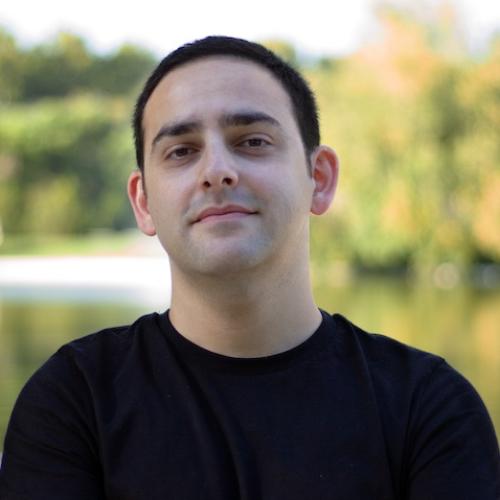
Caio Graco Rodrigues Leandro Roza is a Postdoctoral Researcher and University Researcher at the University of Helsinki , affiliated with the Faculty of Biological and Environmental Sciences and Lammi Biological Station . His work focuses on metacommunity dynamics , functional diversity , and phytoplankton community assembly across aquatic systems. Doctor of Philosophy (Plant Biology, State University of Rio de Janeiro, 2021) MSc in Plant Biology (State University of Rio de Janeiro, 2014) Research themes include ecological synthesis , biodiversity loss , and trait-based approaches , with projects like METAFOR (global metacommunity analysis) and TRACE (trait responses in ecosystems). His collaboration network spans over 90 researchers globally. Recent publications address microplastic impacts on microbial flocs, phytoplankton responses to environmental variables, and methodological frameworks for functional diversity analysis. Awards include the 2012 RAIC Best Oral Presentation in Brazil. He teaches R programming and functional diversity courses, and coordinates thematic reports for the Brazilian Platform of Biodiversity and Ecosystem Services . Current funding includes support from the Finnish Cultural Foundation and the Academy of Finland .
P. K. Panigrahi is a Professor in the Department of Mechanical Engineering at the Indian Institute of Technology Kanpur (IIT Kanpur), specializing in Experimental Fluid Dynamics and Heat Transfer, Micro-Scale Transport, Opto-fluidics, Thermal System Design, and Flow Control. He received his educational qualifications as follows: PhD (1997) from Louisiana State University, Baton Rouge M.S. (1992) from Louisiana State University, Baton Rouge B.Tech (1987) from UCE Burla Professor Panigrahi's research interests span across Laser Based Instrumentation, Flow Control, CAD of Thermal Systems, Turbulence, and Micro-fluidics and Heat Transfer. His work bridges experimental fluid dynamics with practical thermal system design, with applications in opto-fluidics and micro-scale transport phenomena. His research integrates advanced optical techniques with fluid mechanics to solve complex engineering problems. His research publications demonstrate expertise in fluid dynamics, optics, and thermal engineering, with a particular focus on experimental methods and instrumentation. His work has contributed to understanding complex fluid phenomena including non-Boussinesq fountains, droplet hydrodynamics in protein crystallization, digital holographic reconstruction, combustion processes, and crystal growth dynamics. His scientific achievements have been recognized through prestigious awards: Swarnajayanti Fellowship from DST (2006) Humboldt Fellowship from Germany (2004) BOYSCAST Fellowship from Japan (2000) Career Award from AICTE (1998) Professor Panigrahi maintains active research laboratories at IIT Kanpur including the Fluid Mechanics Laboratory, Fabrication Laboratory, Turbulence Research Laboratory, Optical Instrumentation Laboratory, and Microfluidics Laboratory, where he conducts advanced research in fluid dynamics and thermal systems.
J. Scott VanEpps is an Associate Professor in the Department of Emergency Medicine and the Department of Biomedical Engineering at the University of Michigan. He serves as Associate Director for the Weil Institute for Critical Care Research and Innovation and is faculty in the Biointerfaces Institute. Dr. VanEpps is also a Center Member of multiple institutes including the Macromolecular Science and Engineering Center, Weil Institute for Critical Care Research, Biointerfaces Institute, Global REACH Center, Taubman Institute, e-Health and Artificial Intelligence Initiative, and MM-PKUHSC Joint Institute. Dr. VanEpps received dual Bachelor's degrees with Summa Cum Laude honors from the University of Pittsburgh in Molecular Biology and Chemical Engineering (1996-2001). He then completed both an MD and PhD in Bioengineering through the Medical Scientist Training Program at the University of Pittsburgh (2001-2009). Following this, he completed his Emergency Medicine Residency at the University of Michigan/St. Joseph Mercy Hospital (2009-2013) and a Research Fellowship in Emergency Medicine at the University of Michigan (2013-2015). Dr. VanEpps' research focuses on life-threatening infections, particularly those related to implantable medical devices. His work spans three main areas: rapid diagnostics for bloodstream infection, antimicrobial nanomaterials to prevent bacterial adhesion, and in situ treatment strategies for biofilm-related infections. His laboratory has developed culture-free diagnostic platforms that can identify pathogens and determine antibiotic susceptibility in hours rather than days. In nanomaterials research, his team has engineered shape-specific nanoparticles that function as enzyme inhibitors with potential as next-generation antibiotics. For biofilm treatment, his lab has pioneered thermal and mechanical approaches to disrupt biofilms on medical devices while preserving tissue integrity. Dr. VanEpps' recent scholarly output demonstrates a strong focus on translating basic science discoveries into clinical applications. His work spans from fundamental nanomaterial characterization to clinical implementation of rapid diagnostics. A notable trend is the integration of multiple approaches—combining nanotechnology, microbiology, and engineering principles to address complex clinical problems in infection management. His research increasingly incorporates machine learning for sepsis prediction and leverages host-pathogen interactions to develop more targeted therapies. Dr. VanEpps was awarded the SAEM Organizational Advancement Award in May 2024 by the Society for Academic Emergency Medicine. His work has been supported by numerous grants including NIH R01 funding for developing heat-based therapies for central line infections, Coulter Translational Research Partnership funding for rapid extracellular vesicle isolation, and multiple awards from the Michigan Economic Development Corporation for antimicrobial device development. Dr. VanEpps actively mentors students and researchers at various levels, including undergraduate students, graduate students, and postdoctoral fellows. His mentees include Zoe Meyer, Emine Turali-Emre, Linqi Huang, Thomas White, Derek Fukuda, and Rachel Cohn. His research program is supported by substantial grant funding, with current projects totaling millions of dollars, including NIH R01 grants, Department of Defense funding, and industry partnerships focused on combating antimicrobial resistance and improving sepsis outcomes. Dr. VanEpps leads the VanEpps Lab, which operates at the intersection of emergency medicine, critical care, and engineering. The lab maintains an active biorepository of patient samples from emergency department presentations with suspected systemic infection, which serves as a valuable resource for evaluating novel diagnostics. The lab collaborates extensively across disciplines, working with microbiologists, materials scientists, engineers, and clinicians to develop innovative solutions for life-threatening infections.
Brad J. Gemmell is a Professor in the Department of Integrative Biology at the University of South Florida's College of Arts and Sciences. His research focuses on marine biomechanics, particularly the hydrodynamics of gelatinous zooplankton locomotion and feeding mechanisms. Gemmell employs advanced techniques including high-speed video, particle image velocimetry (PIV), and in situ imaging to study animal-fluid interactions in marine environments. His research interests span marine biology, biomechanics, fluid dynamics, and animal locomotion. Gemmell's work primarily investigates how jellyfish, ctenophores, polychaetes, and other gelatinous organisms move through water with remarkable efficiency. He has made significant contributions to understanding passive energy recapture mechanisms, metachronal swimming patterns, and the hydrodynamics of propulsion in marine invertebrates. His research bridges fundamental biological principles with potential engineering applications in bioinspired robotics. Gemmell's publication record demonstrates consistent research productivity since 2013, with a clear trend toward increasingly sophisticated methodologies and broader ecological implications. His work has evolved from basic hydrodynamic measurements to complex field studies of oceanic organisms, with recent publications focusing on movement ecology, prey capture efficiency, and biohybrid robotics applications. The research shows a progression from laboratory-based studies to in situ ocean observations, reflecting growing recognition of the ecological importance of gelatinous zooplankton. Gemmell maintains a highly productive collaborative network, most notably with Sean Colin of Roger Williams University and John H. Costello of the Marine Biological Laboratory. This long-standing collaboration has produced numerous high-impact publications across marine biology and biomechanics journals. His research has significant implications for understanding ocean ecosystems, developing bioinspired engineering solutions, and advancing fundamental knowledge of animal locomotion principles.
Dr. Gaetana Gambino is an Associate Professor in the Department of Mathematics and Computer Science at the University of Palermo, Italy. Her research focuses on nonlinear dynamics, reaction-diffusion systems, and pattern formation in mathematical biology and physics. University: University of Palermo Department: Mathematics and Computer Science Email: gaetana.gambino@unipa.it Research Interests Nonlinear reaction-diffusion systems Turing instability and pattern formation Wave mechanics in biological and chemical systems Conservation laws in generalized fluid dynamics Climate change impacts on marine ecosystems Publication Trends Dr. Gambino's recent work explores cross-diffusion effects in ecological and biological models, focusing on instabilities that lead to pattern formation. Her 2025 studies address climate-driven shifts in Mediterranean seagrass habitats, while 2024 articles investigate soliton dynamics in fifth-order KdV equations and coherent structures in FitzHugh-Nagumo systems. Additional Information Office hours: Thursdays 11:00–13:00, Room 216, Department of Mathematics and Computer Science, Via Archirafi 34, Palermo.
Fabrizio Lo Celso is an Associate Professor at the Department of Physics and Chemistry - Emilio Segrè within the University of Palermo , Italy. He holds the academic code CHEM-02/A and maintains office hours on Wednesdays and Thursdays from 2:30 PM to 5:00 PM in Studio 1/B12, Building 17. He can be contacted via direct email at fabrizio.locelso@unipa.it or by phone at +39 091 23897966. Active Erasmus+ collaborations with institutions in Germany (Technische Universität Braunschweig), Spain (University of A Coruña), Poland (University of Wrocław), and Germany (Fachhochschule Bonn-Rhein-Sieg) His research spans computational and experimental chemistry, focusing on: Structural analysis of ionic liquids and deep eutectic solvents Molecular dynamics simulations for liquid-state characterization Supramolecular organization in biologically relevant systems Pressure-induced structural transitions in polymeric materials Neutron/X-ray scattering applications in physical chemistry Chaperonin-related protein folding disorders Key research trends include sustainability in solvent design, agricultural biotechnology for legume stress tolerance, and cross-disciplinary techniques combining experimental and computational approaches. He teaches Physical Chemistry and Basic Computational Methods for Chemistry at both undergraduate and graduate levels.
Malkiat Johal is a Professor of Chemistry at Pomona College , where he has been since 2006. His research focuses on using self-assembly and ionic adsorption processes to create nano-materials for optical and biochemical applications. Education : Ph.D. from University of Cambridge, B.S. from University of Warwick Johal's lab investigates molecular aggregation and interactions in ultra-thin nano-assemblies. Key areas include: Exploiting natural self-assembly for bioactive surfaces (e.g., immobilized proteins) Controlling molecular orientation of chromophores for nonlinear optical properties Fundamental studies of ion-pair complexation and surface wettability Developing functionalized platforms for chemical/biological detection His recent publications highlight interdisciplinary work at the intersection of nanomaterials , biomolecular interactions , and optical sensing , with applications in drug delivery , biomedical diagnostics , and energy technologies . Collaborative projects often involve quartz crystal microbalance (QCM) and dual polarization interferometry (DPI) for real-time analysis. Scientific Awards & Grants : U.S. Department of Energy Grant (2003) Camille and Henry Dreyfus Foundation Award (2000) DOE Laboratory Directed Research Grant (1999–2000) Johal actively involves undergraduate researchers in his lab, particularly in constructing and characterizing ultra-thin material assemblies. His work has explored biomimetic membrane models, DNA adsorption mechanisms, and metal ion effects on membrane properties.
Carolyn Harris is an Assistant Professor in the Department of Chemical Engineering & Material Science at Wayne State University's College of Engineering. Her research program focuses on bioengineering solutions for hydrocephalus treatment, particularly in developing improved shunt designs and understanding the cellular mechanisms of shunt failure. Dr. Harris leads a laboratory that studies hydrocephalus with a specific emphasis on bioengineering strategies to improve treatment outcomes and quantifying cellular responses to brain injury. Dr. Harris's research interests center on hydrocephalus pathophysiology, cerebrospinal fluid dynamics, shunt design innovation, and the cellular mechanisms of shunt obstruction. Her work bridges chemical engineering principles with clinical neurosurgery to develop improved treatments for hydrocephalus. She has developed novel benchtop models for testing ventricular catheters and has investigated the role of astrocyte responses in shunt failure mechanisms. Her research has significant implications for improving the longevity and effectiveness of hydrocephalus treatments. Analysis of Dr. Harris's recent publications reveals a strong focus on ventricular catheter design optimization, shunt obstruction mechanisms, and innovative approaches to improve hydrocephalus treatment. Her work spans computational fluid dynamics, benchtop modeling, biomaterials development, and clinical studies examining predictors of shunt failure. The research demonstrates a progression from fundamental fluid dynamics to clinical applications, with increasing emphasis on translational research that directly impacts patient care. NIH funding for hydrocephalus research to continue work on improving shunt design Dr. Harris teaches engineering courses including Separation Processes (CHE3800), Basic Engineering I: Design in Engineering (BE1200), and Writing for Engineering Research (CHE7090). Her research program involves collaborations between chemical engineering and neurosurgery, leveraging expertise from both disciplines to address the complex challenges of hydrocephalus treatment. The Harris laboratory has developed several innovative models for testing shunt performance and understanding the biological mechanisms of shunt failure, contributing significantly to the field of neurosurgical device development.
Stavroula Balabani is Professor of Fluid Mechanics at the Department of Mechanical Engineering, University College London (UCL). Her research spans experimental fluid mechanics, biofluids, and microfluidics with applications in healthcare, energy, and manufacturing. She leads an experimental group studying fluid-structure interactions, cardiovascular flows, and microscale technologies for diagnostics and drug delivery. Chemical Engineering Degree, National Technical University of Athens (NTUA) PhD in Fluid Mechanics, King’s College London Her research focuses on: Advanced laser diagnostics for microscale and macroscale transport phenomena Haemodynamics in vascular pathologies (arteriovenous grafts, aortic dissections) Microfluidic modeling of red blood cell behavior and aggregation Elastoinertial instabilities in Taylor-Couette flows Development of reduced-order models for personalized haemodynamic simulations Innovative vortex reactors and flow separation dynamics Recent publications demonstrate her interdisciplinary work combining: Patient-specific CFD simulations validated via MRI Machine learning-enhanced hemodynamic predictions Microfluidic platforms for medical diagnostics Experimental characterization of complex fluid instabilities Scientific Leadership: EPSRC College member IChemE Fellow ASME Journal Associate Editor Her research has been funded by EPSRC, EU programs, and Innovate UK. She collaborates with clinicians and engineers to translate fluid mechanics insights into healthcare solutions.
Dr. Petr Pelech is a researcher at the Faculty of Mathematics and Physics, Charles University (since 2023), and previously at the Weierstrass Institute for Applied Analysis and Stochastics (2020-2022) in the Partial Differential Equations research group. His work spans calculus of variations, continuum thermodynamics, and nonlocal mechanics, with a focus on variational methods for inelastic material modeling. Doctoral degree in Variational Methods in Thermomechanics of Solids (Charles University, 2020) M.Sc. in Mathematical Modelling (Charles University, 2016) B.Sc. in Mathematics (Charles University, 2014) Research interests primarily involve: Rate-independent processes in large-strain inelasticity Gradient flows in Banach spaces via minimizing movement schemes GENERIC framework for visco-elasto-plastic fluid-solid modeling Peridynamics (nonlocal solid mechanics) Thermodynamic consistency in generalized standard solids Recent publications demonstrate interdisciplinary applications in: Biological systems (bacterial division site morphogenesis) Shape memory alloys modeling Non-equilibrium thermodynamics Nonlocal-to-local transitions in mechanics His methodological focus combines variational principles with thermodynamic frameworks, emphasizing both mathematical rigor and physical consistency in modeling complex material behaviors.
Prof. Alexander Liberzon is a Professor in the School of Mechanical Engineering at Tel Aviv University, where he leads cutting-edge research in experimental fluid mechanics and turbulence. His work emphasizes minimally intrusive measurement techniques and bridges engineering with biomedical and environmental applications, maintaining active laboratory operations and institutional affiliations. His research interests center on fluid mechanics and turbulence, extending to experimental methodologies, physiological fluid dynamics, and bio-inspired flow sensors. He investigates heat transfer phenomena, rheology of complex fluids, and turbulent interactions with particles/polymers using particle image velocimetry, Lagrangian tracking, infrared thermography, and MEMS sensors. Applications span biomedical engineering, cloud physics, and electrorheological fluid behavior, demonstrating interdisciplinary impact across fundamental and applied domains. Prof. Liberzon directs the Turbulence Lab (https://turbulencelab.sites.tau.ac.il), which serves as a dedicated facility for experimental investigations into turbulent flows and their interactions with biological systems, polymers, and additives. The lab employs advanced instrumentation for three-dimensional particle tracking and thermal mapping, fostering innovation in both academic research and practical engineering solutions through collaborative projects and industry partnerships.
Stefano Olivieri serves as a Researcher in the Department of Civil, Chemical, and Environmental Engineering (DICCA) at the University of Genoa, Italy. He teaches core courses including Aerodynamics for Mechanical Engineering, Environmental Fluid Mechanics for Environmental Engineering, and River and Maritime Hydraulics for Civil Engineering master's programs, covering critical aspects of hydraulic risk management and fluid dynamics. His research centers on advanced fluid dynamics with emphases on turbulence characterization, fluid-structure interactions, and environmental flow systems. Key investigations include free-stream turbulence generation at low Reynolds numbers, dynamics of flexible fibers and canopies in turbulent boundary layers, and collective behavior of bio-inspired hairy surfaces. Methodologically, his work integrates high-fidelity numerical simulations with experimental validation to address complex flow phenomena across engineering and environmental contexts. Recent publications reveal a cohesive research trajectory exploring fluid-structure coupling in natural and engineered systems, with applications spanning aeronautics, river hydraulics, and ecological flow management. His studies consistently address multi-scale interactions in turbulent flows, particularly focusing on flexible elements like vegetation canopies and fiber arrays under varying flow conditions. Scientific awards: No awards or fellowships were documented in the source material. Advising and grants: The available information does not specify graduate student supervision, research grants, or collaborative funding initiatives. Labs and teams: No dedicated laboratory facilities, research groups, or institutional collaborations were referenced in the provided profile.
Aviel Chaimovich serves as an Associate Professor in the Department of Chemical and Biological Engineering at Drexel University's College of Engineering, specializing in computational algorithms for liquid systems and nanotechnology applications in water treatment through mathematical and data science integration. His academic credentials include: PhD in Chemical Engineering from the University of California, Santa Barbara (2013) Bachelor of Engineering in Chemical Engineering from McGill University, Montreal (2007) Chaimovich's research centers on molecular simulations and multiscale optimization for aqueous solutions and biomimetic assembly, developing cross-scale computational methods to advance environmental engineering and sustainable water purification technologies. His approach uniquely fuses statistical mechanics with data-driven modeling to enhance simulation accuracy for complex fluid dynamics. Publication analysis reveals a sustained 15-year trajectory in coarse-grained fluid modeling using relative entropy frameworks, evolving from fundamental hydrophobic interaction studies to efficient LAMMPS implementations and biomimetic polymer applications, with recent emphasis on computational optimization and multipole approximations. His scientific recognition includes: Alexander von Humboldt Fellowship enabling research at two Max Planck Institutes No details were provided regarding graduate student advising or specific research grants. While his computational focus implies an active research group, explicit laboratory or team information was unavailable in the source documentation.
Wafaa Mansoor is a Lecturer in the College of Science, Technology, Engineering and Mathematics at Murdoch University, where she bridges theoretical mathematics with real-world applications through dedicated teaching and research activities. Education Doctor of Philosophy in Mathematics, Murdoch University (2007-2009) Master of Mathematics, University of Baghdad (1998-2002) Bachelor of Mathematical Sciences, University of Baghdad (1998-2002) Research Interests Her scholarly work centers on biomathematics and disease modeling , leveraging mathematical modeling techniques to analyze complex biological systems. She actively investigates fluid dynamics phenomena and broader applied mathematics problems, emphasizing practical implementations that advance scientific understanding in health and physical contexts. Teaching and Advising Employs interactive lectures, group discussions, and hands-on activities to foster collaborative learning environments Actively recruits students for Honours, Masters, and PhD research projects in Mathematics Focuses on developing critical thinking skills and real-world application awareness in students
Anne Byriel Walls is an Associate Professor in the Department of Drug Design and Pharmacology at the University of Copenhagen's Faculty of Health and Medical Sciences. Her research focuses on translational and clinical pharmacology with particular expertise in kidney function assessment, neuropharmacology, and biomarker development. Her educational background includes a Ph.D. in Neuroscience from the Norwegian University of Science and Technology (awarded September 7, 2010) and a Cand. Pharm. (Pharmacist) degree from the University of Copenhagen (awarded February 10, 2006). Dr. Walls' research interests span multiple interconnected domains of pharmacology. Her work integrates neurochemical research with clinical applications, particularly focusing on GABAergic neurotransmission and brain energy metabolism. She has made significant contributions to the field of renal pharmacology, developing methods for improved glomerular filtration rate estimation and investigating medication safety in kidney disease. Her research on Alzheimer's disease biomarkers demonstrates her interdisciplinary approach connecting neuroscience with clinical diagnostics. Analysis of her recent publications (2022-2025) reveals a strong focus on clinical applications of pharmacological research, with particular emphasis on kidney function assessment, neuropharmacology, and biomarker validation. Her work often involves large-scale clinical studies and systematic reviews addressing practical challenges in medication management for patients with complex conditions. Dr. Walls maintains an active research profile with 48 documented research outputs including journal articles, reviews, book chapters, and conference presentations. Her work has been cited in multiple scientific databases and has attracted attention from news outlets and peer review platforms. She leads the research group at neurometabolism.dk, which focuses on the intersection of neurochemistry and metabolism. Her team collaborates with researchers across multiple countries and disciplines to advance understanding of brain metabolism and its implications for neurological disorders and pharmacological interventions.