Prof. Dr. Bettina G. Keller is a Professor of Theoretical Chemistry at Freie Universität Berlin, leading the Keller Lab in the Department of Physical and Theoretical Chemistry. Her research integrates molecular dynamics simulations, QM/MM models, and kinetic analyses to study biomolecular systems, chemical reactions, and allosteric mechanisms. She collaborates extensively within SFB consortia and GRK research training groups. Her work spans: Development of grid-based models for molecular association Allosteric regulation in pathogen toxins Fluorination effects on protein-ligand interactions Glycopeptide hydrogel design Advanced sampling algorithms like Girsanov reweighting She has received multiple honors including the Hellmann-Preis (2018) and memberships in elite academies. Current projects involve: SFB 1449: Dynamic hydrogels at biointerfaces GRK 2662: Charging in the future VW Momentum: Molecular mobility Her lab maintains strong computational resources and open-source tools for the scientific community.
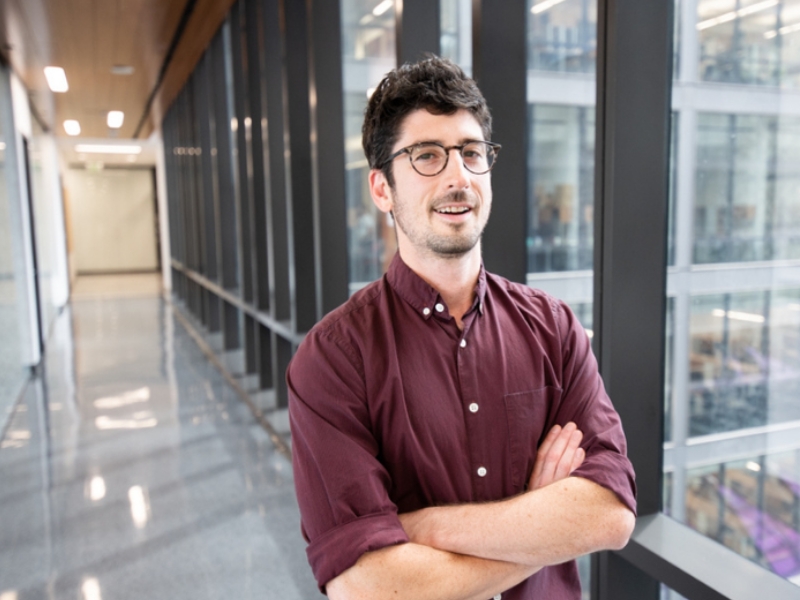
Brian Belardi is an Assistant Professor in the Department of Chemical Engineering at the Cockrell School of Engineering, University of Texas at Austin, holding the Lyondell Chemical Company Endowed Faculty Fellowship in Engineering. His educational background includes: NIH Postdoctoral Fellow in Bioengineering, University of California, Berkeley (2014-2020) Ph.D. in Chemistry, University of California, Berkeley (2014) B.S. in Chemistry, Carnegie Mellon University (2008) Dr. Belardi's research centers on probing and re-programming biological barriers across length scales, combining molecular engineering, synthetic biology, and biophysics. His lab investigates: Extracellular Matrix Modifications: Studying post-translational modifications for diagnostics and biomaterials Epithelial Contacts & Engineering: Manipulating tight junctions to improve drug delivery Synthetic Cell Construction: Building cell-like assemblies for regenerative medicine Protein Switches: Developing light-activated controls for cellular mechanics Recent publications (2020-2023) reveal a strong trend toward synthetic biology approaches for engineering biological barriers, with emphasis on epithelial permeability, extracellular matrix dynamics, and synthetic cell systems. These works bridge fundamental biophysics with translational applications in drug delivery and tissue repair. His major recognitions include: David and Lucile Packard Foundation Packard Fellowship for Science and Engineering (2023) Advanced Drug Delivery Reviews Emerging Voices in Drug Delivery Award (2023) National Institutes of Health Maximizing Investigators’ Research Award (2021) Berkeley Postdoctoral Association Award (2019) National Institutes of Health Ruth L. Kirschstein NRSA Fellowship (2015) Young Investigator Award, University of Alberta Glycomics Centre (2014) Dr. Belardi mentors graduate students in an inclusive lab environment focused on interdisciplinary training. His research is supported by NIH grants, Packard Foundation funding, and industry partnerships. Current projects develop reagents to disrupt and repair biological barriers in cancer and inflammatory diseases. The Belardi Lab combines molecular engineering, chemical biology, and biophysics expertise to construct synthetic cells, detect extracellular matrix modifications, and engineer protein switches for therapeutic applications in drug delivery and regenerative medicine.
Dr. Monica Enculescu is a Scientific Researcher I at the National Institute of Materials Physics (INFIM), Romania, working in the Laboratory of Functional Nanostructures. Her research spans multiple disciplines including nanomaterials, photocatalysis, perovskite solar cells, and biomaterials. Dr. Enculescu's research interests focus on: Nanomaterials and nanostructures for various applications Photocatalysis for environmental remediation Perovskite solar cells and optoelectronic devices Biomaterials and biointerfaces for medical applications Functional materials for energy applications Analysis of her recent publications reveals a strong focus on developing novel nanocomposites and functional materials with applications in environmental remediation, renewable energy, and biomedical fields. Her work often combines experimental approaches with theoretical modeling to understand structure-property relationships in advanced materials. Dr. Enculescu has received research funding for multiple projects including: Molecularly imprinted nanofluidic biosensors for the detection of human derived proteins (MANUNET project, 2020-2022) Plasmon enhancement of dye-doped polymer nanofibers' light emissions (IFA-CEA project, 2017-2019) Quasi one-dimensional photonic crystals based on refractive index control of polymer nanofibers (TE project, 2011-2014) Her laboratory work involves advanced materials characterization techniques including X-ray diffraction, electron microscopy, spectroscopy, and various electrochemical methods. She collaborates with researchers across multiple disciplines, as evidenced by her diverse publication record.
Nives Novosel Vlašić, Ph.D., is a Researcher at the Ruđer Bošković Institute in Zagreb, Croatia, where she works in the Institute for Marine and Environmental Research within the Laboratory for biogeochemistry of the sea and atmosphere. Her research focuses on the behavior and surface properties of microalgae as indicators of environmental changes in aquatic ecosystems. Her research interests span Marine Biology, Microalgae Research, Environmental Stress Response, Biogeochemistry, and Cell Surface Properties. Dr. Novosel Vlašić investigates how marine microalgae respond to various environmental stressors including salinity changes, temperature fluctuations, and heavy metal pollution. Her work employs multimethod approaches combining biophysical, electrochemical, and microscopic techniques to analyze algal cell behavior, surface properties, and physiological responses. Analysis of her recent publications reveals a strong focus on environmental stressors affecting marine microalgae, particularly examining how changes in salinity, temperature, and pollutants like cadmium impact algal cell behavior, surface properties, and physiological responses. Her research demonstrates how microalgae can serve as sensitive bioindicators of environmental changes in aquatic ecosystems, with particular attention to cell adhesion, motility, and surface characteristics as measurable response parameters. Dr. Novosel Vlašić has collaborated extensively with researchers from the Faculty of Science at the University of Zagreb and other international institutions. She has contributed to numerous conference proceedings and has served as an editor for academic symposia, including the 11th ISE Satellite Student Regional Symposium on Electrochemistry (2022). Her doctoral work completed in 2022 at the Faculty of Science, University of Zagreb, focused on 'Behavior and surface properties of microalgae as indicators of stress in aquatic ecosystems,' building upon her earlier graduation thesis from 2018 on 'Adhesion properties of the phytoplankton species Dunaliella tertiolecta Butcher under stressful conditions.'
Lasse Skjoldborg Krog is a Postdoctoral Researcher in the Drug Delivery and Biophysics of Biopharmaceuticals research group at the Department of Pharmacy, University of Copenhagen. Working under Professor Ben Boyd's Structured Biointerfaces group, he focuses on nanoscience and biophysics with particular emphasis on particle-gut interactions and lipid-based drug delivery systems. His research leverages advanced spectroscopic techniques to characterize soft matter structures relevant to pharmaceutical applications. Dr. Krog's research interests center on the application of Low-frequency Raman (LFR) spectroscopy for structural characterization of ordered lipid systems and soft matter. His work investigates how particles interact with endogenous and exogenous molecules in the gut environment, particularly examining lipid self-assembly in aqueous environments and the resulting implications for drug delivery. A significant contribution includes pioneering the use of LFR spectroscopy for in-situ characterization of lipid mesophase systems, which previously required high-end facilities like synchrotron X-ray scattering. His research bridges fundamental physical chemistry with practical pharmaceutical applications, particularly in understanding lipid phase transformations and their kinetics. His publication record demonstrates expertise in both theoretical and applied aspects of pharmaceutical sciences, with recent work spanning from fundamental spectroscopic methodology development to practical applications in drug delivery and gut barrier research. The interdisciplinary nature of his work connects physical chemistry, nanotechnology, and pharmaceutical sciences, with growing recognition evidenced by citations and media coverage.