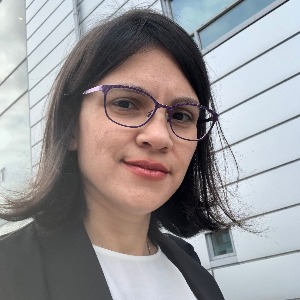
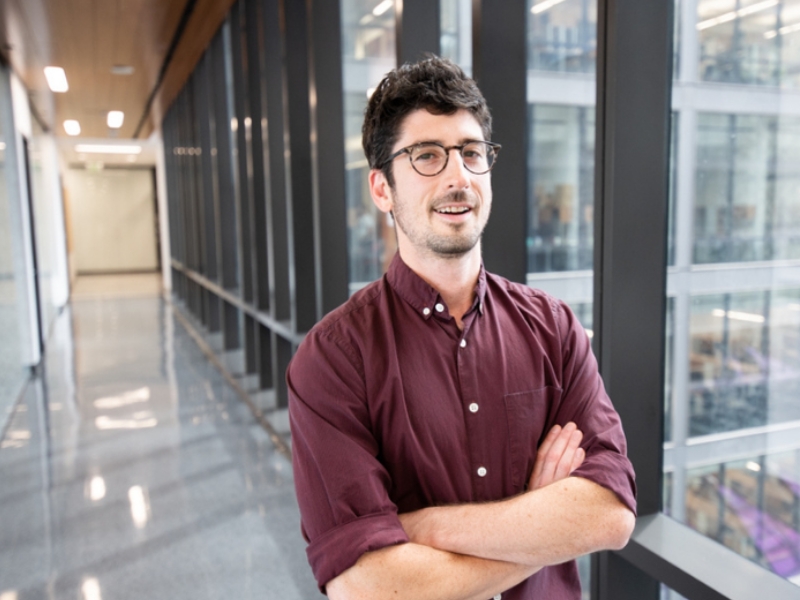
Marite Cardenas is a Professor at Malmö University's Faculty of Health and Society, Department of Biomedical Science. An expert in physical chemistry, she researches structure-function relationships in biological interfaces and colloids. Her work bridges biomedical science and nanotechnology with applications in biomaterials and drug delivery. Research interests include: Colloid and surface chemistry of biological systems Nanomaterial design inspired by biological structures Lipid membrane dynamics and stability Biophysical characterization techniques She leads projects like 'Lipoprotein structure and disease development' and is affiliated with the Biofilms Research Center for Biointerfaces. Recent publications focus on peptide coacervates, inhalable carriers, and cellulose-based nanomaterials, reflecting strong activity in soft matter biophysics.
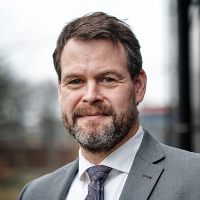
Johan Engblom is Professor and Head of the Department of Biomedical Science at Malmö University's Faculty of Health and Society. His primary affiliations include leadership roles at the Biofilms Research Center for Biointerfaces (BRCB), the Skin and Wound Care research platform, and the Water Science Lab. Engblom's research focuses on three interconnected pillars: (1) Lipid and polymer biochemistry, (2) Biobarrier functionality (skin/mucosa) in pharmaceutical design, and (3) Translational pharmacy bridging molecular mechanisms with patient applications. Recent publications (2023-2025) demonstrate strong emphasis on dermatological biophysics, featuring studies on stratum corneum hydration mechanisms, antibacterial agents, and non-invasive biomarker sampling techniques. His team frequently employs X-ray diffraction and vapor sorption methodologies to analyze skin barrier properties. Research outputs consistently target clinical applications, particularly in diabetic skincare and early melanoma detection. Engblom leads several ongoing projects including HALRIC (Hanseatic research infrastructure), vitamin efficacy in skin formulations, and biobarrier healing mechanisms. The BRCB lab under his direction specializes in interdisciplinary biofilm research at biological interfaces.
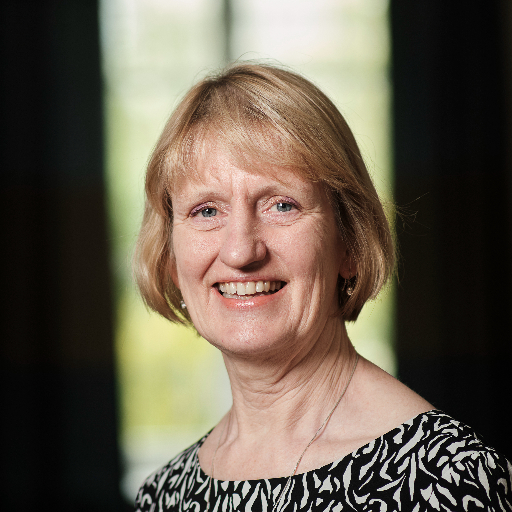
Dr. Alice King is an Associate Professor in Applied Materials and Interfaces within the Department of Physics and Astronomy at the University of Sussex's School of Mathematical and Physical Sciences. Her research focuses on the interfaces between nanomaterials and biological systems, connecting physics, chemistry, and biology to deliver real-world impact including biosensors and advanced composites. Dr. King's educational background includes a PhD from the University of Sydney (2016) on biological molecule interactions with carbon nanostructures, an MPhil on nanocomposites, and a BSc in Physics from the University of Surrey. Her research centers on translating nanoscale discovery into scalable technologies through interdisciplinary collaboration. She investigates how synthesis, processing, and assembly define material behavior across scales, with particular interest in programmable and biomimetic fabrication systems that can adapt dynamically. Current projects include nanomaterial-based biosensors, dynamic tissue scaffolds, and quantum microscopy collaborations. Dr. King's publication record shows a strong trajectory in high-impact journals with research spanning conductive nanocomposites, biosensors, and 2D material interfaces. Her work demonstrates significant translational potential with applications in healthcare diagnostics and advanced materials. Dr. King leads active research programs supported by multiple grants including the EPSRC Doctoral Landscape Award (2025-27) and the Bose Einstein condensate microscopy project (2024-2027). She has collaborated with healthcare institutions like Guy's & St Thomas's Hospital on respiratory-sensor innovation and consulted with industry partners on colorimetric biosensors for early cancer detection. Her research group focuses on developing scalable, platform-based approaches to nanomaterial design that unite physics, chemical engineering, and biology, emphasizing real-world impact through cross-sector translation and public benefit.
Julia Davies serves as Professor of Oral Biology and Pro Dean at Malmö University's Faculty of Odontology, Division 1. She leads research at the intersection of microbiology and dental pathology with significant contributions to understanding oral biofilm mechanisms. Her primary research focuses on microbial biofilms (dental plaque) and their role in oral disease development. Key interests include: Oral streptococcal adhesins in early biofilm formation Bacterial adaptation to salivary proteins Proteolytic activity development in periodontitis and peri-implantitis biofilms Dr. Davies teaches dental students across multiple disciplines including cell biology, tooth development, mucosal biology, and salivary biochemistry. Her recent publications demonstrate strong international collaboration in dental education frameworks and biofilm research. She is affiliated with the Biofilms Research Centre for Biointerfaces and contributes to the Advancing Oral Health research profile, which aims to improve oral healthcare through interdisciplinary research and education. As a key contact for this research profile, she collaborates across multiple divisions within the Faculty of Odontology and maintains an active role in shaping dental education standards across Europe.
Serdar Niyazi Sariciftci is a Full Professor at the Institute of Physical Chemistry, Johannes Kepler University Linz, and leads the Linz Institute for Organic Solar Cells. His work centers on sustainable energy conversion and bioelectronic interfaces, with international recognition in organic semiconductor research. His research spans Organic Solar Cells, Bioelectronics, and Artificial Photosynthesis, focusing on biodegradable materials like algal polysaccharides and DNA-based conductors. Current projects emphasize eco-friendly electronics for medical and energy applications, integrating natural compounds with organic semiconductors to reduce environmental impact. Recent publications reveal a strong shift toward biocompatible organic electronics, with innovations in flexible transistors, biodegradable nanocomposites, and low-voltage medical sensors. Key trends include merging biological materials with electronic functions and developing sustainable alternatives to conventional semiconductors. No scientific awards were mentioned in the provided text. Professor Sariciftci has supervised 58 researchers and students while leading 65 funded projects, including the EU-backed EINSTEIN Excellence initiative (2024-2028) and CO2 utilization research (2025-2027). His grants target nutrifood theranostics, organic photovoltaics, and biocompatible polymers for medical applications. He directs the Linz Institute for Organic Solar Cells, coordinating international teams on 8 active projects. Current collaborations span Europe, with recent hosting of researchers from Turkey, Slovakia, and Ethiopia to advance organic semiconductor pigments and bioelectronic interfaces.
Professor Matthew I. Gibson holds a joint appointment between the University of Warwick's Department of Chemistry and Warwick Medical School . A Royal Society Industry Research Fellow and ERC Consolidator Grant recipient, he leads the iCASE Scheme at the MRC-funded Doctoral Training Center and co-founded CryoLogyx Ltd. Education MChem, 1st Class (2003), University of Durham PhD in Macromolecular Chemistry (2007), University of Durham Postdoc, EPFL (2007-2009) Research focuses on glycosciences and biomaterials for cryopreservation, infection detection, and cell surface modification. His group develops glycosylated nanomaterials and ice recrystallization inhibitors with applications in cell therapy storage and diagnostics. Current projects include the EU-funded Nanocarb and ICE_PACK (ERC) initiatives. Selected Publications address glycomaterial selectivity (2021, JACS Au), polymer-enhanced ice control (2021, JACS), cyclic ice-binding peptides (2021, Nature), and glycosylated nanoparticle diagnostics (2022, Chemical Society Reviews). Key keywords: Glycobiology, Biomimetic Materials, Polymer Nanotechnology, Antifreeze Proteins Scientific Awards include the McBain Medal , RSC Emerging Technology Prize , and multiple Young Investigator recognitions from Biomacromolecules and MacroGroupUK. Teaching includes modules on polymers, glycosciences, and living polymerization. He (co-)supervises 15+ PhD students in glyconanomaterials, cryoprotectants, and cell engineering projects.
Professor Recep Avci is a Research Professor in the Department of Physics at Montana State University's College of Letters & Science. He serves as the Director of the Imaging and Chemical Analysis Laboratory (ICAL), a core facility specializing in complementary surface, interfacial, and bulk characterization of materials using state-of-the-art instrumentation for high-resolution imaging and spectroscopy. ICAL is also a partner of the Montana Nanotechnology Facility (MONT), part of the NSF-sponsored National Nanotechnology Coordinated Infrastructure program. Education: Ph.D. from University of Illinois at Urbana-Champaign, Solid State Physics, 1978 M.S. from University of Illinois at Urbana-Champaign, 1976 B.S. from Istanbul University, Physics, 1971 Dr. Avci's research focuses on nanoscale material characterization using advanced microscopy and spectroscopy techniques. His expertise spans the study of bulk and bio-materials, with emphasis on surfaces and interfaces. His current interests include biophysics, particularly the trapping and concentration of bacteria from liquid environments including fuels, and their application to studying microbially influenced corrosion of materials and biodeterioration of fuels. He also investigates the role of metallurgy in bio-deterioration of metals and alloys. With over 100 published articles and two book chapters, Dr. Avci has made significant contributions across materials science, nanotechnology, and corrosion science. Analysis of Dr. Avci's publications reveals a consistent focus on advanced material characterization techniques, particularly surface analysis methods like SIMS, SEM, and various spectroscopic approaches. His work spans multiple disciplines with applications ranging from industrial materials to biological systems. A notable trend is the application of nanoscale characterization to understand biological interactions with materials, particularly in corrosion and biodeterioration contexts. His research demonstrates strong interdisciplinary connections between physics, materials science, microbiology, and engineering. Grants: FMRG Eco: Manufacturing, repairing, and re-using biomineralized infrastructure materials through low-energy biological processes (National Science Foundation) NNCI: Montana Nanotechnology Facility (National Science Foundation) As Director of ICAL, Dr. Avci oversees a facility serving MSU researchers, external academics, and industry partners. The laboratory supports research across physical, chemical, material, biological, Earth and environmental sciences, and engineering disciplines. ICAL provides training, material characterization services, and expert experimental design assistance, with instrumentation including field-emission scanning electron microscopes, Time-of-Flight Secondary Ion Mass Spectrometry, Auger Nanoprobe, Powder X-ray diffraction, and Atomic Force Microscopy.
Prof. Dr. Bettina G. Keller is a Professor of Theoretical Chemistry at Freie Universität Berlin, leading the Keller Lab in the Department of Physical and Theoretical Chemistry. Her research integrates molecular dynamics simulations, QM/MM models, and kinetic analyses to study biomolecular systems, chemical reactions, and allosteric mechanisms. She collaborates extensively within SFB consortia and GRK research training groups. Her work spans: Development of grid-based models for molecular association Allosteric regulation in pathogen toxins Fluorination effects on protein-ligand interactions Glycopeptide hydrogel design Advanced sampling algorithms like Girsanov reweighting She has received multiple honors including the Hellmann-Preis (2018) and memberships in elite academies. Current projects involve: SFB 1449: Dynamic hydrogels at biointerfaces GRK 2662: Charging in the future VW Momentum: Molecular mobility Her lab maintains strong computational resources and open-source tools for the scientific community.
Brian Belardi is an Assistant Professor in the Department of Chemical Engineering at the Cockrell School of Engineering, University of Texas at Austin, holding the Lyondell Chemical Company Endowed Faculty Fellowship in Engineering. His educational background includes: NIH Postdoctoral Fellow in Bioengineering, University of California, Berkeley (2014-2020) Ph.D. in Chemistry, University of California, Berkeley (2014) B.S. in Chemistry, Carnegie Mellon University (2008) Dr. Belardi's research centers on probing and re-programming biological barriers across length scales, combining molecular engineering, synthetic biology, and biophysics. His lab investigates: Extracellular Matrix Modifications: Studying post-translational modifications for diagnostics and biomaterials Epithelial Contacts & Engineering: Manipulating tight junctions to improve drug delivery Synthetic Cell Construction: Building cell-like assemblies for regenerative medicine Protein Switches: Developing light-activated controls for cellular mechanics Recent publications (2020-2023) reveal a strong trend toward synthetic biology approaches for engineering biological barriers, with emphasis on epithelial permeability, extracellular matrix dynamics, and synthetic cell systems. These works bridge fundamental biophysics with translational applications in drug delivery and tissue repair. His major recognitions include: David and Lucile Packard Foundation Packard Fellowship for Science and Engineering (2023) Advanced Drug Delivery Reviews Emerging Voices in Drug Delivery Award (2023) National Institutes of Health Maximizing Investigators’ Research Award (2021) Berkeley Postdoctoral Association Award (2019) National Institutes of Health Ruth L. Kirschstein NRSA Fellowship (2015) Young Investigator Award, University of Alberta Glycomics Centre (2014) Dr. Belardi mentors graduate students in an inclusive lab environment focused on interdisciplinary training. His research is supported by NIH grants, Packard Foundation funding, and industry partnerships. Current projects develop reagents to disrupt and repair biological barriers in cancer and inflammatory diseases. The Belardi Lab combines molecular engineering, chemical biology, and biophysics expertise to construct synthetic cells, detect extracellular matrix modifications, and engineer protein switches for therapeutic applications in drug delivery and regenerative medicine.
Lasse Skjoldborg Krog is a Postdoctoral Researcher in the Drug Delivery and Biophysics of Biopharmaceuticals research group at the Department of Pharmacy, University of Copenhagen. Working under Professor Ben Boyd's Structured Biointerfaces group, he focuses on nanoscience and biophysics with particular emphasis on particle-gut interactions and lipid-based drug delivery systems. His research leverages advanced spectroscopic techniques to characterize soft matter structures relevant to pharmaceutical applications. Dr. Krog's research interests center on the application of Low-frequency Raman (LFR) spectroscopy for structural characterization of ordered lipid systems and soft matter. His work investigates how particles interact with endogenous and exogenous molecules in the gut environment, particularly examining lipid self-assembly in aqueous environments and the resulting implications for drug delivery. A significant contribution includes pioneering the use of LFR spectroscopy for in-situ characterization of lipid mesophase systems, which previously required high-end facilities like synchrotron X-ray scattering. His research bridges fundamental physical chemistry with practical pharmaceutical applications, particularly in understanding lipid phase transformations and their kinetics. His publication record demonstrates expertise in both theoretical and applied aspects of pharmaceutical sciences, with recent work spanning from fundamental spectroscopic methodology development to practical applications in drug delivery and gut barrier research. The interdisciplinary nature of his work connects physical chemistry, nanotechnology, and pharmaceutical sciences, with growing recognition evidenced by citations and media coverage.