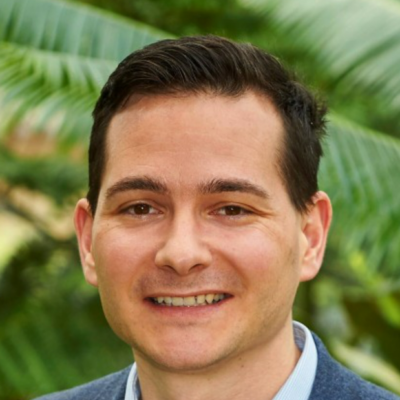
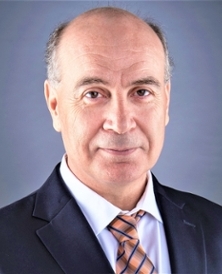
Gianluca Percoco is a Full Professor at the Department of Mechanics, Mathematics & Management, Politecnico di Bari (Poliba), specializing in manufacturing technologies and systems. His research focuses on advancing 3D printing methodologies for soft robotics, sensors, and biomedical applications. Department: Mechanics, Mathematics & Management Research Themes: Additive manufacturing, material extrusion, bioinspired structures His recent work explores ironing process optimization for improved sensor sensitivity, electromagnetic assistance in silicone-based soft robotics, and machine learning for predicting interlayer adhesion in multi-material printing. Publications from 2023-2025 highlight innovations in 3D printed sensors , self-healing polymers , and microfluidic devices . Contact: gianluca.percoco@poliba.it | Tel: +39 080 596 3267
Gianni Stano is an Assistant Professor at the Department of Mechanics, Mathematics & Management, Politecnico di Bari (Bari Polytechnic University), Italy. His research focuses on advanced additive manufacturing techniques and their applications in soft robotics, sensors, and multi-material systems. Academic Rank: Assistant Professor Department: Mechanics, Mathematics & Management Field: Manufacturing Technology and Systems (ING-IND/16) Email: gianni.stano@poliba.it Research Interests Stano's research explores the intersection of additive manufacturing , soft robotics , and smart materials . Key areas include: Multi-material 3D printing and interfacial adhesion optimization Biomimetic and MRI-guided fabrication of anatomical structures Development of silicone-based electromagnetic actuators and grippers Embedded sensor and actuator integration in soft robotics Process parameter modeling for polymer-based additive manufacturing Self-healing materials and assembly-free smart structures Article Trends Stano's recent publications (2023-2025) emphasize multi-material extrusion printing , bioinspired design , and machine learning applications in manufacturing. His work addresses challenges in: Void reduction and layer adhesion in polymers Electromagnetic actuation for untethered soft robots Piezoresistive sensor optimization through process parameters Self-healing polymer fabrication via Diels-Alder chemistry Embedded electronics and copper feature integration Lithium-ion battery manufacturing using material extrusion
Mark Ilton is an Associate Professor of Physics at Harvey Mudd College , leading the PoSM Lab (Physics of Soft Matter). His research focuses on soft matter physics, particularly green technologies involving soft materials such as polymers, rubbers, and gels. He explores fundamental physics behind mechanical energy storage and release in soft systems, with applications in environmental technologies and bioinspired robotics. Research Areas: Soft matter physics, elastodynamics, non-Newtonian fluids, green technologies Key Projects: Mechanical batteries, water-processible polymers, latch-mediated spring actuation His recent publications highlight interdisciplinary collaborations, analyzing biological and engineered systems where thermal energy and mechanical stresses interact at mesoscopic scales (10 nm–100 µm). Notable work includes: 2024: Equal-rate energy efficiency in biological springs 2023: Kinematic trade-offs in elastic mechanisms 2022: Polymerization effects on bottlebrush elastomers
KeelYong Lee is an Assistant Professor at Sejong University's Department of Integrative Bioscience and Biotechnology. His research bridges bioengineering, stem cell biology, and regenerative medicine through innovative approaches like organ-on-a-chip systems and biohybrid robotics. Education: B.A. (2010) and Ph.D. (2017) from Sejong and Sungkyunkwan Universities. Professional Experience: Research Assistant at Sogang University (2013-2017), Postdoctoral Fellow and Research Associate at Harvard University (2017-2022), Senior Staff Scientist at Boston Children’s Hospital (2020-2022). Research interests focus on integrated biological systems , including biohybrid robotics, stem-cell-derived disease models, tissue engineering for regenerative medicine and artificial meat, liposome-based drug delivery, lipid membrane dynamics, and photophysics. His work contributes to UN Sustainable Development Goals related to health and innovation. Article trends highlight expertise in cardiac biophysics, tissue regeneration, and biohybrid systems, with recent studies on 3D-printed ventricle models, strain sensors for contractile organs, and iPSC-CM disease modeling. Labs and Teams: Leads the Kylee Lab at Sejong University, collaborating with institutions like Harvard Medical School and Boston Children’s Hospital. His team explores biohybrid systems and advanced biomaterials for clinical and industrial applications.
Dr. Ali Abolfathi serves as Associate Professor (Teaching) in the Department of Mechanical Engineering at University College London (UCL), where he has been affiliated since 2016. His academic foundation includes a PhD in Sound and Vibration (2012) from the Institute of Sound and Vibration Research at the University of Southampton, focusing on nonlinear vibration phenomena, complemented by prior industry experience in engineering sectors. His research spans structural dynamics and nonlinear vibrations with emphasis on three core domains: (1) Energy transfer mechanisms in flying insects' indirect flight muscles, investigating how thorax elasticity creates resonant systems to reduce flight energetics; (2) Nonlinear behavior in built-up structures, particularly friction effects in rotational hinges found in satellite panels and vehicle components; (3) Vehicle suspension innovation through quasi-zero-stiffness hydropneumatic struts for enhanced ride quality. These themes directly support UN Sustainable Development Goals 7 (Affordable Clean Energy), 9 (Industry Innovation), and 11 (Sustainable Cities). Analysis of his 25 publications reveals consistent focus on vibration control, energy harvesting, and bio-inspired robotics, with recent work (2023-2025) advancing flapping-wing UAV design, transverse galloping energy harvesters, and quasi-zero-stiffness vehicle suspensions. His methodological approach integrates analytical modeling, electromechanical systems, and experimental validation across mechanical, aerospace, and automotive applications. As primary supervisor for three PhD candidates (Resmi Kochalathu Sarala, Moonsoo Park, Igoke Major), he contributes to engineering education while maintaining active consultancy and advisory roles. His work demonstrates strong industry-academia collaboration through projects addressing real-world vibration challenges in automotive and aerospace sectors.
Alvo Aabloo is a Full Professor at the University of Tartu's Institute of Technology, where he leads the Intelligent Materials and Systems Laboratory (IMS Lab). His affiliations include a postdoctoral position at Uppsala University (1995–1996) and ongoing roles at the University of Tartu since 2005. The IMS Lab, accessible via www.ims.ut.ee , specializes in electroactive polymers, biomimetic robotics, and sustainable materials. His research integrates Advanced Materials , Nanotechnology , and Soft Robotics , with emphasis on: Biomimetic actuators (e.g., spider-leg exoskeletons, plant-inspired fluid transport) Ionic polymer-metal composites for precision manipulation Acoustic metamaterials for noise control Green sensors using bacterial cellulose and bio-derived ionic liquids Recent publications (2022–2025) reveal trends in: Robotics education tools (ROS2 web labs, 3D-printable robots) Programmable metamaterials for environmental applications Textile-based encoding and wearable compliance modulation He pioneers sustainable tech, such as all-printed micro-supercapacitors and biodegradable artificial muscles, while collaborating globally on projects spanning Italy, China, and Sweden.
Zachariah A. Page serves as Assistant Professor of Chemical Engineering at The University of Texas at Austin, where he directs the ZAP Research Group focused on light-activated materials development for interdisciplinary applications including 3D printing, tissue engineering, and organic electronics. His academic credentials include a B.S. in Chemistry from Juniata College (2010), Ph.D. in Polymer Science & Engineering from University of Massachusetts Amherst (2015), and postdoctoral training at UC Santa Barbara's Materials Research Lab (2015-2018). Page's research centers on visible and near-infrared photochemistry as a precision tool for controlling material synthesis and properties. His group develops photocatalysts, bioinspired hydrogels, stretchable semiconductors, and impact-damping elastomers through molecular engineering approaches. Key innovations involve using light to spatially and temporally regulate reactions in polymer networks, enabling breakthroughs in rapid manufacturing and biomaterial design. Analysis of his recent publications reveals dominant trends in visible-light-driven polymerization mechanisms, with strong emphasis on energy-efficient photocatalysts, spatially resolved material properties, and bioorthogonal reaction systems. The work consistently bridges fundamental photochemistry with practical applications in additive manufacturing and biomedical engineering. Page has earned exceptional recognition through major awards that validate both research impact and educational contributions: Herman F. Mark Young Scholar (2024) Camille Dreyfus Teacher-Scholar Award (2023) NSF CAREER Award (2021) DoD Early Career Award (2022) ACS PMSE Young Investigator Award (2022) Cottrell Scholar Award (2022) As principal investigator, Page secures substantial research funding from NSF, DoD, and industry partners to support his lab's work. He mentors graduate and undergraduate students through the Texas Undergraduate Mentoring System and Freshman Research Initiative programs, emphasizing interdisciplinary collaboration between chemistry, engineering, and materials science disciplines. The ZAP Research Group maintains specialized facilities for photochemical synthesis, polymer characterization, and 3D printing development, with particular expertise in visible/near-infrared light-matter interactions and advanced polymer network design.
Andreas Walther is a full Professor at the Department of Chemistry, Johannes Gutenberg University Mainz, Germany, and a Research Fellow at the Gutenberg Research College and the Max Planck Institute for Polymer Research. With an academic career spanning elite programs like the Bavarian Macromolecular Science Network and a PhD (summa cum laude) from Bayreuth, he leads cutting-edge research in synthetic biology, DNA nanotechnology, and bioinspired materials. Education: PhD (summa cum laude, 2006-2008) in Macromolecular Chemistry, Bayreuth Diploma (2005) in Polymer and Colloid Science, Bayreuth His research focuses on programmable DNA-based materials, chemically fueled reaction networks, and adaptive hydrogels. Recent work explores synthetic cells, transient colloidal assemblies, and non-equilibrium systems. His lab employs deep learning for kinetic modeling, integrates enzymatic networks with soft robotics, and develops pH-responsive materials for biomedical applications. Key article trends include: (1) DNA-driven adaptive systems (2) Enzymatic reaction networks for autonomous behavior (3) Bioinspired metamaterials (4) ATP-powered signaling interfaces (5) Multivalent pattern recognition (6) Sustainable nanocomposites. Scientific Awards: ERC Consolidator Grant (2021) ARCHES Award (2019) ERC Starting Grant (2015/2016) DSM Science Award (2008) Otto Warburg PhD Prize (2009) IUPAC Young Researcher Prize (2018) Walther serves on scientific advisory boards (FRIAS) and leads the DFG Cluster of Excellence livMatS. His lab develops scalable approaches for molecular motor-polymer conjugates, programmable coacervates, and recyclable vitrimers, with applications in tissue engineering and energy-autonomous materials.
Dr. Edmund R Hunt is a Senior Lecturer in Robotics at the University of Bristol, working within the School of Engineering Mathematics and Technology and the Department of Engineering Mathematics. Since 2021, he has held a prestigious Royal Academy of Engineering Research Fellowship. His research group, the Hunt Lab, focuses on deploying robot swarms into real-world environments for practical applications, particularly in environmental monitoring. Education: PhD in Complexity Sciences (2012-2016), University of Bristol MPhil in Economics (2007-2009), University of Oxford BSc in Physics with Theoretical Physics (2004-2007), Imperial College London Dr. Hunt's research bridges collective animal behavior and swarm robotics, developing bioinspired approaches for real-world robot deployments. His work emphasizes smaller-scale swarms (4-10 robots) using sophisticated ROS-based systems that can navigate complex environments. Key research themes include multi-robot patrolling, trust in human-robot teams, behavioral plasticity in swarms, and environmental monitoring applications. His group conducts experiments both indoors on campus and in outdoor locations including Bristol's harbourside and Fenswood Farm. Analysis of Dr. Hunt's recent publications reveals a strong focus on practical swarm robotics applications, particularly in environmental monitoring and security. His work increasingly integrates human-robot teaming concepts, trust modeling, and bioinspired algorithms. The research shows progression from theoretical swarm concepts toward field-deployable systems with real-world applications in atmospheric measurement, biodiversity monitoring, and security patrolling. Scientific Awards: British Science Festival 2021 Award Lecture Winner for Digital Innovation 3rd Place in EPSRC Photography Competition 2018 EPSRC Doctoral Prize Fellow (2017) UK Intelligence Community Postdoctoral Fellow (2019-2021) Royal Academy of Engineering Research Fellow (2021-2026) Dr. Hunt actively supervises multiple PhD students working on diverse aspects of swarm robotics, including multi-robot patrolling, atmospheric electricity measurement, and behavioral plasticity. His current research is supported by significant grants including the £1.2M EPSRC-funded 'Satisficing Trust in Human-Robot Teams' project (2023-2026) and the T-B PHASE Prosperity Partnership with Thales. He previously held research fellowships from EPSRC and UK Intelligence Community funding. The Hunt Lab operates across multiple Bristol facilities including the Bristol Robotics Laboratory on UWE campus, field testing at Fenswood Farm in Long Ashton, and day-to-day operations on the Clifton campus. The lab works with various robot platforms including Leo Rovers for field experiments and has previously used Kilobots for conceptual swarm research. Current projects explore heterogeneous swarms incorporating different robot types for specialized environmental monitoring tasks.
Justin Dirrenberger is an Associate Professor (Maître de conférences HDR) at Conservatoire National des Arts et Métiers (CNAM) with a joint appointment at Arts et Métiers ParisTech (ENSAM), where he leads the CoMet research team (Comportement et microstructure des Métaux) within the PIMM laboratory. His work bridges fundamental mechanics with industrial applications in additive manufacturing, focusing on architected materials for aerospace, biomedical, and space sectors. Dirrenberger's research centers on architectured materials—including auxetics, metamaterials, and lattice structures—with expertise in computational homogenization, laser-based metal processing, and multi-material 3D printing. Key areas include instability-induced pattern generation, mechanical behavior of heterogeneous media, and sustainable manufacturing processes. His methodology integrates numerical modeling (using Zébulon code) with experimental validation through advanced laser systems and mechanical characterization. Recent publications (2023-2025) reveal strong trends toward bioinspired 4D printing, lunar construction materials (ESA project), and laser-optimized metal lattice production. His work consistently appears in high-impact journals (Materials & Design, Small, Advanced Materials Technologies), demonstrating both theoretical depth and industrial applicability in lightweight structures and energy-absorbing systems. Dirrenberger currently leads five major projects: ANR MIRACLES (2024-2027): Resilient micro-lattices inspired by crystal plasticity H2020 REDI (2022-2027): European doctoral training with RMIT University ANR REDESIGN4D (2021-2026): Machine learning-driven adaptive composites ESA MOON-COMP (2022-2025): Lunar 3D printing for energy dissipation ANR ModuFEET (2021-2026): Reliable power electronics modules He previously directed CNAM's Materials Engineering Program (2017-2024) and led ANR SCOLASTIC (2015-2020) on laser-processed steel. The CoMet team operates within PIMM's advanced experimental ecosystem, utilizing Laser Choc (shock), Héphaïstos (thermal), and MESO 3D-Panam platforms for material processing. Current work focuses on translating computational models into printable architectures—from biomedical scaffolds to lunar construction materials—through close industry collaboration with aerospace, automotive, and space sector partners.
Mansour Karkoub serves as Associate Dean of Accreditation & Assessment at Lamar University's College of Engineering, holding the Michael E. and Patricia P. Aldredge Endowed Chair while serving as Professor of Mechanical Engineering. His academic career spans leadership roles at Texas A&M University, the Petroleum Institute (Abu Dhabi), and INRIA (France), with expertise rooted in robotics and control systems. Education: Ph.D. Mechanical Engineering, University of Minnesota M.S. Mechanical Engineering, University of Minnesota B.S. Mechanical Engineering, University of Minnesota Habilitation to Direct Research (HDR), University of Versailles, France Research Focus: Dr. Karkoub pioneers Robust Control methodologies (H-infinity, adaptive, AI-based), Vibration Control for flexible structures, and Robotics applications spanning medical, inspection, and manufacturing systems. His work on Ground/Underwater Autonomous Vehicles addresses self-driving technologies and mobile robotics, while his Engineering Education research integrates ABET accreditation standards with technology-enhanced learning. Publication Trends: Recent articles (2021-2024) reveal concentrated advancements in neural network-integrated motion cueing algorithms, adaptive fuzzy control for underwater manipulators, and sustainable energy harvesting from vehicle suspensions. His work consistently bridges theoretical control frameworks with real-world applications in autonomous systems, emphasizing uncertainty handling and disturbance rejection. Scientific Recognition: Outstanding Researcher Award (2019, Texas A&M Qatar) Distinguished Achievement Award (2012, Dwight Look College) Best Teacher Award (2012, Texas A&M Qatar) Fellow of ASME, IET, and IMechE IEEE Senior Member Research Leadership: Secured over $12M in funding including a $1.2M 2022 grant for smart vehicle research. Founded and directs the Smart Systems Laboratory at Texas A&M Qatar, mentoring teams focused on autonomous vehicle innovation while leading ABET accreditation initiatives as a commissioner. Laboratory Impact: The Smart Systems Laboratory drives advancements in underwater vehicle manipulators, medical robotics, and energy-efficient transportation through cross-disciplinary collaboration, directly translating control theory into deployable autonomous systems for industrial and medical applications.