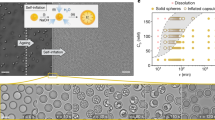
Lluïsa Mora Rentero is a researcher at the Institute for Bioengineering of Catalonia (IBEC), leading the Molecular Imaging for Precision Medicine group. Her work bridges fundamental research with technological innovation to address clinical challenges. Research Focus: Molecular Imaging, Precision Medicine, Bioengineering, and Nanotechnology. Institutional Affiliation: IBEC (Institute for Bioengineering of Catalonia), a multidisciplinary research institute at the intersection of engineering and life sciences. Collaborations: Engaged in clinical partnerships with institutions like ICS to advance translational medicine. Recent projects associated with her group include Real-time human embryo implantation imaging Development of biosensors for muscular dystrophy Creation of chemically guided artificial cells Integration of nanobioengineering in regenerative therapies Interdisciplinary collaborations in bioart and science communication .
Dr. Vukica Jovanovic is a Professor and Chair of the Department of Engineering Technology at Old Dominion University's Frank Batten College of Engineering and Technology. She is an expert in digital manufacturing, cyber-physical systems, and engineering education with a focus on broadening participation in STEM. Ph.D. in Mechanical Engineering Technology, Purdue University (2010) M.Sc. in Industrial Engineering, University of Novi Sad (2006) Other degree in Industrial Engineering - Mechatronics, Robotics and Automation, University of Novi Sad (2001) Dr. Jovanovic leads the Mechatronics and Digital Manufacturing Lab at ODU and is a lead in the Mechatronics Systems Design specialization. Her research focuses on digital transformation applications of digital thread and digital twin in manufacturing, integration of data in mechatronic systems, and workforce development through career pathways. She has secured over $2.5 million in grants from federal and state agencies, including projects like the ONR Mechatronics Pathways and the U.S. Department of Education's Career and Technical Education pathways initiative. Her recent publications emphasize digital twin applications across transportation, healthcare, and Industry 4.0. Dr. Jovanovic also directs the ODU BLAST program, a summer STEM initiative for high school students, and contributes to curriculum development for maritime mechatronics technicians through partnerships with the Virginia Space Grant Consortium and Navy research projects. Best Diversity Paper, Ocean and Marine Engineering Division, ASEE (2021) Creating Excellence Award, Virginia Department of Education (2021) A. Rufus Tonelson Faculty Award, ODU Alumni Association (2021) Batten Fellow, Batten College of Engineering (2019) Manufacturing Division Junior Faculty Award, ASEE (2019) Outstanding Faculty Award, Batten College of Engineering (2018) Dr. Jovanovic's industrial experience includes work at Gamesa Aeronautica (Spain) in aircraft wing manufacturing and leadership of family-owned sheet metal manufacturing. She has developed foundational mechatronics courses and mentored student projects in digital manufacturing and robotics education.
Alessandro Lucantonio is an Associate Professor at the Department of Mechanical and Production Engineering in Aarhus University , specializing in computational mechanics and machine learning applications in soft matter systems. His work focuses on predictive modeling of active materials, transient morphing structures, and biomedical device optimization. Research Areas: Soft robotics, machine learning for mechanics, poroelastic materials, and bioinspired design. Contact: a.lucantonio@mpe.au.dk , +45 93 51 77 76 His recent publications highlight interdisciplinary approaches combining symbolic regression, computational modeling, and experimental validation in soft robotics and responsive materials. Key trends include adaptive shape morphing, fluid-structure interactions, and predictive simulations for biomedical applications.
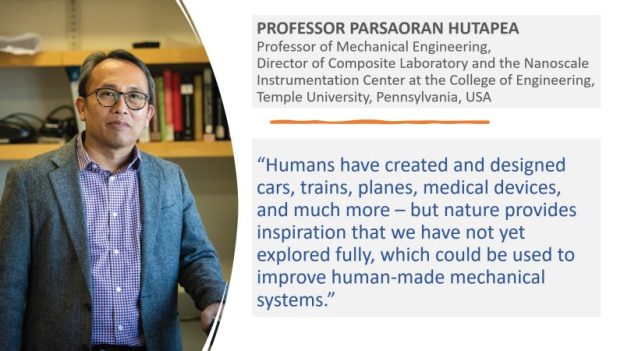
Parsaoran Hutapea is a Professor in the Department of Mechanical Engineering at Temple University's College of Engineering, where he also serves as Director of the Nanoscale Instrumentation Center and leads the Composites Laboratory. His research is actively funded by the Department of Defense and the National Science Foundation. Research Interests: Dr. Hutapea specializes in the mechanics and design of medical devices, with a strong emphasis on bioinspired engineering. His work integrates applied mechanics, composite materials, and soft tissue biomechanics to innovate surgical tools, particularly focusing on mosquito-inspired needles and SMA-actuated systems. His research aims to minimize tissue damage and improve control in minimally invasive procedures. Publication Trends: Over the past five years, Dr. Hutapea's publications reveal a consistent focus on surgical needle mechanics, bioinspired design, and composite applications in medical devices. His work combines experimental testing, finite element modeling, and control systems, often involving collaboration with students and interdisciplinary teams. Emerging themes include machine learning applications in medical sensing and clinical prediction. Scientific Awards: Fellow of the American Society of Mechanical Engineers (ASME) Advising and Grants: Dr. Hutapea mentors numerous students, as evidenced by his co-authorship on recent publications. He has secured substantial research funding from federal and state agencies, including the Department of Defense (CDMRP Prostate Cancer Research Program, Office of Naval Research) and the National Science Foundation, supporting his lab's innovative work in medical device mechanics. Labs and Teams: He directs the Composites Laboratory at Temple University, a research group dedicated to advancing fundamental mechanics in medical device design. The lab fosters collaboration across engineering and medical disciplines, focusing on translating bioinspired concepts into practical surgical technologies.
Yigit Yazicioglu is a Professor of Mechanical Engineering at Middle East Technical University (METU). He holds a Ph.D. from the University of Illinois at Chicago and has been affiliated with METU since 1997, progressing through roles including Lecturer, Assistant Professor, Associate Professor, and his current rank since 2021. His research focuses on solid acoustics in structural and bioacoustic applications, control systems, robotics, and automotive engineering. He has supervised numerous graduate students and led projects funded by TUBITAK, including work on legged robotics, fluid-structure interactions in biomedical contexts, and advanced control systems. Education: Ph.D. Mechanical Engineering (UIC, 2005), M.S. and B.S. from METU (1999, 1997). His teaching spans dynamics, control systems, and robotics courses. Recent research highlights include acoustic detection of vascular obstructions and compliant robotic leg design. He has contributed to over 30 peer-reviewed journal articles and supervised 20+ theses, with ongoing work in non-invasive medical diagnostics and advanced robotics. Key Projects: Low-power legged robot mobility (2018–2022) Acoustic-visual perception for legged robots (2010–2013) Electro-hydraulic control systems development (2007–2010) His academic contributions include pioneering work in bioacoustic signal analysis and robotic locomotion control, with applications in both engineering and biomedical fields. Current research emphasizes interdisciplinary approaches to solve complex problems in robotics and medical diagnostics.
Fiorenzo Omenetto is the Frank C. Doble Professor of Engineering at Tufts University, holding appointments in Biomedical Engineering, Physics & Astronomy, and Electrical and Computer Engineering. His research focuses on biomaterials, particularly silk-based technologies for sustainable high-tech applications, including photonics, optoelectronics, and biodegradable devices. He pioneered silk as a platform for advanced materials, co-founding three companies and receiving prestigious fellowships such as the Guggenheim and Oppenheimer awards. His work spans from lab-scale innovations to global health solutions like silk-stabilized vaccines and edible electronics. Education: Baccalauréat Européen (Scuola Europea, Italy), Laurea in Electronics Engineering (University of Pavia, 1992), PhD in Physics (University of Pavia, 1997). Research emphasizes biomimetic materials, sustainable technology, and interdisciplinary applications. Notable contributions include silk-based biosensors, wearable health monitors, and eco-friendly adhesives. His TED Talk on 'Silk, the ancient material of the future' highlights the transformative potential of bioinspired materials. Labs/Teams: Silklab at Tufts University Grants/Awards: Optica’s 2025 R.W. Wood Prize, National Academy of Inventors Fellow Media: Featured in MIT Technology Review, TED, and global press
Dr. Tsevi Beatus is a faculty member affiliated with the The Benin School of Computer Science and Engineering and the The Silberman Institute of Life Sciences at The Hebrew University of Jerusalem . He leads the Micro Flight Laboratory , which focuses on interdisciplinary research at the intersection of physics, biology, and engineering. Contact: tsevi.beatus@mail.huji.ac.il Phone: +972 2 549-4537 Office: B531 Rothberg (Computer Science), 3-238 Silberman (Life Sciences) Lab: 3-237 Silberman, Givat Ram Campus, Jerusalem, Israel His research spans biophysics, computational biology, and bioinspired robotics, with a focus on flight mechanics in microorganisms and biomechanics. The laboratory actively recruits candidates with engineering, computer science, or biological sciences backgrounds.
Sabine Ludwigs is a Full Professor and Executive Director of the Institute of Polymer Chemistry (IPOC) at the University of Stuttgart, leading the Chair of Structure & Properties of Polymeric Materials. She holds a PhD from the University of Bayreuth and has held postdoctoral and faculty positions at institutions including the Cavendish Laboratory (Cambridge, UK) and the University of Freiburg. Her research focuses on the synthesis and characterization of opto-electronic polymers and inorganic nanoparticles, with an emphasis on structure-function relationships in semiconducting polymers for applications like organic solar cells. She has been awarded the Emmy Noether Grant (DFG), the Eugen-Graetz Award, and multiple invited professorships. Ludwigs is actively involved in interdisciplinary collaborations, including projects with the Fraunhofer Institute and the Freiburg Institute for Advanced Studies (FRIAS). Her work bridges polymer chemistry, materials science, and nanotechnology, addressing challenges in renewable energy and smart materials. Education: PhD in Physical Chemistry of Polymers (University of Bayreuth, 2004) Diploma in Chemistry (University of Bayreuth, 2002) Studies in Chemistry (University of Bayreuth, 1997–2002) Research Interests: Semiconducting polymers and their applications in organic electronics Self-assembled nanostructures and block copolymer templating Bioinspired materials and mixed ionic-electronic transport Energy storage/conversion systems Grants & Awards: Emmy Noether Junior Research Group (2008–2018) Elite Stipend (Baden-Württemberg Foundation) Invited Professorships at École Polytechnique and Université Louis Pasteur Teaching: Lectures on polymer chemistry and materials science at the University of Stuttgart and international institutions Her recent projects include developing adaptive mixed-conducting polymer films for soft robotics and studying hierarchical soft-lithographic patterning of polymers. Ludwigs is a frequent speaker at international conferences, emphasizing interdisciplinary approaches to polymer-based technologies.
Lifeng Wang is an Associate Professor in the Department of Mechanical Engineering at Stony Brook University. He holds a B.E. (2001) and Ph.D. (2006) in Solid Mechanics from Tsinghua University. Prior to Stony Brook, he was an Assistant Professor at Clarkson University (2011–2013) and a postdoctoral associate at MIT (2006–2011). His research focuses on materials modeling, computational mechanics, micro/nano-mechanics, 3D printing, biomaterials, and composite materials. He has published over 25 journal articles and one patent, with work featured in MIT News, NBC News, and Nature News. Research Interests include: Materials modeling and computational mechanics Mechanical behavior of polymers, thin films, and composites Bio-inspired materials and biological systems Lattice metamaterials and mechanical metamaterials 3D printing and additive manufacturing techniques He has received awards such as the National Excellent Doctoral Dissertation Award (China, 2008) and was named among the World’s Top 2% Scientists (2023). His lab explores digital materials, mechanical metamaterials, biomaterials, and fiber networks. Notable projects include biomimetic composites, auxetic materials, and smart materials for robotics. Advisees include over a dozen master’s students at Stony Brook, with active collaborations in grants exploring programmable materials and energy absorption systems. His work integrates machine learning for material design and experimental validation of theoretical models.
Hannah Stuart is Assistant Professor of Mechanical Engineering at the University of California at Berkeley and Visiting Professor at the Cluster of Excellence IntCDC. She holds the Don M. Cunningham Endowed Professorship and focuses on embodied intelligence for robotic dexterity in challenging environments. Education: BS in Mechanical Engineering (George Washington University, 2011), MS and PhD in Mechanical Engineering (Stanford University, 2013/2018) Affiliations: UC Berkeley, Max Planck Institute for Intelligent Systems Research Themes: Her work pioneers tactile robotics through bioinspired design, developing novel manipulation strategies for unstructured environments. Key areas include soft multi-material mechanisms, skin contact physics, and terrain-adaptive locomotion systems. 2023 Articles: Addressed locomotion physics in regolith, friction mechanics in tether systems, and prosthetic transmission tradeoffs 2022 Breakthrough: Created mole crab-inspired self-burrowing robots for subterranean exploration Scientific Recognition: NSF CAREER grant NASA Early Career Faculty award Technical Contributions: Innovations in tactile sensing hardware, including smart suction cups (IROS 2021) and textured skin friction systems (IEEE RA-L 2020). Her lab, Embodied Dexterity Group , emphasizes real-world contact physics for robotic applications.
Manuela Chessa is an Associate Professor in Computer Science at DIBRIS (Department of Informatics, Bioengineering, Robotics, and Systems Engineering) within the Interschool Section of Mathematical, Physical, and Natural Sciences at the University of Genoa. Her research focuses on natural human-machine interfaces using virtual, augmented, and extended reality (XR) systems, with an emphasis on perceptual and cognitive aspects of immersive interaction. MSc in Bioengineering (2005) and PhD in Bioengineering (2009) from University of Genoa Her work integrates bioinspired models with modern XR technologies to address misperception issues, visual stress, and fatigue in immersive environments. She investigates the use of sensing (Kinect, RealSense, ZED) and visualization devices (HMDs, 3D monitors) to create ecological interaction systems grounded in human perception principles. Current research themes include: XR for rehabilitation and training User Experience (UX) in immersive systems 3D reconstruction techniques Self-avatar representation Change detection in virtual environments Her publications span topics like gamified coding in XR, cognitive aspects of interaction, and bioinspired VR design. She leads the Perception & Interaction Lab @ DIBRIS, supervising 4 PhD students and 1 research associate.
Volker Dürr is a Professor of Biological Cybernetics at Bielefeld University , Faculty of Biology, and a member of the Center for Cognitive Interaction Technology (CITEC) . His work focuses on sensory control of locomotion , active tactile sensing in insects , and biomimetic modeling of movement systems. Education : Habilitation in Zoology (University of Cologne, 2008; Bielefeld, 2005), PhD in Biology (Bielefeld, 1998), Diploma in Biology (Tübingen, 1994) Academic Career : Professor at Bielefeld (2009-present), Junior Research Group Leader (University of Cologne, 2007-2009), Research Assistant (Bielefeld, 1998-2006) His research investigates how insects use antennal mechanosensory systems and proprioception to control locomotion in complex environments. Key themes include goal-directed movements , sensorimotor integration , and biomimetic robotics . Publications emphasize tactile sensing (15/23 articles), neural control of movement (9/23), biomechanical modeling (7/23), and cross-species locomotion analysis (4/23). Recent work explores virtual reality paradigms for locomotion studies and spiking neural networks for proprioceptive modeling.
Daniel M. Harris is an Associate Professor of Engineering at Brown University's School of Engineering, promoted to this rank in July 2024. His research focuses on fluid mechanics, microfluidics, interfacial flows, nonlinear systems, and vibration through experimental and theoretical approaches in the Harris Lab. Harris holds the following educational qualifications: PhD in Applied Mathematics, Massachusetts Institute of Technology (2015) BS, Cornell University (2010) Postdoctoral Research Associate and Lecturer, University of North Carolina at Chapel Hill, Mathematics (2015-2017) His research spans biomedical engineering applications, fluid-structure interactions, capillary phenomena, and nonlinear dynamics. He is renowned for pioneering work on walking droplets, microfluidic device development, and vibration dynamics, with strong emphasis on connecting art, craft, and science through experimental fluid mechanics and soft matter physics. Recent publications (2018-2022) reveal dominant themes in microfluidics (Taylor dispersion, device fabrication), interfacial phenomena (capillary attraction, droplet impact), and nonlinear systems (bouncing dynamics, wave-propelled robotics). His work bridges fundamental fluid mechanics with biomedical engineering applications, particularly in micro-robotics for biological propulsion studies and surface property control. Harris has received significant recognition including: Dedicated Faculty Award (2023) American Physical Society Gallery of Soft Matter Winner (2023) Excellence in Research Mentoring Award (2022) Dean's Award for Teaching Excellence (2021) Multiple APS Gallery of Fluid Motion awards (2009, 2012, 2015) NSF Graduate Research Fellowship (2011-2013) He mentors students through research projects as evidenced by his mentoring award, and teaches core engineering courses including Fluid Mechanics and Vibration of Mechanical Systems. His educational innovations include course-based undergraduate research experiences in engineering electives. The Harris Lab actively engages in scientific communication, winning NSF/Popular Science Visualization awards for fluid dynamics demonstrations. The Harris Lab conducts custom experiments in fluid mechanics and soft matter with strong integration of mathematical modeling. The lab emphasizes artistic connections to science and maintains active public outreach through visualizations and demonstrations that have won multiple APS Gallery awards.
Prof. Gilad Yossifon is a faculty member at the School of Mechanical Engineering and the Department of Biomedical Engineering at Tel Aviv University . He leads the Micro and Nano-Fluidics and Robots Laboratory , focusing on electrokinetics in micro- and nano-fluidic devices, lab-on-a-chip applications, and autonomous particle systems. Education: Affiliated with Tel Aviv University and Technion – Israel Institute of Technology Research Interests span microfluidics, nanofluidics, and robotics. His work explores active particles as mobile microelectrodes, dielectrophoretic cargo manipulation, and electrically powered microrobotics for biomedical applications. Key areas include label-free transport systems, field-gradient optimization, and reconfigurable microfluidic components. Recent Articles demonstrate his group's expertise in frequency-dependent cargo selectivity, 3D electrokinetic trapping, and integration of active colloids with dielectrophoretic forces. These publications highlight applications in sample analysis , single-cell processing , and bottom-up fabrication techniques for microsystems. Scientific Recognition includes grants from the US-Israel Binational Science Foundation , Israel Science Foundation , and fellowships from Russell Berrie Nanotechnology Institute and Gutwirth Foundation . Technological Contributions involve developing microfluidic chambers with Indium Tin Oxide substrates, COMSOL simulations of field gradients, and hardware for electrically powered micromotors. Collaborative work extends to directed cargo transport systems and microscale biosensing platforms.
Liu Ji is an Associate Professor in the Department of Mechanical and Energy Engineering at Southern University of Science and Technology (SUSTech) in Shenzhen, China, holding this position since January 2020 after serving as an Assistant Professor from September 2019 to December 2020. Dr. Liu received dual PhD degrees in 2013 - one in Physiochemistry of Condensed Materials from the University of Bordeaux, France, and another in Chemistry from the University of Liege, Belgium. His postdoctoral training included positions at the University of Cambridge (2014-2018) as a Marie-Curie Research Fellow and at MIT (2018-2019), with an additional visiting fellowship at Harvard Medical School. Dr. Liu's research program focuses on soft materials engineering, bioinspired design and fabrication, soft materials mechanics, 3D printing, biomaterials, and soft electronics. His work particularly emphasizes developing functional soft materials with extreme mechanical properties and their applications in biointerfaces, dynamic adhesion, and human-machine interfaces. His research group explores how to design, fabricate, and engineer soft materials that can mimic biological systems for biomedical applications and advanced manufacturing. Dr. Liu has published over 40 papers in high-impact journals including Science Advances, Nature Communications, PNAS, Accounts of Chemical Research, and Advanced Materials. His publications demonstrate consistent innovation in soft materials, particularly in fatigue-resistant hydrogels, supramolecular polymer networks, and biointerface engineering. Two of his papers have been selected as ESI Highly Cited Papers, indicating significant field impact. IAAM Scientist Medal (2022) Fellow of the Institute of Materials, Mining & Minerals (2021) MIT Technology Review Innovators Under 35 in China (2020) Guangdong Pearl River Talents Program (2020) Overseas High-Caliber Personnel in ShenZhen (2020) Japan Polymer Group Young Investigator Award (2017) Marie-Curie Research Fellow (2015) Dr. Liu leads a vibrant research group at SUSTech, mentoring students and establishing international collaborations. His work has received widespread attention, featured in Materials Views China, MIT News, Phys.org, and Materials Today, with his research highlighted on MIT's homepage. His Soft Matter Design and Manufacturing Platform develops novel intelligent soft material technologies through interdisciplinary approaches combining mechanics, materials, physics, and engineering.