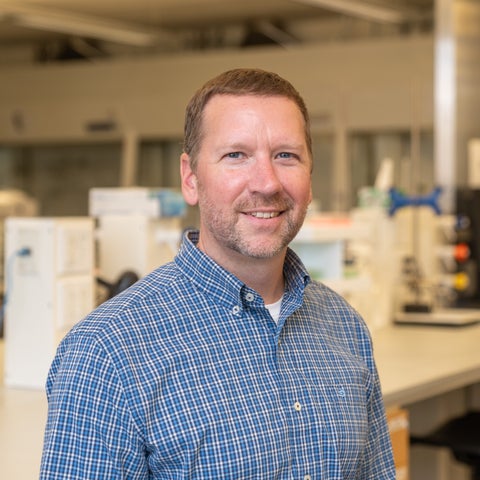
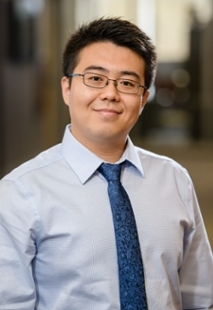
Dr. Sungjin Kim is an Assistant Professor in the Department of Chemical and Biological Engineering at The University of New Mexico (UNM). He earned his Ph.D. in Materials Science and Engineering from MIT (2020) as a Samsung Scholarship Fellow, with prior degrees from KAIST (M.S. 2011, B.S. 2009) and exchange experience at Georgia Tech (2008). His research focuses on bioinspired, energy-efficient materials design for sustainability and healthcare. Education: Ph.D., MIT (2020) M.S. and B.S., KAIST (2011, 2009) Exchange Student, Georgia Tech (2008) Research Interests: Dynamic crosslinking in polymers, bioinspired mineralization for CO2 utilization and hard-tissue engineering, vitrimers for recyclable composites, and sustainable additive manufacturing. His work bridges fundamental chemistry (e.g., metal-coordinate bonds) and applied engineering (e.g., 3D printing). Notable Publications (2025-2022): Explore polyisocyanurate foams, dynamic vitrimer composites, and bioinspired mineralization strategies. Common themes include sustainable materials, dynamic bonding, and hybrid organic-inorganic systems. Awards: Samsung Scholarship Fellow (2014-2019) Government Scholarship (Korea, 2009-2011) Research Report of the Year Award (2012, SKC Co., Ltd.) Outstanding New Researcher Award (2011, SKC Co., Ltd.) Students: Advisees include graduate students Leila Shahriari and Michael Nelwood, and undergraduates Tyrus Antonson and Jacqueline Buenviaje. Former members include Catherine Biju (M.S. candidate) and Lillian Elam (undergraduate).
University of Illinois Urbana-ChampaignUnited States
Professor Iwona M. Jasiuk is a multi-disciplinary academic affiliated with the University of Illinois, holding professorships in Mechanical Science and Engineering, Biomedical and Translational Sciences, Bioengineering, Aerospace Engineering, and other departments. She is also affiliated with the National Center for Supercomputing Applications (NCSA), Beckman Institute for Advanced Science and Technology, and the Carl R. Woese Institute for Genomic Biology. Her research focuses on composite materials, bio-inspired structures, additive manufacturing, and computational mechanics, with a strong emphasis on integrating artificial intelligence into materials science. Her work spans topics such as material characterization, metamaterials design, and radiation effects on materials. Notable research areas include thin-ply composites, lattice structures derived from geometric principles, and the mechanical properties of bio-inspired systems like equine hoof walls. She has pioneered the use of deep learning networks for predicting material behavior in complex systems. Professor Jasiuk has received prestigious awards, including the ASME Fellow, SES Fellow, and Vebleo Scientist Award. Her research is supported by collaborations across engineering, biology, and computational fields, leveraging advanced facilities like NCSA for high-performance computing.
Jim Pfaendtner is a Professor in the Department of Chemistry and serves as the Louis Martin-Vega Dean of Engineering at North Carolina State University. His research focuses on computational molecular science and engineering, with particular emphasis on biomimetic materials, nanoparticle self-assembly, and machine learning applications in chemistry. He leads interdisciplinary projects integrating molecular simulations, advanced materials design, and catalytic processes. Education details are not explicitly provided in the text, but his academic roles suggest advanced training in chemical engineering or chemistry. His work spans theoretical and experimental collaborations, including studies on peptoid-based materials, quantum dot superlattices, and enzyme engineering. Key research themes include: (1) biomimetic mineralization using sequence-defined polymers, (2) computational design of corrosion inhibitors and sustainable materials, (3) machine learning models for interatomic potentials and molecular design, and (4) electrochemical systems in energy storage. His team employs advanced simulation techniques like metadynamics and molecular dynamics to probe complex systems. Notable recent achievements include the FOMMS Medal Lecture (2024), leadership in developing predictive models for silica nanoparticle assembly, and contributions to chemical recycling of plastics via novel catalytic methods. His group actively publishes in high-impact journals like Journal of Physical Chemistry and Nano Letters . Current projects include: (1) hierarchical materials from high-information macromolecules, (2) AI-driven retrosynthetic pathway analysis, and (3) dynamic control of bioinspired nanomaterials. He collaborates with industry on sustainable chemical processes and biocatalyst development.
Pablo D. Zavattieri is the Jerry M. and Lynda T. Engelhardt Professor in Civil Engineering at the Lyles School of Civil Engineering, College of Engineering, Purdue University. His research focuses on solid mechanics applied to the multiscale modeling of advanced and innovative engineering materials, with emphasis on bridging between atomistics to continuum-based models and combining computational tools with experimental validation. Education: B.S./M.S., Instituto Balseiro, Argentina, 1995 Ph.D., Purdue University, 2000 Professor Zavattieri's research spans solid mechanics applied to multiscale analysis and design of advanced architectured materials, interfaces, and complex structures. His work lies at the intersection of Solid Mechanics and Materials Engineering, focusing on developing novel materials with exceptional properties inspired by natural systems. His contributions include micromechanical models for polycrystalline materials, new fracture models for thin-walled structures, and pioneering work on biomimetic materials using 3D printing technology. Current projects investigate the multiscale modeling of heterogeneous and hierarchical materials, micro and nanomechanics of biological materials, bioinspired materials, architectured materials, micropatterned interfaces, and smart materials. His publication record demonstrates a strong focus on understanding natural materials like chiton radular teeth, nacre, and mantis shrimp structures, translating these biological designs into engineered solutions. His recent work spans biological materials characterization, phase-transforming cellular materials, cellulose nanocrystal composites, and 3D printing of cementitious materials, consistently combining computational modeling with experimental validation across multiple length scales. Scientific Awards and Recognitions: NSF CAREER award (2013) Roy E. & Myrna G. Wansik Research Award (2013) Purdue University Faculty Scholar (2015-2020) Kavli Frontier of Science Fellow of the National Academy of Science (2015) National Academy of Engineering US Frontier of Engineering Symposium attendee (2014) Engineering Fracture Mechanics Journal Most Cited Articles award (2005-2009 period) Second Most Cited Journal of the Mechanics and Physics of Solids Article (2007-2012) Cover page of Cellulose journal (2013) Cover page of Advanced Functional Materials journal (2014) Professor Zavattieri has mentored numerous graduate students who have received prestigious awards including William and Mary Goetz Graduate Scholarships, William L. Dolch Graduate Scholarships, Purdue Doctoral Fellowships, and SURF Research Symposium awards. His research has been supported by NSF, AFOSR, INDOT/JTRP, Forest Product Laboratory, General Motors, Velcro, and the Purdue Research Foundation. Notable projects include a $7.5M DoD/MURI award for 'Convergent Evolution to Engineering: Multiscale Structures and Mechanics in Damage Tolerant Functional Bio-Composite and Biomimetic Materials' and multiple NSF grants focusing on biomimetic materials and 3D printing of civil infrastructure. He directs the Multi-Scale Mechanics and Materials by Design Lab at Purdue University, which maintains a strong collaborative network with institutions including UC Riverside (David Kisailus' group), UC San Diego, Northwestern University, and UC Berkeley. The lab has produced significant research on biological materials like chiton radular teeth, mantis shrimp structures, and nacre, translating these natural designs into engineered solutions for applications in infrastructure, lightweight structural materials, and energy absorption systems.
Dr. Xiaowei Zeng serves as Associate Professor and Graduate Advisor of Record for the PhD program in the Department of Mechanical Engineering at the Margie and Bill Klesse College of Engineering and Integrated Design, University of Texas at San Antonio (UTSA). He leads the Computational Mechanics Laboratory, focusing on theoretical and computational approaches to material behavior. His educational background includes: Ph.D. in Engineering, George Washington University Research interests center on computational mechanics with emphasis on bone fracture mechanisms , cell motility modeling , material failure analysis , and multiscale modeling . His work employs advanced methodologies including Finite Element Method (FEM), Cohesive FEM, Meshfree Methods, and Molecular Dynamics Simulation to bridge microstructural properties with macroscopic material behavior in biological and engineered systems. Analysis of recent publications (2019-2025) reveals dominant themes in bioinspired materials , bone mechanics , and cellular dynamics . Key trends include integration of machine learning for mechanics prediction, fracture analysis in polycrystals and biostructures, and multiscale approaches spanning molecular dynamics to continuum modeling. Research increasingly addresses material design challenges through interface engineering and computational optimization. As Graduate Advisor of Record, Dr. Zeng oversees PhD student mentorship in Mechanical Engineering. His research program receives sponsored funding for computational mechanics projects, though specific grant details are not provided in available sources. The Computational Mechanics Laboratory develops theoretical frameworks and computational tools to investigate material microstructure-macroscopic behavior relationships, with current projects targeting bone fracture, cell migration, and bioinspired nanocomposite design.
Massachusetts Institute of TechnologyUnited States
Christine Ortiz is the Morris Cohen Professor of Materials Science and Engineering and Director of the Technology and Policy Program (TPP) at MIT's Institute for Data, Systems, and Society (IDSS). She is also the founder of Station1, a nonprofit focused on socially-directed science and technology education. Her roles include former Dean for Graduate Education at MIT (2010–2016), board director for Mueller Water Products and Enovis, and trustee of the Essex County Community Foundation. She holds a B.S. from Rensselaer Polytechnic Institute and M.S./Ph.D. from Cornell University. Education: B.S., Materials Science and Engineering, Rensselaer Polytechnic Institute M.S. and Ph.D., Materials Science and Engineering (Theoretical and Applied Mechanics minor), Cornell University Research Interests: Dr. Ortiz’s work spans biomaterials, advanced manufacturing, and socially-responsible materials design. Her lab explores biological systems like cartilage, bone, and chiton armor to develop bio-inspired materials. She integrates nanotechnology, computational modeling, and additive manufacturing to create sustainable, protective materials. Her research also addresses societal impacts of technology through education and policy initiatives. Articles Trends: Recent publications focus on bio-inspired armor (e.g., chiton scales, fish mechanics), advanced materials fabrication, and interdisciplinary STEM education reforms. Her work bridges engineering, biology, and policy to address global challenges like sustainable design and equitable education access. Scientific Awards: Presidential Early Career Award in Science and Engineering (2003) Vannevar Bush Faculty Fellowship (2013) Advising & Grants: Supervised over 300 students/postdocs across 60 disciplines. Led MIT’s graduate strategic plan, including global education initiatives and fellowship infrastructure. Secured over $200M in research funds through interdisciplinary grants. Founded Station1 to scale socially-conscious STEM education via partnerships with startups and global networks. Labs/Teams: Leads the Ortiz Research Group at MIT and Station1’s cross-disciplinary teams. Collaborates with engineers, scientists, physicians, and urban planners to advance socioresilient materials and education equity. Station1’s programs include a historic wool mill learning space and collective impact initiatives with 30,000+ students across 30 programs.
William Murphy is a Professor in the Department of Biomedical Engineering at the University of Wisconsin-Madison, with affiliated roles in Materials Science & Engineering. His research focuses on creating bioinspired biomaterials, defining stem cell microenvironments, advancing tissue regeneration, and developing novel drug/gene delivery systems. Education PhD (2002) and MS (2000) from University of Michigan BA (1998) from Illinois Wesleyan University Murphy’s work bridges materials science and biomedical applications, emphasizing synthetic hydrogels, mineral-coated substrates, and interdisciplinary approaches to regenerative medicine. His research includes organoid modeling, mRNA therapeutics, and plant-derived scaffolds. Key scientific awards include the Kellett Award (2021), NSF CAREER Award (2008), and fellowships from the Biomedical Engineering Society (2020) and American Institute for Medical and Biological Engineering (2014). He has also received teaching honors like the UW Teaching Academy Award (2005). Murphy’s publications highlight advancements in biomaterials for stem cell culture, spinal cord repair, cardiomyocyte differentiation, and mRNA stabilization. His lab explores both synthetic and plant-based scaffolds, cytokine delivery, and genome editing applications. Grants NIH National Research Service Award (2003) NIH Cellular Biotechnology Predoctoral Fellowship (2000) NSF Research Experience for Undergraduates Fellowship (1997)
Professor Derk Joester leads the Joester Group at Northwestern University's Department of Materials Science and Engineering. His research focuses on understanding the formation, properties, and degradation of mineralized tissues in both vertebrate and invertebrate organisms, with a particular emphasis on biomineralization mechanisms. He employs cutting-edge techniques such as atom probe tomography (APT), synchrotron X-ray microtomography, and machine learning-driven image segmentation to study materials like chiton radula teeth and human dental enamel. Education: Ph.D. Chemistry, ETH Zurich, Switzerland (2000) M.Sc. Chemistry, ETH Zurich, Switzerland (1999) Fulbright Scholar, University of Tennessee (1994–1995) B.A. Chemistry and Pharmacy, University of Tübingen, Germany (1992) Research Interests: His group investigates the role of organic matrices in controlling mineralization, the dynamics of amorphous-to-crystalline transitions, and the application of bioinspired materials in fields like dentistry and additive manufacturing. Key projects include the Enamel Atlas initiative to map enamel structure across scales and the study of Sr sequestration in marine organisms for nuclear waste remediation. Professional Recognition: Fellowships: Minerva, Weizmann Institute, ETH Zurich, Fulbright Awards: Dr. Nathorff-Einstein Award (1992), Fonds of the German Chemical Industry Award (1992) Grants & Collaborations: Current funding supports projects like the Enamel Atlas , bioengineering single-crystal growth, and Sr mineralization studies in Acantharea. Collaborators include institutions such as UCSF, UPenn, and the Forsyth Institute. Labs & Teams: The Joester Group hosts a multidisciplinary team, with ongoing projects in cryo-tomography, nanomaterials visualization, and computational modeling of biomineral systems.
Aren Gerdon is a Professor of Chemistry and Chair of the Department of Chemistry at Emmanuel College . He bridges chemistry education with cutting-edge research in biomineralization, nanotechnology, and analytical biochemistry, emphasizing interdisciplinary connections between science and social justice. Education: Ph.D. in Analytical Chemistry, Vanderbilt University B.A. in Chemistry, Hanover College His research focuses on understanding hydroxyapatite formation through biomineralization pathways, utilizing DNA aptamers and nanoparticles as biomimetic templates. He explores the biochemical role of amelogenin in enamel development and develops novel analytical methods for mineralization studies. His work intersects with biomedical applications for bone regeneration and forensic chemistry, particularly in ignitable liquid analysis. Research Trends: Recent publications highlight: Advancements in DNA aptamer-nanoparticle conjugates for mineralization templates Optimization of analytical techniques (e.g., SPME, QCM-D) Integration of social justice themes into chemistry education Collaborative undergraduate research training Development of biomimetic materials for calcium phosphate synthesis Curriculum reforms in analytical chemistry education Scientific Awards: NSF Research at Undergraduate Institutions (RUI) Grant (2019-2022) Co-investigator on NSF Major Research Instrumentation Grant (2019) NSF RUI Grant for Biomimetic Templates (2013-2017) Gerdon mentors undergraduate researchers through hands-on laboratory experiences, emphasizing instrumental methods (microscopy, spectroscopy, gel electrophoresis) and collaborative problem-solving. His lab contributes to biotechnological solutions for bone health and forensic science while advancing educational practices in analytical chemistry.
Nima Rahbar is the White Family Distinguished Professor and Department Head of Civil, Environmental, & Architectural Engineering at Worcester Polytechnic Institute (WPI). He holds an affiliation with the Mechanical Engineering Department. His academic career began with a BS from Sharif University of Technology (1998) and a PhD from Princeton University (2008). Rahbar leads the Bioinspired Materials Design Lab (BMDL), focusing on bioinspired materials, sustainable construction, and self-healing concrete. His work includes developing the Carbon-Negative Enzymatic Construction Material (ECM), which sequesters CO₂ while offering superior structural performance. Research interests span bioinspired design, mechanics of biological materials, nanomechanics, and toughening mechanisms. He collaborates actively on NSF-funded projects and has pioneered enzymatic repair for cementitious surfaces. Awards include the NSF CAREER Award (2012), TMS Young Leader Award (2012), and Sigma Xi Outstanding Junior Faculty Research Award (2018). Media coverage highlights his ECM innovation in Science Daily and BBC Earth. Rahbar advises students on research projects and contributes to sustainable development goals SDG 9 and 11. His lab explores applications in resilient infrastructure and climate-friendly materials. Grants include recent NSF funding to refine ECM and develop educational programs. He balances academic leadership with advancing novel materials for global sustainability challenges.
Lihong Lao is an Assistant Professor in the Department of Mechanical and Aerospace Engineering at Syracuse University, affiliated with the College of Engineering & Computer Science. He leads the Environmental Control Materials (ECM) Lab and is associated with the Syracuse Center of Excellence in Environmental and Energy Systems (SyracuseCoE) and the BioInspired Institute. His work bridges materials science, engineering, and sustainability, focusing on biomimetic approaches to create smart materials for thermal and moisture management in both human-centric systems and built environments. Education: Ph.D., Cornell University B.S. and M.S., Zhejiang University Research Interests: Lao’s expertise spans polymers, fibers, and textiles ; soft and smart materials ; bio-inspired design ; and innovative manufacturing techniques . His lab integrates disciplines like chemistry, electrical engineering, and architecture to address global challenges such as energy efficiency, environmental sustainability, and human health through interdisciplinary innovation. Key projects include developing 'skin-like' fabrics for moisture management and smart materials responsive to environmental stimuli. Awards: He has received the AATCC Foundation Student Research Grant, was a finalist in the Woolmark Performance Challenge, earned Six Sigma Green Belt certification as a Project Leader at Dow Chemical, and holds the Chu Kochen President Scholarship from Zhejiang University. Grants & Funding: Highlighted grants include his work on biomimetic systems and advanced materials development. The ECM Lab collaborates across departments and leverages IoT, machine learning, and artificial intelligence to optimize material performance and reduce energy consumption. Labs/Teams: Director of the ECM Lab, which emphasizes interdisciplinary research to create sustainable solutions for human and environmental thermoregulation. Affiliated with SyracuseCoE and the BioInspired Institute for environmental and energy systems innovation.
Leah Spangler is affiliated with Virginia Commonwealth University, where she contributes to advanced research in biochemistry and materials science. Her work bridges biological systems with nanotechnology, focusing on sustainable synthesis of semiconductor materials and innovative biomaterials. Research Interests: Spangler's research spans multiple disciplines, emphasizing Protein-engineered quantum dots and nanocrystals Biomineralization mechanisms for controllable material synthesis Green chemistry approaches to nanomaterial manufacturing Applications of biomaterials in optoelectronics and healthcare Scientific Trends: Analysis of her recent publications reveals expertise in bioinspired synthesis, light-harvesting protein dynamics, and leveraging microbial systems for metal nanoparticle extraction. Her work aligns with sustainable technologies and biohybrid material development.
Chong Liu is the Neubauer Family Assistant Professor of Molecular Engineering at the University of Chicago's Pritzker School of Molecular Engineering. Her research focuses on Materials Science, Electrochemistry, Water, Energy, and Separation technologies. She holds a PhD from Stanford University (2015) and a BS from Fudan University. Before joining UChicago in 2018, she conducted postdoctoral research at Stanford. Her research explores advanced materials for energy and environmental applications, including lithium extraction, ion-selective membranes, and electrochemical systems. Key achievements include developing novel MoS₂-based membranes and functionalized materials for energy storage and water treatment. Liu’s work has led to awards such as the 2024 Sloan Research Fellowship and DOE Early Career Award. Her group investigates sustainable energy solutions through interdisciplinary approaches, combining nanotechnology, electrochemistry, and materials design. Her lab, the Liu Group, is located at the Marjorie B. Kovler Viral Oncology Laboratories, Room 104. Administrative support is provided by Manna Jiang and Keturah Mitchell-McCall.
Dr. Zhaoxu Meng serves as an Assistant Professor at Clemson University within the College of Engineering, Computing and Applied Sciences. He joined the department in 2019 following a postdoctoral fellowship at Northwestern University's Center for Hierarchical Materials Design (CHiMaD). His work bridges computational modeling and experimental approaches to advance high-performance materials through bioinspired design principles. His academic background includes: Ph.D. in Civil Engineering from Northwestern University (2018) B.S. in Engineering Mechanics from Beihang University, Beijing (2013) Dr. Meng's research centers on bioinspired structural materials, multiscale modeling, and the mechanics of nanocomposites and composites. He investigates how natural hierarchical structures inform next-generation material designs, with emphasis on interphase engineering and ballistic impact resistance. His lab develops computational models spanning atomistic to continuum scales to predict material behavior under extreme conditions, focusing on graphene-based systems and Bouligand architectures. Analysis of his recent publications reveals strong trends in nanocomposite mechanics (particularly graphene-polymer systems), biomimetic structural design, and advanced computational techniques including coarse-grained molecular dynamics and machine learning operators. His work consistently integrates simulation with experimental validation to address challenges in material failure, viscoelasticity, and sustainable manufacturing processes. His professional recognition includes: CHiMaD Postdoctoral Fellowship Dr. Meng leads the Meng Lab which maintains active collaborations with national laboratories and industry partners. Current projects focus on computational design of architected materials for impact resistance and sustainable packaging applications, supported by federal and industry grants. The lab emphasizes training graduate students in computational materials science while developing predictive models for advanced manufacturing processes and material synthesis.
Dr. Anamika Prasad is an Associate Professor in the Department of Mechanical and Materials Engineering at Florida International University's College of Engineering and Computing. Her research focuses on biobased and bioinspired materials, tissue biomechanics, nano-mechanical characterization, and biomedical devices for precision agriculture and healthcare. She leads the PrasadLab, exploring innovations at the intersection of materials science and biological systems. Education: Not explicitly listed in provided materials. Research Interests: Biobased materials and bioinspired design Tissue biomechanics (bone tumors, vascular tissues) Nano-characterization techniques Biomedical devices for healthcare and agriculture Her recent work includes developing nanopesticides for crop protection, bioinspired composites, and 3D-printed bioreactors. She has contributed to additive manufacturing advancements and sensor technologies for plant health monitoring. Notable grants include NSF CAREER and DMREF awards. Lab/Teams: PrasadLab (https://sites.google.com/view/prasadlab/home).