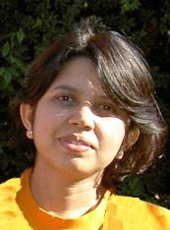
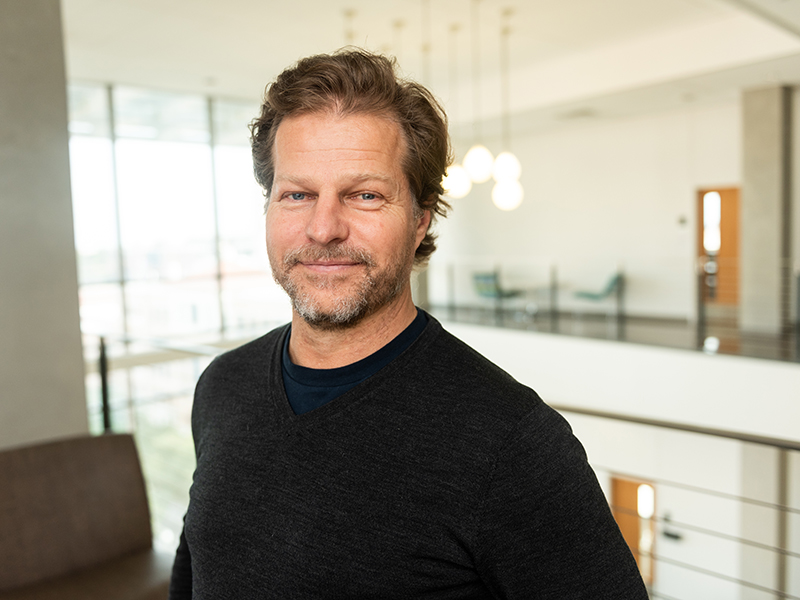
Anjana Asthana serves as a Research Assistant Professor in the Department of Materials Science and Engineering at Michigan Technological University, specializing in advanced nanomaterials characterization and applications for electronics and energy systems. Her research expertise spans: Nanomaterials (ZnO nanobelts, TiO 2 nanotubes) Semiconductors and superconductors Magnetic materials and giant magnetoresistance Materials characterization (SEM, TEM, XRD, Raman, photoluminescence) Mechanics and electron transport of nanocomposites In-situ transmission electron microscopy Analysis of her 15 most recent publications reveals consistent focus on zinc oxide nanostructures and titanium dioxide systems, with emphasis on real-time observation of mechanical-electrical interactions under in-situ conditions. Her work demonstrates strong interdisciplinary connections between nanoscale mechanics, electronic properties, and energy applications, particularly in flexible electronics and quantum switching devices.
Brian A. Korgel is a Professor and holds the Rashid Engineering Regents Chair at the University of Texas at Austin's Department of Chemical Engineering within the Cockrell School of Engineering. He serves as Director of the Energy Institute and The Center for a Solar Powered Future (spf2050), an NSF Industry/University Cooperative Research Center. Previously, he directed Phases I & II of the NSF IUCRC for Next Generation Photovoltaics (2011-2021) and the Doctoral Portfolio Program in Nanoscience and Nanotechnology at UT Austin. His educational background includes a B.S. (1991) and Ph.D. (1997) from UCLA, followed by post-doctoral work at University College Dublin (1997-1998). Research Interests: Nanotechnology with focus on size-tunable material properties Synthesis of nanostructured materials Fabrication of nanoscale devices Applications in microelectronics, photonics, spintronics, coatings, sensors and biotechnology Supercritical fluid processing of nanomaterials Nanowires and nanocrystals for energy applications His recent publications demonstrate significant activity in metal halide perovskite nanocrystals, silicon nanocrystal functionalization, and photovoltaic applications. The research spans fundamental nanomaterial synthesis to practical device applications, with particular emphasis on energy conversion and storage technologies. His group has produced over 30 PhD graduates who now hold positions in academia and industry worldwide. Scientific Awards: National Academy of Engineering (NAE), 2018 American Association for the Advancement of Science (AAAS) Fellow, 2012 American Institute of Chemical Engineers (AIChE) Professional Progress Award, 2012 Billy and Claude R. Hocott Distinguished Centennial Engineering Research Award, 2025 Outstanding Achievement in Nanoscience (ACS Division of Colloid & Surface Chemistry), 2020 Professor Korgel actively advises numerous graduate students and has served as Associate Editor for the Journal of Crystal Growth and Materials Science and Engineering: R. His research has been supported by significant grants including the NSF CAREER Award and DuPont Young Professor Award. His group maintains active collaborations with national laboratories and international institutions, including serving as Distinguished Visiting Professor of the Chinese Academy of Sciences. The Korgel Research Group operates within the Nanotechnology Research Center at UT Austin, focusing on experimental investigations of size-tunable material properties and the rational self-assembly of nanostructures with atomic detail. The group maintains strong industry partnerships through the NSF IUCRC for Next Generation Photovoltaics.
Dr. Annika Glotzbach is a Scientific Associate in the Cell Metabolism team at the Leibniz Research Centre for Working Environment and Human Factors (IfADo) in Dortmund, Germany, conducting research within the Toxicology department. Her work focuses on molecular mechanisms in cancer metabolism and neurodegenerative diseases, with direct collaboration under Prof. Dr. Jan G. Hengstler. Her primary research interests center on breast cancer metabolism, particularly in ER-HER2+ subtypes, investigating how lipid storage and glycerophosphodiesterases like EDI3 and LIPG influence tumor progression, therapy resistance, and metastasis. She also explores Alzheimer's disease pathogenesis through APP intracellular domain signaling pathways, bridging cancer biology and neurodegeneration research. Recent publications reveal consistent trends in targeting metabolic adaptations in cancer cells, with 2023-2024 studies demonstrating EDI3's role in HER2 therapy resistance and metastasis, while her 2019 work established LIPG's function in oxidative stress adaptation. These studies employ mouse models and molecular techniques to identify therapeutic vulnerabilities in breast cancer. No information regarding student advising or research grants was found in the provided text. Dr. Glotzbach operates within the Cell Metabolism team at IfADo, which maintains strong institutional ties with the Technical University of Dortmund and participates in collaborative projects across the Leibniz Association network, utilizing core facilities including bioimaging and intravital toxicology units.
Andreas Scholtz-Illigens serves as a Researcher at the Leibniz Research Centre for Working Environment and Human Factors (IFADO), affiliated with TU Dortmund University. He operates within the Toxicology department's Regulatory Networks of Stem Cell Differentiation research group, focusing on molecular mechanisms of stem cell behavior under toxicological influences. His core research spans Toxicology, Stem Cell Differentiation, and Gene Regulatory Networks, investigating how environmental toxins disrupt cellular differentiation pathways through transcriptional regulation. This work integrates systems biology approaches to model toxicant impacts on developmental processes. No scientific awards were documented in available sources. Information regarding student supervision, grant funding, or collaborative projects was not provided in institutional materials. He contributes to IFADO's interdisciplinary Toxicology division alongside specialized teams including Systems Toxicology, Neurotoxicology, and Intravital Toxicology, utilizing the institute's bioimaging and metabolic profiling facilities at the Dortmund campus.
Janina Winken is a Researcher at the Leibniz Research Centre for Working Environment and Human Factors (IFADO), affiliated with the Technical University of Dortmund. She is part of the Neurotoxicology and Chemosensation team within the Toxicology department, located at Ardeystr. 67, 44139 Dortmund, Germany. Her contact details include email winken@ifado.de and phone +49 231 1084-414, with Prof. Dr. Jan G. Hengstler serving as department head. Her research centers on neurotoxicology—the study of toxic substances' effects on nervous system function—and chemosensation, which examines chemical sensory processes including taste and smell perception. This work addresses critical occupational and environmental health implications of neurotoxic agents, with applications in risk assessment and safety regulation development. The research integrates molecular, cellular, and behavioral methodologies to evaluate neural damage mechanisms and sensory disruption pathways. The Neurotoxicology and Chemosensation team operates within IFADO's broader Toxicology department structure, which includes Systems Toxicology, Cell Metabolism, Bioimaging, and Regulatory Networks of Stem Cell Differentiation research groups. This collaborative framework supports interdisciplinary investigations into workplace health hazards through advanced experimental models and human biomonitoring approaches.
Enza Fazio is a Full Professor in the Department of Mathematical and Computer Sciences, Physical Sciences and Earth Sciences at the University of Messina, specializing in experimental physics of matter and applications (SSD: PHYS-03/A). With over two decades of academic experience, she teaches across multiple degree programs including Physics, Biomedical Engineering, and Environmental Sciences, and serves on the Steering Committee of the Physics Degree Course and PhD Program. Her educational background includes: High School Diploma (1993) - Liceo Scientifico Statale Capo d'Orlando Degree in Physics (1999, 109/110) - University of Messina PhD in Physics (2003) - University of Messina Specialist in Technology Transfer and Innovation (2007) - Polytechnic University of Milan PhD in Advanced Technologies for Optoelectronics and Photonics (2013) - University of Messina Professor Fazio's research focuses on experimental solid-state physics, particularly laser ablation synthesis of nanostructured materials, optical spectroscopy diagnostics of thin films and nanostructures, biomedical applications of Raman spectroscopy, and analysis of failure mechanisms in microelectronic devices. She has developed modular systems for micro-Raman spectroscopy and nonlinear optical spectroscopy, and manages multiple research laboratories focused on optical spectroscopy, nonlinear optics, microanalysis, thin films, and nanomaterials. Her recent publications (2025) demonstrate a strong focus on nanomaterials for biomedical applications, laser processing technologies, environmental remediation, and advanced materials characterization. These works span multiple disciplines including nanotechnology, biomedicine, environmental science, and microelectronics, reflecting her interdisciplinary approach to research. Her notable scientific achievements include: Young Researchers Award from University of Messina (2008) Third place in Start Cup dello Stretto Innovation Award (2008) Italian Representative for IUVSTA in Surface Engineering (2019-2025) Ranked in the top 2% of the world's best researchers by Stanford University (2024) Professor Fazio has directed numerous research projects including the HIPPOCRATES project on micro and nanotechnologies for health, served as Task Manager for the H2020-WInSiC4AP project, and is currently involved in multiple European research initiatives. She holds a patent for 'Innovative biotechnological systems for the detection of cellular or molecular analytes' (2021), demonstrating her commitment to translating research into practical applications. She heads the Optical Spectroscopy Laboratory MNS and Nonlinear Optical Spectroscopy Laboratory at the University of Messina, and oversees the Microanalysis and Thin Film Laboratories and Nanomaterials Laboratory. Her research group collaborates extensively with national and international institutions including CNR-IPCF Messina, CNR-IMM Catania, Polytechnic University of Milan, and international partners in Berlin and Portugal.
Henrik Siegumfeldt is an Associate Professor in the Department of Food Science at the Faculty of Science, University of Copenhagen. His research focuses on both positive and negative aspects of food microbiology, with particular expertise in fermentation processes, spoilage mechanisms, and pathogenicity of microorganisms. He teaches general food microbiology and contributes to specialized courses in Brewing Science and Dairy Microbiology. Dr. Siegumfeldt's educational background includes a Ph.D. (defended May 2000) with the thesis "The dynamics of pHi regulation in lactic acid bacteria" and an MSc (defended October 1997) with the thesis "Physiological studies of Saccharomyces cerevisiae during fermentation of beer". His research interests span multiple areas of food microbiology, with particular emphasis on bioimaging and single cell studies of microorganisms in food matrices. He has developed expertise in fluorescence microscopy techniques to study bacteria in dairy products, single cell growth dynamics, rapid detection methods for physiological changes, and adhesion dynamics of microbial cells. His work bridges fundamental microbiology with practical applications in food safety and quality. Analysis of his recent publications reveals a strong focus on microbial behavior in food systems, particularly examining bacteria in fermented products like beer, wine, and dairy. His research integrates advanced imaging techniques with microbial physiology to address food safety challenges and improve fermentation processes. Key themes include stress responses of foodborne microorganisms, microbial interactions in complex food matrices, and development of novel monitoring tools for industrial applications. Administratively, Dr. Siegumfeldt serves as Head of Studies for the MSc in Food Science and Technology since 2008, and previously held the same position for BSc programs (2008-2015) and was Head of the Food Microbiology Section (2009-2010). He has supervised 4 PhD students (3 completed, 1 active) and chaired 17 assessment committees. His research leadership includes management of 5 scientific projects with 9.4 million DKK in external funding. He has an extensive publication record with 71 research outputs including 48 journal articles, and is actively engaged in knowledge dissemination through 22 activities and 12 media contributions focused on food safety and brewing science.