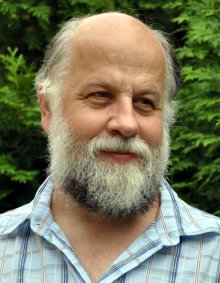
Suhyb Salamaمشاهده پروفایل
دانشیار
- Remote sensing of water quality
- Hydrological and water-resources management
- Radiative transfer modelling
- +۶ مورد دیگر
Suhyb Salama is Associate Professor of Remote Sensing of Water Quality and Water Resources Management at the Department of Water Resources, Faculty of Geo-information Science and Earth Observation (ITC), University of Twente, the Netherlands. His research integrates radiative-transfer physics, machine-learning analytics and multi-sensor satellite data to unravel hydrological and water-quality processes from micro-scale spectroscopy to meso-scale land–atmosphere interactions, directly supporting UN Sustainable Development Goals 6 and 14. Education: PhD in Civil Engineering, Katholieke Universiteit Leuven, Belgium (2003) MSc in Hydraulic Engineering (magna cum laude), KU Leuven (1999) BSc in Civil Engineering, Damascus University, Syria (1993) Research interests: Salama’s scholarly work spans remote sensing of biogeophysical variables, spatiotemporal modelling of suspended sediments and algal blooms, radiative-transfer theory across visible to microwave domains, development of smartphone-based water-quality apps, detection of floating plastic litter, and assessment of groundwater–vegetation feedbacks. He combines optical, thermal and microwave observations with physical and data-driven models to deliver actionable information on water scarcity, pollution extremes and climate-change impacts. Recent publication trends (2023-2025): His latest articles focus on machine-learning quantification of estuarine sediment variability, advanced detection of floating plastics, smartphone calibration for citizen-based water-quality monitoring, spectral-textural mining mapping, and analytical derivation of water-clarity time series from Sentinel-2 imagery. Collectively these works push toward operational, open-source solutions for high-frequency, basin-scale water-quality monitoring and UN SDG reporting. Editorial & professional service: Salama serves as topical editor for the journal Remote Sensing (2020-2024) and has chaired sessions on long-term earth-observation of suspended particulate matter. He actively collaborates across Europe, Africa and Asia on projects that merge remote sensing, hydrodynamic modelling and capacity development. Teaching & capacity building: He teaches MSc courses on optical and microwave remote sensing for water resources, supervises MSc and PhD research, and champions problem-based learning that equips students with enterprising skills to tackle complex water and climate challenges.