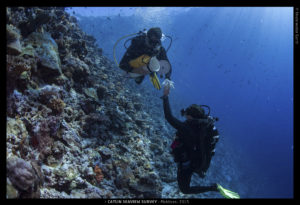
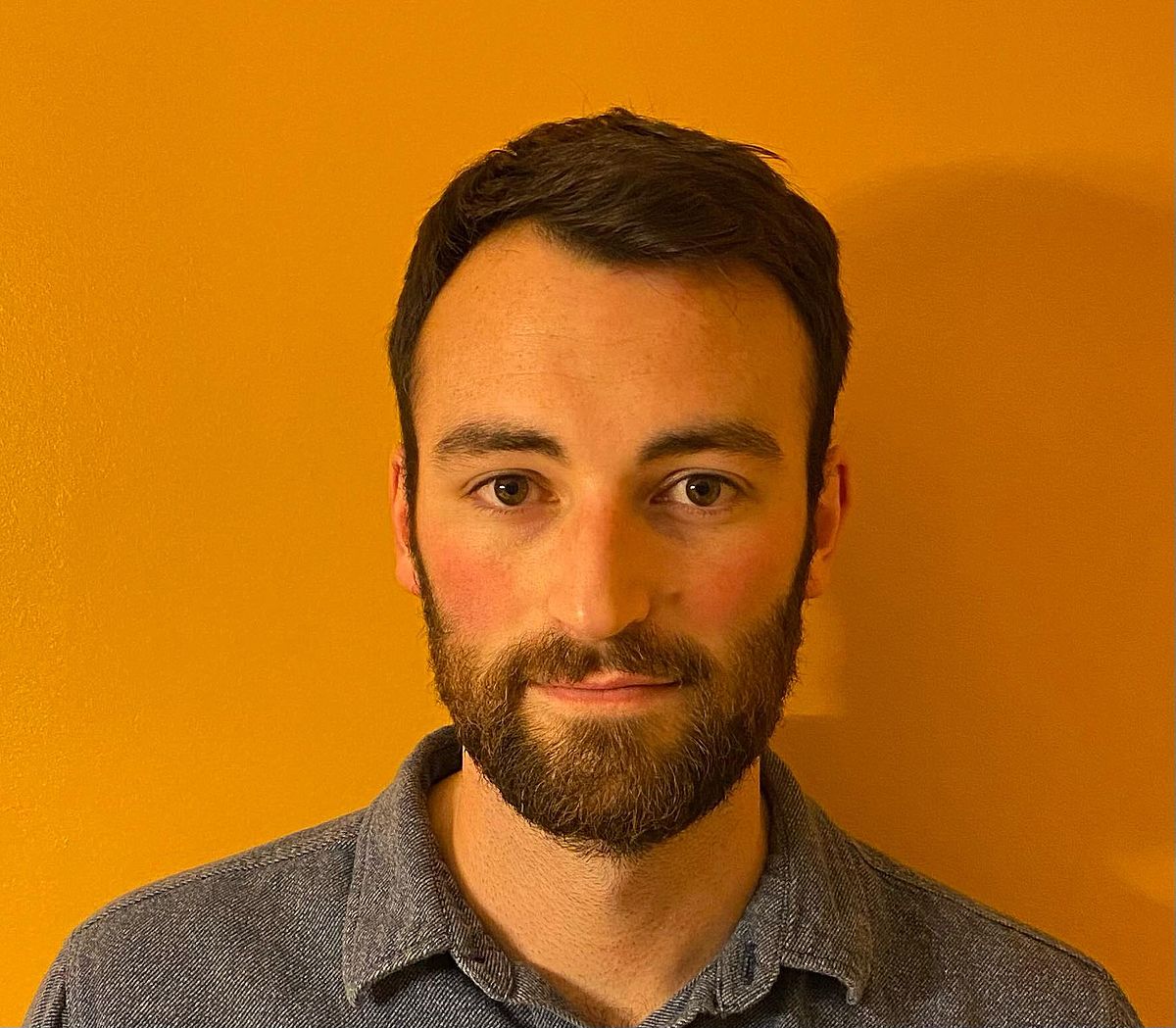
Dr. Veronica Radice is a Research Fellow at the University of Queensland and a member of the Australian Research Council Centre of Excellence for Coral Reef Studies. Her work focuses on coral physiology in relation to environmental conditions, particularly in mesophotic ecosystems, using biogeochemical techniques, genetics, and field experiments to study impacts of ocean warming and thermal stress on coral recovery from bleaching. Education: Bachelor’s degree in Biology from Johns Hopkins University, followed by research assistant and lab manager roles at Temple University. Research: Investigates coral trophic ecology, nutrient cycling, and gene expression under climate stress, with fieldwork in the Indo-Pacific and Maldives. Awards: XL Catlin Seaview Survey Ocean Scholar. Expertise: Mesophotic coral ecosystems, coral bleaching resilience, biogeochemistry, and oceanographic influences on reef productivity. Resources: Contributed to datasets and platforms like Mesophotic.org for coral reef research.
Poul Bjerregaard is a Professor of Ecotoxicology at the Department of Biology, University of Southern Denmark (SDU) . His research focuses on the effects of endocrine disrupting chemicals, metals, and pesticides on marine and freshwater organisms. He is a leading figure in national and international toxicological assessments and has coordinated multiple large-scale research projects, including those under the Danish Centre on Endocrine Disrupters (CeHoS). Research Interests: Ecotoxicology of endocrine disrupting chemicals Metal toxicology in marine organisms Pesticide effects on aquatic ecosystems Biomarker development for estrogenic activity Environmental risk assessment His work integrates laboratory experiments with field studies, often using species like Carcinus maenas , Salmo trutta , and Danio rerio as model organisms. He has contributed to the development of OECD test guidelines and has advised regulatory bodies such as the Danish Environmental Protection Agency. Projects & Collaborations: Bjerregaard has led over 26 research projects, including the development of ecotoxicological test methods for endocrine disruptors and mercury contamination studies in Danish coastal areas. He is actively involved in policy-relevant science communication and has delivered numerous public lectures and media interviews.
Liam MacNeil is a researcher at GEOMAR Helmholtz Centre for Ocean Research Kiel, working within Research Division 3: Marine Ecology, specifically in the Marine Evolutionary Ecology group. His office is located in room 1.401 at the GEOMAR facility in Kiel, Germany, and he can be contacted at +49-431 600 4521 or lmacneil@geomar.de. Dr. MacNeil's research focuses on marine ecological systems with particular emphasis on: Marine biodiversity and community assembly processes Fisheries science and management, especially in the Baltic Sea Biogeography of demersal fish populations Climate change impacts on marine organisms Advanced monitoring techniques combining imaging and molecular approaches His publication record demonstrates a strong focus on spatial and temporal patterns in marine communities, with significant contributions to understanding how environmental changes affect species distributions and abundances. Recent work highlights systemic challenges in European fisheries governance and proposes ecosystem-based solutions that address both sustainability and carbon sequestration. Dr. MacNeil has developed innovative methodologies including superpixel analysis for monitoring mudsnail growth under ocean warming and integrating metabarcoding with digital holography for plankton monitoring. His research aligns with GEOMAR's core themes of Marine Ecosystems and Biogeochemical Cycles, contributing to global understanding of ocean dynamics and sustainable management practices.
Daniel Pauly is a Professor at the Institute for the Oceans and Fisheries and Department of Zoology at the University of British Columbia . Holding a doctorate (1979) and habilitation (1985) in Fisheries Biology from the University of Kiel, Germany, he has led the Sea Around Us project since 1999, focusing on global fisheries trends and sustainability solutions. Education: Master (1974), Doctorate (1979), Habilitation (1985) in Fisheries Biology, University of Kiel His research spans overfishing , climate change impacts on marine life, and ecosystem modeling , particularly through the development of the Gill-Oxygen Limitation Theory (GOLT) explaining fish growth constraints under warming oceans. Recent work emphasizes the urgent need to ban high seas fishing and improve marine protected area effectiveness. Key article trends include: global fisheries reconstruction (2016 Nature Communications paper), nutrient cycle disruption from biomass extraction, temperature-size relationships in aquatic organisms, and historical ecology applications for modern conservation. His 2023-2025 publications address fisheries subsidies , invasive species , and equitable marine resource distribution . Scientific Awards Tyler Prize for Environmental Achievement (2023) BBVA Foundation Frontiers of Knowledge Award (2019) Chevalier de la Légion D'Honneur (2017) Albert Ier Grand Medal in Science (2016) Volvo Environmental Prize (2006) International Cosmos Prize (2005) 7 Honorary Doctorates Pauly co-founded FishBase.org and the Ecopath modeling software, revolutionizing fisheries research. His extensive advising role has shaped generations of marine scientists across five continents. Leading research teams at UBC's Sea Around Us project and collaborating globally with institutions like the Paul G. Allen Family Foundation , Pauly's work continues to influence UN FAO guidelines and WTO fisheries subsidy negotiations .
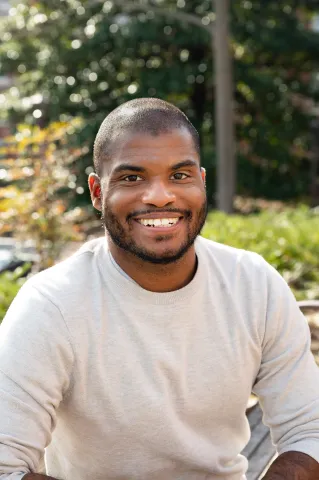
Dr. Isaiah Bolden serves as an Assistant Professor at Georgia Institute of Technology, specializing in marine biogeochemistry and paleoclimatology with a focus on coral reef ecosystem dynamics and climate change impacts. His research integrates field observations from Caribbean and Pacific reef systems with advanced geochemical analyses to address critical environmental challenges. His academic credentials include: Ph.D. in Oceanography from the University of Washington (2020) M.S. in Oceanography from the University of Washington (2017) B.A. in Earth and Oceanographic Science from Bowdoin College (2015) Dr. Bolden's research program centers on coral reef biogeochemical cycling , employing sclerochronology and stable isotope analysis to reconstruct paleoclimate records and assess contemporary ecosystem health. His methodological expertise spans inorganic mass spectrometry , marine carbonate chemistry , and trace element cycling , with significant contributions to understanding climate change resilience in coastal ecosystems. He actively promotes marine science outreach and interdisciplinary collaboration through initiatives like GEOPAths GO Jamaica. Analysis of his 15 most recent publications (2021-2025) reveals three dominant research thrusts: (1) Caribbean-focused paleoclimate reconstructions using coral cores and speleothems to document sea surface temperature and hydrological changes ; (2) High-resolution biogeochemical studies of reef metabolism examining photosynthetic plasticity and carbon cycling in atoll systems; and (3) Policy-oriented research developing international cooperation frameworks for coral conservation. His work consistently bridges field measurements from Puerto Rico, St. Croix, Jamaica, and French Polynesia with laboratory geochemistry to address climate adaptation challenges.
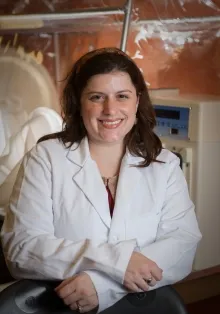
Dr. Jennifer Glass is an Associate Professor at the Georgia Institute of Technology , affiliated with the School of Earth and Atmospheric Sciences. Her research bridges astrobiology , biogeochemistry , and microbial ecology , focusing on how trace metals influence microbial processes in extreme environments. Education Ph.D., Geological Sciences, Arizona State University (2011) B.Sc., Earth and Space Sciences, University of Washington (2006) B.Sc., Oceanography, University of Washington (2006) Dr. Glass investigates: Environmental controls on methane and nitrous oxide cycling in terrestrial and marine ecosystems Biogeochemical cycles of bioessential trace elements Marine microbiology, particularly anaerobic metabolisms Integration of omic and geochemical datasets to understand microbial interactions Co-evolution of microbial metabolisms and ocean chemistry over Earth's history Her recent publications highlight trends in methane hydrate stability , nitrogen cycling microbes , and the role of metals in prebiotic chemistry . These works span disciplines including Climate Science , Planetary Habitability , and Environmental Microbiology . Scientific Awards American Geophysical Union - Thomas Hilker Early Career Award for Excellence in Biogeosciences (2021) American Society of Microbiology - Alice C. Evans Award for Advancement of Women (2021) Kavli Fellow (2018) NSF Graduate Research Fellow (2007-2010) NASA Astrobiology Postdoctoral Fellow (2011-2013) Dr. Glass leads the Glass Lab , which integrates omic and geochemical approaches to study microbial processes in extreme environments. Her team's 2024 research includes studies on oxygen-deficient zone nitrogen cycling and methane clathrate binding proteins .
Rachel Gallery is an Assistant Professor at the School of Natural Resources and the Environment, University of Arizona, specializing in soil microbial ecology, biogeochemical cycles, and climate change impacts. Her research spans diverse ecosystems including alpine forests, semi-arid regions, and tropical alpine páramos, with a focus on microbial responses to disturbances like wildfire, drought, and climate warming. Research Themes : Microbial community dynamics, carbon cycling, mineral weathering, critical zone science, and ecosystem resilience. Methodological Focus : Integration of field measurements, genome-resolved metagenomics, remote sensing, and modeling approaches to understand soil processes. Recent work highlights seasonal snowmelt effects on microbial activity, novel applications of the MIMICS model, and soil connectivity mechanisms. While her publications emphasize collaborations through CZNet and Critical Zone Observatories, no specific advising or grant details are listed in the provided data.
Steven Bouillon is a Professor at the Faculty of Bioscience Engineering and head of the Soil and Water Management unit at KU Leuven's Department of Earth and Environmental Sciences. His research focuses on biogeochemical processes in aquatic systems, including rivers, lakes, estuaries, and mangroves. Faculty of Bioscience Engineering Soil and Water Management unit Department of Earth and Environmental Sciences His research spans carbon cycling in coastal and inland waters, greenhouse gas emissions, stable isotope analysis, and climate change mitigation. He leads projects on carbon sequestration in mangroves/saltmarshes, river-geomorphology interactions, and tropical wetland biogeochemistry. Recent collaborative projects include: Carbon stocks in newly created salt marshes and mangroves (2024-2028) WETCOAST: Coastal climate adaptation (2024-2027) Blue Alkalinity (2024-2027) Carbon dynamics in Lake Victoria papyrus wetlands (2023-2027) He teaches courses in: Ecology and Biogeochemistry of Aquatic Systems Soil and Water Systems Global Biogeochemical Cycles
Smruthi Karthikeyan is the Gordon and Carol Treweek Assistant Professor of Environmental Science and Engineering and a William H. Hurt Scholar at the California Institute of Technology (Caltech). Her research integrates microbial ecology, computational biology, and engineering to develop multi-omic approaches for understanding microbial communities. She focuses on translating microbiome data into biomarkers for environmental and human health, particularly through wastewater surveillance and soil microbiome dynamics. Education: B.Tech, Anna University (Chennai), 2012 M.S., Columbia University, 2014 Ph.D., Georgia Institute of Technology, 2020 Research Interests: Dr. Karthikeyan's lab pioneers culture-independent techniques to study microbial dark matter , employing isotopic tracer-based mass spectrometry, meta-omics, and single-cell analysis. Key areas include: Linking microbial identity to function at cellular/spatial levels Soil carbon flux responses to drought Antibiotic resistance evolution in environmental contexts Rhizosphere microbiome interactions Gut microbiome dynamics under antibiotic exposure Scientific Awards: Gordon and Carol Treweek Assistant Professorship (2023-) William H. Hurt Scholar (2023-) Her work has established innovative wastewater surveillance frameworks for public health, including early detection of SARS-CoV-2 variants and campus-wide monitoring systems. She leads active projects on microbial community responses to environmental stressors and develops computational tools for microbiome analysis.
Ulrich Riller is an Adjunct Professor at the Department of Earth and Planetary Sciences , McMaster University . With over 25 years of scholarly activity, his research spans impact crater formation, structural geology, and tectonic processes across terrestrial and planetary contexts. Specializes in impact crater dynamics (Chicxulub, Vredefort, Sudbury) Expertise in Andean tectonics and crustal deformation Key contributions to hydrothermal systems in impact craters Developed analogue experiments for crater evolution Created ValleyMorph tool for geomorphic analysis His recent publications (2015-2025) focus on impact melt dynamics, post-impact biological recovery, and tectonic controls on mineralization. Notable works include studies on shock-deformed minerals and central uplift kinematics . Collaborations with institutions like IODP-ICDP Expedition 364 highlight his fieldwork and analytical capabilities. Active in peer-reviewed publishing (Science, Nature, Geology) Contributes to planetary science and ore geology Engaged in multi-scalar structural analysis from microfractures to orogenic belts
Martín Hoecker-Martinez is an Associate Professor and Department Chair at the University of Redlands. His research focuses on geophysical fluid dynamics, particularly boundary layer flows and air-sea exchange processes. Education: Ph.D. in Oceanography, Oregon State University M.S. in Applied Physics, California Institute of Technology B.S. in Physics, Harvey Mudd College His work combines field observations , rotating fluid dynamics experiments , and computer modeling to study ocean-atmosphere interactions. Recent publications examine geophysical flows , carbon cycle dynamics , and microbial transport mechanisms . Scientific Awards: Woods Hole Oceanographic Institution Geophysical Fluid Dynamics Fellow (2011) AGU Fall Meeting Outstanding Student Paper (2010) Wayne V. Burt Outstanding Graduate Student (2010) Adjunct Faculty Excellence, Mt San Antonio College (2006-2007) He maintains affiliations with multiple professional societies including the American Geophysical Union and American Physical Society. His group has developed a rotating fluid dynamics laboratory at Redlands for studying geophysical flows.
Dr. Mina Azizi Rad is a Postdoctoral Researcher at the Department of Soil Science, Institute of Earth System Sciences, Leibniz University Hannover since 2022. She works within the Soil Chemistry Group and is actively involved in the KliFa (Climate Farming in Lower Saxony) project. Her academic journey includes a Ph.D. in Biogeochemistry from Gottfried Wilhelm Leibniz Universität Hannover (2018-2022), where she was a member of the International Research Training Group (IRTG) "Geoecosystems in Transition on the Tibetan Plateau" (TransTiP). Her research focuses on soil chemistry and biogeochemistry, particularly examining soil respiration dynamics, carbon cycling processes, and microbial community responses to environmental changes. She has conducted extensive research on the Tibetan Plateau ecosystem, investigating how soil organic carbon responds to climate variations. Her work bridges laboratory analysis with field studies, emphasizing the connections between soil properties, microbial activity, and climate factors. Dr. Azizi Rad's publication record demonstrates consistent contributions to high-impact journals in soil science and biogeochemistry. Her research shows a clear progression from fundamental soil processes to climate change impacts, with a geographical focus on the Tibetan Plateau and applications to climate farming practices. Her work combines experimental approaches with modeling techniques to understand soil carbon dynamics under changing environmental conditions. She is an active member of the American Geophysical Union (AGU) since 2020 and previously participated in the IRTG TransTiP project during her doctoral studies. Her professional background includes research positions at the Max Planck Institute for Biogeochemistry (2018-2022) and experience managing a soil and plant analysis laboratory in Iran (2007-2015). Dr. Azizi Rad has received formal training in multiple disciplines, holding two Master's degrees (in Evolution, Ecology and Systematics from Friedrich-Schiller University Jena, and in Soil Science from Azad University of Karaj, Iran) along with a Bachelor's degree in Soil Science from Urmia State University, Iran. Her educational background spans soil microbiology, plant nutrition, and ecosystem ecology, providing a strong foundation for her interdisciplinary research approach.
Dr. Emma Kritzberg is an Associate Professor in the Department of Biology at Lund University, Sweden, and a LINXS Fellow in the Environment and Climate theme. She serves as a member of Working Group 3 - Nutrient Cycles and Land-Water Interactions, focusing on interdisciplinary research at the intersection of environmental science and climate studies. Her research interests span: Biogeochemical cycles Land-water ecosystem interactions Aquatic and terrestrial ecology Climate change impacts on nutrient dynamics Microbial ecology in environmental systems Earth system modeling Scientific Affiliations & Achievements: LINXS Fellow (Environmental and Climate Sciences)
Ann Larsson is a Senior Lecturer at the Department of Marine Sciences, University of Gothenburg. Her research focuses on biohydrodynamics, particularly how water flow influences marine organisms and their ecological interactions. Key projects include studies on olfactory navigation in Norway lobster, flow effects on barnacle settlement, and restoration of cold-water coral reefs. Current projects: Olfactory navigation in Norway lobster (Nephrops norvegicus), applications for creel fishery. Past work: Fouling-release coatings, sediment impacts on Lophelia pertusa, marine pollution mitigation. Research Interests: Biohydrodynamics, cold-water coral ecology, antifouling technology, and ocean acidification effects. Her work bridges fluid dynamics with marine conservation, emphasizing ecological interactions and sustainable solutions. Recent Publications: Contributions span topics like Desmophyllum pertusum embryonic survival under acidification, copper release rate optimization for antifouling, machine learning applications in marine image analysis, and flow regime impacts on coral larval behavior. Contact: Email: ann.larsson@marine.gu.se | Visiting address: Tjärnö 45296 Strömstad, Sweden.
Bastien Queste serves as an Associate Senior Lecturer in the Department of Marine Sciences at the University of Gothenburg, Sweden, where he leads cutting-edge research on ocean deoxygenation and biogeochemical cycles using autonomous observational platforms. His work addresses critical gaps in climate modeling related to oxygen minimum zones and small-scale ocean processes. His research centers on oxygen minimum zones (OMZs) and their role in marine ecosystems, carbon/nitrogen cycling, and greenhouse gas production. He investigates how physical processes—from large-scale circulation to submesoscale eddies—influence oxygen supply and consumption across global oceans, with fieldwork focused on the Arabian Sea, Baltic Sea, and Antarctic regions. Queste's approach combines autonomous gliders, satellite data, and in-situ measurements to resolve processes that conventional climate models fail to capture due to grid limitations. Analysis of his 15 most recent publications reveals a dominant focus on ocean deoxygenation mechanisms, carbon cycle dynamics, and climate change impacts. Key trends include the ventilation of OMZs by water masses like Persian Gulf Water, sea-ice regulation of carbon dioxide uptake, methane emissions from anthropogenic sources, and ice-ocean interactions in polar regions. His methodology consistently leverages autonomous platforms for high-resolution observations across diverse marine environments. Queste directs the FLOW Lab (Fluxes in Low Oxygen Waters), which investigates low-oxygen water dynamics through interdisciplinary collaboration. The lab's work integrates physical oceanography, biogeochemistry, and climate science to improve predictive models of ocean deoxygenation under future climate scenarios.