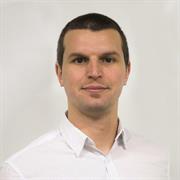
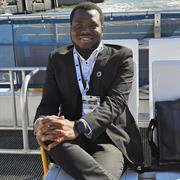
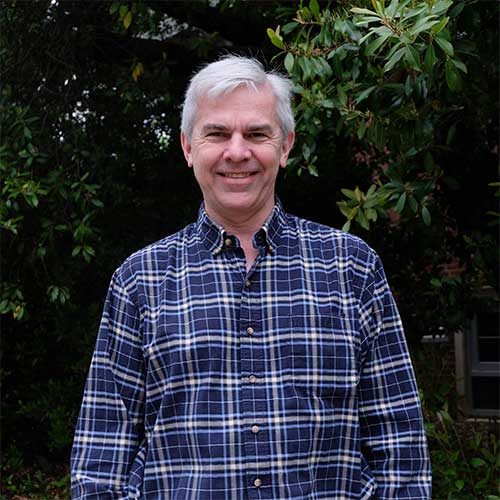
Dr. Marianne Zanon Zotin is a Researcher at the Copernicus Institute of Sustainable Development, affiliated with Utrecht University's Department of Environmental Sciences. Her work focuses on interdisciplinary approaches to climate change mitigation, industrial sustainability, and circular economy strategies. She explores pathways for decarbonizing industries, reducing material demand, and enhancing climate resilience in sectors like agriculture and aviation. Her research integrates quantitative methods such as life cycle assessment, integrated assessment modeling, and scenario analysis to evaluate policy implications and technological innovations. Key themes include fossil fuel phase-out strategies, bio-based alternatives, and the socio-technical dimensions of energy transitions. Zotin’s work spans global comparative studies (e.g., Brazil, Europe, China) and emphasizes systemic connections between material and energy systems. Her publications highlight critical gaps in current climate policies, particularly regarding non-energy industrial uses and induced land-use changes from biofuel production. She advocates for holistic frameworks that prioritize service provisioning while minimizing environmental impacts.
OĞUZHAN DER is a Lecturer at the Department of Marine Engineering Operations, Maritime Faculty of Bandırma Onyedi Eylül University (2023–present), and previously served as a Lecturer at Osmaniy'e Korkut Ata University (2020–2023). His research focuses on sustainable manufacturing processes, materials science, and maritime logistics. He actively publishes on topics such as nanomaterials, laser cutting optimization, and energy-efficient systems. His academic contributions include over 41 articles in the Department of Marine Engineering Management, emphasizing interdisciplinary approaches to environmental sustainability and advanced manufacturing technologies. Recent studies explore AI-driven solutions for material selection and process optimization, with applications in aerospace, automotive, and renewable energy sectors. Key research themes include improving machining performance through novel materials and methodologies, analyzing freight rate dynamics in maritime transport, and advancing smart agriculture via IoT integration. He has also contributed to exergy analysis in industrial processes and decarbonization strategies for port operations.
Verena Otter, PhD, is an Associate Professor specializing in Business Management and Organisation with a focus on sustainable supply chains and agribusiness innovation. Her research explores foreign direct investments in agriculture, digital transformation in food systems, and renewable energy policies. She co-leads three research projects including Eco-ready (climate-smart agriculture transitions) and Galgo (food systems innovation). Key research themes include sustainable agri-food networks, biogas production optimization, and decision-making processes in agricultural innovation adoption. Her work bridges theoretical frameworks like the resource-based view with practical applications in food system resilience. Recent studies examine China-Germany dairy FDI dynamics and stakeholder communication in digital supply chains. Prof. Otter advises two PhD candidates (Fiore and Galgo) and has collaborated on EU-funded projects like SHEALTHY addressing food preservation technologies. Her research outputs span 21 peer-reviewed articles with notable contributions to International Food and Agribusiness Management Review and Supply Chain Management journals.
Prof. Petra Hellegers is a Professor and Chair of the Water Resources Management group at Wageningen University & Research. Her expertise spans environmental economics, water governance, agricultural water management, and biofuels. She leads a multidisciplinary team of 20 staff and over 30 PhD candidates addressing global challenges in water allocation, irrigation systems, and contested knowledges. Notable projects include the Jordan Policy Dialogues and research on Vietnam's Mekong Delta. She actively engages in policy discussions, notably at the 2023 World Water Week in Stockholm. Research Interests Economic analysis of water policies and instruments Water reuse strategies in agriculture Climate adaptation in water-scarce regions Equitable water governance frameworks Recent Contributions Advocated for water-centric food system design Explored transformative water governance in Jordan Analyzed groundwater depletion in Yemen and Vietnam Developed frameworks for wastewater reuse arrangements Teaching She coordinates courses on land and water management, including 'Design in Land and Water Management' and 'Agricultural Water Management Interactions.'
Maria Barbosa is a Professor of Bio Process Engineering at Wageningen University & Research , specializing in microalgal biotechnology and bioprocess optimization. Her work focuses on sustainable production systems for biofuels, nutraceuticals, and bioproducts using microorganisms like Nannochloropsis and Arthrospira platensis. Research Interests: Her research integrates microbiology, chemical engineering, and environmental science to develop scalable bioprocesses. Key areas include: - Microalgal metabolism for lipid and polyunsaturated fatty acid production - Bioreactor design optimization for photobioreactors and membrane systems - Strain improvement through genetic and metabolic engineering - Sustainable resource recovery from wastewater and CO₂ emissions Advising & Grants: Supervises 5+ PhD candidates in projects like 'SUNPERFORM' (CO₂ fixation pathways) and 'Microalgae 100%'. Active in securing funding for algae-based carbon capture and LCA assessments. Labs & Teams: Co-directs AlgaePARC Innovation Center , a facility dedicated to applied microalgae research and industrial partnerships.
Steven Bottle is an Adjunct Professor in the School of Chemistry & Physics at Queensland University of Technology (QUT). He holds a PhD from Griffith University and a BSc(Hons) from the University of Queensland. His research focuses on detecting free radicals and reactive oxygen species using fluorescence, developing novel antioxidants for diseases like Ataxia Telangiectasia, and predicting material lifetimes through profluorescent additives. He collaborates with the Department of Defense on smart materials for aerospace applications, such as the Joint Strike Fighter program. Education: PhD, Griffith University BSc(Hons), University of Queensland Research Interests: His work spans: Antioxidant drug development for neurodegenerative diseases Fluorescence-based detection of oxidative stress in biological systems Material degradation monitoring via profluorescent polymers Photocatalytic conversion of sugars and pollutants Key Contributions: Bottle’s group pioneered nitroxide-free radical synthesis and their application in antioxidant therapies. They also developed fluorescence methods to predict polymer lifetimes, critical for industrial materials. Recent collaborations include advancing smart materials for defense and aerospace sectors. Awards and Grants: While specific awards are not listed, his extensive research portfolio indicates sustained funding and recognition in materials and medicinal chemistry. Labs & Teams: Leads the Medical & Forensic Chemistry program at QUT, focusing on interdisciplinary projects blending chemistry, biology, and engineering.
Adjunct Professor Richard Brown from Queensland University of Technology's Faculty of Engineering leads the Environmental Fluid Mechanics Group while directing the Biofuel Engine Research Facility. With expertise in Thermodynamics and Fluid Mechanics (thermofluids), his work spans renewable energy systems, engine emissions analysis, and environmental pollutant dispersion. Over 6,200 Scopus citations and $5M+ in research grants highlight his academic impact. PhD in Mechanical Engineering (University of Sydney) Bachelor of Theology (Sydney College of Divinity) Bachelor of Engineering (University of Technology Sydney) Research emphasizes applied thermodynamics , internal combustion engine optimization , and alternative fuel development through projects like: 2015-2018 VIED-funded shipping emissions monitoring 2014-2018 ARC-funded satellite river flow monitoring 2012-2015 peak3 P/L diesel filtration studies 2008-2010 ARC-funded photocatalytic water treatment His 2025 publications focus on ship emission modeling , reduced chemical kinetics , and biofuel nanostructural analysis . Professional roles include conference co-chair (Australasian Fluid Mechanics Conference 2020) and editorial positions for environmental engineering proceedings. Teaching innovations feature interactive web tutorials and museum-based thermodynamics labs.
Govert Valkenburg is a Research Professor and Vice Dean for Research at the Department of Interdisciplinary Studies of Culture, Faculty of Humanities, NTNU. He holds a PhD in Philosophy of Technology from Twente University, an MA in the same field, an MSc in Electrical Engineering, and a BMus in classical vocals. His research focuses on Science and Technology Studies (STS), particularly the role of knowledge in innovation and governance, with an emphasis on epistemic justice and energy transitions. Current projects include the RCN-funded Risk in the Information Society (until 2024), examining equitable knowledge integration in innovation processes. Key research areas include energy justice, climate governance, and the ethical dimensions of technological systems. Valkenburg has contributed to interdisciplinary initiatives such as The Good Infrastructures Lab and the EpiJustInf project. His work spans sustainable energy systems, biomedical research, and privacy technologies, advocating for inclusive decision-making frameworks. He has authored or co-authored over 50 publications, including articles on epistemic justice, energy citizenship, and algorithmic fairness in research management. His outreach activities include lectures on AI ethics, climate policy, and avant-garde music composition. Valkenburg’s research bridges philosophy, sociology, and engineering, addressing societal challenges through critical interdisciplinary approaches.
Marcos Djun Barbosa Watanabe is a Senior Researcher at the Industrial Ecology (IndEcol) Programme within the Department of Energy and Process Engineering at NTNU. His research focuses on prospective life-cycle assessment (LCA) of energy systems, bioenergy, sustainable land management for biofuels, and climate change mitigation strategies. He holds a background from a postdoctoral fellowship at IndEcol/EPT, specializing in LCA of biofuel production for maritime applications. His work emphasizes modeling tools for evaluating bioenergy systems' environmental impacts, integrating biomass availability and value chain configurations. Research interests include advanced biofuel production technologies (e.g., Fischer-Tropsch synthesis, hydrothermal liquefaction), renewable energy integration in industrial processes, and policy-driven decarbonization pathways. Key areas of focus are aviation, maritime, and heavy-duty transport sectors' transition to sustainable fuels. Publications span techno-economic and environmental assessments of bioenergy systems, with emphasis on Brazil's sugarcane industry and European policy contexts. Recent work explores Power-to-X fuels, hydrogen-based biofuels, and land-use strategies for climate mitigation. Outreach activities include lectures on hydrogen-based fuels' climate impacts and presentations at international biomass conferences. He collaborates with institutions like the Norwegian Centre for Sustainable Bio-based Fuels and Energy. Labs/Teams: Active in the IndEcol Programme, focusing on industrial ecology and sustainability science. Collaborates with global research networks on bioenergy and climate policy.
Dr. Arantza Aldea is a Senior Lecturer in Computing at the School of Engineering, Computing and Mathematics, Oxford Brookes University. She coordinates the Computing Foundation program and oversees foundation degree collaborations with partner colleges. Her research focuses on AI-driven healthcare solutions, particularly diabetes management systems, and spans areas such as decision support systems, usability engineering, and semantic technologies. She leads projects like ABLE DOC (Avatar-Based Learning for Diabetes) and COORDINATE (Cloud-based Diabetes Management in Colombia), emphasizing interdisciplinary collaboration between computing, healthcare, and education. Her educational background includes a BSc and PhD in relevant fields. Research interests include healthcare technology, data analytics, and software engineering, with affiliations to the Artificial Intelligence, Data Analysis and Systems (AIDAS) Institute, and groups like the Applied Software Engineering and Data Analytics Group (ASEDA). Recent work highlights the development of mHealth applications and cloud platforms for diabetes care, validated through clinical trials in Colombia. Dr. Aldea’s publications reflect her focus on healthcare informatics, with notable contributions to AI-based decision support systems, semantic multi-criteria analysis, and educational tools like PILET for programming education. Her work bridges technological innovation with real-world healthcare challenges, aiming to improve patient outcomes through personalized and accessible solutions.
Carolyn W.T. Lee-Parsons is an Associate Professor in the Chemical Engineering Department and the Chemistry & Chemical Biology Department at Northeastern University's College of Engineering, with additional affiliation in the Bioengineering program. She joined the Chemical Engineering Department in Fall 1999 and leads the Lee-Parsons Lab, which focuses on innovative approaches to pharmaceutical production using plant cell cultures. Education: PhD in Chemical Engineering, Cornell University (1995), Advisor: Prof. Michael L. Shuler BS in Chemical Engineering, University of Kansas, Summa cum laude Dr. Lee-Parsons' research primarily focuses on the production of valuable pharmaceutical compounds from plant cell cultures, specifically targeting the production of important anti-cancer drug molecules like vinblastine and vincristine from Catharanthus roseus (Madagascar periwinkle). Her work bridges chemical engineering, molecular biology, and plant science to develop economically viable processes for producing these complex plant-derived pharmaceuticals. The Lee-Parsons Lab seeks to understand how plant cells regulate the biosynthesis of these critical molecules and then reprograms this regulatory network to increase production using synthetic biology tools like CRISPR technology. Analysis of her recent publications reveals a strong focus on transcription factor regulation of alkaloid biosynthesis in Catharanthus roseus , with particular emphasis on ZCT and GLK transcription factors. Her research increasingly incorporates advanced genome editing techniques to manipulate metabolic pathways, demonstrating a clear progression toward developing practical transformation protocols like EASI for more efficient genetic manipulation of plant systems. This work directly addresses chemotherapy drug shortages by engineering enhanced production of critical plant-derived pharmaceuticals. Scientific Awards: Excellence in Mentoring Award, 2023 College of Engineering Faculty Fellow, 2022 University Excellence in Teaching Award, 2019 Martin W. Essigmann Outstanding Teaching Award, 2013, 2018 Northeastern Research Leadership Development Initiative (ReDI) Program, 2016-2017 National Science Foundation CAREER Award, 2002-2007 Acorn Innovation Grant from MassVentures, 2025 Dr. Lee-Parsons has secured significant research funding from the National Science Foundation, Massachusetts Technology Transfer Center, and GapFund360 to support her work. She actively mentors undergraduate and graduate students, with several mentees receiving PEAK Experiences Awards. Her commitment to education is evident through her teaching awards and development of innovative course modules connecting classroom learning to real-world research, including experiential learning through green chemistry labs and biofuel production analysis. The Lee-Parsons Lab brings together chemical engineers, bioengineers, biochemists, molecular biologists, and plant biologists in a collaborative effort to understand and engineer plant metabolic pathways. The lab's research vision extends beyond cancer drugs to include potential applications in biofuel production using plant or microalgae cultures, demonstrating a broad approach to addressing critical bioproduction challenges through integrated engineering and biological strategies.
Thomas Maschmeyer is a Professor of Chemistry and ARC Future Fellow at the University of Sydney, where he directs the Laboratory of Advanced Catalysis for Sustainability. He has held significant roles including Foundation Director of the USyd Institute of Sustainable Solutions (now part of the Charles Perkins Centre), Vice-Chairman of the Institute of Chemical Technology at TU Delft, and Assistant Director of the Davy Faraday Laboratories at the Royal Institution, London. His research spans advanced catalysis, sustainable energy systems, and green chemistry, with a focus on technologies such as third-generation catalysis, solar hydrogen production, and ionic liquids. He has authored over 240 publications, 22 patents, and 22 book chapters, and serves on editorial/advisory boards of nine international journals. 2019: Honorary doctorates from Ca’Foscari Venice and Trieste 2018: RACI R.K. Murphy Medal for Industrial Chemistry 2016: USyd Vice-Chancellor’s Prize for Outstanding Research Engagement 2011: Fellow of the Australian Academy of Science and other institutions 2007: Le Fèvre Memorial Prize for outstanding basic research in chemistry As a co-founder of renewable energy start-ups Ignite Energy Resources and Licella, and a founding Professor of Dutch high-tech company Avantium, he bridges academic innovation with industrial impact. He advises Australian federal and state governments at ministerial levels and holds multiple international consultancies.
Professor Enrico Della Gaspera is a faculty member in the School of Science at RMIT University, Melbourne, Australia, specializing in chemistry and nanoscience. His research focuses on nanomaterials, nanostructured coatings for energy applications, optoelectronics, and photocatalysis. He leads a research group comprising postdoctoral researchers, PhD students, and undergraduate interns. Enrico actively teaches chemistry and nanotechnology courses at RMIT. Previously, he worked at leading institutions including the University of Padova, UCLA, Stanford, and CSIRO, gaining cross-disciplinary expertise in chemistry, materials engineering, and energy sustainability. He has secured numerous competitive research grants and awards, recognizing both his research and teaching excellence. His current projects include developing metal oxide thin films for solar water splitting, plasmonic sensors, and energy-harvesting materials. Enrico collaborates internationally and maintains active profiles on Bluesky, LinkedIn, and Google Scholar for research updates. Research interests span nanoparticle synthesis, optoelectronic devices, energy-saving/smart coatings, and sustainable chemistry. His group's work addresses challenges in renewable energy, environmental sustainability, and advanced materials.
Dr. Ibrahim Hakeem is a Research Fellow in the School of Engineering at RMIT University, specializing in chemical and environmental engineering. He holds a PhD from RMIT (2023) under Prof. Kalpit Shah, an MSc in Sustainable Chemical Engineering from the University of Bath, and a BEng in Chemical Engineering from Nigeria. His research focuses on waste valorisation, biosolids management, and wastewater treatment, with particular expertise in thermal treatment processes (e.g., pyrolysis, hydrothermal carbonization) for producing value-added materials like biochar and carbon nanomaterials. He collaborates closely with the Australian water sector and is affiliated with RMIT’s ARC Training Centre for Biosolids Resource Transformation. Research Interests: Critical metals recovery, PFAS fate in thermal processes, biogas pyrolysis, and sustainable waste-to-resource technologies. Teaching: Guest Lecturer for PROC 2121 (Chemical Engineering Design) and Lecturer for OENG 1041 (Environmental Engineering Ethics). Awards: Student Water Prize Award, Paul Darvodelsky Biosolids Scholarship. His recent publications emphasize advancing thermochemical processes for environmental remediation and resource recovery, with applications in sustainable energy and pollution control.
Kelly Zering is a Professor and Extension Specialist at North Carolina State University's Department of Agricultural Economics. With 35 years of experience, his work focuses on the economics of biological and man-made systems in agriculture, including swine production, manure management, renewable energy, and bio-based supply chains. He teaches courses such as Swine Markets and Risk and Agribusiness New Venture Development, and has developed predictive algorithms for decision support in bio-based industries. His research emphasizes environmental and economic sustainability, addressing challenges like waste management technologies, energy production from agricultural byproducts, and the impacts of vertical coordination in pork markets. Zering's extension programs bridge academic research with practical applications, offering farmers and policymakers tools for sustainable practices. He has evaluated technologies like anaerobic digesters, belt systems, and nutrient recovery methods, contributing to policy discussions on environmental compliance and economic viability. Zering's publications span decades, analyzing topics from hog industry restructuring to stochastic frontier models for new crops. His work often intersects with policy design, such as reviewing USDA data products and assessing the economic effects of regulatory moratoriums. While no awards are listed here, his extensive contributions to applied agricultural economics reflect a commitment to both academic rigor and real-world impact.