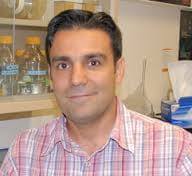
Niema Pahlevan serves as Associate Professor of Aerospace and Mechanical Engineering and Medicine at the University of Southern California, holding the Gordon S. Marshall Early Career Chair in Engineering since 2022. He joined USC in 2017 with dual appointments in the Viterbi School of Engineering and Keck School of Medicine, following a postdoctoral position at Caltech and clinical research role at Huntington Medical Research Institutes. His academic credentials include: B.S. in Mechanical Engineering from University of Tehran M.S. in Mechanical Engineering from California State University, Northridge Ph.D. in Bioengineering from Caltech (2013) Dr. Pahlevan's research bridges engineering principles with cardiovascular medicine, focusing on hemodynamic modeling and medical device innovation. His work integrates computational fluid dynamics with clinical cardiovascular diagnostics to address challenges in: Biomechanics of blood flow Cardiovascular device design Non-invasive diagnostic methods Cardiovascular system modeling Medical technology translation Physiological fluid mechanics His research program has been recognized through: NSF CAREER Award American Heart Association Career Development Award These competitive awards provide critical grant funding supporting his interdisciplinary research at the engineering-medicine interface.
Jodi L. McBride, PhD, is an Associate Professor of Neuroscience at Oregon Health & Science University (OHSU) in Portland, Oregon. Her laboratory is situated at the Oregon National Primate Research Center (ONPRC), where she leads research focused on developing therapies for neurodegenerative diseases, particularly Huntington's and Batten diseases. Dr. McBride has established herself as a leading expert in creating non-human primate models of neurodegenerative disorders and developing gene therapy strategies to treat them. Dr. McBride received her B.S. from the University of Illinois in 1998 and her Ph.D. from Rush University Medical Center in 2005. She completed post-doctoral training in Gene Therapy at the University of Iowa (2005-2008) followed by post-doctoral work in Neuroscience at the Oregon National Primate Research Center (2008-2010). Dr. McBride's research program centers on modeling and treating neurodegenerative diseases. Her expertise in viral gene delivery has enabled the creation of a rhesus macaque model of Huntington's disease that closely replicates the neuropathology, transcript dysregulation and behavioral manifestations of the disease. She also discovered and characterized the first non-human primate model of Batten disease, where CLN7 mutant Japanese macaques show lysosomal storage accumulation, progressive blindness, tremor and ataxia. Her work focuses on developing novel biomarkers of disease expression (imaging and biofluids) and assessing gene therapy strategies using novel viral vector serotypes to optimize delivery of therapeutic genes to affected brain regions. Analysis of Dr. McBride's recent publications reveals a strong focus on translational neuroscience, with emphasis on developing and refining non-human primate models of neurodegenerative diseases, particularly Huntington's and Batten diseases. Her work spans multiple disciplines including gene therapy, neuroimaging, biomarker development, and neuropathology. A significant portion of her research involves optimizing viral vector delivery systems for treating neurological disorders, with particular attention to species differences in biodistribution and efficacy. Dr. McBride has received numerous honors and awards for her work, including: Keynote Address at the Huntington's Disease Society of America conference (2008) OHSU Technology Transfer and Business Development Award: Top Industry Collaboration (2015) OHSU Technology Transfer and Business Development Awards for Recognized Industry Collaboration (2016, 2017) OHSU Brain Institute Festival of Lights Award (2019) Nomination for the NINDS Landis Award for Outstanding Mentorship (2021) As an Associate Editor for Molecular Therapy and an active member of the American Society of Gene and Cell Therapy and the Society for Neuroscience (including the Oregon Chapter), Dr. McBride plays a significant role in the neuroscience community. Her collaborative approach is evident in her extensive publication record, which includes numerous multi-institutional projects focused on developing therapies for neurodegenerative conditions. Dr. McBride's laboratory at the Oregon National Primate Research Center represents a critical hub for translational neuroscience research, bridging basic science discoveries with potential clinical applications. Her work with non-human primate models provides invaluable insights into disease mechanisms and therapeutic approaches that cannot be fully replicated in rodent models, making significant contributions to the field of neurodegenerative disease research.
Professor Fredrik Nikolajeff is affiliated with Luleå University of Technology, where he serves as a Professor in the Department of Health, Education and Technology within the Division of Nursing and Medical Technology. His research program bridges nursing science with cutting-edge biomedical technologies, focusing on diagnostic applications of small extracellular vesicles across multiple disease states. Dr. Nikolajeff's research portfolio demonstrates significant expertise in small extracellular vesicles research , cancer diagnostics , neurodegenerative diseases , and infrared spectroscopy techniques . His work consistently applies translational medicine principles to develop novel diagnostic approaches that could significantly impact clinical practice. His interdisciplinary approach spans nursing, biomedical engineering, and molecular diagnostics, creating innovative pathways for disease detection and monitoring. Analysis of Professor Nikolajeff's recent publication record (2024-2025) reveals a concentrated research program focused on leveraging small extracellular vesicles as diagnostic biomarkers across multiple disease domains. His work spans gastrointestinal and pancreatic neuroendocrine tumors, breast cancer, and Alzheimer's disease, demonstrating a systematic approach to developing non-invasive diagnostic tools. His methodological innovations in vesicle isolation and spectroscopic analysis represent significant contributions to the field of translational medicine, with potential applications across multiple clinical specialties.
Dr. Yechun Wang serves as an Associate Professor and Graduate Program Coordinator in the Department of Mechanical Engineering at North Dakota State University, demonstrating leadership in both academic instruction and graduate program administration. Her distinguished educational background spans dual disciplines: Doctor of Musical Arts (2023), North Dakota State University Master of Music in Piano Performance (2014), North Dakota State University Ph.D. in Chemical Engineering (2007), University of Maryland, College Park M.S. in Chemical Engineering (2004), University of Maryland, College Park B.S. in Chemical Engineering (2001), East China University of Science and Technology Dr. Wang's research integrates advanced engineering principles with fluid dynamics applications, focusing on Microfluidics, Complex Fluids, and Biofluid Mechanics. Her work employs Computational Fluid Dynamics and Numerical Analysis to solve problems in biological systems while extending to materials science through Organic Coatings characterization. This interdisciplinary approach bridges chemical engineering fundamentals with mechanical engineering applications in medical, environmental, and industrial contexts. As Graduate Program Coordinator, she oversees curriculum development, student admissions, and academic mentoring for mechanical engineering graduate students, reflecting her commitment to cultivating the next generation of engineers through rigorous academic guidance.
Nanna Viereck serves as an Associate Professor in the Department of Food Science at the University of Copenhagen's Faculty of Science, specializing in Food Analytics and Biotechnology within the Spectroscopy & Chemometrics section. She has held this position since 2009 and additionally serves as vice-manager of her section and Deputy Head of Research for the Department since 2014. Her academic journey includes an Assistant Professor role from 2003-2009, a postdoctoral position at Risø National Laboratory (2002-2003), and a brief research visit to Adelaide University (2003). PhD in Life Sciences and Chemistry, Roskilde University (2002) MSc in Laboratory of Molecular Spectroscopy, University of Copenhagen (1997) Nanna's research centers on NMR spectroscopy applications in food science, with expertise in both liquid and solid state low and high field NMR for food systems analysis and metabolomics. She has developed quantitative NMR methods for food quality screening using multivariate data analysis approaches. Her work spans diverse food matrices including pectins/alginates, carbohydrates, lipids, and whole foods like dairy products, cereals, and beverages. She has contributed significantly to the Department's metabolomics platform development and conducts research on NMR studies of biological tissues and biofluids. Analysis of her publication record reveals consistent contributions to food science and analytical chemistry, with particular emphasis on NMR spectroscopy applications. Her work shows progression from fundamental NMR methodology development to applied food quality and metabolomics research, with increasing interdisciplinary collaboration across nutrition, plant science, and dairy technology fields. Nanna actively supervises students, having guided 10 MSc students since 2004 and co-supervised 2 PhD students since 2008. She has secured research funding reflected in her 42 research outputs including journal articles, book chapters, and conference presentations, with an H-index of 9 as of 2015. She has organized significant conferences including the innovation conference 'Fødevareingredienser – et dansk væksteventyr' (2013) and co-chaired the annual inSPIReFOOD conference (2013-2014). As a member of Biopeople's Food & Health working party and manager of the inSPIRe pillar for process analytical technology, she maintains strong connections between academic research and industry applications. Her leadership extends to course development, including Quantitative Bio-spectroscopy and Food Entrepreneurship courses taught in collaboration with DTU.
Zeinab Hajjarian, Ph.D., is an active Assistant Professor of Biomedical Engineering at the University of Massachusetts, Lowell within the Francis College of Engineering. Her research program bridges soft-matter physics, engineering, and medical diagnostics to develop advanced optical imaging platforms for understanding disease pathophysiology, with particular focus on breast carcinoma. Her educational background includes a Ph.D. in Electrical Engineering from Pennsylvania State University (2009), an M.S. in Electrical Engineering from the University of Tehran, and a B.S. in Electrical Engineering from Sharif University of Technology in Tehran, Iran. Hajjarian's research centers on developing optical imaging and sensing technologies that characterize biomechanical and optical properties of tissues, particularly in cancer microenvironments. Her work applies laser speckle micro-rheology to map mechanical properties in tumor microenvironments, investigate cardiovascular conditions, and develop point-of-care coagulation testing devices. She has pioneered techniques for characterizing tissue micromechanical properties using laser speckle fluctuations and has developed multiple apparatus and algorithms for mechano-pathology investigation. Her publication portfolio demonstrates consistent advancement in laser speckle rheology applications, with recent work focusing on tissue granularities, viscoelastic spectra of biological tissues, and tumor microenvironment characterization. The research trajectory shows evolution from fundamental optical communications during her doctoral work to sophisticated biomedical applications in disease diagnostics. Selected Awards and Honors: Eleanor & Miles Shore Foundation Fellowship (2020) American Society for Laser Medicine and Surgery Research Grant (2019) Biomedical Engineering Society Career Development Award (2018) MGH Office of Women's Career Scholarly Writing Award (2017) Gordon Research Conference Best Poster Award (2016) Hajjarian has an exceptional record of innovation with over 20 original manuscripts (14 as first author), two invited review articles, and more than 15 patent applications (6 granted). Her research has significant translational potential for improving diagnostic pipelines and patient outcomes through integration of optical technologies in clinical settings. She previously held positions at the Wellman Center for Photomedicine at Massachusetts General Hospital and was promoted to Instructor in the Department of Dermatology at Harvard Medical School in 2013. Her laboratory focuses on developing novel optical microscopes and sensing devices for characterizing biophysical properties of soft tissues and biofluids, with emphasis on translating these technologies to clinical diagnostic applications.
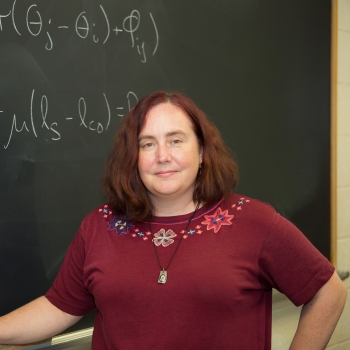
Christina Hamlet serves as an Associate Professor of Mathematics at Bucknell University, where she has been a core faculty member since joining the institution in 2016 after completing a postdoctoral fellowship at Tulane University. Her academic credentials reflect exceptional interdisciplinary breadth: Ph.D. from University of North Carolina M.A. from University of South Florida B.S./B.A. in Chemistry and Mathematics from University of South Florida B.A. in Psychology and Anthropology from University of Louisville Dr. Hamlet's research program integrates advanced mathematical modeling and computational techniques to investigate fluid-structure interactions in biological contexts. Her current projects analyze jellyfish feeding hydrodynamics, lamprey swimming biomechanics, and nematocyst discharge mechanisms, revealing fundamental physical principles governing animal-fluid interactions while providing insights for bio-inspired engineering applications. This work positions her at the intersection of applied mathematics, biomechanics, and biological physics. Her recent publications (2016-2018) demonstrate consistent focus on computational fluid dynamics within biological systems, particularly examining locomotion and feeding mechanisms in aquatic organisms. These studies frequently employ collaborative approaches with biologists and engineers to model complex fluid-body interactions using sophisticated numerical methods. No scientific awards or honors were documented in the provided information. Details regarding graduate student supervision, research grants, or funding sources were not included in the available materials. The text contains no references to specific research laboratories, collaborative teams, or institutional research centers associated with Dr. Hamlet's work.