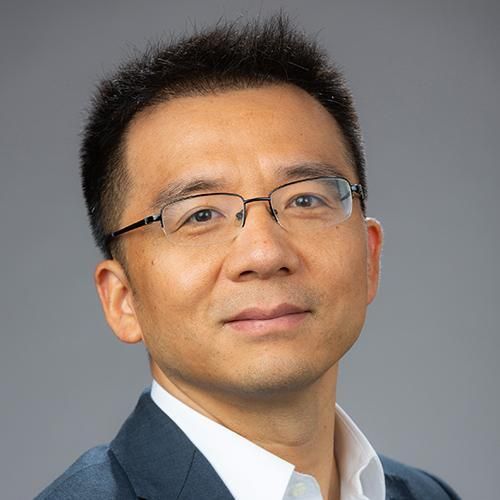
Tony Jun Huang is the William Bevan Distinguished Professor of Mechanical Engineering and Materials Science at Duke University, with additional professorships in Electrical and Computer Engineering and Biomedical Engineering. His research focuses on acoustofluidics, optofluidics, and micro/nano systems for biomedical diagnostics and therapeutics. Ph.D. in Mechanical and Aerospace Engineering (UCLA, 2005) Huang's research has revolutionized biomedical microsystems through acoustofluidic technologies, enabling contactless particle manipulation, exosome isolation, and advanced diagnostic platforms. His work has been cited over 36,000 times (h-index: 102) with 30 issued/pending patents. Recent publications highlight his innovations in acoustic tweezers, extracellular vesicle analysis, topological acoustofluidics, and AI-assisted biomimetic imaging. His lab develops technologies for single-cell analysis, non-invasive diagnostics, and programmable material systems. 2023 Highly Cited Researcher (Web of Science) 2020 Fellow of the National Academy of Inventors (NAI) 2019 Van C. Mow Medal (ASME) 2017 Analytical Chemistry Young Innovator Award (ACS) 2010 NIH Director's New Innovator Award Huang has taught courses including ME 535: Biomedical Microsystems and mentored numerous graduate students through his Duke Acoustofluidics Lab. His lab's technologies are applied in cancer biomarker detection, Alzheimer's diagnostics, and wound healing hydrogels.
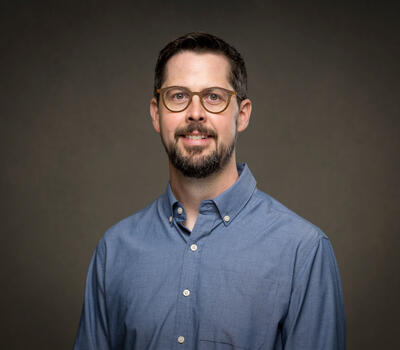
Matthew Johnston is an Associate Professor in the School of Electrical Engineering and Computer Science at Oregon State University. His research focuses on integrating sensors with CMOS circuits, stretchable electronics, and bio-energy harvesting. He holds a B.S. from Caltech and a Ph.D. from Columbia University. Prior to academia, he co-founded Helixis, a biotech instrumentation startup, and worked in venture capital. His awards include the 2020 SRC Young Faculty Award and 2021 Teaching Excellence Award. Education : B.S., Electrical Engineering, California Institute of Technology, 2005 M.S., Electrical Engineering, Columbia University, 2006 Ph.D., Electrical Engineering, Columbia University, 2012 Research Interests : Johnston explores lab-on-CMOS platforms, stretchable sensor systems, and energy harvesting for low-power applications. His work bridges electronics engineering with biomedical and environmental fields, emphasizing practical applications through interdisciplinary collaboration. Awards : 2020 Semiconductor Research Corporation Young Faculty Award 2021 Oregon State University Teaching Excellence Award 2021 Provost Fellowship Advising & Grants : Johnston’s research is supported by grants from industry and federal agencies. His lab, the SIM Lab, develops innovative electronic systems for healthcare and environmental monitoring. Labs & Teams : He leads the SIM Lab , focusing on interdisciplinary projects in integrated circuits and biomedical applications.
Professor Doraiswami Ramkrishna is the Harry Creighton Peffer Distinguished Professor of Chemical Engineering at Purdue University's Davidson School of Chemical Engineering. His research focuses on applying mathematical methods to chemical and biochemical systems, including population balance modeling, stochastic processes, and cybernetic frameworks for metabolic networks. His work spans crystallization processes, cancer chemotherapy modeling, and personalized medicine. Education: B.S. from the University of Bombay (1960), Ph.D. from the University of Minnesota (1965). He joined Purdue in 1976 after faculty roles at Indian institutions. His awards include membership in the U.S. and Indian National Academies of Engineering, the AIChE Wilhelm and Thomas Baron Awards, and the 2021 William H. Walker Award for Chemical Engineering Literature. Research Interests: Cybernetic modeling of biological systems, population balances in particulate systems, stochastic modeling of rare events, and mathematical approaches to cancer treatment optimization. His group collaborates on projects involving metabolic networks, drug resistance mechanisms, and personalized hydroxyurea therapy for sickle cell disease. Awards: Over 30 honors including the 2021 Walker Award, NAE membership, and Platinum Award from Mumbai University. Advising: Mentored numerous graduate students and research associates, with notable work on lipid metabolism, chemotherapy-induced neuropathy, and crystallization dynamics. Labs/Teams: Leads the Ramkrishna Research Group, collaborating internationally on projects like cancer care engineering and metabolic engineering of bioethanol production.
David Smith is a Professor of Applied Mathematics at the University of Birmingham and Deputy Director of Research and Knowledge Transfer at the Engineering and Physical Sciences Healthcare Technologies Institute. He is renowned for his interdisciplinary research applying mathematical modeling to medicine and biology, particularly in microscale fluid dynamics of fertility, sperm motility, cilia mechanics, and mathematical endocrinology. Research Interests: Microfluid dynamics of fertility and reproduction, especially sperm motility and embryonic nodal cilia Mathematical endocrinology, including pharmacokinetics of cortisol and thyroid disease Development and application of regularized Stokeslets methods for biological flows Bayesian modeling for spectroscopic biomedical diagnostics Multiscale modeling in reproductive health and cell motility His recent publications span computational tools for viscous flow, dinoflagellate swimming, kinetic modeling of biochemical reactions, and Bayesian diagnostics using Raman spectroscopy, reflecting a broad and impactful interdisciplinary portfolio. Projects & Grants: Principal Investigator, EPSRC project on rapid sperm capture using imaging and machine learning (2016–2022) Co-Investigator, US Army and UK Ministry of Defence projects on traumatic brain injury biomarkers (2021–2028) Alan Turing Institute Turing Fellowship (2019–2020) EPSRC and Proctor & Gamble supported parameter estimation projects Smith chairs the editorial board of Mathematics in Medical and Life Sciences , has organized major conferences on bioactive fluids, and delivered keynote lectures on regularized Stokeslets methods. He currently supervises four PhD students and a postdoctoral fellow, welcoming new doctoral applicants.
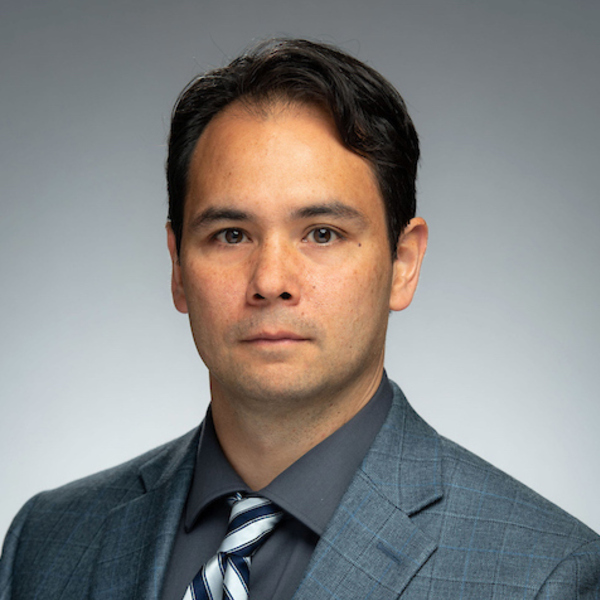
David Go is the Vice President and Associate Provost for Academic Strategy at the University of Notre Dame, where he also holds the Viola D. Hank Professorship in Aerospace and Mechanical Engineering. He oversees implementation of the University Strategic Framework and manages faculty appointment processes, with administrative oversight of institutes including the Lucy Institute for Data and Society and the Fitzgerald Institute for Real Estate. His research focuses on plasma science, heat transfer, fluid dynamics, and chemical analysis, with significant contributions to plasma-electrochemistry and sustainable chemical synthesis. Education: B.S. (2001) and M.S. (2004) from University of Notre Dame, Ph.D. (2008) from Purdue University His work explores plasma-liquid interfaces, solvated electron dynamics, and plasma-assisted catalysis, particularly for light hydrocarbon conversion. Recent publications highlight advancements in non-aqueous plasma electrolysis, machine learning-enhanced plasma sintering, and interfacial transport phenomena. Awards include the Air Force Young Investigator Award, NSF CAREER award, and multiple honors for teaching and innovation. Current research trends integrate plasma physics with chemical engineering and materials science, focusing on sustainable energy solutions and microscale manufacturing. Scientific recognitions include: Fellow of the American Society of Mechanical Engineers Senior Member of IEEE IEEE Early Achievement Award First-Source Bank Commercialization Award Go has supervised graduate studies and received patents for technologies in plasma-assisted synthesis and microfluidic diagnostics. His leadership roles involve committees addressing academic governance, risk management, and foreign influence in research.
Maria Pilar Coy Fuster is a Full Professor at the University of Murcia , affiliated with the Faculty of Veterinary Medicine and the Department of Physiology . Her research focuses on reproductive physiology, in vitro fertilization (IVF), oviductal mechanisms, epigenetics, and assisted reproductive technologies (ART) in mammals, particularly pigs and cattle. Education : Degree in Veterinary Medicine, University of Murcia (1987) PhD in Veterinary Medicine, University of Murcia (1991) Diplomate in Animal Reproduction, European College of Animal Reproduction (2001) Research Interests encompass understanding oviductal glycoproteins like OVGP1 that regulate polyspermy, genomic and proteomic analysis of reproductive fluids, epigenetic impacts of ART, and developing biobanks for reproductive biofluids. She co-discovered a conserved oviductal mechanism in ungulates (absent in humans) that enhances IVF efficiency, leading to a PNAS publication and a patent. Scientific Awards include: Mention of Quality by the Spanish Ministry of Education Mention of Excellence by the Spanish Ministry of Education She has secured substantial funding, including a €3.8 million European Horizon 2020 grant for the Rep-Biotech Marie Sklodowska-Curie program, producing 15 international PhDs. Currently, she leads the AFRODITA network. Teaching Contributions include designing the internationally recognized Master and PhD programs in Reproductive Biology and Technology at the University of Murcia. She plays a leadership role as an Associate Editor for journals like Molecular Reproduction and Development and Molecular Human Reproduction .
Dr. Amneet Bhalla serves as an Associate Professor in the Department of Mechanical Engineering within the College of Engineering at San Diego State University (SDSU). His primary contact email is asbhalla@sdsu.edu, with office located in Engineering Building Room 323-G, and phone number (619) 594-2043. Education: Ph.D., Mechanical Engineering, Northwestern University (2013) M.S., Mechanical Engineering, Indian Institute of Technology Kharagpur (2009) B.S., Mechanical Engineering, Indian Institute of Technology Kharagpur (2004-2008) Postdoctoral Training: University of North Carolina at Chapel Hill (Mathematics Department) and Lawrence Berkeley National Laboratory (Computational Research Division) Research Interests: Dr. Bhalla develops advanced numerical methods and high-performance computing techniques for computational fluid dynamics (CFD) and fluid-structure interaction (FSI) problems. His work spans aquatic locomotion, renewable energy device modeling, multiphase flows, vehicular aerodynamics, and bioengineering applications. He creates mathematical models to interrogate underlying flow physics for engineering design optimization, with emphasis on open-source software development through the IBAMR library. Publication Trends: Recent publications (2023-2025) focus on robust numerical frameworks for multiphase flows with phase change, acoustic streaming, and fluid-structure interaction. Key themes include mass conservation in level set methods, adaptive mesh refinement, and solvers for non-isothermal gas-liquid-solid systems. Applications range from aquatic locomotion and renewable energy devices to microfluidics and biomedical flows, demonstrating commitment to both theoretical advances and practical engineering solutions. Scientific Awards: No awards mentioned in the provided text Advising and Grants: Dr. Bhalla secured an NSF CAREER award (2023) for "Consistent Continuum Formulation and Robust Numerical Modeling of Non-Isothermal Phase Changing Multiphase Flows". As PI of the CFD Lab, he mentors graduate students in computational mechanics, leveraging prior industrial experience at ExxonMobil Upstream Research Company. His research integrates industrial practicality with academic rigor through collaborations with national laboratories. Laboratory and Team: The Computational Fluid Dynamics and Flow Physics Laboratory (CFD Lab) develops the open-source IBAMR software—a distributed-memory parallel implementation of the immersed boundary method with adaptive mesh refinement. The lab emphasizes transparency, community engagement, and reproducibility, establishing cross-institutional collaborations while advancing computational methods for complex flow phenomena in engineering and biological systems.
Umit Coskun is a Teaching Professor in the Department of Mechanical and Industrial Engineering at Northeastern University. His research focuses on biomechanics, biofluids, mechanobiology, complex fluids, and multiscale matter. He is affiliated with the university’s engineering programs and has contributed to academic leadership roles in regional engineering education conferences. While specific educational background details are not provided in the text, his professional activities include participation in the American Society for Engineering Education (ASEE) Northeast Section conferences. Notably, he has been involved in organizing and leadership roles at these events, reflecting his commitment to engineering pedagogy and professional development. His research interests emphasize interdisciplinary applications of fluid dynamics and mechanical systems, though no specific awards or publications are explicitly listed here. The text mentions a 2013 patent for an 'Artery Imaging System' awarded to an individual named Ahmet Coskun, but this appears unrelated to Umit Coskun. No grants, advising records, or lab affiliations are detailed in the provided information.
Dr. Seunghwan Shin is a postdoctoral researcher at ETH Zurich's Department of Mechanical and Process Engineering, affiliated with the Institute of Fluid Dynamics and working within Prof. Filippo Coletti’s group . His research spans fluid dynamics, polymer science, and biophysics, with a focus on multiphase flows, shear-banding in entangled polymers, and bacterial motility in complex fluids. Bachelor’s Degree : Chemical & Biological Engineering from Seoul National University (minor in Economics) PhD : Chemical Engineering at the University of Minnesota under Prof. Xiang Cheng and Prof. Kevin D. Dorfman His work explores turbulent suspensions , polymer microstructure , and active matter systems , combining experimental and rheological approaches. Publications emphasize quasi-2D turbulence , shear-banding , and colloidal media interactions in both synthetic and biological systems. The 15 most recent articles highlight trends in non-Newtonian fluid behavior , DNA-polymer dynamics , and enhanced motility mechanisms , with subfields spanning viscoelastic flows , microscale transport , and active colloids . He is part of the Coletti Group at ETH Zurich, advancing research on fluid dynamics and complex media.
James Baish is a Professor of Biomedical Engineering at Bucknell University. His research focuses on biological heat and mass transport, fluid mechanics, and the origins of biological form. He has contributed significantly to understanding cancer angiogenesis, lymphatic system dynamics, and transport phenomena in biological tissues. B.S.M.E, Bucknell University, 1979 M.S.E, University of Pennsylvania, 1983 Ph.D., University of Pennsylvania, 1986 Baish's work spans mathematical modeling of angiogenesis, thermal conductivity in biomaterials, and mechanobiological control of lymphatic pumping. His publications highlight interdisciplinary approaches combining engineering principles with biomedical applications.
Gareth McKinley is a Professor at the Department of Mechanical Engineering , Massachusetts Institute of Technology (MIT) , and co-founder of Cambridge Polymer Group. His work focuses on the extensional rheology of complex fluids, non-Newtonian fluid dynamics, and microfluidics. Education Ph.D., MIT (1991) M.Eng., University of Cambridge (1986) B.A., University of Cambridge (1985) Research Interests McKinley investigates superhydrophobic surfaces, food and biofluid rheology, viscoelastic flow instabilities, and microfluidic devices for complex fluids. His work spans theoretical modeling, experimental characterization, and practical applications in energy and environmental technologies. Scientific Awards Fellow of the Royal Society (2019) National Academy of Engineering (2019) SES G.I. Taylor Medal (2022) Society of Rheology Bingham Medal (2013) APS-DFD Frenkiel Award (2002) Advising & Grants McKinley has advised numerous graduate students and leads research funded by NSF, with past roles as Director of MIT’s Program in Polymer Science & Technology (2004-2009). He is actively involved in professional service, including editorial boards and leadership in rheology societies. Labs & Teams He works in the Hatsopoulos Microfluids Laboratory at MIT and collaborates with institutions like Harvard, Brown University, and Swansea University.
Andrew Turner is a Visiting Associate Professor at the University of Plymouth within the School of Geography, Earth and Environmental Sciences , Faculty of Science and Engineering. His work focuses on marine and environmental biogeochemistry, with particular emphasis on plastic and chemical pollutants in marine, terrestrial, and atmospheric systems. Teaches marine and environmental biogeochemistry Researches plastics, heavy metals, and emerging contaminants Integrates citizen science with conventional research Collaborates with 20+ international institutions Research Themes: Specializes in microplastic/nanoplastic pollution, toxic metal interactions, waste management, and atmospheric plastic transport. His studies include human exposure to microplastics, contamination of consumer goods, and environmental impacts of recycling processes. Publication Trends: Recent articles show increasing focus on microplastic-air interactions, human health implications, and analytical advancements in plastic and metal detection. Key subfields: atmospheric microplastics, biofluid contamination, dust storm transport, and consumer product leaching. Advising & Collaboration: Supervises PhD/MRes candidates and 150+ MSc students. Collaborates with organizations including WHO, Science Museum, and academic institutions across 15 countries.
Mingyang Tan is a Postdoctoral Research Associate at the Department of Mechanical and Industrial Engineering, Northeastern University. Their research focuses on intersections of biomedical engineering, rheology, 3D printing, and materials science, with applications in pharmaceutical manufacturing and biofluid dynamics. Role: Postdoctoral Research Associate Department: Mechanical and Industrial Engineering Email: mi.tan@northeastern.edu Research Interests Mingyang Tan's work explores rheological properties of complex systems, including 3D bioprinting for tissue engineering, magnetic particle dynamics in fluids, and microrheology of biofluids. Their studies address biomedical applications like plasma coagulation and osteochondral graft development, alongside innovations in pharmaceutical manufacturing using binder jetting 3D printing . Publication Trends Recent articles highlight advances in additive manufacturing , biomaterials , and microrheology , particularly for medical and pharmaceutical contexts. Key themes include magnetic alignment of particles, sustained drug delivery , and anisotropic suspensions . The work spans computational simulations, experimental validations, and translational applications. Scientific Awards Advising & Grants No formal advising or grant information is explicitly mentioned in the provided text. Labs & Collaborations Details about specific labs, teams, or collaborative networks are unavailable in the provided materials.
Juan R. Cebral is a Professor in the Departments of Bioengineering and Mechanical Engineering at the Volgenau School of Engineering, George Mason University. He leads the Computational Hemodynamics Laboratory and maintains affiliations with the Center for Computational Fluid Dynamics and the Krasnow Institute for Advanced Studies. His research bridges engineering and medicine to address life-threatening vascular conditions through computational modeling. He earned his PhD in Computational Sciences and Informatics from George Mason University in 1996 and completed his MSc in Physics at the University of Buenos Aires, Argentina in 1991. Originally from Plaza Huincul in Patagonia, Argentina, he has built an internationally recognized research program focused on patient-specific modeling of cerebral blood flow. Professor Cebral's research centers on using computational fluid dynamics to model hemodynamics in cerebral aneurysms and other vascular diseases. His work investigates the relationship between blood flow patterns and aneurysm development, rupture, and treatment outcomes, with particular focus on flow diversion techniques. His lab develops methods for constructing patient-specific anatomical models from medical images and applies them to enhance risk assessment and personalize endovascular treatments. His research has been funded by the National Institutes of Health, American Heart Association, Whitaker Foundation, and industry partners including Philips Healthcare and Boston Scientific. His recent publications (2024-2025) demonstrate continued focus on cerebral aneurysm hemodynamics with increasing attention to flow diversion mechanisms, fibrin accumulation, and aneurysm wall integrity. His work integrates computational modeling with biological and clinical data to better understand aneurysm growth patterns, rupture risks, and treatment outcomes, featuring sophisticated multi-scale modeling approaches that connect hemodynamic conditions with biological responses in the vessel wall. His research has been funded by prestigious organizations including the National Institutes of Health, American Heart Association, and Whitaker Foundation His work has been featured in Forbes Argentina (August 5, 2024 and October 7, 2024) His student Medhini Sosale earned the prestigious Goldwater Scholarship (April 12, 2022) Professor Cebral mentors students in bioengineering research, with several advisees receiving significant recognition. His research program is supported by multiple NIH grants including R01 NS076491 (Computational and Biological Approach to Flow Diversion) and R21 NS094780 (Improved evaluation of PCOM aneurysms), as well as funding from Philips Medical Systems and Mayo Clinic. He collaborates extensively with clinicians at Inova Fairfax Hospital, Mayo Clinic, and international institutions to translate computational findings into clinical practice. He directs the Computational Hemodynamics Laboratory at George Mason University, which specializes in patient-specific modeling of blood flows in cerebral aneurysms. The lab works closely with the Center for Computational Fluid Dynamics and collaborates with clinicians and researchers from Inova Fairfax Hospital, Mayo Clinic, Allegheny General Hospital, Kuopio Medical Center in Finland, Clinica ENERI in Argentina, University of Pittsburgh, and Barcelona Supercomputing Center.
David Fernandez Rivas is Professor at the University of Twente , Faculty of Science and Technology, within the Mesoscale Chemical Systems Group . Since 2017 he is also a Research Affiliate at the MIT Department of Mechanical Engineering and a Visiting Professor in the Dermatology Department of Erasmus MC, Rotterdam. His work bridges physics, chemical engineering and biomedicine. Education BSc & MSc in Nuclear Engineering (2004, 2006) – Higher Institute of Science and Technology, Havana, Cuba PhD (2012) – University of Twente, Netherlands Research Interests David’s core expertise lies at the intersection of microfluidics and cavitation phenomena . He exploits controlled bubble collapse to achieve needle-free injection , process intensification , water treatment , and solar-to-fuel conversion . His ERC-funded BuBble Gun project aims for painless, cost-effective drug delivery, while spin-offs BuBclean and FlowBeams commercialize ultrasonic cleaning and ink-delivery technologies. Scientific Awards & Recognition European Research Council Starting Grant 2019 (€1.5 M) NWO VIDI Grant 2023 NWO Stairways to Impact Award 2021 KIVI Prince Friso Engineer of the Year 2021 KHMW Pieter Langerhuizen Fonds Prize 2016 Elected member, Global Young Academy (2020) & Young Academy of Europe Advising & Grants David has successfully transferred research into society via two start-ups and several European consortia. He co-chairs the COST Action Greenering and mentors numerous PhD and master students within the TechMed Centre and MESA+ Institute at Twente. Labs & Teams He leads the BuBble Gun research team and collaborates closely with the Mesoscale Chemical Systems laboratory, MIT Bioinstrumentation lab, and Erasmus MC Dermatology department.