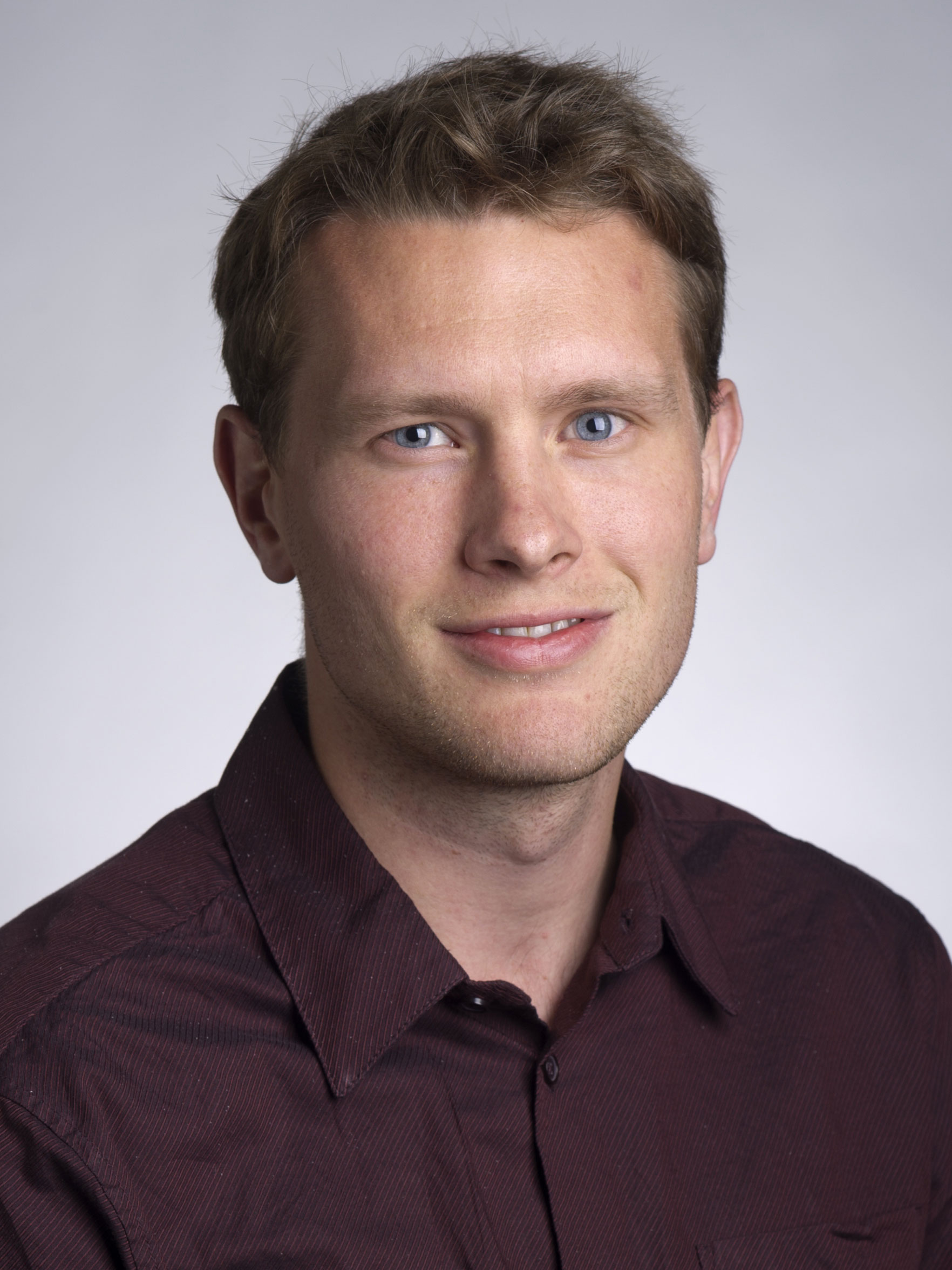
Dr. Jakob Karolus is a postdoctoral researcher at Ludwig-Maximilians-Universität München (LMU) and affiliated with the Embedded Intelligence group at the German Research Center for Artificial Intelligence (DFKI). He holds a BSc and MSc in Computer Science and Visual Computing from TU Darmstadt and completed his PhD at the University of Stuttgart and LMU Munich. Academic background: BSc/MSc in Computer Science, PhD in HCI and AI Current roles: Postdoc at LMU, Researcher at DFKI His research focuses on physiological sensing , proficiency-aware systems , and human-centric AI , with emphasis on electromyography (EMG), biofeedback, and gaze-based interfaces. He develops technologies to enhance human perception and create adaptive interactive systems that respond to cognitive load, muscle activity, and brain signals. Recent publications explore applications of EMG in musical interfaces (EMPiano, EMGuitar), VR presence (VRsneaky), and ethical AI design. His work intersects human-computer interaction , sensor systems , and augmented cognition . Notable awards: Best paper award at WOAR '15. Collaborates on European projects like ERC Amplify and the SFB-TRR 161 initiative on cognition-aware visualizations.
Regan L. Mandryk is a Professor at the University of Saskatchewan and Tier 1 Canada Research Chair in Digital Gaming Technologies and Experiences. With over 200 publications cited 10,000+ times, she pioneered affective physiological evaluation for games and focuses on games for health, wellbeing, and interpersonal relationships. Inducted into Royal Society of Canada (2014) E.W.R. Steacie Fellowship (2018) Led inaugural CHI PLAY and Canadian graduate training program SWaGUR Research Interests : • Game-based wellbeing interventions • Toxicity and harassment in online spaces • Affective computing and player emotion • Accessibility in digital games • Social dynamics in multiplayer environments • Gamification for health outcomes Recent Article Trends highlight: 1) Toxicity mitigation in esports, 2) Physiological feedback mechanisms, 3) Spatial cognition in games, 4) AI integration in game design, 5) Social anxiety and digital play, 6) Cultural representation in gaming. Scientific Awards : Tier 1 Canada Research Chair (2020–present) E.W.R. Steacie Fellowship ($430,000, 2018) Royal Society of Canada Inductee (2014) Best Paper Awards at ACM CHI, CHI PLAY, IEEE Games, ASSETS, CSCW Teaching & Supervision : Developed courses in affective computing, game design, and human-computer interaction. Supervised numerous undergraduate honors theses on topics including biofeedback games, social anxiety in play, and toxicity detection systems.
Aaron Tabor is an Assistant Professor at the University of New Brunswick . His research focuses on bridging Human-Computer Interaction (HCI) with Biomedical Engineering and Health Informatics to develop innovative rehabilitation technologies and wellness-oriented systems. Email: q4k8p@unb.ca Office: Room GE109A His work emphasizes inbodied interaction design , which integrates internal physiological processes into technology development. Key areas include breathing exercise systems for ADHD and chronic disease management, EMG feedback for spinal cord injury rehabilitation, and gamification in therapeutic interventions. Research Trends : The provided articles highlight his focus on three domains: (1) gait analysis using underfoot pressure sensors and deep learning, (2) respiratory therapy through biofeedback and idle games, and (3) inbodied interaction frameworks that leverage neuro-physiological pathways for self-tuning systems. These works often intersect machine learning , gamification , and non-invasive physiological monitoring .
Fred Shaffer is a Biological Psychologist and Professor at Truman State University's Psychology Department, where he has proudly taught since 1975. He serves as the director of the Truman Center for Applied Psychophysiology and is currently the President of the Association for Applied Psychophysiology and Biofeedback (AAPB). Shaffer earned his BA in Psychology and Political Science with a minor in Philosophy/Religion from Claremont Men's College in 1971, followed by an MS in Clinical Psychology in 1973 and a PhD in Social-Personality Psychology in 1975 from Oklahoma State University. His research focuses on heart rate variability (HRV), physiological psychology, and biofeedback. Shaffer has pioneered work in HRV biofeedback, resonance frequency assessment, and alternative methods like rhythmical skeletal muscle tension to increase HRV. His research has demonstrated the complex relationship between the heart and brain, showing that a healthy heart exhibits complex oscillations rather than metronome-like regularity. His publications show a strong trend toward practical applications of HRV research, particularly in developing accessible biofeedback techniques and establishing normative values. His work bridges theoretical physiological principles with clinical applications across multiple domains including stress management, emotional regulation, and performance enhancement. Walker and Doris Allen Fellowship for Faculty Excellence (2008) Outstanding Research Mentor of the Year award (2013) AAPB Distinguished Scientist award (2019) BCIA created a scholarship in his honor for HRV Biofeedback applicants (2021) Shaffer has mentored an award-winning undergraduate research team for over 48 years, with notable students including Christopher Zerr, who received the Omicron Delta Kappa Outstanding Leadership award in 2015. He has served as Chair and Treasurer of the Biofeedback Certification International Alliance (BCIA), which certifies professionals in 35 countries. His Truman Center for Applied Psychophysiology has received generous support from BioSource Software, Thought Technology Ltd., and the Association for Applied Psychophysiology and Biofeedback. He directs the Truman Center for Applied Psychophysiology, which has conducted HRV research for over thirty years. The center has trained biofeedback professionals internationally in locations including Portugal, Italy, Australia, UK, Netherlands, Hong Kong, South Africa, Germany, Rome, Thailand, and Venice. Shaffer provides online biofeedback education through BioSource Software LLC and has served as a contributing editor for Applied Psychophysiology and Biofeedback and Biofeedback Magazine.
Casper Harteveld is an Assistant Professor in the Game Design Program at Northeastern University , with affiliated appointments in Mechanical and Industrial Engineering , Electrical and Computer Engineering , and the School of Law . He also collaborates with faculty in Marine Science and Public Policy. His research focuses on using games to study and improve decision-making, particularly in complex systems like pharmaceutical supply chains and disaster response. He applies games in areas where natural environment studies are challenging, collecting behavioral data through simulations. His work integrates Human-Computer Interaction , Artificial Intelligence , Virtual Reality , and Computational Thinking , emphasizing societal impact and education. In recent years, he has led projects such as RePresent , a serious game addressing Access to Justice for pro se litigants, and has received NSF and DARPA awards. His publications cover topics like AI in Game Design , Escape Rooms for Education , and Computational Thinking Metrics . Scientific Awards: Young Talent Prize of Information Systems Special Prize for Best Dissertation in Simulation & Gaming Five NSF Awards (including CRISP and TIER 1 grants) DARPA Young Faculty Award NSF Fellow of the Next Generation of Hazards & Disasters Researchers
Dr. Deniz Mevlevioğlu serves as a Lecturer in the School of Computer Science and Information Technology at University College Cork, Ireland, based in Office 1.81 of the Western Gateway Building. His contact details include email Deniz.Mevlevioglu@ucc.ie and phone +353 21 420 5929, with ORCID identifier 0000-0003-2776-1304. His research centers on virtual reality applications for mental health, specifically: Real-time anxiety detection using biosensors and convolutional neural networks during VR therapy Development of immersive cognitive assessments like the Emotional Virtual Reality Stroop Task Integration of physiological feedback mechanisms (e.g., visual respiratory monitoring) in exposure therapy Analysis of his publication history reveals a consistent focus on adaptive VR therapeutic systems. His work bridges computer science and clinical psychology through real-time biosignal analysis, with publications spanning technical implementations (2021-2024), systematic reviews, and pilot clinical studies. Key innovations include convolutional neural network-based anxiety classifiers and respiratory biofeedback integration, all targeting enhanced efficacy of VR-based mental health interventions through physiological computing.
Jan Wikgren is a Senior Lecturer and Vice Head of the Department of Psychology within the Faculty of Education and Psychology. His research bridges psychophysiology, neuroscience, and behavioral conditioning, with a specialized focus on sensory gating mechanisms and cardiorespiratory influences on learning. He investigates neurocognitive processes using methods like transcranial stimulation (tDCS/tRNS) and classical conditioning paradigms. Research interests center on: Psychophysiological interactions between cardiac cycles and cognition Disgust conditioning in clinical populations (e.g., OCD) Exercise-derived neuroplasticity across lifespan Sensory gating and startle reflex modulation Non-invasive neuromodulation techniques Publication trends (2021–2025) reveal interdisciplinary work combining neuroimaging, genetic models, and physiological monitoring. Dominant themes include: hippocampal plasticity influenced by aerobic fitness, interoceptive learning modulated by cardiac rhythms, and clinical applications of brain stimulation for behavioral disorders. Research utilizes both human cohorts and rodent models. No awards or student advisories are documented. Collaborative projects include sensory gating studies and cardiac-cycle-dependent learning mechanisms.
Dr. Charles Markham is an Associate Professor in the Department of Computer Science at Maynooth University's Faculty of Science & Engineering. He graduated with a degree in Applied Physics from Dublin City University and earned his PhD in element specific imaging in computerised tomography. His research spans novel imaging systems, biomedical instrumentation, and human-computer interaction with a strong focus on brain-computer interfaces and motion capture technologies. Research Affiliations: Hamilton Institute, ALL Institute Teaching: Robotics, Computer Graphics, Advanced Computer Architecture Professor Markham's research interests center on novel imaging technologies including coded aperture imaging and wide-baseline stereo systems, motion capture and wearable computing with applications in rehabilitation, and mobile machine vision for driving simulation and augmented reality. His work with the Mathematics and Statistics Ecology group demonstrates interdisciplinary interests in ecological modelling . His publication record shows consistent contributions to brain-computer interfaces (2007-2011), driver behavior analysis (2014-2021), motion capture systems (2006-2009), and optical imaging techniques (2001-2008). The research spans multiple disciplines including neuroscience, biomedical engineering, and ecological mathematics. He has supervised several graduate students including D. Kelly (2009 thesis on sign language recognition) and J. Foody (2007 thesis on motion capture biofeedback systems). His collaborations extend across institutions with partnerships at TU Dublin and University College Dublin.
Marijke De Couck is an unpaid Visiting Professor at the Vrije Universiteit Brussel , Belgium. Her research focuses on cancer , pain management , physiology , and biofeedback , with a particular interest in vagus nerve mechanisms in oncology and psychosocial factors influencing pain perception. ORCID: 0000-0001-7887-8073 Research affiliation: Vrije Universiteit Brussel Her work explores biopsychosocial interventions like pain neuroscience education for cancer survivors, vagus nerve stimulation in disease processes, and the impact of perceived injustice on chronic pain. Recent publications include randomized controlled trials and systematic reviews on pain management, as well as interdisciplinary studies on resume screening biases. Notable research trends encompass: Teleprehabilitation protocols for breast cancer patients Meta-analytical approaches to pain psychology Neuromodulatory mechanisms in oncology Occupational psychology in hiring processes Active in multidisciplinary collaborations , she contributes to projects like IMAGica (2016-2023) involving genetic diseases and cardiac arrhythmias, as well as clinical trials with teams across Belgium, Netherlands, and international institutions.
Dr. Henri Hurkmans is an active Researcher at Erasmus University Medical Center in Rotterdam, Netherlands, affiliated with the Erasmus School of Medicine and the Department of Orthopedics and Sports Medicine. His research program focuses on developing and validating technological interventions for rehabilitation, particularly in stroke recovery and orthopedic rehabilitation settings. Dr. Hurkmans' research interests center around the application of sensor technology and feedback systems to improve rehabilitation outcomes. His work spans multiple domains including stroke rehabilitation where he has pioneered mirror therapy protocols, orthopedic rehabilitation with focus on weight-bearing techniques, and sensor-based monitoring of patient movements in hospital settings. His research demonstrates how technological innovations can provide objective measurements and real-time feedback to enhance patient recovery. Analysis of his publication history reveals a clear progression from foundational work on mirror therapy and visual illusions for stroke patients (2012-2015) toward more recent applications of wearable sensor technology for monitoring hospitalized patients (2023-2024). His research consistently bridges clinical rehabilitation practice with technological innovation, with particular emphasis on validating measurement tools and developing practical clinical applications. Dr. Hurkmans has established productive collaborations with key researchers including Bussmann, Verhaar, Selles, and Ribbers across multiple publications. His work has demonstrated significant impact, with his 2015 mirror therapy article accumulating 59 Scopus citations and his 2014 visual illusion study receiving 47 citations, indicating substantial influence in the neurorehabilitation field.
Gregory F. Payne is a Research Professor and Fischell Institute Fellow at the University of Maryland's A. James Clark School of Engineering, affiliated with the Institute for Bioscience and Biotechnology Research and the Brain and Behavior Institute. His research bridges microelectronics and biotechnology through innovative biofabrication techniques and redox-based communication strategies. Education: Ph.D. in Chemical Engineering from The University of Michigan (1984), M.S. and B.A. in Chemical Engineering from Cornell University (1981, 1979). Research Focus: Dr. Payne leads pioneering work in two domains: 1) Biofabrication using stimuli-responsive biopolymers (chitosan, alginate) and enzymes to construct bio-device interfaces through electrodeposition and biological conjugation mechanisms; 2) Redox-based molecular communication developing catechol-modified matrices and spectroelectrochemical methods to enable electron transfer between biological systems and electronics, facilitating bio-information processing. Publication Trends: Recent work (2022-2025) demonstrates accelerated innovation in redox-enabled bioelectronics, including 3D-printed sensor platforms, electrogenetic cellular control, and biomimetic redox capacitors. The research consistently integrates electrochemistry, synthetic biology, and advanced materials to create bio-hybrid systems for medical, environmental, and industrial applications. Awards and Honors: Guest Professor, Wuhan University, China Fischell Institute Fellow Research Infrastructure: Leads the Payne Group with interdisciplinary collaborations worldwide. Manages projects including a $1.5M NSF grant for bioelectronic devices and $1M Moore Foundation grant for redox communication technology. Current lab focus includes developing the "Internet of Bio-Nano Things" through electrogenetic constructs.
Junho Park is an Assistant Professor at the University of Calgary, holding cross-appointment across three academic units: Schulich School of Engineering (Biomedical Engineering), Cumming School of Medicine (Community Health Sciences), and Faculty of Arts (Psychology). He also serves as Faculty Researcher at W21C Research and Innovation Centre, Member at O'Brien Institute for Public Health, and Child Health and Wellness Researcher at Alberta Children's Hospital Research Institute. PhD in Industrial and Systems Engineering (Texas A&M University) MSc in Industrial Engineering (Seoul National University) BSc in Computer and Industrial Engineering with Psychology minor (Yonsei University) His research focuses on Human-AI Interaction, Human Factors Engineering, and Ergonomics, with specific applications in biosignal processing for prosthetics, workload assessment in assistive technologies, and cognitive support systems for aging populations. Current projects include augmented reality biofeedback systems and autonomous vehicle interfaces for individuals with cognitive impairments. Recent publications demonstrate expertise in applying machine learning to biomedical engineering challenges and human factors assessments. The HERO Lab actively seeks postdoctoral researchers and graduate students in areas spanning human-AI interaction, ergonomics, and computational modeling. Scientific Awards Student Member with Honours, Human Factors and Ergonomics Society (2023) IEEE International Conference on Human-Machine Systems Travel Grant (2022) Institute for Applied Creativity Student Fellowship, TAMU (2022) Korean-American Scholarship Foundation (2021) HFES Best Student Paper Award (2021)
Kessler Dorian is a Professor at Bern University of Applied Sciences (BFH), actively contributing to research in social policy, sociology, and labor economics. He is affiliated with the LIVES research network and associated with UNIL (University of Lausanne). Primary Affiliation: Bern University of Applied Sciences Collaborations: LIVES Research Network, UNIL Researchers His research focuses on: Unemployment insurance systems and their societal impacts Family dynamics under economic stress Post-divorce socioeconomic adjustments Public-private welfare interactions Article trends (2018-2024) show interdisciplinary work bridging social policy analysis with gender studies , emphasizing economic precarity and marital separation effects. Recent publications examine benefit generosity's heterogeneous impacts and biofeedback interventions in aging research.
Christian Rominger is a Senior Lecturer at the Institute of Psychology , Faculty of Natural Sciences, University of Graz. His research focuses on the intersection of creativity, psychophysiology, and interoception, particularly examining relationships between physical activity, heart rate variability (HRV), and cognitive performance. Current project: Investigating dose-response relationship between physical activity and creativity Methodological expertise: Ambulatory monitoring, EEG alpha power analysis Research trends in his publications include: Psychophysiological mechanisms underlying creativity HRV as biomarker for stress and interoceptive awareness Development of just-in-time adaptive interventions (JITAI) for mental health
Fabien Verite is a Lecturer at ISIR (Institut des Systèmes Intelligents et de Robotique), part of Sorbonne University, where he is affiliated with the IRIS research team. His work focuses on the intersection of robotics, haptics, and human motor control, with significant applications in medical and rehabilitation contexts. His research interests span several key areas: Haptic feedback systems for surgical and rehabilitation applications Postural control and balance mechanisms Sensory feedback restoration for amputees using prosthetic devices Laparoscopic surgery assistance and training Neuromuscular control and rehabilitation techniques Verite's publications over the past decade demonstrate consistent focus on developing and evaluating haptic interfaces and sensory augmentation devices. His recent work (2022-2024) shows an increasing emphasis on multi-modal haptic feedback systems (combining vibrotactile and skin stretch technologies) for both surgical applications and upper limb prosthetics. His research often involves interdisciplinary collaborations with clinicians, engineers, and neuroscientists to address real-world challenges in medical robotics and rehabilitation. Among his notable contributions are the development of the Multi Vibrotactile-Skin Stretch (MuViSS) device for sensory feedback restoration in amputees and innovative approaches to enhancing laparoscopic surgery through haptic feedback augmentation.