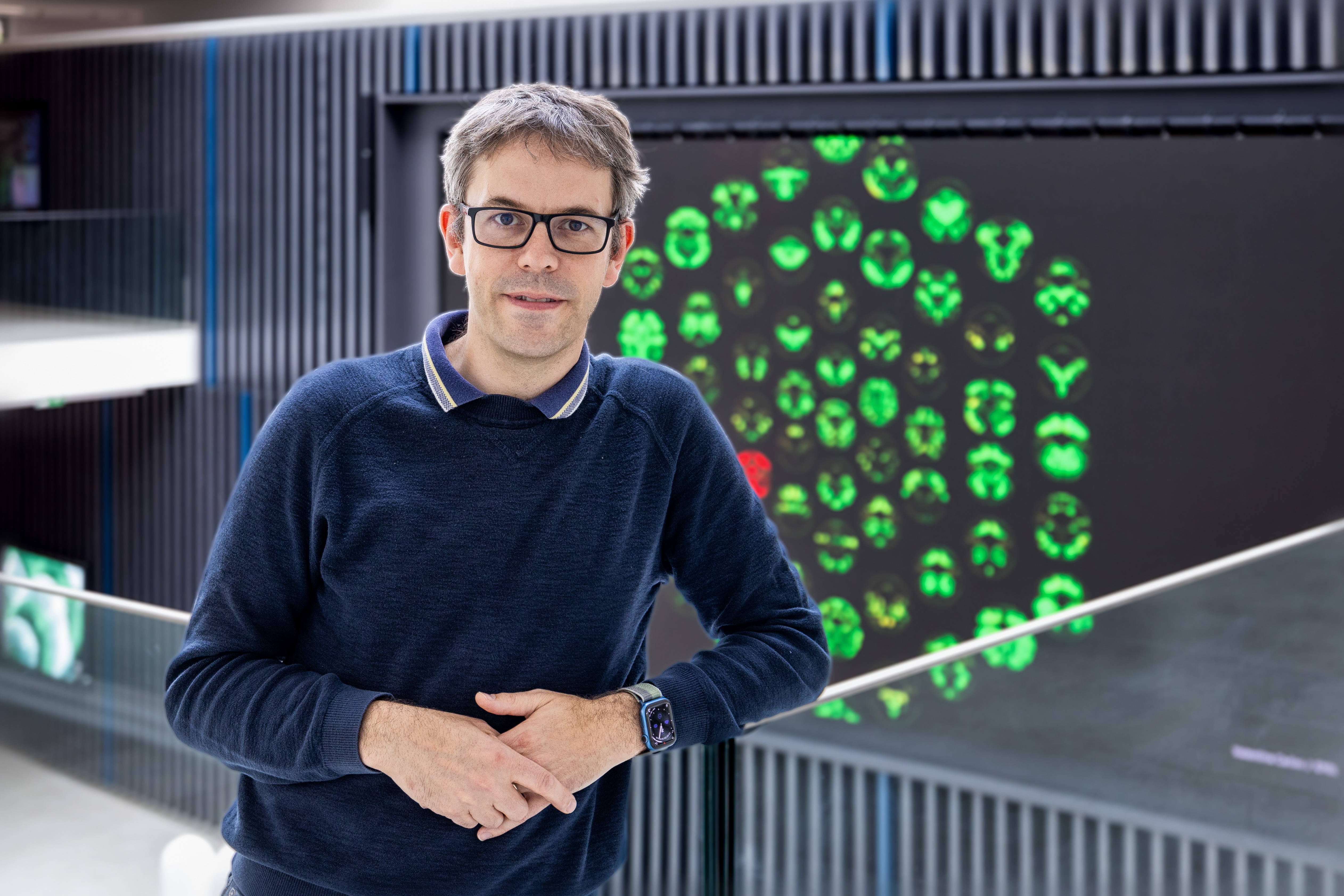
Prithvi Ravi Kantan is a full-time Researcher at Aalborg University's Department of Architecture, Design and Media Technology within The Technical Faculty of IT and Design. His work focuses on developing sound-based and multimodal feedback systems for motor rehabilitation, integrating principles from music technology and biomedical engineering. Education: PhD in Embodied Sonification Design (2021-2023) M.Sc. in Sound and Music Computing (2018-2020) B.E. in Electronics and Telecommunications (2009-2013) Research interests include real-time auditory feedback systems for neurological rehabilitation, user-centered design of clinical technologies, and the application of generative music in data sonification. He actively contributes to projects like HearWalk (2023-2027), exploring sound-facilitated motor learning in cerebral palsy patients. Notable achievements include winning the Danish Sound Day Research Pitch Battle (2023) and receiving the Best Student Paper Award at ICAD 2024. His work aligns with UN SDG 3 (Good Health) and SDG 4 (Quality Education). Teaching responsibilities include coordinating bachelor and master-level courses in PBL-based learning, emphasizing interdisciplinary approaches. He has supervised multiple student projects and contributed to over 39 publications since 2013.
John Paulin Hansen is a Professor at the Technical University of Denmark (DTU), affiliated with the Department of Technology, Management and Economics under the Technology and Business Studies school. His research focuses on human factors, human-computer interaction, and assistive technologies, particularly in gaze interaction and rehabilitation robotics. He holds a Ph.D. from Aarhus University (1992) and has led research groups at institutions like Risø National Laboratory and the IT University of Copenhagen. His work emphasizes improving quality of life for individuals with motor disabilities through innovations like The Eye Tribe and GazeIT lab initiatives. Research Interests include: Eye-tracking technology and gaze interaction systems Exoskeletons and AR interfaces for stroke rehabilitation Human digital twins in healthcare Telepresence robotics accessibility Brain-computer interfaces (BCI) Key Achievements: Founded EU’s COGAIN network, co-created The Eye Tribe startup (acquired by Facebook/Oculus), and leads the GazeIT lab supported by the Bevica Foundation. His projects address sustainable development goals through inclusive technology solutions. Awards: Vanførefondens Forskerpris 2018 Multiple Best Paper Awards (2019–2022) Reviewers' Favourite Best Paper Award at DESIGN2022 Advising & Grants: Mentor to startups like The Eye Tribe and Orbital (acquired by GN Audio). Current projects include EU Horizon 2020 Rehyb initiative for AR exoskeleton interfaces and Human Digital Twin applications in rehabilitation. Labs/Teams: GazeIT lab pioneers assistive tech innovations, collaborating with LEGO and Serious Games Interactive. Active in developing inclusive design pedagogy and digital twin methodologies for healthcare.
Laurens Boer is an Associate Professor in Human-Computer Interaction and Design at the IT University of Copenhagen, leading the IxD Lab and the MSc in Digital Design and Interactive Technologies programme. His work bridges critical design practices with speculative futures research, focusing on material computing and participatory innovation. Boer's research emphasizes ethical technology through projects like provotypes and fabulation techniques to explore wellbeing and societal impacts. Key research areas include: critical design methodologies, speculative design for futures studies, and design interventions in healthcare and biotechnology. He actively engages with Nordic tech imaginaries through the NORDICFAB project and IoT applications in production environments. Recent work explores affective interactions for chronic illness management, slow technology for sustainability, and reimagining smartphone usage patterns. Boer's pedagogical contributions include studio-based education methods and material programming frameworks for physical computing. His collaborative projects span academic-industry partnerships, emphasizing design anthropology and participatory approaches. Notable contributions include the 'Hedonic Haptics Player' wearable device and the 'Social Robotic Donuts' project investigating human-robot interaction.
Helle Rovsing Møller Jørgensen is a Developmental therapist at North Jutland Regional Hospital with research affiliation to Aalborg University's Faculty of Health Sciences. She serves as Principal Investigator on the HearWalk: Sound-Facilitated Rehabilitation project (2023-2027), collaborating with Dahl, S., Kantan, PR, and Spaich, EG. Her research focuses on: Applying biofeedback and auditory feedback systems in rehabilitation Improving gait symmetry in post-stroke patients Developing movement sonification techniques for clinical use Creating musical paradigms to enhance rehabilitation intensity User-centered design of rehabilitation technologies Dr. Jørgensen's work bridges clinical practice and engineering to create more effective rehabilitation tools, with recent findings showing how ecological auditory elements like 'the sound of water' can improve patients' gait symmetry. Her research demonstrates significant potential for making rehabilitation more engaging and effective through auditory feedback systems. Her scientific recognition includes: Nomination for Best Posters at a conference (2024) 4th Prize in RehabWeek 2023 Best Poster Competition She has received media coverage for her work on auditory biofeedback in rehabilitation and contributes to quality of life improvements through 'Pleasant rehabilitation with musical biofeedback therapy.' Her research shows strong connections to biofeedback (100%), auditory feedback (50%), and user-centered design (50%) according to fingerprint analysis.
Rogerio Pessoto Hirata is an Associate Professor and Head of the ExerciseTech Research Group at the Department of Health Science and Technology, Aalborg University, Denmark. He holds academic affiliations with the Faculty of Medicine and coordinates the Bachelor in Sports Science program. His research focuses on biomechanics, pain mechanisms, and rehabilitation interventions for older adults and individuals with chronic pain. Notable contributions include studies on postural control in osteoporosis patients, online dance interventions for fall prevention, and the efficacy of assessment tools like smartphone-based movement analysis. Education: Ph.D. in Clinical Sciences (2011), University of São Paulo Master's in Biodynamics of Human Movement (2006) Bachelor's in Exercise Science (2003) Adjunktpædagogikum in University Pedagogy (2014) Research Interests: Postural control under pain conditions Effects of experimental pain on motor control Interventions for fall prevention in older adults Technology-driven rehabilitation (e.g., inertial measurement units, smartphone apps) Administrative Roles: Head of Research Group (ExerciseTech, since 2022) Member of the Ph.D. Council at the Faculty of Medicine Responsible for the Sports Science Laboratory since 2011 Member of the Institute Council for Health Science and Technology (2020–2027) Teaching Contributions: Delivered courses in biomechanics, motor control, and neurophysiology at institutions in Brazil (USP, FMU) and Denmark (UCN, Aalborg University) Employed technology-enhanced pedagogy (e.g., Moodle, real-time polls) Supervised over 30 students across bachelor's, master's, and Ph.D. programs Key Projects: StabiliTouch : Biofeedback-based fall risk reduction (Aalborg University, 2024–2024) Moving Together : Online dance intervention for mental and physical health (Tryg Foundation, 2022–2023)
Thomas Sinkjær is a Professor in neuroscience and technology at Aalborg University's Department of Health Science and Technology, Faculty of Medicine. He directs research at the Center for Sensory-Motor Interaction and leads the Neural Engineering and Neurophysiology group. His expertise includes movement neuroscience, neurophysiology, motor control, electrophysiology, cortical stimulation, neuroplasticity, and neurorehabilitation. His research examines fundamental aspects of human gait function and develops neurodiagnostic and therapeutic technologies. Sinkjær holds a Dr.Med.Sci (1997) and PhD (1987) from Aalborg University and an M.Sc.EE (1983). He serves in leadership roles including Secretary General of The Royal Danish Academy of Sciences and Letters and Chair of Bevica Fonden. His recent publications demonstrate consistent focus on neurophysiology of movement, spinal reflexes, and rehabilitation technologies across diverse populations including spinal cord injury and cerebral palsy patients. Research trends show strong emphasis on sensorimotor integration during locomotion, neuroplasticity mechanisms, and translational rehabilitation engineering. No specific scientific awards, students advised, or grants are detailed in the provided text.
Erika G. Spaich is an Associate Professor at the Department of Medicine and Health Technology, Faculty of Health Sciences, Aalborg University. She leads neurorehabilitation research at the Center for Neurotechnology and Rehabilitation (CNR) and serves as Vice-President of the International Functional Electrical Stimulation Society (IFESS). Her work combines biomedical engineering with clinical applications. Her research focuses on Neurorehabilitation technologies Functional Electrical Stimulation (FES) systems Rehabilitation robotics Auditory biofeedback for gait symmetry Neural plasticity mechanisms Recent publications highlight hybrid FES-robotic systems and sound-facilitated rehabilitation, with ongoing projects targeting spinal cord injury and stroke recovery. She has received multiple conference awards including the 2024 RAICES Award and Best Student Paper Award (2024). Key collaborations include Technical University of Munich and international research teams in neurotechnology.
Martin Alexander Garenfeld is an Assistant Professor at the Department of Health Science and Technology, Faculty of Medicine, Aalborg University. His work bridges biomedical engineering and neurorehabilitation, focusing on restoring motor and sensory functionality through advanced human-machine interfaces and haptic feedback systems. Education: PhD in Biomedical Engineering (2019) with a thesis on multichannel electrotactile stimulation for prosthetic sensory feedback. Research Interests : Developing biomedical technologies to restore sensory feedback in prosthetics, enhancing virtual reality immersion through tactile feedback, and improving fall prevention via biofeedback systems. His expertise aligns with the UN Sustainable Development Goals for healthcare innovation. Recent Article Trends : Recent publications emphasize electrotactile stimulation for prosthetic sensory fidelity, virtual hand embodiment, closed-loop myoelectric control, and fMRI signal processing. These works span biomedical engineering, neuroscience, and human-machine interaction. Projects : Active projects include StabiliTouch (PI, 2024) for fall prevention and SockEET (Project Participant, 2023) for high-resolution prosthetic feedback. Past collaborations involved CLIMB (cloud-connected bionic limbs) and TACTILITY (VR tactile feedback).
Michael Skipper Andersen is a Professor in the Department of Materials and Production at Aalborg University's Faculty of Engineering and Science in Denmark. He leads research within the Section of Applied Systems Research Biomechanics and directs the Center for Mathematical Modelling of Knee Osteoarthritis. His work focuses on biomechanical analysis of knee joint mechanics, osteoarthritis progression, and musculoskeletal modeling. Andersen's research interests center on biomechanics with a strong focus on knee osteoarthritis. He employs mathematical modeling, experimental techniques, and clinical applications to understand joint mechanics, cartilage loading, and pain mechanisms. His work bridges engineering principles with clinical orthopedics, developing predictive models for knee osteoarthritis progression and innovative solutions for knee replacement surgery. He has made significant contributions to understanding how gait modifications, muscle strength, and joint loading affect knee health and disease progression. His recent publications (2023-2025) reveal a strong trend toward increasingly sophisticated biomechanical modeling of knee joint mechanics, with growing emphasis on clinical translation. His work spans multiple subfields including cartilage mechanics, gait analysis, joint laxity measurement, and knee replacement optimization. A notable focus is on developing predictive mathematical models of knee osteoarthritis (MathKOA project), personalized knee replacements (SPARK project), and robotic technologies for assessing knee injuries. His research demonstrates strong interdisciplinary collaboration across engineering, medicine, and clinical practice. Wearable Robotics Association's 2018 Innovation Challenge Grand Prize Winner (WearRAcon18) Mimics Innovation Award - Second Prize EMEA Region (2018) Winner of Fifth Grand Challenge Competition to Predict In Vivo Knee Loads (2014) Best research paper award: WHY DON'T ALL MALPOSITIONED RESURFACED CUPS HAVE HIGH WEAR? (2012) Andersen has secured substantial research funding from major Danish foundations including the Novo Nordisk Foundation, Independent Research Fund Denmark, and Innovation Fund Denmark. His current projects include MathKOA (2022-2027, Novo Nordisk Foundation), SPARK (2021-2025, Independent Research Fund Denmark), and several others focused on knee biomechanics and osteoarthritis. He supervises PhD students (5 mentioned in his profile) and collaborates extensively with clinical researchers and engineers across multiple institutions. His work has direct clinical impact, with media coverage highlighting potential applications for improving knee surgery outcomes and developing better knee prostheses. Andersen directs the Center for Mathematical Modelling of Knee Osteoarthritis and leads the Section of Applied Systems Research Biomechanics. His research group develops and applies advanced biomechanical modeling techniques, robotic measurement systems, and clinical assessment protocols. The team includes engineers, clinicians, and researchers working on mathematical modeling, experimental biomechanics, and clinical translation of their findings. Their work spans from fundamental biomechanical research to practical applications in knee replacement surgery and osteoarthritis management.
Oliver Stegle is a Professor at Heidelberg University since 2020, holding concurrent roles as Group Leader at EMBL Heidelberg and Division Head at DKFZ (German Cancer Research Center). His research focuses on statistical genomics, systems genetics, and speech prosody analysis, with contributions to robotics in education and vocal charisma training. He earned a PhD in Physics from the University of Cambridge (2009), followed by postdoctoral work at the Max Planck Institute in Tübingen (2009–2012). He has led groups at EMBL-EBI (2012–2018) and EMBL Heidelberg (2019–present), while also serving as an ERC Investigator since 2019. His work integrates computational methods with experimental designs to address challenges in genomics and speech science. Research interests include developing novel tools like the MARRYS helmet for jaw movement analysis and exploring the interplay between prosody, robotics, and human interaction. His interdisciplinary approach spans bioinformatics, phonetics, and human-computer interaction, with a focus on applications in healthcare and education. Recent studies investigate how speech parameters influence perceived charisma and the design of effective communication systems in industrial and virtual environments. Publications highlight advancements in speech analysis, bio-signal measurements for stress reduction, and the role of prosody in hate speech perception. He collaborates widely, contributing to open data policies in phonetics and advancing technologies for public speaking training. His lab’s work is supported by major grants, reflecting his leadership in both academic research and institutional roles.
Sofia Dahl is an Associate Professor in the Department of Architecture and Media Technology at Aalborg University's Technical Faculty of IT and Design. She leads research within the Media Cognition and Interactive Systems (MeCIS) group, specializing in Sound and Music Computing. Her work bridges computer science, psychology, and rehabilitation science to develop innovative auditory feedback systems for movement rehabilitation. Dr. Dahl earned her Doctor of Technology in Speech and Music Communication from KTH Royal Institute of Technology, completing her degree in 2006. She previously served as Visiting Associate Professor in Embodied Music Cognition at the University of Oslo from 2013 to 2018. Her research focuses on the intersection of music, technology, and human movement, particularly how auditory feedback can enhance motor learning and rehabilitation. She investigates embodied interaction, movement sonification, and the cognitive processes underlying musical performance and perception. Her work has significant applications in neurorehabilitation, particularly for stroke recovery, cerebral palsy treatment, and gait training. Analysis of her recent publications reveals a strong trend toward applying sound and music computing to clinical rehabilitation settings. Her research increasingly integrates artificial intelligence with movement analysis to create adaptive biofeedback systems that respond to patients' specific needs and progress. The work spans from fundamental research on movement fluency in musical performance to applied clinical studies with measurable patient outcomes. Best Student Paper Award (2024) Nomination - Best Posters (2024) 4th Prize in RehabWeek 2023 Best Poster Competition Best Use of Sound - Academic (2023) Dr. Dahl actively supervises PhD students and leads multiple significant research grants, including the HearWalk project (2023-2027) focused on sound-facilitated rehabilitation and MusAIc-move (2022-present) which uses AI-generated music to promote engagement in movement rehabilitation. She collaborates extensively with clinicians and researchers across Europe through the Nordic Sound and Music Computing Network. Her laboratory work combines motion capture technology, real-time audio processing, and user-centered design to create effective rehabilitation tools that have been validated in clinical settings with measurable improvements in patient outcomes.
Daniel Overholt is an Associate Professor at Aalborg University's Department of Architecture, Design and Media Technology , affiliated with the Technical Faculty of IT and Design . His work bridges sound technology, human-computer interaction, and physiotherapy applications. Lead researcher in multiple projects (ImprovAIze, FMN, NEMID) Expert in augmented instruments and affective computing Active contributor to Sound and Music Computing conferences Research focuses on interactive music systems , integrating motion recognition , biofeedback , and open-source technologies . Recent projects explore urban soundscapes, cultural heritage, and assistive tools for sensory impairments. His 2024 publications highlight knitting-powered interfaces , dynamical audio systems , and motion-affect interaction . Research outputs span 76 publications and 7 projects since 2003, showing consistent innovation in music technology and interactive systems . Contact: dano@create.aau.dk | ORCID
Michael Andersen is a Part-time Lecturer at the Department of Communication and Psychology, affiliated with The Faculty of Social Sciences and Humanities at Aalborg University. His work focuses on biomechanical analysis of musculoskeletal systems, particularly in joints and soft tissues, with applications in orthopedic research, sports medicine, and clinical rehabilitation. He specializes in computational modeling, musculoskeletal system dynamics, and imaging technologies for biomechanical assessment. Key research interests include knee and shoulder joint mechanics, cartilage biomechanics, gait analysis, and the development of clinical assessment tools using biplanar radiography and MRI. His methodologies often integrate finite element analysis, musculoskeletal modeling (e.g., AnyBody Modeling System), and motion capture technologies. Andersen also investigates ergonomics in manual labor, focusing on joint loading during material handling tasks and workplace injury prevention. His recent work emphasizes personalized interventions for osteoarthritis, evaluating knee brace designs, and optimizing surgical techniques through computational simulations. He contributes to advancements in non-invasive measurement technologies, such as robotic systems for joint laxity assessment and ultrasound-based bone registration improvements. Publications highlight studies on knee cartilage mechanics, ligament parameter estimation, and the biomechanical effects of muscle strength variations on joint loading. He collaborates across disciplines, applying biomechanical principles to improve clinical outcomes in orthopedics and sports medicine.