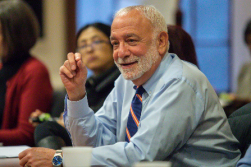
Joé T. Martineau is an Associate Professor in the Department of Management at HEC Montréal, holding the Chair in Organizational Ethics and AI Governance. He also co-leads IVADO's R3 AI research program and is a regular member of OBVIA. His expertise spans organizational ethics, neuroethics, healthcare administration, and AI governance. He earned a joint PhD and M.Sc. in Management from HEC Montréal. His research focuses on the ethics and governance of AI, outcomes of ethics programs, and developing ethical competence in organizations. Recent work includes studies on AI in healthcare, crisis management in sports, and patient engagement in cancer care. Dr. Martineau has been recognized with the 2024 Best Practical Solutions Award (with Audrey-Anne Cyr), the 2022 HEC Montréal Pedagogical Innovation Award, and the 2020 Excellence in Teaching Award. He teaches courses on organizational ethics and responsible research conduct. He has supervised 13 graduate students and contributed to over 30 peer-reviewed articles, books, and case studies. His work bridges ethical theory with practical applications in management and AI development.
Webb Keane is the George Herbert Mead Collegiate Professor of Anthropology at the University of Michigan. He is affiliated with the Center for Southeast Asian Studies, Global Islamic Studies Center, and the Interdisciplinary Program in Anthropology and History. His research focuses on ethics, semiotics, material culture, and religion in Southeast Asia and beyond. He holds a PhD and AM from the University of Chicago and a BA from Yale College. His major publications include Signs of Recognition , Christian Moderns , and Ethical Life , with his latest book Animals, Robots, Gods (2025) exploring non-human ethics. Keane has held fellowships from the Guggenheim Foundation and the National Endowment for the Humanities, and has lectured globally, including at Cambridge and the London School of Economics. Research Interests: Moral philosophy, semiotics, materiality, religion, media, and historical consciousness. Awards: Guggenheim Fellowship, Annette B. Weiner Memorial Lecturer, Edward Westermarck Memorial Lecturer. Teaching: Courses on language and culture, anthropology of religion, and Southeast Asian studies. Affiliations: Center for Southeast Asian Studies, Global Islamic Studies Center, Interdisciplinary Program in Anthropology and History.
Dr. Katharina Bauer is Associate Professor of Practical Philosophy at Erasmus School of Philosophy, Erasmus University Rotterdam. She obtained her doctorate summa cum laude and completed her habilitation on theories of practical necessity. Previously a Feodor-Lynen Fellow at Rijksuniversiteit Groningen and Goethe Universität Frankfurt, she bridges continental philosophy with contemporary societal challenges. Her research investigates the impact of technological and ecological transformations on moral agency, focusing on dignity, authenticity, and autonomy. Key areas include: Ethical implications of human enhancement technologies Technomoral resilience in education systems Democratic hope in crisis contexts Phenomenological approaches to personal identity Publications since 2021 demonstrate sustained focus on pandemic ethics, democratic theory, and moral education, with increasing emphasis on sociotechnical systems and collective agency. Awards include the prestigious Feodor-Lynen Fellowship for Experienced Researchers from the Alexander von Humboldt Foundation. She chairs the Dutch Association of Ethicists and leads PhD supervision in moral philosophy and phenomenology.
Dr. Samantha Halliday is an Associate Professor in Biolaw at Durham Law School and Co-Director of the Durham CELLS (Centre for Ethics and Law in the Life Sciences) and the Institute for Medical Humanities. She has held academic positions across Europe, including roles at the Universities of Huddersfield, Leeds, Liverpool, Warwick, Swansea, and Aberystwyth. Her doctoral work at Justus-Liebig University Giessen, Germany, examined compelled obstetric intervention and received the Promotionspreis award for best legal thesis. Education includes a Law with German Law and Language degree from the University of East Anglia and a doctorate from Justus-Liebig Universität Giessen. Her research focuses on comparative medical law and ethics at life's beginning/end, with particular attention to advance decision-making and maternal-fetal conflicts. She authored Autonomy and Pregnancy: A Comparative Analysis of Compelled Obstetric Intervention (Routledge, 2016), a seminal work in biomedical law. Key grants include an ESRC Research Seminar Series on advance decision-making and DFG-funded projects on transnational criminal law harmonization. She serves on peer review boards for AHRC/ESRC and advises the Royal Pharmaceutical Society's end-of-life care committee. Fluent in English, German, French, and Dutch, she actively contributes to interdisciplinary dialogues on healthcare law and ethics. Current projects include fostering a European research network on advance directives and analyzing cross-border challenges in criminal law limitation periods. Her work bridges legal, medical, and social science perspectives to address complex ethical dilemmas in healthcare.
Barbara J. Evans is a Stephen C. O’Connell Chair Professor of Law and Professor of Engineering at the University of Florida, with joint appointments in the Levin College of Law and Herbert Wertheim College of Engineering. She focuses on data privacy, AI/ML medical software regulation, genomic technologies, and diagnostic testing, and is a key member of the NIH Bridge2AI project. Education : J.D. from Yale Law School, LL.M. in Health Law from the University of Houston, postdoctoral training in clinical ethics at MD Anderson, and a Ph.D. in Earth Sciences from Stanford. Her research bridges law and engineering, emphasizing ethical and regulatory challenges in AI/ML medical applications, genomic data governance, and DIY biotechnology. She has led initiatives like the LawSeq SM project to standardize genomic analysis policies. The 15 most recent works highlight her interdisciplinary focus on AI ethics in healthcare, genomic privacy, and regulatory frameworks for emerging technologies. Key subfields include biomedical data sharing, FDA compliance, and equitable access to health data infrastructure. Scientific Awards : American Law Institute membership, IEEE Senior Membership, Greenwall Foundation Faculty Scholar. Evans has collaborated with institutions like the American College of Medical Genetics and Genomics (ACMG) and contributed to guidelines for genomic medicine. Her grants include NIH funding for Bridge2AI and LawSeq SM projects.
Bruno Takahashi is the Brandt Endowed Professor of Environmental Communication at Michigan State University, holding a joint appointment in the School of Journalism and AgBioResearch. He serves as Research Director of the Knight Center for Environmental Journalism and maintains affiliations with the Health and Risk Communication Center, the Environmental Science and Policy Program, and the Center for Latin American and Caribbean Studies at MSU. Born and raised in Lima, Peru, Dr. Takahashi earned his bachelor's degree in communication from Universidad de Lima, followed by M.S. and Ph.D. degrees in Environmental Science from SUNY ESF. Bachelor's in Communication, Universidad de Lima, Peru M.S. in Environmental Science, SUNY ESF Ph.D. in Environmental Science (specializing in environmental communication and participatory processes), SUNY ESF Dr. Takahashi's research program focuses on news coverage of environmental issues, environmental journalism practices in Latin America and U.S. Latino media, and identity in science communication. His work emphasizes counter-hegemonic environmental discourses in Latin American contexts, examining complex networks of actors, media, and communication processes embedded in post-colonial and social and environmental justice dynamics. He has conducted extensive field research in Peru, Bolivia, and Puerto Rico, with particular attention to environmental communication during disasters and in Indigenous communities. His recent scholarly output reveals a strong trend toward examining climate change communication through diverse cultural lenses, with significant attention to Latin American perspectives, immigrant experiences in the United States, and identity factors in science communication. His publications frequently address decolonial approaches to environmental communication and the need for more inclusive international scholarship that centers Global South perspectives. Scientific awards and recognitions include: 2024 AEJMC First Place in Latin American Communication Research 2021 Fellow of the Institute for Diverse Leadership, AEJMC 2019 Knudson Latin America Book Prize Multiple top paper awards from ICA and AEJMC conferences Dr. Takahashi actively mentors a diverse research team of Ph.D. students, post-doctoral associates, and MA students, with former students now holding positions at universities including University of Nevada, University of Minnesota, and Emory University. His research is supported by significant grants including a $2.8 million NSF grant for the SciComm Identities Project, funding from the Climate and Land Use Alliance, and multiple State Department and Embassy grants for environmental journalism training in Latin America. He has developed and led education abroad programs to Peru (2018, 2024) and the Netherlands/Belgium (2022), providing experiential learning opportunities for students in environmental communication. As Research Director of the Knight Center for Environmental Journalism, Dr. Takahashi leads initiatives supporting environmental journalists globally. His current projects include examining environmental discourses in the Peruvian Amazon related to oil spills affecting Indigenous communities, studying decolonial environmental journalism practices in Bolivia and Peru, and co-leading Working Group 5 on Public Engagement and Governance for The Lancet Countdown Latin America, which has generated significant media coverage in outlets like CNN and El País.
Martin Schlag is Professor at the University of St. Thomas holding the Alan W. Moss Endowed Chair for Catholic Social Thought and serving as Co-director of the Terrence J. Murphy Institute for Catholic Thought, Law, and Business within the Opus College of Business's Department of Ethics and Business Law. His educational background includes: JD from University of Vienna Licentiate in Theology (Lic. Theol.) from Pontifical University of the Holy Cross, Rome Doctorate in Sacred Theology (STD) from Pontifical University of the Holy Cross, Rome Schlag's research centers on Catholic social thought's application to political and economic systems, examining historical Christian perspectives on markets, trade, money, private property, and social justice. He advocates for principled business leadership that promotes the common good and integrates the poor into market economies through Christian humanism. His work emphasizes truth, goodness, and beauty as foundational to business as a noble vocation. Analysis of his 2022-2025 publications reveals dominant trends in subsidiarity theory, gift economies in business, digital ethics, and pandemic policy through theological frameworks. His scholarship consistently connects Catholic social teaching to contemporary challenges including e-commerce morality, technological unemployment, diversity initiatives, and integral ecology of work. As Co-director of the Terrence J. Murphy Institute, Schlag leads interdisciplinary initiatives bridging Catholic thought with business practice, organizing global conferences that inform his research and publications. No information is available regarding student advising or research grants.
Enrique Sanz Giménez-Rico, SJ is a Professor at the Faculty of Theology of Comillas Pontifical University , where he has taught for over two decades. His academic journey includes a Licentiate in Trilingual Biblical Philology (Pontifical University of Salamanca, 1990) Licentiate in Sacred Scripture (Pontifical Biblical Institute, 1997) Doctorate in Theology (Comillas Pontifical University, 2000) . Specializing in Old Testament theology and spirituality , his research focuses on the Theology of the Pentateuch , Theology of the Psalter , and Greek Philology . His recent publications explore themes like prophetic literature , divine mercy , and biblical foundations for environmental ethics , reflecting a synthesis of Hebrew Bible studies and contemporary theological challenges . Scientific contributions include Sexenio Campo 11 accreditation in Philosophy, Philology, and Linguistics (2011-2018) ACAP certification as Professor Doctor of Private University (2007) . Professional roles encompass Rector of Comillas Pontifical University (2021-2024) Dean of Theology and Canon Law Faculties (2015-2021) Director of the Department of Sacred Scripture and Church History (2011-2015) .
Nancy Kass is a Professor in the Department of Health Policy and Management at the Johns Hopkins Bloomberg School of Public Health, where she also holds the Phoebe R. Berman Professorship in Bioethics and Public Health. She serves as Vice Provost for Graduate and Professional Education at Johns Hopkins University and is the Interim Chair of the Department of Health Policy and Management. Additionally, she is Deputy Director for Public Health at the Johns Hopkins Berman Institute of Bioethics and co-directs the Johns Hopkins Fogarty African Bioethics Training Program. ScD, Johns Hopkins University, 1989 BA, Stanford University Postdoctoral Fellowship, Kennedy Institute of Ethics, Georgetown University Dr. Kass’s research focuses on the ethical dimensions of public health policy and research, with particular expertise in bioethics, research ethics, public health ethics, informed consent, learning health systems, and global health ethics . Her work addresses ethical challenges in HIV/AIDS, obesity prevention, genetics, and international research. She has developed influential frameworks for ethical oversight in public health and clinical research. Her recent publications (2024–2025) reflect a strong focus on modernizing clinical research ethics, including optimizing informed consent, integrating clinical trials with medical practice, and enhancing data infrastructure. These works emphasize ethical governance, patient-centered decision-making, and the alignment of research with real-world healthcare delivery. Her scholarship spans high-impact journals such as JAMA and Implementation Science , demonstrating sustained scholarly leadership. GBFFR Annual Award, Global Forum on Bioethics in Research, 2016 Member, National Academy of Medicine (formerly Institute of Medicine), 2008 Fellow, Hastings Center, 2007 Delta Omega Honorary Society in Public Health, 1996 AMTRA (Advising, Mentoring, and Teaching Award), Johns Hopkins, 1996 Dr. Kass has played a pivotal role in education and mentorship, having directed the PhD program in Bioethics and Health Policy for 15 years. She currently leads the Fogarty-funded African Bioethics Training Program, advancing global bioethics capacity. She has served on numerous national and international advisory bodies, including the National Cancer Institute’s central IRB, the National Academy of Medicine, and the WHO Ethics Review Committee. Her leadership extends to chairing the national Precision Medicine Initiative central IRB. She is actively involved in research projects such as the CDC Informed Consent Project, Bioethics of Quality Improvement, and Demonstrating Respect and Acceptable Consent Strategies in patient-centered outcomes research. These initiatives underscore her commitment to ethical innovation in public health and clinical practice.
Dr. Zhiying Ma is an Assistant Professor at the University of Chicago Crown Family School of Social Work, Policy, and Practice , with faculty affiliations at the Center for East Asian Studies, Center for the Study of Gender and Sexuality, and Global Studies Program. She holds a joint PhD in Comparative Human Development and Anthropology from the University of Chicago and bachelor's degrees in Psychology and Philosophy from Peking University. Research Focus: Examines biopolitical paternalism in China's mental health governance Develops peer support systems for persons with serious mental illnesses Investigates intersections of disability rights, care ethics, and welfare systems Conducts ethnographic fieldwork in psychiatric hospitals and community teams Key Projects: Led a CBPR pilot project (2019-2021) to create peer support manuals in Guangzhou, and currently scales services in Guangzhou/Yunnan with Cyrus Tang Foundation support. Collaborated with the WHO on community mental health models. Scientific Recognition: 2021 Ford Global Fellow Published in SSM-Mental Health , Cultural Anthropology , and Disability Studies Quarterly Advocacy & Impact: Combines scholarship and activism , consulting for NGOs on disability livelihoods and gender equality. Collaborates with China's community mental health teams to improve service fidelity and client satisfaction.
Dr. Ronald P. Strauss serves as the Adams Distinguished Professor at the University of North Carolina at Chapel Hill in the Adams School of Dentistry, with additional appointments as Professor of Social Medicine in the School of Medicine and Clinical Professor of Epidemiology in the Gillings School of Global Public Health. He concurrently holds the position of Chief Global Officer for the Adams School of Dentistry and is an active member of the UNC Craniofacial Center Team. His academic credentials include: BA in Biology from Queens College New York DMD from the University of Pennsylvania PhD in Sociology from the University of Pennsylvania Dr. Strauss's research examines the social dimensions of chronic health conditions, with specialized focus on craniofacial differences and HIV/AIDS. His interdisciplinary approach integrates clinical practice, sociological theory, ethical frameworks, and health policy analysis to address stigma, healthcare access barriers, prenatal diagnosis implications, and community engagement strategies. Methodologically, he employs qualitative ethnography and survey research to investigate psychosocial impacts. His scholarly output demonstrates consistent thematic focus across decades, with recent publications revealing intensified examination of structural determinants of health, intersectional disparities in craniofacial care, and innovative community-based HIV/AIDS interventions. Key patterns include transdisciplinary collaboration, emphasis on patient-centered outcomes, and critical analysis of systemic inequities in healthcare delivery. Dr. Strauss directs the campus-wide HIV/AIDS Course annually since 1987 and teaches Social and Health Systems to medical students. As Faculty Director of the CFAR Office of Community Engagement and lead of the Thorp Faculty Engaged Scholars Program, he mentors faculty in community-engaged scholarship while maintaining active clinical and research supervision. He maintains leadership within the UNC Craniofacial Center Team and has conducted international fieldwork across five countries, reflecting his commitment to global health equity through partnerships in Brazil, Israel, Thailand, Moldova, and China.
Troy Duster is the Chancellor’s Professor at the University of California, Berkeley, and a Senior Fellow at the Warren Institute on Law and Social Policy. He holds a Ph.D. in Sociology from Northwestern University (1962), an M.A. from UCLA (1959), and a B.S. in Journalism from Northwestern (1957). His career includes roles as Silver Professor at New York University (1999–2012) and Professor at UC Berkeley (1979–99), alongside leadership positions such as Director of the Institute for the Study of Social Change (1979–1997) and Chair of the Sociology Department (1985–88). Research Interests focus on the intersection of race, genetics, criminal justice, and science policy. Key areas include the social consequences of genetic research, the ethics of DNA databases, and the historical and cultural dimensions of race. His work critiques how scientific advancements like genetic testing and forensic databases perpetuate racial disparities. Publications span over five decades, with notable works such as Backdoor to Eugenics (2003) and Whitewashing Race (2003). His articles address topics like the misuse of genetic data, the implications of the Human Genome Project, and the sociological challenges posed by behavioral genetics. Awards include the DuBois-Johnson-Frazier Award (2001) and a Guggenheim Fellowship (1971–72). He has advised institutions like the National Institutes of Health on ethical issues in genetics and contributed to public debates through media appearances and museum collaborations. Professional Contributions include over 20 years on advisory boards for organizations like the National Advisory Council for the Human Genome Research and the American Sociological Association. His work bridges academia and public policy, advocating for equitable science practices and social justice.
David M Feldshuh is a Professor in Performing and Media Arts at Cornell University with over 40 years of service, uniquely combining a board-certified emergency medicine physician career with theater artistry. As founding Artistic Director of the Schwartz Center for the Performing Arts, he leads a resident company of professional actors collaborating with students across Cornell. His education spans Dartmouth College (B.A. Philosophy, Phi Beta Kappa, cum laude), London Academy of Music and Dramatic Arts, and dual Ph.D. (Theatre) and M.D. (Medicine) from the University of Minnesota, followed by Emergency Medicine residency at Hennepin County Medical Center and board certification. Feldshuh’s research centers on theater as a vehicle for social change, particularly at the arts-healthcare intersection. He pioneers creativity training methodologies derived from Zen meditation, Gestalt Therapy, and martial arts to enhance professional presence. His work examines ethical dilemmas in medical practice through performance, with emphasis on cultural bias mitigation and historical trauma processing. His creative output reveals consistent focus on social justice narratives, evolving from historical adaptations like Antigone to contemporary explorations of systemic inequity. Recent works demonstrate increasing formal innovation through multi-role performance structures and transmedia storytelling approaches that bridge academic and public engagement. Major honors include: Pulitzer Prize Finalist and 5 Emmy Awards for Miss Evers' Boys Cornell’s Stephen H. Weiss Presidential Fellowship (highest teaching honor) Distinguished Service Award from Tuskegee University’s National Bioethics Center AMA “Freddy” Award for medical film excellence CINE Golden Eagle for documentary work Feldshuh mentors through honors tutorials and developed the globally adopted eCornell course Acting in Public , teaching 1,600+ students across 15 countries. His Schwartz Center leadership established institutional grant frameworks supporting large-scale productions like Bernstein’s Mass with 138 performers. Current initiatives include leadership workshops for Cornell Tech and corporate clients, extending his presence-training methodology beyond academia. He maintains active creative practice through the Schwartz Center’s resident company, directing major productions while integrating medical ethics into performance pedagogy. His stadium announcing role at Cornell commencements for 20+ years exemplifies his commitment to institutional community engagement.
Dr. Mattia Andreoletti is a Lecturer at the Department of Health Sciences and Technology at ETH Zurich, working within the Professorship for Bioethics. His research spans philosophy of medicine and bioethics, with a focus on the ethical dimensions of AI in healthcare, dementia policy, drug regulation, and clinical reasoning. PhD from the European School of Molecular Medicine (SEMM), affiliated with the European Institute of Oncology (IEO, Milan) ORCID: 0000-0003-1880-0770 His work intersects with clinical ethics, particularly examining replicability in scientific research, evidential pluralism in drug regulation, and the ethical landscape of digital biomarkers. He contributes to courses such as Ethics in Drug Development and Ethics Workshop: The Impact of Digital Life on Society . The 15 most recent articles (2025-2023) highlight his engagement with AI ethics, dementia prevention, regulatory science, and clinical reasoning. Topics include ethical frameworks for digital biomarkers, evidential pluralism in drug approval, and philosophical foundations of rehabilitation sciences.
Dr Ulla McKnight is an Assistant Professor in Sociology (Sociology and Criminology) at the University of Sussex, School of Law, Politics and Sociology. Her interdisciplinary research focuses on racialised and gendered health inequalities, particularly in reproductive and sexual health for ethnic minority and migrant women in the UK. Her educational background includes a PhD in Sociology from Goldsmiths, University of London (2016), an MA in Postcolonial Studies (Goldsmiths, 2006), a BFA in Photography (San Francisco Art Institute, 2001), and a Postgraduate Certificate in Learning and Teaching in Higher Education (Goldsmiths, 2018). Dr McKnight’s research lies at the intersection of Science and Technology Studies (STS), Black Feminist Hauntology, and participatory methodologies. She investigates how crises such as antimicrobial resistance (AMR), environmental collapse, and political inequity shape health futures. A key contribution is her conceptualisation of the HIV diaspora , which captures the transnational care experiences of people living with HIV in high-resource settings. Her work critically examines the entanglements of race, infectious disease, and political uncertainty using speculative and sensory methods. Her recent publications and research projects reveal a strong focus on maternal morbidity, speculative futures in sexual health, and the social justice dimensions of AMR. She employs arts-based and collaborative methods to explore the 'unsayable' in healthcare experiences. Nominated for Education Awards 2024 Nominated for Education Awards 2025 Dr McKnight is actively involved in supervising student research and has taught courses such as 'Doing Social Research', 'Health across the Lifecourse', and 'Sociology Research Proposal'. She is a Co-Investigator on the AHRC-funded project 'Reproductive Borders and Bordering Reproduction' and collaborates with the Wellcome Trust-funded project 'Inequalities and Tackling Antimicrobial Resistance in Sexual Health'. She has also secured a grant from the National Institute for Health Research for an arts-based workshop on 'unsayable' experiences. She is actively engaged in academic and public discourse through invited talks, conference presentations, and peer review for journals including Sociology of Health and Illness and Journal of the International AIDS Society .