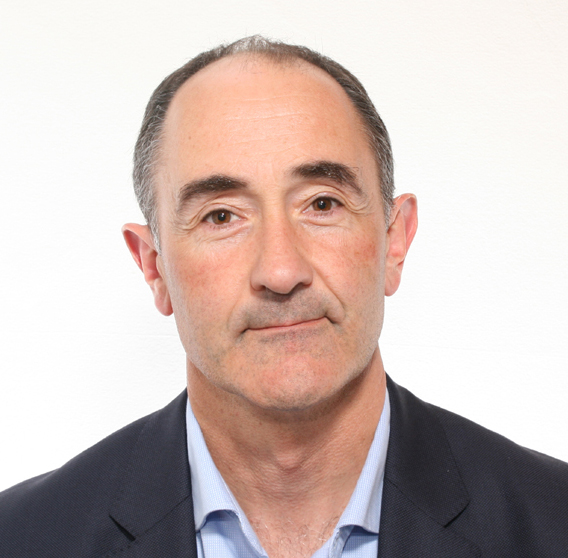
David Leigh is a Professor in Organic Chemistry at the University of Manchester , UK. He has held prestigious positions including the Sir Samuel Hall Chair (2014–present), Forbes Chair at the University of Edinburgh (2001–2012), and Chair of Synthetic Chemistry at the University of Warwick (1998–2001). His research focuses on synthetic molecular machines, supramolecular chemistry, and molecular knots. Fields of Scholarship : Synthetic molecular machines, Synthetic molecular knots and links, Supramolecular chemistry His work includes creating hydrogen-bonded molecular rotors , reversible rotary molecular motors , and artificial ribosome mimics . Article trends highlight nanotechnology , molecular engineering , and self-assembly advancements. Scientific Awards : Royal Society of Chemistry Pedler Award (2014), ERC Advanced Grant (2014), Bakerian Prize (2013), Tilden Prize (2010), Fellow of the Royal Society (2009), etc. Leigh has led groundbreaking projects funded by the European Research Council (2008, 2014) and held an EPSRC Senior Research Fellowship (2005–2010). His lab at the University of Manchester explores bottom-up molecular design and stimuli-responsive systems.
Yuri Y. Gleba is a renowned academic scientist affiliated with the Institute of Cell Biology and Genetic Engineering at the Ukrainian Academy of Sciences in Kiev, Ukraine. As Founder and Director (1989–2010) and current Honorary Director, he has shaped plant biotechnology research through pioneering work in transient expression systems and molecular farming. Key Roles: Founder and Director of Institute of Cell Biology and Genetic Engineering (1989–2010), Honorary Director (2010–present) Research Interests Plant genetics , plant physiology , and biotechnology underpin his work in genetic engineering , viral vector systems , and transgenic plant applications . His innovations include the Magnifection platform for rapid plant-based vaccine production and methods for RNA silencing enhancement in molecular farming. Scientific Recognition includes membership in six international academies (World Academy of Arts and Science, Academia Europaea, Leopoldina, Ukrainian Academy of Sciences, Lithuanian Academy of Science, Bavarian Academy of Sciences) and prestigious awards like the Koerber Prize , A. von Humboldt Prize , and state prizes from the USSR and Ukraine. His work has appeared in top journals including Proceedings of the National Academy of Sciences USA and FEBS Letters . Publications : Gleba's 15 most recent articles (2004–2010) focus on plant biotechnology applications, viral vector engineering, and molecular farming. Key trends include plant-based pharmaceutical production , transient expression systems , and transgene containment strategies . Laboratory and Collaborations : Founded and led the Institute of Cell Biology and Genetic Engineering, fostering international collaborations in plant biotechnology and genetic engineering research.
Sabine Glasl-Tazreiter is a Lecturer at the University of Vienna's Faculty of Life Sciences , specifically within the Department of Pharmaceutical Sciences and its Division of Pharmacognosy . Her office is located in room 2E 412 on the 4th floor at Josef-Holaubek-Platz 2, Vienna, Austria (1090). Contact details include telephone number +43-1-4277-55207 and email sabine.glasl@univie.ac.at . Principal research focus: Phytochemistry & Biodiscovery Specialization: Secondary metabolites from ethnomedicinally used plants across Europe, Mongolia, and Latin America Key techniques: Isolation of bioactive compounds, structural elucidation, pharmacological evaluation Quality control expertise: Macroscopic/microscopic identification, chemical analytics Recent publications highlight her work in: 2024 - Development of the VOLKSMED Database for Austrian folk medicine wound healing plants 2025 - Advanced mucociliary clearance research in respiratory systems 2023 - Innovations in optoacoustic imaging technology 2019 - Structure-function analysis of phycobiliproteins for medical imaging 2017 - Phytochemical characterization of Latin American antidiabetic plants
Professor Ray Dixon Ray Dixon is a Research Professor and Project Leader at the Department of Molecular Microbiology, John Innes Centre, and co-Director of the CAS-JIC Centre for Excellence in Plant and Microbial Sciences in Beijing/Shanghai. He has been an Honorary Professor at the University of East Anglia's School of Biological Sciences since 1998. His career spans over four decades in bacterial nitrogen fixation research. Education: B.Sc. (Microbiology, University of Reading, 1969), D.Phil. (Microbial Genetics, University of Sussex, 1973). Research Focus: Regulation of biological nitrogen fixation by environmental signals (oxygen/nitrogen/metal availability). His lab pioneers synthetic biology approaches to engineer nitrogen fixation into plants, aiming to enhance sustainable agriculture. Achievements: Elected Fellow of the Royal Society (1999), EMBO Member (1987), recipient of the Adam Kondorosi Award (2019) and Fleming Award (1983). Over 30 years of leadership in international scientific committees and funding panels. Key Contributions: Pioneered understanding of nif gene regulation, discovered novel nitrogenase systems, and developed polyprotein strategies for synthetic biology applications. Collaborates globally through initiatives like CEPAMS and UBNFC.
Matteo Carandini is the GlaxoSmithKline / Fight for Sight Professor of Visual Neuroscience at University College London, holding appointments in the Faculty of Brain Sciences and the Institute of Ophthalmology. He has maintained his UCL position since 2007 following prior roles at Smith-Kettlewell Eye Research Institute and ETH Zurich. Education: Ph.D. in Neural Science, New York University (1996) Laurea in Mathematics, summa cum laude, Università di Roma (1990) Research Focus: Carandini's work integrates visual neuroscience , computational modeling , and large-scale neural recordings to decode how cortical circuits process sensory information. His lab pioneers techniques for monitoring million-neuron ensembles during behavior, investigating how internal states like attention modulate sensory processing through circuit-level mechanisms in visual cortex. Scientific Recognition: 2023 ERC Advanced Investigator 2022 Wellcome Trust Investigator 2018 M. R. Bauer Distinguished Visiting Professor, Brandeis University 2009 & 2023 ERC Advanced Grants Multiple Wellcome Trust Investigator Awards (2012, 2017, 2022) 2005 McKnight Scholar Award Mentorship & Funding: Carandini has trained 21 postdoctoral fellows and 9 doctoral students who now lead research at institutions including Oxford, Stanford, and DeepMind. His £20M+ research portfolio includes the ERC/UKRI "Coding and wiring in a million cortical neurons" project (2023-2028) and Wellcome Trust "Photonic Neuropixels probes" initiative, driving innovations in brain-wide recording technology. Collaborative Leadership: As Executive Committee member of the Neuropixels collaboration and former International Brain Laboratory board member, he coordinates global neuroscience consortia developing standardized approaches for studying brain-wide circuit dynamics during decision-making.
Gordana Wozniak-Knopp is a researcher at the University of Natural Resources and Life Sciences, Vienna (BOKU), affiliated with the Institute of Molecular Biotechnology under the Department of Biotechnology and Food Science. Her work focuses on antibody engineering, molecular biotechnology, and protein stability optimization. Key research areas include Development of multispecific antibodies using controlled Fab-arm exchange and SEED technology Engineering antigen-binding sites in Fc regions Stabilization of antibody fragments via disulfide bonds and domain exchange Extracellular vesicle functionalization for targeted drug delivery Design of diagnostic antibody microarrays and SARS-CoV-2 antigen platforms Between 2020–2024, she led an FWF-funded project on therapeutic antibodies for birch pollinosis and a 2016–2023 CD Laboratory for Innovative Immunotherapeutics. Her recent publications (2022–2023) emphasize trispecific antibody design, SARS-CoV-2 diagnostics, and CD81-based delivery systems. Scientific contributions include peer-review activities for journals like Protein Science , Nature Communications , and Scientific Reports , along with organizing events such as the Lange Nacht Der Forschung 2024 . She actively participates in international conferences and project evaluations for organizations like Poland’s National Science Centre.
Martin Fussenegger is a Professor of Biotechnology and Bioengineering at both the Department of Biosystems Science and Engineering (D-BSSE) of ETH Zurich in Basel and the University of Basel. He is a leading expert in synthetic biology, mammalian cell engineering, and metabolic disorder correction through designer cell implants. Education: Graduated under Werner Arber at the University of Basel (1992) Ph.D. in Medical Microbiology (1994) with Volkmar Braun at the Max Planck Institute of Biology in Tübingen Postdoctoral studies on host-pathogen interactions with Thomas F. Meyer at the Max Planck Institute of Infection Biology in Berlin (1995) His research focuses on designing synthetic gene circuits that implement complex control and closed-loop expression logic, as well as developing theranostic designer cell implants that interface with host metabolism to correct metabolic disorders like diabetes, obesity, and neurodegenerative diseases. Recent work emphasizes electrogenetics and synthetic immunology. Scientific Awards: Swiss National Science Foundation Professor Award (2002) Gaden Award (2003) ERC Advanced Grants (2012, 2018) James E. Bailey Award (2015) Medal of the European Society for Animal Cell Technology (ESACT) (2015) Fussenegger has served in leadership roles including Chairman of ETH Zurich's Department of Biosystems Science and Engineering (2009-2010) and Director of Studies for the ETH Zurich Biotechnology Curriculum (2005-2013). He is a member of AIMBE, EMBO, SATW, and the US National Academy of Engineering.
Lise Øvreås is a Professor in Geomicrobiology at the Department of Biology, University of Bergen, with a distinguished career spanning over two decades. She serves as President of the Norwegian Academy of Science and Letters (since 2022), Academic Director of Ocean Sustainability Bergen (2019-2022), and Dean of Research at the Faculty of Mathematics and Natural Sciences (2010-2014). Her interdisciplinary research bridges microbiology, ecology, mathematics, and computer science. Education: Ph.D. in Microbiology (Dr.Scient), University of Bergen (1998) Pedagogic Exam in Instructional Theory and Practice, University of Bergen (1992) Master of Science in Microbiology (Cand. Scient.), University of Bergen (1991) Bioengineer (authorized), Fysiokjemikerhøgskolen in Bergen (1986) Her research focuses on microbial genetic diversity, population dynamics, and biodiversity regulation in Arctic ecosystems and deep-sea hydrothermal vents. She investigates how microbial communities adapt to environmental stressors like climate change and gradients in salinity/pH. Her work emphasizes interdisciplinary approaches to understanding microbial ecology. Lise Øvreås has published 94 scientific articles (Google Scholar), including several highly cited papers on microbial ecology. Her research contributes to global understanding of microbial biodiversity in extreme environments. Scientific Honours: Nansen Minneforelsening (2020) Fulbright Arctic Chair (2012) Multiple symposium awards (1993-2002) President of Norwegian Academy of Sciences and Letters (2022) Member of Norwegian Academy of Technological Sciences (since 2014) International working group memberships (Royal Society, NCEAS) She has supervised 30 master’s students, 14 PhD graduates, and 7 postdocs, demonstrating her commitment to academic mentorship. Her leadership roles include Vice-Head of Biology Department (2015-2016) and participation in boards like Olav Thon Foundation (2014-2023).
Rainer Hahn is an Associate Professor in Biochemical Engineering at the Institute of Biochemical Engineering, Department of Biotechnology and Food Sciences, University of Natural Resources and Life Sciences, Vienna (BOKU). He also serves as Head of the Downstream Processing Unit at the BioIndustrial Pilot Plant and is a key researcher at the Austrian Center of Industrial Biotechnology (ACIB). His work is centered on bioprocess engineering with a strong focus on downstream processing and biopharmaceutical purification. University: University of Natural Resources and Life Sciences, Vienna (BOKU) School: Department of Biotechnology and Food Sciences Department: Institute of Biochemical Engineering Role: Associate Professor, Head of Downstream Processing Unit His research interests span Bioprocess Engineering , Downstream Processing , Industrial Biotechnology , Pharmaceutical Technology , and Chemical Biology . He investigates advanced purification techniques, particularly in chromatography and protein separation processes. His recent work emphasizes multicomponent adsorption, protein A affinity systems, and purification of complex biomolecules like secretory immunoglobulin A (sIgA). The trend in his recent publications reveals a strong emphasis on protein purification , chromatographic modeling , and process optimization in biopharmaceutical manufacturing. His work integrates experimental analysis with mathematical modeling to improve efficiency and predictability in downstream operations, especially in multi-component systems. Topics such as continuous chromatography , pH transients , and affinity resin development reflect his leadership in advancing industrial bioprocessing. His notable scientific awards include: HOUSKA PRIZE (Recognition Award) - 2016 Dissertation Prize of the Austrian Society for Biotechnology - 2002 Rainer Hahn has been actively involved in numerous research projects funded by FWF, national enterprises, and private foundations, focusing on biopharmaceutical purification and process development. He mentors students and contributes to academic training through lectures and supervision. He is also a dedicated reviewer for leading journals such as Journal of Chromatography A , Biotechnology and Bioengineering , and Separation and Purification Technology . His work is closely tied to industrial applications, particularly in the development of scalable and efficient biomanufacturing processes. He is associated with the BioIndustrial Pilot Plant and collaborates with ACIB, contributing to innovation in industrial biotechnology. His research group focuses on developing robust downstream strategies for next-generation biopharmaceuticals.
Magdalena Von Der Thannen is a Senior Scientist & Lecturer at the Institute of Soil Bioengineering and Landscape Construction at the University of Natural Resources and Life Sciences, Vienna (BOKU). She earned her doctorate with distinction in 2019 and holds two master's degrees from BOKU Vienna - in Alpine Natural Dangers/Watershed Regulations (2014) and Landscape Planning and Landscape Architecture (2012). Her educational background includes: Doctorate (2019, passed with distinction) Master in Alpine Natural Dangers / Watershed Regulations (2014, BOKU Vienna) Master in Landscape Planning and Landscape Architecture (2012, BOKU Vienna) Dr. Von Der Thannen's research focuses on soil bioengineering, river restoration, life cycle assessment, carbon balance, ecosystem services, and eddy covariance measurements. Her work bridges engineering, ecology, and environmental science with particular emphasis on sustainable approaches to natural hazard protection and landscape management. She has developed methodologies for environmental life cycle assessment of alpine protective structures and soil bioengineering constructions, with a strong focus on carbon balance and ecosystem services valuation. Analysis of her publications reveals a consistent research trajectory focused on quantifying the environmental performance of bioengineering solutions. Her most recent work (2024-2025) emphasizes carbon accounting in urban green infrastructure and floodplain ecosystems, building upon earlier work on life cycle assessment methodologies. She has established connections between eddy covariance measurements and ecosystem services, particularly in riparian restoration contexts. Her scientific recognition includes: Jubiläumsfonds der Stadt Wien für die Universität für Bodenkultur (2020) Projektprämierung der Stadt Wien - BOKU Research Funding Programm 2020 Dr. Von Der Thannen has presented her research at numerous international conferences including the EGU General Assembly and INTERPRAEVENT meetings. Her work demonstrates strong collaboration with Austrian and European institutions focused on natural hazard management and sustainable infrastructure development.
Univ.-Prof. Dr. Viktoria Weber serves as Vice-Rector for Research and Sustainable Development at the University for Continuing Education Krems, Austria. Her work bridges academic leadership and cutting-edge biomedical research, with a focus on biomaterials, extracellular vesicles, and immunothrombosis. Research interests include blood-biomaterial interactions, heparin pharmacology, and the role of extracellular vesicles in disease pathogenesis. She leads studies on stem cell-derived vesicles for regenerative medicine and diagnostic applications. Her lab investigates mechanisms underlying immunothrombosis in sepsis and新冠肺炎. Publications emphasize translational research in biomaterial design, coagulation pathways, and cell signaling. Her work integrates advanced bioreactor systems, flow cytometry standardization, and clinical diagnostics. Current projects explore therapeutic apheresis materials and novel endotoxin detection methods. Her interdisciplinary approach spans bioengineering, immunology, and clinical practice, contributing to innovations in dialysis membranes and blood product safety. She collaborates internationally on MISEV2023 guidelines for extracellular vesicle research standardization.
Luis M. Liz-Marzán is an Ikerbasque Professor and Scientific Director at CIC biomaGUNE in San Sebastián, Spain. He was previously a Full Professor at the University of Vigo and has held visiting positions at institutions such as Tohoku University, University of Michigan, and Max-Planck Institute of Colloids and Interfaces. Education: He studied Chemistry at the University of Santiago de Compostela (1983–1988) and earned his PhD in 1992 with a thesis on microemulsions and magnetic nanoparticles. Research Interests: His work focuses on nanoplasmonics , colloid science , and nanoparticle self-assembly . He has pioneered the use of colloidal methods for controlling nanoparticle shape, optical properties, and biomedical applications such as biosensing and early disease diagnostics . His publications span a broad range of topics including plasmonic tuning, nanowire growth, biofilm imaging, and surface-enhanced Raman scattering. The trend in his work shows a strong integration of synthesis, characterization, and application of nanomaterials, particularly gold and silver-based systems, with a growing emphasis on biomedical interfaces. Awards and Honors: Blaise Pascal Medal in Materials Science (2017) ERC Advanced Grants (2011 & 2018) Highly Cited Researcher (2014–2018) Fellow of EURASC, OSA, and RSC Grants and Collaborations: He has led major international projects, including two ERC Advanced Grants, and has collaborated with institutions across Europe, Asia, and the Americas. His group, the Bionanoplasmonics Laboratory , has reshaped CIC biomaGUNE into a globally recognized center.
Birgit Wiltschi is a researcher at the Institute of Bioprocess Science and Engineering within the University of Natural Resources and Life Sciences, Vienna (BOKU) . Her work focuses on protein engineering, non-canonical amino acid incorporation, and bioprocess optimization for therapeutic and industrial applications. Academic Affiliation : BOKU, Institute of Bioprocess Science and Engineering Research Themes : Protein functionalization, bioorthogonal chemistry, enzyme engineering, synthetic biology, and bioproduction systems Recent publication trends highlight her expertise in: Site-specific non-canonical amino acid incorporation Chemoselective protein modification techniques Development of "clickable" therapeutic proteins Lectin engineering for biomedical applications Optimization of microbial bioproduction systems Doctoral Thesis Supervision : Hanaee A: Development of methods for in vitro quantification of proteolysis in E. coli systems (2024)
Dr. Lea Atanasova is a Principal Investigator (PI) at the University of Natural Resources and Life Sciences in Vienna (BOKU), affiliated with the iLTEC Food Technology and iIMIG Microbial Genetics research groups. She holds academic degrees of Mag.rer.nat. and Dr.rer.nat., with her work focusing on interdisciplinary applications in food technology and microbial genetics. Contact: lea.atanasova@boku.ac.at Research Interests: Dr. Atanasova's work spans Food Science , Microbiology , and Biotechnology , emphasizing practical applications in food systems and microbial processes. Her expertise also intersects with Applied Chemistry and Environmental Science through sustainable biotechnological innovations. Labs & Teams: iLTEC Food Technology iIMIG Microbial Genetics
Martin Altvater is a researcher at the Institute of Microbiology and Microbial Biotechnology within the Department of Biotechnology and Life Sciences at the University of Natural Resources and Life Sciences, Vienna (BOKU). He holds a Dr. sc. from ETH Zurich and a Dipl.-Biol., and his work focuses on microbial biotechnology, particularly yeast-based systems for sustainable bioproduction. His research spans ribosome assembly, fermentation technologies, and metabolic engineering for lactic acid production. His research interests include Microbiology, Microbial Biotechnology, Yeast Biotechnology, Ribosome Assembly, Sustainable Bioproduction, Lactic Acid Fermentation, Synthetic Biology, Industrial Biotechnology, Bioart, and Metabolic Engineering . These areas reflect a strong interdisciplinary focus on using microbial systems for industrial and environmental applications, particularly in the context of bioeconomy and sustainability. The trends in his recent publications highlight a dual focus: one on fundamental molecular mechanisms in yeast ribosome biogenesis and nuclear export, and another on applied biotechnological innovations for sustainable lactic acid production. His work integrates systems biology, metabolic engineering, and process optimization, often using Saccharomyces cerevisiae as a model and industrial host. A notable recent direction includes bioart collaborations, emphasizing science communication and public engagement. Scientific Awards: No specific awards or fellowships are listed in the available data. Advising and Grants: There is no public record of supervised theses or doctoral students. No research projects are currently listed under his name as principal investigator. However, he actively contributes to the scientific community as a reviewer for journals including Biotechnology Journal , Essays in Biochemistry , Bioengineering , BMC Biotechnology , and FEMS Microbiology Letters . Labs and Research Teams: Martin Altvater is affiliated with the Institute of Microbiology and Microbial Biotechnology at BOKU, where he conducts research in microbial systems and bioprocesses. He collaborates closely with leading researchers such as Diethard Mattanovich and Michael Sauer, known for their work in industrial biotechnology and systems biology. His work is embedded in a larger research ecosystem focused on sustainable bioproduction and synthetic biology.

_Skokanitsch_Magnolia (210x280px).jpg)