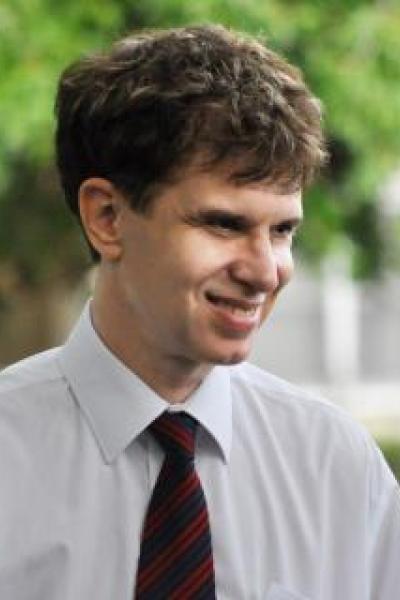
Dr. Minliang Yang is an Assistant Professor in Food Sustainability at North Carolina State University's Department of Food, Bioprocessing & Nutrition Sciences. Her research focuses on system-level analyses (TEA, LCA, machine learning) to advance food sustainability, particularly through plant-based foods, cellular agriculture, and greenhouse gas mitigation strategies. She holds a B.S. in Food Science from Henan University of Technology (2012), M.S. and Ph.D. in Agricultural and Biosystems Engineering from Iowa State University (2014/2018), and a postdoctoral fellowship at Lawrence Berkeley National Laboratory (2022). Her work spans biofuel production, bioproduct valorization, and sustainable biorefinery systems. Key contributions include optimizing biomass pretreatment methods (e.g., low-moisture anhydrous ammonia), developing plant-based platforms for human milk oligosaccharides, and evaluating the economic viability of carbon-negative fuels. Dr. Yang's interdisciplinary approach integrates engineering, biology, and economics to address global food system challenges. Recent publications emphasize co-processing agricultural residues, machine learning-driven process modeling, and cost-benefit analyses of bio-based materials. Her research highlights the potential of integrating plant biotechnology with advanced analytics to create scalable, sustainable solutions for food and energy systems.
Michael Benzaquen is a CNRS Research Scientist and accredited research director (HDR) based at École Polytechnique, where he founded and currently holds the Chair of Econophysics & Complex Systems. He is affiliated with LadHyX (UMR CNRS 7646), a research laboratory focused on hydrodynamics and complex systems at the intersection of physics, economics, and social sciences. Dr. Benzaquen's research spans multiple interdisciplinary fields, with primary interests in: Statistical physics of complex systems Hydrodynamics at interfaces Econophysics and quantitative finance Socio-physics and behavioral modeling Applications of physics to economics and social sciences Physical approaches to market microstructure and price formation His work demonstrates a unique methodology applying physical principles to understand complex phenomena in financial markets, social dynamics, and ecological systems. Dr. Benzaquen has made significant contributions to understanding market impact, price formation, and the statistical properties of economic systems from a physics perspective, while also maintaining strong research in fundamental fluid dynamics and interfacial phenomena. Analysis of Dr. Benzaquen's extensive publication record reveals a consistent trend toward interdisciplinary integration, with recent work increasingly bridging statistical physics, econophysics, and complex systems theory to address real-world problems. His publications span from fundamental research on ship wakes, liquid crystals, and thin films to applied studies in quantitative finance, ecological economics, and social dynamics, demonstrating remarkable breadth while maintaining methodological coherence through statistical physics approaches. As an accredited research director (HDR), Dr. Benzaquen supervises PhD students and postdoctoral researchers, leading an active research group focused on econophysics and complex systems. His group maintains strong collaborations across disciplines and regularly publishes in high-impact journals spanning physics, finance, and interdisciplinary sciences. The group's work is supported by various research funding sources enabling ambitious projects at the intersection of physics and social sciences. Dr. Benzaquen's laboratory at LadHyX brings together researchers from diverse backgrounds including physics, mathematics, economics, and computer science to tackle complex problems using quantitative approaches. His research has practical applications in financial market regulation, ecological conservation, and materials science, reflecting the real-world impact of his interdisciplinary methodology.
Adam Kleczkowski is a Professor in the Department of Mathematics and Statistics at the University of Strathclyde, where he holds the Global Talent Chair. He is actively involved in research, supervising PhD students, and contributing to public health policy, particularly in epidemiological modeling. University: University of Strathclyde School: Faculty of Science Department: Department of Mathematics and Statistics Position: Professor Email: a.kleczkowski@strath.ac.uk ORCID: 0000-0003-1384-4352 Twitter: @aklecz Education: Doctor of Science in Theoretical Physics, Jagiellonian University (1989) Master of Physics, Jagiellonian University (1984) Adam Kleczkowski's research focuses on mathematical biology, particularly in modeling infectious diseases in human, animal, and plant populations. His work integrates ecological modeling, bioeconomic analysis, and public health, with applications in food security, sustainability in aquaculture, and pollination services. He specializes in parameter estimation for epidemiological systems and develops models to inform disease control strategies. His recent contributions include modeling the spread of COVID-19 in Scottish care homes and analyzing the risks of measles outbreaks due to declining vaccination rates. His recent publications and blog posts reflect a strong trend in combining rigorous mathematical modeling with accessible science communication. He frequently writes for The Conversation and maintains two blogs—'Statistically (in)significant' in English and 'Pandemia 2021' in Polish—covering topics such as tuberculosis, immigration, aging populations, and election data. His scientific work is supported by major funders including NERC, MRC, BBSRC, Scottish Government, and Defra. Scientific Contributions and Outreach: Member, Science Advice and Response Team, Plant Health Centre (Scotland) Expert contributor to Scottish Government on Plant Health business case Contributor to Scottish Government and Public Health Scotland COVID-19 modeling Author of 14 articles in The Conversation (over 1.5 million reads) Regular science blogger and tweeter (@aklecz) He has led or participated in 24 research projects, including international collaborations such as a Memorandum of Understanding with ICRISAT. He has supervised multiple research students and projects, and his work contributes to UN Sustainable Development Goals related to health, food security, and sustainable agriculture. He is also an Honorary Professor at the University of Stirling (2018–2020), reflecting his ongoing academic influence.
Rick Horan is a Professor in the Department of Agricultural, Food, and Resource Economics at Michigan State University (MSU), part of the College of Agriculture & Natural Resources. He holds a Ph.D., M.A. from Pennsylvania State University, and dual B.S. degrees from Appalachian State University. His research focuses on environmental and natural resource economics, particularly the interplay between economic and ecological systems. Key areas include endangered species management, invasive species control, wildlife disease dynamics, and agricultural pollution policy. He has published in top journals like PNAS, American Economic Review, and the American Journal of Agricultural Economics. Horan has served as Managing Editor of Resource and Energy Economics (2010–13), Associate Editor roles for American Journal of Agricultural Economics and Natural Resource Modeling , and contributed to a National Academy of Sciences report on environmental policy. His teaching includes Advanced Natural Resource Economics and Microeconomic Theory analysis. Research highlights include modeling ecological thresholds, bioeconomic approaches to species management, and integrating human behavior into epidemiological models. His work has been featured in media outlets like The Economist and Forbes. Horan’s advising and grants focus on interdisciplinary solutions for environmental challenges. His labs and research teams address complex issues like agri-environmental service coordination and sustainable land-use strategies. Current research explores policy mechanisms for balancing economic activities with ecosystem preservation.
Didier Raboisson is a Full Professor in Ruminant Population Medicine and Animal Health Economics at the National Veterinary School of Toulouse (ENVT), France. Holding a DVM, MSc, PhD, and Diplomate status in the European College of Bovine Health Management (ECBHM), his career spans from clinical practice (2004-2006) to academic leadership at ENVT since 2006, progressing from contractual assistant to full professor in 2019. His educational credentials include a Doctor in Veterinary Medicine (2003), ruminant clinical internship (2005), MSc in Agricultural Socio-economics (2007), PhD in Institutional Economics (2011), and HDR accreditation (2017). His research pioneered the DairyHealthSimulator® (DHS®), a stochastic dynamic bioeconomic model optimizing dairy herd management under constraints like antimicrobial use. Key contributions address veterinary workforce shortages, disease cost analytics, and veterinary business models through innovative frameworks like the DODforD herd health approach. Raboisson's publication portfolio exceeds 75 international peer-reviewed papers, with recent work focusing on antimicrobial reduction strategies, lameness economics, and dairy cooperative development. His research demonstrates consistent interdisciplinary integration of veterinary science, economics, and stochastic modeling, particularly evident in the shift from descriptive disease cost analysis to utility-optimized decision frameworks. Scientific recognition includes: ECBHM Diplomate status (2011) HDR accreditation (2017) DHS® and App Qost® patents Academic editor roles at PlosOne and Frontiers in Veterinary Sciences As supervisor of 8 PhD students and 6 post-doctorates, Raboisson leads the VetEconomics research group while directing France's continuous training program in bovine population medicine. His grant portfolio exceeds €1.4 million from INRAE, Ministry for Agricultural Sovereignty, ANR, and EU programs. International collaborations span Cornell, Liverpool, and Indian institutions through CEFIPRA and Prezode initiatives, with policy impact evidenced by DGAL working group contributions on veterinary shortages and biosecurity.
Dr. Hans Oechsner is a leading academic in agricultural engineering and bioenergy, holding multiple leadership positions including Head of the State Institute for Agricultural Engineering and Bioenergy (Landesanstalt für Agrartechnik und Bioenergie), Managing Director of the Baden-Württemberg Working Group on Agricultural Engineering and Rural Construction (ALB), and Project Leader for the International Graduate College focused on maize-based agricultural systems adaptation to limited phosphate reserves. He teaches advanced courses on biogas technology and bioenergy infrastructure at the Department of Agricultural Engineering in the Tropics and Subtropics. His research centers on optimizing bioenergy systems and sustainable resource management, with key interests in: Advanced biogas production techniques (e.g., mechanical pretreatment, two-stage digestion) Phosphorus recovery from organic waste streams Valorization of agricultural residues and livestock manure Development of circular bioeconomy models for crop systems Dr. Oechsner's recent publications (2022-2025) demonstrate a strong focus on enhancing biogas plant efficiency, nutrient recycling from digestate, and sustainable biomass utilization. His work consistently integrates full-scale applications with fundamental research, particularly in pretreatment optimization and waste stream valorization. He leads research infrastructure at the State Institute for Agricultural Engineering and Bioenergy, coordinating teams working on large-scale biogas optimization and agricultural waste management. His projects frequently involve international collaborations and industry partnerships.
David Finnoff is a Professor and Wyoming Excellence Chair in Economics at the University of Wyoming. His research integrates economics with epidemiology and ecology to address global challenges. Key research domains: Pandemic economics and optimal intervention strategies Bioeconomic modeling of wildlife diseases Invasive species risk management Climate change impacts on natural resources He leads the $991,566 NSF RAISE project on behavioral responses to epidemics and has published foundational work in PNAS on pandemic optimization. His research informs policy at USDA, NOAA, and public health agencies.
David Kling is an Associate Professor in the Department of Applied Economics at Oregon State University, specializing in natural resource and environmental economics. His research bridges ecological systems with economic decision-making frameworks. Natural resource economics Bioeconomics Non-market valuation methods Marine and forest resource management His recent publications focus on uncertainty modeling in resource management, invasive species control, and climate adaptation strategies. Key themes include policy dynamics, ecological valuation, and adaptive management frameworks.
Yu (Yvette) Zhang is a Professor in the Department of Agricultural Economics at Texas A&M University, affiliated with the College of Agriculture and Life Sciences. She holds dual Ph.D.s in Economics (Texas A&M University, 2010) and Biology (Duke University, 2004), and a B.S. in Life Sciences from Peking University (1998). Her research focuses on behavioral and experimental economics, food economics, applied econometrics, and environmental economics. She has been recognized with awards such as the Uma Lele Mentor Award (2023) and contributed to editorial roles at major journals like Applied Economic Perspectives and Policy . Her work addresses critical issues like consumer behavior in food markets, pandemic impacts on global food systems, and policy interventions for sustainable agriculture. Recent studies include analyzing incentive programs to curb brain drain and evaluating the effects of climate change on crop yields. She has advised numerous graduate students and collaborates across disciplines to address complex economic challenges. Education : Ph.D. in Economics, Texas A&M University, 2010 Ph.D. in Biology, Duke University, 2004 B.S. in Life Sciences, Peking University, 1998 Her research intersects agriculture, environment, and policy, with a focus on empirical methods and real-world applications. Recent publications highlight interdisciplinary approaches to food security, pest management, and consumer preferences for sustainable products.
Jaejin Jang is Associate Professor and Department Chair of Industrial & Manufacturing Engineering at UW-Milwaukee. His research optimizes production systems and supply chains, with recent focus on biofuel subsidies and water-energy nexus management. Publications appear in International Journal of Energy Research and other leading journals. He developed algorithms for semiconductor fabrication throughput improvement and scheduling optimization under uncertainty. His doctoral work at Purdue focused on industrial system efficiency.
Jon Olaf Olaussen is a Professor of Economics at NTNU School of Economics and Vice Dean for Research at the Faculty of Economics at NTNU. He holds a PhD from NTNU’s Department of Economics (2007) and previously worked at Sintef Fisheries and Aquaculture before joining NTNU in 2008. Education: PhD in Economics, NTNU Department of Economics (2007) Research Focus: Jon’s research spans environmental and resource economics, with a focus on natural resource management, aquaculture challenges (e.g., wild salmon and sea lice interactions), housing economics (energy labeling and real estate markets), and wildlife management (moose, deer, reindeer). He leads the NTNU School of Business and Economics Centre for Housing and Environmental Economics. Recent Article Trends: His work explores regulatory challenges in aquaculture, housing market dynamics (auctions, energy certificates), and angler behavior in Nordic fisheries. Key topics include policy impacts, biodiversity conservation, and strategic economic decision-making. Labs & Teams: He oversees the Centre for Housing and Environmental Economics, which integrates economic analysis with environmental and housing sector challenges.
Prof. Keikhosro Karimi is a Professor in the Department of Bio-engineering Sciences at Vrije Universiteit Brussel. His research focuses on sustainable biorefinery systems, waste valorization, and biofuel production. Key areas include biomass pretreatment, bioenergy optimization, and circular economy strategies for industrial and agricultural residues. Research Projects STEP-Chem (2025–2029): Technological strategies for a sustainable chemical industry. IPSU 2024: Smart biorefinery concepts for municipal biowaste valorization in Europe. Research Interests Prof. Karimi’s work integrates advanced pretreatment technologies, machine learning optimization, and life cycle assessment to address sustainability challenges in bioenergy systems. He explores innovative approaches for converting lignocellulosic biomass, marine macroalgae, and food industry byproducts into biofuels, biochemicals, and high-value materials. Recent Contributions Recent studies highlight breakthroughs in ultrasound-assisted biomass processing , fish waste biorefining , and blockchain-enabled food waste management . His work emphasizes scalability, economic viability, and environmental impact mitigation in bioprocess design. Grants & Collaborations Active collaborations include EU-funded initiatives and industry partnerships focused on bio-based economies. Ongoing projects aim to harmonize technological, socio-economic, and environmental dimensions of sustainable chemical production.
Gina Shamshak is a Professor in Economics and Environmental Studies at Goucher College . As an environmental and natural resource economist specializing in fisheries and aquaculture economics , she develops dynamic stochastic bioeconomic models to analyze seafood markets and fishing industry sustainability. Education: Ph.D. in Environmental and Natural Resource Economics (University of Rhode Island), M.A. and B.A. in Economics (Boston University) Her research focuses on seafood consumption patterns , fishing community economics , and sustainable aquaculture production systems . Recent publications examine market opportunities for U.S. aquaculture, economic viability of inland seafood markets, and global seafood demand trends. Scientific Awards: Elizabeth Conolly Todd Class of 1921 Distinguished Professorship (2023-2028) Caroline Doebler Bruckerl Class of 1925 Award (2021-2022) IAAEM Dissertation of the Year (2010) As principal investigator and subcontract researcher on multiple NOAA grants, she has examined regulatory impacts on fishing crews, elasmobranch interactions in shrimp fisheries, and local food movement potential for seafood producers. She has presented keynote addresses at international aquaculture conferences, including Aquaculture America and IIFET symposia.
Katherine Y. Zipp is an Associate Professor of Environmental and Resource Economics in the Department of Agricultural Economics, Sociology, and Education (AESE) at The Pennsylvania State University, where she is co-funded by the Institutes of Energy and the Environment (IEE). Based at 116 Ferguson Building in University Park, PA, she conducts critical research on the economic drivers and environmental consequences of land cover and land use changes, addressing pressing issues including climate change, habitat destruction, and water pollution through interdisciplinary frameworks. Her research program integrates Environmental and Resource Economics with spatial analysis to investigate Open-space Conservation, Environmental Risk Assessment (focusing on floods, wildfires, and invasive species), Water Quality, and Biofuel Production. She develops sophisticated models that capture the dynamic feedback between economic decisions and environmental systems, emphasizing how land-use policies must account for both human behavior and ecological processes to achieve sustainable outcomes. Her work bridges theoretical economics with practical applications in conservation and resource management. Analysis of her recent publications reveals a consistent focus on spatially explicit economic modeling applied to environmental challenges, particularly in three domains: flood risk and insurance policy (examining market adaptations to flood maps), bioenergy crop adoption on marginal lands (using spatial hot spot analysis), and recreational ecosystem services (linking visitor motivations to management outcomes). Her interdisciplinary approach frequently incorporates natural resource management perspectives and stakeholder engagement, yielding actionable insights for environmental policy design. Dr. Zipp has secured substantial external funding as Principal Investigator and Co-Principal Investigator across multiple high-impact projects: Co-PI on a $748,456 U.S. Fish and Wildlife Service grant (2020-2022) for "Implementing High Priority Objectives, Strategies, and Actions Identified in the Pennsylvania Aquatic Invasive Species Management Plan" PI on a $9,952 PSU ICS Seed Grant for "The Study and Simulation of the Mechanisms Driving Species Migration" Co-PI on a $797,949 U.S. Fish and Wildlife Service grant (2019-2021) for "Advancing High Priority, Objectives, Strategies and Actions Identified in the Pennsylvania Aquatic Invasive Species Management Plan" Co-PI on a $499,500 USDA National Institute of Food and Agriculture grant (2017-2019) for "Flexible Buffer Systems: Enhancing Ecosystem Services and Expanding Agricultural Options in Riparian Areas" PI on a $200,000 FAA ASCENT grant (2016-2017) for "Analysis of Ecosystem service valuation and policy design of water quality improvements associated with perennial grasses and cover crops" Co-PI on a $326,646 USDI Joint Fire Sciences Program grant (2016-2019) for "Firescapes in the mid-Atlantic: Mismatches between social perceptions and prescribed fire use" Co-PI on a $50,000 Center for Rural Pennsylvania grant (2016) for "Flood Mitigation for Pennsylvania's Rural Communities: Community-Scale Impact of Federal Policies" She actively mentors graduate researchers including William L. Rice, X. Li, W. Jiang, and Y-H Shr, whose collaborative work appears in her publication record. Her research teams consistently integrate economists, ecologists, and social scientists to address complex environmental problems, with strong partnerships across federal agencies, state programs, and interdisciplinary research centers at Penn State.
Tom Kompas is an Honorary Professor of Environmental Economics and Biosecurity at the University of Melbourne, affiliated with the Crawford School of Public Policy. He holds leadership roles, including Editor-in-Chief of Asia and the Pacific Policy Studies and former Director of the Crawford School (2009–2015). His research focuses on bioeconomic modelling, climate change impacts, and natural resource economics, with contributions to global biosecurity policy and fisheries management. He has advised the Australian Department of Agriculture’s Eminent Scientists Group since 2010. His research integrates large-scale economic models to address complex environmental challenges, such as optimal biosecurity surveillance and climate policy. Key publications include analyses of foot-and-mouth disease management, fisheries sustainability, and the economic implications of climate change. He has received prestigious awards, including the CSIRO Medal for Research Achievement (2009) and the Eureka Prize (2011). Educations: Not explicitly listed, but extensive academic career implies advanced degrees in economics or related fields. His work bridges theory and practice, addressing real-world issues like water resource management, invasive species control, and sustainable development. He has served on international advisory boards and contributed to policy frameworks for marine reserves and fisheries governance. Grants & Advising: His research has been widely funded, though specific grants are not detailed here. Advised numerous collaborative projects with government and academic institutions. Tom’s teaching excellence is recognized through multiple awards, reflecting his commitment to student learning and pedagogical innovation.