Professor Thomas Bein is affiliated with the Department of Chemistry at Ludwig-Maximilians-Universität München (LMU) , where he leads the Functional Nanosystems research group. His work focuses on synthesizing and characterizing nanostructured materials with applications in energy, catalysis, and biomedical delivery. Mesoporous nanoparticles for drug delivery Semiconductor nano-morphologies for photovoltaics Photoelectrochemical water splitting Metal-organic frameworks (MOFs) Electroactive networks His research emphasizes atomic-scale control of material architectures using self-assembly, hydrogen bonding, and covalent interactions, enabling precise tuning of electronic, optical, and catalytic properties. A review of his recent publications reveals cutting-edge investigations into covalent organic frameworks (COFs), perovskite-inspired solar materials, and functional nanoparticle systems. Key trends include optimizing energy conversion efficiency, enhancing stability in optoelectronic devices, and exploring bio-compatible nanocarriers for targeted therapies. Professor Bein’s group actively contributes to interdisciplinary projects at the intersection of chemistry, physics, and biomedical engineering, with ongoing collaborations in solar energy, sustainable materials, and nanomedicine.
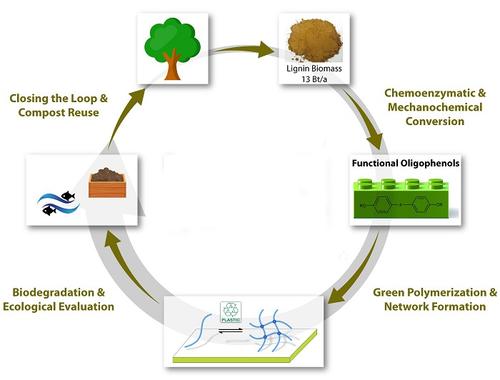
Rainer Haag is a Professor at the Department of Chemistry, Freie Universität Berlin, leading the Haag Group in the Institute of Chemistry and Biochemistry. His research focuses on biodegradable and sustainable materials, dynamic hydrogels, and polymeric nanosystems for biomedical applications. Department of Chemistry, Freie Universität Berlin Member of SFB 1449: Dynamic Hydrogels at Biointerfaces Collaborator in the StemGel startup project Co-founder of CSR|Berlin interdisciplinary research institute Research Interests: Development of stimuli-responsive polymers, multivalent virus inhibitors, and functional biointerfaces. Key projects include: Antiviral coatings using heteromultivalent polymers Thermoresponsive hydrogels for stem cell expansion Graphene derivatives for bacterial capture and disinfection Lignin upcycling for sustainable resin materials Supramolecular nanosystems for drug delivery Publication Trends highlight interdisciplinary work in polymer chemistry, nanotechnology, and biomedical applications. Recent articles focus on: 2D polyglycerols for virus interactions Redox-responsive nanogels Mucus-inspired adhesive hydrogels Tumor-targeting micelles Bacterial disinfection using graphene composites Labs & Collaborations include the Polymeric and Supramolecular Nanosystems subgroup, the Dynamic Hydrogels and Biointerfaces team, and partnerships with MIT in developing bioinspired adhesives. His group contributes to DFG-funded SFB 1449 and CSR|Berlin initiatives.
Max Planck Institute for Intelligent SystemsGermany
Christoph Keplinger serves as Managing Director of the Max Planck Institute for Intelligent Systems (MPI-IS) in Stuttgart, Germany, leading the Robotic Materials Department since 2020 and assuming overall institute leadership in 2023. He holds dual academic appointments as Honorary Professor at the University of Stuttgart and Eminent Visiting Professor of Soft Robotics at the University of Colorado Boulder, establishing him as a pivotal figure in bridging fundamental materials science with advanced robotics. His interdisciplinary approach integrates physics, chemistry, and engineering to pioneer breakthroughs in soft robotic systems. Keplinger's academic foundation includes a PhD in Soft Matter Physics from Johannes Kepler University Linz, Austria, followed by postdoctoral research at Harvard University focusing on mechanics and chemistry of soft materials. This unique background enabled his transition into robotics innovation, particularly in electrohydraulic actuation systems. His research program centers on three synergistic pillars: (I) soft robotics development through novel actuator technologies like HASEL artificial muscles; (II) energy capture mechanisms using soft materials; and (III) functional polymers engineered for robotic applications. This work produces transformative hardware that mimics biological functionality, with significant implications for human-robot interaction, medical devices, and sustainable robotics systems. His group employs cutting-edge materials synthesis and characterization techniques to create lifelike robotic components. Analysis of recent publications reveals dominant trends in wearable haptic interfaces, electrohydraulic actuation systems, and tremor-suppression technologies. The research consistently leverages HASEL (Hydraulically Amplified Self-healing Electrostatic) technology to achieve muscle-like performance in soft actuators, with applications spanning from fingertip haptic feedback to underwater manipulation systems. This trajectory demonstrates a clear progression from fundamental material properties toward practical implementations in medical rehabilitation and human augmentation. His exceptional contributions have earned prestigious recognition: 2017 Packard Fellowship for Science and Engineering, awarded for high-impact interdisciplinary research 2021 Alexander von Humboldt Professorship (declined to remain at MPI-IS), Germany's most valuable international research award 2013 EAPromising European Researcher Award from the European Scientific Network for Artificial Muscles As principal investigator, Keplinger leads a dynamic interdisciplinary research group while securing competitive funding for frontier projects. His entrepreneurial vision materialized in 2018 through co-founding Artimus Robotics, where he serves as Chief Science Officer to commercialize HASEL technology. This dual commitment to academic research and industry translation exemplifies his dedication to real-world impact, particularly in creating biodegradable and sustainable soft robotic solutions. The Robotic Materials Department operates state-of-the-art facilities for materials fabrication, robotic integration, and haptic interface development. The team maintains strong collaborations across MPI-IS departments and external institutions including the University of Colorado Boulder, fostering innovation in sustainable robotics through initiatives like biodegradable electrohydraulic actuators. Current projects focus on wearable tremor suppression systems, electrohydraulic locomotion platforms, and energy-autonomous soft robots that address critical challenges in medical rehabilitation and human augmentation.
Lukas Hiendlmeier is a Researcher at the Technical University of Munich, affiliated with the Munich Institute of Biomedical Engineering (MIBE) and the Associate Professorship of Neuroelectronics led by Prof. Bernhard Wolfrum. He holds a Master of Science in Mechanical Engineering from TUM. His research focuses on advanced fabrication technologies such as 3D printing, laser micromachining, and polymer material science, with applications in neuroelectronics and biomedical devices. Hiendlmeier’s work emphasizes developing self-folding bioelectronic interfaces, flexible electrodes, and implantable neural devices for peripheral nerve interfacing. His contributions include innovations in 4D printing techniques, thermoformed materials, and origami-inspired electrode designs. He collaborates on projects involving cell manipulation, microfluidic lab-on-a-chip systems, and closed-loop neural stimulation systems. Publications span topics like self-folding bioelectronics, flexible sensor arrays, and nanorobotics, showcasing expertise in materials science and biomedical engineering. His research bridges fundamental science and translational applications, addressing challenges in neural prosthetics, wearable diagnostics, and tissue engineering. Hiendlmeier is actively involved in the neuroTUM initiative and contributes to interdisciplinary teams at TUM, focusing on advancing neurotechnology through innovative fabrication methods and biomaterials.
Dr. Friederike Adams is an Independent Research Group Leader at the University of Stuttgart and University of Tübingen, focusing on Precision Polymers for Pharmaceutics . Her work bridges polymer chemistry and nanomedicine, emphasizing sustainable materials for drug delivery systems. Education: PhD in Chemistry (2019, TU Munich), M.Sc. in Chemistry (2015, TU Munich), B.Sc. in Chemistry (2013, TU Munich) Awards: No explicit awards listed Research: Specializes in living-type polymerizations, catalyst design, and post-polymerization functionalization for drug and RNA delivery . Publications: 15+ works on sustainable polyesters, metal-catalyzed polymerization, and nanocarrier systems. Students: Mentors 10+ PhD, master’s, and bachelor’s students, including Lea-Sophie Hornberger and Philipp Weingarten . Collaboration: Joint research group with the Schnichels Lab at the Eye Hospital Tübingen. Funded by BMBF and Baden-Württemberg Ministry of Science under Germany’s Excellence Strategy.
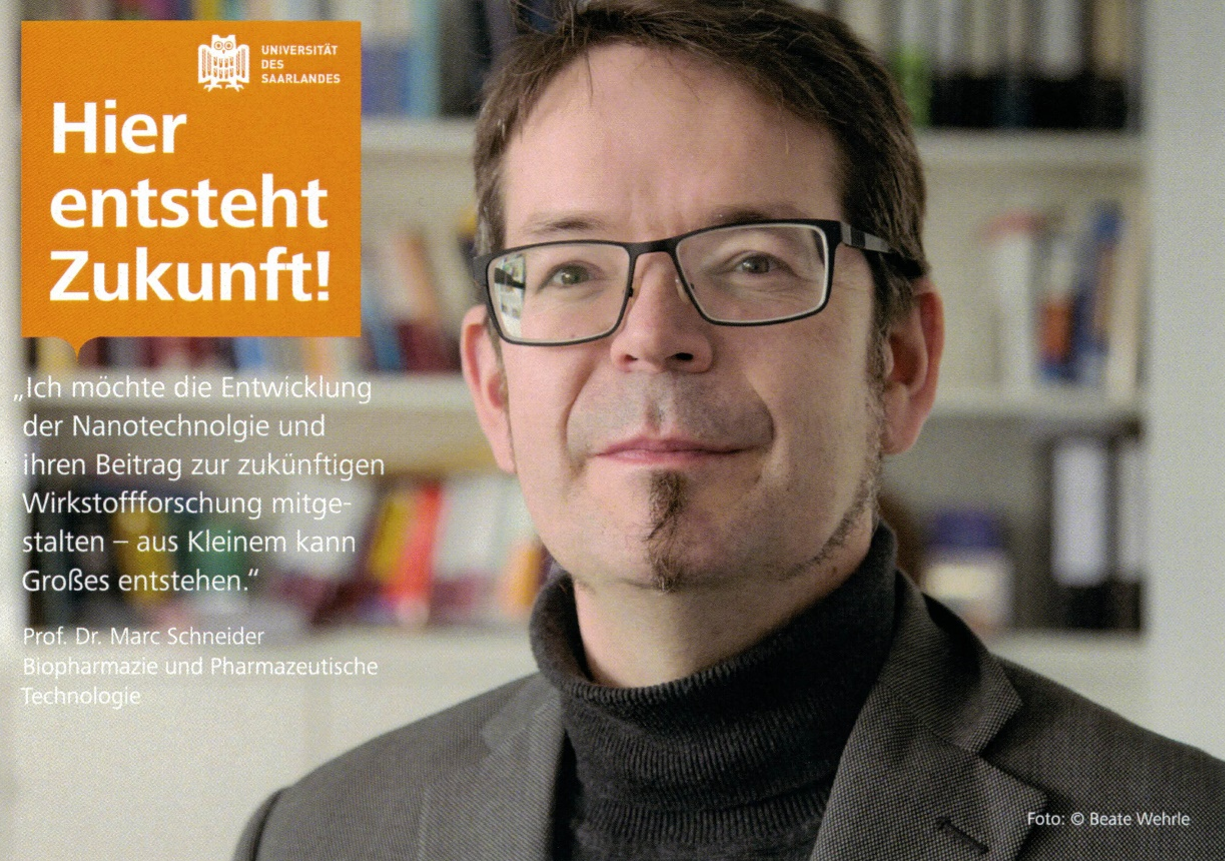
Prof. Dr. Marc Schneider holds a professorship in Biopharmaceutics and Pharmaceutical Technology at Saarland University's College of Pharmacy . His research focuses on colloidal drug delivery systems, particularly nanostructured and non-spherical particle engineering for overcoming biological barriers in pulmonary and transdermal applications. He leads an internationally recognized lab in Saarbrücken, collaborating with Helmholtz Institute for Pharmaceutical Research Saarland (HIPS) and trinational institutions. Research Highlights: Development of inhalable nano/microparticle systems Surface modification of gelatin nanoparticles Characterization of mucus-penetrating particles 3D printing for microneedle fabrication Atomic Force Microscopy (AFM) for nanoparticle analysis Selected Scientific Awards: European Journal of Pharmaceutics and Biopharmaceutics Best Paper Award (2018) for mucus-penetrating nanoparticles Recognized in 'Ausgezeichnete Orte im Land der Ideen' competition (2018) for 'Nano-Mais' drug delivery system Collaborative Networks: Co-editor for Advanced Drug Delivery Reviews special issue on biological barriers Key participant in trinational Master's program in Biomedicine with Strasbourg, Mainz, and Luxembourg Active in Controlled Release Society (CRS) conferences and local chapters
Prof. Dr.-Ing. Arne Pietsch is a faculty member at the Technical University of Luebeck in the Department of Mechanical Engineering and Economics . His expertise centers on apparatus and plant engineering for the food industry , with a focus on hygienic apparatus engineering and high-pressure technology . Specializations: Food process engineering, supercritical fluid applications, and industrial plant design Current role: Founding Officer in the department His research spans supercritical CO2 processes , including decaffeination, turbine cleaning, and polymer impregnation. He integrates high-pressure systems into engineering education and explores viscosity dynamics in food processing. Key publication trends (2012–2019) highlight work in: Supercritical fluid extraction and impregnation High-pressure equipment safety and design Gas-assisted oilseed pressing Coffee processing quality control
Prof. Ellen Kandeler is a leading academic in soil biology and microbial ecology at the University of Hohenheim , heading the Department of Soil Biology within the Institute of Soil Science and Site Science. Her work focuses on microbial interactions, soil organic matter dynamics, and the impacts of land use and climate change on soil systems. She actively contributes to interdisciplinary projects funded by the German Research Foundation (DFG), including studies on mineral-organic matter associations, pesticide degradation, and agroecosystem resilience. Research interests include rhizosphere dynamics, biogeochemical cycles, and the ecological functions of soil microorganisms, with applications in sustainable agriculture and environmental protection. She is also involved in institutional roles as a Deputy Ombudsperson for Scientific Integrity and member of committees overseeing large-scale research infrastructure. Her recent publications emphasize climate-soil feedbacks, microbial community assembly, and the biodegradation of agrochemicals. Projects like the DFG-FOR 1695 on agricultural landscapes under climate change highlight her commitment to addressing global environmental challenges through soil science. Prof. Kandeler’s work bridges fundamental and applied research, with a focus on translating soil microbial processes into strategies for sustainable land management and mitigating anthropogenic impacts on soil health.
Prof. Dr. Leonid Ionov is a leading academic at the Faculty of Engineering Science , University of Bayreuth, specializing in Biofabrication and 4D Printing . He has held professorial roles since 2017, with prior positions at the University of Georgia and TU Dresden. Research Priorities: Smart responsive polymers, 3D/4D bioprinting, self-healing electronics, and bioinspired surface engineering. Teaching: Offers advanced courses in 3D Printing of Polymers , Biofabrication , and Polymer Science . His work integrates stimuli-responsive materials with additive manufacturing to create bioinspired actuators, vascular scaffolds, and self-healing conductive systems. Recent articles focus on 4D-printed vascular junctions , multi-responsive cellulose composites , and dynamic bilayer morphing . Scientific Achievements Recipient of the 2022 North Bavaria Business Plan Competition award 2012 Georg Manecke Prize for biopolymer research Developed European patents for Li-S battery cathodes and microfluidic devices Trained over 20 PhD/postdoc alumni now at institutions like Iowa State University and Harvard Medical School . Leads a multidisciplinary lab with advanced equipment for polymer synthesis, electrospinning, and cell culture studies.
Prof. Dr.-Ing. Jörg Müssig serves as a Professor at Bremen University of Applied Sciences within Faculty 5 (Department 2), focusing on sustainable composite materials development. His research bridges engineering and environmental science through innovation in natural fiber applications for industrial use. His primary research domains encompass natural fiber composites, biobased materials, and sustainable material systems, with specialized expertise in flax, hemp, and nettle fiber reinforcement. He investigates mechanical properties, interfacial adhesion mechanisms, flame retardancy solutions, and processing techniques like injection molding and filament winding, emphasizing sustainability metrics and biomimetic design principles. Analysis of his 2024-2025 publications reveals dominant themes in natural fiber composite optimization, particularly regenerated cellulose systems and coupling agent-free interfaces. Emerging trends include consumer perception studies of biobased materials and integration of ecological parameters into industrial design processes, reflecting expanding interdisciplinary approaches. Prof. Müssig leads extensive grant-funded projects including edible mushroom mycelium composites (2024-2026), sulfur-based flame retardants (2024-2026), natural fiber sector market analysis across Europe (2024-2025), and marine durability studies (2024-2025), demonstrating sustained research leadership with significant industry and cross-institutional collaborations. His work operates within a robust research ecosystem at Bremen University of Applied Sciences, where his project portfolio indicates leadership of a specialized team focused on sustainable material innovation, though specific lab infrastructure details remain unmentioned in source materials.
Florian Hausen is a Professor for Applied Interface Electrochemistry at RWTH Aachen University and leads the scanning probe microscopy focused group at the Fundamentals of Electrochemistry (IET-1) department within Forschungszentrum Jülich . His work bridges electrochemistry, nanotechnology, and materials science, with a focus on energy storage systems. Education : Studied Chemistry at the University of Bonn PhD in Physics from Saarland University Hausen's research interests center on in-situ/operando scanning probe techniques to study interfaces in energy materials, including solid-state batteries , proton exchange membrane water electrolyzers , and ionic liquids . His group explores: Correlative microscopy (AFM, SEM, EPR) for multi-scale analysis Mechanical properties under electrochemical load Tribology of materials in battery systems Interphases in lithium, zinc, and silicon-based energy technologies The article trends reflect his expertise in: Nanoscale electrochemical characterization of battery and electrolyzer components Material degradation under dynamic cycling and electrochemical stress Correlation of electrical, mechanical, and chemical properties in energy systems Technique development for operando studies and data reproducibility His work contributes to understanding and improving: Lithium plating and SEI formation Nanomechanical stability of electrolyzer anodes and cathodes Carbon nanofiber properties for battery electrodes Doping effects in ceramic solid electrolytes
Thomas Gries is a Professor at RWTH Aachen University 's Department of Textile Technology . He serves as the Director of the university's textile machinery department, leading research in composite materials, sustainable textiles, and advanced manufacturing technologies. Current Role: University Professor & Director, Chair of Textile Machinery Research Focus: Textile engineering, carbon fiber composites, sustainable manufacturing, digital twins His work spans experimental studies on fiber-reinforced composites, AI-driven process optimization, and lunar regolith-based fiber production for space applications. Collaborations include public research projects with industrial partners and events like the WIRKTag 2025 on AI in work design. Recent publications analyze: Mechanical behavior of natural/synthetic fiber composites Recycled thermoplastic composite thermoforming 3D-woven CFRP structural optimization Moon-based fiber production from lunar materials Environmental impact assessment tools for textiles
Prof. Tanja Weil is a Director at the Max Planck Institute for Polymer Research, recognized for her groundbreaking research at the intersection of polymer chemistry and biomedical applications. She received the prestigious Karl Ziegler Award in 2023 for her work on supramolecular polymers in living cells, particularly their role in disrupting cancer cell structures. Her research focuses on designing synthetic materials that interface with biological systems, with applications in targeted drug delivery, cancer therapy, and imaging technologies. Notably, her studies on light-responsive peptide nanostructures and fluorescent nanodiamond sensors highlight her expertise in merging materials science with life sciences. Her scientific contributions span polymer synthesis, nanomedicine, and diagnostic tools, with recent breakthroughs in intracellular assembly dynamics and metallodrug development. Awards include the Karl Ziegler Award (50,000€ + gold medal), acknowledging her dual impact on fundamental science and translational medicine. Collaborations with international teams are evident in symposia like the CRC1066 on tumor immunotherapy, underscoring her role in fostering interdisciplinary research. Awards: Karl Ziegler Award (2023) Key Research Areas: Peptide nanostructures in cancer, bioorthogonal chemistry, nanodiamond quantum sensors. Lab/Team: Department Weil at Max Planck Institute, leading projects on synthetic biology and biomedical nanomaterials.
Óscar Andrey Herrera Sancho is a Full Professor at the University of Costa Rica and a researcher at the Atomic, Nuclear and Molecular Sciences Research Center. He holds a PhD in Physics from Leibniz University Hannover and has held roles including Head of the Physical Metrology Department at the National Metrology Institute of Costa Rica. His research spans Quantum Optics, Quantum Biology, Surface Physics, and Educational Physics, with interdisciplinary work in art conservation, biophysics, and cultural heritage science. Education: Postdoc Fellowship, Institute for Quantum Optics and Quantum Information, University of Innsbruck (2016) PhD in Physics, Leibniz University Hannover (2012) M.Sc. in Physics, University of Costa Rica (2008) B.Sc. in Physics, University of Costa Rica (2003) Research Interests: His work bridges quantum physics with cultural heritage preservation, including material analysis of historical artifacts, fungal biodeterioration studies, and pedagogical innovations linking literature and science. He also investigates surface physics phenomena relevant to astrophysical ice transitions and quantum gas systems. Scientific Awards: Alexander von Humboldt Foundation Fellow Advising & Grants: While specific grants are not listed, his extensive co-authorship network and leadership roles indicate active collaboration in interdisciplinary research. His work on cultural heritage has involved student teams in material analysis and software development for artifact preservation. Labs & Teams: Leads the Spatially Resolved Ultracold Rydberg Physics group at the 5th Institute of Physics, focusing on quantum systems and their applications in precision measurement and cultural heritage science.
Felecia Davis is an Associate Professor of Architecture at Stuckeman School, Penn State University , where she leads the SOFTLAB research group. Her work bridges architecture, computational design, and textile technology, exploring how responsive materials can transform spatial experiences. She is also a co-founder of the Black Reconstruction Collective , a non-profit supporting Black diaspora design work. Ph.D. in Design and Computation from MIT Master of Architecture from Princeton University B.S. in Engineering from Tufts University Davis investigates the intersection of computational textiles , responsive architecture , and Black spatial practices . Her research includes thermoresponsive knitted structures, emotion-sensing textiles, and mycelium-based architectural composites. She examines how materials can embody cultural narratives and environmental adaptability. Her 15 most recent publications (2012-2024) focus on topics like knitted tension structures, biohybrid materials, dreadlock-inspired architecture, and electromagnetic urbanism. These works span disciplines including architecture , material science , and cultural studies , with subfields like soft robotics , haptic interfaces , and sustainable fabrication . 2023 Bogliasco Foundation Architecture Fellow 2022 Cooper Hewitt Smithsonian Design Museum Digital Design Awardee 2022 Architectural League Emerging Voices Winner 2021 MoMA Reconstructions Exhibition Contributor 2013-2012 Multiple MIT research awards Davis has advised students in projects like MycoKnit and Phototropic Fiber Composites , and led design studios at Princeton , Cooper Union , and Cornell . Her SOFTLAB pioneers textile-based architectural systems, while her forthcoming book Softbuilt: Networked Architectural Textiles (2025) synthesizes her material research.