Professor Thomas Bein is affiliated with the Department of Chemistry at Ludwig-Maximilians-Universität München (LMU) , where he leads the Functional Nanosystems research group. His work focuses on synthesizing and characterizing nanostructured materials with applications in energy, catalysis, and biomedical delivery. Mesoporous nanoparticles for drug delivery Semiconductor nano-morphologies for photovoltaics Photoelectrochemical water splitting Metal-organic frameworks (MOFs) Electroactive networks His research emphasizes atomic-scale control of material architectures using self-assembly, hydrogen bonding, and covalent interactions, enabling precise tuning of electronic, optical, and catalytic properties. A review of his recent publications reveals cutting-edge investigations into covalent organic frameworks (COFs), perovskite-inspired solar materials, and functional nanoparticle systems. Key trends include optimizing energy conversion efficiency, enhancing stability in optoelectronic devices, and exploring bio-compatible nanocarriers for targeted therapies. Professor Bein’s group actively contributes to interdisciplinary projects at the intersection of chemistry, physics, and biomedical engineering, with ongoing collaborations in solar energy, sustainable materials, and nanomedicine.
Sandro Carrara is a Full Professor at École Polytechnique Fédérale de Lausanne (EPFL), where he leads the Bio/CMOS Interfaces (BCI) laboratory. He is affiliated with the School of Engineering (STI), the Institute of Electrical Engineering (SCI-STI-SC), and the Integrated Systems Laboratory (LSI). His academic leadership spans teaching, doctoral supervision, and editorial roles in major journals including IEEE Sensors Journal and BioNanoScience. Education: Diploma in Electronics, National Technical Institute of Albenga, Italy Master in Physics, University of Genoa, Italy PhD in Biochemistry and Biophysics, University of Padua, Italy His research focuses on the integration of biological systems with CMOS technology, particularly in the development of nanoscale biosensors for health monitoring. Key areas include memristive biosensors, wearable and implantable sensors, electrochemical detection, and therapeutic drug monitoring. His work bridges electronics, nanotechnology, and biomedicine to enable point-of-care diagnostics and personalized medicine. His recent publications (2023–2025) show a strong trend toward sustainable printed electronics, machine learning for biosensing, in-memory computing for cancer diagnostics, and remote health monitoring. These works appear in high-impact journals such as IEEE Sensors Journal , Nanoscale , and Biosensors and Bioelectronics: X . Scientific Awards: IEEE Fellow (2015) IEEE Sensors Council Technical Achievement Award (2016) Distinguished Lecturer, IEEE Sensors Council (2017) Best Paper Award, IEEE MeMeA Symposium (2020) Multiple Gold and Bronze Leaf Prizes at PRIME and IEEE conferences Best Poster Awards at EMBEC and Nano-Tera meetings He actively advises PhD students and leads research projects involving CMOS-based biosensors, wireless implants, and smart sensor systems. His lab collaborates widely across disciplines and institutions, focusing on real-world applications in oncology, neurology, and environmental health. He has also contributed to the development of battery-free wearable devices, optical power transfer systems, and IoT-enabled telemedicine platforms. Laboratories and Teams: Bio/CMOS Interfaces (BCI) Laboratory, EPFL Integrated Systems Laboratory (LSI), EPFL Collaborations with IEEE Sensors Council and Circuits and Systems Society Editorial leadership in IEEE Sensors Journal and BioNanoScience
Irene Taurino is an Assistant Professor (tenure track) in the Faculty of Engineering Science at KU Leuven, affiliated with the Department of Physics and Astronomy and the Department of Electrical Engineering (ESAT). She leads the Laboratory of Electrochemical Materials and Bio Interfaces (eMATI), focusing on nano- and microtechnologies for biomedical applications. Her work emphasizes developing advanced electrochemical systems for therapeutic and sensing purposes, including biodegradable platforms and stretchable substrates. Research Interests: Electrochemistry, Nanotechnology, (Bio)sensing, Drug delivery, Bimetals/Metal Oxides, and Smart materials. Projects include HumiPlast (plant transpiration sensors), QuantPAH (firefighter health monitoring), and TALENT (thin-film deposition technologies). She holds leadership roles in Leuven One Health, LIMNI, and the Plant Institute. Advising & Grants: Promotes/Co-promotes 10+ projects on biosensors, CO2 electroreduction, and smart farming. Key roles in funding initiatives like EU Horizon and industry partnerships. Labs/Teams: Heads eMATI, fostering interdisciplinary research in bioelectronics and soft materials. Emphasizes creativity and translational research from fundamental science to practical applications.
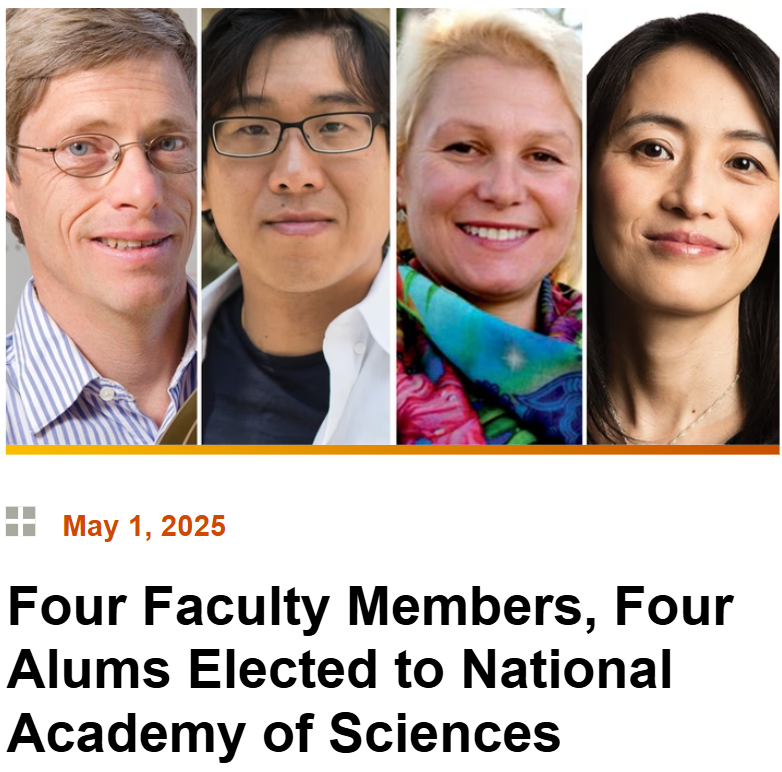
Julia R. Greer serves as the Ruben F. and Donna Mettler Professor of Materials Science, Mechanics and Medical Engineering at the California Institute of Technology (Caltech), where she also holds the position of Executive Officer for Applied Physics and Materials Science since 2025. She earned her B.S. from MIT (1997) and M.S./Ph.D. from Stanford University (2000/2005), joining Caltech as Assistant Professor in 2007, promoted to Professor in 2013, and appointed to her current named professorship in 2019. Her research spans mechanics of hierarchical architectures , nanomaterials , and additive manufacturing , with significant contributions to energy storage systems and biomedical materials . Key focus areas include nano-scale mechanical properties, in-situ deformation analysis, and development of novel fabrication techniques for micro-architected materials. Her group pioneered hydrogel infusion additive manufacturing for metals and multiphoton 3D lithography standards. Analysis of recent publications reveals strong emphasis on solid-state battery interfaces (2025), bioresorbable microrobots (2024), and AI-enabled material design (2024), demonstrating cross-disciplinary impact across energy, healthcare, and quantum technologies. Her work consistently bridges fundamental nanomechanics with practical applications in energy storage and medical devices. 2024 ASME Nadai Medal 2024 SES A.C. Eringen Medal Elected to National Academy of Sciences (2025) Fletcher Jones Foundation Director (2019-2025) Professor Greer has advised over 40 PhD students including Seola Lee (2025) and Wenxin Zhang (2025), with research funded by collaborations spanning MIT, UCSF, Purdue, and ETH Zurich. Her group maintains active projects in lightweight nanoarchitected materials for impact absorption, electroactive polymers for braille devices, and 3D interdigitated solid-state batteries. Current leadership includes Editor-in-Chief of the Journal of Applied Physics (2024-) and direction of Caltech's Materials Science department.
Lukas Hiendlmeier is a Researcher at the Technical University of Munich, affiliated with the Munich Institute of Biomedical Engineering (MIBE) and the Associate Professorship of Neuroelectronics led by Prof. Bernhard Wolfrum. He holds a Master of Science in Mechanical Engineering from TUM. His research focuses on advanced fabrication technologies such as 3D printing, laser micromachining, and polymer material science, with applications in neuroelectronics and biomedical devices. Hiendlmeier’s work emphasizes developing self-folding bioelectronic interfaces, flexible electrodes, and implantable neural devices for peripheral nerve interfacing. His contributions include innovations in 4D printing techniques, thermoformed materials, and origami-inspired electrode designs. He collaborates on projects involving cell manipulation, microfluidic lab-on-a-chip systems, and closed-loop neural stimulation systems. Publications span topics like self-folding bioelectronics, flexible sensor arrays, and nanorobotics, showcasing expertise in materials science and biomedical engineering. His research bridges fundamental science and translational applications, addressing challenges in neural prosthetics, wearable diagnostics, and tissue engineering. Hiendlmeier is actively involved in the neuroTUM initiative and contributes to interdisciplinary teams at TUM, focusing on advancing neurotechnology through innovative fabrication methods and biomaterials.
Abdon Pena-Francesch is an Assistant Professor in the Department of Materials Science and Engineering at the University of Michigan. He is also affiliated with the Macromolecular Science and Engineering Program, Chemical Engineering, and the Michigan Robotics Institute. His interdisciplinary research integrates biomaterials science, polymer chemistry, soft matter physics, and nanotechnology to develop programmable soft materials for applications in healthcare, robotics, and environmental science. Education: Ph.D. in Engineering Science and Mechanics, The Pennsylvania State University, 2017 M.Sc. in Chemical Engineering, Institut Químic de Sarrià (Barcelona, Spain), 2013 B.Sc. in Mechanical Engineering, Institut Químic de Sarrià (Barcelona, Spain), 2011 Research Interests: His work focuses on bioinspired materials , soft robotics , self-healing polymers , and biodegradable microrobots . By engineering molecular and nanoscale structures, his lab designs materials with programmable properties for soft robotic systems and biomedical devices. The group emphasizes both fundamental science and translational applications, including tissue repair, actuation, and environmental sensing. Awards and Honors: Humboldt Research Fellowship for Postdoctoral Researchers (2018–2020) Alumni Association Dissertation Award, Penn State University (2017) Rustum and Della Roy Innovation in Materials Research Award (2016) Materials Research Society Graduate Student Award (2016) First Prize, Penn State ESM Graduate Research Symposium (2015) AGAUR MOBINT Fellowship, Government of Catalunya (2012) Labs and Affiliations: He leads the Bioinspired Materials Lab , an interdisciplinary group within the University of Michigan’s Materials Science & Engineering Department. The lab collaborates with the Macromolecular Science & Engineering Program, Chemical Engineering, and the Michigan Robotics Institute.
Muhammad Muddasar is a Researcher at the University of Limerick's School of Engineering, affiliated with the Bernal Institute. His primary research focuses on developing sustainable materials derived from lignin for energy harvesting and storage applications. Under the supervision of Professor Maurice Collins, he investigates advanced materials such as hydrogels, ionic conducting membranes, and carbon nanomaterials to enhance renewable energy systems. His work emphasizes reducing environmental impact through innovative synthesis techniques and lifecycle analysis. Key research areas include thermoelectric materials, bioenergy production, microbial electrolysis cells, and lignin valorization. Collaborations span topics like low-grade thermal energy recovery, supercapacitor optimization, and carbon fiber production improvements. Despite no explicit awards listed, his contributions include over 17 peer-reviewed publications between 2021-2025, showcasing impactful work in Materials Today Sustainability, Advanced Functional Materials, and ACS Applied Polymer Materials. His articles highlight trends in lignin-derived materials for energy applications, sustainable manufacturing, and nanomaterial-driven bioenergy systems. Active in international networks, his research bridges material science and renewable energy engineering, addressing global sustainability challenges.
Tarmo Tamm is a Researcher at the Intelligent Materials and Systems Lab, University of Tartu. His work focuses on conducting polymers, soft actuators, and biomaterials , with emphasis on applications in biomedical engineering, nanotechnology, and electrochemistry. He holds a primary affiliation with the University of Tartu and has authored/co-authored over 100 peer-reviewed articles since 2002. His research spans material characterization, actuator design, and polymer electrolyte systems. Key projects include development of biocompatible hydrogels (e.g., sea cucumber-derived materials), soft exoskeletons inspired by spider leg mechanics, and sustainable paper recycling processes . Tamm’s publications highlight interdisciplinary collaboration with institutions globally, addressing topics like ion mobility in PEDOT films, microbial interactions with silicone foams, and encapsulation techniques for biomedical actuators. His work often bridges fundamental material science with practical applications, such as energy storage systems and medical devices. Current research trends emphasize electrochemomechanical systems and bioinspired materials , with growing focus on sustainable materials engineering.
Dr. Hongli (Julie) Zhu is an Associate Professor in the Department of Mechanical and Industrial Engineering at Northeastern University's College of Engineering. Her research focuses on sustainable energy storage, multifunctional materials, and advanced manufacturing, with emphasis on developing environmentally friendly biomass-derived materials, all solid-state batteries, and flow batteries. She leads the ZHU Lab at Northeastern University, which is dedicated to creating safer, cheaper, and higher performance energy storage solutions while exploring multifunctional materials derived from nature. Dr. Zhu received her PhD from South China University of Technology and Western Michigan University (2004-2009). She conducted postdoctoral research at KTH Royal Institute of Technology in Sweden (2009-2011), focusing on biodegradable and renewable biomaterials from natural wood, followed by additional postdoctoral work at the University of Maryland (2012-2015), where she researched nanocellulose and energy storage. Dr. Zhu's research spans multiple disciplines at the intersection of materials science, energy storage, and sustainable manufacturing. Her work addresses critical challenges in energy storage technology, including developing all solid-state batteries, flow batteries, and high energy density battery systems. She has pioneered research in sustainable biomass-derived materials, particularly investigating cellulose, hemicellulose, and lignin for applications in bendable, implantable, and biocompatible electronics. Her lab also focuses on advanced manufacturing techniques, including high-speed roll-to-roll processing for emerging advanced materials and devices. Analysis of Dr. Zhu's publication record reveals a strong focus on next-generation battery technologies, particularly solid-state systems. Her research demonstrates significant contributions to understanding and improving lithium dendrite suppression, electrode architecture optimization, and interface stabilization in solid-state batteries. She has also made substantial advances in sustainable materials derived from natural resources, developing applications for cellulose nanostructured fibers, paper, and aerogel/hydrogel systems. MRS Communications Early Career Distinguished Presenters and JMR Distinguished Invited Speakers (2024) Selected in Stanford University List of Top 2% Scientists Worldwide (2021-2024) College of Engineering Faculty Fellow (2023) Soren Buus Outstanding Research Award (2022) Women in Materials Science, Advanced Materials (2021 and 2022) Women Scientists at the Forefront of Energy Research, ACS Energy Letters (2020) Innovator of the Year 2013, Maryland Jakob Wallenberg Scholarship, Sweden Dr. Zhu has secured significant research funding from various sources, including the National Science Foundation and Department of Energy. Her current projects include "Uncovering the mechano-electro-chemo mechanism of fresh Li in sulfide based all solid-state batteries through operando studies" (NSF), "Enabling Advanced Electrode Architecture through Printing Technique" (DOE), and "Engineering the Metal Sulfide Interface in All Solid State Batteries through Operando Study" (NSF). She collaborates with industry partners including Rogers Corporation and has developed patented technologies related to sustainable materials and energy storage. Dr. Zhu serves as Codirector of Advanced & Intelligent Manufacturing, Editor of Progress in Materials Science, and on the Editorial Advisory Board of Chemical Society Reviews. The ZHU Lab at Northeastern University is a highly interdisciplinary research group that bridges scales from the nanoscopic to macroscopic and system level. The lab's work has led to numerous patents, including "Natural fiber composites as a low-cost plastic alternative" and "Fire-retardant Nanocellulose Aerogel, and Methods of Preparation and Uses Thereof." The group focuses on making energy storage safer, cheaper, and higher performing while exploring multifunctional materials derived from nature, with particular emphasis on applying high-speed roll-to-roll manufacturing to emerging advanced materials and devices.
Alex Chortos is an Assistant Professor of Mechanical Engineering at Purdue University's School of Mechanical Engineering. His research focuses on bio-inspired electronics, mechanically adaptive materials, and advanced manufacturing techniques. He leads the Chortos Lab, which explores innovations in soft actuators, wearable haptics, and polymer design. Chortos holds a B.A.Sc. from the University of Waterloo (2011), a Ph.D. from Stanford University (2017), and completed a postdoctoral fellowship at Harvard University (2020). His academic work bridges fundamental material science with practical applications in robotics, biomedical devices, and human-machine interfaces. Key research areas include: Multimaterial additive fabrication for soft robotics Stretchable sensors and transistors for e-skin applications Design of durable and adaptive polymer systems His publications emphasize advancements in 3D printing techniques, bioinspired sensor systems, and the development of mechanically robust electronic components. Recent work explores photodynamic polymers and machine learning-driven optimization of soft actuators.
Rahim Rahimi is an Assistant Professor of Materials Engineering at Purdue University, associated with the College of Engineering. His research focuses on advanced materials for biomedical applications, environmental sensing, and flexible electronics. Key interests include developing smart sensors for healthcare, antibacterial coatings for medical implants, and sustainable agricultural monitoring systems. Research emphasizes targeted drug delivery systems via smart capsules, environmental sensor networks for water quality and soil health, and nanotechnology applications in wearable devices. Notable projects include oxygen-generating surgical meshes for wound healing and low-cost wireless sensors for precision agriculture. His work bridges materials science with clinical and environmental challenges, leveraging plasma deposition techniques and nanomaterial functionalization. Recent efforts focus on self-calibrating sensors and integrating machine learning for manufacturing optimization. No scientific awards are explicitly listed in the provided information. His advisory role and grant activities are inferred through his research outputs in materials engineering and biomedical innovation. Rahimi collaborates across disciplines within Purdue's engineering ecosystem, contributing to labs focused on bio-inspired materials and flexible electronics. Future work aims to advance implantable medical devices and scalable sensor technologies for global health applications.
Professor Klas Tybrandt leads the Soft Electronics group at Linköping University's Laboratory of Organic Electronics (LOE), focusing on stretchable materials and bioelectronics integration with the human body. He holds a Master's (2007) and PhD (2012) from LiU, followed by postdoctoral research at ETH Zurich (2013-2014). Promoted to Professor in 2024, he oversees the Wallenberg Wood Science Center (WWSC), WISE, and AFM initiatives. His work spans Stretchable batteries Neural interfaces Organic thermoelectrics and has earned awards like the ERC Consolidator Grant (2023) and Wallenberg Academy Fellow (2022). His research emphasizes sustainable materials and energy harvesting. Education: PhD in Organic Bioelectronics (LiU, 2012) ETH Zurich Postdoc (2013-2014) Research interests include soft electronics and biohybrid systems , with breakthroughs in gold nanowire electrodes and stretchable electrofluid batteries . Over 70 peer-reviewed articles and 7 patents underscore his contributions to organic electronics. Grants & Funding: ERC Consolidator Grant (€2M) Wallenberg Academy Fellowship (SEK 36M) Labs/Teams: Head of Soft Electronics group (LOE), active in WWSC and WISE consortia.
Prof. Annemiek ter Heijne is a Full Professor of Environmental Technology at Wageningen University & Research, affiliated with the Agrotechnology & Food Sciences faculty and leading the Environmental Technology group. She focuses on circular economy solutions, microbial electrochemistry, and sustainable resource recovery from waste streams. Her research integrates biological, chemical, and physical processes to develop technologies like bioelectrochemical systems for methane production and nutrient recovery. Education: MSc in Environmental Sciences (Wageningen University), PhD in Environmental Technology (Wageningen University & Wetsus). She has held a 0.8 FTE position since her PhD, balancing work with family and hobbies. Her leadership emphasizes collaboration, work-life balance, and the ethical use of AI in science. Research Interests: Bioelectrochemical systems, microbial fuel cells, carbon capture via electrochemical processes, and sustainable wastewater treatment. She explores how bacteria can clean wastewater while generating energy, emphasizing circularity and global sustainability. Key Projects: Scaling up methane-producing bioelectrochemical systems, CO₂-to-methane conversion, and optimizing bioanodes for ammonium recovery. Collaborates with industry to translate lab innovations into real-world applications. Awards: NWO Vidi Grant (2019) Advising: Supervises 18 PhD candidates including D. Metz (Circular Nutrients), Y. Chang (Sulfur Recovery), and J. Steller (Power-to-Methane) Grants: Multiple EU and industry funded projects on electrochemical technologies Labs/Teams: Leads the Environmental Technology group and chairs the Wageningen Energy Alliance, fostering cross-disciplinary energy research.
Jeremy Baumberg is a Professor at the Cavendish Laboratory, University of Cambridge, leading research in nanoscience and nanotechnology. He specializes in designing nano-materials with unique optical properties, including plasmonic cavities and polymer opals, with applications in catalysis, sensing, and energy. His work bridges academia and industry through collaborations with Hitachi, IBM, and his spin-offs Mesophotonics and Base4. Research interests focus on light-matter interaction in nanoscale systems, quantum plasmonics, surface-enhanced Raman spectroscopy (SERS), and nanocavity engineering. Recent projects include developing plasmonic nanogap reactors, high-energy-density battery materials, and the open-source WaterScope platform for water quality monitoring. Awards : Faraday Medal (2017) Rumford Medal (2014) Young Medal (2013) Royal Society Fellowship (2011) Mullard Prize (2005) His lab, the Ray Dolby Centre, explores optomechanical systems, plasmonic sensors, and nanostructured materials. Baumberg advises ARIA and serves on the EPSRC Council, emphasizing interdisciplinary innovation and scalable nanotechnology solutions.
Jasna Simonović Radosavljević is a Senior Researcher at the Institute for Multidisciplinary Research, University of Belgrade, specializing in the design and application of materials derived from plant cell walls. Her work focuses on leveraging FTIR spectroscopy, crystallographic methods, and DPLS microscopy to analyze structural properties of biopolymers. Doctor of Physical and Chemical Sciences (2018) – Faculty of Physical Chemistry, University of Belgrade Master of Physical Chemistry (2009) – Faculty of Physical Chemistry, University of Belgrade BSc in Physical Chemistry (2008) – Faculty of Physical Chemistry, University of Belgrade Her research explores plant cell wall modifications for sustainable materials, with emphasis on environmental applications and biodegradable polymers. She has contributed to studies on lignocellulosic biomass, compression wood formation, and biosensor development. Recent publications highlight trends in lignocellulosic biomass characterization for electrochemical sensing, structural analysis of wood polymers, and biodegradable polymer applications in soil protection and cereal fortification. 2018: Participant and scholarship holder, International School of Biophysics "Academician Radoslav K. Anđus" (NERKA) 2009, 2011: COST Action FP0802 STSM research fellowship grant at Innventia, Stockholm, Sweden She has participated in 12 projects, including COST actions, bilateral initiatives between Serbia-Croatia, and national grants focused on nanomaterials, plant cell wall engineering, and soil-biotechnology integration. Her expertise spans atomic force microscopy, polarized FTIR, and X-ray diffraction.