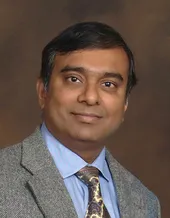
Srijan Kumar is an Assistant Professor in the School of Computational Science and Engineering at Georgia Institute of Technology's College of Computing. His research focuses on data science, AI for security, and online safety, addressing challenges in detecting malicious users, misinformation, and enhancing AI robustness. His work has been deployed in platforms like Flipkart and Wikipedia, and recognized through awards such as the NSF CAREER and Forbes 30 Under 30. Education: B.Tech from Indian Institute of Technology, Kharagpur Ph.D. in Computer Science from University of Maryland, College Park Postdoctoral training at Stanford University Research Interests: Multi-modal/multi-lingual detection of harmful content and users Adversarial robustness of AI models Graph and network analysis for early detection Responsible recommender systems Awards & Grants: NSF CAREER Award (2023) Kavli Fellow (2022) Facebook/Adobe Faculty Awards NSF Convergence Accelerator Phase II grant ($5M) Advising & Labs: Leads the CLAWS Lab, advising over 20 students. Active in mentoring through conferences and NSF-funded projects.
Jan Madsen is a Professor at DTU Compute, Technical University of Denmark, and Head of the Embedded Systems Engineering section. His research focuses on system-level modeling and design of embedded computing systems, particularly cyber-physical systems, microfluidic biochips, and synthetic biology applications. Develops design automation tools and methodologies for embedded systems Supervises numerous PhD students and leads major research projects Research Interests Key areas include: Embedded systems-on-a-chip Cyber-Physical Systems (Internet-of-Things) Microfluidic Lab-on-Chip devices Synthetic biology with molecular computing Design, modeling, and optimization of complex systems Scientific Awards DATE Fellow (2019) IEEE CEDA Outstanding Recognition (2019) DTU Scientific Advise Award (2013) Best Paper Awards at MECO (2013) and CASES (2009) Jorck’s Foundation Research Award (1995) Publications His 14+ journal papers and 115+ conference papers demonstrate expertise in: SystemC-based modeling frameworks Energy-aware sensor networks Self-healing eDNA architectures Microfluidic biochip synthesis RTOS modeling and MPSoC exploration
Dr. Richard Fair is the Lord-Chandran Distinguished Professor of Engineering at Duke University, with a career spanning semiconductor physics, digital microfluidics, and lab-on-a-chip systems. His research group collaborates with faculty across Duke, Harvard, and Stanford in bioengineering, genomics, and environmental science to develop applications-driven microfluidic platforms. Ph.D. in Electrical and Computer Engineering, Duke University (1969) B.S.E.E., Duke University (1964) M.S.E.E., Pennsylvania State University (1966) Research interests focus on electrowetting-based microfluidics for biosensing, diagnostics, and synthetic biology applications. Key innovations include adaptive droplet routing , magnetic bead manipulation , and integrated optical sensors for real-time analyte detection in environmental and medical contexts. Recent publications emphasize deep reinforcement learning for biochip automation, fluorescent nucleosome detection , and inorganic ion analysis in aerosols. Collaborations with institutions like Advanced Liquid Logic and NSF-funded projects highlight his interdisciplinary approach. IEEE Third Millennium Medal (2000) Solid State Science and Technology Award (Electrochemical Society, 2003) Gordon E. Moore Medal (2009) Fellow, IEEE and Electrochemical Society Grants include NSF awards with Nan Jokerst and Krish Chakrabarty for adaptive lab-on-a-chip optical control, DARPA funding for genomic engineering platforms, and collaborations with the Desert Research Institute on airborne particle sensing. His lab develops scalable solutions for environmental monitoring, clinical diagnostics, and synthetic biology applications.
Tsun-Ming Tseng is a Professor and principal investigator at the Chair of Electronic Design Automation at the Technical University of Munich (TUM). He leads the Emerging Technology Group and oversees multiple DFG/BMBF-funded research projects in the areas of microfluidic large-scale integration, optical network-on-chip design, and novel microfabrication techniques. Dr. Tseng's research focuses on design automation for emerging technologies, with particular expertise in three main areas: microfluidic large-scale integration, optical network-on-chip systems, and novel microfabrication processes. His work bridges the gap between electronic design automation and cutting-edge applications in bioengineering, photonics, and advanced manufacturing. His research group develops sophisticated algorithms and tools for optimizing design, reliability, and performance in these emerging domains. Analysis of Dr. Tseng's recent publications reveals a strong focus on practical implementation challenges in emerging technologies. His work spans both theoretical algorithm development and practical system implementation, with particular emphasis on reliability, performance optimization, and manufacturing considerations. The research shows increasing integration between different technology domains, particularly the convergence of microfluidics, optical networking, and electronic design automation. Dr. Tseng has been awarded multiple significant research grants including: "DE-TW-CloudWRONoC" (BMBF-NSTC project, PI, 2025-2028, EUR 797.7K) "DE-TW-PI3D" (BMBF-NSTC project, PI, 2024-2027, EUR 391.6K) "Physical Design for Microfluidic Large-Scale Integration" (DFG research grant, PI, 2024-2026, EUR 331.9K) Multiple other DFG and industrial projects totaling over EUR 3 million in funding He has successfully supervised numerous doctoral researchers and postdoctoral fellows, with current group members including Jiahui Peng, Debraj Kundu, Liaoyuan Cheng, and several others. Dr. Tseng leads the Emerging Technology Group at TUM, which focuses on developing design automation methodologies for next-generation technologies. The group maintains strong collaborations with international institutions, including partnerships with researchers in Taiwan and Hong Kong. The team operates state-of-the-art facilities for research in microfluidics, optical networking, and advanced microfabrication techniques.
Saghi Forouhi is an Assistant Professor at Linköping University, affiliated with the Division of Electronics and Computer Engineering (ELDA) and the Department of Electrical Engineering (ISY). Her research focuses on analog circuits, biochips, and signal processing technologies. Primary Affiliation: Linköping University School: Division of Electronics and Computer Engineering Department: Department of Electrical Engineering In 2025, she co-authored the publication Advanced CMOS Biochips , which explores intersections between CMOS technology and biomedical applications.
Song Jun-myeong is a Professor at Seoul National University (SNU) College of Pharmacy, specializing in Analytical Pharmacology and Nanomedicine. He has held leadership roles including Director of the Library and Information Center at SNU College of Pharmacy and Director of the Korean Biochip Society. Bachelor of Science, Sogang University (1991) Master of Science, Sogang University (1993) Ph.D., Kyushu University (1997) His research focuses on tumor clearing imaging, 3D bioprinting, drug analysis, and photodynamic therapy. He utilizes quantum dot-based imaging and single-cell cytometry for cancer diagnostics and drug mechanism studies. Analysis of his publications reveals a consistent emphasis on nanotechnology applications for pharmacological research, particularly in cancer diagnostics, drug resistance mechanisms, and antimicrobial nanomaterials. His work bridges analytical chemistry with biomedical applications. He serves on multiple scientific advisory boards and committees, including the Korean Society for Biotechnology and Bioengineering and the Pharmacist National Examination Question Development Committee. Song leads the Laboratory for Nanomedicine at SNU College of Pharmacy, advancing technologies in quantum dot imaging and nanomaterial synthesis for pharmaceutical applications.
Azhar Zam is an Associate Professor of Bioengineering at NYU Abu Dhabi (NYUAD) and associated faculty at NYU Tandon School of Engineering's Biomedical and Electrical Engineering departments. He holds a B.Sc. from University of Indonesia, M.Sc. from University of Luebeck (Germany), and Ph.D. from Friedrich-Alexander-University Erlangen-Nuremberg (Germany). His research focuses on developing smart optical devices for medical imaging/diagnostics, including laser surgery, OCT, photoacoustics, and AI-driven imaging systems. He leads the Laboratory for Advanced Bio-Photonics and Imaging (LAB-π) at NYUAD and has authored 85+ publications/patents. Education: Bachelor of Science, University of Indonesia M.Sc. Biomedical Engineering, University of Luebeck Ph.D. Engineering, Friedrich-Alexander-University Erlangen-Nuremberg Research Interests: Innovations in biomedical optics, optical-based smart sensors, AI-enhanced diagnostics, and miniaturized medical imaging systems. His work integrates advanced optical technologies with surgical robotics and clinical applications. Professional Contributions: Associate Editor for Frontiers in Photonics Biophotonics section; Reviews Editor for Frontiers in Ophthalmology Retina section. Previously held positions at University of Basel (Assistant Professor), University of Waterloo, and other institutions globally. Labs & Teams: Directs NYUAD's LAB-π lab focusing on bio-photonics innovations. Collaborates across NYU's global network and international partners.
Tsung-Yi Ho is a Professor in the Department of Computer Science at National Tsing Hua University, Taiwan. He holds the Hans Fischer Fellowship at the Technical University of Munich's Institute for Advanced Study (TUM-IAS). His primary research focuses on design automation for microfluidic biochips and nanometer integrated circuits, emphasizing reliability, optimization, and interdisciplinary applications in bioengineering. Ho received his Ph.D. in Electrical Engineering from National Taiwan University in 2005. He has held positions at National Cheng Kung University and National Chiao Tung University before joining National Tsing Hua University. His work bridges algorithmic design with practical biochip fabrication, addressing challenges like contamination control, routing optimization, and fault tolerance in microfluidic systems. His research interests span design automation for emerging technologies, including paper-based biochips and 3D microfluidic architectures. He has pioneered methods for integrating hardware-software co-design principles into biochip development, enhancing both functionality and reliability. His contributions include novel routing algorithms, contamination mitigation techniques, and reliability-aware synthesis frameworks. Ho has authored over 100 publications, including influential papers in IEEE Transactions on CAD and ACM journals. He serves on the editorial boards of multiple top-tier journals and chairs professional chapters for ACM and IEEE. His awards include the Humboldt Research Fellowship, Dr. Wu Ta-You Memorial Award, and Best Paper Awards at VLSI Test Symposium and IEEE Transactions on CAD. His current projects involve optimizing control-fluidic co-design for paper-based biochips and developing AI-driven frameworks for microfluidic functionality prediction. He collaborates widely, leading cross-disciplinary initiatives at TUM-IAS and Taiwan's academic institutions.
Dr. Thomas Brandstetter is a researcher and group leader at the University of Freiburg's Department of Microsystems Engineering (IMTEK), leading the Bioanalytical Surfaces group since 2007. He holds a Ph.D. in Biology from the University of Freiburg (2000) and has extensive postdoctoral experience in biochip technologies and clinical applications. His research focuses on developing innovative bioanalytical platforms for DNA/RNA detection, protein analysis, and biomedical applications such as tumor cell capture and biofilm prevention. He has pioneered surface-attached polymer networks and hydrogel coatings to enhance biochip sensitivity and reusability. Key research areas include biochip technology, microfluidics, surface chemistry, and materials science. His work integrates interdisciplinary approaches to address challenges in diagnostics, such as point-of-care testing and in vivo diagnostics. Notable projects include hydrogel-based sensor surfaces, PCR-compatible metallic coatings, and functionalized medical wires for capturing rare cells in blood. He oversees a team of PhD students and postdocs, contributing to advancements in analytical chemistry and biomedical engineering. Dr. Brandstetter has published extensively on topics like DNA microarray platforms, NASBA amplification, and antibacterial coatings. His lab collaborates with industry partners like Genescan Europe AG and contributes to translational research through patents on biochip fabrication and medical devices. He is actively involved in teaching and mentoring, fostering the next generation of researchers in bioanalytical technologies.
Luca Benini is a Full Professor of Electronics at the University of Bologna's Department of Electrical, Computer and Systems Engineering. He also holds a Visiting Faculty Position at the Ecole Polytechnique Federale de Lausanne (EPFL) and serves as Chief Architect of the Platform 2012 project at STMicroelectronics in Grenoble, France. His educational background includes academic positions progressing from Assistant Professor (1998) to Associate Professor (2001) and finally Full Professor (2006) at the University of Bologna. He has held significant industry positions including IC Architecture and CAD Engineer at Integrated Information Technology Inc. (1994), Senior Member of R&D Staff at Synopsys Inc. (1996), and Visiting Researcher at Hewlett Packard Laboratories (1997-2004). Professor Benini's research focuses on designing systems for ambient intelligence, spanning multi-processor systems-on-chip, networks on chip, and energy-efficient smart sensors and sensor networks. His work has expanded into biochips for biological molecule recognition, bioinformatics, and advanced algorithms for in-silico biology. His expertise in low-power design of integrated circuits and systems earned him IEEE Fellow status in 2007. He has received multiple honors including best paper awards at IEEE GLS-VLSI and the European Wireless Sensor Networks Conference (both 2008), with three of his papers featured in 'Design Automation and Test in Europe - The Most Influential Papers of 10 Years' (Springer 2008). IEEE Fellow (2007) for contributions to design technologies for low power design Member of ARTEMISIA Steering Board (elected twice) Member of European Design and Automation Association Main Board Member of MEDEA+ EDA roadmap committee Member of EC Advisory group on Computing Systems Benini has held significant leadership roles in the academic community, serving as General Chair of the IEEE/ACM Design Automation and Test in Europe Conference (2009), DATE Program Chair (2005), and Program Chair for multiple specialized symposia. He serves as associate editor for several prestigious journals including IEEE Transactions on Computer-Aided Design and ACM Transactions on Embedded Computing Systems, and has organized influential workshops like the Dagstuhl Seminar on Power-Aware Computing Systems.
Krishnendu Chakrabarty is the John Cocke Distinguished Professor of Engineering and Professor of Computer Science at Duke University, chairing the Department of Electrical and Computer Engineering. His research focuses on integrated circuits testing, microfluidics, biochips, and cyberphysical systems. He holds honorary titles from institutions globally and has received over a dozen best-paper awards. Education: B.Tech from IIT Kharagpur (1990), M.S.E. and Ph.D. from University of Michigan (1992, 1995). Awards include Humboldt Research Award (2013), IEEE Computer Society Technical Achievement Award (2015), and AAAS Fellowship (2018). Research explores fault diagnosis in hardware, smart manufacturing, and biochip automation. His cyberphysical systems work includes hybrid microfluidic platforms for single-cell analysis and droplet-based bioassays. Collaborations with TUM-IAS focus on Microfluidic Design Automation (MDA). Editor-in-Chief of IEEE Transactions on VLSI Systems and former Editor of ACM Journal on Emerging Technologies. Active in academic leadership and interdisciplinary projects, emphasizing sustainability and advanced manufacturing.
Lu Shin Wong is a Senior Lecturer in Chemical Biology and Biological Chemistry at the University of Manchester's School of Chemistry, affiliated with the Manchester Institute of Biotechnology. He holds a PhD from the University of Southampton and has expertise in biocatalysis and nanofabrication. His research focuses on sustainable chemical processes, enzyme-driven reactions, and nanoscale material fabrication. Wong has held postdoctoral roles at Manchester and Northwestern University, and leads projects in biocatalytic applications, nanotechnology, and bioelectronics. Education: PhD in Organic and Analytical Chemistry (University of Southampton, 2005); BPharm (University of Nottingham, 1997); Postgraduate Diploma in Clinical Pharmacy (University of Bradford, 2001). Research Interests: Biocatalysis (enzyme-mediated organosilicon chemistry, sustainable oxidations); Nanofabrication (scanning probe lithography, polymer pen lithography). His work bridges biotechnology and nanotechnology, emphasizing sustainable synthesis and biomedical applications. Recent projects include the Manchester Bioelectronics Network and CRISPR-Cas technology integration into organic electronics. Key Achievements: Developed methods for protein immobilization using phosphopantetheinyl transferase, pioneered biocatalytic approaches to silicone polymer synthesis, and contributed to understanding stem cell behavior on nanostructured substrates. Active in interdisciplinary collaborations, including bioelectronics and mass spectrometry advancements.
Li Yi is a Tenured Associate Professor at the School of Microelectronics, Southern University of Science and Technology (SUSTech) , with expertise in nanoplasmonics, nano-optics, and biochips. His career spans institutions including KU Leuven, Imperial College London, and Ludwig-Maximilians-Universität München. Education: Ph.D. (2015, KU Leuven & IMEC), M.S. (2010) and B.S. (2007) in Biomedical Engineering from Zhejiang University. Career: Associate Professor (2021–present) and Assistant Professor (2019–2020) at SUSTech; LMU Research Fellow (2018–2019); Research Associate (2015–2018) at Imperial College London. Research Interests focus on single-molecule biochips, DNA data storage, and nanopore sequencing. His work bridges nanotechnology with biomedical applications, including: Integrated circuit-compatible optical/electrical devices Computational lithography and nanoscale imaging Neural network training for biosensing Publications include >60 peer-reviewed articles with 25 H-index. His recent work emphasizes DNA-based data encryption, nanopore engineering, and portable biosensing systems. Key journals: Nature Communications, Nano Letters, ACS Nano. Scientific Awards : LMU Research Fellowship (Marie Curie COFUND) imec Excellent Scientific Award Shenzhen 'Peacock Plan' Category B Talent Outstanding Poster Award at Surface Plasmon Photonics 2017 Participation in Lindau Nobel Laureates Meeting (2019) Grants include Ministry of Science and Technology Key R&D Youth Program, NSFC General Program, and Guangdong Provincial Key Program. His lab develops: Fluidic nanopores for single-molecule sensing Optical antennas for enhanced detection Training programs in biochip design and nano-optics
Ali Meimandi is a Doctoral Assistant and candidate in the Doctoral Program in Microsystems and Microelectronics at École Polytechnique Fédérale de Lausanne (EPFL), Switzerland. He conducts research in the BioCMOS Interfaces (BCI) Laboratory within the Institute of Electrical Engineering and Microengineering, School of Engineering, focusing on ultralow-power biomedical integrated circuits. His educational background includes: M.Sc. in Electronics Engineering from Politecnico di Milano (2022) B.Sc. in Electrical Engineering (Electronics) from Amirkabir University of Technology (2018) Meimandi's research centers on designing ultralow power and ultralow area analog/mixed-signal ICs for brain monitoring applications. His expertise spans biosensors, neural prosthesis, and miniaturized CMOS circuits, with emphasis on developing innovative biomedical systems that bridge electrical engineering with neuroscience. His work targets practical implementations for implantable and wearable health monitoring technologies. His publication record shows consistent advancement in miniaturized circuit design for biomedical applications, particularly in brain monitoring, sweat analysis, and hydration tracking systems. These works demonstrate his dual expertise in analog circuit design and biological interface implementation. Key recognition includes: 2024 IEEE Sensors Letters Best Paper Award for 'Flexible Sensor and Readout Circuitry for Continuous Ion Sensing in Sweat' As a Teaching Assistant for Bio-nano-chip design (EE-517) and Analog circuits for biochip (EE-518), Meimandi contributes to EPFL's educational mission while advancing his research in active Bio/CMOS interfaces. His work in the BCI Laboratory focuses on heterogeneous integration of nanostructures for next-generation biosensors. The BioCMOS Interfaces Laboratory provides an interdisciplinary environment where Meimandi develops novel electronic-biological interfaces, with applications ranging from neural prosthetics to continuous health monitoring systems through innovative circuit architectures.
Mirela Alistar is an Assistant Professor at the ATLAS Institute and the Department of Computer Science at the University of Colorado Boulder. She leads the Living Matter Lab , focusing on cyber-physical systems based on biochips to revolutionize healthcare diagnostics. Her interdisciplinary work bridges computer science, engineering, biotechnology, and bioart. Education : PhD in Embedded Systems Engineering (2010-2014, Technical University of Denmark), Postdoc in Human-Computer Interaction (2015-2018, Hasso Plattner Institute). Her research advances digital microfluidics and fault-tolerant biochips , enabling at-home diagnostic tools like OpenDrop . She also explores bioart through installations such as Semina Aeternitatis and Perfume Distillation Machine . She co-founded >top , a Berlin-based art & science project space, and advises startups digi.bio and bold.health . Her UIST'16 Honorable Mention Award highlights her innovative contributions. The Living Matter Lab under her leadership investigates interactive biodesign , combining technical precision with creative exploration of living systems.