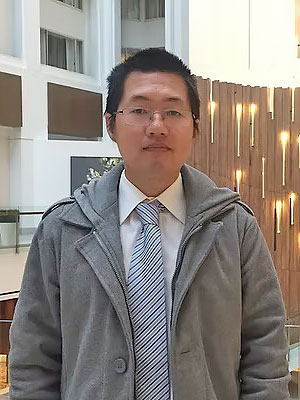
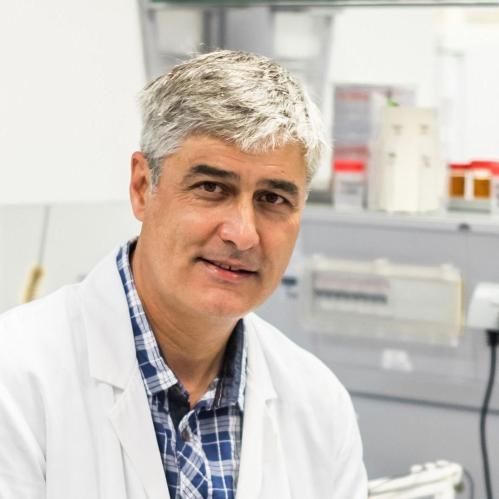
Jolanta Kumirska is a Professor at the Faculty of Chemistry, University of Gdańsk , where she leads the Department of Environmental Analytics and co-heads the Division of Science Education and Communication. Her research focuses on pharmaceutical wastewater treatment , chemical contamination in water , and forensic chemical diagnostics . Faculty of Chemistry, University of Gdańsk Department of Environmental Analytics Laboratory of Analytics and Chemical Diagnostics Her work spans electrocoagulation , catalytic ozonation , and biochar-based remediation for pharmaceutical contaminants and microplastics. Recent publications emphasize antibiotic resistance genes in wastewater and QSAR models for chemical risk assessment. Her articles reveal trends in synergistic water treatment technologies and environmental fate of emerging pollutants , with applications in forensic fiber analysis and chemical safety regulation . She actively contributes to the POWER program at the University of Gdańsk, supporting environmental protection initiatives.
Huan Chen is a Research Assistant Professor in the Department of Environmental Engineering and Earth Sciences at Clemson University. His research specializes in water resilience, contaminant dynamics, and resource recovery, integrating biogeochemistry, environmental chemistry, and computational methods. He investigates impacts of wildfires, climate change, and land-use alterations on water quality using advanced analytical techniques including FT-ICR MS, pyrolysis-GC/MS, and hyperspectral imaging. Education: Ph.D. in Civil Engineering, University of Tennessee, Knoxville (2013–2016) M.S. in Statistics, University of Tennessee, Knoxville (2013–2016) M.S. in Environmental Engineering, Peking University (2006–2009) B.E. in Environmental Engineering, Southwest Jiaotong University (2002–2006) Research Focus: Dr. Chen studies (1) disturbances at aquatic-terrestrial interfaces affecting drinking water quality; (2) water reuse in agriculture/hydraulic fracturing and resource recovery via microalgae; (3) environmental big data analysis using MATLAB/R/Python and machine learning for microplastics detection. His work addresses PFAS, antibiotics, and wildfire-derived contaminants. Publication Trends: Recent articles (2023–2025) demonstrate strong focus on wildfire impacts, PFAS dynamics, microplastics detection, water reuse technologies, and antibiotic resistance. Methodologies emphasize advanced mass spectrometry, hyperspectral imaging, and machine learning applications across diverse environmental matrices. Awards: Excellent Papers of 2023 (Soil & Environmental Health) Excellent Undergraduate Thesis (2006)
Milan Šipka is an Assistant Professor at the Faculty of Agriculture, University of Banja Luka, specializing in soil science and agricultural systems. He contributes to the Department of Soil, Plant Physiology, and Nutrition, focusing on sustainable agricultural practices, water management, and environmental impact assessments. His research addresses irrigation optimization, green infrastructure, and soil contamination mitigation. Key projects include the H2020 SMARTWATER initiative, promoting smart water management in Bosnian agriculture, and studies on biochar applications for green roofs. He collaborates internationally through EU-funded projects, emphasizing capacity building and technology transfer. His work spans herbicide adsorption in soils, land degradation neutrality, and invasive species distribution analysis. Leading: Valorization of Plum Seed Kernel (2025-2026), Soil Health Restoration (2024-2025) Participant: SMARTWATER (2020-2023), FAO-supported soil revitalization (2017-2018) His publications highlight interdisciplinary approaches to agriculture, integrating remote sensing, biogeochemistry, and policy frameworks. He actively presents at conferences like AgroReS and the International Symposium on Biotechnology, addressing topics from precision farming to eco-friendly materials. Grants: €1.7M from EU Horizon 2020, RS Ministry funding Collaborations: FAO, Croatian Agricultural Universities, EU institutions
Res. Asst. Ahmet Özdemir is a Researcher affiliated with the Department of Turkish Language and Literature at Bingöl University's Faculty of Arts and Sciences. He has been serving as a research assistant since 2009, following his BSc from Gaziosmanpaşa University (2009) and MSc from Atatürk University (2014). He is currently pursuing a PhD in the same field. His academic role focuses on Turkish Language and Literature, but his research interests and publications also extend into interdisciplinary areas such as pharmacology, nanotechnology, and environmental science. Education: Bachelor's: Turkish Language and Literature, Gaziosmanpaşa University (2009) Master's: Turkish Language and Literature, Atatürk University (2014) PhD: Ongoing in Turkish Language and Literature, Institute of Turkic Studies Research Interests: While rooted in Turkish Language and Literature, his work spans diverse domains: linguistics, cultural studies, medicinal chemistry, bioenergy systems, and nanomaterial applications . His recent studies explore topics like antibacterial agents, biochar environmental impacts, and green synthesis of nanoparticles. These interdisciplinary efforts reflect a focus on bridging humanities and scientific innovation. Publications: His articles highlight trends in biomaterials, drug discovery, and ecological sustainability. Key themes include the synthesis of nano-catalysts from plant extracts, biochar's role in soil health, and the diagnostic potential of biomarkers. Awards/Grants: No specific awards or grants mentioned in the provided text. Labs/Teams: No lab affiliations explicitly stated. However, his collaborative research in chemistry and biology suggests involvement with interdisciplinary teams.
Majid Sedighi is a Professor (Reader) in Geotechnical Engineering at the University of Manchester, leading the Geo-Environmental research theme. He is also the Head of Internationalisation (Africa and the Middle East) at the Faculty of Science and Engineering, and serves on the Editorial Board of Géotechnique . His research focuses on geoenvironmental engineering, multiphysics processes in soils, and sustainable technologies for energy and environmental challenges, including radioactive waste management and microplastics mitigation. Education: MSc and PhD in Geotechnical Engineering from Cardiff University, with prior experience as a UNESCO Research Fellow and Senior Design Engineer. He has supervised 16 PhD students since 2011 and leads projects on clay erosion, geothermal energy, and groundwater remediation. Research interests include coupled THCM processes, geo-material behavior under extreme conditions, and sustainable development goals. He has secured £10M in European funding and collaborates globally, including as an Adjunct Professor at Zhejiang University. Awards include the ICE Environmental Geotechnics Prize (2019) and Best Paper Awards. His work contributes to UN Sustainable Development Goals related to clean water, affordable energy, and responsible consumption. Active in professional roles: Discipline Lead at Nuclear Waste Services, member of the Centre for Crisis Studies, and organizer of international conferences on environmental sustainability. His lab, Geo-Environmental Engineering Group , offers PhD funding in multiphysics, reactive transport, and microplastics research.
Samaneh Ghaedi is an Innovative Environmental Engineer holding a Doctor of Philosophy degree and affiliated with the Department of Civil Engineering and Management. Her research focuses on advanced nanomaterials for environmental applications, particularly in water treatment and pollution control, with significant contributions to UN Sustainable Development Goals for clean water and sustainable cities. Her core expertise spans adsorption, separation, membrane technologies, and photocatalysis, specializing in the design, synthesis, and characterization of Metal-Organic Frameworks (MOFs), MXene-based composites, and MOF-biochar hybrids. These engineered materials enable targeted removal of contaminants like heavy metals, boron, and pharmaceuticals through tunable surface functionality and sustainable material architectures. Analysis of her 2022-2025 publications reveals a dominant trend in developing reusable MOF-biochar composites for multi-ionic heavy metal systems and photocatalytic degradation of antibiotics. Her work consistently emphasizes material reusability, waste-to-resource conversion, and sustainable contaminant management, demonstrating strong alignment with circular economy principles in environmental engineering. Dr. Ghaedi has led scientific workshops for academic outreach, showcasing active knowledge dissemination. While specific grant details and student advising records aren't documented, her leadership in workshops and high-impact publications (10+ peer-reviewed articles) indicates substantial research impact and community engagement in environmental remediation.
Sajeevee Kadawatha Dina Mithrage serves as an Honorary Research Fellow at the Institute of Agriculture, The University of Western Australia. Previously, they held positions as Senior Lecturer at Spectrum Institute of Science and Technology (Colombo, Sri Lanka), Scientific Officer at the National Research Council (Colombo), and Tutor in the Department of Biotechnology at Wayamba University of Sri Lanka. Education: PhD in Soil Science and Plant Nutrition, The University of Western Australia (2018-2023) M.Phil in Integrated Water Resources Management, University of Peradeniya (awarded 2018) B.Sc in Agriculture Sciences, Wayamba University of Sri Lanka (2006-2010) Research focuses on agricultural rehabilitation of contaminated sites, specializing in phytoremediation of mine tailings using organic amendments and plant-based solutions. Key interests include heavy metal remediation, biochar applications for carbon sequestration, and microbial inoculation technologies involving mycorrhizal fungi and rhizobia. Their work bridges soil science, biotechnology, and environmental engineering to address mining pollution. Recent publications (2022-2024) demonstrate consistent innovation in iron ore tailings rehabilitation, primarily using perennial ryegrass (Lolium perenne) with organic amendments like wheat straw and biochar. Research reveals critical insights into metal uptake dynamics, topsoil enhancement, and comparative efficacy of amendment strategies, establishing foundational knowledge for sustainable mine site restoration. Collaborates extensively with researchers including Zed Rengel and Zulkifli Solaiman within UWA's agricultural research ecosystem. Current work integrates field studies on metal/loid immobilization with microbial biomass optimization in contaminated substrates.
Associate Professor Vaidas Bivainis of Vytautas Magnus University's Faculty of Engineering, Department of Agricultural Engineering and Safety, specializes in agricultural technology and materials engineering. Holding a Doctor of Technology degree since 2010, he contributes to sustainable agriculture through granular fertilizer research. Doctor of Technology (2010) Associate Professor at Vytautas Magnus University His research focuses on organic fertilizer mechanics , employing discrete element modeling (DEM) to optimize spreading efficiency. Recent studies examine bone meal granules, spherical manure fertilizers, and biochar integration, using Altair EDEM software for digital simulations. Research trends show emphasis on centrifugal spreader optimization and environmental impact reduction through improved fertilizer application techniques. Collaborative work with Eglė Jotautienė and Ramūnas Mieldažys dominates his publications.
Nixon Sunny, Ph.D., is a Visiting Researcher at the Faculty of Engineering, Imperial College London, with over 8 years of expertise in low-carbon energy systems. His research spans energy efficiency, hydrogen recovery, carbon capture and storage (CCS), negative emissions technologies, and industrial decarbonization. Education: Ph.D. in Centre for Environmental Policy (2022), Imperial College London M.Eng. in Department of Chemical Engineering (2017), Imperial College London His work focuses on addressing industrial decarbonization challenges, particularly in the Middle East and Global South, through collaborations with industrial partners and projects funded by Ofgem, Innovate UK, and the UK Government. Recent projects include hydrogen recovery from steel wastes, green hydrogen supply systems, and biochar process intensification. Nixon lectures and supervises Masters students via Imperial’s Sustainable Energy Futures and Environmental Technology programs. He is a technical reviewer and guest editor for journals like Nature Energy and Energy & Environmental Science .
Maria E. Koulouri is a Research Associate at the Department of Civil and Environmental Engineering, Imperial College London. Her work focuses on resource recovery from wastewater and faecal sludge, with expertise in pyrolysis treatment for biochar soil amendments, biofuels, and carbon sequestration optimization. Education: MEng in Civil Engineering, National Technical University of Athens, Greece MSc in Environmental Engineering, Imperial College London Her research addresses systemic circularity assessments and life-cycle analysis tools for bio-waste streams, emphasizing carbon-negative innovations and decision support systems. Previously, she worked at a global engineering consultancy as a Water and Environmental Engineering Consultant before completing her PhD at Imperial in 2024.
Dr. Alla Marchuk is a Lecturer at the School of Agriculture and Environmental Science , University of Southern Queensland. With a PhD from the University of Adelaide (2013), her work bridges soil chemistry, environmental engineering, and food safety. PhD in Soil Chemistry, University of Adelaide (2013) Research Interests: Focus on soil structural stability, arsenic mobility in agricultural systems, and irrigation water chemistry. Key areas include: Soil dispersion mechanisms Hydraulic conductivity modeling Biochar applications for contaminant removal Water quality impacts on soil health Development of analytical protocols Article Trends: Recent publications emphasize arsenic speciation, hydraulic reduction in alkaline soils, and biochar modification for sustainable water treatment. Collaborative work with global researchers in environmental and agricultural engineering dominates. Supervision: Active associate supervisor for doctoral candidates researching soil-water interactions and contaminant dynamics. Centre for Agricultural Engineering (UniSQ)
Dr David Pham is a Postdoctoral Research Fellow at the University of Southern Queensland with affiliations to the Centre for Future Materials . He holds a PhD in Materials Chemistry from Queensland University of Technology (QUT) and has held postdoctoral positions at QUT and Pukyong National University. BEng (HoChiMinh University of Technology, 2009) MEng (Pukyong National University, 2013) PhD (Queensland University of Technology, 2020) His research focuses on electrochemical energy storage , green chemistry , and chemical recycling , with expertise in synthesizing materials for sustainable technologies. Recent work includes upcycling waste materials , deep eutectic solvents , and potassium ion capacitors . Publications span topics like Li-ion battery recycling , supercapacitor design , and hydrothermal processes for waste valorization. Scientific awards include Best Oral Presentation (2021), Executive Dean’s Commendation for Outstanding Thesis (2020), and recognition for top-cited work (2024). He has contributed to Elsevier's Supercapacitors: Materials, Design, and Commercialization as an editor.
Patrizia Bernardi is an Associate Professor in the Department of Engineering and Architecture at the University of Parma, where she has been actively teaching and conducting research for over a decade. She is involved in multiple graduate programs, including Civil Engineering and Architecture and City Sustainability, delivering core courses such as Steel and Wood Constructions, Design of Structures, and Structural Modeling for Building Design. Her research focuses on structural integrity, seismic resilience, and sustainable construction materials. Key areas include the seismic vulnerability of reinforced concrete bridges, performance evaluation of innovative concretes with biochar and recycled aggregates, and environmental impact assessments of low-carbon building materials. Her work supports the advancement of circular economy principles in civil engineering. The analysis of her recent publications reveals a strong trend toward sustainability and resilience in infrastructure, combining structural performance with environmental life-cycle considerations. She actively contributes to databases and experimental studies on alternative concrete materials, positioning her at the forefront of green construction research. Scientific Awards: No scientific awards listed in the provided text. While no formal list of advisees is provided, her role as a senior academic and frequent co-author on research involving structural analysis and sustainable materials suggests active mentorship and collaboration with graduate students. There is no mention of external grants, but her research output indicates sustained project involvement. She is part of a research group within the Department of Engineering and Architecture focused on structural safety, material innovation, and seismic risk mitigation, collaborating with researchers such as Beatrice Belletti, Marco Di Ludovico, and Andrea Prota.
Xose Lois Otero Pérez is a University Professor of Soil Science and Agricultural Chemistry at the University of Santiago de Compostela (USC), affiliated with the Higher Polytechnic School of Engineering. He leads research at the Center for Interdisciplinary Research in Environmental Technologies (CRETUS) and is a core member of the Ambiosol research group. His work focuses on soil biogeochemistry in extreme environments, wetland ecosystems, and environmental remediation of contaminated soils and waters. Notably, his doctoral thesis on 'Biogeochemistry of heavy metals in marine sedimentary environments' earned an Extraordinary Doctorate Award from the Soil Science Spanish Society. Key research areas include: soil formation in proglacial zones, mangrove restoration, microplastic contamination, heavy metal dynamics in mine tailings, and seabird impact on coastal soils. Collaborations span global institutions, with fieldwork in Ecuador, Brazil, Mexico, and Antarctica. He actively investigates climate change impacts on high-altitude páramos and coastal wetlands, emphasizing ecosystem services and carbon dynamics. Education: Doctorate in Soil Science (2000) from USC, supervised by Dr. Felipe Macías Vázquez. Awards: Extraordinary Doctorate Award (Soil Science Spanish Society). Key Projects: Mangrove soil recovery in Brazil, microplastic toxicity studies in Atlantic fish, and geochemical analysis of Antarctic sediments. His recent work addresses emerging threats like microplastic cardiotoxicity, phosphorus bioavailability in biochar-amended soils, and the role of iron in soil carbon stabilization. He advocates for 'climate-smart mining' practices and sustainable coastal management strategies.
John Long is an Associate Professor and Extension Specialist in the Department of Biosystems & Agricultural Engineering at Oklahoma State University (OSU). He holds a 60% teaching and 40% extension appointment, focusing on agricultural machinery systems, precision agriculture, and engineering education. His work bridges academic research and practical outreach to farmers and ranchers. Ph.D. in Biological Engineering, North Carolina State University (2014) Dr. Long's research centers on precision agriculture , intelligent machine systems , sprayer technology , and crop planting equipment . He has developed and taught courses in machinery design, mechanical failure analysis, and agricultural electronics. His recent scholarly work explores laser weeding, precision seed orientation, residue management, and emission studies of agricultural machinery. The 15 most recent publications reflect a strong trend in precision agricultural technologies , with emphasis on automation, sensor integration, energy efficiency, and environmental sustainability. Key subfields include image-based seed control, low-emission machinery, smart fertilization, and cost-effective mechanization for small and large farms. Dr. Long has received multiple research grants from Cotton Incorporated, the Oklahoma Department of Agriculture, and the CHS Foundation, supporting projects on precision planting, biochar utilization, and international agricultural partnerships. Precision Planting Technologies for Improving Cotton Emergence in Oklahoma (Cotton Incorporated, 2020–2025) Use of Biochar as a Soil Amendment (Oklahoma Department of Agriculture, 2024–2025) Central Asia University Partnerships Program – Uzbekistan (American Councils, 2020–2021) He teaches a variety of courses including Machine Design and Failure Analysis , Principles of Agriculture and Off-Road Machinery , and Doctoral Research and Dissertation , indicating active mentorship of graduate students. He is a member of the American Society of Agricultural and Biological Engineers (ASABE) and contributes to outreach through extension publications and workshops for farmers.