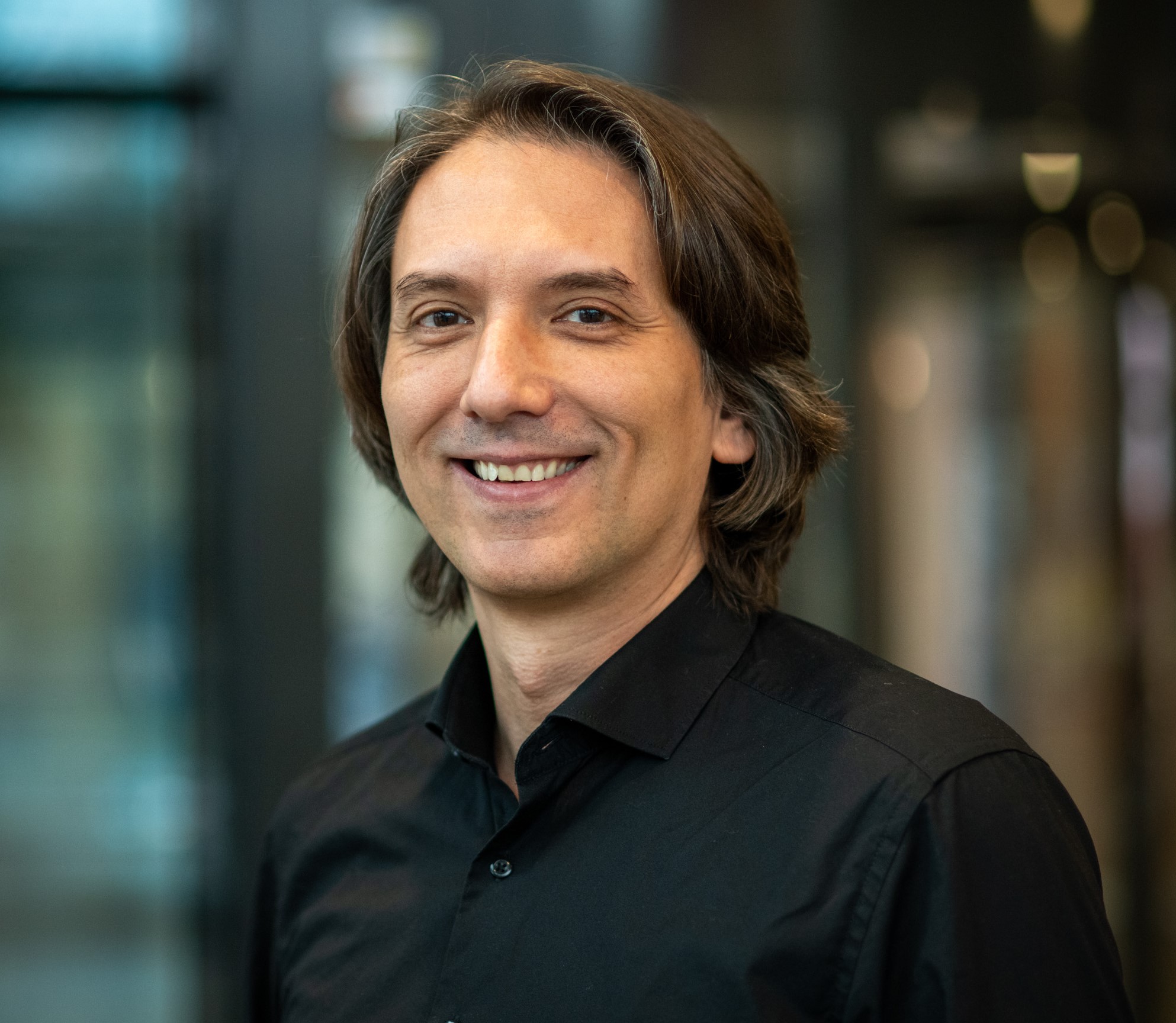
Hauke Smidt is a Personal Professor at Wageningen University & Research, affiliated with the Molecular Ecology group within the Faculty of Veterinary Medicine and Animal Sciences. His research focuses on microbial ecology, particularly gut microbiota dynamics, antibiotic resistance, environmental microbiology, and the One Health framework. Smidt has supervised over 50 PhD students and contributed to 519 publications, including studies on microbiome resilience, fermented food impacts, and bioremediation strategies. Education and affiliations include leadership roles in projects addressing antimicrobial resistance, pig health, and drinking water microbiology. His work spans collaborations across Europe and Asia, with notable contributions to understanding microbial community responses to environmental stressors and dietary interventions. Smidt is actively involved in public outreach, as seen in media contributions discussing microbiome research and health benefits. Key projects include aquifer treatment for drinking water, microbiome simulation models, and combating plant pathogens. His awards and recognition are not explicitly listed, but his extensive publication record and project leadership highlight significant academic impact.
Dr. Ng How Yong is an Assistant Professor at the Department of Civil and Environmental Engineering, National University of Singapore (NUS). He specializes in membrane science and wastewater treatment technologies, with a focus on membrane fouling mitigation and bioelectrochemical systems. His research integrates membrane bioreactors, anaerobic/aerobic processes, and microbial sensors for sustainable water reclamation and industrial wastewater management. Education: BEng/MEng (Civil Engineering, NUS, 1997/2000), Ph.D. (Environmental Engineering, UC Berkeley, 2002) Research interests include membrane separation processes, microbial fuel cell-based sensors for heavy metal detection, and energy recovery from wastewater. He has pioneered advancements in anaerobic ceramic membrane bioreactors and forward osmosis technologies. Key contributions span over 50 peer-reviewed publications, focusing on optimizing biological treatment systems, understanding fouling mechanisms, and developing novel desalination processes. His work bridges fundamental science and engineering applications, addressing global water scarcity challenges. Awards: IWA Fellow (2012), NUS Young Researcher Award (2009), Singapore Youth Award (2008) Dr. Ng has led multiple international conferences, including the 8th IWA Specialist Conference on Membrane Technology (2017) and the 3rd Asia-Pacific Young Water Professional Conference (2010). He serves on editorial boards of Water Research , Journal of Water Reuse and Desalination , and the International Water Association committees.
Professor Bing-Jie (Bruce) Ni is an Adjunct Professor at the University of Technology Sydney (UTS) within the School of Civil and Environmental Engineering and a full Professor at UNSW Sydney. He is an internationally recognised leader in environmental engineering, wastewater treatment, greenhouse-gas mitigation, microplastics fate, electrocatalysis and sustainable energy systems. Education PhD in Environmental Engineering, University of Science and Technology of China, Hefei (2005–2009) Research Interests Professor Ni’s research integrates process engineering, microbial biotechnology, materials science and mathematical modelling to develop sustainable technologies for high-efficiency pollutant removal, minimal carbon footprint and maximal energy recovery from wastewater. He is a global pioneer in: Modelling and control of nitrous oxide (N₂O) and methane (CH₄) emissions from wastewater systems, Micro- and nano-plastics ecotoxicity and mitigation in anaerobic digestion, Transforming sewage sludge into high-value liquid bio-energy (medium-chain fatty acids and long-chain alcohols), Designing cost-effective electrocatalysts from natural minerals for green hydrogen production and wastewater electrolysis. Research Output & Impact Over the last decade he has published 2 research books, 30 book chapters and >400 refereed journal papers , including 35 in Environmental Science & Technology and 85 in Water Research . His work has influenced global policy: the IPCC adopted his nitrous-oxide-emission model in 2019 to revise national greenhouse-gas inventories for the first time in 13 years. Awards & Recognition ARC Future Fellowship & ARC DECRA Fellowship Clarivate Analytics Highly Cited Researcher (Web of Science) Royal Society of Chemistry Highly Cited Researcher (2020–present) Mendeley Data Top 2 % Cited Researchers worldwide Listed among “Australia’s Most Innovative Engineers” (Engineers Australia, 2018) 50+ additional awards including Scopus Young Researcher Award, South Australian Water Awards, UQ Research Excellence Awards, and Outstanding Doctoral Dissertation Awards. Research Funding & Leadership He has secured ≈ AUD $10 million in competitive funding (six major ARC grants plus >20 government, university and industry projects). He serves as: Lead Guest Editor, Water Research Editorial Advisory Board, Environmental Science & Technology Associate Editor for Journal of Cleaner Production , Environmental Chemistry Letters , Environmental Research , Journal of Environmental Management Editorial Board member for five additional high-impact journals. Teaching & Supervision At UTS he teaches Renewable Energy Technologies , Environmental and Sanitation Engineering , Process Dynamics and Control , and Water and Wastewater Treatment . He is available to supervise Masters and PhD students in environmental biotechnology, process modelling and sustainable energy systems. Laboratory & Commercial Translation He heads active research teams at both UNSW and UTS and is the inventor of >10 granted patents , some of which are currently being commercialised to deliver real-world impacts in greenhouse-gas-neutral wastewater treatment and renewable energy production.
Loring Nies is a Professor of Civil Engineering/Environmental and Ecological Engineering at Purdue University, holding roles in the School of Civil Engineering. He serves on key committees such as the University Senate and the Professional Practice Advisory Committee. His research focuses on environmental engineering challenges, including nanomaterial impacts, bioremediation, anaerobic digestion, and sustainability strategies. He has contributed to advancing interdisciplinary education through initiatives like the foundational graduate course in Environmental and Ecological Engineering. Research interests emphasize understanding nanomaterial interactions with soil microbiology and developing sustainable solutions for water reuse, waste recycling, and end-of-life treatment. His work spans laboratory studies on microbial community dynamics to large-scale analyses of water resource management in HUC-4 basins. He has pioneered methods for economic input-output analysis in advanced manufacturing contexts and explored innovations in environmental engineering education curricula. Notable contributions include studies on fullerene toxicity, metal oxide nanomaterial effects, and bioaugmentation strategies for methane production optimization. His research bridges environmental science with engineering applications, addressing modern challenges in energy storage technologies and industrial symbiosis. While no specific awards are listed, his extensive committee involvement reflects institutional recognition of his expertise. Loring Nies advises on recovery alternatives for wind turbine end-of-life management and has explored frameworks for integrating environmental and business aspects in sustainable product development. His work integrates molecular genetic techniques to assess bioremediation efficacy in contaminated sites, demonstrating a commitment to both theoretical and applied environmental solutions.
Professor Frederic Coulon holds the position of Professor of Environmental Chemistry and Microbiology at the Cranfield Water Science Institute, part of Cranfield University's School of Management. His work focuses on transdisciplinary environmental science, including soil and water chemistry, bioremediation, wastewater treatment, and risk assessment. He leads research on microbial interactions in engineered systems, biodegradation of petroleum hydrocarbons, and emerging contaminants. His professional interests span soil and water chemistry, fate of chemicals in environmental systems, hazardous waste site remediation, and policy-influencing research. Key collaborators include BBSRC, NERC, Defra, and the European Commission. He has advised on contaminated land management and developed solutions for pragmatic risk-based remediation strategies. Research activities include microbial adaptations in cold environments, environmental monitoring technologies, and anaerobic digestion optimization. Over 200 peer-reviewed articles highlight his contributions to environmental engineering and science, with a focus on bioremediation, bioaerosol risk assessment, and sustainable waste management. Current projects address challenges in low-carbon remediation, landfill mining, and antimicrobial resistance in agricultural environments. He supervises multiple PhD students and collaborates internationally on initiatives like the UK-India vWa project and the REGENERATIS program for metallurgical site regeneration.
Claudia Gunsch is the Muriel Theodorsen Williams E'46 Distinguished Professor of Civil and Environmental Engineering at Duke University, with secondary appointments in the Nicholas School of the Environment and Department of Biomedical Engineering. She directs the NSF Engineering Research Center for Precision Microbiome Engineering (PreMiEr) and serves as Associate Director for the Duke Microbiome Center. PhD (2004): University of Texas at Austin MS (2000): Clemson University BS (1998): Purdue University Her research focuses on environmental molecular biotechnology , particularly: investigating ecological impacts of emerging contaminants on microbiomes; developing microbiome engineering approaches for bioremediation; studying microbial evolution from contaminant exposure; and creating innovative water treatment technologies. Current projects apply advanced molecular methods to probe environmental microbial processes in bioremediation, contaminant impact assessment, and environmental microbiome modeling. She has been recognized with numerous awards including: NSF Faculty Early Career Development Award (2009), ASCE Huber Prize (2016), and NAE Frontiers of Engineering Fellowship (2011). Her lab has mentored 28 graduate students, 34 undergraduates, and 8 postdoctoral associates. She leads research initiatives funded by NSF, EPA, NIEHS, and industry partners. Editor-in-Chief, Biodegradation journal Member, npj Clean Water and Industrial Biotechnology editorial boards Active in AEESP and ASCE leadership roles
Elizabeth A. Edwards is a University Professor at the University of Toronto in the Department of Chemical Engineering and Applied Chemistry , with cross-appointments to the Department of Cell & Systems Biology . As Director of BioZone and Canada Research Chair in Anaerobic Biotechnology, she leads groundbreaking research in microbial bioremediation of groundwater pollutants and industrial wastewater treatment through anaerobic digestion. Ph.D. in Environmental Engineering (Stanford, 1993) M.Eng. and B.Eng. in Chemical Engineering (McGill, 1985/1983) Licensed Professional Engineer (P.Eng.) Her research focuses on anaerobic microbial communities that degrade pollutants like chlorinated solvents and aromatic hydrocarbons. Using advanced molecular biology, genomics, proteomics , and biochemical pathway analysis , her lab investigates functional interactions in microbial consortia and translates discoveries to commercial applications such as the KB-1® bioproduct . Recent studies examine enzyme activity, lignocellulose degradation, and granulation dynamics in anaerobic reactors. Scientific Recognition: 2020 Killam Prize in Engineering 2016 Canada Research Chair (Tier 1) 2014 Royal Society of Canada Fellow 2011 Canadian Academy of Engineering Fellow 2011 AAAS Fellow 2008-2010 Killam Research Fellowship She supervises extensive graduate student projects spanning enzyme discovery, bioremediation optimization, and microbial consortium analysis. Her lab collaborates with GeoSyntec Consultants and SiREM Labs for field implementation of bioremediation strategies.
Niall Kirkwood is the Charles Eliot Professor of Landscape Architecture at Harvard University's Graduate School of Design (GSD), where he has been a faculty member since 1991. He holds concurrent roles as Deputy Editor-in-Chief of Landscape Architecture Journal and is affiliated with institutions worldwide, including Tsinghua University and Chulalongkorn University. His research focuses on post-industrial landscape regeneration, brownfield remediation, and climate-resilient urban design. Education: BArch from University of Manchester (UK), MLA from University of Pennsylvania (USA), and honorary doctorates from Harvard and University of Ulster (2009). Research interests emphasize innovative technologies for polluted land remediation, environmental justice, and the intersection of design with ecological systems. Notable projects include the Tar Creek Superfund Site regeneration, DMZ reclamation in Korea, and brownfield revitalization in Mumbai. Publications include influential works like Principles of Brownfield Regeneration (2010) and PHYTO: Site Remediation and Landscape Design (2015). Awards include AAAS membership (2024) and FASLA fellowship (2009). Teaching spans design studios addressing global challenges like Bangkok's climate resilience and Ireland's urban transformation. He led GSD's Academic Affairs as Associate Dean (2019-2024) and founded the Center for Brownfield Research at Tsinghua University. Labs/Initiatives: Co-founded the Center for Brownfield Research (Tsinghua), directed the Center for Environment and Technology (GSD 1997-2017), and collaborates with the Harvard Global Health Institute.
Prof. dr hab. inż. Łukasz Chrzanowski is a faculty member at the Institute of Chemical Technology and Engineering of the Poznań University of Technology , Poland. He holds a habilitation in Technical Sciences, Biotechnology (2013) and a PhD in Chemical Sciences, Chemical Technology (2005), both from Poznań institutions. His academic journey began with an MS in Chemical Technology (2001) at Poznań University of Technology. Current Roles: Professor, Department of Organic and Bioorganic Chemistry; Editorial Board Member of Polish Journal of Microbiology , Molecules , Polish Journal of Environmental Studies , and Toxics . Collaborations: Helmholtz Centre for Environmental Research (Germany), Technical University of Denmark, University of Applied Sciences and Arts Northwestern Switzerland, BOKU-University of Natural Resources and Life Sciences (Austria), The University of Alabama, and Université Rennes 1 (France). His research focuses on biodegradation of xenobiotics (surfactants, hydrocarbons, pharmaceuticals, herbicides, ionic liquids) in natural environments, emphasizing microbial adaptation mechanisms , plant-microbe interactions, and geomicrobiological processes . Recent work explores herbicidal ionic liquids, bioaugmentation strategies, and biosurfactant impacts on environmental remediation. Key trends in his publications include: Bioremediation of diesel/biodiesel blends and PAHs Microbial degradation of ionic liquids and pharmaceuticals Soil-water microbial dynamics and surfactant ecology Applications of geomicrobiology in pollution management Awards: Minister of Science and Higher Education Scholarship for Young Scientists (2012) Nowicki Foundation/Deutsche Bundesstiftung Umwelt grant He has supervised over 40 scientific popular articles and edited multiple journals, including Polish Journal of Microbiology and Molecules .
Dr. Onur G. Apul is an Associate Professor of Civil and Environmental Engineering at the University of Maine and an incoming faculty member at Penn State. He holds a Ph.D. from Clemson University (2014) and bachelor's/master's degrees from Middle East Technical University (Turkey). His research focuses on nanotechnology-driven solutions for water treatment challenges, particularly PFAS and microplastics pollution. He leads the Apul Research Group, which explores advanced oxidation processes, nanomaterials, and nanobubble technologies. Key achievements include developing predictive models for PFAS adsorption, thermal regeneration of activated carbon, and microwave-enhanced remediation. Education: Ph.D. in Environmental Engineering and Science, Clemson University (2014) M.S. in Environmental Engineering, Middle East Technical University (2009) B.S. in Environmental Engineering, Middle East Technical University (2006) Research Interests: Nanomaterials for water treatment (graphene, CNTs) PFAS remediation and thermal regeneration of adsorbents Microplastic pollution dynamics and mitigation Nanobubble-enhanced oxygen transfer in aquaculture Sustainable engineering solutions for emerging contaminants Awards: 2023 Early Career Research Recognition, Maine College of Engineering and Computing Lab & Team: The Apul Research Group includes postdocs, graduate students, and undergraduates working on projects like PFAS lifecycle analysis, nanobubble applications, and space-based water treatment. Notable collaborations include Yale University, Arizona State University, and Penn State.
Borja Valverde Pérez is an Associate Professor in the Department of Environmental and Resource Engineering at the Technical University of Denmark (DTU). His research advances sustainable water resource recovery through biotechnology innovations. Research focuses on microalgae cultivation, microbial protein production, and bioelectrochemical systems for water treatment. Key projects explore nutrient recovery from waste streams and greenhouse gas mitigation in biological processes. Recent publications demonstrate innovative approaches to wastewater valorization, including microalgae-bacteria consortia for pollutant degradation and inorganic bioelectric systems for low-temperature denitrification. Work integrates experimental validation with life cycle assessment. He coordinates projects on industrial symbiosis and circular economy applications in water systems. Current initiatives investigate decarbonization pathways for water resource recovery facilities through energy-flexible operation.
Dr. Cynthia Coles is an Associate Professor in the Department of Civil Engineering at Memorial University of Newfoundland's Faculty of Engineering and Applied Science. She specializes in environmental engineering, water resources, and geo-environmental engineering. Her research focuses on metal interactions with soils/sediments, arsenic distribution/removal, and mining impacts on groundwater. She teaches courses including Water and Wastewater Treatment, Environmental Pollution Mitigation, and Renewable Energy. Education: PhD (Geo-environmental Engineering) and M.Eng. (Water Resources) from McGill University, B.Eng. (Civil Engineering Structures) from McGill University. Industrial experience includes construction supervision in Sierra Leone and work with Conestoga-Rovers and Associates. Research Highlights: Over 15 peer-reviewed publications since 2000, focusing on heavy metal adsorption mechanisms, groundwater remediation techniques, and climate change impacts. Recent work addresses arsenic removal via sand filtration and peat-based sorbents. Teaching: Offers graduate courses in water treatment, soil chemistry, and environmental pollution control. Undergraduate instruction includes hydrology, municipal engineering, and environmental geotechnics. Current Opportunities: Accepting M.Env.Sci. students for research in geo-environmental engineering.
Klaus Mosthaf is an Associate Professor in the Department of Environmental and Resource Engineering at the Technical University of Denmark (DTU), where he conducts research on contaminant transport and numerical modeling in porous and fractured media. His work focuses on protecting groundwater resources through advanced modeling of contamination from substances like PFAS, chlorinated solvents, and pesticides. He is actively involved in teaching and academic leadership, coordinating the Nordic Masters program Enviro5Tech and the Sino-Danish Center module on Pollutants and Pollution Control. Research Interests: Transport processes in porous media Groundwater contamination and remediation Numerical modeling of reactive transport Aquifer Thermal Energy Storage (ATES) Fractured and variably saturated geologies Coupled porous-medium and free-flow systems His recent publications reveal a strong focus on PFAS fate, bioremediation in ATES systems, and tracer-based characterization of glacial tills. He employs tools like COMSOL Multiphysics, Python, and FEFlow to develop predictive models grounded in laboratory and field data. Scientific Contributions: Active contributor to over 60 publications in hydrogeology and environmental engineering Key developer of models for coupled processes in subsurface systems Organizer and speaker at international conferences on multiphase flow and contaminant transport Advising and Grants: Klaus Mosthaf supervises multiple PhD students and has coordinated significant research projects, including those on PFAS transport and bioremediation. He is the main supervisor of two active PhD projects and has previously co-supervised two others. His leadership extends to board membership in the Danish Academy of Technical Sciences on Soil and Groundwater (ATV Jord og Grundvand), where he fosters collaboration among academia, consultants, and public authorities. Laboratories and Research Groups: His work is conducted within DTU Sustain, a leading research environment in environmental engineering, where he collaborates with experts in hydrogeology, bioremediation, and sustainable technologies. He is deeply integrated into a network of national and international collaborators focused on groundwater protection and sustainable subsurface utilization.
Prof. Dr. Antonis Chatzinotas is a leading figure in Microbial Interaction Ecology at the Helmholtz Centre for Environmental Research (UFZ) and holds a Professorship at the University of Leipzig since 2020. His research focuses on understanding microbial and viral interactions in terrestrial and aquatic ecosystems, particularly how environmental changes affect community composition, genetic landscapes, and biogeochemical cycles. Head of Microbial Interaction Ecology group at UFZ Professor at University of Leipzig Key research areas include: Microbial and viral diversity in pristine/aquifer systems Predatory interactions between protists/bacteria/viruses Applications in agroecosystems and environmental biotechnology Functional redundancy in microbial communities Impact of environmental variability on coexistence Recent publications highlight interdisciplinary approaches combining DNA stable isotope probing , metagenomics , and ecological modeling to study bioaugmentation, pesticide-microbe interactions, and viral transport mechanisms. His work bridges theoretical ecology with practical environmental solutions. Collaborations span institutions like EPFL, ETH Zurich, and University of Otago. Current projects explore low-risk biopesticides, virome-land use relationships, and microbial stability-vegetation links. The group actively supports open science principles and participates in transformative publishing agreements.
Professor Ravi Naidu is a Distinguished Laureate Professor and Director at the University of Newcastle's School of Environmental and Life Sciences. He also serves as the Managing Director of the Cooperative Research Centre for Contamination, Assessment and Remediation of the Environment (CRC CARE) and Director of the Global Centre for Environmental Remediation (GCER). With over 25 years of experience, Professor Naidu is a global leader in contamination studies, focusing on agricultural and industrial impacts on the environment. Professor Naidu's educational background includes a Doctor of Philosophy from Massey University (New Zealand), a Master of Science from the University of the South Pacific, and an honorary Doctor of Science from Tamil Nadu Agricultural University. His academic journey has positioned him as a leading expert in environmental contaminants, bioavailability, and remediation. Professor Naidu's research focuses on contaminated soil, water, and potential impacts of contaminants on human health. His work has led to the implementation of policy directives for governments and new technologies to manage and remediate polluted groundwater and soil. He has developed a systems-based approach to risk assessment that examines contaminants from agriculture and industry and their relationships with environmental and human receptors. His research spans PFAS (Per- and polyfluoroalkyl substances), heavy metals, arsenic, and other environmental contaminants, with a strong emphasis on practical applications and remediation technologies. Professor Naidu has patented seven technologies to safeguard the environment and human health, including a product to remediate toxic chemicals left behind by firefighting foams. Professor Naidu's scientific contributions have been recognized with numerous prestigious awards: Gold Medal in environmental science (1998, Tamil Nadu Agricultural University) Elected Fellow of the Soil Science Society of America (2000) Elected Fellow of the New Zealand Soil Science Society (2004) Elected Fellow of the Agronomy Society of America (2006) Soil Science Society of America's International Soil Science Award (2012) Elected Fellow of the American Association for the Advancement of Science (2013) Honorary DSc from Tamil Nadu Agricultural University (2013) Inaugural Banksia CEO award for outstanding contribution to environmental sustainability research (2013) Professor Naidu has supervised over 35 PhD completions and established strong research networks including the Soil Contamination Research Australasia Pacific (SCRAP), now titled the Australian Remediation Industry Cluster (ARIC), which has grown to over 4000 members across the region. He has independently raised funds for research and training in the Asia region, running more than 20 workshops and 5 international conferences over the last 10 years. His research funding totals over $170 million, including CRC CARE funding. As Director of GCER and Managing Director of CRC CARE, Professor Naidu leads teams focused on developing solutions for complex contamination problems. CRC CARE's center in China enables collaboration with scientists and engineers to train locals to develop solutions for environmental contamination problems. His "pooCARE" technology helps convert piggery waste into biogas, demonstrating his commitment to practical, scalable environmental solutions. Professor Naidu's vision includes expanding research on environmental risk assessment and remediation to China and the Asia region through collaboration and the development of Centers of Excellence.