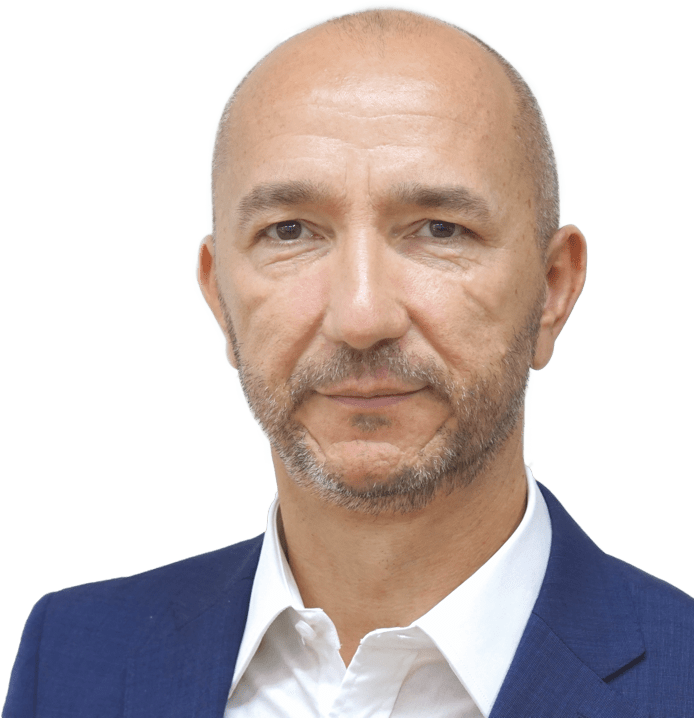
Claudiu Gradinaru is an Interim Chair and Professor in the Department of Chemical and Physical Sciences at the University of Toronto Mississauga, part of the Faculty of Arts & Science. He holds a Ph.D. in Physics from VU University Amsterdam and has conducted postdoctoral research at Leiden University and Sandia National Laboratories. His research focuses on single-molecule biophysics, intrinsically disordered proteins (IDPs), and G protein-coupled receptors (GPCRs), leveraging advanced microscopy and computational techniques. Education: B.Sc. in Physics (University of Bucharest, 1995), Ph.D. in Physics (VU University Amsterdam, 2001). Roles: Interim Chair, Principal Investigator of the Gradinaru Biophysics Lab, and educator in molecular biophysics, optics, and classical mechanics. Research Interests: His lab employs ultrasensitive optical techniques (e.g., single-molecule fluorescence spectroscopy) to study conformational dynamics of IDPs and GPCRs in live cells. Key areas include: Structural ensembles of IDPs using NMR, SAXS, and smFRET. GPCR oligomerization and signaling dynamics. Development of computational methods for ensemble modeling. Advising: Gradinaru mentors numerous graduate and undergraduate students, including PhD candidates Xiaohan Zhou (GPCR dynamics) and Maria Shemeteva (GPCR signaling), and MSc students Aiyan Brown (smFRET analysis) and Xinge Liu (IDP complexes). His lab has produced over 40 publications since 2001, with recent work featured in Biophysical Journal , Journal of the American Chemical Society , and Nucleic Acids Research . Labs & Instruments: The Gradinaru Lab houses custom-built microscopes for multiparameter single-molecule fluorescence, fluorescence correlation spectroscopy, and TIRF microscopy. Collaborations span institutions in Canada, the U.S., the U.K., and Australia.
Prof. Mario Thevis is a Professor at the Institute of Biochemistry within the German Sport University Cologne, leading the Centre for Preventive Doping Research (ZePräDo). His research focuses on doping control, pharmacology, and analytical chemistry, with over 891 publications since 2004. He has been an editor for journals like Drug Testing and Analysis and has received awards such as the Fresenius Preis der GDCh 2023. Research Interests: Doping detection methods, drug metabolism, analytical techniques, and sports pharmacology. Key Projects: Includes studies on physiological adaptation processes and development of Dried-Blood-Spot (DBS) analysis technologies. His work bridges sports science and clinical research, emphasizing preventive doping strategies and athlete health monitoring. Recent media engagements highlight his expertise in global anti-doping efforts.
Wen-Yee Lee is a Professor at the University of Texas at El Paso (UTEP), specializing in environmental and biomedical chemistry. Her research focuses on developing analytical methods for detecting environmental pollutants and cancer biomarkers. She leads studies on volatile organic compounds (VOCs) for prostate and renal cancer diagnosis, nanoparticle-based environmental remediation, and green chemistry approaches for contaminant analysis. Her work bridges environmental science and clinical diagnostics, with significant contributions to wastewater surveillance and transboundary pollution studies along the U.S.-Mexico border. Dr. Lee’s research has been supported by major grants, including NIH funding for prostate cancer detection technologies and collaborative initiatives with Chihuahua universities. She is a key contributor to UTEP’s interdisciplinary efforts in biomedical research, environmental engineering, and sustainable chemistry. Her lab develops novel methods for contaminant detection, including freeze-drying techniques for SARS-CoV-2 surveillance and electrocatalytic degradation of perfluorinated pollutants. Her work emphasizes practical applications, such as improving diagnostic accuracy through machine learning models and advancing eco-friendly remediation strategies. Dr. Lee’s research also explores the translocation of pollutants in plants and their impact on human health, as seen in studies involving pesticides and endocrine disruptors.
Leslie Farris is an Associate Professor at the University of Massachusetts Lowell , affiliated with the Kennedy College of Sciences and the Department of Chemistry . Her work bridges analytical chemistry and biochemistry, focusing on polymer-protein interactions and biosensor development. Leslie Farris’s research explores non-covalent interactions , antibody orientation , and fluoroimmunoassays for disease biomarkers like influenza nucleoprotein , prostate-specific antigen , and CA-125 . Her methodologies include computational analysis , atomic force microscopy , and interferometry . All publications originate from collaborations with McDonald, M.J., underscoring a sustained focus on analytical techniques and clinical diagnostics .
Lucy Kind serves as a Research Associate in Nanotechnology and Deputy Dean for the BSc programs in "Chemistry" and "Bioanalytics & Cell Biology" at the Institute for Chemistry and Bioanalytics within the School of Life Sciences at the University of Applied Sciences and Arts Northwestern Switzerland (FHNW), located in Muttenz, Switzerland. Dr. Kind's research specializes in innovative synthesis, modification, and characterization of surfaces, hard and soft materials, hydrogels, vesicles, and colloids. Her work bridges fundamental nanotechnology with practical applications in food safety, particularly developing advanced detection methods for nanoparticles in complex food matrices. She leads research activities in the nanoLab, where her team addresses critical challenges in nanoparticle quantification for vulnerable populations including newborns. Her recent publication in ACS Omega demonstrates expertise in high-throughput detection of silica nanoparticles in early life nutrition products, establishing characterization methods that balance accuracy, sensitivity, and automation requirements. This research successfully distinguishes nanoparticle content in food formulations and reveals how food matrices significantly influence detection methodologies compared to reference systems. Scientific recognition includes: 2013 FH-Award from Schweizerischen Chemischen Gesellschaft in the Category "Molecules for Life Sciences" 2013 Conseuro Poster Award As Deputy Dean for BSc programs, Dr. Kind oversees academic administration and curriculum development while maintaining active research leadership. Her work has direct industry applications for food safety standards and quality control processes, with potential regulatory impact. Dr. Kind leads the nanoLab research group, which functions as an interdisciplinary hub connecting chemistry, bioanalytics, and food science to develop standardized protocols for nanoparticle detection in complex matrices, with particular focus on vulnerable consumer groups.
Dr. Muhammad N. Yousaf is a Full Professor in the Department of Chemistry at York University, affiliated with the Biology Graduate Program. His interdisciplinary research group bridges organic chemistry, bioanalytical methods, chemical biology, and biomaterials to study cell behavior and develop advanced biotechnologies. Research focuses include: 1) Surface chemistry and microfluidics for cell behavior analysis, 2) Dynamic 'click' chemistry for bioconjugation, 3) Liposome fusion for cell surface engineering in tissue engineering, and 4) biodegradable polymers for regenerative medicine. His lab integrates synthetic chemistry, live-cell microscopy, and material science to create innovative tools for biomedical applications. Key research outputs include scaffold-free 3D tissue assembly, redox-responsive bioconjugation strategies, and bioorthogonal bacterial surface modifications. These studies have been highlighted in C&E News, Faculty 1000, and major news outlets. He supervises graduate students in the Biology program and collaborates on projects involving cell-cell interactions, hydrogel design, and stem cell differentiation. His lab is located in the Life Sciences Building and Chemistry Department facilities at York University.
Dr. Ruth Godfrey is an Associate Professor in Biomedical Sciences at Swansea University Medical School, Faculty of Medicine, Health and Life Science. With over a decade of academic experience, she has progressed from Lecturer (2011-2017) to Senior Lecturer (2017-2020) and currently serves as Associate Professor (2020-present). Her work bridges academic research and practical applications, supporting R&D for multinational companies, government agencies, and SMEs through her expertise in analytical technologies. Dr. Godfrey's research focuses on analytical technologies and method development for medical and chemical analysis, with particular emphasis on environmental medicine, mass spectrometry, and sample preparation technology. Her work spans pharmaceutical analysis, environmental monitoring, and clinical applications, with a strong focus on developing practical analytical solutions for complex real-world problems. She has made significant contributions to the QuEChERS (Quick, Easy, Cheap, Effective, Rugged, and Safe) methodology, adapting it for environmental and clinical matrices, and has developed educational tools like the 'Periodic Table' for liquid chromatography separation modes and mass spectrometry instrumentation. Her publication record demonstrates consistent productivity across environmental analysis, mass spectrometry, and chromatography. The trends in her work show increasing focus on environmental applications of analytical techniques, particularly regarding pollutant monitoring and sustainable analytical methods. While maintaining strong foundations in mass spectrometry fundamentals, her recent work has expanded into green chemistry applications and the intersection of analytical science with environmental sustainability. Dr. Godfrey has received significant recognition through her professional designations: Chartered Chemist Chartered Scientist Fellow of The Higher Education Academy She has successfully secured diverse research funding from UKRI, EU programs, industry partners, and charities, totaling over £2 million across multiple projects. Her supervision record includes PhD, MRes, and MPhil students, with current projects focusing on environmental and health impacts of chemical pollutants. Beyond her university role, she actively contributes to the scientific community as Secretary of the RSC Analytical Methods Committee's Instrumental Analysis Expert Working Group and as an RSC Chemnet Ambassador promoting science education.
Gary Black is a Professor of Protein Biochemistry and Head of Department at Northumbria University's Applied Sciences Department. He holds a PhD in Biochemistry (CNAA, 1992) and a BSc (Hons) in Applied Biology (CNAA, 1988). His research focuses on protein biochemistry, biocatalysis, and enzymology with applications in bioengineering and industrial processes. He has published over 58 peer-reviewed articles, including work on enzyme engineering, biocatalytic synthesis, and protein structure-function relationships. Key research interests include the design of enzymes for industrial applications, computational modeling of enzyme mechanisms, and the development of biocatalytic systems for sustainable processes. His work spans topics such as lyase activity optimization, cytochrome P450 systems, and microbial enzyme systems for lignocellulosic waste utilization. Dr. Black leads a research group engaged in collaborative projects with industry and academia, focusing on enzyme innovation and bioprocess development. His research has been cited over 1,430 times, reflecting significant contributions to the field of protein biochemistry.
Heather Desaire is a University Distinguished Professor and holds the Keith D. Wilner Chair in Chemistry at the University of Kansas, Department of Chemistry. Her research focuses on mass spectrometry applications in bioanalytical and physical organic chemistry, including structural analysis of glycoproteins and organic reaction mechanisms. She pioneered methods to characterize glycopeptides using tandem mass spectrometry and developed rules for dissociation reactions in mass spectrometry. Her recent work integrates machine learning for biomarker discovery, Alzheimer’s disease studies, and detecting AI-generated academic texts. Key tools developed by her group include GlycoPep DB and GlycoPep ID for glycopeptide analysis. Education: B.A. in Chemistry from Grinnell College (1997), Ph.D. in Chemistry from University of California, Berkeley (2001). Postdoctoral work at Quintiles Inc. (2002). Research Interests: Mass spectrometry of glycoproteins and small organic molecules. Machine learning applications in proteomics and biomarker validation. Forensic analysis of latent fingerprints and sebum via mass spectrometry. Structural studies of HIV envelope glycoproteins and vaccine development. Publications highlight advancements in AI detection (over 99% accuracy distinguishing ChatGPT text), Alzheimer’s biomarkers, and lipidomic studies using non-invasive sampling. Her work has been supported by grants including the NSF Career Award and the ASMS Research Award. Awards: William T. Kemper Award for Excellence in Teaching (2009), NSF Career Award (2007-2012), and ASMS Research Award (2006). Lab: Desaire Research Group develops cutting-edge tools for glycoproteomics and mass spectrometry data analysis. Collaborations focus on translational research in virology, neurodegenerative diseases, and forensic science.
Perdita Barran is a Professor of Mass Spectrometry at the University of Manchester’s Manchester Institute of Biotechnology. She specializes in advanced mass spectrometry applications, including protein dynamics, metabolomics, and biocatalysis. Her research focuses on structural biology, ion mobility-mass spectrometry, and translational diagnostics for diseases like Parkinson’s and post-COVID-19 conditions. She leads or co-leads 16 active research projects, including studies on SARS-CoV-2, biotherapeutic manufacturing, and synthetic biology. Education: Not explicitly listed in provided text. Affiliations: Manchester Institute of Biotechnology, University of Manchester. Research interests span metabolomics (e.g., sebum biomarkers for Parkinson’s), viral protein characterization (e.g., SARS-CoV-2 nucleocapsid), and analytical methods for biomanufacturing. Recent projects include developing diagnostic tools for long-term health outcomes post-COVID-19 and optimizing CHO cell cultures for antibody production. Her work integrates computational modeling with experimental techniques to elucidate molecular structures and dynamics. Articles highlight advancements in mass spectrometry for high-throughput screening, protein conformational studies, and biomarker discovery. Awards and grants (not detailed) support her interdisciplinary research. Supervises 40+ students across projects, emphasizing training in cutting-edge analytical techniques. Key collaborations involve synthetic biology, photocatalysis, and material science applications. Labs and teams: Active at the Manchester Institute of Biotechnology, collaborating with interdisciplinary groups on bioanalytical chemistry and biotechnology.
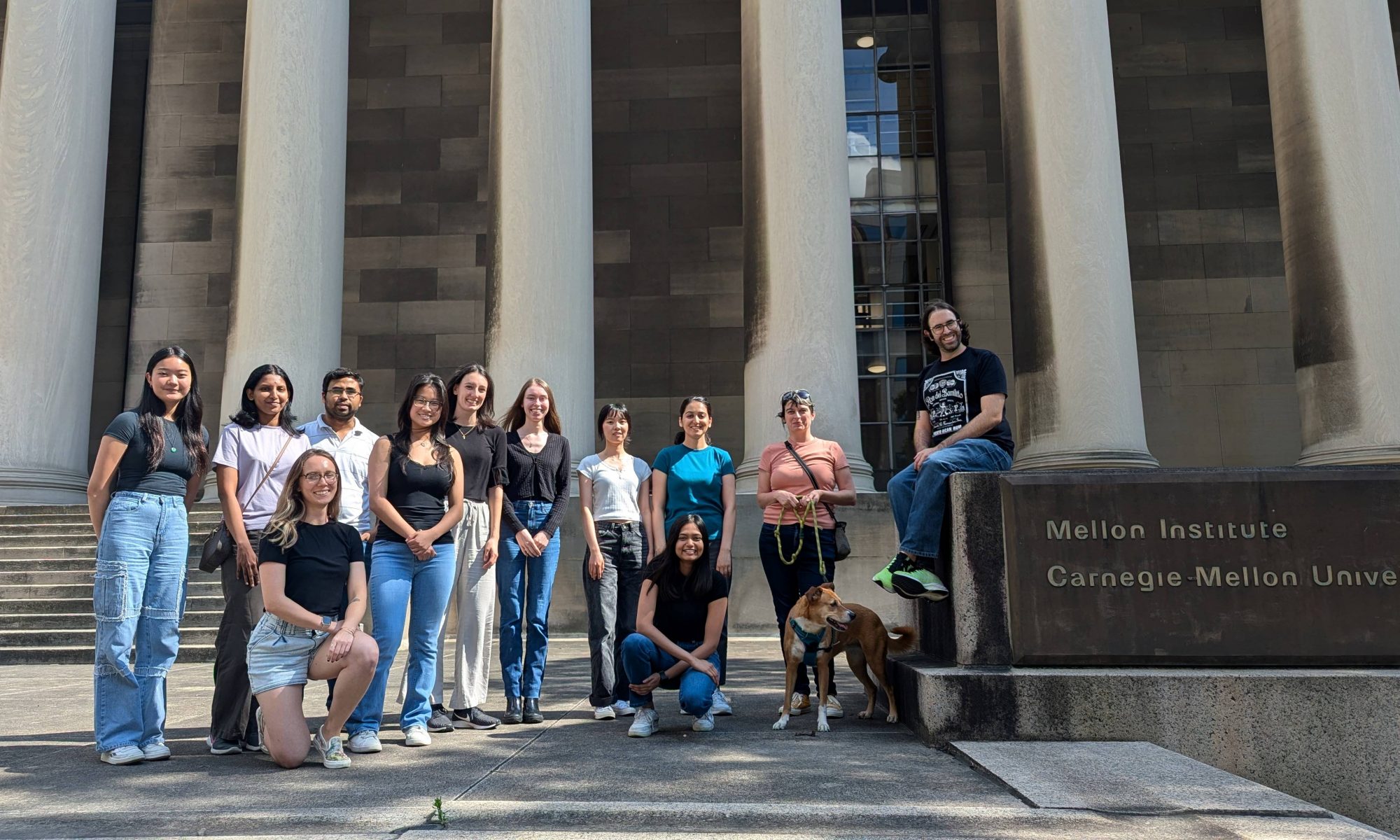
Carrie McDonough is an Associate Professor in the Department of Chemistry at Carnegie Mellon University. Her research focuses on environmental analytical chemistry, PFAS contamination, bioavailability, bioaccumulation, and toxicology, using high-resolution mass spectrometry and bioanalytical methods to assess risks of organic pollutants to aquatic ecosystems and human health. 2017–2019 Postdoctoral Fellow, Colorado School of Mines 2017 Ph.D. in Chemical Oceanography, University of Rhode Island Graduate School of Oceanography 2008 B.Sc. in Chemistry, Massachusetts Institute of Technology Her work develops bioaccumulation-directed prioritization tools for ionizable organics, virtual organisms for contaminant isolation, and in vitro techniques to study PFAS transformation. Current projects include evaluating sediment-associated PFAS bioavailability in marine organisms and short-chain PFAS in human urine (CDC NIOSH-funded). Recent publications highlight PFAS isomer differentiation , electron beam remediation , and human exposure via seafood . Her team has identified previously undetected bioaccumulative PFAS in AFFF-dosed mice and developed interactive software for PFAS analysis . 2025 Emerging Investigator Series, Environ. Sci.: Processes & Impacts Postdoctoral Fellow, Colorado School of Mines She mentors 8 graduate/undergraduate students and has trained 5 alumni now in academia, EPA, and public health. Her lab collaborates on SERDP ER22-4003 (marine PFAS) and CDC NIOSH grants. Personal interests include brewing beer and spending time with her dogs, Millie and Pickles.
Richard N. Zare, the Marguerite Blake Wilbur Professor in Natural Science and Professor of Chemistry at Stanford University, is a pioneering figure in physical chemistry and nanochemical analysis . His career spans institutions including MIT, University of Colorado, Columbia University, and Stanford since 1977. He has chaired Stanford's Chemistry Department and served on numerous national science policy boards. Education : Ph.D. in Chemical Physics (1964) and B.A. in Chemistry & Physics (1961) from Harvard University Appointments : Professor (1977–Present), Professor of Physics (1992–Present), Howard Hughes Medical Institute Professor (2006–2010) Zare's research focuses on laser-based reaction dynamics , microdroplet chemistry , and interfacial electrochemistry , with applications in green chemistry , chemical analysis , and biomolecular systems . His team has developed techniques like laser-induced fluorescence , cavity ring-down spectroscopy , and Hadamard transform mass spectrometry . Recent publications highlight breakthroughs in metal nanoparticle synthesis , CO2 conversion , and biomolecular condensate electrochemistry . His work bridges physical chemistry , analytical chemistry , and environmental science . Major Awards : National Medal of Science Wolf Prize in Chemistry BBVA Foundation Frontiers of Knowledge Award King Faisal International Prize Presidential Award for Science Mentoring (PAESMEM) 11 Honorary Doctorates Zare teaches Stanford's Chemistry in the Kitchen course and has mentored numerous Ph.D. students and postdocs . He leads the Zarelab, with affiliations to Bio-X , Woods Institute , and Cardiovascular Institute .
Renã A. S. Robinson is an Adjunct Professor in the Department of Chemistry at the University of Pittsburgh, affiliated with the Dietrich School of Arts and Sciences. Her research integrates bioanalytical chemistry, mass spectrometry, and proteomics to investigate the molecular mechanisms of aging and immunosenescence. Research Interests: Bioanalytical Chemistry Mass Spectrometry and Ion Mobility Spectrometry Proteomics in Aging and Neurodegenerative Diseases Immunosenescence and Immune System Aging Alzheimer’s and Parkinson’s Disease Mechanisms Development of Novel Proteomic Methodologies (e.g., cPILOT) The recent publications highlight a strong focus on quantitative proteomics, oxidative stress, host immune responses in sepsis, and neurodegenerative disease modeling. Her work combines cutting-edge analytical techniques with biological systems, particularly using Drosophila and transgenic mouse models. A recurring theme is the application of advanced mass spectrometry methods to understand age-related changes at the proteome level. Scientific Awards: ASMS Emerging Investigator (2015) Lloyd N. Ferguson Young Scientist Award (2014) Keystone Conference Early Career Travel Award (2012) Pitt EXCEL Best Mentor Award (2010) Society of Analytical Chemists of Pittsburgh Starter Grant (2010) UNCF/Merck and Lyman T. Johnson Postdoctoral Fellowships Kraft Fellowship and GAANN Fellowships during graduate studies Dr. Robinson has advised numerous graduate students and postdoctoral researchers, many of whom are co-authors on her publications. Her research has been supported by early-career grants and fellowships, indicating strong recognition in the analytical and biochemical communities. She has contributed significantly to method development in proteomics, particularly in multiplexed quantitation and ion mobility techniques. She leads a research group focused on aging and proteome dynamics, utilizing interdisciplinary approaches that combine biochemistry, analytical instrumentation, and bioinformatics. Her lab continues to explore the intersection of immunology and neurodegeneration, aiming to identify early biomarkers and therapeutic targets for age-related diseases.
Professor Jacek Młynarski is affiliated with the Institute of Organic Chemistry, Polish Academy of Sciences . He leads a research group focused on asymmetric catalysis, bioactive compound synthesis, and AI-driven reaction discovery. Asymmetric catalysis with zinc/magnesium Lewis acids AI-guided catalyst optimization Stereoselective synthesis of pharmaceuticals/natural products Organocatalysis and redox chemistry His recent work bridges artificial intelligence with asymmetric catalysis, enabling systematic discovery of reaction pathways. He specializes in chiral zinc/magnesium catalysts, organocatalytic Michael additions, and computational reaction planning. His group includes Prof. Sławomir Jarosz , Prof. Zbigniew Pakulski , and PhD student Paulina Baczewska . He holds the OPUS NCN 2021/41/B/ST4/01617 grant titled "Artificial Intelligence meets Asymmetric Catalysis: a new pathway for catalyst optimization and discovery" .
Dr. Richa Pandey is an Assistant Professor in the Department of Biomedical Engineering at the University of Calgary's Schulich School of Engineering. She serves as a Full Member of the Hotchkiss Brain Institute and is the Principal Investigator of the Wearable and Bio-integrated Technologies (WeBiT) Lab, where she also holds the UCalgary Research Excellence Chair position. Her work bridges biomedical engineering, digital health, and women's health applications. Dr. Pandey earned her Ph.D. in Physical Electronics from Tel Aviv University in 2018. Her educational background provides the foundation for her interdisciplinary research that combines electronics, biomaterials, and medical applications. Dr. Pandey's research focuses on developing innovative healthcare solutions with particular emphasis on women's health challenges including perinatal depression, preeclampsia, cervical cancer, and malaria in pregnancy. Her laboratory specializes in three interconnected research pillars: wearable biosensors for continuous health monitoring, point-of-care diagnostic technologies for decentralized testing, and bioreceptor discovery for enhanced detection systems. These technologies are designed to be accessible, particularly in low-resource settings, addressing significant health inequities through engineering solutions. Her work integrates biology, engineering, and digital health to create medical technologies that are both effective and user-friendly. Analysis of Dr. Pandey's recent publications reveals a strong focus on electrochemical and photoelectrochemical biosensing platforms, with particular emphasis on nucleic acid-based detection systems. Her research spans multiple application areas including infectious disease diagnostics (particularly for SARS-CoV-2), cancer biomarker detection, environmental monitoring, and neurotransmitter sensing. The consistent theme across her work is the development of rapid, sensitive, and field-deployable diagnostic technologies that minimize sample preparation requirements while maintaining high analytical performance. Marie Sklodowska Curie Fellowship, Marie Sklodowska Curie Association Excellence Award, Marian Gertner Institute for Medical Nanosystems Food Security Fellowship, Manna Center for Food Safety and Security Dr. Pandey actively mentors federally and provincially funded students and postdoctoral fellows in her laboratory. Her educational philosophy emphasizes hands-on learning and application of engineering principles to medical challenges. She participates in outreach initiatives that inspire underrepresented groups to pursue engineering careers. Her collaborative approach includes partnerships with clinicians, industry experts, and global health organizations to ensure her research translates into practical, impactful healthcare solutions. Dr. Pandey also teaches multiple courses including BMEN 388 Signals, Systems and Instrumentation I, BMEN 585 Guest Lecture on Point of Care Diagnostics, BMEN 600 Biomedical Engineering Foundations, and BMEN 468 Engineering Design for Biomedical Engineering. The Wearable and Bio-integrated Technologies (WeBiT) Lab serves as the hub for Dr. Pandey's research activities. The laboratory houses federally funded instruments and highly skilled personnel dedicated to developing cutting-edge medical devices. The lab's vision focuses on creating disruptive technologies to engineer health solutions through a multidisciplinary and translational approach. Current projects include Revolutionizing real-time health monitoring through wearable biosensors, Making diagnostics accessible through point-of-care technologies, and developing the foundation of smart sensing through bioreceptor discovery and design.