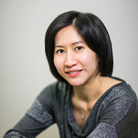
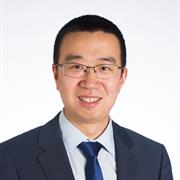
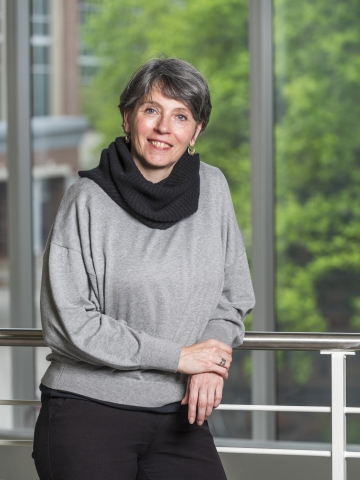
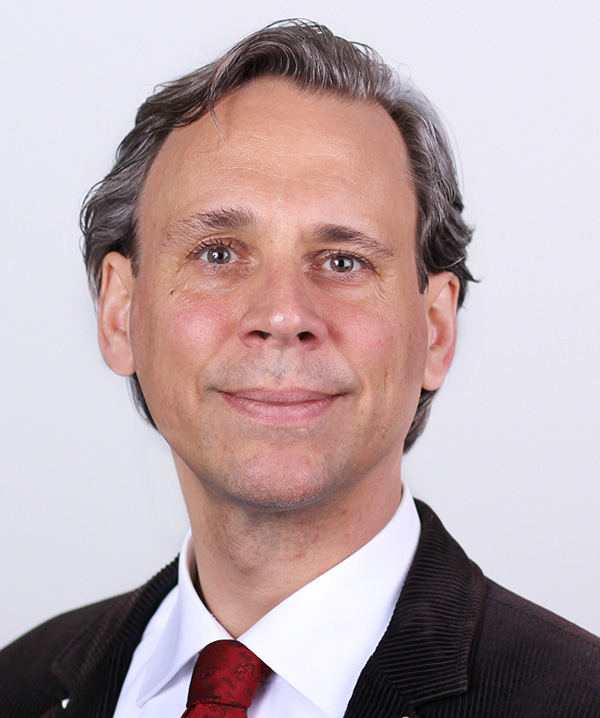
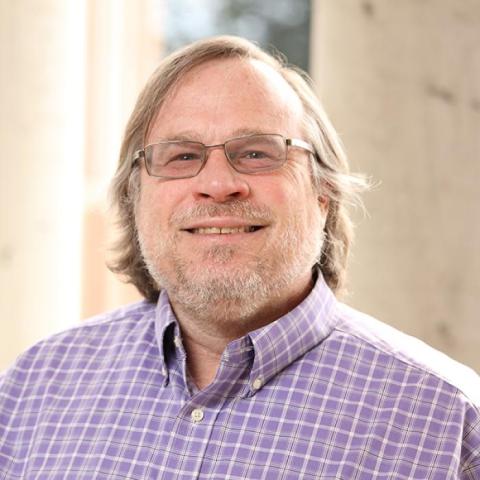
Jennifer Chen is an Associate Professor in the Department of Chemistry at York University's Faculty of Science. She leads a research group focused on designing nanomaterials for optical sensing, biomedical diagnostics, and solar energy conversion , with an emphasis on plasmonic nanostructures and hybrid materials. Research spans analytical, inorganic, and physical chemistry Eligible supervisor for Physics and Astronomy graduate students Key funding: CFI, NSERC, Ontario Research Fund Her work bridges fundamental studies of materials interfaces with applications in healthcare and sustainability. Recent publications explore charge transfer mechanisms and DNA-nanoparticle interactions for biosensing. 2022: J. Mater. Chem. A on Mn-doped quantum dots 2020: Analyst and ACS Appl. Nano Mater. on DNA-based sensing 2018: JPCC on interfacial charge dynamics 2013: JACS on plasmonic microRNA detection Major awards include the Canadian Society for Chemistry Fred Beamish Award (2019), Nano Ontario Early-Career Award (2018), and Top 40 Under 40 Analytical Scientist (2018). Her group has trained 15+ graduate students, including PhD graduates Brian and Anthony.
Prof. Frieder W. Scheller is affiliated with the Institute of Biochemistry and Biology at the University of Potsdam, Germany. His work centers on advanced biosensing technologies, particularly molecularly imprinted polymers (MIPs), bioelectronics, and biomimetic recognition systems. Research Interests: His primary fields include Bioanalysis, Bioelectronics, Biosensors, Molecularly Imprinted Polymers, Electrochemical Sensing, and Plastibodies. His research bridges chemistry, materials science, and biotechnology to develop synthetic alternatives to biological receptors for medical and environmental applications. The recent publications (2019–2024) highlight a strong trend in designing MIP-based nanofilms for protein and virus recognition, including applications in SARS-CoV-2 detection and enzyme monitoring. These studies focus on improving selectivity, stability, and reliability of electrochemical biosensors using innovative polymer architectures. Scientific Contributions: Developed Strep-tag imprinted polymer platforms for bio(electro)catalysis. Explored ACE2-mimicking MIPs for viral epitope recognition. Investigated challenges in MIP sensor reliability and non-specific binding. Advanced the concept of plastibodies for biomacromolecules, viruses, and cells. Collaborations and Advising: Prof. Scheller has collaborated with over 145 co-authors globally, indicating strong network engagement. While no formal students are listed in the provided text, his collaborative output suggests mentorship and team leadership roles in multidisciplinary research projects involving materials, electrochemistry, and biotechnology. Laboratories and Research Teams: His work is conducted within the Institute of Biochemistry and Biology at the University of Potsdam, likely involving a research group focused on bioanalytical chemistry and sensor development. The frequent co-authorship with researchers like Aysu Yarman and Xiaorong Zhang indicates an active, interdisciplinary team working on next-generation biosensing platforms.
Dr. Yi David Ju is a Senior Research Fellow at RMIT University's School of Science and an ARC DECRA Fellow at La Trobe University's School of Cancer Medicine. He leads the Nanomedicine and Gene Therapeutics Laboratory at the Olivia Newton-John Cancer Research Institute (ONJCRI) and holds Honorary Fellowships at the University of Melbourne's Department of Microbiology & Immunology and Chemical Engineering. PhD from University of Melbourne (2017, Frank Caruso) 2017–2021 : Research Fellow at University of Melbourne 2021 : Vice-Chancellor’s Postdoctoral Fellow at RMIT 2023 : Visiting Researcher at University of Manchester's Nanomedicine Lab His research focuses on Bio-Nano Interactions , particularly Nanoparticle-Immune System dynamics, Lipid Nanoparticle Engineering for mRNA Delivery , and Poly(ethylene glycol) Alternatives . Key contributions include stealth nanoparticles for prolonged circulation, anti-PEG antibody dynamics in vaccine development, and patient-specific targeting models for chronic lymphocytic leukemia . Recent publications analyze hybrid immuno-PET-MRI probes for inflammation monitoring, zwitterionic PEG nanoparticles for reduced immunogenicity, and RAFT polymer-based LNPs for enhanced gene delivery . His work also explores supramolecular DNA-polyphenol assemblies and metal-phenolic coatings for controlled drug release . Scientific Awards : 2023 ACIS ECR Lectureship Finalist, 2023 ACS Nano Impact Award 2022&2023 RMIT Enabling Capability Platform Funding 2021 CBNS Most Significant Publication Award 2020 CBNS Career Development Award 2019 Outstanding Postdoctoral Researcher Award 2019 Nanoscale Advances Oral Prize 2017 Reviewer Excellence Award for Chemistry of Materials 2014 Best Tutor Award Professional Roles : Associate Editor, Journal of Materials Science Committee Member, Royal Australian Chemical Institute (Victorian Branch) Active Member, Australasian Colloid and Interface Society
Pamela Pollet is a faculty member at the Georgia Institute of Technology, specializing in the Department of Chemistry. Her academic work focuses on green chemistry, sustainable processes, chemical education, and flow chemistry. BSc : University of Rouen, France (1994) PhD : Chemistry, University of Rouen, France (2011) Post-doctoral Fellow : University of Bradford, UK (1998); Georgia Institute of Technology, USA (1999) H.D.R : Chemistry, University of Rouen, France (2011) Pollet’s research spans chemical safety, sustainable chemistry, catalysis, and smart solvents. She emphasizes green chemistry & sustainability, integrating undergraduate research into her projects. Her work also explores continuous flow technology for scalable chemical processes and education-focused innovations, including sustainability practices and equity in chemical sciences. Her recent publications highlight trends in chemical education (e.g., active learning in organic chemistry), green chemistry (e.g., CO2-responsive materials), and flow chemistry (e.g., continuous flow polymerization and catalytic reactions). These works reflect interdisciplinary collaboration, industry partnerships, and sustainable methodologies. Scientific Awards: GaTech Safety Ambassador Award, 2017 Vasser-Wooley Excellence in Teaching Award, 2017 Geoffrey G. Eichholz Faculty Teaching Award, 2020 University System of Georgia Chancellor Learning Scholar, 2021 Student Recognition of Excellence in Teaching CIOS Honor Roll, 2022–2024 Class of 1934 Outstanding Innovative Use of Education Technology Award, 2024 Pollet actively contributes to chemical education and laboratory safety , with grants and partnerships focused on academic-industry collaborations (e.g., the Partners in Lab Safety initiative) and educational technology integration.
Frederick R. Haselton is a Professor of Biomedical Engineering, Chemistry, and Ophthalmology and Visual Sciences at Vanderbilt University’s School of Engineering. His research focuses on developing low-cost, accessible diagnostic technologies for global health challenges, particularly in resource-constrained settings. He leads the Haselton Lab, a multidisciplinary team advancing innovations like Adaptive PCR, coffee ring-based diagnostics, and quantum dot imaging systems. Education : Ph.D. in Bioengineering from the University of Pennsylvania; B.A. in Mathematics from Haverford College. Research Interests : Dr. Haselton’s work spans molecular diagnostics, nanotechnology, and global health. Key projects include: Adaptive PCR: A revolutionary PCR method using synthetic L-DNA for temperature-independent cycling, enabling point-of-care diagnostics. Coffee Ring Diagnostics: Leveraging evaporation phenomena to create simple malaria and tuberculosis tests requiring no electricity. Quantum Dot Imaging: Developing multispectral tools for retinal and cardiovascular disease monitoring. Global Health Collaborations: Leading LIGHT (Laboratories for Innovation in Global Health Technologies), a cross-disciplinary initiative addressing diagnostic needs in low-resource environments. Grants & Funding : Haselton has secured major grants from NIH, Bill & Melinda Gates Foundation, and others for projects like tuberculosis detection via magnetic bead systems and mobile-connected diagnostic tests. Labs & Teams : The Haselton Lab collaborates with faculty across engineering, medicine, and chemistry. Current personnel include postdocs, graduate students, and undergraduates working on projects ranging from HIV viral load monitoring to SARS-CoV-2 diagnostics.
Prof. Dr. Sebastian Schlücker is a full professor in the Department of Physical Chemistry at the University of Duisburg-Essen , where he leads the Molecular Biophotonics and Nanodiagnostics research group within the Faculty of Chemistry. He is actively engaged in research, teaching, and academic leadership, with a strong focus on advanced spectroscopic techniques for biomedical and analytical applications. His research interests lie at the intersection of nanophotonics, plasmonics, and bioanalytical chemistry . Key areas include surface-enhanced Raman spectroscopy (SERS) , single-particle spectroscopy , laser diagnostics , and the design of functionalized metal colloids for biosensing and tumor diagnostics. He emphasizes a theory-guided approach combining simulation and experiment to tailor nanoparticle properties. His recent publications (2023–2025) reflect a strong trend toward quantitative, label-free molecular diagnostics , point-of-care testing , and in situ monitoring of catalytic and biological processes . The work spans fundamental plasmonics to clinical applications, particularly in cancer detection and immunoassays using SERS nanotags. International Raman Innovation Prize He mentors students and researchers, supervises theses, and collaborates widely across disciplines. His group develops advanced instrumentation, including portable SERS readers , fs-laser laboratories , and automated nanoparticle synthesis systems (e.g., BONAPARTE robot). He teaches master’s courses such as NanoBioPhotonics and Optical Spectroscopy , and is involved in STEM outreach.
Professor Nick Turner is a Professor in Bioanalytical Chemistry at the University of Sheffield's Department of Chemistry within the School of Mathematical and Physical Sciences. He holds a BSc in Pharmacology (University of Southampton, 1997), an MRes in Biochemistry (University of Exeter, 1999), and a PhD in Bio-organic Chemistry (Cranfield University, 2004). His career includes roles at the University of Utah, University of Newcastle (Australia), Open University, and De Montfort University, where he progressed from Lecturer to Reader in Bioanalytical Chemistry. In 2022, he received an EPSRC Established Career Fellowship for artificial chaperone research and was awarded a personal chair. His research focuses on molecular recognition, particularly molecularly imprinted polymers (MIPs) for biosensing, nucleic-acid-polymer hybrids, and artificial chaperones. These technologies address challenges in drug detection, environmental monitoring, and biomedical diagnostics. He actively supports PhD applications in these areas. Awards: EPSRC Established Career Fellowship (2022), Senior Fellowship of HEA (2016) Professional Memberships: Royal Society of Chemistry, Macro Group UK (Secretary) Teaching interests include analytical chemistry and pharmacology, emphasizing modern techniques like VR/AR in drug design education. He contributes to interdisciplinary projects such as the Open Science Laboratory and MOOC development.
Trine Grønhaug Halvorsen is a Professor at the University of Oslo's Department of Pharmacy, within the Faculty of Mathematics and Natural Sciences. Her research focuses on developing innovative analytical methods for protein analysis in complex biological samples using mass spectrometry. She specializes in sample preparation techniques, smart sampling strategies, and biomarker quantification. Education: PhD in Drug Analysis (2003), Cand.pharm. (1998) Awards: Publication Award (2001) for pioneering liquid-phase microextraction work Research interests include molecularly imprinted polymers, antibody-based capture methods, and electromembrane extraction. Her work emphasizes improving analytical sensitivity and speed for low-abundance proteins in clinical and biomedical contexts. Recent articles highlight advancements in smart samplers, dried blood spot analysis, and LC-MS-based protein quantification. These studies address challenges in biomarker detection and clinical diagnostics. Labs/Teams: Pharmaceutical Analytical Chemistry Group, SmartProteinAnalysis@UiO Teaching: Courses in bioanalytical chemistry, drug analysis, and sample preparation
Dr. Amin Reza Rajabzadeh is an Associate Professor at the W Booth School of Engineering Practice and Technology, McMaster University, with affiliate roles in the McMaster School of Biomedical Engineering and Mechanical Engineering. He specializes in biochemical engineering, focusing on biosensors, bioseparation processes, and bioprocess monitoring. His research includes developing biosensors for biological process monitoring and nanotechnology-based cancer therapies. He holds a Professional Engineer license (P.Eng.) and is a member of the Canadian and American Engineering Education Associations. Dr. Rajabzadeh's teaching spans core biochemical engineering courses like Bioreactor Design and Bioprocess Control. He has received the McMaster President’s Award for Teaching and a MacPherson Leadership in Teaching Fellowship. His research clusters span Energy, Environment, Health & Bio-innovation, and Micro-Nano Systems. Recent work includes nanoplatforms for photothermal cancer therapy (ACS Applied Materials & Interfaces, 2021) and innovations in sustainable protein enrichment via tribo-electrostatic separation. Collaborations span biomaterials, environmental engineering, and nanotechnology. Awards: Teaching Excellence Awards, Leadership Fellowships Research Themes: Biosensors, Nanomedicine, Bioseparation Technologies Labs/Teams: Biomedical Engineering Research Group, Nanotechnology Applications Lab
Timothy G. Strein is a Professor of Analytical Chemistry at Bucknell University, where he also held a Presidential Professorship from 2014-2017. He earned his B.S. from North Carolina State University in 1988 and his Ph.D. from Penn State University in 1992, working on electrochemistry at microvoltammetric electrodes with Dr. Andrew G. Ewing. Following a Camille and Henry Dreyfus Postdoctoral Fellowship at Bucknell (1992-1994), he joined the chemistry faculty where he has served as Department Chair (2010-2014), Acting Chair (2006-2007), and Graduate Coordinator (1998-2006, 2015-). His educational background includes: B.S. in Chemistry from North Carolina State University (1988) Ph.D. in Chemistry from Penn State University (1992) Camille and Henry Dreyfus Postdoctoral Fellowship at Bucknell University (1992-1994) Professor Strein's research focuses on bioanalytical chemistry, with particular expertise in capillary electrophoresis (CE), bile salt micelle structure, chiral separations, aqueous NMR spectroscopy, and isothermal titration calorimetry (ITC). His current work (2025) centers on developing rapid, inexpensive methods for chiral separations using CE, investigating the mechanisms that give rise to chiral separations with bile salt micelles by MEKC-CE, and the underlying thermodynamics driving chiral selection. He also conducts collaborative research using NMR to study bile micelle structure and ICP-MS to determine lithium ion concentrations in human blood, correlating endogenous Li levels with neurological health issues. Analysis of his recent publications (2005-2023) reveals a strong focus on chiral separations using bile salt micelles, with particular emphasis on understanding the molecular mechanisms of chiral recognition. His work spans analytical methodology development, fundamental studies of micellar structure, and applications in bioanalysis. The interdisciplinary nature of his research is evident in publications spanning chemistry, biochemistry, materials science, and medical applications. His scientific recognition includes the Henry Dreyfus Teacher/Scholar Award (TH-98-025). His external funding portfolio demonstrates sustained research support: George I. Alden Trust (2025-2030): $150,000 for HPLC instrumentation Bucknell-Geisinger Research Initiative (2024-2025): $20,000 for lithium concentration studies NSF-ROA Supplement (2021-2022): $29,600 for CE-MS interface development NSF-RUI Grant (2018-2021): $211,552 for chiral separation mechanisms Multiple previous NSF, NIH, and private foundation grants totaling over $1.5 million Professor Strein has mentored numerous undergraduate and MS students, many of whom have gone on to successful careers in academia, industry, medicine, and government. His teaching encompasses analytical chemistry, chemical equilibria, instrumental analysis, forensic chemistry, and general chemistry. He has served the department in various leadership roles and promotes undergraduate research as a central component of his scholarly activities.
Prof. Laura Suter-Dick is a Professor and Team Leader of Cell Biology and In Vitro Toxicology at the University of Applied Sciences and Arts Northwestern Switzerland (FHNW), within the School of Life Sciences and the Institute for Chemistry and Bioanalytics. She also serves as Group Leader for Molecular Toxicology and Node Representative for the Swiss Competence Center for 3Rs (3RCC). Her research focuses on developing in vitro models for toxicology and disease modeling, emphasizing alternatives to animal experimentation. Key technologies include 3D cultures, microfluidic systems, bioprinting, and advanced imaging techniques. She teaches Cell Biology, bioassays, and Toxicology at the university level. Her work integrates cutting-edge methods like single-cell sequencing and functional assays to study substance efficacy and toxicity, particularly in brain medicine and drug discovery. Prof. Suter-Dick leads a team supervising bachelor, master, and PhD students in these areas. Her technical expertise spans liver fibrosis modeling, nephrotoxicity screening (e.g., NephroScreen platform), and blood-brain barrier systems. She collaborates on projects like the reduction-responsive enzyme immobilization and neurotoxicity assessment of organic solvents. Her lab employs advanced analytical tools, including flow cytometry and bioanalytical methods, to address translational challenges in toxicology and regenerative medicine. Prof. Suter-Dick advocates for the 3Rs (Replacement, Reduction, Refinement) in animal research and contributes to standardizing microphysiological systems for reproducibility. Her interdisciplinary approach bridges academic research with industry needs, particularly in developing fit-for-purpose in vitro models for regulatory and safety assessments.
Kevin K. Lehmann is the William R. Kenan, Jr., Professor of Chemistry at the University of Virginia, within the Department of Chemistry in the College of Arts & Sciences. He is a leading researcher in molecular spectroscopy, with a focus on ultrasensitive detection methods such as cavity ring-down spectroscopy (CRDS) and double-resonance techniques. His educational background includes a B.S. from Cook College, Rutgers University (1977), a Ph.D. from Harvard University (1983), and a Junior Fellowship at the Harvard Society of Fellows. Lehmann's research is centered on advancing trace gas sensing using optical methods, particularly CRDS with high-reflectivity cavities and telecom-grade lasers. His group has pioneered Doppler-free two-photon CRDS and sub-Doppler double-resonance spectroscopy using frequency combs, enabling high-precision measurement of molecular transitions in gases like methane and nitrous oxide. These methods have applications in atmospheric science, planetary exploration (e.g., Mars missions), and combustion diagnostics. He also investigates meta-science questions around the reproducibility of spectroscopic data. The recent publications highlight a strong trend in high-resolution, quantum-limited spectroscopic techniques applied to small polyatomic molecules. There is a clear focus on enhancing selectivity and sensitivity through nonlinear optical effects, cavity enhancement, and advanced detection schemes. Applications span environmental monitoring, astrochemistry, and fundamental molecular physics. Fellow of the Optical Society, 2011 W.R. Kenan Professor of Chemistry, 2009 Earle K. Plyler Award in Molecular Spectroscopy, 2003 Thomas A. Edison Patent Award, 2002 Fellow of the American Physical Society, 1995 Lehmann has advised numerous graduate students and postdoctoral researchers, and his lab has been supported by grants from agencies involved in space exploration, environmental science, and fundamental physics. His work has led to commercial instrumentation through Tiger Optics, Inc. He maintains strong international collaborations, particularly with researchers in Sweden on methane spectroscopy. While specific grant details are not listed, the scope and impact of his research suggest sustained funding from NSF, NASA, and DOE. His laboratory focuses on optical cavity-based sensors and high-resolution spectroscopy setups, integrating frequency combs, narrow-linewidth lasers, and cryogenic pre-concentration systems for trace analysis. The team combines experimental innovation with theoretical modeling to interpret complex spectra and improve measurement fidelity.
Ali Ansari is a Teaching Assistant Professor in the Department of Bioengineering at the University of Illinois Urbana-Champaign (UIUC), part of the Grainger College of Engineering. He previously served as a Visiting Assistant Professor at Bucknell University’s Bioengineering/Electrical and Computer Engineering departments (2021–2023). Ansari holds a B.S. in Electrical Engineering from Southern Methodist University (2012) and a Ph.D. and M.S. in Bioengineering from UIUC (2018 and 2016, respectively). Education: Bachelor of Science in Electrical Engineering, Southern Methodist University, 2012 Master of Science in Bioengineering, University of Illinois Urbana-Champaign, 2016 Doctor of Philosophy in Bioengineering, University of Illinois Urbana-Champaign, 2018 His primary research focus is in Biomedical Engineering Education, with scholarly contributions spanning biomaterials, microfluidics, and cell isolation technologies. Recent work includes studies on extracellular matrix microparticles for heart regeneration, microfluidic systems for cell co-culture, and surface functionalization techniques. Ansari’s research trajectory reflects advancements in translational biomedical engineering, balancing foundational studies with applied innovations. Ansari’s articles highlight trends in biomaterials for regenerative medicine, microfluidic device design, and cell isolation methodologies. His work emphasizes integrating engineering principles with biological systems to address challenges in tissue repair and biomedical device development. No scientific awards are listed in the provided information. Professional affiliations include membership in the American Society for Engineering Education (ASEE), Biomedical Engineering Society (BMES), and the Biomedical Engineering Education Council (BEEC). His academic roles suggest involvement in teaching, student mentorship, and educational program development. Details about grants or lab affiliations are not explicitly detailed, though his research interests align with UIUC’s bioengineering research ecosystem.
Juewen Liu is a Professor and Canada Research Chair in Biosensors and Bionanotechnology in the Department of Chemistry at the University of Waterloo, affiliated with the Faculty of Science. His research program employs principles of chemistry, physics, and biology to develop innovative nanoscale materials and systems with applications in sensing, diagnostics, and therapeutics. Research encompasses: DNA aptamer development and applications Nanoparticle engineering for biomedical use Biointerface chemistry innovations Nanozyme design and catalytic applications Liu maintains an extensive publication record in high-impact journals, with recent work emphasizing advanced biosensing platforms, targeted drug delivery systems, and nanomaterial-based solutions for environmental and health challenges. His research integrates fundamental science with practical applications in diagnostics and therapy. Teaching responsibilities include courses on nano-biomaterials and nano-instrumentation. Professor Liu collaborates extensively through the Waterloo Institute for Nanotechnology, Water Institute, and Centre for Bioengineering and Biotechnology.
Maxim V. Berezovski is a Full Professor in the Department of Chemistry and Biomolecular Sciences at the University of Ottawa , Faculty of Science. His research focuses on bioanalytical chemistry , aptamer development , and biomarker discovery , particularly in cancer and immune cell biology. His lab specializes in Kinetic Capillary Electrophoresis (KCE) , aptamer-based biosensors, and single-cell analysis. Research interests include: Therapeutic and diagnostic applications of nucleic acid and peptide aptamers Biomarker identification for cancers (e.g., breast, glial tumors) Proteomic/metabolomic analyses of exosomes and extracellular vesicles Recent work emphasizes aptamer-driven innovations, such as: Fluorescence-guided brain tumor surgery Quantitative detection of SARS-CoV-2 proteins Molecular imaging of tumors using infrared-labeled aptamers Publications span aptamer engineering , cancer diagnostics , and environmental impacts on proteomics . Collaborations focus on interdisciplinary applications in medicine, biotechnology, and environmental science.