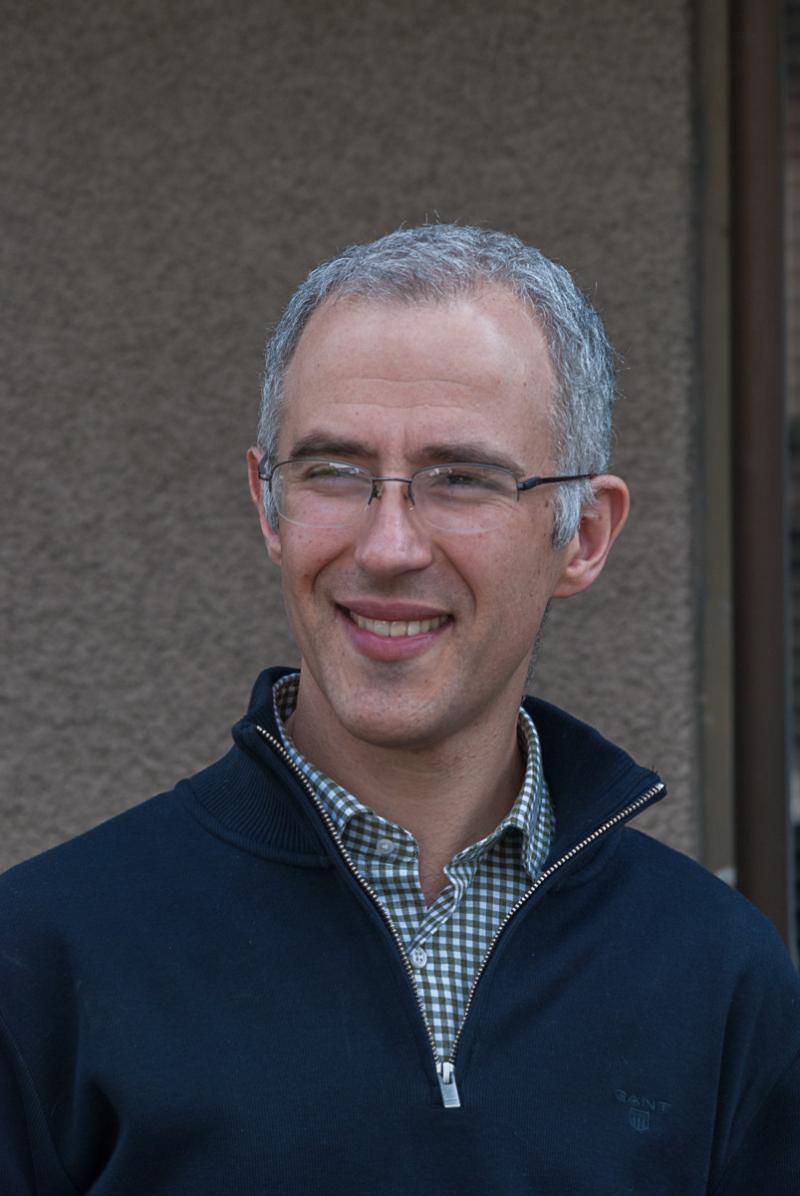
Dr. Guillermo Amador is an Assistant Professor in the Experimental Zoology department at Wageningen University & Research. His research focuses on understanding how animals interact with complex environments through locomotion, adhesion, and fluid dynamics. He investigates biological systems like insects, plants, and marine organisms to inspire bio-engineered solutions for robotics, microfluidics, and material science. Amador received his PhD in Mechanical Engineering from Georgia Institute of Technology (USA), followed by postdoctoral research at the Max Planck Institute for Intelligent Systems (Germany) and a Marie Sklodowska-Curie fellowship at TU Delft (Netherlands). His expertise spans biophysics, biomaterials, and biomechanics, with a focus on self-cleaning mechanisms and bioadhesion. He collaborates with the 4TU consortium on Dutch Soft Robotics to develop bio-inspired designs. His work bridges fundamental biology with engineering applications, emphasizing interdisciplinary approaches to solve challenges in robotics and environmental science. Amador teaches courses including Biomimetics and Functional Zoology , integrating his research into education. His research highlights include studies on cuttlefish suction cups, stick insect adhesion, and pollen transport mechanisms in pollinators.
Dr Santiago Romero-Vargas Castrillon is a Senior Lecturer in Chemical Engineering at the University of Edinburgh, affiliated with the Institute for Infrastructure and Environment and the School of Engineering. He previously held positions at the University of Minnesota and Yale University. His research focuses on membrane technology, environmental nanomaterials, and biofouling mitigation. Education: PhD in Chemical Engineering (Princeton University), postdoctoral research at Yale, and degrees from McGill University and University of Western Ontario. Research interests include colloid science, membrane separations, and 2D nanomaterial applications. Key projects involve developing novel cleaning processes for water treatment membranes and studying bioadhesion mechanisms using AFM. Recent awards include RSE Young Academy membership and EPSRC funding. He actively supervises PhD students and collaborates with industry partners like Panton-McLeod.
Houman Savoji is an Associate Professor in the Department of Pharmacology and Physiology at the Faculty of Medicine, University of Montreal. He is also a full-time researcher at the CHU Sainte-Justine Research Center and principal investigator in regenerative medicine, organs-on-chip, and bioprinting at TransMedTech Institute. Dr. Savoji received his PhD in Biomedical Engineering from the Institute of Biomedical Engineering at Polytechnique Montréal in 2016. He then completed a postdoctoral fellowship at the Institute of Biomaterials and Biomedical Engineering at the University of Toronto. His research expertise combines advanced manufacturing technologies (micro- and nano-fabrication, 3D bioprinting, microfluidics, cell electrospinning) with functional and composite materials for applications in tissue engineering, regenerative medicine, and organs-on-chip. His work focuses on the design, development, optimization, implementation, and characterization of innovative functional biomaterials using emerging engineering technologies, with particular emphasis on cardiac tissue engineering and biomimetic pulmonary heart valves for pediatric patients. Dr. Savoji has published extensively on biomaterials, tissue engineering, 3D bioprinting, and organ-on-chip technologies. His recent publications demonstrate expertise in viscoelastic characterization of soft tissues, engineering immune responses to biomaterials, ceramic engineering for biomedical applications, and advanced 3D bioprinting techniques for cardiac and vascular tissue engineering. 2017-2020, Postdoctoral Research Grant, CIHR 2017-2019, Postdoctoral Research Grant, FRQNT 2017-2018, Human Society of International Grant, Human Toxicity Assessment Project 2016, CR-CHUM Research Center Award 2015, Star Student-Researcher Award, FRQNT 2014-2015, Jane and Frank Warchol Fellowship, Society of Vacuum Coaters Foundation 2013, Institute of Textile Science Award 2012-2015, Excellence Doctoral Scholarship for Foreign Students, FRQNT Dr. Savoji has supervised Master's students including Ines Barrakad (2024) working on 'Advanced manufacturing technologies versus molding of corneal implants: 3D printing vs molding of a Keratoprosthesis' and Zineb Ajji (2023) researching 'Development of perfusable patches by 3D bioprinting for potential application in cardiac tissue regeneration.' He has secured numerous research grants from organizations including CIHR, NSERC, FRQNT, FRQS, MITACS, and others for projects related to 3D bioprinting of cardiac tissues, biomimetic heart valves, and other tissue engineering applications. The Savoji Laboratory, located within the Department of Pharmacology and Physiology and Institute of Biomedical Engineering of the Faculty of Medicine of the University of Montreal, the Research Center of the CHU Sainte-Justine (CHUSJ), and the TransMedTech Institute, focuses on multidisciplinary research involving 3D bioprinting using stem-cell derived human cardiac cells to fabricate functional cardiac tissues for transplantation and drug discovery applications.
Professor Ali Gilles Tchenguise Miserez holds a joint appointment as Professor in the School of Materials Science and Engineering and the School of Biological Sciences at Nanyang Technological University (NTU) in Singapore. He is also the President's Chair in Materials Science and Engineering. His research group, the Biological and Biomimetic Materials Laboratory (BBML), is highly interdisciplinary, bringing together molecular biologists, chemists, bio-physicists, and materials scientists to study natural materials with unique properties not found in man-made materials. Prof. Miserez's research interests span multiple areas including bioelastomeric membranes & coiled-coil engineering, mechanisms of biofouling adhesion & anti-adhesive coatings, molecular biomimetics of non-mineralized hard tissues, biomineralized structures with graded properties, and liquid-liquid phase separation. His work focuses on understanding the molecular, physico-chemical, and structural principles of biological materials and translating these designs into novel biomimetic synthesis strategies. His laboratory emphasizes "green chemistry" approaches that mimic nature's energy-efficient synthesis methods under ambient conditions. Prof. Miserez's publication record demonstrates significant impact across multiple disciplines, with work appearing in top journals including Science, Nature Materials, Nature Biotechnology, Nature Chemical Biology, and Advanced Materials. His recent research has particularly focused on peptide coacervates for intracellular delivery of therapeutics, with applications in cancer treatment, mRNA delivery, and nucleic acid therapeutics. This work represents a convergence of materials science, biochemistry, and medicine with significant translational potential. Singapore National Research Foundation (NRF) Fellowship (2011) - $3 Million individual research grant for early career scientists Prof. Miserez has mentored numerous PhD students and postdoctoral researchers, many of whom have gone on to successful careers in academia and industry. His laboratory has developed strong international collaborations and has secured significant research funding. Current projects include developing peptide-based delivery systems for cancer therapeutics, understanding marine biofouling mechanisms, and creating biomimetic materials inspired by natural systems. The BBML laboratory is actively recruiting talented researchers interested in interdisciplinary work at the interface of biology and materials science.
Prof. Silvia Vignolini is a leading researcher in sustainable and bio-inspired materials. Since January 2023, she has served as Director at the Max Planck Institute of Colloids and Interfaces , where she leads the department of Sustainable and Bio-inspired Materials . Her academic career includes a Lecturer in Physics at University College London (2013-2017) and a Professor of Biomaterials and Sustainability at the University of Cambridge (2020-2022). Education: University of Florence (Physics, PhD) Postdoctoral Research: University of Florence , University of Cambridge Her research bridges chemistry , soft matter physics , optics , and biology , focusing on the self-assembly of natural materials into functional architectures. She pioneered work on cellulose-based photonic materials with applications in displays, pigments, and radiative cooling. The selected articles highlight her work on cellulose nanocrystals , structural coloration , and sustainable fabrication techniques . Key trends include mechanochromic hydroxypropyl cellulose systems, bio-inspired light management, and applications in microalgae growth and bacterial symbiosis. Scientific Awards : Philip Leverhululme Prize (2019) ACS Lectureship in Sustainable Chemistry (2018) Ipazia Prize for Women in Science (2012) PhD Thesis Award (University of Florence, 2009) At the Max Planck Institute, her interdisciplinary research group explores bio-inspired design principles for sustainable materials, combining experimental and computational approaches to create functional materials from natural resources.
Professor Gerard Sutton is an Honorary Professor in the Faculty of Medicine and Health at the University of Sydney, affiliated with the Save Sight Institute and Vision Eye Institute. He specializes in corneal and refractive surgery, combining clinical practice with research in keratoconus, corneal bioengineering, and global eye care. His work includes developing the Australian Corneal Bioengineering Centre and pioneering innovations like the Corneal Biopen for treating corneal defects. Research interests span clinical and laboratory-based studies, focusing on corneal transplantation, bioengineered treatments, and refractive surgery outcomes. Current projects include corneal bioengineering, keratoconus pathogenesis, and SMILE surgery clinical outcomes. He holds memberships in prominent ophthalmology societies like RANZCO and APPO. Awards: 2019 RANZCO John C. Parr Medal Lecture Award 2017 Sydney Research Centre ‘Big Idea’ Innovation Award 2015 XOVA Excellence in International Ophthalmology 2014 Asia Pacific Academy of Ophthalmology Achievement Award Grants & Funding: AU$35M BIENCO consortium (2023) for corneal blindness therapies AU$1.1M Corneal Biopen commercialization (2018) NHMRC Ideas Grant for bioengineered corneal layers (2019) His research group collaborates internationally, with projects addressing corneal transplantation equity, bioink development, and regenerative solutions for ocular surface diseases. Clinical affiliations include Sydney Eye Hospital and the Lions NSW Eye Bank.
Orlando Rojas is a Professor at the University of British Columbia (UBC), holding joint appointments in the Departments of Chemical and Biological Engineering, Chemistry, and Wood Science. He leads the Biobased Colloids and Materials (BiCMat) research group and directs the Bioproducts Institute . His research focuses on sustainable development through renewable materials, including nanopolysaccharides, bacterial nanocellulose, lignins, and multiphase systems. Rojas has advised over 50 PhD students and 40+ MS students, with a h-index of 90 (Google Scholar). Key Roles/Positions : Canada Excellence Research Chair in Renewable Materials Adjunct Professor at NC State University (USA) and Dalian Polytechnic University (China) Director of FinnCERES Flagship (Finland) Research Interests : Development of bio-based materials for energy, healthcare, and environmental applications. Key areas include nanocellulose functionalization, lignin valorization, and bioinspired materials. His work integrates colloidal science, multiphase systems, and sustainable manufacturing. Grants & Awards : ERC Advanced Grant and Horizon H2020 funding 2013 ACS Fellow, 2015 Tappi Nanotechnology Award First Latin-American recipient of the Anselme Payen Award (ACS) Labs & Collaborations : Active partnerships with Aalto University (Finland) and institutions globally. Leads the BiCMat group spanning UBC and FinnCERES, focusing on bio-based materials and sustainable technologies.
Youngwoo Seo is a Professor at The University of Toledo within the College of Engineering , specifically the Department of Chemical Engineering . His research focuses on molecular-scale bioadhesion, biofilm control in water systems, environmental sensor development, and sustainable water treatment technologies. Education: Ph.D. in Environmental Engineering, University of Cincinnati (2008) M.S. in Civil & Environmental Engineering, Sungkyunkwan University (2001) B.S. in Civil & Environmental Engineering, Sungkyunkwan University (1999) Research and Teaching Interests: span biofilm dynamics, nanoparticle interactions, disinfection by-product control, membrane biofouling, and sustainable bioremediation. He develops environmental sensors for microenvironmental monitoring and applies these tools in water systems and medical device contexts. Scientific Awards: WMAO Distinguished Service Award (2021) Undergraduate Research Mentor Award (2021) US Air Force Summer Faculty Fellowship (2016) Kohler International Travel Award (2015) Sigma Xi Young Investigator Research Award (2014) Faculty Research Excellence Award (2014) GCAT-SEEK Workshop Travel Award (2014) ASEE Faculty Early Career Award (2013) Undergraduate Research Recognition Award (2012) ASCE/EWB-USA Sustainable Development Award (2011) US EPA P3 Competition Honorable Mention (2011) Faculty Excellence Award (2010) His research group explores microbial interactions with engineered materials and environmental systems. Contact him at youngwoo.seo@utoledo.edu or via phone at (419) 530-8131.
Abdon Pena-Francesch is an Assistant Professor in the Department of Materials Science and Engineering at the University of Michigan. He is also affiliated with the Macromolecular Science and Engineering Program, Chemical Engineering, and the Michigan Robotics Institute. His interdisciplinary research integrates biomaterials science, polymer chemistry, soft matter physics, and nanotechnology to develop programmable soft materials for applications in healthcare, robotics, and environmental science. Education: Ph.D. in Engineering Science and Mechanics, The Pennsylvania State University, 2017 M.Sc. in Chemical Engineering, Institut Químic de Sarrià (Barcelona, Spain), 2013 B.Sc. in Mechanical Engineering, Institut Químic de Sarrià (Barcelona, Spain), 2011 Research Interests: His work focuses on bioinspired materials , soft robotics , self-healing polymers , and biodegradable microrobots . By engineering molecular and nanoscale structures, his lab designs materials with programmable properties for soft robotic systems and biomedical devices. The group emphasizes both fundamental science and translational applications, including tissue repair, actuation, and environmental sensing. Awards and Honors: Humboldt Research Fellowship for Postdoctoral Researchers (2018–2020) Alumni Association Dissertation Award, Penn State University (2017) Rustum and Della Roy Innovation in Materials Research Award (2016) Materials Research Society Graduate Student Award (2016) First Prize, Penn State ESM Graduate Research Symposium (2015) AGAUR MOBINT Fellowship, Government of Catalunya (2012) Labs and Affiliations: He leads the Bioinspired Materials Lab , an interdisciplinary group within the University of Michigan’s Materials Science & Engineering Department. The lab collaborates with the Macromolecular Science & Engineering Program, Chemical Engineering, and the Michigan Robotics Institute.
Scott L. Diamond is the Arthur E. Humphrey Professor of Chemical and Biomolecular Engineering and Bioengineering at the University of Pennsylvania's School of Engineering and Applied Sciences. He serves as Director of the Penn Center for Molecular Discovery, Director of the Penn Biotechnology Masters Program (one of the largest in the country with over 130 students), and Associate Director of the Institute for Medicine and Engineering (IME). His laboratory is located in the Roy and Diana Vagelos Laboratories at 3340 Smith Walk, 1020 Vagelos Research Laboratories, Philadelphia, PA. Diamond's research spans multiple interconnected fields in blood biology and biotechnology. His work focuses on mechanobiology, thrombolysis, coagulation, bioadhesion, gene therapy, drug/device development, proteomics, drug discovery, systems biology, and microfluidics. His laboratory has developed numerous specialized microfluidic devices for studying blood clotting under various flow conditions, including 8-channel devices for high-throughput clotting assays, side-view devices for clot structure analysis, stenosis devices for high shear clotting assays, and impingement-post devices for studying von Willebrand factor fibers. Diamond's research group has pioneered approaches to model and predict blood function using systems biology principles. His team has developed computational models that integrate reaction-transport phenomena with platelet signaling networks to predict thrombus formation under flow. These models have enabled the development of 'virtual blood' computer simulations that can predict the effectiveness of anticoagulation drugs for individual patients, contributing significantly to personalized medicine approaches in hemostasis and thrombosis. His extensive publication record demonstrates a consistent focus on understanding the fundamental mechanisms of blood clot formation and dissolution. Recent work has emphasized microfluidic approaches for point-of-care diagnostics, patient-specific modeling of platelet function, and the development of novel therapeutic strategies for thrombotic disorders. His research bridges engineering principles with clinical hematology to address significant challenges in cardiovascular medicine. NSF National Young Investigator Award NIH FIRST Award American Heart Association Established Investigator Award AIChE Allan P. Colburn Award George Heilmeier Excellence in Research Award Elected Fellow of the Biomedical Engineering Society (BMES) Diamond has secured significant research funding, including a $2.8 million NIH grant for 'Blood Systems Biology' and a $9.5 million NIH grant for the Penn Center for Molecular Discovery. His laboratory has developed numerous microfluidic devices for blood analysis and has collaborated extensively with clinicians and industry partners. Diamond has served on advisory committees for NSF, NIH, AHA, and NASA, and has consulted extensively for industry and government. With over 180 publications and patents, his work has significantly advanced the understanding of blood clotting mechanisms and the development of diagnostic and therapeutic approaches for thrombotic disorders.
Dr. Su Ryon Shin is an Assistant Professor in the Division of Engineering in Medicine at Harvard Medical School and Brigham and Women's Hospital (BWH) in Cambridge, MA. She leads an active research laboratory focused on bioengineering, tissue engineering, and regenerative medicine, with particular expertise in 3D bioprinting, biomaterials, and organ-on-a-chip technology. Her research interests span biohybrid robotics, decellularized extracellular matrix, stem cell-based tissue engineering, and volumetric muscle regeneration . Dr. Shin's work integrates advanced biomaterials with cellular systems to create innovative solutions for tissue regeneration and disease modeling. She has pioneered approaches using human stem cell-derived materials for volumetric tissue regeneration and developed biohybrid neuromuscular robots powered by living cardiac muscle cells. Her publication record demonstrates consistent productivity with over 180 publications, including numerous first/senior author papers in high-impact journals like Science Robotics, Advanced Materials, and Nature Reviews Bioengineering . Her work shows a clear progression from fundamental biomaterials development to increasingly complex tissue engineering applications and translational research. Dr. Shin has received significant recognition including being named a 2025 BWH Health & Technology Innovation Awardee , Highly Cited Researcher 2024 by Web of Science, and multiple Stepping Strong Innovator Awards (2015, 2018, 2020). Her research has been featured in Nature Reviews Bioengineering for breakthrough work on biohybrid robots. She actively mentors students and postdocs, with former lab members accepted to prestigious programs like MIT's PhD program in Chemical Engineering. Her collaborative approach is evident through numerous interdisciplinary projects with researchers across Harvard Medical School, BWH, and international institutions.
Guojun Chen is an Assistant Professor at the Department of Biomedical Engineering and a member of the Rosalind & Morris Goodman Cancer Institute (GCI) at McGill University . His research focuses on engineering intelligent biomaterials for precision medicine , with emphasis on non-viral genome editing , cold atmospheric plasma (CAP) therapy , and biomaterials-mediated immunotherapy . The lab operates in a multidisciplinary environment , integrating principles from materials science , chemistry , biology , and health sciences . Education : Ph.D. from University of Wisconsin-Madison (2017), Postdoc at UCLA (2020) Research Themes : Genome Editing Delivery : Designing non-viral vectors for efficient CRISPR/Cas9 delivery in vivo. CAP-mediated Immunotherapy : Developing portable cold plasma devices to synergize with immune checkpoint blockade and study CAP’s immunological mechanisms. Biomaterials-based Immunotherapy : Reprogramming tumor microenvironments using bioresponsive materials to enhance immune responses. Publication Trends : Recent work spans responsive nanomaterials , genomic editing systems , and plasma oncology , with a focus on cancer immunotherapy , diabetes diagnostics , and bioinspired medical devices . Scientific Awards : Canada Research Chair (2024, 2025) McGill's President's Prize for Emerging Researchers (2025) FRQS Chercheurs-boursiers (2022) Chinese Association for Biomaterials Young Investigator Award (2022) NSERC Discovery Grant (2021) Advising & Grants : Supervises 14 current graduate and undergraduate students. Secured $5M+ in funding from CIHR , NSERC , CCS , and CFI , including multi-institutional collaborations with Dr. Morag Park , Dr. Réjean Lapointe , and Dr. Ian Watson .
Prof. Dr. Nils Kröger serves as Chair for "Biomimetic Materials" at the Technical University of Dresden, Germany, where he leads the Kröger Group dedicated to studying diatoms and their remarkable biological capabilities. His research program investigates two extraordinary phenomena exhibited by these microalgae: silica biomineralization and underwater adhesion. Academic Background: Diploma in Chemistry, University of Regensburg, Germany (1991) PhD in Biochemistry, University of Regensburg, Germany (1995) Habilitation in Biochemistry, University of Regensburg, Germany (2001) Assistant Professor, Georgia Institute of Technology, Atlanta, USA (2005) Associate Professor, Georgia Institute of Technology, Atlanta, USA (2011) W3 Professor for Biomimetic Materials, TU Dresden, Germany (2012) Professor Kröger's research sits at the intersection of biology, materials science, and nanotechnology. His group employs biochemical, molecular genetic, and cell biological approaches to unravel how diatoms construct intricate silica structures and adhere to surfaces underwater. This work has significant implications for developing novel bio-inspired materials and understanding fundamental biological processes. Recent advancements in his laboratory have revealed molecular mechanisms behind diatom motility and the precise control of silica pattern formation. Analysis of Professor Kröger's publication record shows consistent focus on diatom biology with increasing interdisciplinary collaboration. His recent work demonstrates sophisticated integration of physics, engineering, and biology to understand the mechanical aspects of diatom movement and structure formation. The research shows progression from basic protein characterization to complex systems-level understanding of diatom motility and morphogenesis. Current Research Funding: Deutsche Forschungsgemeinschaft (DFG): PoL Nucleation grant with Prof. Stefan Diez (2022-2025) - Acto-myosin cooperativity and regulation underlying diatom gliding motility Deutsche Forschungsgemeinschaft (DFG) (2018-2022) - Molecular basis of diatom adhesion and motility Previous funding from Air Force Office of Scientific Research (AFOSR) (2010-2016) - Molecular Mechanism of Diatom Adhesion Professor Kröger actively mentors PhD students and maintains a vibrant research group comprising senior scientists, postdoctoral researchers, technicians, and graduate students. His laboratory serves as a hub for interdisciplinary collaboration, bridging traditional boundaries between biology, chemistry, physics, and materials science. The group maintains strong international connections and participates in numerous collaborative research initiatives focused on biomineralization and bio-inspired materials.
Peyman Karami is a Postdoctoral Researcher at the Laboratory of Biomechanical Orthopedics (LBO) within École Polytechnique Fédérale de Lausanne (EPFL)'s College of Engineering . Research focuses on adhesive hydrogels for cartilage repair and orthopedic applications Investigates biomimetic stimuli (hydrostatic pressure, temperature) in chondrocyte homeostasis Develops ligin-based multifunctional hydrogels for sustainable biomedical applications Expertise in mechanobiology and thermomechanical regulation of tissue-engineered constructs Scientific Contributions: Leads 15+ publications on hydrogel technologies for cartilage regeneration, thermomechanical stimulation effects, and lignin functionalization, including breakthrough work in NIR-light photocuring , malacic trachea repair , and biomimetic temperature gradients . Current Research Trends: Prioritizes injectable adhesive hydrogels , noninvasive tissue repair , and multi-functional biomaterials that couple mechanical and biochemical cues for enhanced regeneration.
Dr. Kaveh Emami is a researcher at Newcastle University , specializing in proteomics, microbiology, and biotechnology. His work spans plant biotechnology, bacterial adhesion, and marine microbiology. Key research areas: Proteomics, Microbial Genetics, Plant Biochemistry, and Environmental Microbiology. Collaborated on studies involving rice mutants, barnacle adhesion, antibiotic discovery, and algal-bacterial interactions. His recent publications (2023–2009) focus on proteomic analysis, bacterial pathways, and applications in agricultural and marine biotechnology. No explicit scientific awards are documented in the provided data. Co-authored studies with Professor Angharad MR Gatehouse , Professor Tony Clare , and Professor Jeff Errington highlight his interdisciplinary collaborations.