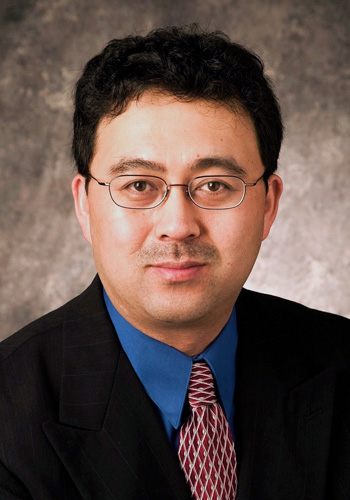
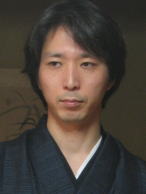
Jinghong Chen is a Professor in the Department of Electrical and Computer Engineering at the University of Houston's Cullen College of Engineering. His research focuses on highly integrated mixed-signal/RF circuits and systems, including high-speed wireline transceivers, data converters, amplifiers, and detector electronics for scientific applications. Research encompasses CMOS circuit design for wireless communications, radar systems, biomedical interfaces, and particle physics experiments. Notable innovations include low-power ADCs, millimeter-wave frequency synthesizers, and radiation-hardened circuits for high-energy physics. Chen holds 10 US patents covering circuit design innovations including VCSEL drivers, clock recovery systems, and low-noise amplifiers. His group collaborates with international physics laboratories on detector readout systems. Recent publications demonstrate advances in 5G/mmWave circuits, high-speed data converters, and low-power sensor interfaces, with applications in automotive radar, WiFi systems, and scientific instrumentation.
Dr. Alex Yue is a Senior Lecturer in Bio-instrumentation at the Faculty of Engineering and Technology, University of the West of England (UWE) Bristol. He also serves as Head of Instrumentation at the Institute of Bio-Sensing Technology, leading research in passive bioimpedance sensing, zero-power human-computer interactions, and low-power micro/nanoelectronics for contactless biosensors and motion-insensitive electrodes in digital health. Education: BEng Telecommunication (1985) MEng Biomedical Engineering (1995) PhD Biomedical Engineering (1999) Dr. Yue’s research spans biomedical circuits and systems design, focusing on innovative solutions for wearable biosensors, implantable neural recordings, and medical imaging technologies. His work includes low-power mixed-signal integrated circuits (ICs) for blowfly neural recordings and non-contact vital sign monitoring in neonatal care. He has contributed to advancements in electrical impedance tomography, ultrasound diagnostics, and reduced-dosage X-ray screening. Funding and Projects: UKRI Smart Grant/Industrial funded project (2020-2022): Non-contact technology for vital sign monitoring in neonate and pediatric populations (Academic PI) Innovate UK POEM project (2022-2023): Pulse oximetry from eardrum (Academic Co-I) Innovate UK AKT project (2024): Academic PI Scientific Awards: Live Demos Prize at IEEE ISCAS Senior Member of IEEE Additional Expertise: Dr. Yue’s portfolio includes analog/digital sensor interface design, embedded systems (Microcontroller/FPGA), low-power CMOS IC design, and biomedical signal processing for auditory evoked responses, otoacoustic emissions, and electrooculography (EoG) in augmented reality. He also explores energy harvesting for IoT sensor nodes and noise reduction techniques in signal measurement.
Gian Luca Barbruni is a Postdoctoral Researcher at the Bio/CMOS Interfaces Laboratory at École polytechnique fédérale de Lausanne (EPFL), Switzerland, where he focuses on designing novel circuital architectures for in-memory sensing and computing, and on drinkable µm-sized bioelectronics for enhanced brain imaging and precise diagnostics. He also served as a Doctoral Assistant at the Integrated Systems Laboratory (LSI1) at EPFL. Dr. Barbruni earned his Ph.D. in Microsystems and Microelectronics from EPFL in 2023, focusing on the design and development of innovative cortical visual prosthesis to revert blindness. Prior to that, he received his M.Sc. in Biomedical Instrumentation (2019) and B.Sc. in Biomedical Engineering (2017) from Politecnico di Torino, Italy. His research primarily centers on the intersection of low-power mixed-signal IC design, wireless power transfer, and microfabrication techniques for biomedical applications. His work spans brain-computer interfaces, vision restoration technologies, cancer diagnostics, and electrochemical sensing systems. Dr. Barbruni's approach integrates circuit design with electrode-tissue interface engineering to create miniaturized, wireless neural interfaces that overcome limitations of traditional neurostimulation systems. His research on frequency-switching inductive links has demonstrated significant improvements in efficiency and power delivery for large-scale neural interfaces. His publication record shows a clear progression toward increasingly sophisticated and miniaturized neural interface systems, with recent work focusing on in-memory sensing for cancer diagnostics and advanced microfabrication techniques for electrode integration. The consistent theme across his publications is the development of wireless, miniaturized systems that can operate within safety constraints while delivering sufficient power for neural stimulation and sensing applications. Dr. Barbruni has received several notable recognitions for his work: Best Student Paper Award in Electronics at IEEE MOCAST, 2022 in Bremen, Germany As a Principal Investigator, he has secured multiple competitive grants including MINT-CMOS (Enable 2022) and WIMOS-RES (Enable 2022). He serves as a reviewer for prestigious journals including IEEE Transactions of Biomedical Circuits and Systems and IEEE Sensors Journal, and as a TPC member for major conferences such as IEEE BioCAS, IEEE Sensors, IEEE MeMeA, and IEEE ICECS. Dr. Barbruni is actively involved with the Bio/CMOS Interfaces Laboratory in Neuchâtel, part of EPFL's School of Engineering, where he leads research on novel circuital architectures for in-memory sensing and computing. His work on 'Neural Dot' represents a significant advancement in fully integrated monolithic chips for neural interfaces, featuring wafer-level CMOS-compatible post-processing techniques for electrode integration that address traditional challenges in miniaturized neural implant design.
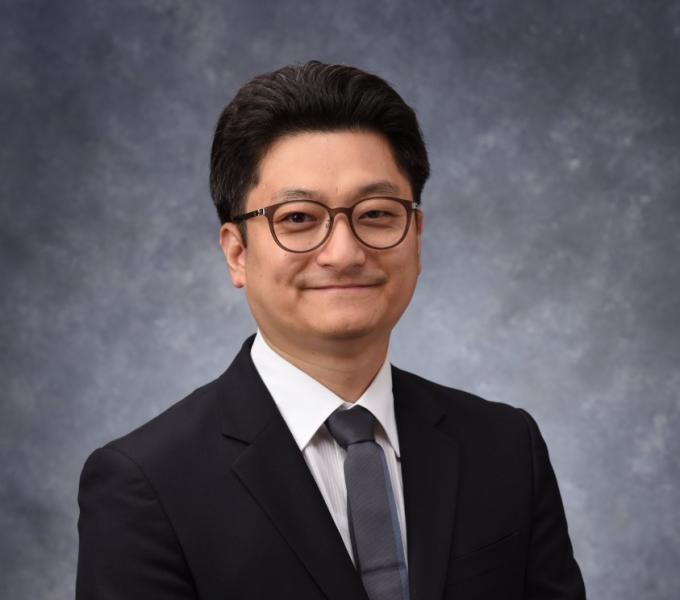
Sung-Min Sohn serves as Assistant Professor in the School of Biological and Health Systems Engineering within Arizona State University's Ira A. Fulton Schools of Engineering. His research pioneers RF/analog/digital circuit innovations for biomedical imaging systems, with particular focus on advancing magnetic resonance imaging (MRI) hardware capabilities. His academic foundation includes a Ph.D. in Electrical and Computer Engineering from the University of Minnesota-Minneapolis (2013), complemented by master's and bachelor's degrees from Korea University, Seoul (2004, 2002). Prior to academia, he gained industry experience as a circuit design engineer at LG Electronics (2004-2007). Dr. Sohn's research centers on bio-inspired electronics for medical applications, specializing in simultaneous transmit-receive (STAR) MRI systems, automatic RF tuning/matching mechanisms, and novel coil architectures. His work bridges electrical engineering principles with clinical imaging needs to develop more accessible and efficient diagnostic hardware. Publication analysis reveals an evolutionary trajectory from consumer electronics (2003-2006) to specialized MRI instrumentation (2011-2016), demonstrating consistent innovation in RF component design, field uniformity optimization, and high-power circuit integration for medical imaging systems. His scientific recognition includes the prestigious NIH Pathway to Independence Award (K99/R00) in 2016, one of only five awarded that year in biomedical imaging and bioengineering. As Principal Investigator, Dr. Sohn leads the NIH-funded Automatic RF Signal Tuning project (K99EB020058). He also contributes to major collaborative initiatives including portable MRI development (R24MH105998) and ultra-high-field (9.4T) human MRI systems (R01EB006835), working with researchers at the University of Minnesota and Columbia University. His teaching portfolio spans undergraduate and graduate biomedical instrumentation courses with honors thesis supervision.
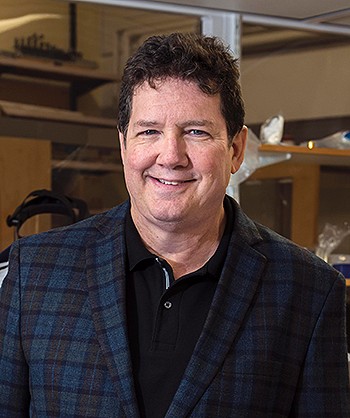
Michael J. Naughton is the Evelyn J. and Robert A. Ferris Professor of Physics at Boston College, Department of Physics. His research focuses on experimental condensed matter physics, nanoscale materials engineering, and plasmonic systems. Key areas include molecular organic superconductors, nanoscale photovoltaics, and bio/chemical sensing via nanocoax architectures. He leads a lab supported by NSF, NIH, and the W.M. Keck Foundation. Notable awards include the Boston College Distinguished Research Award (2005) and Fellow of the American Physical Society (2003). Education: Ph.D. from Boston University (Physics), B.S. from St. John Fisher College. Research group develops nanoscale devices for applications like cholera toxin detection and neural interfaces. Recent work includes plasmonic halos for molecular sensing and optrode arrays for neurophysiology. Collaborations span biology, psychology, and engineering disciplines. Lab Innovations: Nanocoax sensors (sub-ppb sensitivity), Au dendrite electrocatalysts for CO₂ electrolysis Key Projects: Wireless plasmonic communication systems, metamaterial plasmonic structures for superconductivity modulation Grants: Active funding from NSF, NIH, and private foundations Students advised include lead authors on biosensors (Michelle Archibald, Jeffrey Naughton) and nanowire fabrication (Juan Merlo, Nathan Nesbitt). His work bridges physics with biomedical and environmental challenges, addressing topics from climate change mitigation to opioid prescribing practices.
Sharmistha Bhadra is an Assistant Professor at McGill University, specializing in wearable electronics, biomedical sensors, and flexible optoelectronics. Her research focuses on developing innovative sensor systems for health monitoring, including intraoral wearables, flexible organic photodetectors, and wireless biomedical devices. She has contributed to advancements in biodegradable batteries, motion artifact reduction techniques, and low-power sensor interfaces. Her work integrates materials science, circuit design, and biomedical applications, with notable projects like smart mouthguards for electrooculogram monitoring, printed RFID tags for food quality sensing, and flexible power management systems. Bhadra's research emphasizes practical implementations of sensor technologies in real-world medical and environmental contexts. Key areas of innovation include: 1) Wearable health monitoring systems (e.g., wristbands for vital signs), 2) Printed and flexible electronics for biomedical applications, 3) Organic photodetectors for ambient light sensing, and 4) Passive wireless sensing technologies. Her publications span journals like IEEE Transactions on Biomedical Circuits and Systems, demonstrating interdisciplinary contributions to both hardware and algorithmic aspects of sensor systems.
Dr. Jeremy Holleman is an Associate Professor and Program Coordinator of Electrical Engineering at the University of North Carolina at Charlotte. He directs the assessment efforts within the Electrical and Computer Engineering department. His research focuses on low-power analog/mixed-signal circuits, biomedical interface design, neuromorphic computation, and machine learning hardware for resource-constrained systems. He holds a Ph.D. (2009) and M.S. (2006) from the University of Washington and a B.S. (1997) from Georgia Institute of Technology. Dr. Holleman's work emphasizes energy-efficient computing architectures and hardware implementations of machine learning, including contributions to MLPerf Power benchmarks and TinyML standards. His academic background includes over 20 years of experience in analog circuit design, neuromorphic systems, and biomedical signal processing. Notable projects include a 1 Tera-OPS/Watt analog deep learning engine and ultra-low-power neural amplifiers for bio-potential recording. He has published extensively across IEEE journals and conferences, with over 50 peer-reviewed articles. His research has been applied in medical implants, wireless neural interfaces, and energy-harvesting systems. Current initiatives include advancing analog deep learning architectures and sustainable AI hardware optimization. Dr. Holleman’s lab collaborates on hardware-software co-design for embedded machine learning and neuromorphic systems.
Dr. Kyeongwon Jeong is a Researcher affiliated with the Institute of Integrated Systems at ETH Zürich, contributing to the Professorship for Analog and Mixed Signal Circuits . Their work focuses on advanced analog and mixed-signal circuit design, particularly in biomedical applications such as neural interfaces, ultrasound imaging, and cochlear implants. Key technical areas include low-power ADCs, noise-shaping techniques, and artifact-tolerant biopotential acquisition systems. Research interests span analog front-end design for biosignal processing, ultrasonic transceiver systems for medical imaging, and reconfigurable neural stimulation circuits. Dr. Jeong's publications emphasize innovations in dynamic range enhancement, energy efficiency optimization, and robust circuit design against process variations. Their contributions address challenges in wearable medical devices, portable diagnostics, and closed-loop neural recording systems. Recent work includes development of ultra-low-power CMOS circuits for capsule endoscopy ultrasound systems, high-resolution neural stimulation ICs with integrated recording capabilities, and advanced ΔΣ modulators for biomedical signal acquisition. These advancements aim to improve accuracy, reduce power consumption, and expand applicability of bioelectronic devices in clinical settings.
Ludovico Minati is a multidisciplinary researcher with appointments as a Specially-Appointed Associate Professor at Tokyo Institute of Technology (Japan) and Visiting Researcher at the University of Trento's Center for Mind/Brain Sciences (CIMeC). He holds concurrent positions as Visiting Professor at the Institute of Nuclear Physics – Polish Academy of Science and serves as a contract lecturer at the Free University of Bolzano. Education: PhD in Neuroscience, Brighton & Sussex Medical School (2012) Dr. Hab. in Physics, Institute of Nuclear Physics – Polish Academy of Science (2017) MSc in Applied Cognitive Neuroscience, University of Westminster (2008) MSc in Medical Physics, The Open University (2009) MSc in Science, The Open University (2006) BSc in Physical Science, The Open University (2009) BSc in Information Technology, The Open University (2004) Research Focus: Minati investigates emergent synchronization phenomena in nonlinear electronic and neural systems, developing bio-inspired electronic circuits to model brain dynamics. His work bridges experimental physics, neural network theory, and robotics, emphasizing chaotic oscillators, brain connectivity analogs, and hardware implementations of neural-like dynamics across multiple scales. Publication Trends: Recent articles (2015-2019) demonstrate consistent focus on nonlinear synchronization phenomena, experimental chaos in electronic circuits, and neural-electronic analogies. Research evolves from fundamental oscillator networks toward applications in robotics control systems and multi-scale brain modeling, with increasing complexity in hardware implementations. Honors & Recognition: Chartered Engineer (CEng), UK Engineering Council Chartered Physicist (CPhys), UK Institute of Physics Chartered Scientist (CSci), UK Science Council IEEE Senior Member Editorial Leadership: Holds editorial positions for Chaos Solitons & Fractals , IEEE Access , Frontiers in Physiology , Entropy , and Complexity , contributing to special issues on nonlinear systems and neural engineering.
Paolo Motto Ros is a Researcher specializing in biomedical engineering, wearable systems, and low-power electronics. He has extensive experience in event-driven signal processing , functional electrical stimulation , and biocompatible sensor design , with a focus on human-machine interfaces and implantable devices. His research interests include: Biomedical instrumentation Wireless power/data transmission Surface electromyography (sEMG) Low-complexity embedded systems Plant impedance monitoring Neuroprosthetics Recent publications highlight collaborations with institutions on piezoelectric skin sensors , CMOS neural implant circuits , and plant health monitoring systems . His work spans applications in healthcare, robotics, and environmental technology.
Inhee Lee is an Assistant Professor at the Department of Electrical and Computer Engineering , University of Pittsburgh. Previously, he worked as an Assistant Research Scientist at the University of Michigan (2015–2019). His research spans space electronics , quantum computing circuits , and energy-efficient systems for extreme environments. B.S., M.S. in Electrical and Electronic Engineering, Yonsei University (2006, 2008) Ph.D. in Electrical Engineering, University of Michigan (2014) Lee's lab develops miniature, low-power energy-efficient sensing and computing systems with applications in biomedical , infrastructure monitoring , ecology , and Internet-of-Things (IoT) . Recent work includes radiation-hardened circuits for space, cryogenic CMOS for quantum computing, and a miniature system for tracking monarch butterfly migration. His publications highlight trends in ultra-low-power design , energy harvesting , and bio-signal processing . Collaborations include institutions in South Korea, Netherlands, India, and Switzerland. Finalist, Moore Inventor Fellows (2024) MCSI Research Seed Grant (2024) Panelist, SEED Workshop (2024) Lee actively participates in academic leadership through session chairing at IEEE conferences and organizing workshops in energy harvesting and display technologies. His work bridges circuit innovation with cross-disciplinary applications in sustainability and health tech.
Dong-Kyun Ko serves as an Associate Professor in the Electrical and Computer Engineering Department within the College of Engineering at the New Jersey Institute of Technology (NJIT). His academic journey includes a BS from Yonsei University (2005), followed by MS (2007) and PhD (2011) degrees in Materials Science and Engineering from the University of Pennsylvania, and a joint postdoctoral appointment in Electrical Engineering and Chemistry at MIT (2014). Education: Postdoc: MIT, Electrical Engineering and Chemistry (2014) PhD: University of Pennsylvania, Materials Science and Engineering (2011) MS: University of Pennsylvania, Materials Science and Engineering (2007) BS: Yonsei University, Materials Science and Engineering (2005) Professor Ko's research centers on colloidal quantum dot-based devices, utilizing semiconductor nanocrystals with engineered electronic properties as fundamental building blocks. His work explores nanoscale phenomena to develop unconventional device architectures, particularly focusing on mid-wavelength infrared (MWIR) photodetection and sensing applications. This involves precise manipulation of nanocrystal surfaces through ligand engineering, development of solution-processed inks for scalable fabrication, and investigation of carrier dynamics in quantum dot solids. Analysis of his 15 most recent publications reveals a concentrated research trajectory in mid-infrared optoelectronics, with dominant themes including PbSe and Ag 2 Se colloidal quantum dots for uncooled photodetectors, intraband transition engineering, and solution-processed device fabrication. His group demonstrates expertise in nanocrystal synthesis, surface chemistry modification, and integration into functional photonic and electronic devices operating in challenging infrared spectral regions. Professor Ko maintains an active research program with consistent high-impact publication output, though specific scientific awards or major grants aren't documented in the available materials. His laboratory focuses on advancing colloidal quantum dot technology for next-generation infrared sensing applications.
Professor Kaushik Sengupta holds a faculty position at Princeton University's Department of Electrical and Computer Engineering, affiliated with the Princeton Materials Institute. His research focuses on integrated microsystems, spanning electromagnetic systems, AI-driven chip design, and bioelectronic technologies. He leads the Integrated Microsystems Research Lab (IMRL), emphasizing interdisciplinary innovation across scales from macro to nano. Education: PhD (Caltech, 2012), MS (Caltech, 2008), B.Tech/Integrated M.Tech (IIT Kharagpur, 2007). Research interests include reconfigurable millimeter-wave systems, nano-optical systems, microfluidics, and AI-enabled chip design for next-gen communication, sensing, and healthcare applications. His work bridges electronics, photonics, biochemistry, and control systems. Notable awards include the IEEE Solid-State Circuits Society New Frontier Award (2022) and multiple young investigator awards. He has mentored 13 advisees and pioneered projects in THz systems, secure wireless links, and point-of-care diagnostics. Labs/Teams: Integrated Microsystems Research Lab (IMRL), collaborating across disciplines to create adaptive, integrated systems for healthcare and infrastructure applications.
Seunghoon Yang is a Research Associate at the Center for Functional Nanomaterials within Brookhaven National Laboratory. His work focuses on van der Waals heterostructures , 2D semiconductor devices , and neuromorphic engineering . PhD in Engineering: Nano Bio-Information Technology from Korea University (2022) BSc in Display and Semiconductor Physics from Korea University (2016) BSc in Biological and Chemical Engineering from Hongik University (2013) His research explores interface band engineering , optoelectronic modulation , and molecular dipole effects in nanoscale devices. Current projects include CMOS integration of neuromorphic devices and oxide-based memristor development . Recent publications highlight van der Waals heterostructures for photodetection , excitonic devices , and spintronic applications . His work bridges materials synthesis , device physics , and advanced computation . 2021: Best Poster Award, The 12th International Conference on Advanced Materials and Devices (ICAMD) 2020: KU Graduate School Achievement Award, Korea University 2020: Best Poster Awards at KPS Fall Meeting, NANO KOREA, and Korean Conference on Semiconductor 2018: Best Poster Paper Award (Silver), 5th International Conference on Advanced Electromaterials Yang contributes to scientific computing through algorithm development for 2D material characterization and is affiliated with Brookhaven National Laboratory's Building 735, Room 2023c facility.
Hirokazu Takahashi is a Professor and Principal Investigator at the Department of Mechano-Informatics, Graduate School of Information Science and Technology, University of Tokyo. He leads the Bio-Intelligence Systems Lab, where his team approaches neuroscience from a mechanical engineering perspective. His research spans multiple scales of neural networks, from dissociated neuronal cultures to rodent and human brains. Born in Sendai, Japan (1975) B.S., M.S., Ph.D. in Mechanical Engineering from University of Tokyo (1998, 2000, 2003) Assistant Professor at Department of Mechano-Informatics (2004) Associate Professor (2019) Professor (2023) His research focuses on reverse engineering the brain to understand neural computation in the cerebral cortex. His lab develops novel experimental methods including high-density microelectrode arrays to obtain large-scale neural data, which is then analyzed using machine learning and AI techniques. Key research areas include emergent computing with dissociated neuronal cultures, auditory system processing in rodents, and epilepsy research in both animal models and humans. The lab investigates how intelligence, consciousness, and fine arts emerge from neural networks at various scales. His recent publications demonstrate significant advancements in understanding spontaneous beat synchronization in rats, physical reservoir computing with living neuronal cultures, and vagus nerve stimulation effects on cortical responses. His work bridges engineering, neuroscience, and informatics to extract design principles of brain function. Engineering Department Head Award (Research) for student Kiki Mamiya Professor Takahashi has supervised numerous students through graduation theses, master's theses, and doctoral research. His lab maintains extensive collaborations with institutions including ETH Zurich, Maxwell Biosystems, Monash University, and NTT. His research is funded through various grants supporting interdisciplinary work at the intersection of mechanical engineering and neuroscience. The Bio-Intelligence Systems Lab operates at the cutting edge of neural engineering, developing technologies such as high-density CMOS arrays with 10,000 recording sites and creating bio-silicon hybrid sensors. The team investigates neural representation with functional maps, learning-induced plasticity, auditory streaming, and mismatch negativity. Current projects include studying the effects of music on brain activity, developing seizure detection algorithms, and exploring the mechanisms of vagus nerve stimulation.