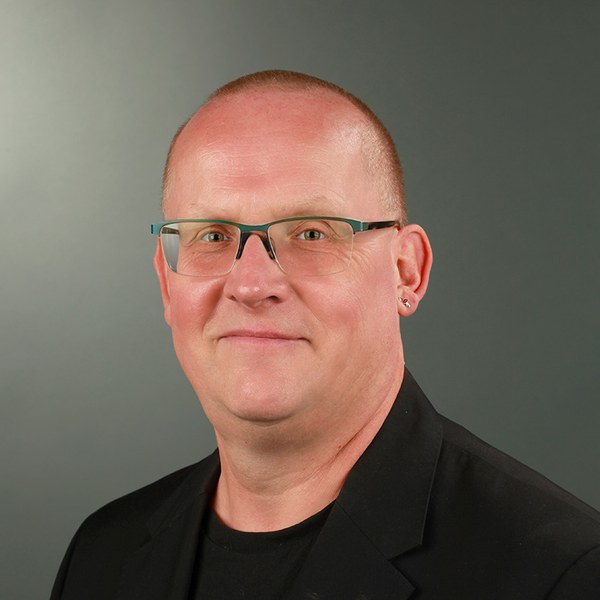
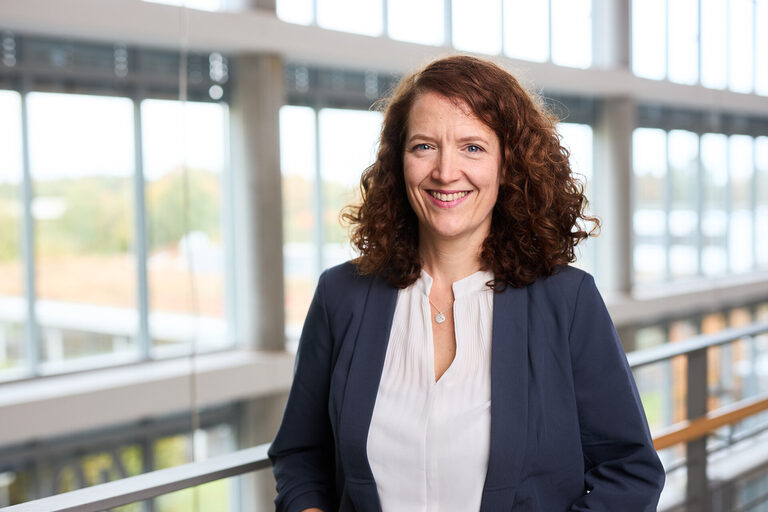
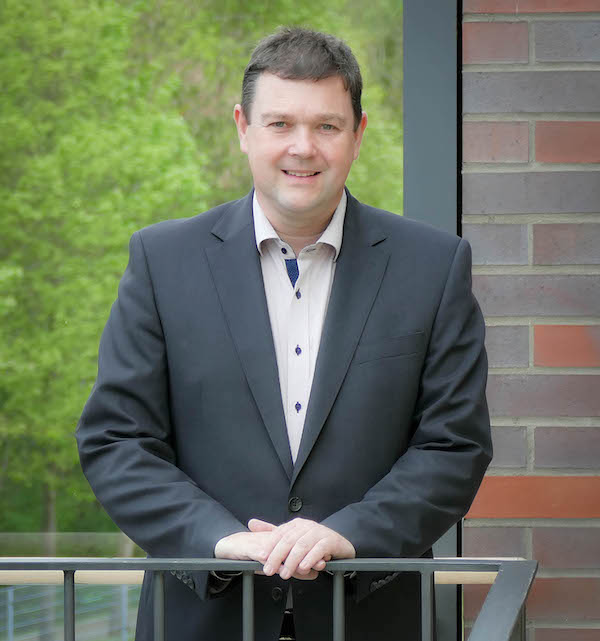
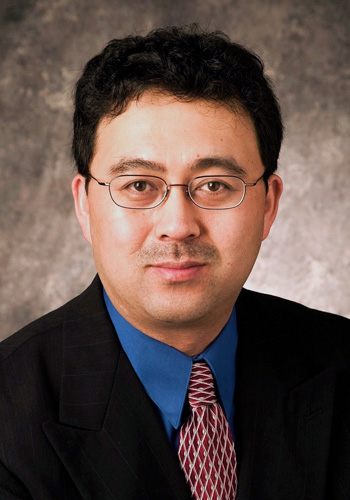
John Taylor is Professor of Microelectronics and Optoelectronics at the University of Bath, where he directs the Centre for Advanced Sensor Technologies. With over 160 publications, his research develops biomedical technologies and energy systems. His research focuses on: Low-power implantable biomedical systems Neural signal processing interfaces Piezoelectric energy harvesting applications Recent work includes neural processing systems for bladder function monitoring and energy harvesting from marine environments. His research contributes to UN Sustainable Development Goals through medical technology innovation and renewable energy solutions. He leads multiple funded projects including EU Horizon 2020 initiatives on adaptive bio-electronics and EPSRC projects on neural signal detection. His lab collaborates internationally with institutions in Germany, Denmark, and the UK.
Swiss Federal Institute of Technology in LausanneSwitzerland
Suraj Kumar Maurya is a doctoral researcher at EPFL, affiliated with the School of Engineering (STI) and the SCI-STI-SC department. He holds the position of Doctoral Assistant in the Bio/CMOS Interface (BCI) Group, supervised by Prof. Sandro Carrara, and is co-supervised by Prof. Cedric Bessire at Bern University of Applied Sciences (BFH). His research focuses on developing innovative point-of-care diagnostic devices combining microfluidics and image-based techniques. Education: B.Tech. in Electronics and Communication Engineering from Dr. A.P.J. Abdul Kalam Technical University (2016-2020) MSc in Biomedical Engineering from the University of Bern (2021-2024) Research interests include bio-microfluidics, lab-on-chip technologies, and biomedical image processing with machine learning applications. His work aims to decentralize medical diagnosis and advance personalized medicine through cost-effective, accessible devices. Labs/Teams: Member of the Microfluidics Group at Bern University of Applied Sciences and the BCI Group at EPFL (https://www.epfl.ch/labs/bci/).
Zhangming Zhu is a Professor at Xidian University in the School of Microelectronics . He specializes in Microelectronics and Circuit Design , with a focus on Analog-to-Digital Converters (ADCs) , CMOS Technology , and Low-Power Electronics . His work addresses challenges in high-speed, high-precision, and energy-efficient circuit design. Research Interests: His publications highlight expertise in ADCs, PLLs, energy harvesting, biomedical sensors, and RF systems. Recent Publications: 2025 papers include a 12-bit 1.5-GS/s ADC , a 5-18-GHz Quadrature Receiver , and 20-bit SAR ADC with thermal error suppression. Collaborations: Frequently co-authors with Shubin Liu, Yi Shen, Ruixue Ding, and others. Applications: Work spans consumer electronics, IoT, biomedical devices, and energy-efficient systems.
Nicole McFarlane is an Associate Professor in the Min H. Kao Department of Electrical Engineering and Computer Science at the University of Tennessee, Knoxville (UTK), where she also holds the TCE Advance Professor title. She is affiliated with the Tickle College of Engineering and leads the Micro-Bio-Electronics Group (MLAB), focused on advanced sensor technologies. Education: Nicole McFarlane earned a PhD in Electrical Engineering from the University of Maryland, College Park (2010), and dual bachelor's (BS, 2001) and master's (MS, 2003) degrees in Electrical Engineering from Howard University, Washington D.C. Research Interests: Her work centers on developing compact, efficient sensor systems using mixed-signal CMOS strategies and nanotechnology. Applications span electrochemical biosensors, point-of-care medical devices, nuclear imaging panels, and hardware security for embedded systems. The MLAB lab emphasizes cost-effective, scalable solutions for healthcare, military, and research domains. Article Trends: Recent publications (2024) highlight innovations in perimeter-gated SPAD arrays for cryptographic security, silicon photomultipliers for nuclear imaging, and asynchronous readout architectures. 2023 work includes multimodal gesture recognition systems and pH sensors with integrated encryption. These studies reflect her focus on merging cutting-edge CMOS technologies with secure, multifunctional sensor design. Scientific Awards: No awards explicitly listed in the provided texts. Advising & Grants: Nicole advises students in the Kao Department's graduate and undergraduate programs. While specific advisee names are not provided here, her research is supported by grants in microelectronics and sensor integration. She has pioneered portable biosensor systems, including wireless pH-impedance devices and encryption architectures for wearable health monitors. Labs & Teams: As founder/leader of the Micro-Bio-Electronics Group (MLAB), she oversees projects combining CMOS fabrication with nano/micro-fabrication techniques. The lab explores applications ranging from implantable medical sensors to battlefield-ready detection systems, emphasizing interdisciplinary collaboration.
Prof. Stefan van Waasen serves as Director of the Peter Grünberg Institute's Integrated Computing Architectures division (PGI-4) and holds a Full Professorship in Communication Systems at the University of Duisburg-Essen. His work bridges quantum computing, neuromorphic systems, and cryogenic electronics development. Director, Integrated Computing Architectures (PGI-4) Full Professor, Communication Systems, University of Duisburg-Essen Research Focus: Electronic Systems for Quantum & Neuromorphic Computing Research Interests center on quantum dot electronics, memristor-based architectures, and cryogenic CMOS technology. His group develops scalable control systems for qubits and neuromorphic networks, with particular emphasis on power management and signal integrity at ultra-low temperatures. Publication Trends reveal a technical focus on quantum computing interfaces, neuromorphic hardware, and particle detector systems. His recent work includes co-simulation tools for cryogenic electronics optimization and novel architectures for memristor arrays in machine learning applications. Laboratory Involvement includes leadership at Forschungszentrum Jülich's Peter Grünberg Institute (PGI-4), where his team works on integrated circuits for quantum and neuromorphic computing platforms.
University of Illinois Urbana-ChampaignUnited States
Professor John A Rogers is a leading academic in materials science and biomedical engineering, currently holding the Louis Simpson and Kimberly Querrey Professor position at Northwestern University . He is also the founding Director of the Querrey-Simpson Institute of Bioelectronics , with joint appointments in Biomedical Engineering, Mechanical Engineering, Electrical Engineering, Chemistry, and Neurological Surgery. His research spans bio-integrated electronics, flexible devices, and nanofabrication technologies. Education : BA/BS in Chemistry and Physics (University of Texas, 1989); SM in Physics and Chemistry (MIT, 1992); PhD in Physical Chemistry (MIT, 1995). Rogers’ work focuses on Soft, skin-like electronics for vital signs monitoring, Bioresorbable devices for cardiac and neural applications, Injectable optoelectronics in neuroscience, and 3D microsystems for biomedical research. His team pioneers stretchable silicon , transient electronics , and bio-inspired fabrication methods. Recent research trends include millimeter-scale pacemakers , wireless skin-interfaced systems , and closed-loop bio-optoelectronics . These innovations leverage flexible substrates , nanoscale thermocapillary flows , and soft lithography for unprecedented biocompatibility and functionality. Scientific Awards : Sigma Xi William Procter Prize (2023), IEEE Biomedical Engineering Award (2023), James Prize (2022), Guggenheim Fellowship (2021), MacArthur Fellowship (2009), and multiple academy fellowships. Rogers leads a multidisciplinary team and has co-authored over 1000 peer-reviewed papers, with more than 100 patented technologies commercialized through startups. His lab’s 3D electronic pericardium and skin-integrated microfluidics exemplify his commitment to translating fundamental science into clinical solutions.
Donhee Ham is the John A. and Elizabeth S. Armstrong Professor of Engineering and Applied Sciences at Harvard University , focusing on the intersection of semiconductor technology, biomedical engineering, and quantum electronics . His lab develops advanced CMOS-based systems for neuronal interfaces, magnetic resonance imaging, and bio-silicon hybrid platforms, with applications in cellular electrophysiology, data storage, and quantum sensing . Recent work includes: High-density microhole electrode arrays (iMEA) for synaptic connectivity mapping Portable NMR/MRI systems for molecular fingerprinting and bacterial monitoring Gigahertz plasmonic devices and 2D electron gas systems for microwave non-reciprocity Hybrid cyto-silicon systems with closed-loop modulation Exploration of low-power electronics and DNA-based data storage His research often bridges solid-state circuits with biological applications , as seen in his Nature and Nature Communications publications. Collaborations span Harvard SEAS, MIT, and international institutions.
Dortmund University of Applied Sciences and ArtsGermany
Prof. Dr. Andrea Schütze is a full professor at the Department of Microelectronics and Circuit Technology, Technische Universität Dresden. Her research focuses on nanoelectronics, energy-efficient systems, and bio-inspired circuits. She leads the Nanoelectronics and Circuits Group and directs the Dresden Center for Emerging Technologies. Education: PhD in Electrical Engineering, TU Dresden (2007) Diploma in Microelectronics, TU Ilmenau (2003) Research Interests: Andrea Schütze pioneers bio-inspired circuits for neuromorphic computing and develops ultra-low-power mixed-signal systems for IoT. Her work bridges nanoelectronics with biomedical applications, emphasizing energy-efficient architectures and novel device integration techniques. Publications: Recent articles highlight advancements in nanoelectronic devices, neuromorphic circuits, and 3D stacked CMOS integration. Her work frequently addresses emerging technologies like quantum dots and spintronics. Awards: 2018 IEEE Women in Engineering International Leadership Award 2020 German Future Prize Grants & Advising: Current EU Horizon 2020 grant (€4.2M) for bio-inspired computing. Supervises 5 PhD students and 12 master's students in topics ranging from neuromorphic hardware to energy harvesting circuits. Labs & Teams: Leads the TU Dresden Nanoelectronics Lab, collaborating with Fraunhofer Institute for Integrated Circuits (IIS). Active in EU-funded Clean Sky 2 consortium for energy-efficient avionics systems.
Andrew R. Brown is a Professor at Griffith University's Queensland College of Art and Design , with a focus on Creative AI, algorithmic music/art, and interaction design. He leads the Creative Arts Research Institute and co-authored Making Music with Computers: Creative Programming in Python . His research spans computational creativity, digital music tools, and technology's philosophical dimensions. Education : PhD (UQ 2004), Master of Education (U. Melbourne 1993), Graduate Diploma in Computer Science (Deakin 1990), Bachelor of Education (Melbourne CAE 1984). Research Themes : Brown bridges music, computer science, and design through projects like low-cost DIY grooveboxes (OnBoard Quadra), live-coding performance systems, and AI-assisted creative frameworks. His work examines how constraints in technology foster innovation and democratize artistic expression. Recent Publications emphasize accessible electronic instruments, algorithmic pattern generation, and intersections between handmade hardware and digital fabrication. He has secured significant ARC Discovery Project grants and internal university funding for interactive media research. Supervision includes doctoral candidates exploring AI collaboration in art, sonic expression through costume instruments, and open-source design pathways. He also delivered keynotes at ComputationWorld 2019 (Venice) and World Science Festival 2016.
Douglas A. Buchanan, Ph.D., P.Eng., FCAE, is Professor of Electrical and Computer Engineering at the University of Manitoba and a founding member of the Microelectronics and Nanotechnology Research Group. A Canada Research Chair (Tier II) in Microelectronic Materials from 2003-2013, he also served as Acting Dean of the Faculty of Engineering (2010-11) and Vice-President Commercialization at Innovate Manitoba (2012-14). His career combines 16 years at IBM Watson Research Center with two decades of academic leadership in Winnipeg. Education Ph.D. in Applied Physics & Electronics, University of Durham, U.K., 1986 M.Sc. in Electrical Engineering, University of Manitoba, 1982 B.Sc. in Electrical Engineering, University of Manitoba, 1981 Research Interests Prof. Buchanan’s work spans nano-scale CMOS gate dielectrics, high-κ metal oxides (HfO₂, ZrO₂, Al₂O₃), defect chemistry, quantum tunnelling, and dielectric reliability. Since 2010 his group has pioneered MEMS capacitive micromachined ultrasonic transducers (CMUTs) with multiple moving membranes for low-frequency, air-coupled imaging and NDT, as well as floating-gate MOS chemosensors functionalized with conducting polymers for olfactory applications. His publications reveal two dominant waves: the 1990s-2000s focus on ultra-thin SiO₂/high-κ stacks and the ITRS gate-stack roadmap, followed by a 2010s-2020s surge in CMUT design, anemometry, and polymer-based sensor arrays, demonstrating continuous adaptation from fundamental materials physics to applied micro-systems. Honours & Awards University of Manitoba Students’ Teacher Recognition Award – 2007 IBM Research Division Award – 1988 IBM Outstanding Technical Achievement Award – 1992 IBM Microelectronics Division General Manager’s Teamwork Award – 1997 Fellow, Canadian Academy of Engineering Senior Member, IEEE Professional Service & Grants He co-founded SEMATECH’s Gate Stack Engineering Working Group (1992-2000) that authored the ITRS gate-stack roadmap, co-chaired multiple MRS and IEEE Semiconductor Interface Specialists Conferences, and edited special issues of IBM J. Res. Dev. and MRS Proceedings on ultra-thin dielectrics. Grant support has included NSERC Canada Research Chair, CFI, and industrial partnerships with IBM, SEMATECH, and Manitoba HVDC Research Centre. Labs & Teams He leads the Microelectronics & Nanotechnology Research Laboratory within the University of Manitoba’s Faculty of Engineering, supervising graduate researchers in clean-room micro-fabrication, electrical characterization, and MEMS prototyping for ultrasound and chemical sensing systems.
Schmalkalden University of Applied SciencesGermany
Prof. Dr.-Ing. Roy Knechtel is a Professor at the Faculty of Electrical Engineering, Schmalkalden University of Applied Sciences. His research focuses on MEMS technologies, semiconductor wafer bonding, and sensor systems, with extensive applications in industrial microsystems. He leads investigations in wafer-level encapsulation, CMOS-MEMS integration, and reliability testing for microsensors. Research Interests: Knechtel specializes in intelligent autonomous sensors, micro-electro-mechanical systems (MEMS), and semiconductor processing techniques. His work emphasizes wafer bonding methodologies (glass frit, anodic, direct bonding), MEMS packaging, and sensor integration for automotive, biomedical, and industrial applications. Key areas include hermetic sealing, process optimization, and 3D heterogeneous integration. Publication Trends: Over 50 publications (2000–2020) demonstrate sustained focus on wafer bonding physics, MEMS fabrication robustness, and microsystem encapsulation. Recent works explore edge effects in bonding, adhesive techniques for lab-on-chip devices, and acoustic MEMS. His articles consistently address industrial scalability and reliability challenges in semiconductor microsystems. Patents & Innovations: Holds patents including: Method for hermetic sealing of MEMS structures (DE112007001698A5) Wafer-level chip separation with micromechanical structures (EP1599412A1) Electrical connection methods for bonded wafers (DE10350460A1) Laboratory Leadership: Directs research in wafer bonding characterization and MEMS process development, collaborating with industry partners like X-FAB and Fraunhofer on production-scale microsystem technologies.
Dr. Tridib Saha is an Associate Professor and Director of the Education & Training Academy at Monash University Malaysia, where he leads university-wide initiatives in teaching excellence and professional development. He is affiliated with the School of Engineering and the Department of Electronics Engineering, contributing significantly to both educational leadership and research in sensor technologies. Associate Professor, School of Engineering, Monash University Malaysia Director, Education & Training Academy, Vice President Education Portfolio Research Focus: Acoustic Wave Sensors, Bio-Sensing, Environmental Monitoring, and Engineering Education Dr. Saha’s research centers on the design and application of acoustic wave resonator-based sensors for environmental and biomedical uses, including VOC detection in wastewater and early diagnosis of dengue. His work spans materials engineering, nanostructured sensing films, and interface electronics. He also champions the Scholarship of Teaching and Learning (SoTL), promoting pedagogical innovation through programs like Higher Education @MUM. His recent publications reveal a strong trend in developing advanced resonant sensors using novel electrode designs, 2D nanomaterials, and polydopamine-based molecular imprinting. These works integrate disciplines such as materials science, environmental engineering, and biomedical diagnostics, often targeting real-world applications in sustainability and public health. Dr. Saha has been honored with prestigious awards for his contributions to education: PVC Award for Excellence in Education: Teaching Excellence (2023) Vice Chancellor's Education Excellence Award For Teaching Excellence - Early Career (2024) He has successfully led multiple externally funded research projects, including those supported by the Fundamental Research Grant Scheme (FRGS) and industry partners. Dr. Saha supervises research teams working on sensor development and photoelectrochemical systems, and he is currently accepting PhD students. His leadership extends to curriculum design, staff capacity building, and advancing Monash Malaysia’s reputation in higher education excellence. Dr. Saha leads the Education & Training Academy, a key unit fostering professional development for academic staff. His research team collaborates across disciplines on projects involving nanomaterials, wearable sensors, and solar fuel generation, contributing to the UN Sustainable Development Goals in clean water, sustainable cities, and affordable clean energy.
Swiss Federal Institute of Technology in LausanneSwitzerland
Junrui Chen is a Researcher and Doctoral Assistant at the Integrated Systems Laboratory (LSI1) within the School of Engineering (STI) at EPFL. He is affiliated with the Bio/CMOS Interfaces Laboratory and the SCI-STI-SC group. His research focuses on biomedical engineering, microfluidics, and biosensor technologies, particularly in in-memory sensing using bio/nano technologies under the supervision of Prof. Sandro Carrara. Education: BSc in Mechanical and Automation Engineering from Beihang University (2017), MSc in Mechatronics and Information Technology from Karlsruhe Institute of Technology (2021). His master's work involved microfluidic channel design for biosensors and ECG/PLT signal detection using MATLAB and LabVIEW. Research interests include microsystem design, biomedical signal processing, and microfabrication techniques. He contributes to projects like in-memory sensing and has developed skills in image processing and biosignal analysis, as evidenced by his GitLab repositories. Labs/Affiliations: EPFL's Integrated Systems Laboratory (LSI1) and Bio/CMOS Interfaces Lab (https://www.epfl.ch/labs/bci/). Office location: MC A3 197, Neuchâtel.
Shubin Liu is a researcher specializing in microelectronics, integrated circuits, and analog circuit design. His work focuses on advanced ADC architectures (e.g., pipelined SAR, time-interleaved, noise-shaping), phase-locked loops (PLL), and sensor readout systems for MEMS and biomedical applications. Recent publications highlight collaborations with Zhangming Zhu and colleagues on high-speed, low-power, and PVT-robust designs. Research interests span Analog-to-digital conversion Low-power RF front-ends Calibration techniques High-frequency oscillators Biopotential amplifiers Time-interleaved ADCs His 15 most recent articles (2023-2025) explore power-efficient ADCs, jitter reduction in PLLs, and sensor interfaces, with keywords including Electronics, Integrated Circuits, Signal Processing, and Microelectronics. Notable subfields: SAR ADCs, Time-Domain Interpolation, Capacitor Mismatch Compensation, and IoT-optimized designs. Shubin Liu’s work is published in journals like IEEE Journal of Solid-State Circuits , Microelectronics Journal , and conferences such as CICC and ISSCC, reflecting his active engagement in cutting-edge analog and mixed-signal research.
Jinghong Chen is a Professor in the Department of Electrical and Computer Engineering at the University of Houston's Cullen College of Engineering. His research focuses on highly integrated mixed-signal/RF circuits and systems, including high-speed wireline transceivers, data converters, amplifiers, and detector electronics for scientific applications. Research encompasses CMOS circuit design for wireless communications, radar systems, biomedical interfaces, and particle physics experiments. Notable innovations include low-power ADCs, millimeter-wave frequency synthesizers, and radiation-hardened circuits for high-energy physics. Chen holds 10 US patents covering circuit design innovations including VCSEL drivers, clock recovery systems, and low-noise amplifiers. His group collaborates with international physics laboratories on detector readout systems. Recent publications demonstrate advances in 5G/mmWave circuits, high-speed data converters, and low-power sensor interfaces, with applications in automotive radar, WiFi systems, and scientific instrumentation.