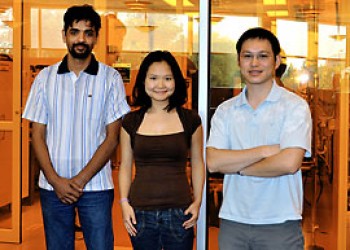
Hugh Zhou is a Research Fellow in the Department of Mechanical & Aerospace Engineering at Monash University. His work focuses on advancing robotic harvesting systems, automation in orchards, and sensor integration for agricultural applications. He has contributed to projects such as the Monash Apple Retrieving System and Phenobot, an autodigital phenotyping tool for horticulture. His research emphasizes real-time defect detection, tactile sensing for obstacle handling, and 3D fruit detection algorithms. Collaborations span international institutions, with contributions to precision agriculture and sustainable development goals related to food production efficiency. Key publications include advancements in robotic end effectors, soft robotic actuators, and slip detection methods. His work bridges mechanical engineering, computer vision, and agricultural automation, addressing challenges in fruit harvesting efficiency and system intelligence.
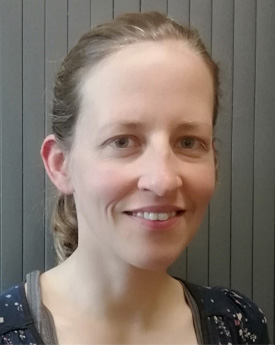
Dr Emma Wilson is a Lecturer in the Computing and Communications department at Lancaster University, focusing on systems and control theory applied to healthcare and biological systems. Her interdisciplinary research integrates engineering principles with biomedical challenges to improve health outcomes, including adaptive treatments, bio-inspired robotics, and muscle modeling. Her research spans multiple areas such as control theory, bio-inspired control mechanisms, brain-based robotics, and computational modeling of biological systems. A key theme is translating insights from biological systems into engineered solutions and vice versa, particularly in digital health applications like personalized treatment decisions and dynamic health modeling. Recent work includes developing robust control algorithms for anticoagulant therapies and neuro-inspired adaptive systems for robotics. She leads projects like DCQ (Cyber Security of Digital Medical Devices) and collaborates on initiatives like the Health Behavior Change research group. Her publications reflect a blend of theoretical control systems research with practical healthcare applications. Dr Wilson is affiliated with the Lancaster Intelligent, Robotic and Autonomous Systems Centre (LIRA) and the Data Science Centre (SCC), emphasizing her role in cutting-edge interdisciplinary research.
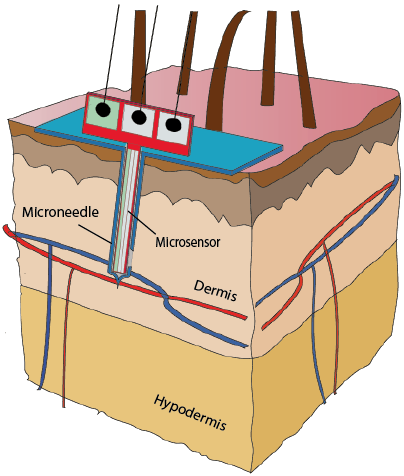
Federico Ribet is a Researcher at KTH Royal Institute of Technology's Department of Micro and Nanosystems. He holds an M.Sc. in Nanotechnologies for ICTs from EPFL (Switzerland), INPG (France), and Politecnico di Torino (Italy). Currently a post-doctoral researcher, his work focuses on biomedical microsystems, specifically developing minimally invasive biosensors and microneedle-based technologies for continuous glucose monitoring and interstitial fluid sampling. Ribet is an inventor on multiple patents and co-founder of medtech startups Samplimy Medical AB and Sensible Healthcare Systems BV. His research spans microfabrication of bio-compatible materials, electrowetting-on-dielectric (EWOD) actuation, and magnetic microchip assembly. Key projects include the Gluco-Touch system for painless CGM and microneedle drug delivery patches. Ribet's work emphasizes improving diabetes management through non-invasive monitoring and enhancing point-of-care diagnostics via wearable biosensors. Ribet's lab collaborations include Prof. Niclas Roxhed and Prof. Göran Stemme. His innovations bridge clinical needs with engineering solutions, addressing challenges in sensor miniaturization, biocompatibility, and real-time diagnostic accuracy.
Wenchuang (Walter) Hu is an Assistant Professor of Electrical Engineering at the Erik Jonsson School of Engineering and Computer Science, University of Texas Dallas. He holds a B.S. in Electronics from Peking University (1999), M.S. and Ph.D. in Electrical Engineering from the University of Notre Dame (2001, 2004), and completed a postdoc at the University of Michigan, Ann Arbor (2005). His research focuses on nanolithography, nanofabrication of low-dimensional nanostructures, bio-sensors for disease diagnostics, nanostructured biomaterials, and organic electronics. He leads the Solid State Electronics Lab, advancing technologies like silicon nanowire biosensors, polymer solar cells, and nanomedicine. Education: B.S., Electronics, Peking University (1999) M.S., Electrical Engineering, University of Notre Dame (2001) Ph.D., Electrical Engineering, University of Notre Dame (2004) Postdoc, University of Michigan, Ann Arbor (2005) Research Interests: Nanolithography, bio-sensors, nanomedicine, organic electronics, nanofluidics, and nanoelectromechanical systems. His work bridges electronics and biology, with applications in cancer diagnostics, environmental monitoring, and energy materials. His publications highlight advancements in silicon nanowire biosensors for femtomolar detection, nanoimprint lithography for solar cells, and polymeric nanomedicine. He secured over $2M in grants, including NSF funding for solar cell innovation and NIH grants for biosensor development. Notable recognitions include Sigma Xi membership, ACS affiliation, and leadership awards. He actively serves on conference committees and reviews for journals like Nanotechnology and ACS Nano . Key Projects: Defined nanoscale Si sensors for cancer diagnostics Lithographically patterned polymer solar cells Nanostructured biomaterials for tissue engineering Professional service roles include session chair at EIPBN conferences and technical director of Bioelectronics at the Chinese Institute of Engineering. His lab’s innovations contribute to both academic and commercial advancements in nanotechnology.
Marco Domaneschi is an Assistant Professor in the Department of Structural, Building and Geotechnical Engineering (DISEG) at Politecnico di Torino, Italy. He teaches courses in Earthquake Engineering, Structural Design, and Seismic Protection Systems. He previously served as a Research Associate and Contract Professor at Politecnico di Milano and has extensive experience as a structural engineer and R&D consultant. His research focuses on bridge engineering, earthquake engineering, structural monitoring, disaster resilience, and sustainability . He employs advanced numerical simulations and experimental techniques to assess and enhance the safety and performance of civil infrastructure. His work integrates digital technologies, machine learning, and smart materials for structural control and health monitoring. The recent publications highlight a strong trend in resilience assessment, seismic protection systems, sustainable retrofitting using exoskeletons, structural health monitoring (SHM), and digital innovation in infrastructure management . His research increasingly combines computational modeling with real-world applications, including blockchain for asset management and AI for dynamic identification. Top 2% most-cited scientist (Stanford/Elsevier, 2022) Takuji Kobori Prize (2014) Best Presentation Award, ASEA SEC 5 (2020) Best Presentation Award, ISHMII 2017 Multiple MSC Research Assist Program Awards (2012–2014) Marco Domaneschi has supervised several PhD students and has scientific responsibility for multiple EU and national research projects, including Horizon Europe’s RESUME, BIO-RESTORE, and VIBRATIONCLEAR. He supports PIs in coordinating ERC projects and serves as a scientific advisor for international PhD researchers. He has led numerous commercial and departmental research contracts focused on structural monitoring, BIM implementation, and sensor integration. He is actively involved in the scientific community, serving as Associate Editor for journals including Journal of Vibration and Control and Frontiers in Built Environment , and as a member of editorial boards for Structure and Infrastructure Engineering and Bridge Engineering (ICE) . He has chaired and organized major international conferences such as WCEE2024 and IABMAS 2024, and has led over 15 conference sessions.
Gina Shreve is an Associate Professor in the Department of Chemical Engineering and Materials Science at Wayne State University . With expertise in biocatalysis, environmental microbiology, and sensor development, her research spans multiphase reactor design, biosurfactant applications, and membrane bioreactor systems for environmental remediation. Education: Ph.D., Chemical Engineering, University of Michigan (1991) M.S., Microbiology & Immunology, University of Michigan (1986) B.S., Biochemistry (University of Michigan) Her work focuses on: Molecular dynamics simulations of surfactant micelle structures Development of pathogen/environmental toxin detection sensors Protein structure/function modeling for serine proteases Bioremediation of chlorinated hydrocarbons in anaerobic systems Transport phenomena in membrane bioreactors Computational analysis of biosurfactant-enhanced hydrocarbon degradation Recent publications demonstrate strong emphasis on biosurfactant characterization , environmental sensor development , and hydrocarbon degradation mechanisms . Her group combines experimental data with computational modeling to optimize bioremediation processes. Scientific recognition includes: National Institutes of Health (NIH) funding National Science Foundation (NSF) grants Environmental Protection Agency (EPA) awards US Patent #6,848,295 for acoustic wave sensor technology Active in education, she teaches core chemical engineering courses including CHE3820 - Chemical Engineering Laboratory and CHE3220 - Measurements Laboratory . Her research integrates experimental methods with theoretical modeling for environmental and biosynthetic applications.
Dr. Ioana Andreea Brezestean is a Scientific Researcher III (R2 rank) at the National Institute for Research and Development in Isotopic and Molecular Technologies (Cluj-Napoca, Romania). She holds a PhD in Physics (2022) and Master's degrees in Medical Physics (2013, 2015) from Babeș-Bolyai University . Her work focuses on nanomaterial synthesis , SERS substrate development , and environmental/health monitoring through advanced spectroscopic techniques. Current projects include NanedisSERS (bioinspired 3D nanoplatforms for neurodegenerative disease diagnostics) and AL-DIBI SERS (Alzheimer's biomarker detection using gold nanourchins). Her expertise spans nanoparticle fabrication (silver/gold), microfluidic sensor design , and multi-modal characterization (Raman, FT-Raman, SERS, TERS, microscopy). She contributes to eco-friendly nanocomposite development in projects like ECONANO4AUTO (bio-PA materials with chicken feather derivatives). Key collaborations include SINTEF AS (Norway), University of Medicine and Pharmacy 'Iuliu Hațieganu' , and NANOM MEMS SRL . Her methodology integrates DFT calculations , quantum chemistry modeling , and statistical pattern recognition for pathogen resistance analysis.
Prof. Ben Paechter is a leading academic at the School of Computing Engineering and the Built Environment , Edinburgh Napier University, specializing in evolutionary algorithms and swarm robotics. As a Professor , he has shaped research directions in computational optimization and adaptive systems for over two decades. Research Themes : Evolutionary Swarm Robotics, Multi-Objective Optimization, Hyper-heuristics, Neural Architecture Search Key Projects : FOCAS (European Commission), KTP: Intelligent Agents (Innovate UK), PerAda (Self-Aware Systems) Collaborations : CAVES Research Group, Centre for Algorithms, Visualisation and Evolving Systems His article trends demonstrate expertise in cross-domain hyper-heuristics, swarm behavior tree evolution, and neural network architecture optimization. Recent works (2023-2024) focus on GPU-accelerated evolutionary algorithms and hierarchical swarm control systems. Scientific Awards : Fellow of the British Computer Society (FBCS) Chartered IT Professional (CITP) GECCO Best Paper Nomination (2018) Advising & Grants : Supervised 5 PhD students including Paul Lapok (planar mechanisms) and Andreas Steyven (swarm diversity). Secured £2.2M+ in funding across 13 projects, including EU FOCAS (£639,999) and Innovate UK grants.
Sofia Guridi Sotomayor is a Doctoral Researcher at the Department of Design , Aalto University School of Arts, Design and Architecture . Her work bridges smart textiles , bio-based materials , and circular design , aligning with UN Sustainable Development Goals (SDGs) related to sustainable innovation and climate action. Education: Bachelor's in Arts and Design from Pontificia Universidad Católica de Chile Her research focuses on: Biodegradable eTextile Sensors for functional materials Smart Gloves with pressure sensors for healthcare applications Bioeconomy-driven design using novel biobased materials Circular Design practices in textile innovation Key trends from her publications include interdisciplinary approaches to biomaterials , conductive textiles , and sustainable technology for environmental impact reduction. Selected awards: Dorothy Waxman International Textile Design Prize (Finalist & Honorable Mention, 2022) She actively collaborates on projects like the Aalto University Bioinnovation Center and engages in public outreach through talks and exhibitions, including Laser Talks and Designs for a Cooler Planet .
Shubin Liu is a researcher specializing in microelectronics, integrated circuits, and analog circuit design. His work focuses on advanced ADC architectures (e.g., pipelined SAR, time-interleaved, noise-shaping), phase-locked loops (PLL), and sensor readout systems for MEMS and biomedical applications. Recent publications highlight collaborations with Zhangming Zhu and colleagues on high-speed, low-power, and PVT-robust designs. Research interests span Analog-to-digital conversion Low-power RF front-ends Calibration techniques High-frequency oscillators Biopotential amplifiers Time-interleaved ADCs His 15 most recent articles (2023-2025) explore power-efficient ADCs, jitter reduction in PLLs, and sensor interfaces, with keywords including Electronics, Integrated Circuits, Signal Processing, and Microelectronics. Notable subfields: SAR ADCs, Time-Domain Interpolation, Capacitor Mismatch Compensation, and IoT-optimized designs. Shubin Liu’s work is published in journals like IEEE Journal of Solid-State Circuits , Microelectronics Journal , and conferences such as CICC and ISSCC, reflecting his active engagement in cutting-edge analog and mixed-signal research.
Patrice RANNOU is a CNRS Director of Research (DR-CNRS) in Section 11 (Soft Matter) at the University Grenoble Alpes. He leads research in the MIEL Team (Materials, Interfaces, and Electrochemistry) within UMR5279-LEPMI, focusing on multi-scale functional materials for energy and electronics. His work integrates organic/inorganic hybrid materials, self-assembly processes, and advanced characterization techniques to enhance energy storage and conversion systems. Education: M.Sc. in Polymer Chemistry (1993, Institut Textile & Chimique de Lyon), M.Sc. in Polymer Physics (1994, University Montpellier II), Ph.D. in Physics (1998, University Grenoble), and HDR in Chemistry (2013, University Grenoble). Professional roles include Deputy Head of the Observatory for Micro and NanoTechnologies (2013–2018) and co-PI of collaborative projects like Battery2030+ and SOLiD. He has advised 17 postdocs, 13 PhD students, and 10 foreign students. Research Interests: Bio-inspired materials, ion-conducting polymers, liquid crystalline systems, and energy storage technologies. Key areas include thermotropic ionic liquid crystals for batteries, self-assembled protein nanowires, and hierarchical soft materials for photovoltaics. Over 138 publications and 17 patents highlight his contributions to materials science and energy applications. Grants and Collaborations: ANR-funded projects (e.g., BioVolt, MASTERMIND), EU initiatives (Horizon Europe SOLiD), and international partnerships with institutions like Aalto University (Finland) and Sungkyunkwan University (South Korea). Active in organizing conferences like ENGINE Winter School and ICOE. Labs and Teams: MIEL Team at LEPMI, LEPMI/Blue Solutions Joint Lab (Li₂ Lab for energy storage), and collaborations with CEA, CERN, and industry partners.
Christopher Kemper Ober is the Francis Norwood Bard Professor of Materials Engineering in the Department of Materials Science and Engineering at Cornell University's College of Engineering. He has been a faculty member since 1986, following several years in industry at the Xerox Research Centre of Canada. Ober currently serves as the Director of the Cornell NanoScale Science and Technology Facility (CNF), a leading national resource for nanofabrication. He has held significant leadership roles, including Interim Dean of Engineering from 2009 to 2010. His research is internationally recognized, and he has received numerous prestigious awards and honors. Ober earned his B.Sc. in Chemistry from the University of Waterloo in 1978, followed by an M.S. (1980) and Ph.D. (1982) in Polymer Science & Engineering from the University of Massachusetts-Amherst. His academic journey reflects a strong foundation in chemistry and materials, which he has applied to pioneering work in polymer science and engineering. Ober's research focuses on the design and synthesis of advanced polymers for applications in lithography, nanotechnology, and biologically compatible materials. His work enables high-resolution patterning in microelectronics through the invention of new photoresist families. Key research areas include fundamental studies of self-organization in polymers, development of lithographic materials for microelectronics and biotechnology, and creation of environmentally friendly, fouling-resistant surfaces. His group employs state-of-the-art facilities at Cornell for polymer synthesis and advanced characterization. His recent publications reveal a strong trend toward precision macromolecular engineering, particularly using sequence-defined polypeptoids for extreme ultraviolet (EUV) lithography. Research themes include controlling stochastics in patterning, enhancing EUV sensitivity through heavy atom incorporation, designing non-ionic photo-acid generators, and engineering polymer brushes for adaptive optical and antifouling applications. His work bridges polymer chemistry, materials science, and engineering, with implications for semiconductor manufacturing, biomedical devices, and sustainable technologies. National Academy of Engineering member (2023) SPIE Senior Member (2018) Fellow of the American Association for the Advancement of Science (AAAS) (2015) Fellow of the American Physical Society (APS) (2014) Japan Photopolymer Science and Technology Outstanding Achievement Award (2015) American Chemical Society Award in Applied Polymer Science (2006) Humboldt Research Prize (2007) Ober has mentored numerous graduate students and postdoctoral researchers and leads a highly collaborative research group. His work is supported by major funding agencies including the National Science Foundation (NSF), Office of Naval Research (ONR), Defense Threat Reduction Agency (DTRA), and industry partners such as Intel. As Director of CNF, he oversees a major facility that supports interdisciplinary research across Cornell and beyond. His leadership in materials chemistry is further evidenced by his involvement with IUPAC, including contributions to standardized terminology in advanced lithography. Ober’s laboratory and team focus on pushing the boundaries of polymer science for next-generation technologies. The Cornell NanoScale Facility, under his direction, provides cutting-edge tools for nanofabrication, enabling research in quantum devices, bio-interfaces, and advanced electronics. His group’s work on polymer brushes, liquid crystals, and sequence-controlled polymers exemplifies a holistic approach to materials design, integrating synthesis, characterization, and application.
Rahul Sujanani is a Postdoctoral Research Scholar in the Department of Chemical Engineering at the University of California, Santa Barbara, affiliated with the Robert Mehrabian College of Engineering. He conducts research in the Segalman Lab, focusing on advanced membrane materials for sustainable separations. His academic foundation includes: Ph.D. in Chemical Engineering, The University of Texas at Austin (2022) B.S. in Chemical Engineering, Rensselaer Polytechnic Institute (2016) Dr. Sujanani's research centers on hydration physics in polymer membranes, specifically investigating how water content governs ion and solute transport mechanisms. His work bridges fundamental polymer physics with practical membrane design for water treatment, energy applications, and environmental sustainability. Key themes include the transition between dry and hydrated states in polymers, pressure-induced diffusion phenomena, and molecular engineering of selective transport pathways. This interdisciplinary approach integrates materials synthesis, transport characterization, and computational modeling to address critical challenges in separation science. Analysis of his 15 most recent publications (2022-2025) reveals consistent focus on hydration-dependent transport in ion-containing polymers. Dominant trends include quantification of water concentration gradients, elucidation of ion pairing effects, and development of structure-property relationships for membrane selectivity. His work spans fundamental electrochemistry (Donnan potential, ion association) to applied engineering (3D-printed hydrogel devices, sustainable polymer design), demonstrating strong alignment with global priorities in water-energy nexus technologies. Within the Segalman Lab, Dr. Sujanani contributes to research on bio-inspired materials and polymer upcycling, particularly in the 'Membranes and Water Interactions' initiative. The lab's collaborative environment enables cross-cutting work on conjugated polymers, mixed conducting systems, and polymeric ionic liquids, positioning his membrane transport studies within broader materials innovation efforts for sustainability.
Dr. Emily Cranston is a Professor & President's Excellence Chair in Forest Bio-products at the University of British Columbia, with dual appointments in the Department of Wood Science and the Department of Chemical & Biological Engineering. She leads the Sustainable Nano Biocomposites Lab, focusing on developing high-performance sustainable materials using biological components, particularly nanocellulose. Her research bridges the fields of forestry, chemical engineering, and materials science to create alternatives to non-renewable resources. Dr. Cranston's research interests center on nanocellulose-based materials, with a particular focus on cellulose nanocrystals (CNCs). Her work spans multiple disciplines including polymer science, colloid chemistry, surface characterization, and biomaterials engineering. She investigates the fundamental properties of nanocellulose, develops novel surface modification techniques, and creates high-performance nanocomposites for diverse applications ranging from sustainable packaging to biomedical devices. Her group explores the mechanical properties of nanomaterials, interfacial phenomena, and the development of functional coatings and films. Analysis of Dr. Cranston's recent publications reveals a strong focus on advancing the fundamental understanding of nanocellulose properties while developing practical applications. Her work spans multiple domains including sustainable materials, biomedical applications, and advanced manufacturing. Key themes include surface modification of cellulose nanocrystals, development of nanocomposites with enhanced properties, characterization techniques for nanocellulose, and applications in areas like sustainable adhesives, thermal insulation materials, and vaccine stabilization. Winner of the 2013 Best Nanotechnology Article in TAPPI Journal Award Highlighted in Chemical and Engineering News (June 2014 - Nano from the Forest) Featured in Canadian Chemical News (Sept.-Oct. 2013) Multiple invited cover art features for journal publications 2021 HOT article designation & invited journal cover Invited review for Nature Reviews Materials (2021) Dr. Cranston actively mentors a large research group comprising postdoctoral fellows, graduate students, and undergraduate researchers. Her lab has produced numerous PhD and master's graduates who have gone on to successful careers in academia and industry. She maintains extensive collaborations with researchers across Canada and internationally, particularly in the areas of nanocellulose characterization, biomaterials development, and sustainable materials engineering. Her research is supported by various funding agencies that recognize the importance of developing renewable alternatives to petroleum-based materials. The Sustainable Nano Biocomposites Lab maintains state-of-the-art facilities for nanomaterial synthesis, characterization, and testing. The lab specializes in techniques including atomic force microscopy (AFM), quartz crystal microbalance with dissipation (QCM-D), surface plasmon resonance (SPR), and various spectroscopic methods. Dr. Cranston's team works closely with industry partners to translate fundamental research into practical applications, particularly in the forest products, biomedical, and sustainable materials sectors.
Giovanni Marletta is a Full Professor of Physical Chemistry at the University of Catania 's Faculty of Mathematical, Physical and Natural Sciences. His career spans over four decades, focusing on Nanotechnology , Radiation-Matter Interactions , and Bio-Surface Interactions . With 4200+ SCOPUS citations (H-index 34), he has coedited 11 international proceedings and delivered 90+ invited lectures globally. Current leadership: President of Master in Chemistry of Materials (2012–2018), Coordinator of Nanotechnology Laboratory (2011–present) Research: Radiation-induced polymer chemistry (1981–2002), Biofunctional surfaces (1996–present), Molecular self-organization (1999–present) His interdisciplinary work combines ion beam surface engineering with biomimetic design , developing nanoscale platforms for cell adhesion studies, biosensors, and organic electronics. He has held editorial roles at Advanced Biomaterials , Langmuir , and Materials Science and Technology , while serving on EU Framework Program advisory groups and multiple international conference steering committees. Scientific Contributions: Developed ion beam methodologies for controlled surface biocompatibility Pioneered curvature-driven protein orientation studies Demonstrated radiation-induced non-thermodynamic polymer phase transitions